Text analysis Worksheets for Ages 3-9
4 filtered results
-
From - To
Explore our engaging Text Analysis Worksheets designed for children ages 3-9 at Kids Academy! These thoughtfully created resources help young learners sharpen their reading comprehension and analytical skills through fun, interactive activities. Each worksheet encourages kids to engage with texts in a playful way, promoting critical thinking and literacy development. From identifying main ideas to understanding story sequences, our worksheets are perfect for both classroom use and homeschooling. With colorful illustrations and age-appropriate content, children will enjoy honing their text analysis abilities while building foundational learning skills. Foster a love for reading and empower your child's learning journey today!
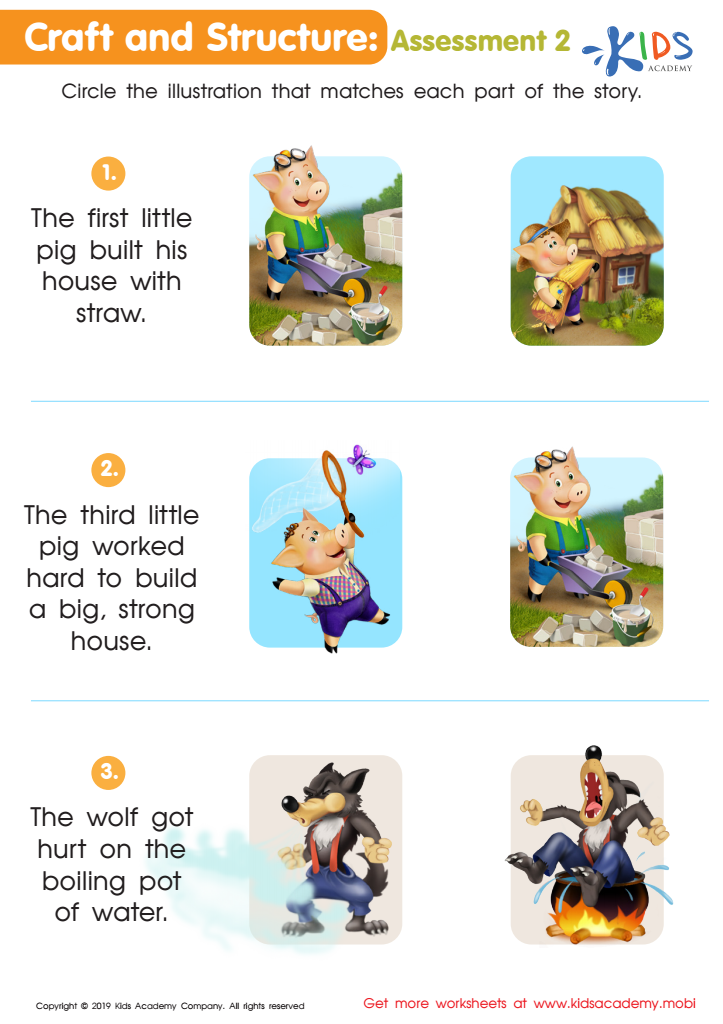
Craft and Structure: Assessment 2 Worksheet 2
 Assign to My Students
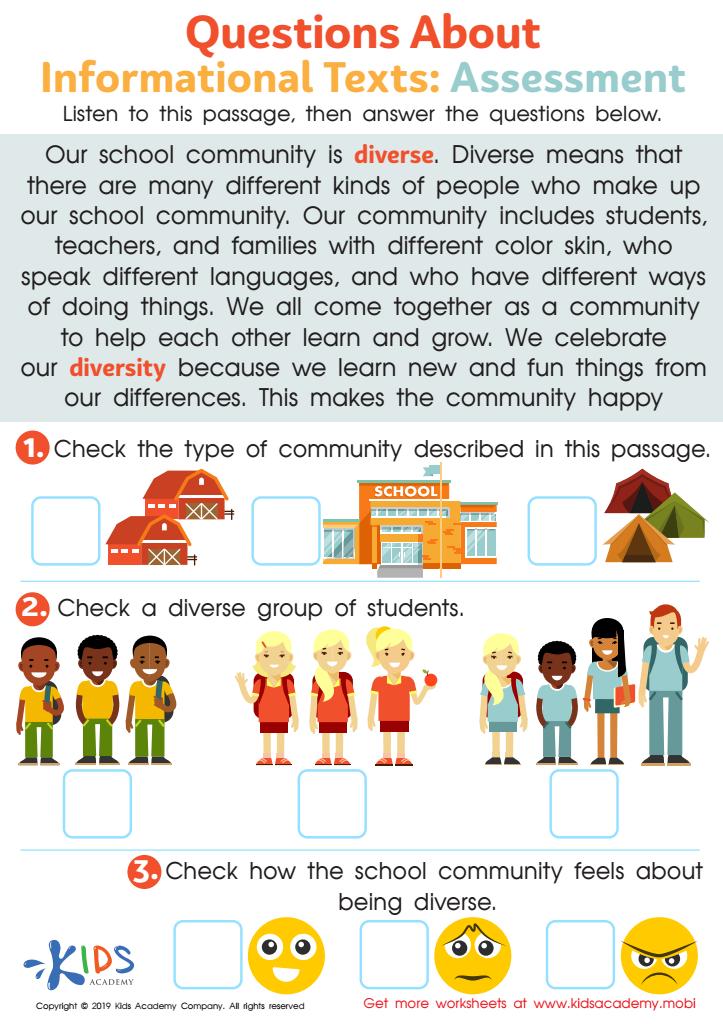
Questions About Informational Texts: Assessment 1 Worksheet
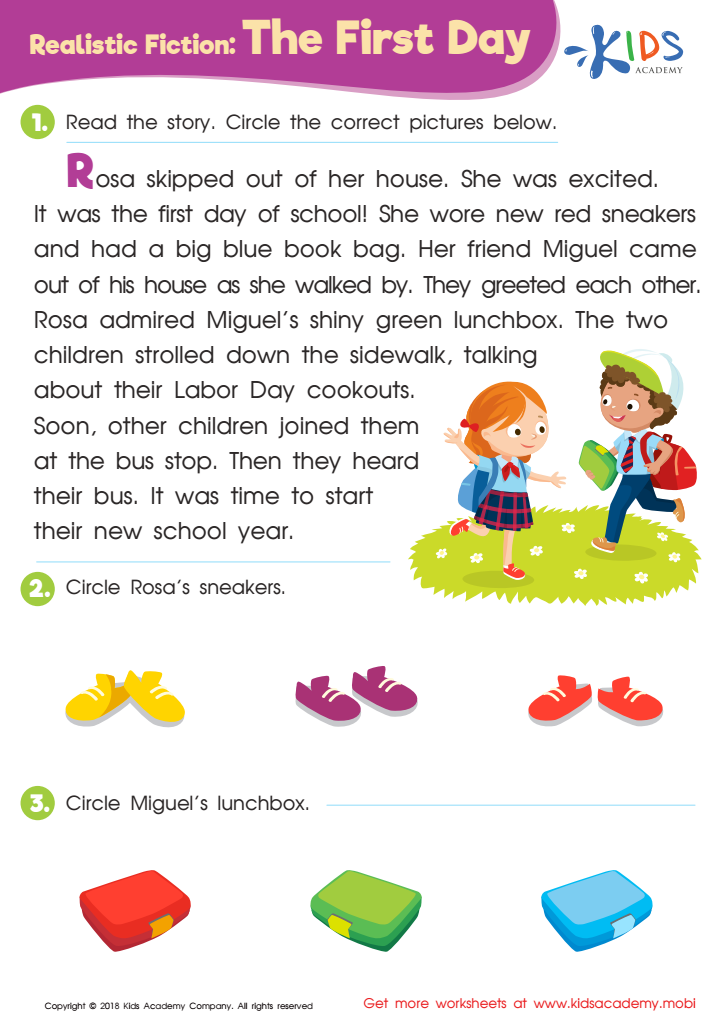
Realistic Fiction: The First Day Worksheet
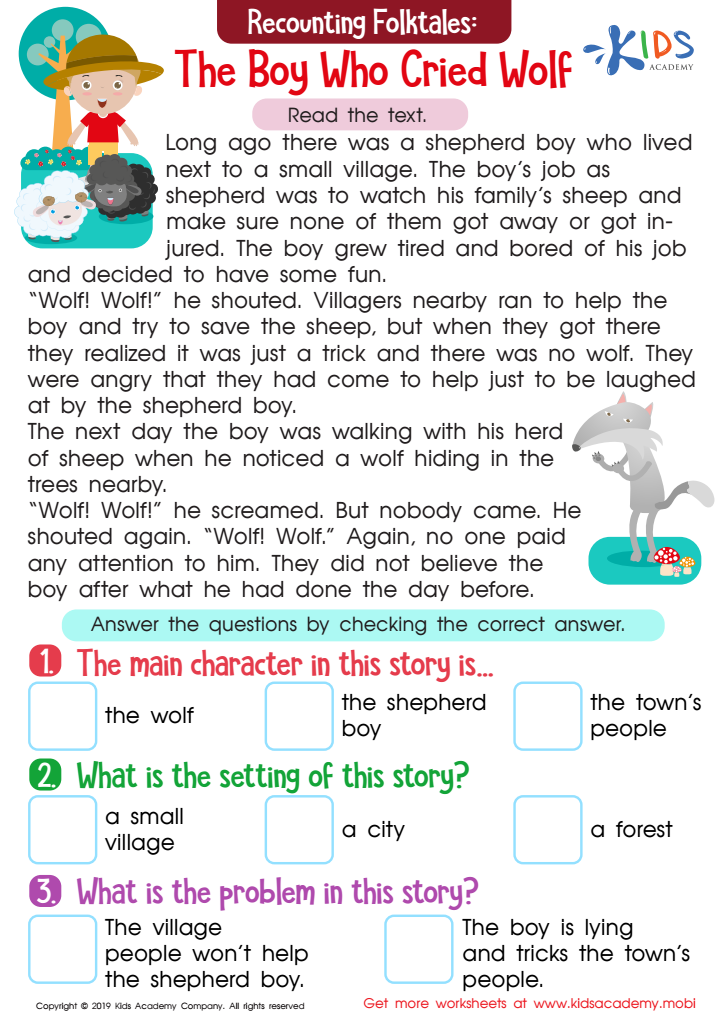
The Boy Who Cried Wolf Part 1 Worksheet







Parents and teachers should prioritize text analysis for children aged 3 to 9 because it plays a crucial role in developing crucial literacy skills early on. At this formative age, children are rapidly acquiring language, comprehension, and critical thinking skills. Text analysis involves examining stories, vocabulary, structure, and meaning, which fosters deeper understanding and engagement with books and other texts.
By focusing on text analysis, caregivers can help children identify themes, characters, and contexts in literature, promoting both analytical and imaginative skills. This practice encourages discussions around the material, helping children articulate their thoughts and questions, which enhances their verbal and cognitive abilities.
Furthermore, text analysis supports phonemic awareness and vocabulary expansion, foundational elements for reading development. Engaging with diverse materials encourages a love for reading and learning, as children discover how stories reflect their experiences or expose them to new perspectives.
Ultimately, early investment in text analysis equips children with essential tools for lifelong learning, helping them become proficient readers, critical thinkers, and empathetic individuals. By nurturing these skills from a young age, teachers and parents play a vital role in shaping successful readers and thinkers of the future.








