Time-telling skills Worksheets for Ages 3-9
8 filtered results
-
From - To
Discover our engaging "Time-Telling Skills Worksheets for Ages 3-9" designed to make learning about clocks and time fun! These versatile worksheets cater to various skill levels, helping children grasp essential concepts such as reading analog and digital clocks, understanding hours and minutes, and recognizing time-related vocabulary. Each activity promotes visual learning and develops critical thinking skills through interactive exercises perfect for home or classroom use. By incorporating colorful designs and age-appropriate challenges, these worksheets inspire young learners to feel confident in expressing time. Explore our collection today to support your child's educational journey and enhance their understanding of time!
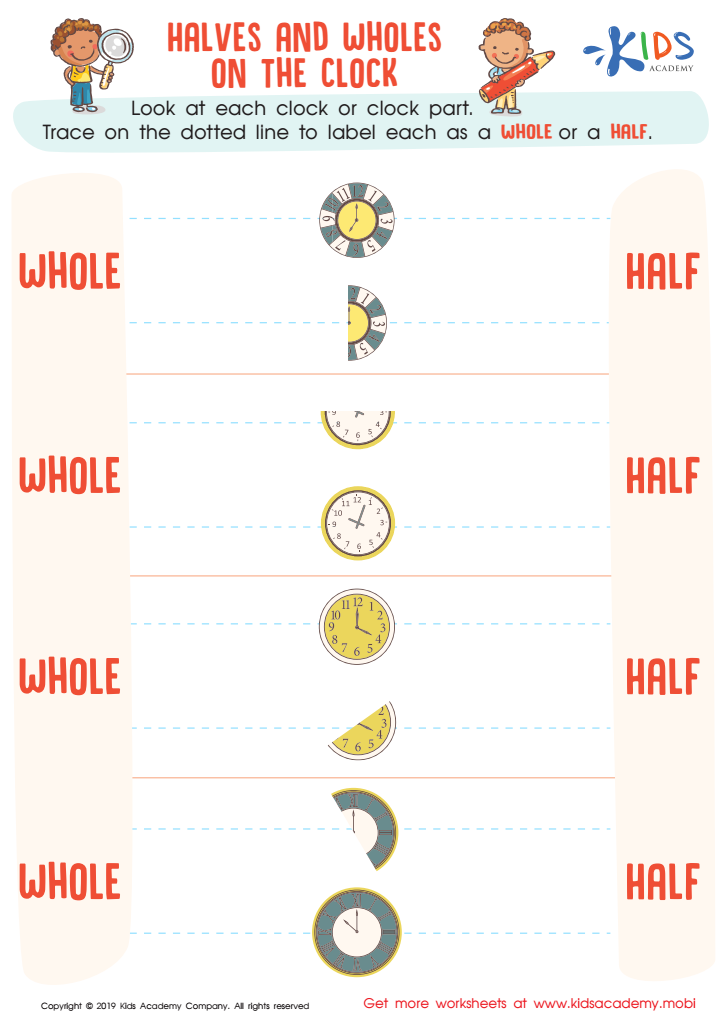
Halves and Wholes on the Clock Worksheet
 Assign to My Students
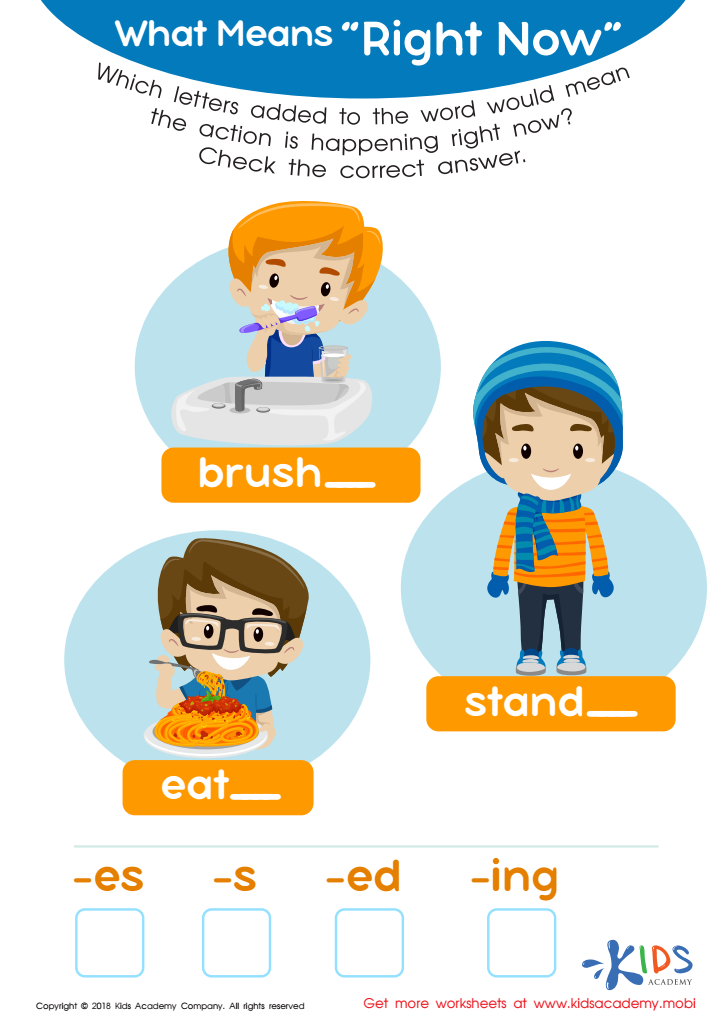
What Means "Right Now" Worksheet
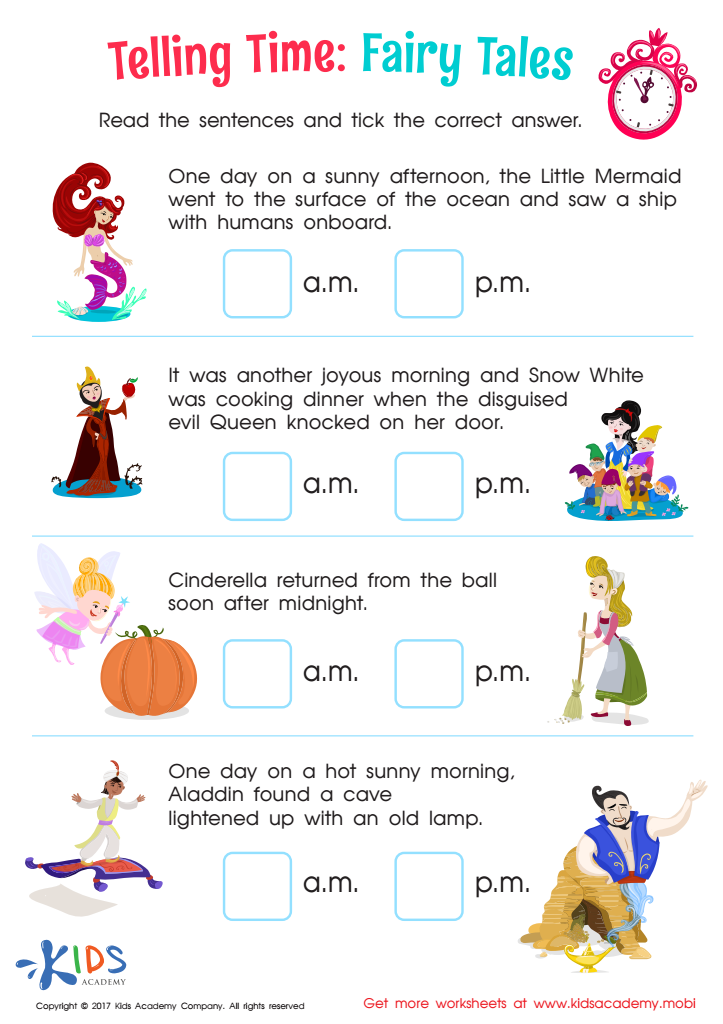
Telling Time: Fairy Tales Worksheet
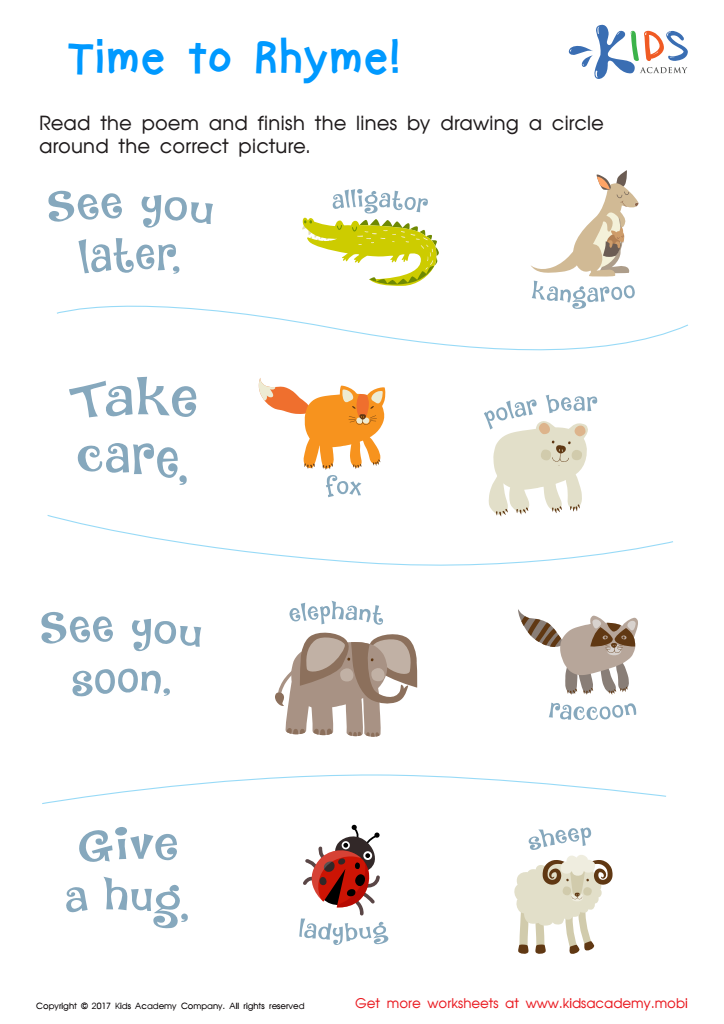
Time to Rhyme Rhyming Worksheet
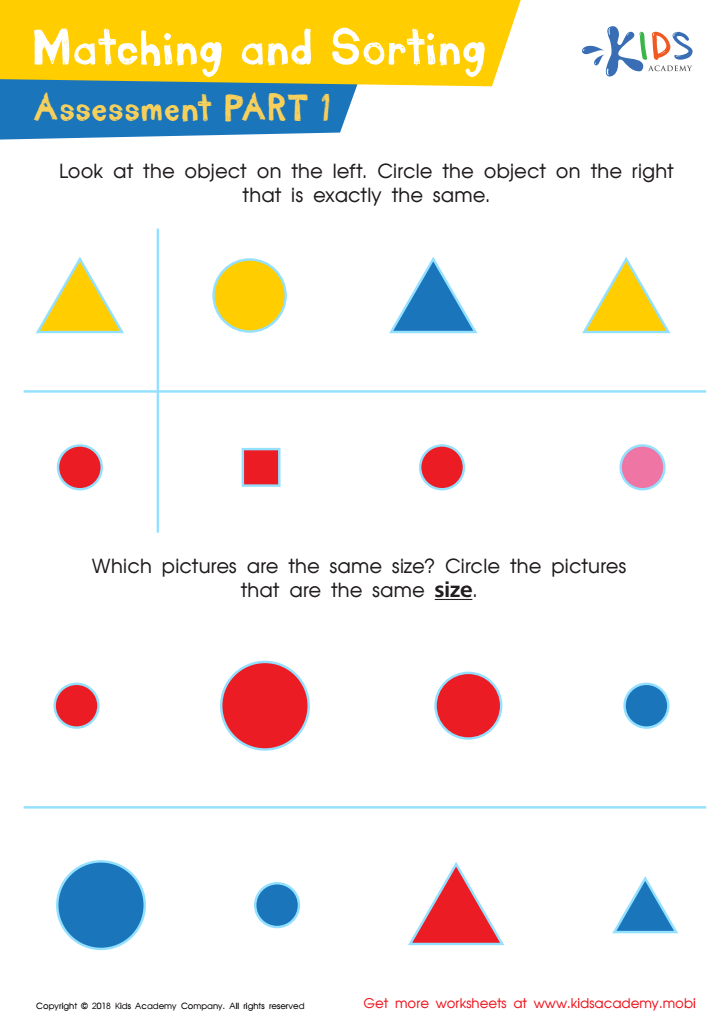
Matching and Sorting for Kindergarten: Assessment 1 Worksheet
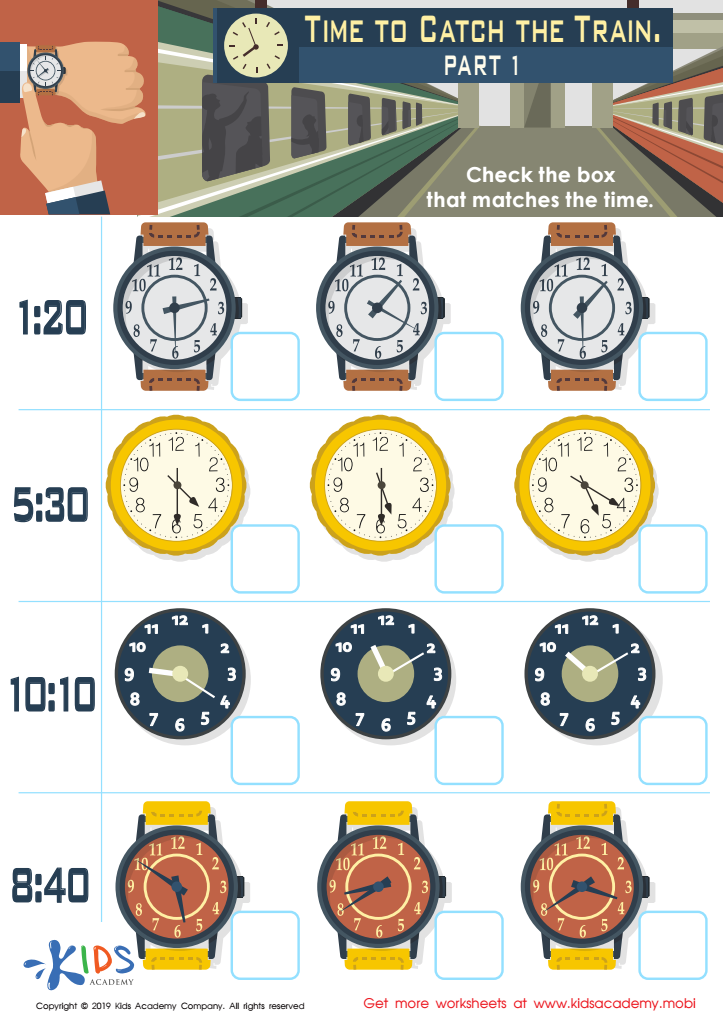
Time to Catch the Train Part 1 Worksheet








Teaching time-telling skills to children aged 3-9 is crucial for their cognitive development and daily functioning. Understanding time helps children develop a sense of routine, structure, and responsibility, fostering independence as they gradually manage their daily tasks. For parents and teachers, instilling these skills encourages punctuality and awareness of how long activities take, enhancing organizational skills.
Moreover, time-telling skills lay the groundwork for critical thinking and problem-solving abilities. As children learn to track time, they engage in counting, number recognition, and sequencing, which are essential components of early math development. Interactive methods, like using clocks with visuals or incorporating time-related games, make learning enjoyable and effective.
Furthermore, the ability to tell time promotes social skills as children interact and coordinate with peers around playdates and activities. In today’s fast-paced society, time management is more important than ever, setting the foundation for lifelong success.
Overall, by prioritizing time-telling skills, parents and teachers equip children with essential tools for planning, understanding the passage of time, and becoming more confident learners in both academic and social settings.








