Understanding measurements Worksheets for Ages 3-9 - Page 2
28 filtered results
-
From - To
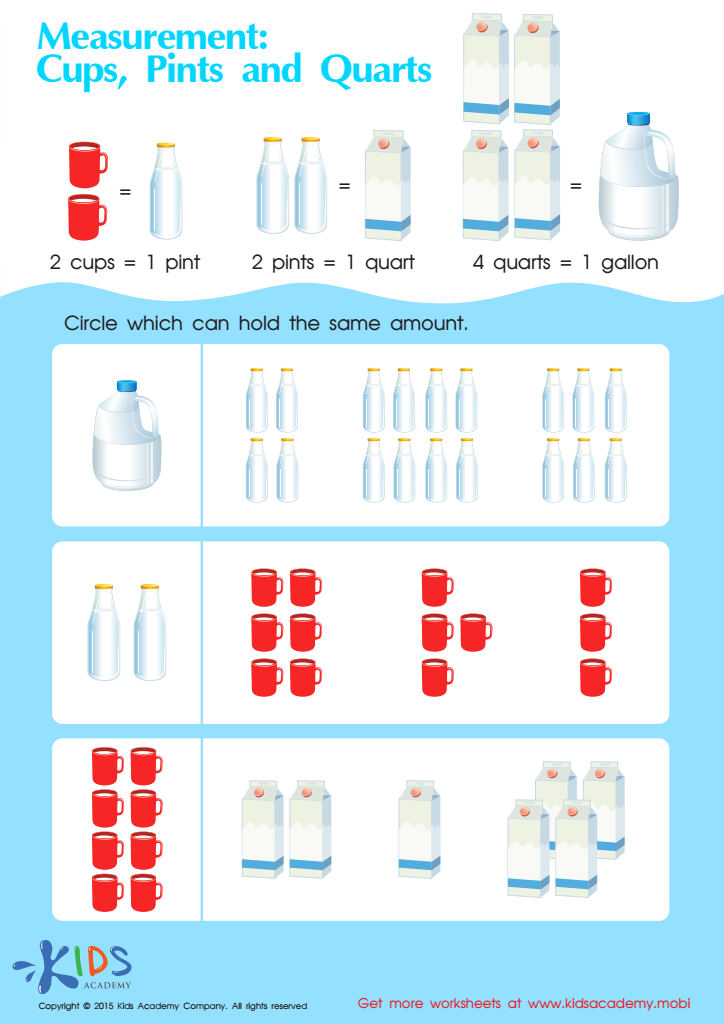
Cups, Pints and Quarts 2 Worksheet
 Assign to My Students
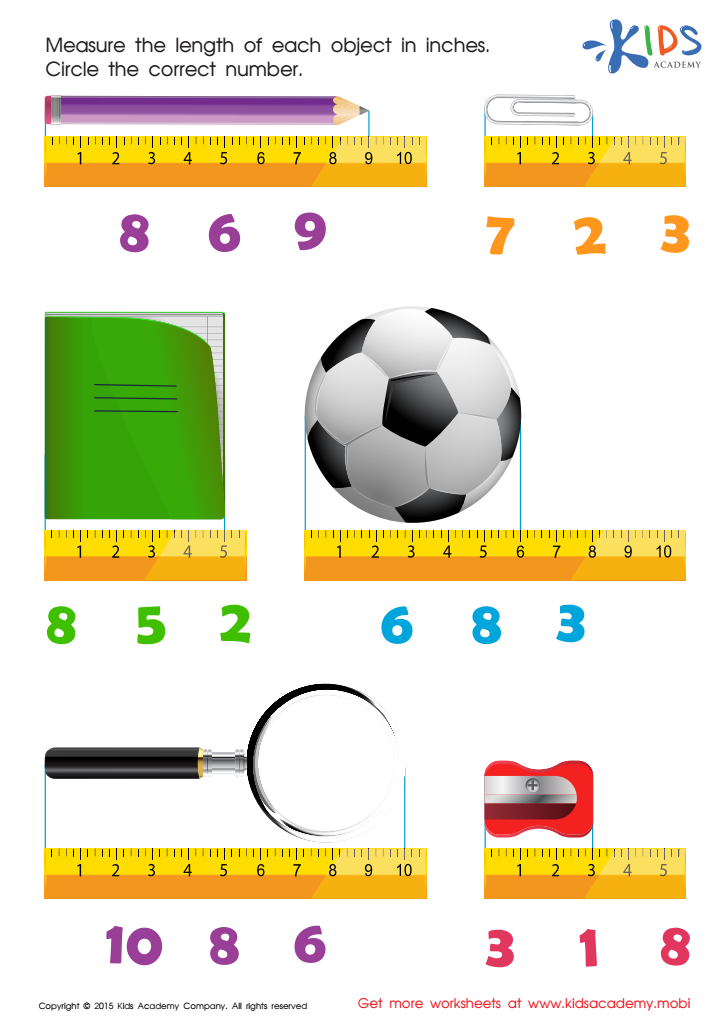
Learning measuring objects in inches Worksheet
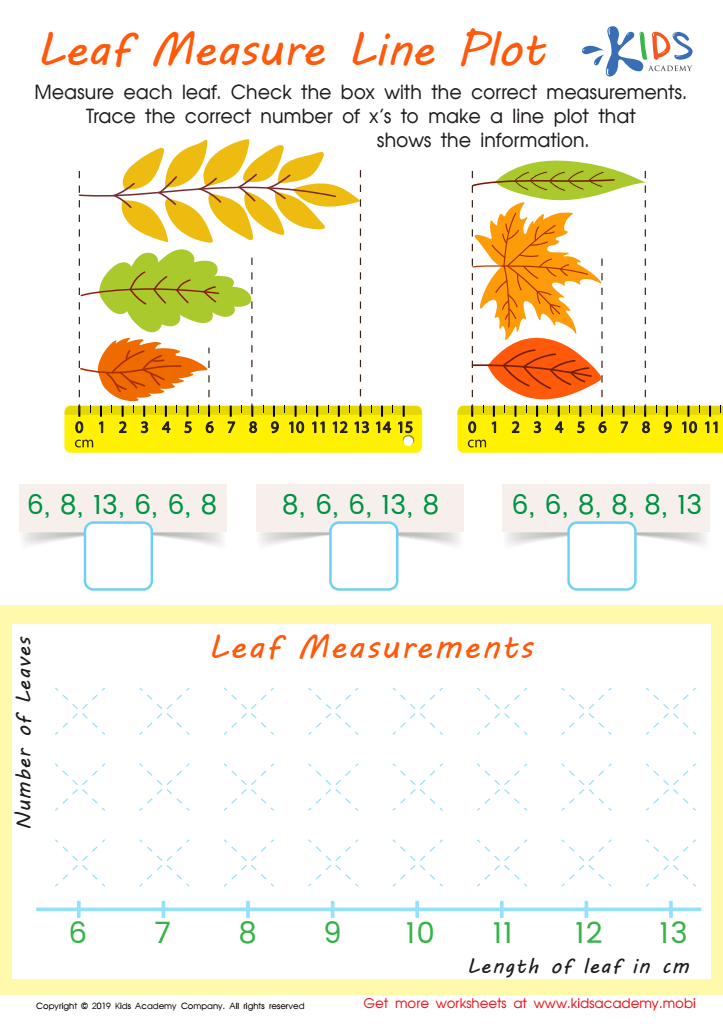
Leaf Measure Line Plot Worksheet






Understanding measurements is crucial for children ages 3-9 as it lays the foundation for their mathematical development and everyday problem-solving abilities. At this age, children are naturally curious and eager to explore their environment. By introducing measurement concepts, parents and teachers can nurture this curiosity, helping children develop critical thinking skills and spatial awareness.
When young learners grasp the basics of measurement—like length, weight, and volume—they enhance their ability to compare, classify, and quantify objects. These skills are not only fundamental to math but also apply to science, art, and even cooking, making measurements relevant in various daily activities. Furthermore, measurement activities promote fine motor skills through hands-on experiences, such as using rulers, weighing ingredients, or filling containers.
Moreover, understanding measurement fosters vocabulary development and comprehension as children learn terms like “longer,” “heavier,” or “fuller.” This is key for effective communication and enhances literacy skills. Engaging children in measurement tasks creates a strong sense of achievement and supports their understanding of mathematical concepts, preparing them for more complex arithmetic in later years. By valuing measurement education, parents and teachers empower children to explore, describe, and interact with their world more confidently and successfully.








