Understanding place value Worksheets for Ages 3-9
16 filtered results
-
From - To
Our "Understanding Place Value Worksheets for Ages 3-9" offer a fun and engaging way to introduce young learners to the foundational concept of place value. These educational worksheets cover a variety of activities, from basic number recognition to more advanced place value concepts, ensuring a graduated learning experience. Designed by experts, they help children visualize and grasp the significance of each digit in a number. Perfect for in-class or home use, these printables are an exceptional resource for enhancing math skills and building confidence. Ideal for parents and educators aiming to foster early numerical proficiency in children.
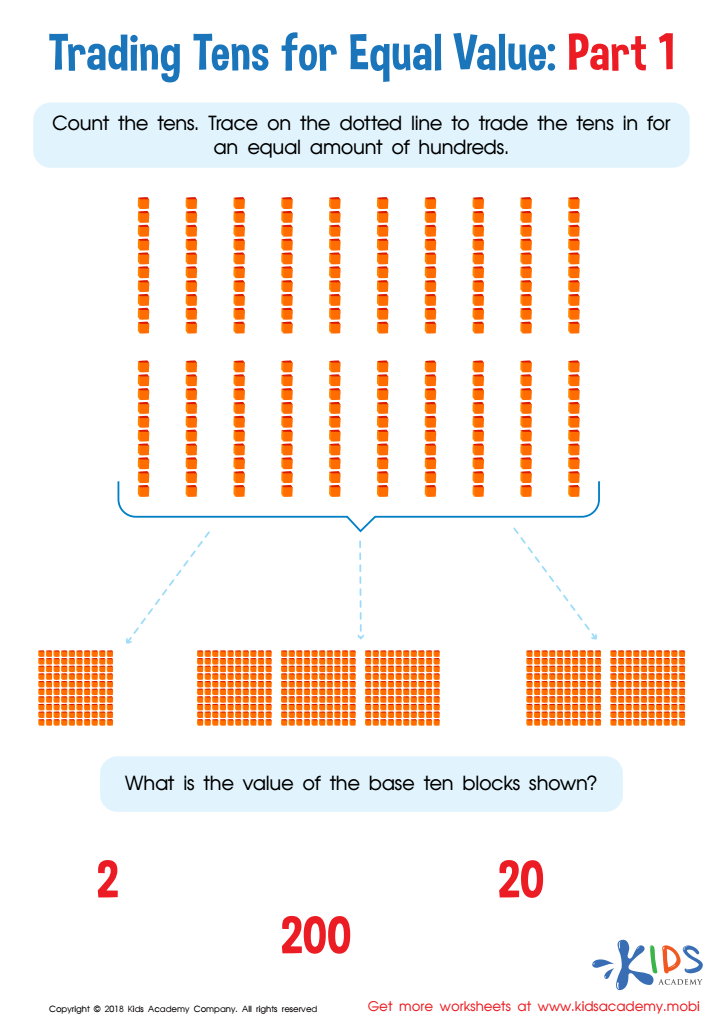
Trading Tens for Equal Value Worksheet: Part 1
 Assign to My Students
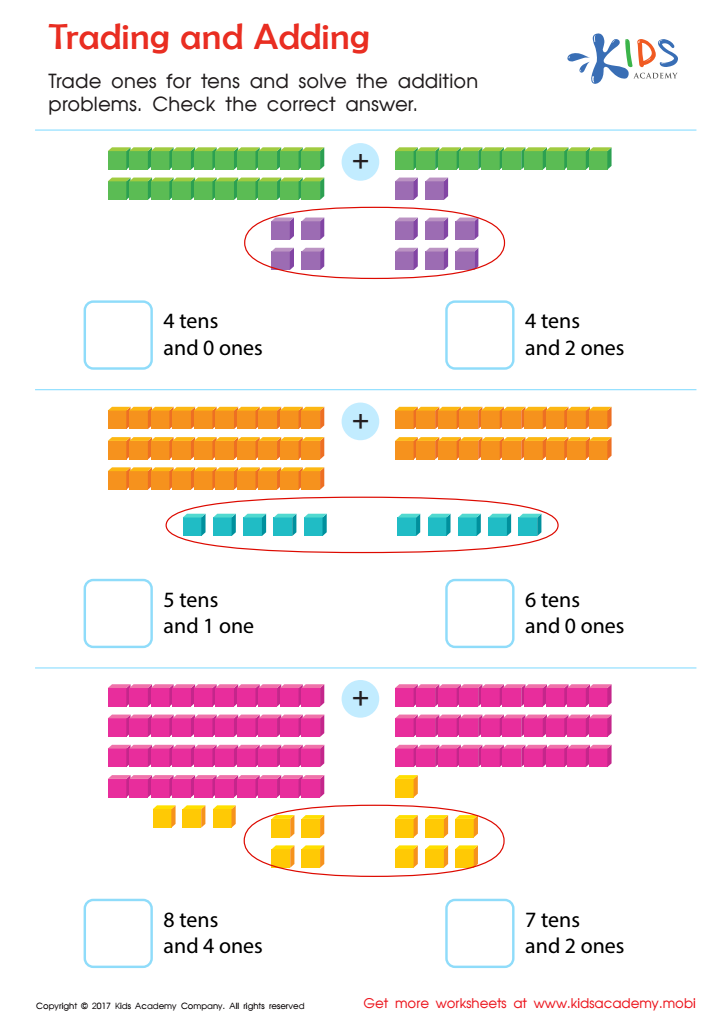
Trading and Adding Worksheet
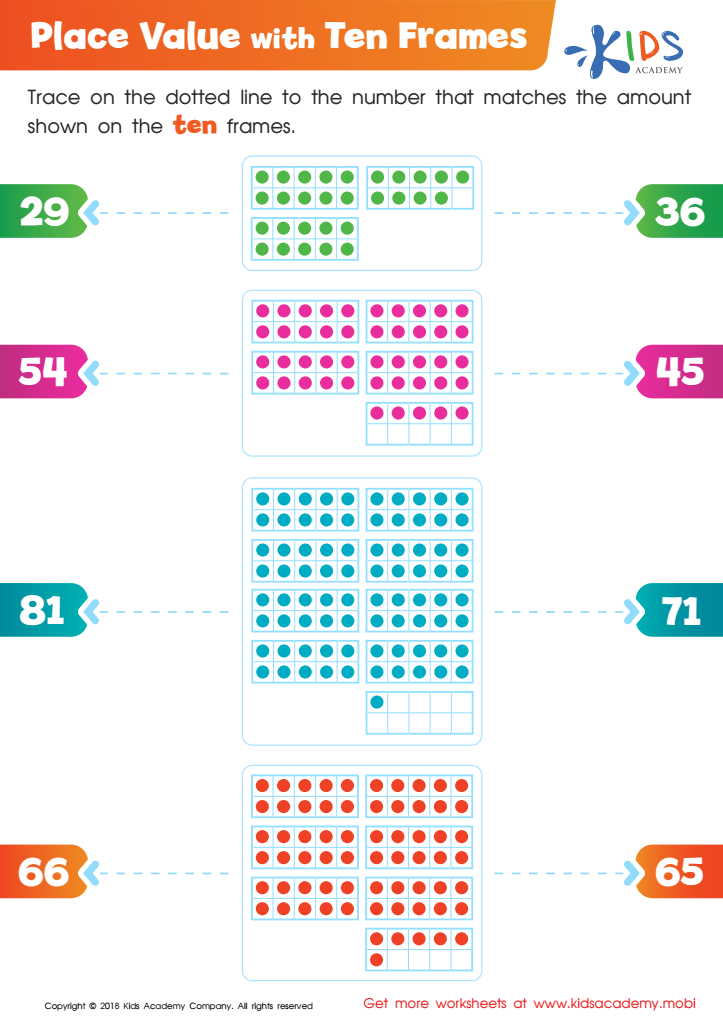
Place Values with Ten Frames Worksheet
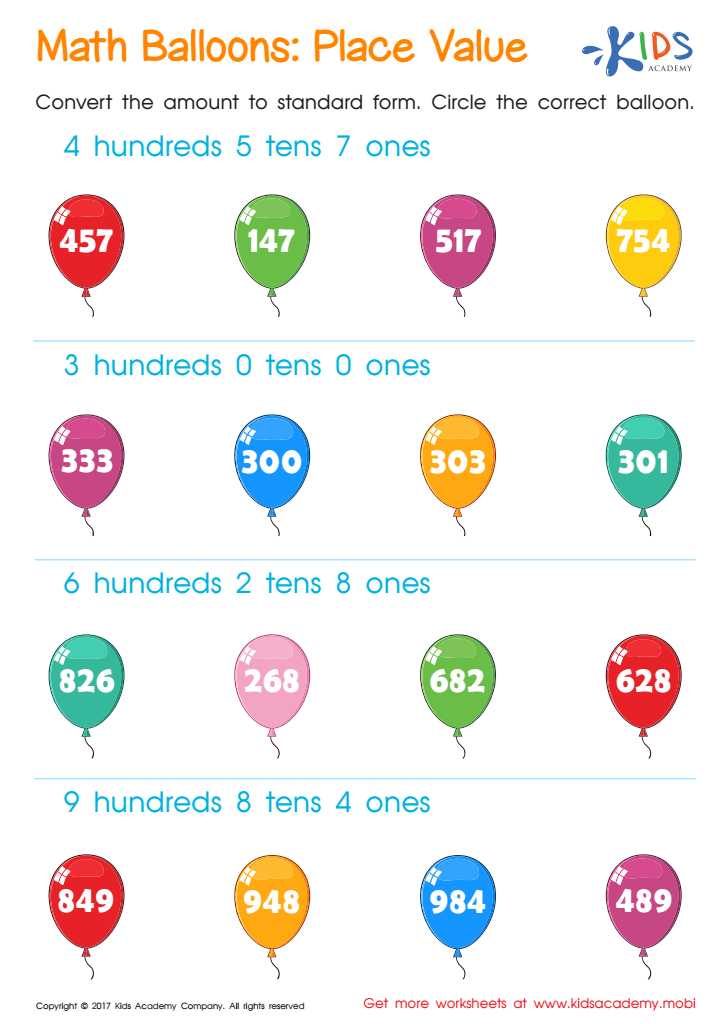
Place Value Printable Worksheet
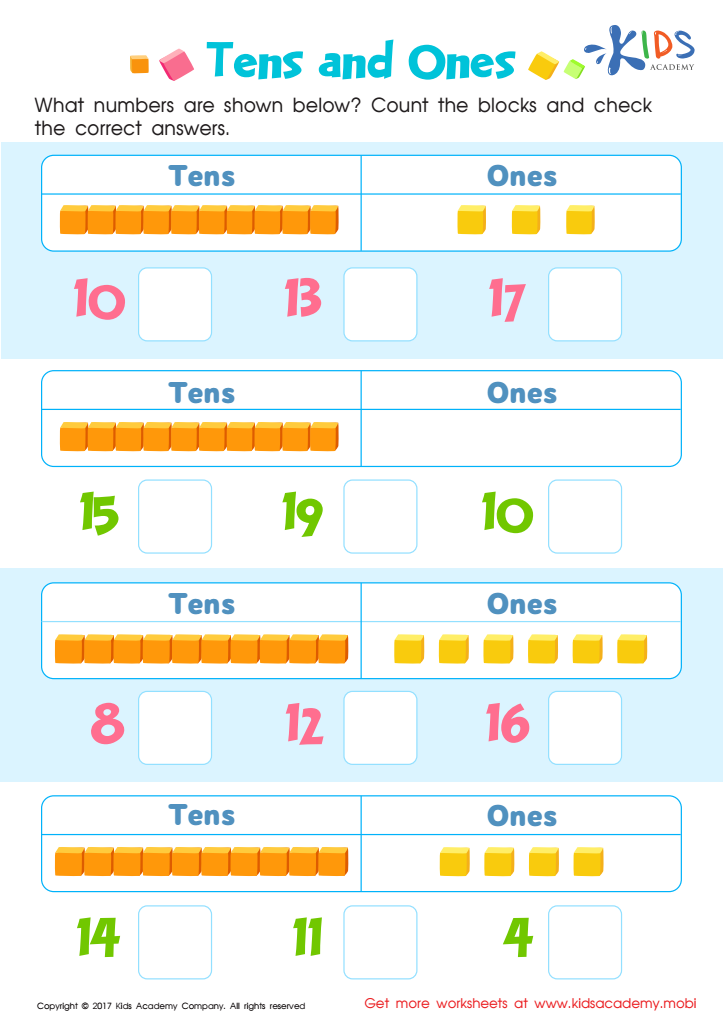
Tens and Ones Worksheet
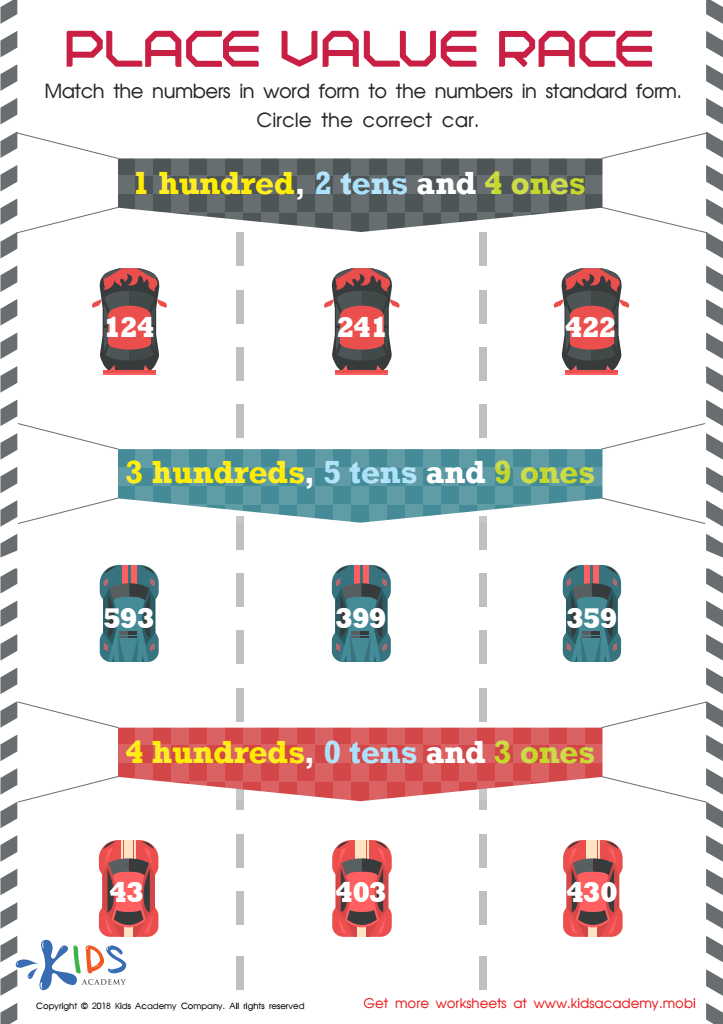
Place Value Race Worksheet
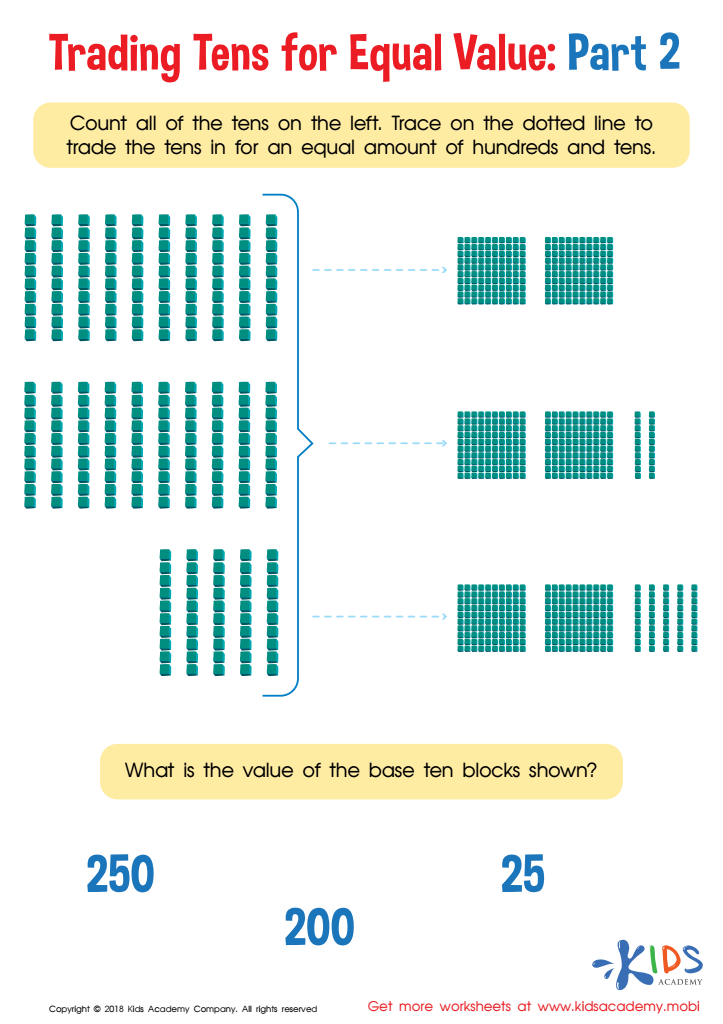
Trading Tens for Equal Value Worksheet: Part 2
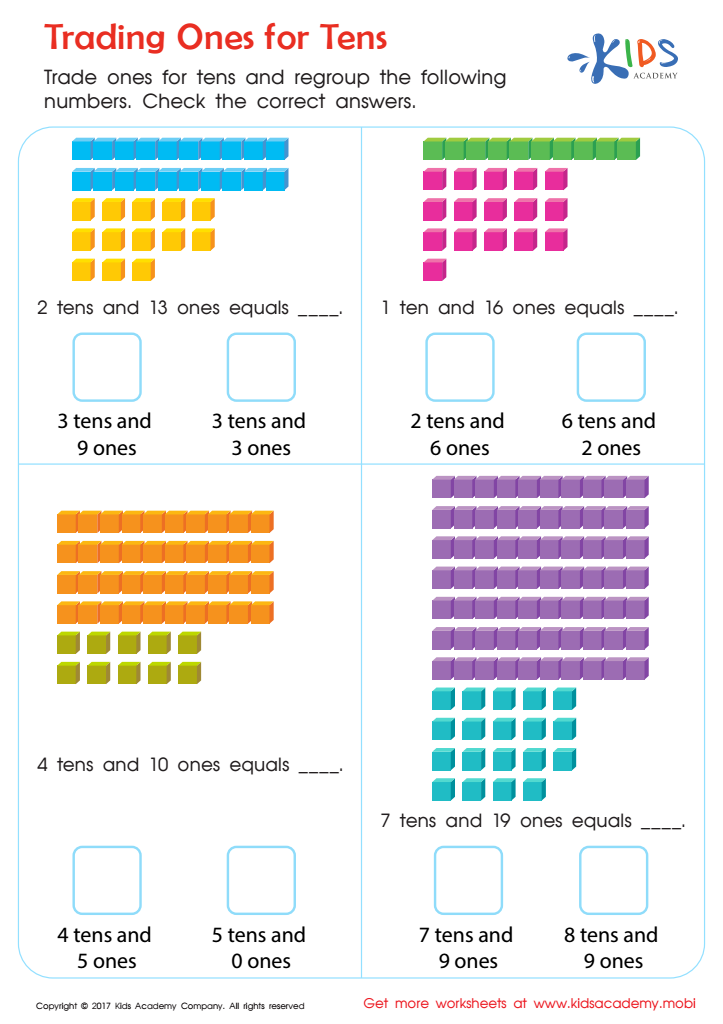
Trading Ones for Tens Worksheet
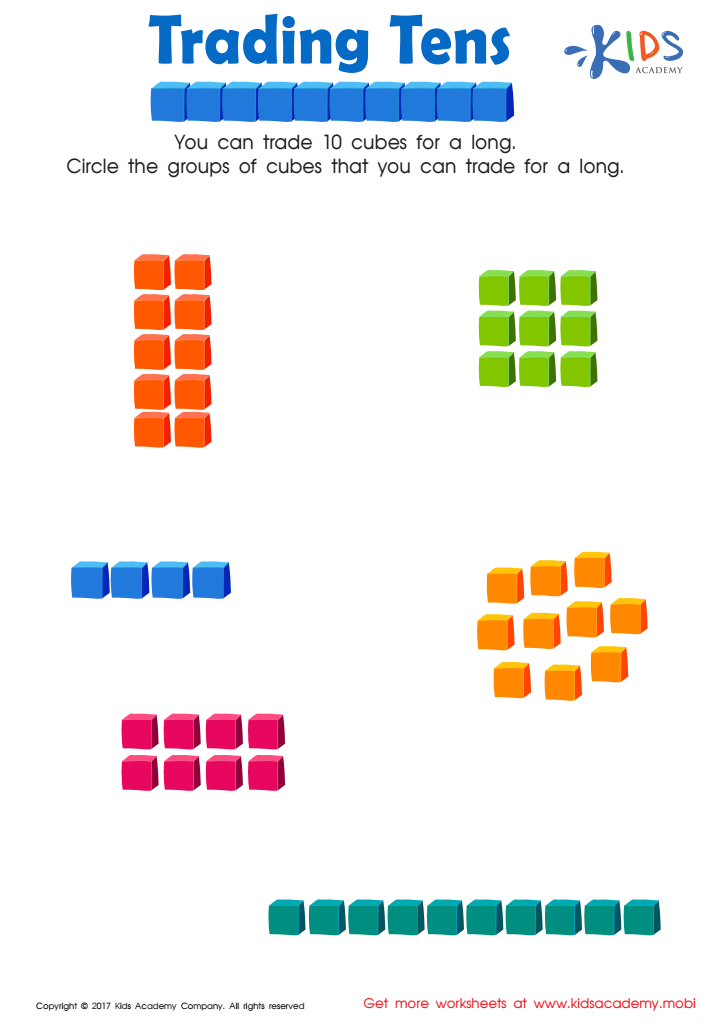
Trading Tens Worksheet
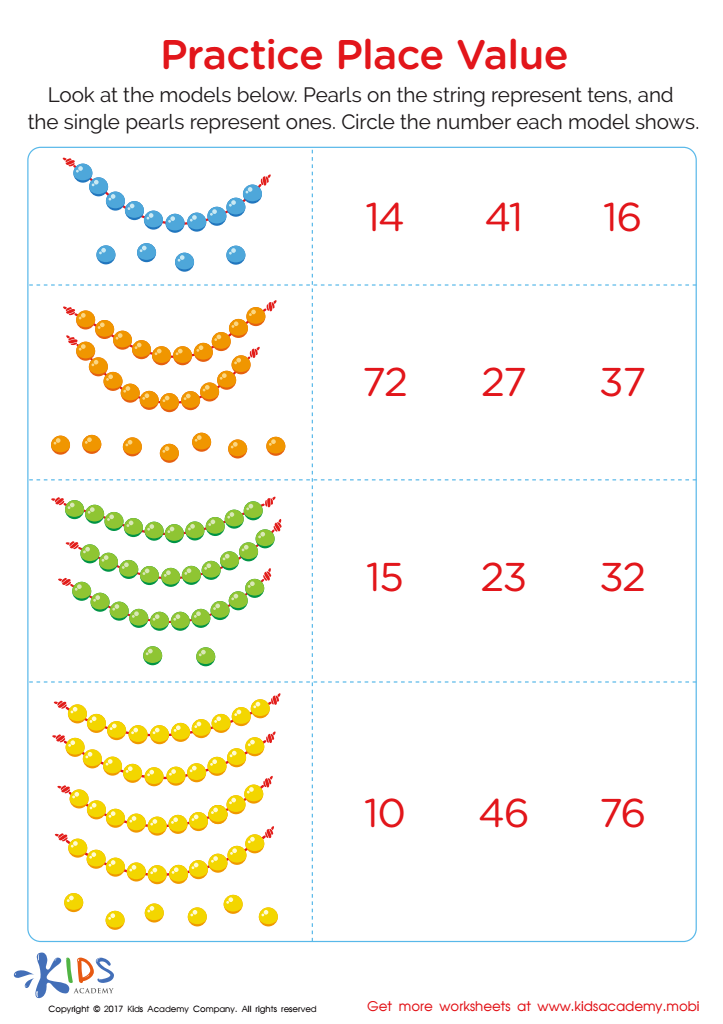
Practice Place Value Printable
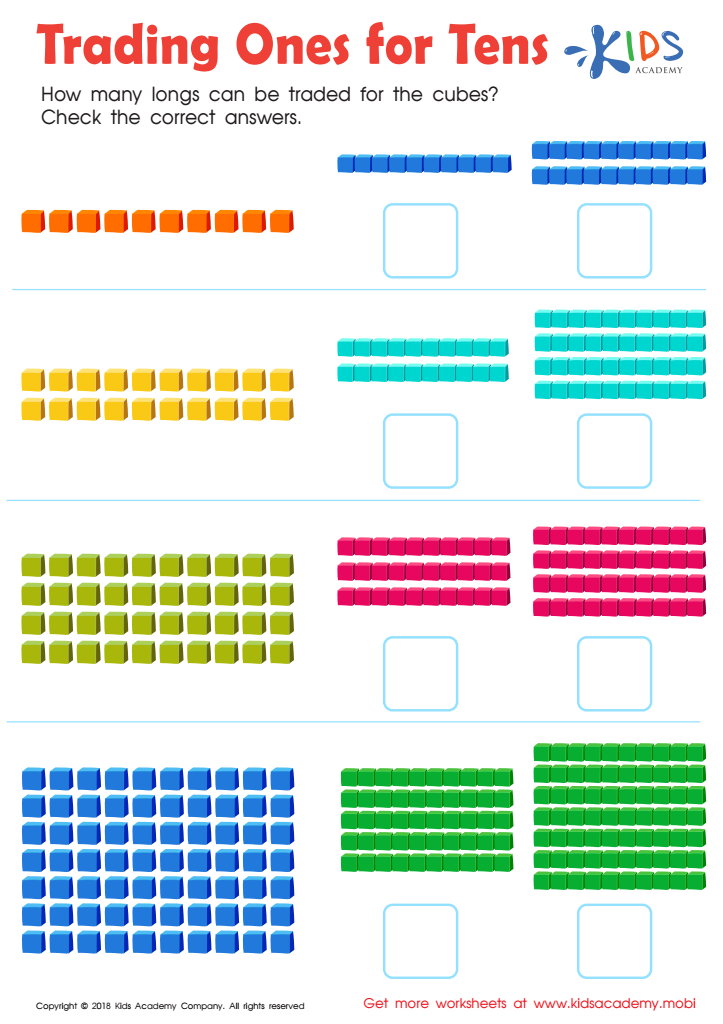
Trading Ones for Tens Worksheet: Part 2
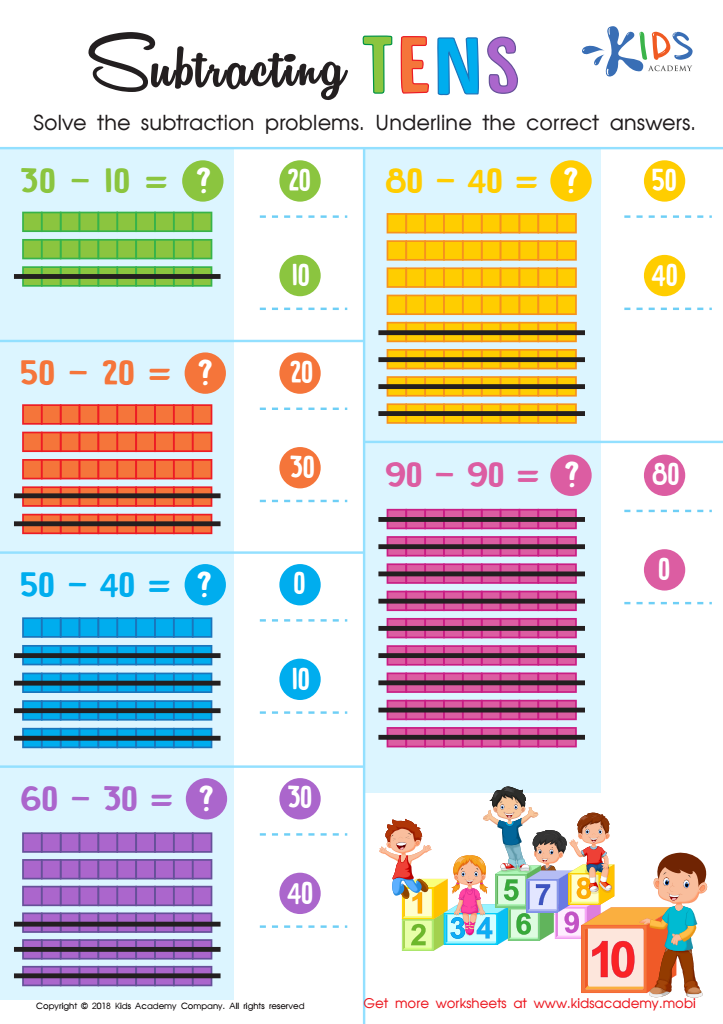
Subtracting Tens Worksheet
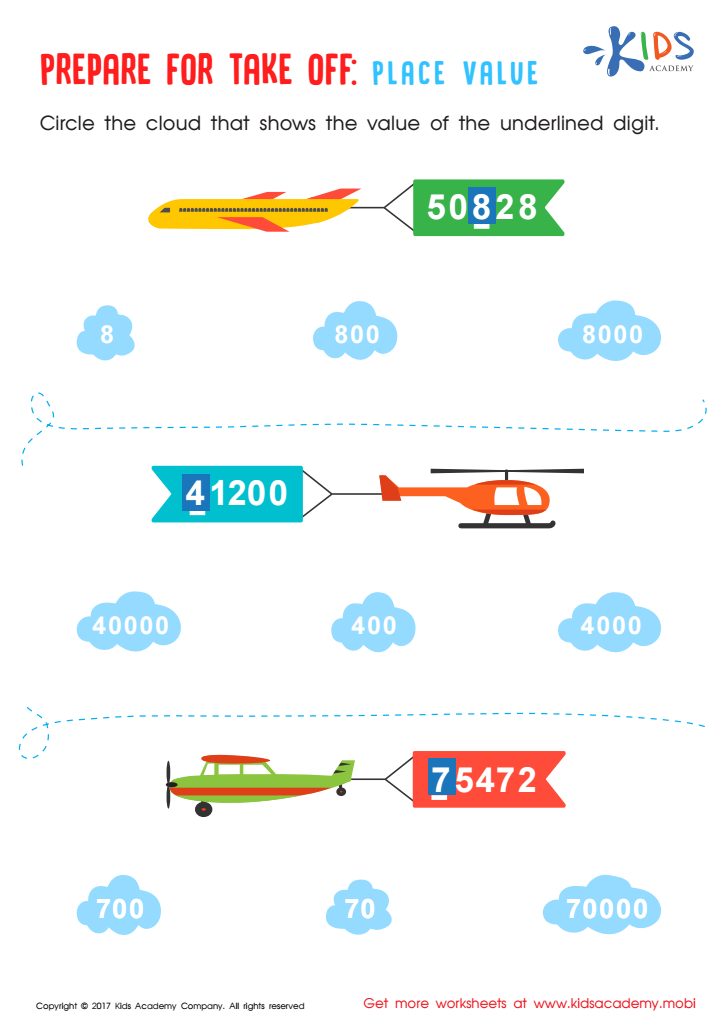
Free Place Value Worksheet for 3rd Grade
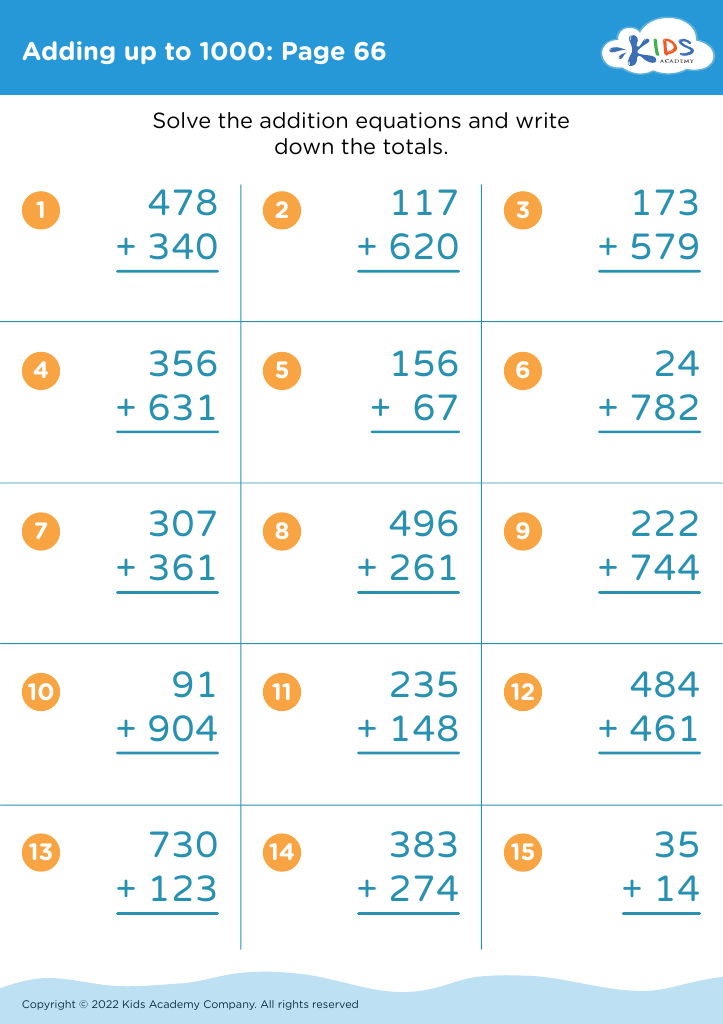
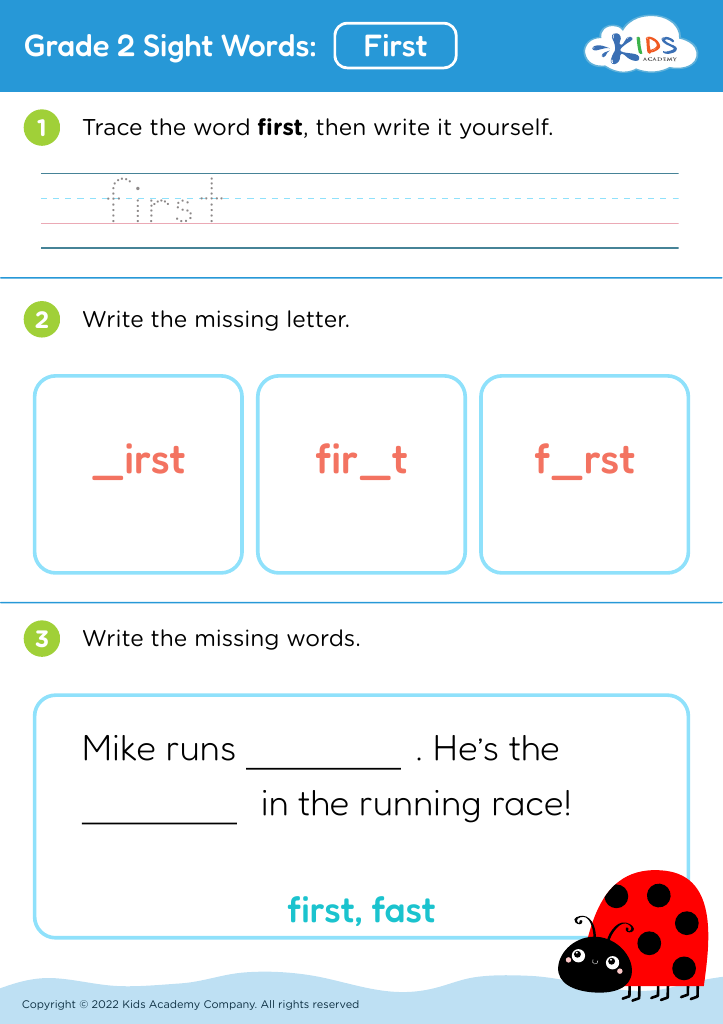






.jpg)
Understanding place value is fundamental for young children because it is the cornerstone of number sense and arithmetic. For children aged 3-9, mastering place value helps them grasp the concept of numbers beyond mere counting. It lays the groundwork for more complex mathematical operations such as addition, subtraction, multiplication, and division.
When children understand place value, they recognize that the position of a digit in a number determines its value (e.g., in the number 248, the digit 2 represents two hundred). This understanding is crucial for performing calculations accurately. For instance, understanding that 10 ones can be regrouped as 1 ten is essential for carrying over numbers in addition or borrowing in subtraction.
Moreover, a solid grasp of place value enhances mental math skills, making it easier and faster for children to compute numbers in their heads. This builds confidence and fosters a positive attitude toward mathematics, crucial during early education as it sets the tone for their future learning experiences.
Parents and teachers should prioritize teaching place value because it not only aligns with educational standards but also promotes critical thinking and problem-solving skills. Engaging children in activities that reinforce place value builds a strong mathematical foundation, crucial for their academic success and practical daily life activities, such as measuring and handling money.








