Check out this FREE "Visual Learning" Trial Lesson for age 3-9!

Animal Life Cycle

Favorites
With answer key
Interactive
  • 3-9
  • Visual Learning
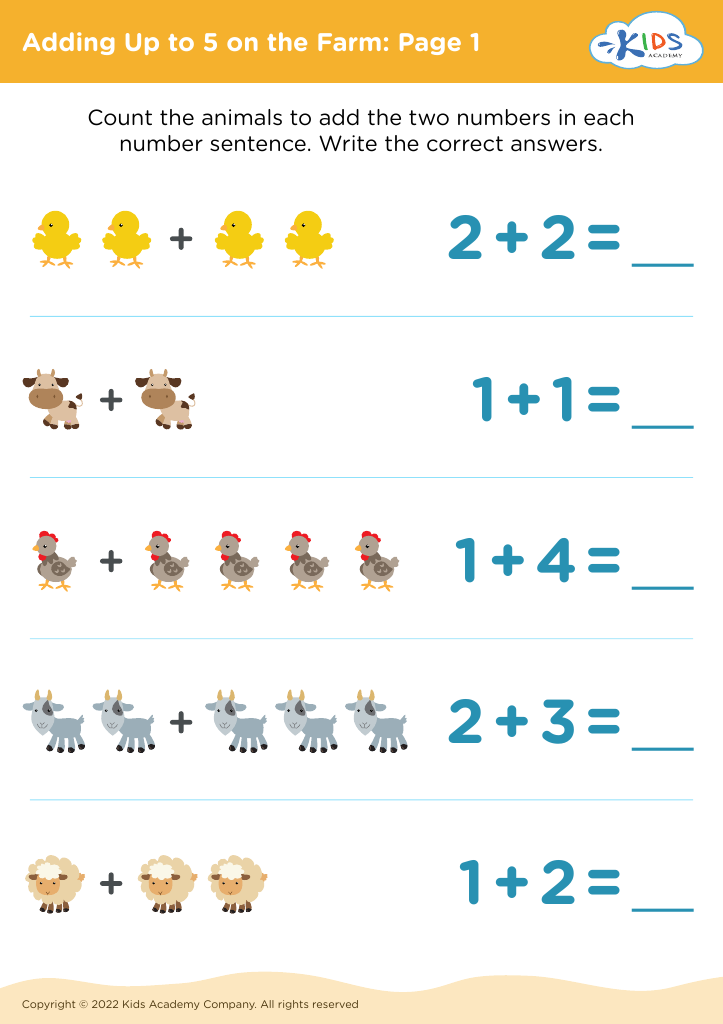
Adding Up to 5 on the Farm: Page 1
Worksheet
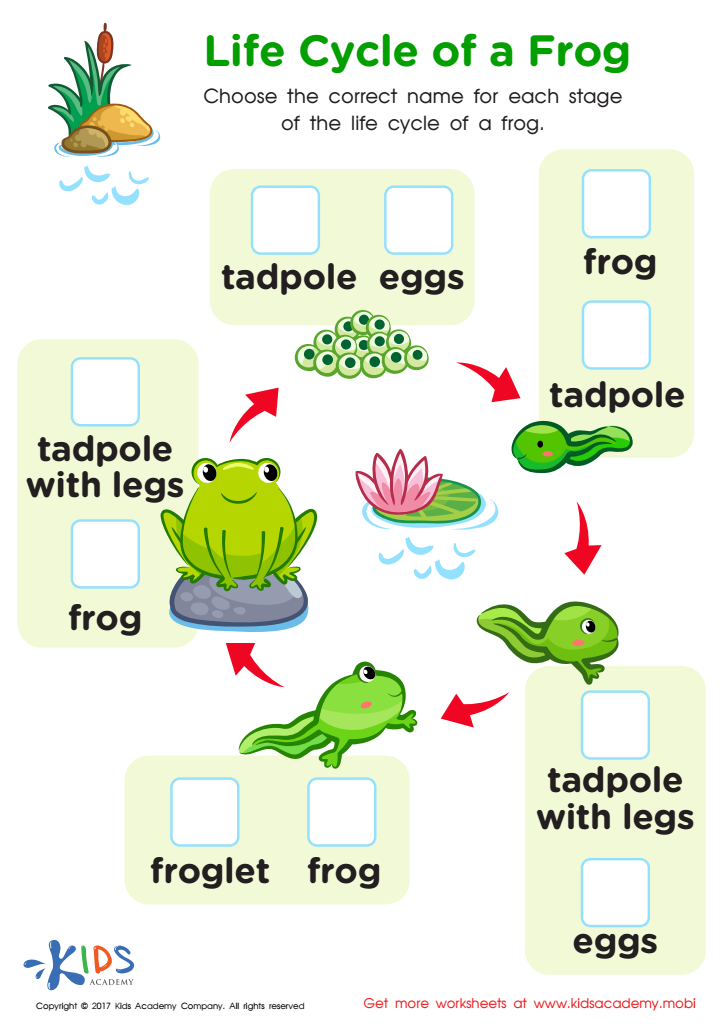
Life Cycle Frog Printable

Life Cycle Frog Printable

Kids can explore the life cycle of frog with this fun worksheet! Draw lines from one stage to the next to follow the transformation from tadpole to frog and learn about the cycle of life.
Life Cycle Frog Printable
Worksheet
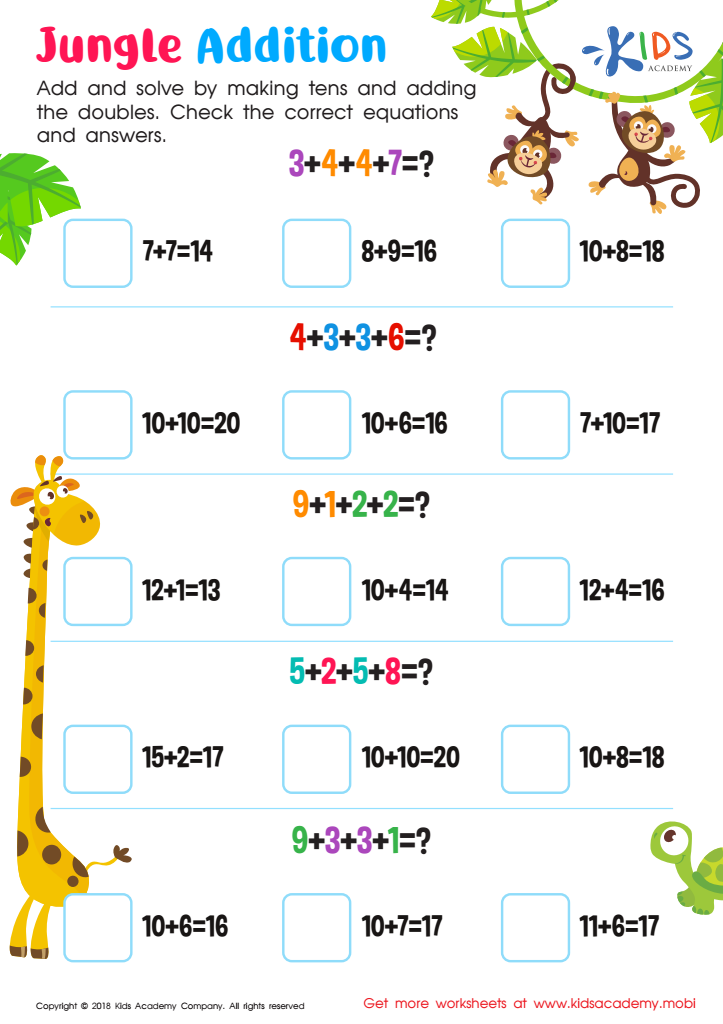
Jungle Addition Worksheet

Jungle Addition Worksheet

With this worksheet, kids can use the strategies of making tens and adding doubles to add numbers with more than three addends. They'll practice choosing the right method and become more confident in their calculations, enabling quicker, more efficient computation.
Jungle Addition Worksheet
Worksheet
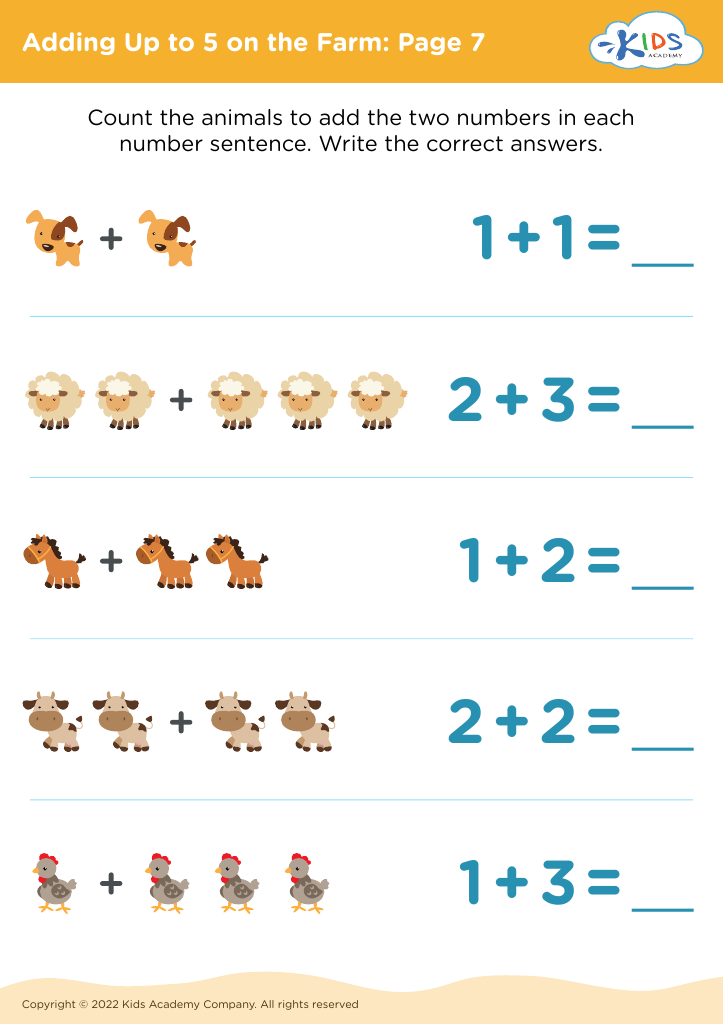
Adding Up to 5 on the Farm: Page 7
Worksheet
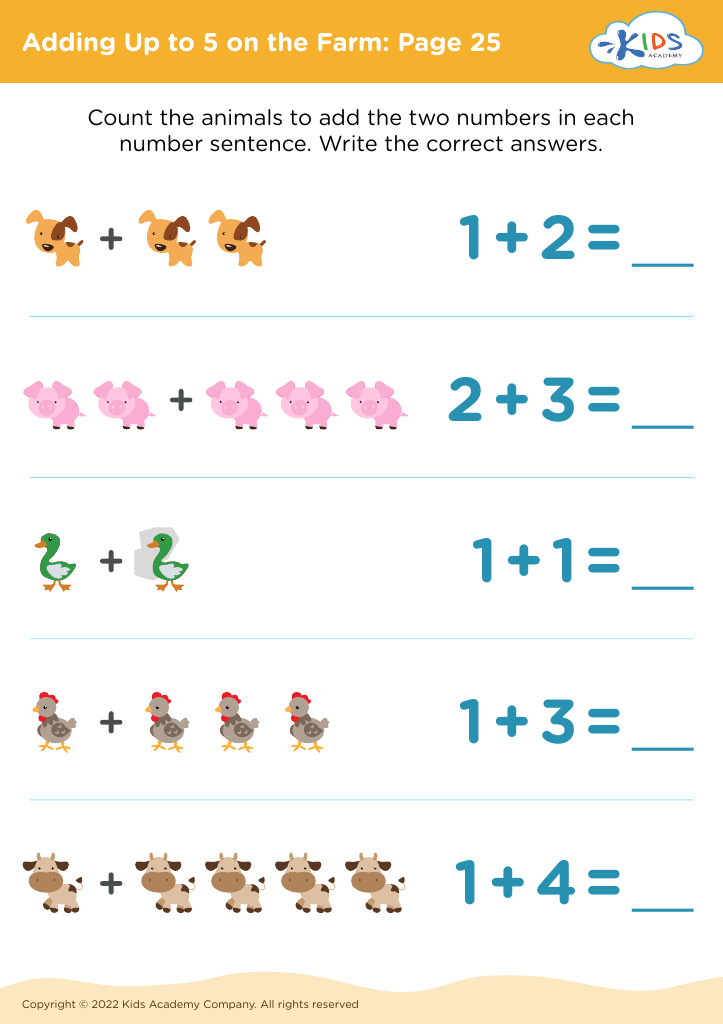
Adding Up to 5 on the Farm: Page 25
Worksheet
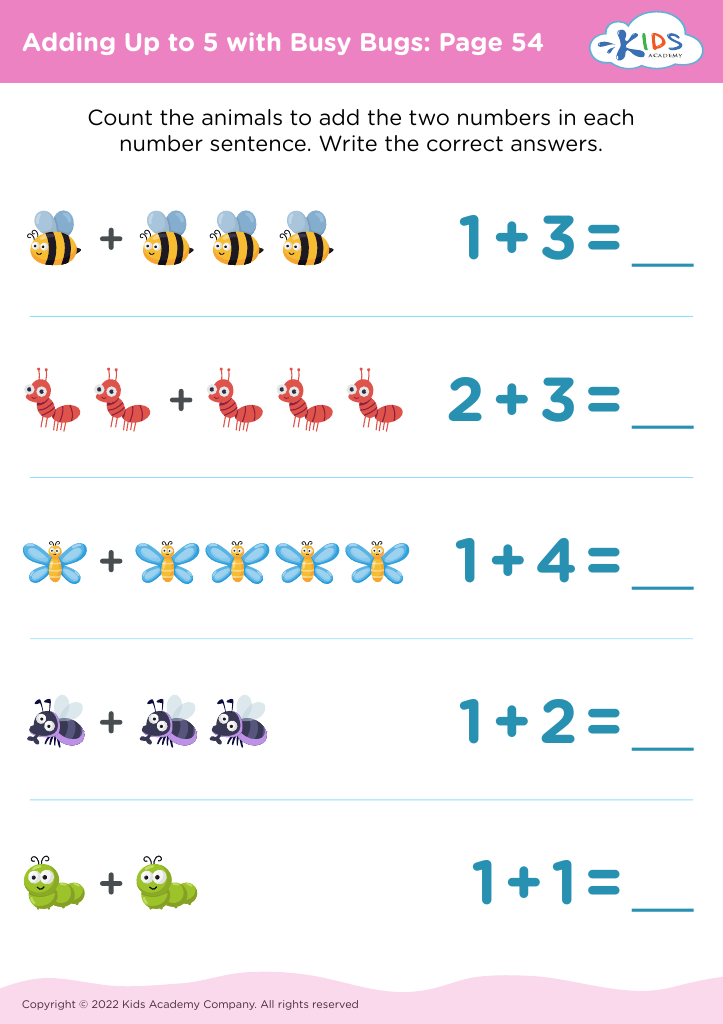
Adding Up to 5 with Busy Bugs: Page 54
Worksheet
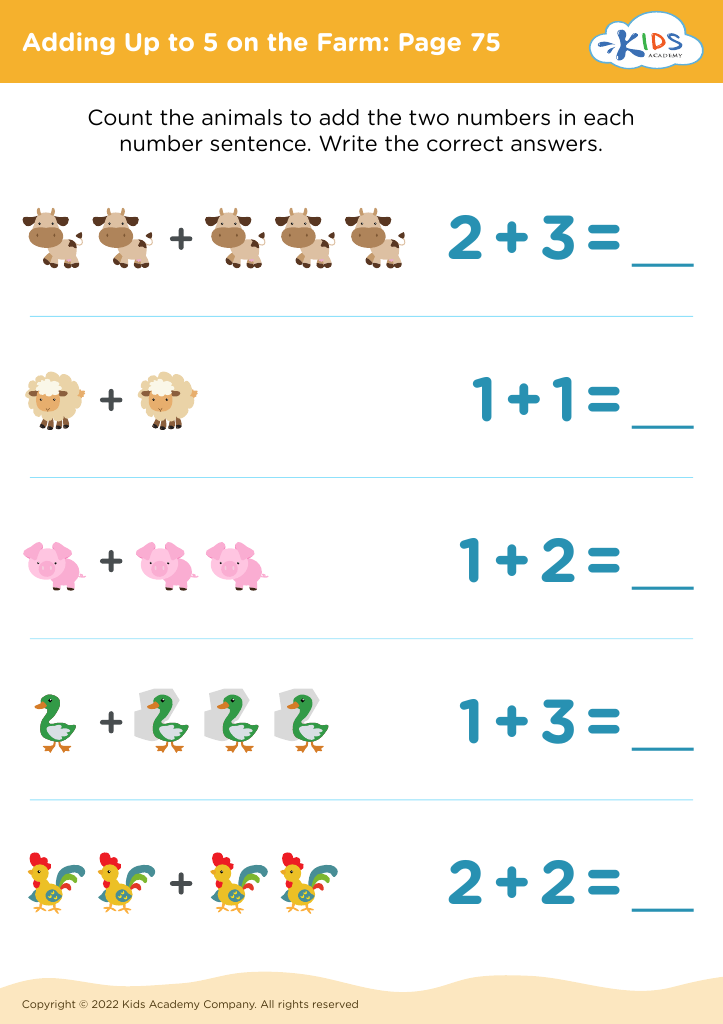
Adding Up to 5 on the Farm: Page 75
Worksheet
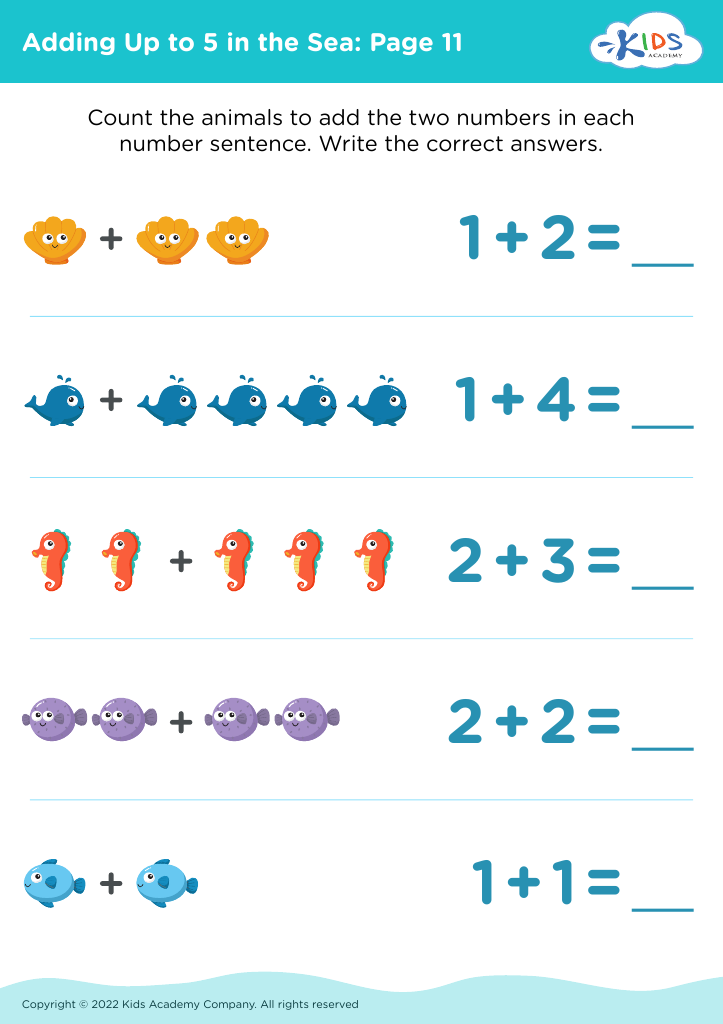
Adding Up to 5 in the Sea: Page 11
Worksheet
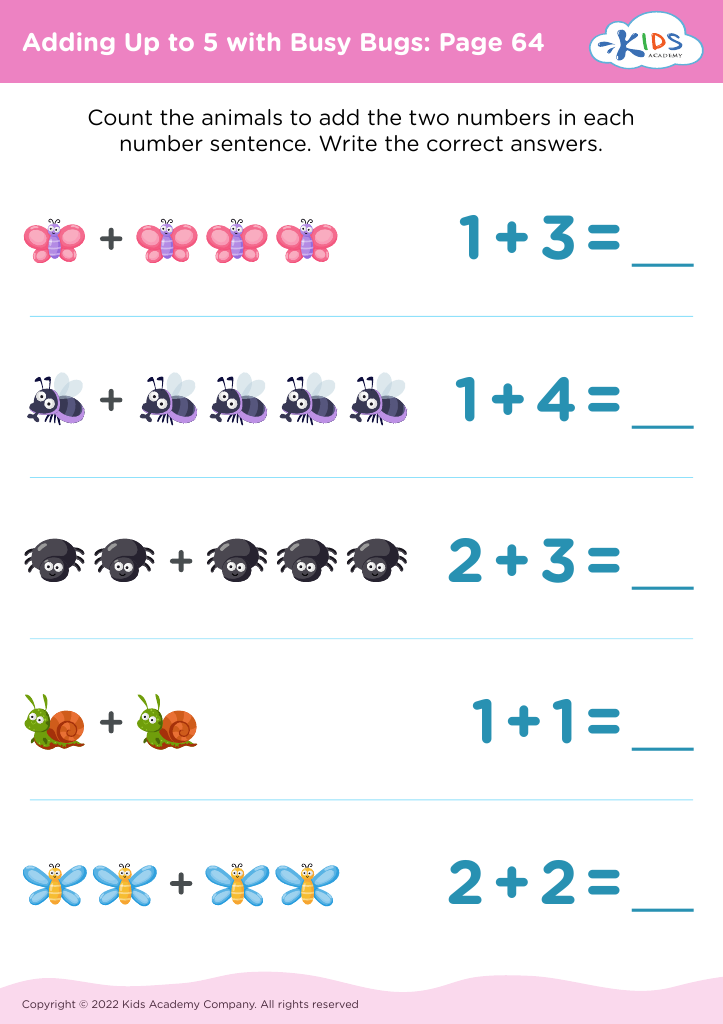
Adding Up to 5 with Busy Bugs: Page 64
Worksheet
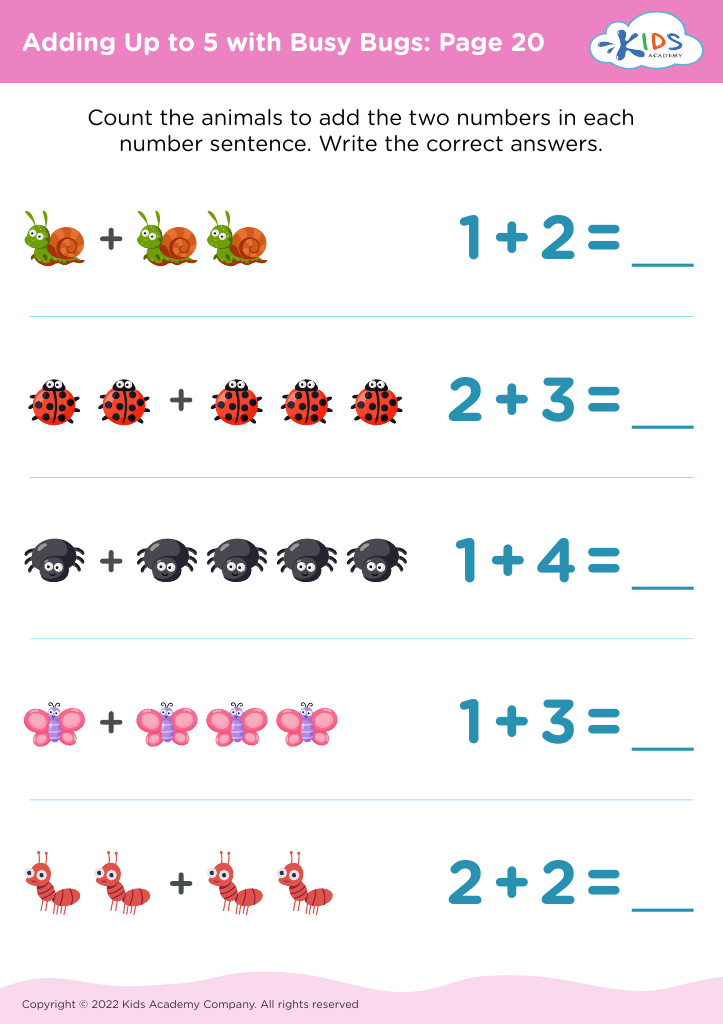
Adding Up to 5 with Busy Bugs: Page 20
Worksheet
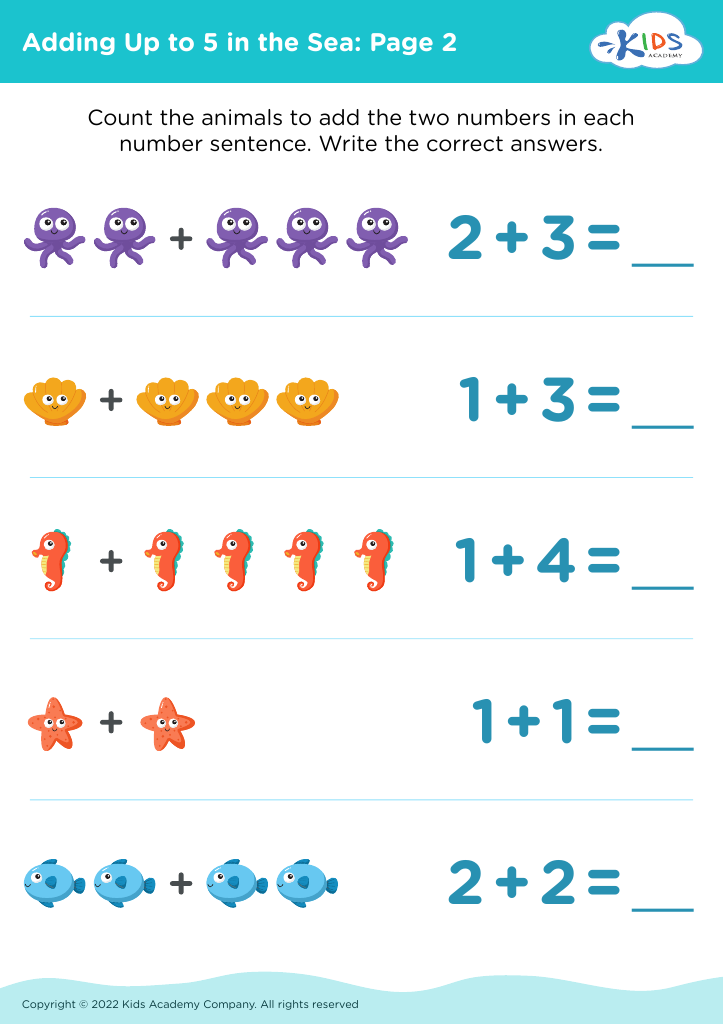
Adding Up to 5 in the Sea: Page 2

Adding Up to 5 in the Sea: Page 2

Adding Up to 5 in the Sea: Page 2
Worksheet
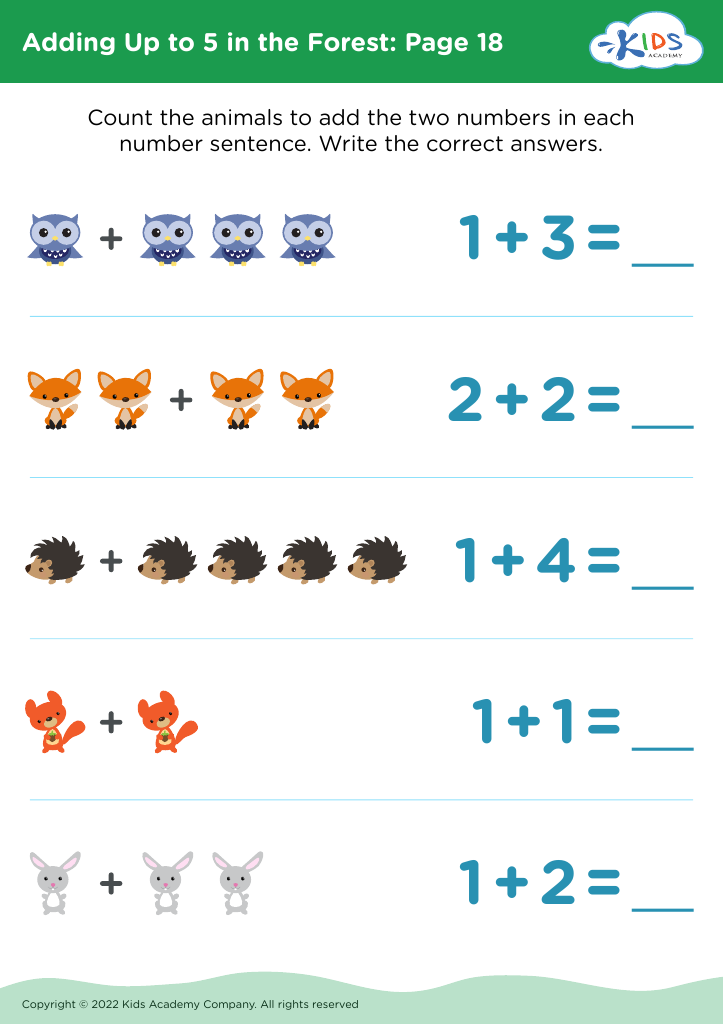
Adding Up to 5 in the Forest: Page 18
Worksheet
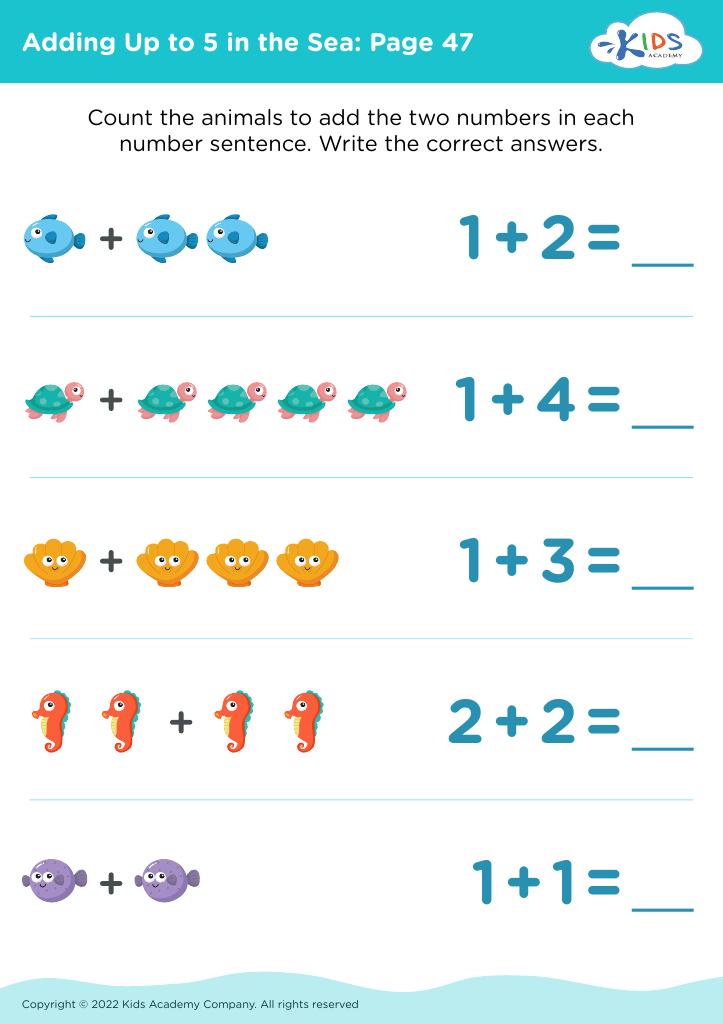
Adding Up to 5 in the Sea: Page 47
Worksheet
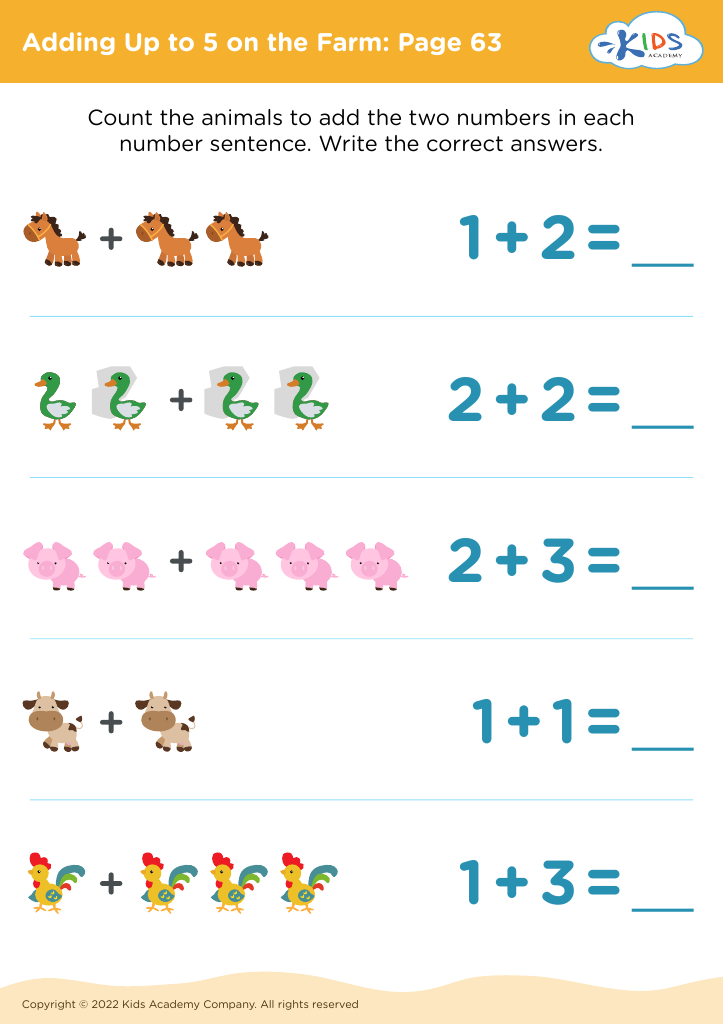
Adding Up to 5 on the Farm: Page 63
Worksheet
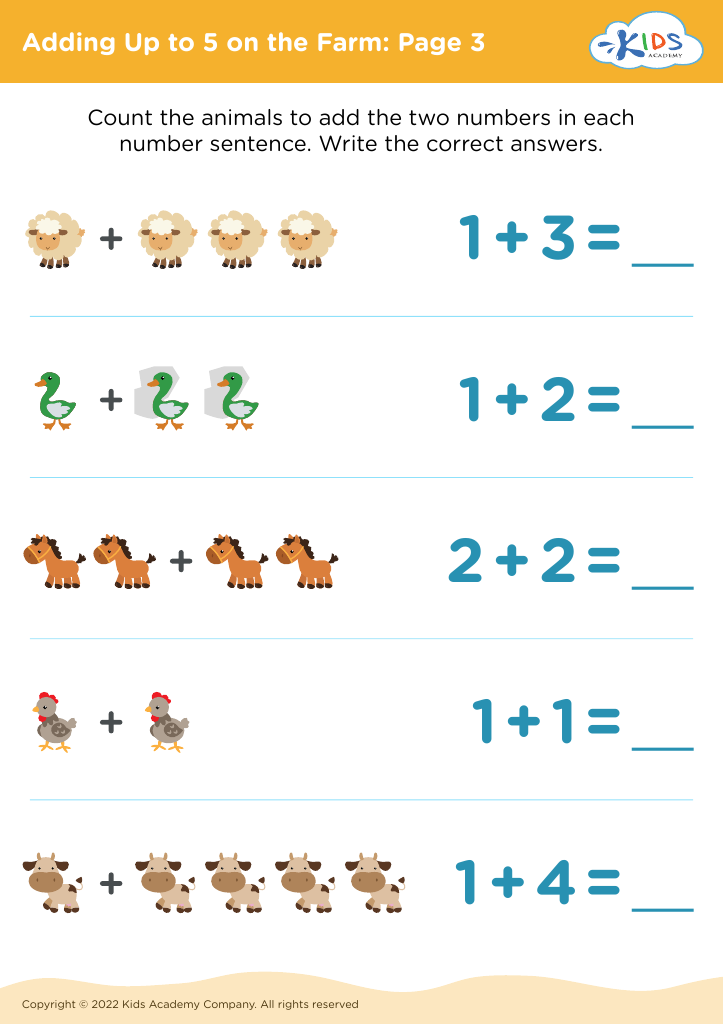
Adding Up to 5 on the Farm: Page 3
Worksheet
Addition at the Zoo Worksheet
Addition at the Zoo Worksheet
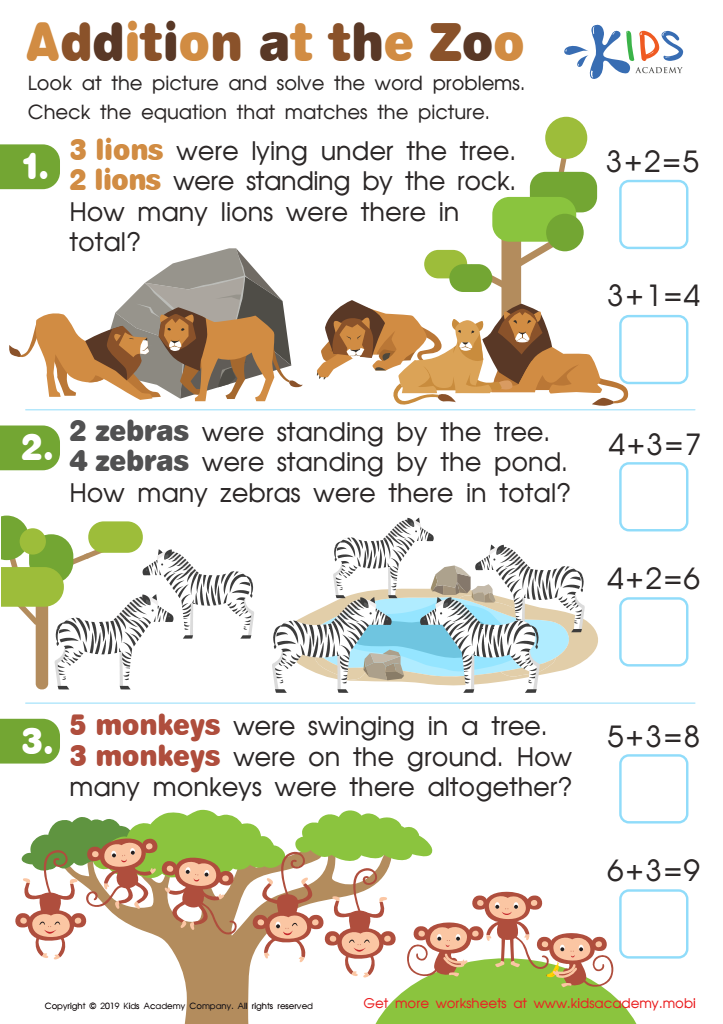
Visit the zoo with your kids and point out all the different animals. Ask them to name their favorites and identify animals on a worksheet. Challenge them to solve word problems related to the pictures. Ask them for the equation that fits the picture and check the answer.
Addition at the Zoo Worksheet
Worksheet
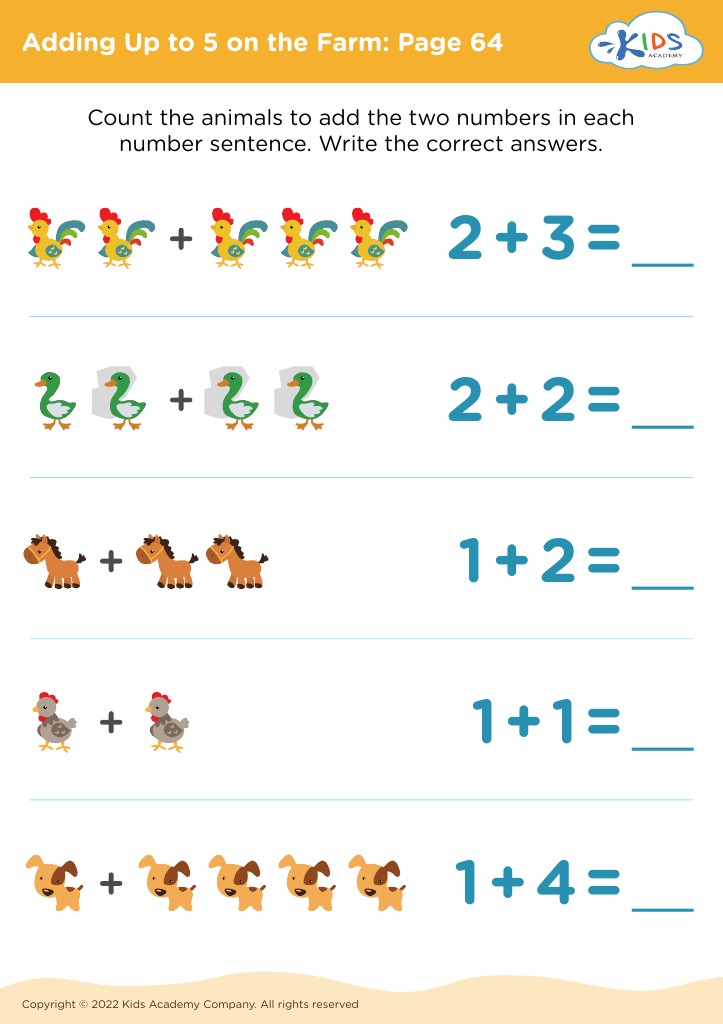
Adding Up to 5 on the Farm: Page 64
Worksheet
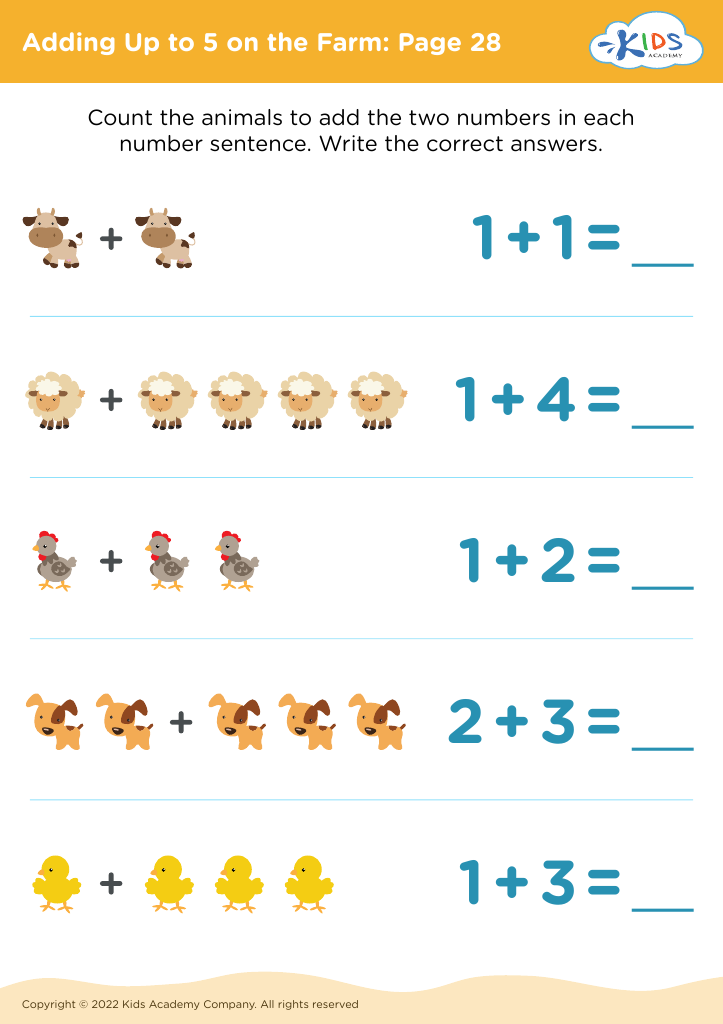
Adding Up to 5 on the Farm: Page 28
Worksheet
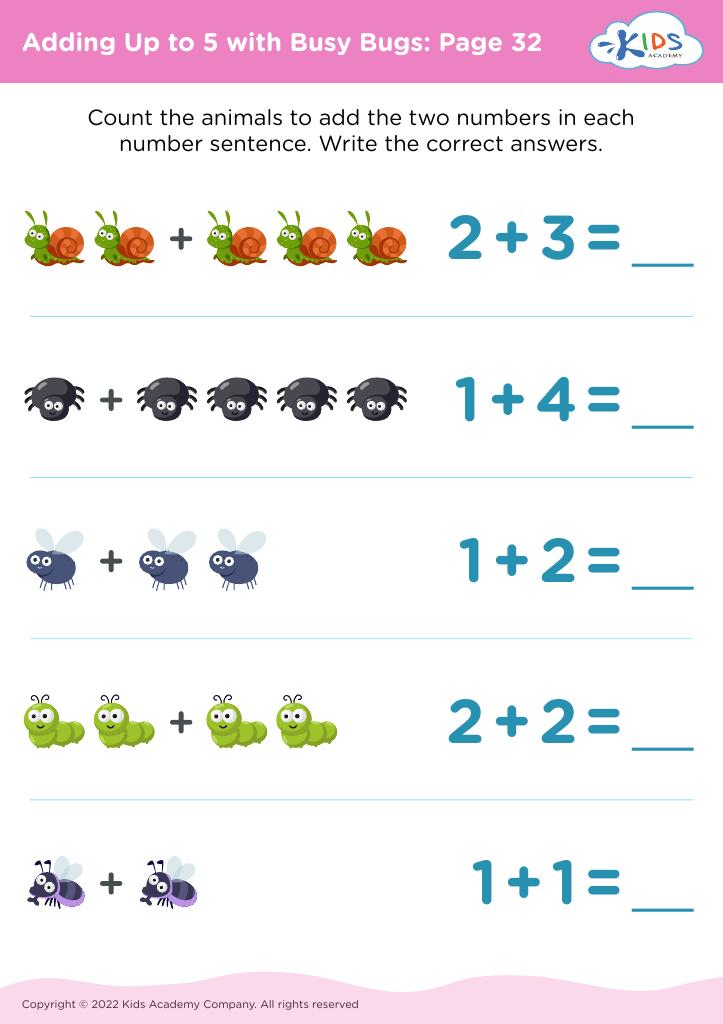
Adding Up to 5 with Busy Bugs: Page 32
Worksheet
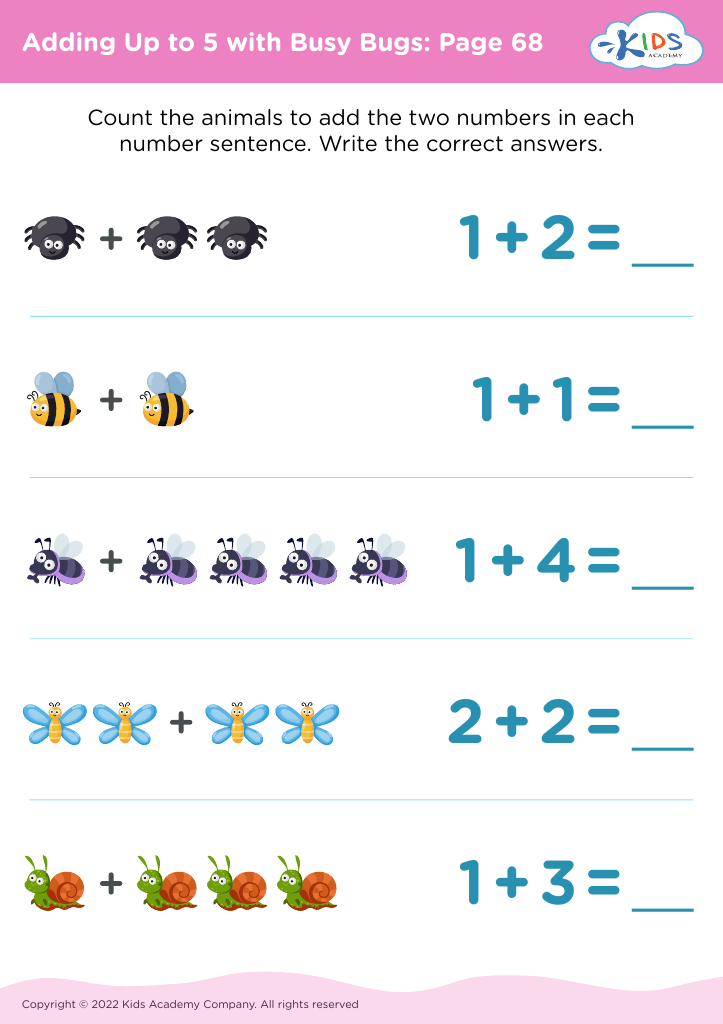
Adding Up to 5 with Busy Bugs: Page 68
Worksheet
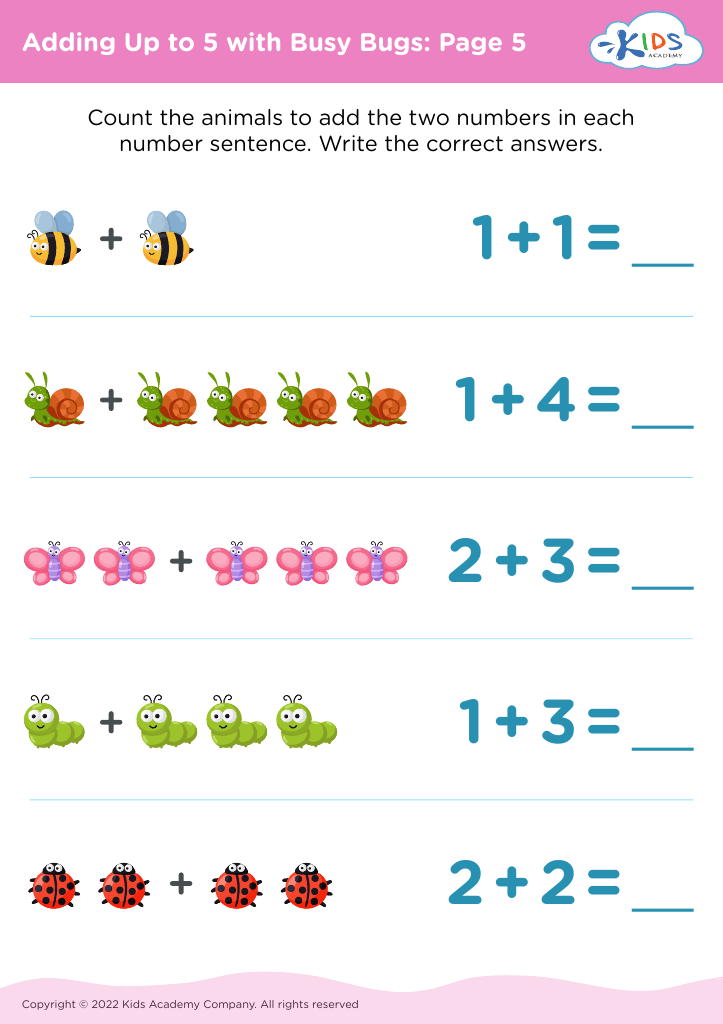
Adding Up to 5 with Busy Bugs: Page 5
Worksheet
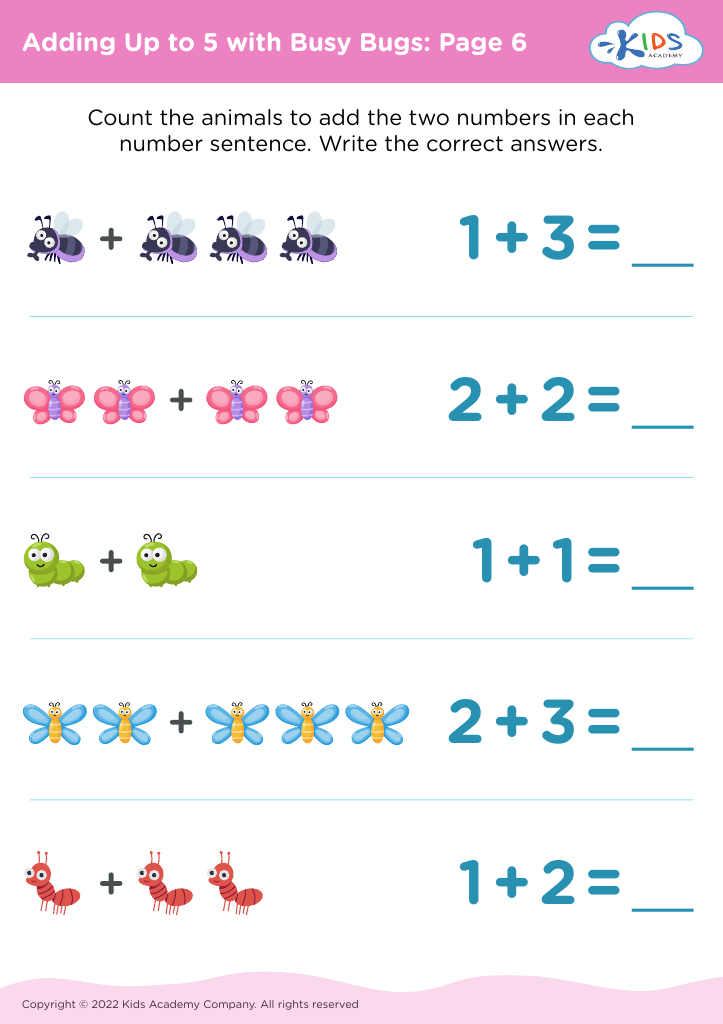
Adding Up to 5 with Busy Bugs: Page 6
Worksheet
Sources of Heat Energy Worksheet

Sources of Heat Energy Worksheet

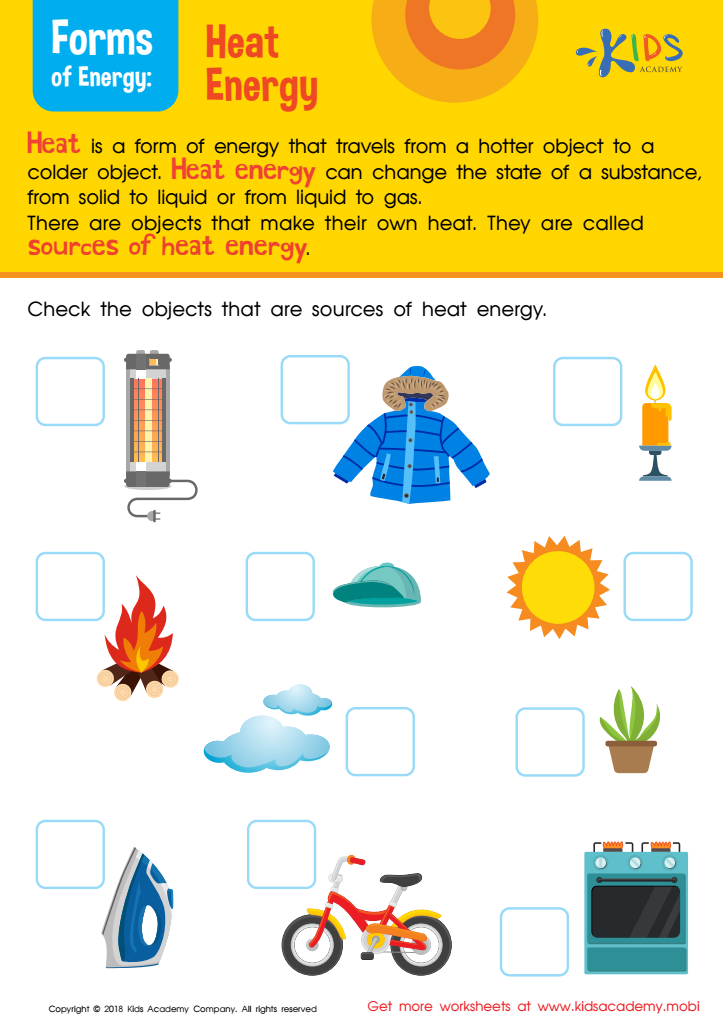
Heat energy is everywhere - from inside our homes to outside in the sun. Natural sources include the sun, geothermal energy, and volcanic activity. This worksheet helps kids identify and learn about these sources and more!
Sources of Heat Energy Worksheet

Worksheet
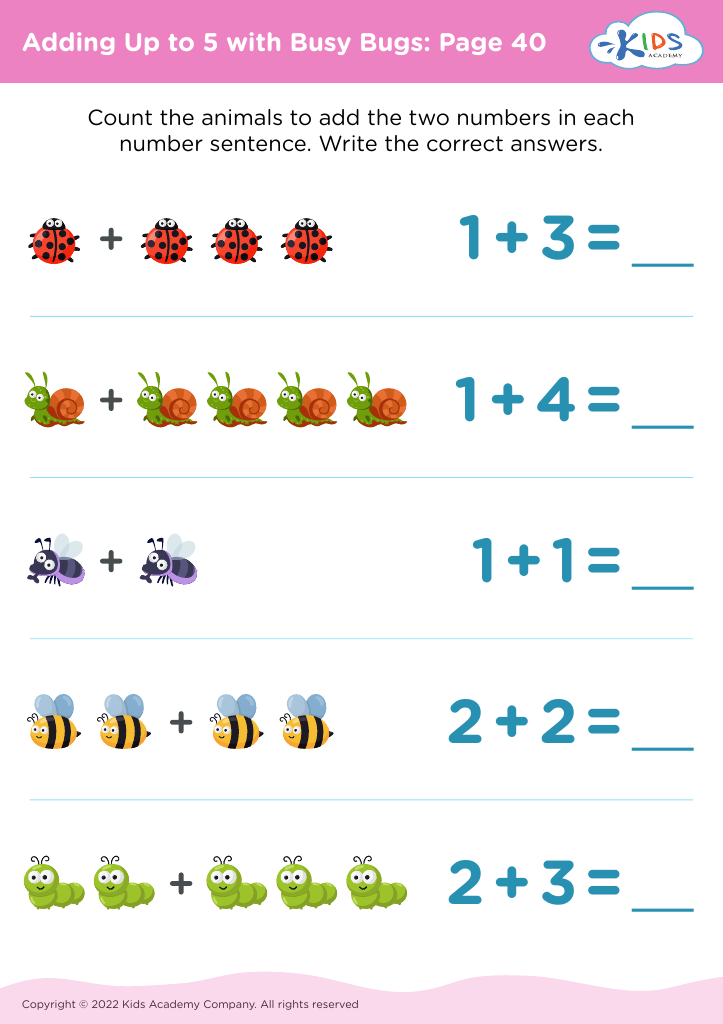
Adding Up to 5 with Busy Bugs: Page 40
Worksheet


Visual learning is crucial for children aged 3-9 as it significantly impacts their cognitive and social development. At this formative stage, children are inherently curious and learn best through engaging experiences that stimulate their senses. Visual learning caters to this by incorporating images, drawings, charts, and videos, making learning more accessible and enjoyable.

For parents and teachers, understanding the benefits of visual learning can enhance teaching strategies and learning outcomes. Visual aids help children retain information better, as they can connect new concepts to familiar images and experiences. This multimodal approach not only fosters comprehension but also nurtures critical thinking and problem-solving skills.

Moreover, visual learning supports diverse learning styles. Some children may struggle with traditional text-based learning, leading to frustration or disengagement. By utilizing visual methods, educators can create inclusive environments that cater to various learners, ensuring that every child can thrive.

Additionally, engaging visual content can spark creativity and encourage collaboration among peers. As children work together on visually stimulating projects, they develop essential social skills and emotional intelligence. In essence, prioritizing visual learning is not just beneficial but vital for empowering young learners to become confident and capable individuals.