
Word Recognition Worksheets for Ages 3-9
77 filtered results
Difficulty Level
Grade
Age
-
From - To
Subject
Activity
Standards
Boost your child’s early reading skills with our engaging Word Recognition Worksheets for ages 3-9! These expertly designed learning tools help young readers identify and understand common sight words quickly. Through enjoyable activities and exercises, kids will increase their vocabulary and confidence in reading. Perfect for preschool through early elementary grades, our worksheets cover essential learning areas including phonics, word families, and context clues. Parents and educators can use these resources to support classroom learning or as extra practice at home. Make reading fun, easy, and accessible with Kids Academy’s Word Recognition Worksheets! Start your child’s reading journey today.
Favorites
With answer key
Interactive
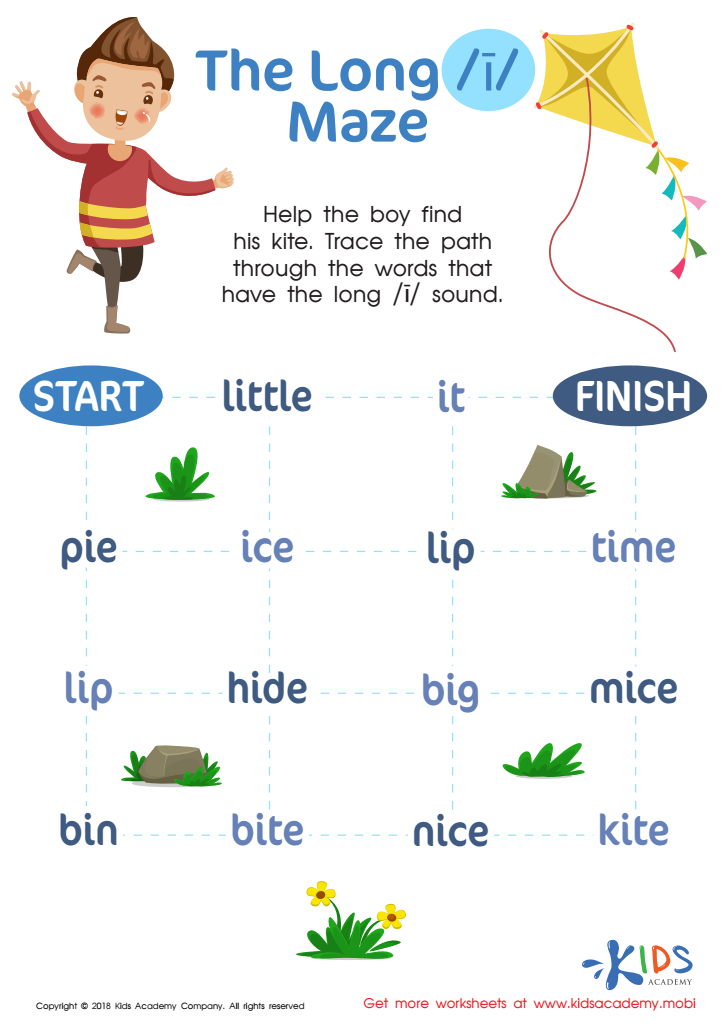
The Long I Maze Reading Worksheet
Help your child learn phonics to help them read. Show them the difference between long and short "i" sounds. Guide them as they use a pencil to trace words with the long "i:" sound in the "Help the Boy in the Picture" worksheet exercise. This will help them find the kite in the picture.
The Long I Maze Reading Worksheet
Worksheet
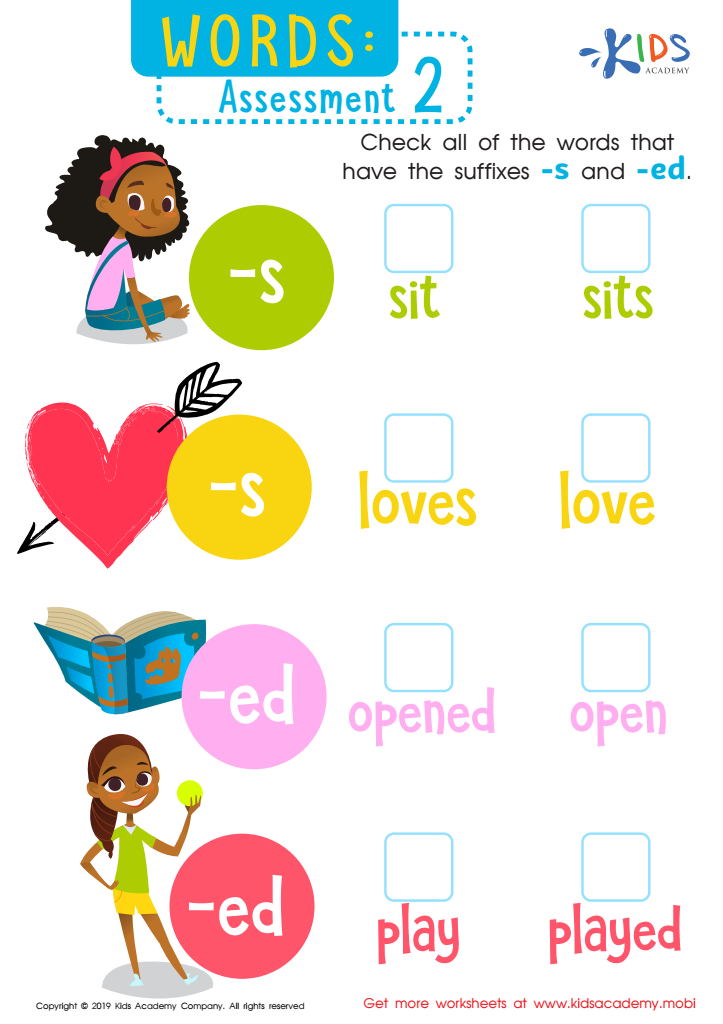
Words: Assessment 2 Worksheet
Test your child’s knowledge of -s and -ed word endings with this fun worksheet! They'll look at images and read the words, then choose the correct suffix to finish each one. Vivid illustrations make this an enjoyable learning experience!
Words: Assessment 2 Worksheet
Worksheet
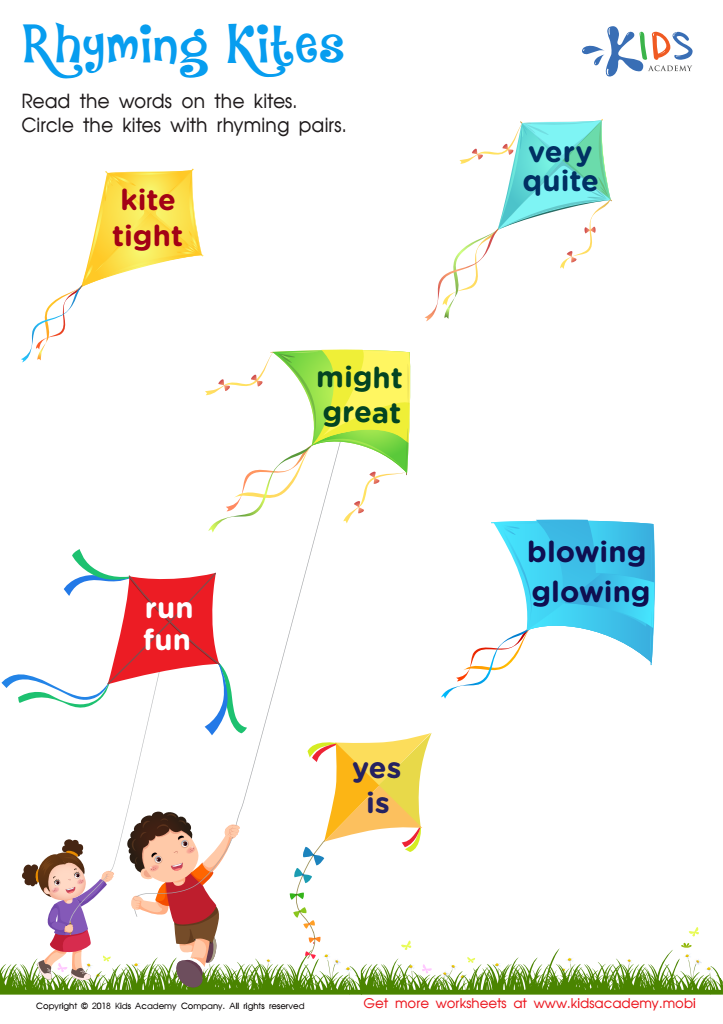
Rhyming Kites Worksheet
On a spring day, fly a kite! Kids Academy has a rhyming worksheet to boost your child's skills. Read the pairs of words aloud. Circle the kites if they rhyme, leave them blank if they don't. Listen carefully and find all the rhyming word pairs to complete this sheet!
Rhyming Kites Worksheet
Worksheet
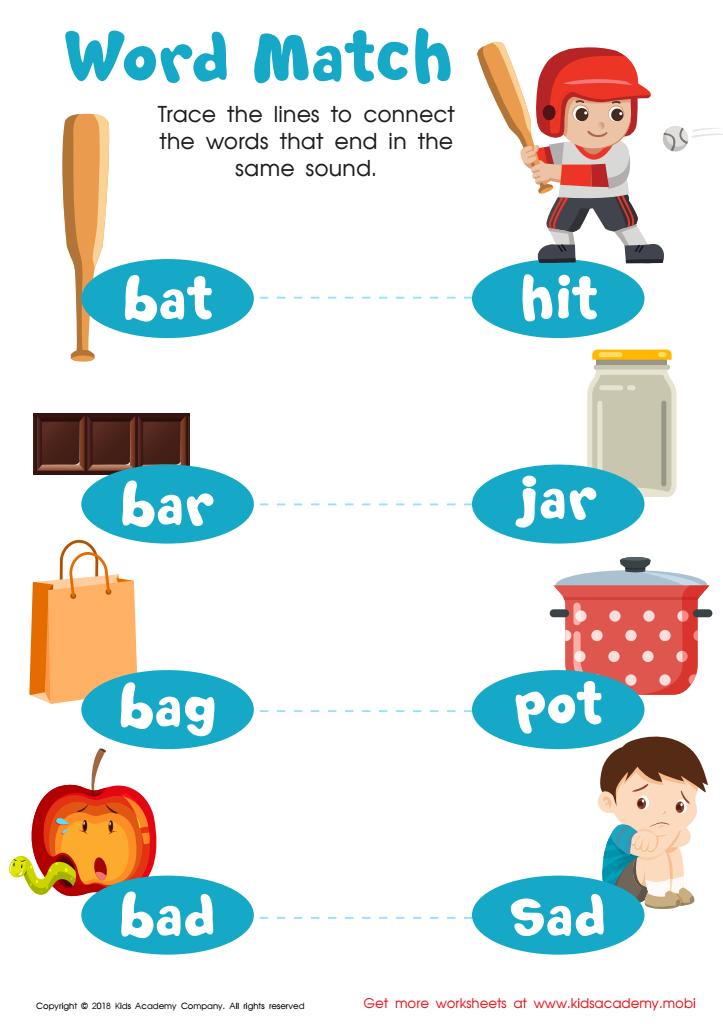
Word Match Reading Worksheet
This printout helps children learn to read fluently by connecting words with the same sound. Colorful pictures aid understanding and context for kindergarten-level students. Tracing lines, they learn to identify the sounds made by letters of the alphabet and deepen their knowledge of phonics.
Word Match Reading Worksheet
Worksheet
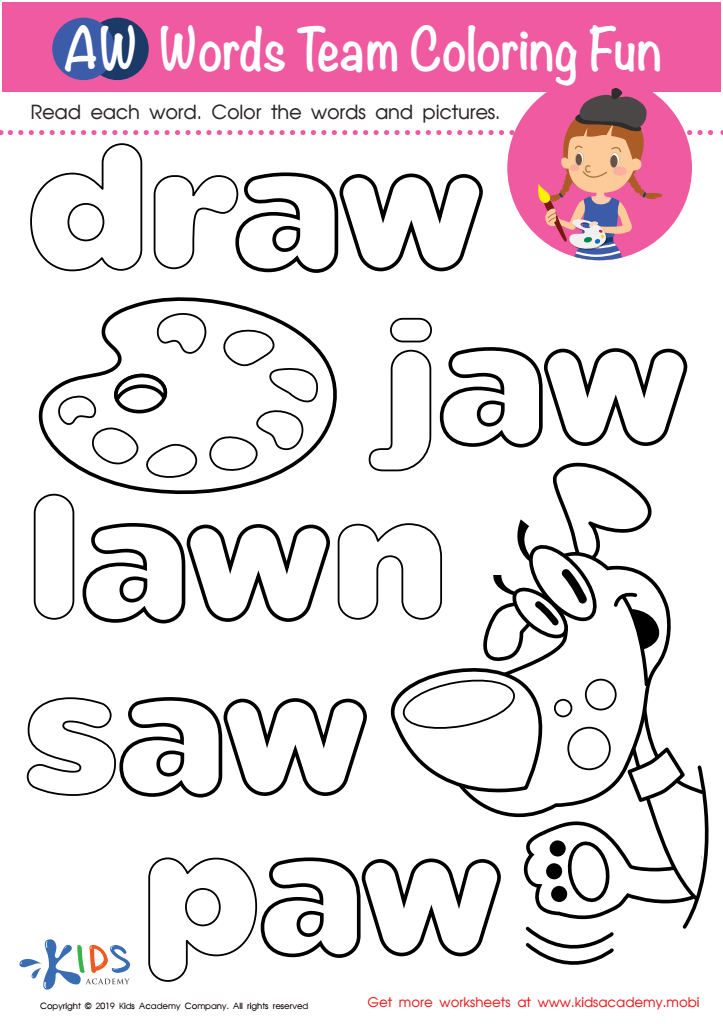
AW Words Team Coloring Fun Worksheet
Coloring words they can read is a blast for little learners! This worksheet offers emerging readers the chance to practice and gain confidence in reading words from the -aw family, while also improving fine-motor and creativity skills. Without knowing it, they'll learn about phonetic teams along the way!
Download (PDF)
 Assign to My Students
Assign to My Students
AW Words Team Coloring Fun Worksheet
Worksheet
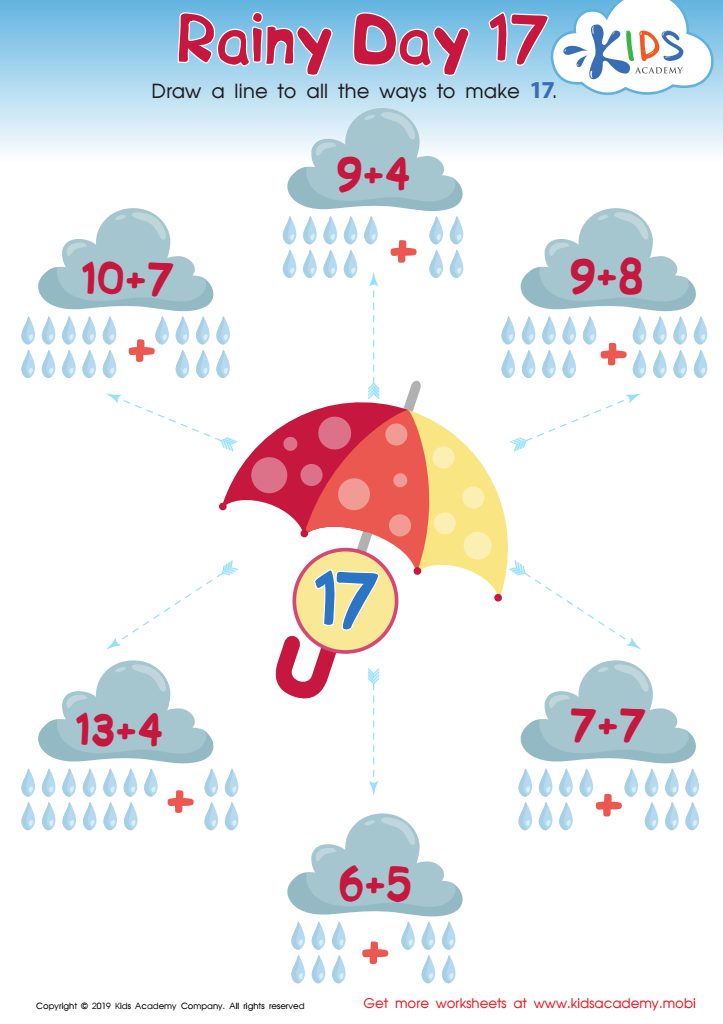
Rainy Day 17 Worksheet
Assist your kids with the 6 equations given. Each cloud displays the sum of two numbers, some of which make 17. Guide them to figure out the total of both numbers when added and draw a line to the umbrella in the center to illustrate the different ways to make 17. This activity will sharpen their addition skills.
Rainy Day 17 Worksheet
Worksheet
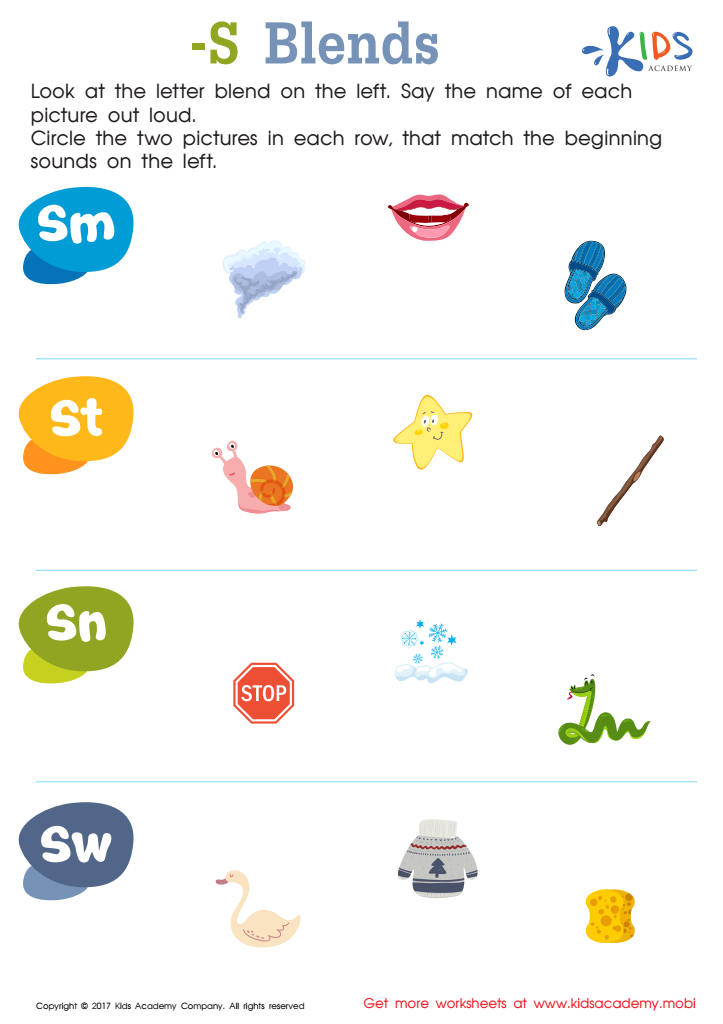
"s" Blends Spelling Printable
Treat your child to fun phonics practice with this worksheet: "s" blend words! They’ll enjoy discovering the different sounds and words that start with "s", from snakes to snails and all in between.
"s" Blends Spelling Printable
Worksheet
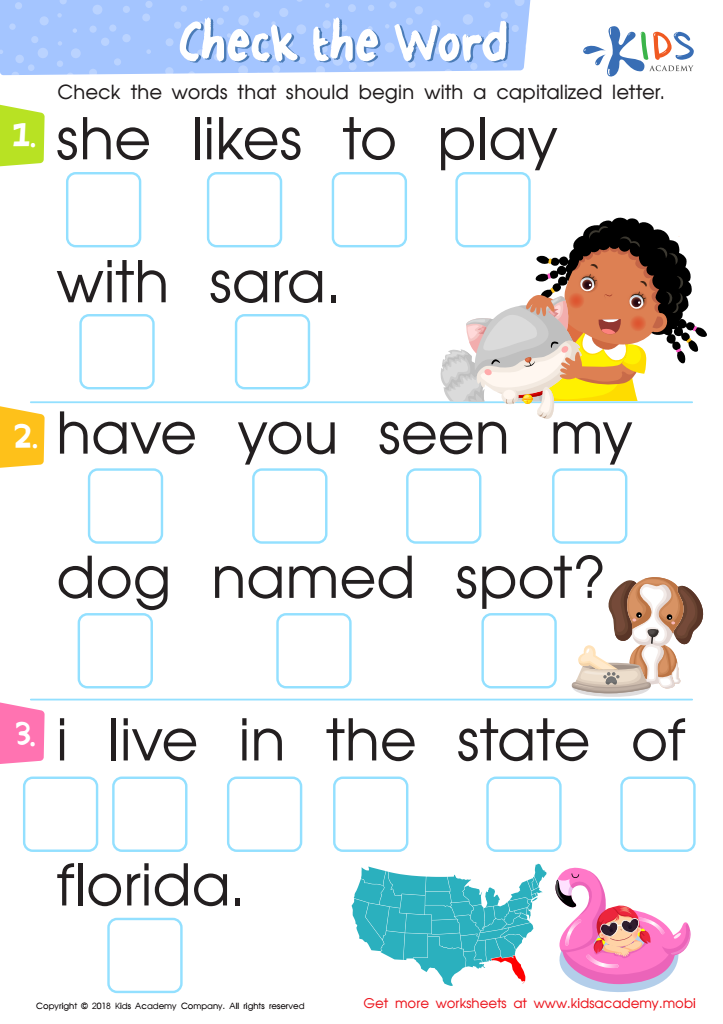
Check the Word Worksheet
Help your kids learn the rules of capitalisation - that the first word of each sentence and nouns must start with a capital letter. Use this worksheet to test their understanding: ask them to identify which words should begin with a capital.
Check the Word Worksheet
Worksheet
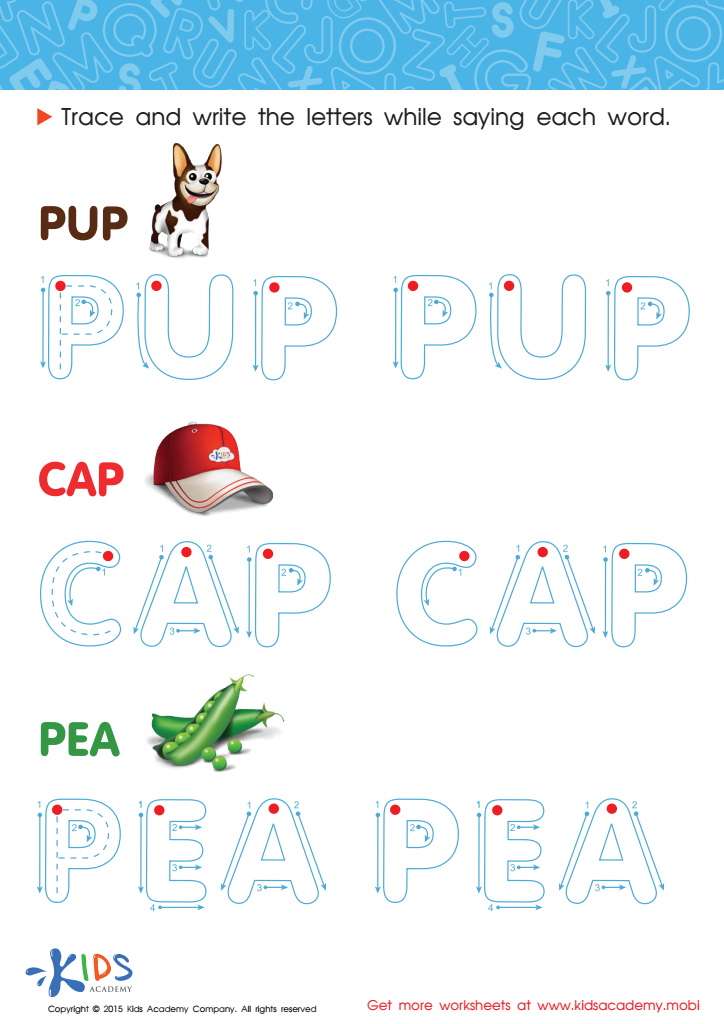
A Pup, a Cap and a Pea Spelling Worksheet
Practice tracing and writing with three new words. Carefully trace each word and try to remember it, then move on to the next one. Head to Kids Academy for more tracing worksheets!
Get your pencils ready! Let's practice tracing and writing three new words on Kids Academy's spelling worksheets. Carefully trace each line and remember the words. Pick more great worksheets on their website to continue practicing. Have fun!
A Pup, a Cap and a Pea Spelling Worksheet
Worksheet
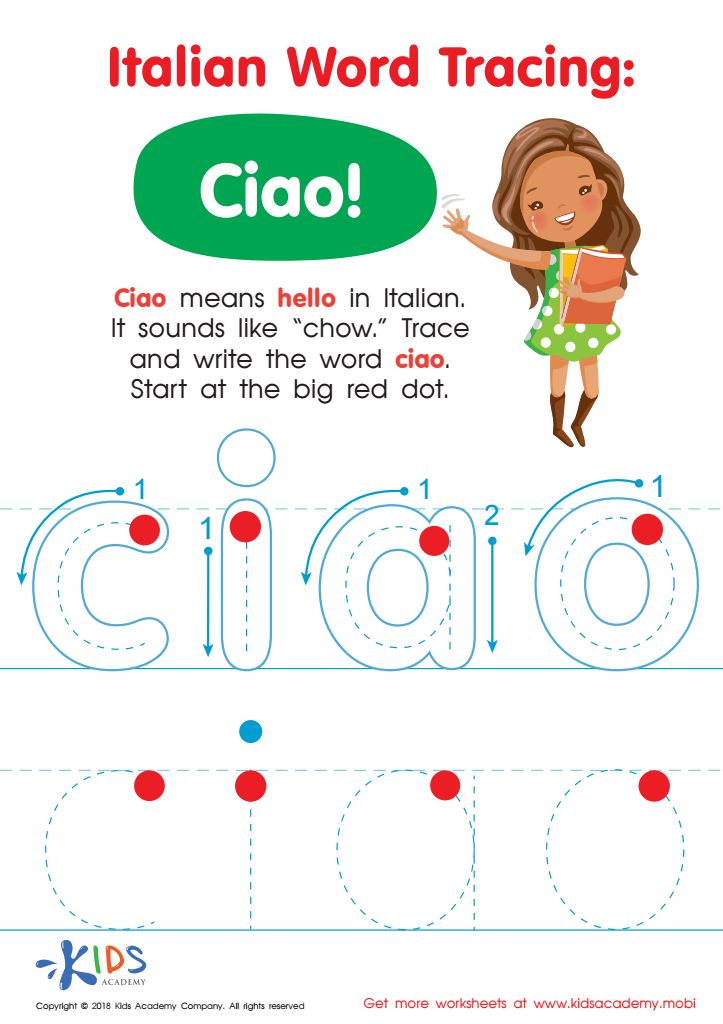
Italian Word Tracing: Ciao Worksheet
Help kids learn to greet people in different languages with this fun worksheet! Featuring the Italian word 'Ciao', it helps kids trace and learn the pronunciation. Plus, it teaches hand-eye coordination and fine-motor skills. Global connectivity can start with this activity!
Italian Word Tracing: Ciao Worksheet
Worksheet
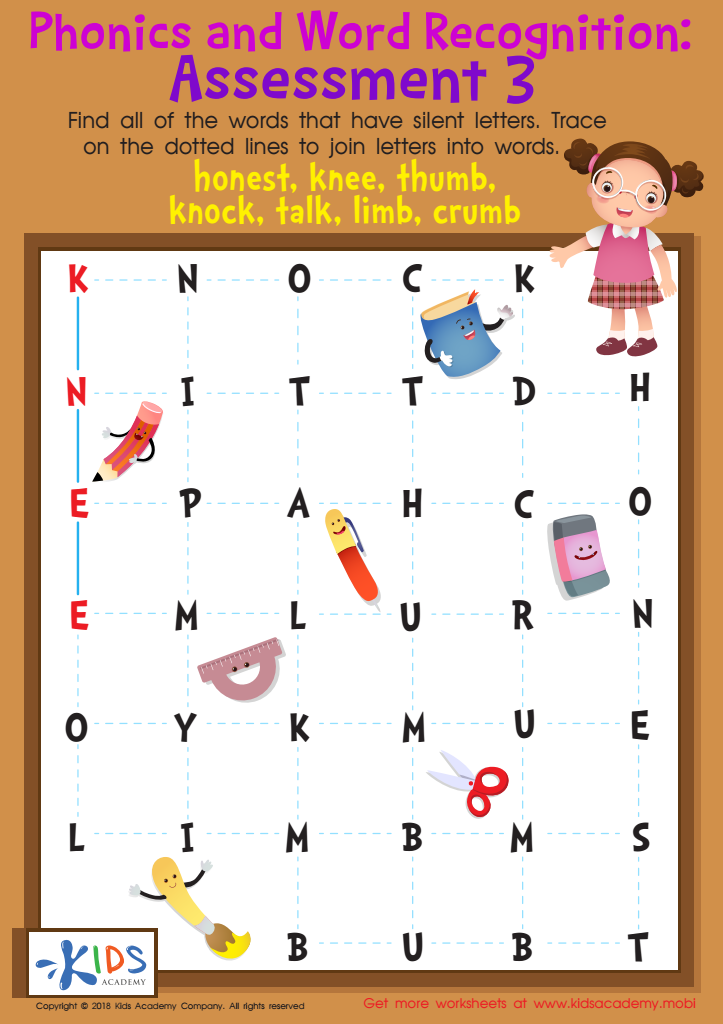
Phonics and Word Recognition: Assessment 3 Worksheet
Silent letters can be tricky for kids learning to read and write. Show them how they work with words like 'knee' and 'dumb'. Then, challenge them to come up with their own. Give them a worksheet with silent letters and trace the lines to join the letters into words.
Phonics and Word Recognition: Assessment 3 Worksheet
Worksheet
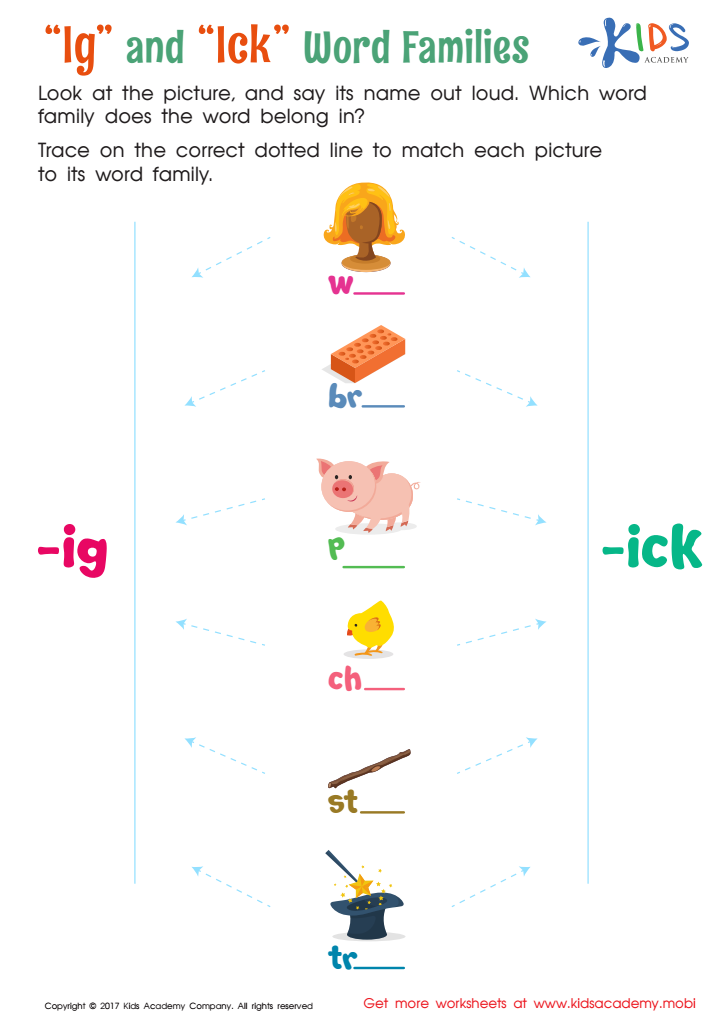
Words Families "ig" and "ick" Spelling Worksheet
Combine fun and learning with this illustrated spelling worksheet featuring "ig" and "ick" words! Ask kids to say the word, then determine which word family it belongs to. Pictures make it easier to learn and remember!
Words Families "ig" and "ick" Spelling Worksheet
Worksheet
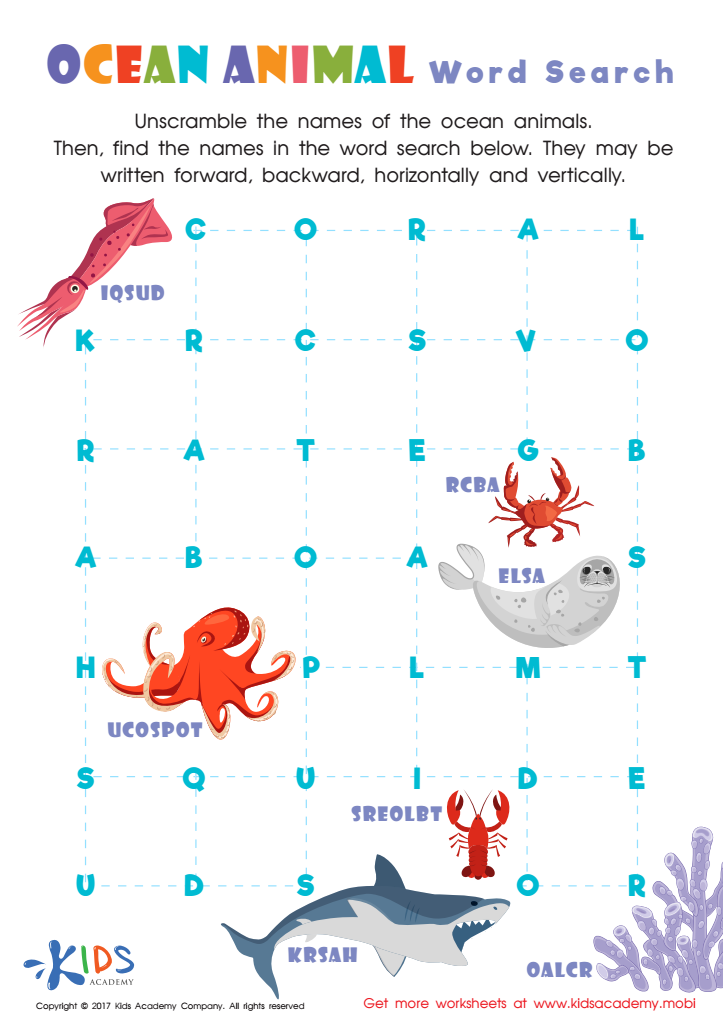
Ocean Animals Word Search Printable
Challenge your child to unscramble the names of ocean animals and find them in the word search. This ocean animals printable is a fun way to teach kids more about these fascinating creatures!
Ocean Animals Word Search Printable
Worksheet
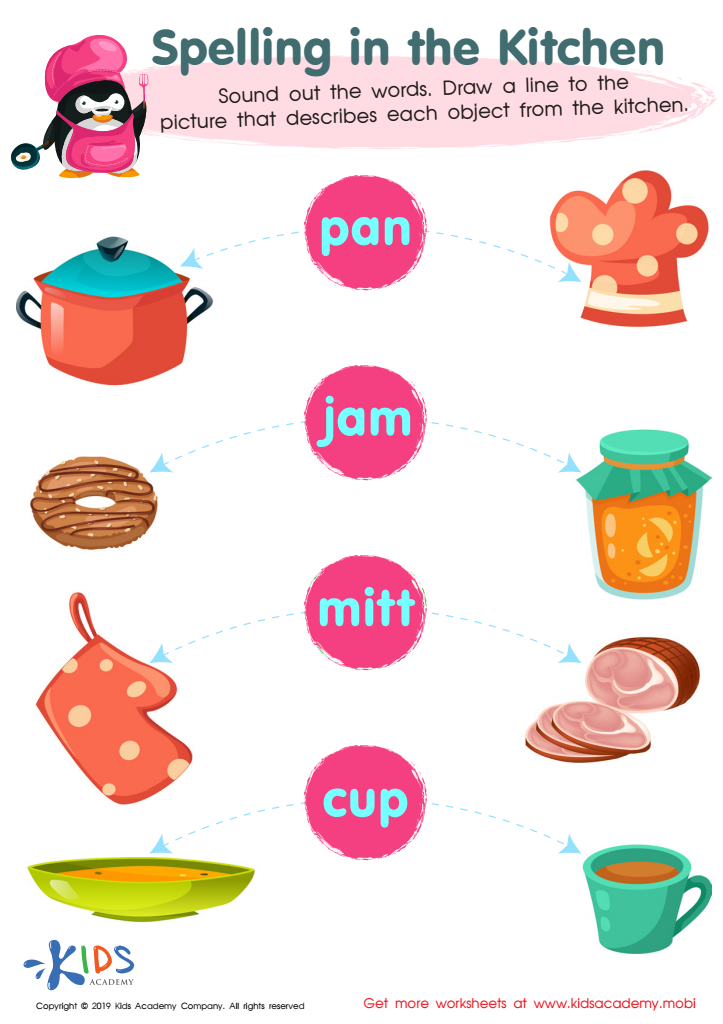
Spelling in the Kitchen Worksheet
Your little ones can learn a lot if they help in the kitchen. Get them to identify and say the name of each item in the picture in this worksheet. Sound out the words for them and help draw a line to the right picture. It's a great way for them to learn about kitchen items!
Spelling in the Kitchen Worksheet
Worksheet
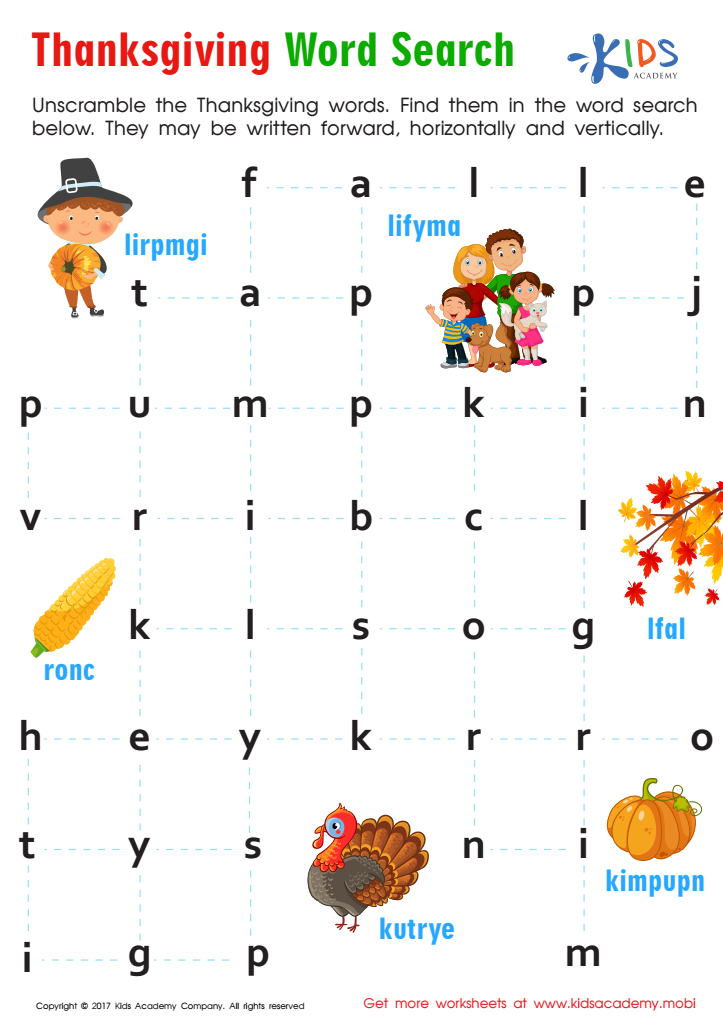
Thanksgiving Word Search Sight Words Worksheet
Unscramble letters to find Thanksgiving-themed sight words with this free worksheet! It's an exciting way to boost your child's reading skills. Download the PDF and enjoy!
Thanksgiving Word Search Sight Words Worksheet
Worksheet
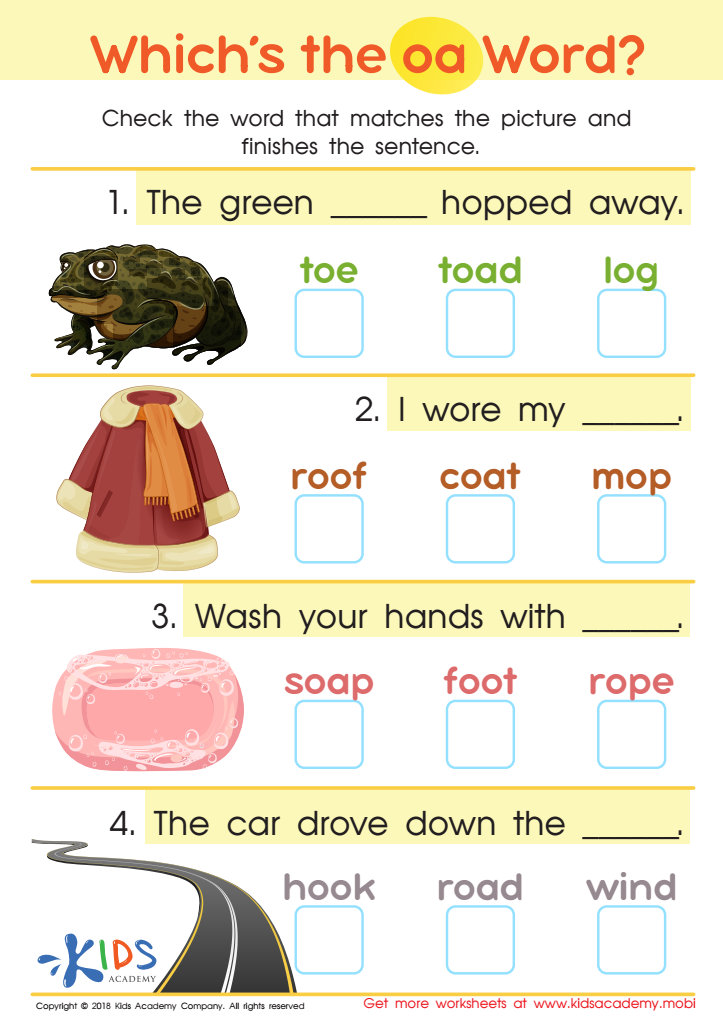
Which's the OA Word? Worksheet
Encourage your kids to complete this fun worksheet. Ask them to identify the animals and objects in the pictures. Read the incomplete sentences aloud, and then find the correct word to finish the sentence. Check their work.
Which's the OA Word? Worksheet
Worksheet
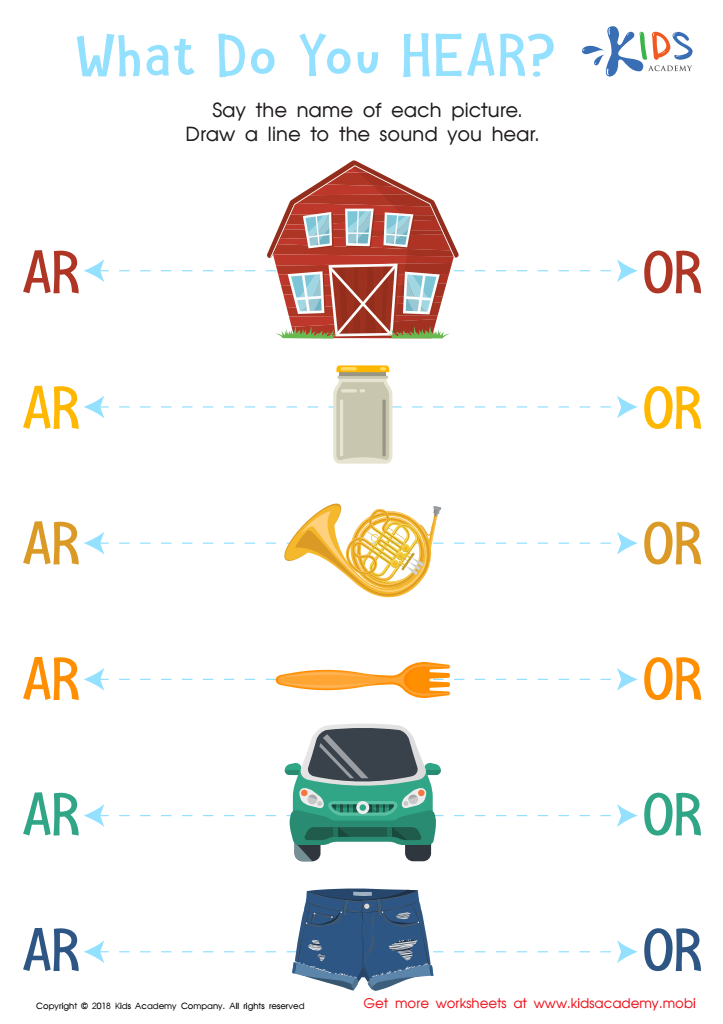
What do you hear Worksheet
Kids can practice distinguishing between r-controlled vowel teams /ar/ and /or/ with this worksheet. The pictures help identify the words and the sounds heard. Tracing a line to the correct sound supports fine motor skills development.
What do you hear Worksheet
Worksheet
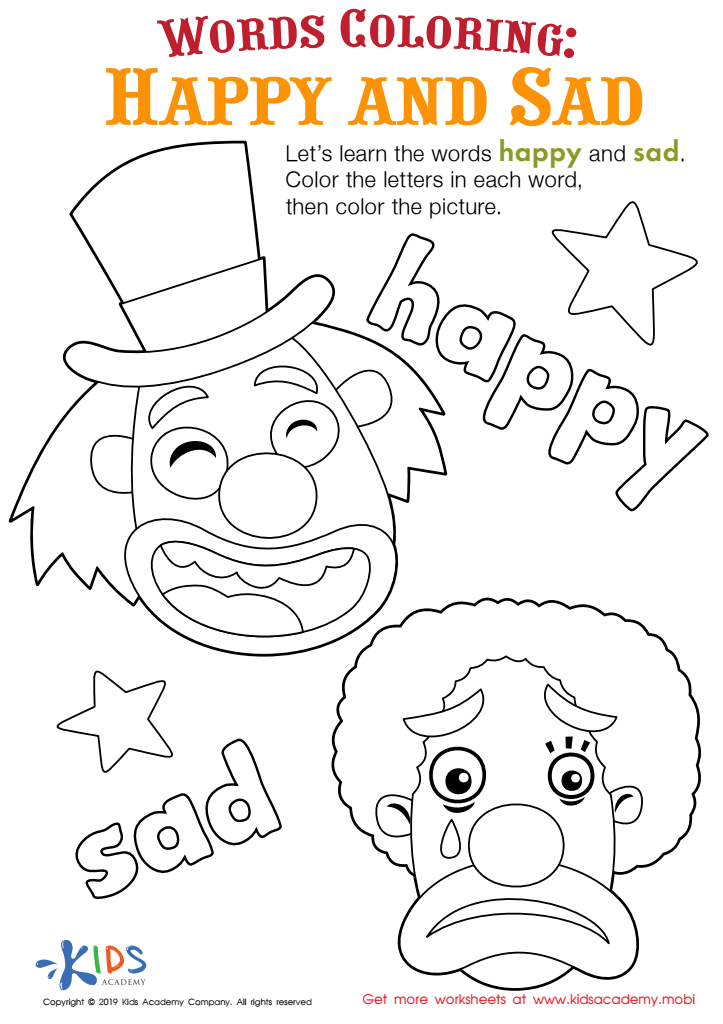
Happy and Sad Words Coloring Worksheet
Help students understand emotions by using this fun worksheet. It features smiling and sad clowns and the words 'happy' and 'sad'. Read the words with your students, then have them color the clowns and the emotion words. This PDF is an effective way to teach kids how to express how they feel.
Download (PDF)
Assign to My Students
Assign to My Students
Happy and Sad Words Coloring Worksheet
Worksheet
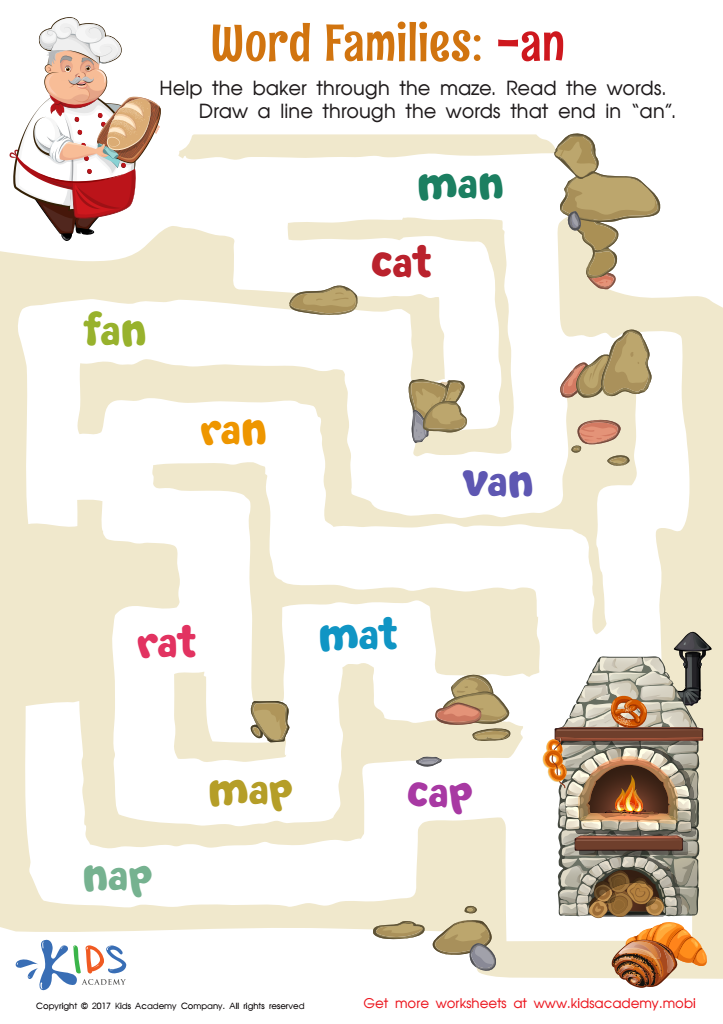
Words Families "an" Spelling Worksheet
Ace spelling with ease! Print this worksheet to explore words that end in "an". Enjoy a fun maze and learn this common ending!
Words Families "an" Spelling Worksheet
Worksheet
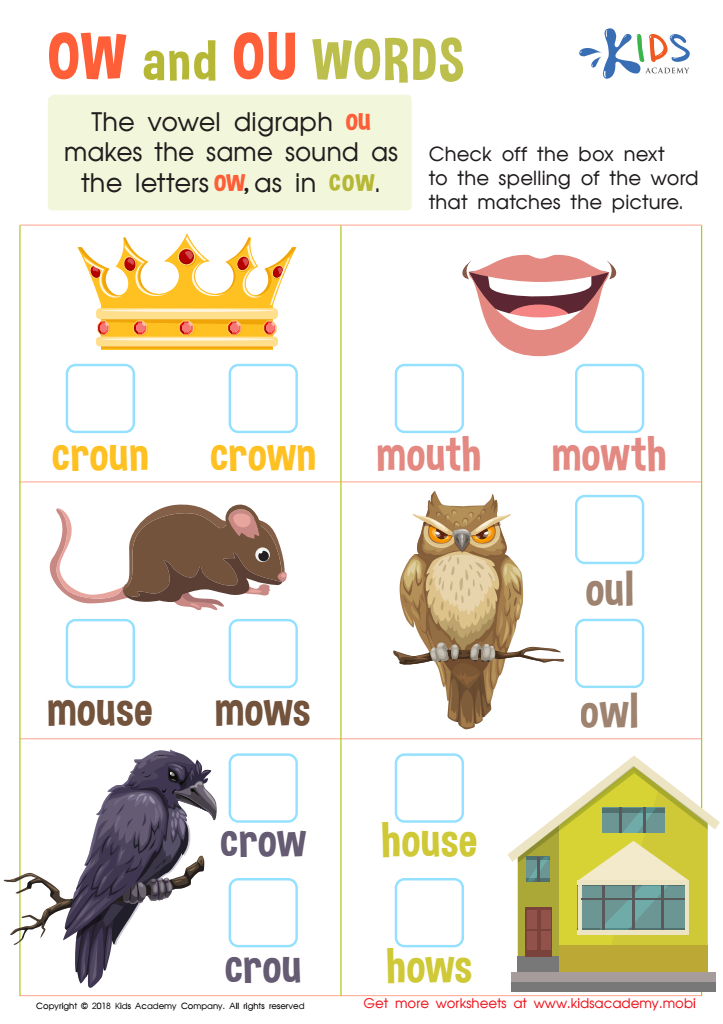
Reading: OW and OU Words Worksheet
Help your kids learn phonetics! Explain the different sounds and long/short variations. Emphasize that some vowel sounds are the same, e.g. ou = ow in cow. For practice, have them read aloud the words in the worksheet and check the box next to the spelling that matches the picture.
Reading: OW and OU Words Worksheet
Worksheet
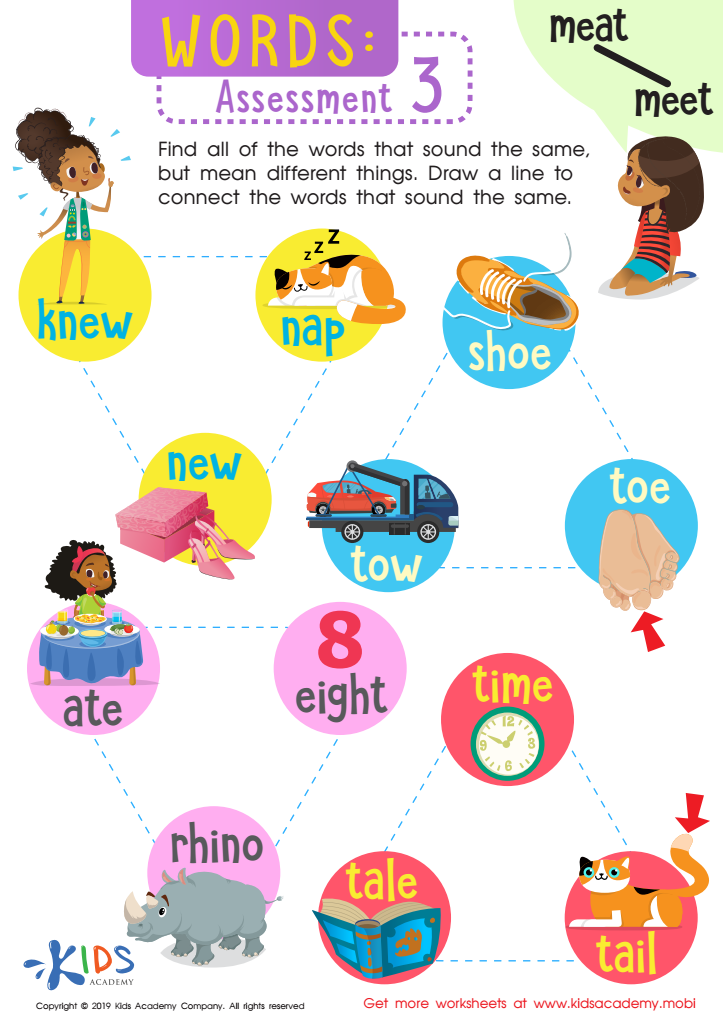
Words: Asessment 3 Worksheet
Assess your child's knowledge of homonyms with words like "toe" and "tow". This fun worksheet helps find words that sound the same but have different meanings and spellings. Use it to introduce homographs--words spelled the same with different meanings!
Words: Asessment 3 Worksheet
Worksheet
Join Kids Academy for Free
Who is primarily going to use this learning content?







Word recognition is crucial for children ages 3-9 because it lays the foundation for reading proficiency, which is essential for learning across all subjects. At this formative stage, children are developing the cognitive skills required to decode spoken and written language, a key literacy milestone. Children who struggle with word recognition often face difficulties in comprehension, limiting their ability to absorb new information. Recognizing words quickly and accurately helps them read more fluently, making it easier to understand and engage with the text.
For parents and teachers, fostering word recognition helps identify potential reading difficulties early, allowing for timely intervention. This can prevent long-term academic challenges and support children in developing a love for reading. Through activities such as phonics games, flashcards, and read-aloud sessions, caregivers can make learning to read enjoyable, while also providing the repetition and practice necessary for mastery.
Moreover, strong word recognition skills correlate with better communication abilities and higher confidence levels. Children who can read effortlessly tend to participate more actively in class and show a greater interest in learning. Thus, emphasizing word recognition not only boosts academic performance but also supports overall cognitive and emotional development, setting the stage for lifelong learning success.








