Critical Thinking 2D Shapes Worksheets for Ages 3-9
5 filtered results
-
From - To
Enhance your child's critical thinking with our engaging 2D Shapes Worksheets designed for ages 3-9. These fun and educational activities promote logical reasoning and problem-solving skills as children explore and identify various 2D shapes. Our expertly crafted worksheets encourage kids to analyze shapes, understand spatial relationships, and develop mathematical thinking in an interactive way. Ideal for both classroom and home use, these printable resources provide a solid foundation in geometry while nurturing a love for learning. Perfect for young learners seeking to boost their cognitive development through enjoyable and challenging exercises. Download now to start your child’s journey in critical thinking!
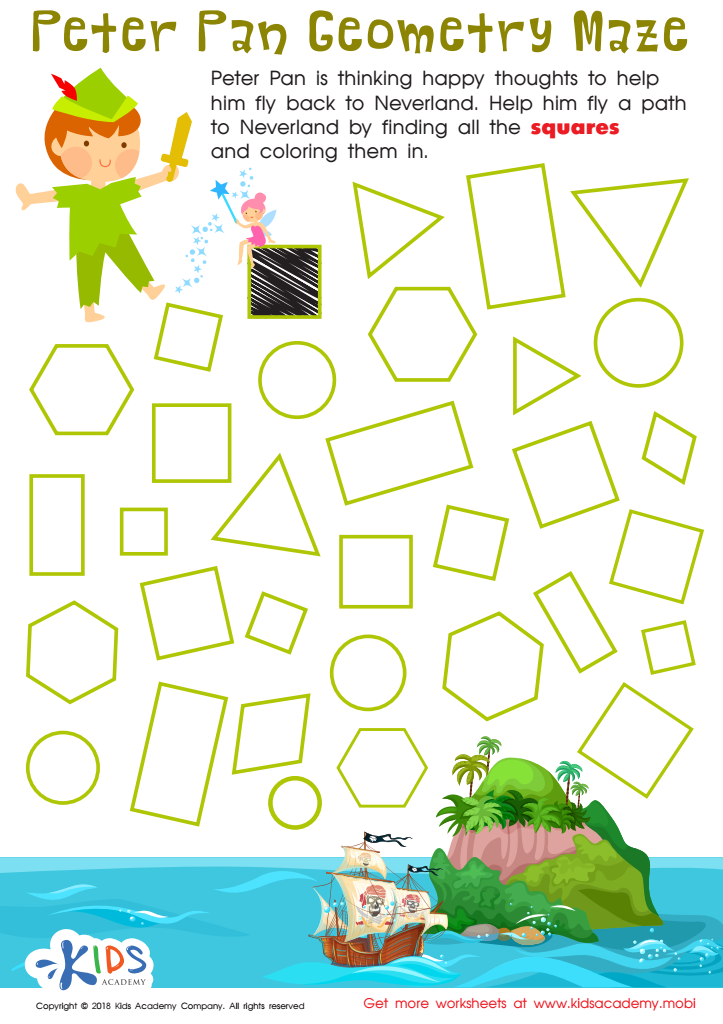
Peter Pan Worksheet
 Assign to My Students


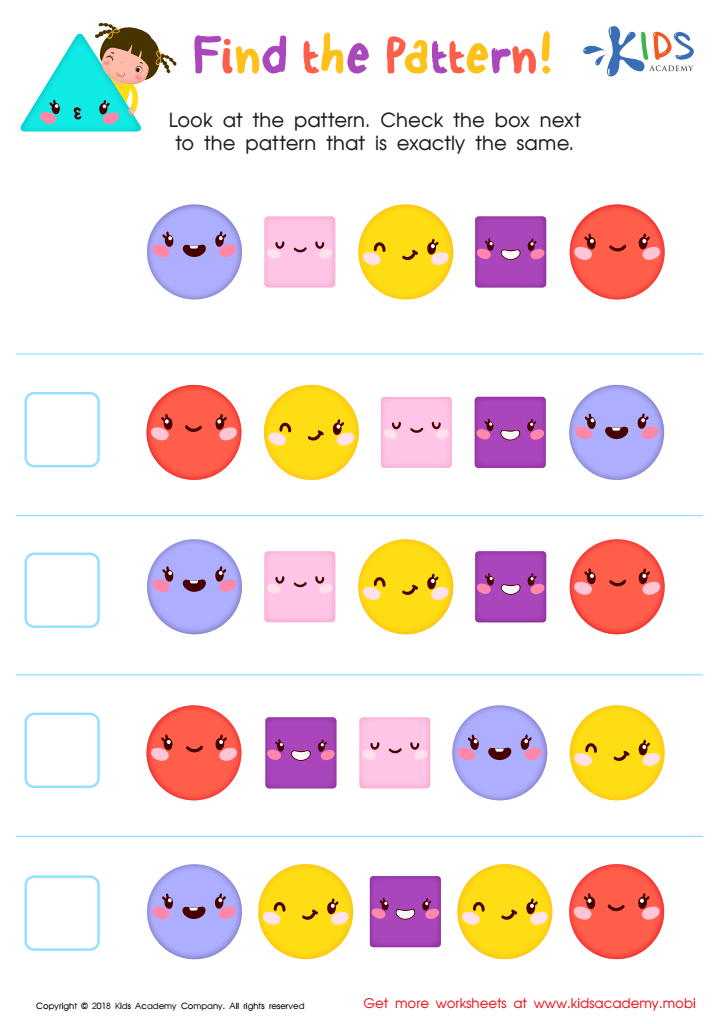
Find the Pattern Worksheet
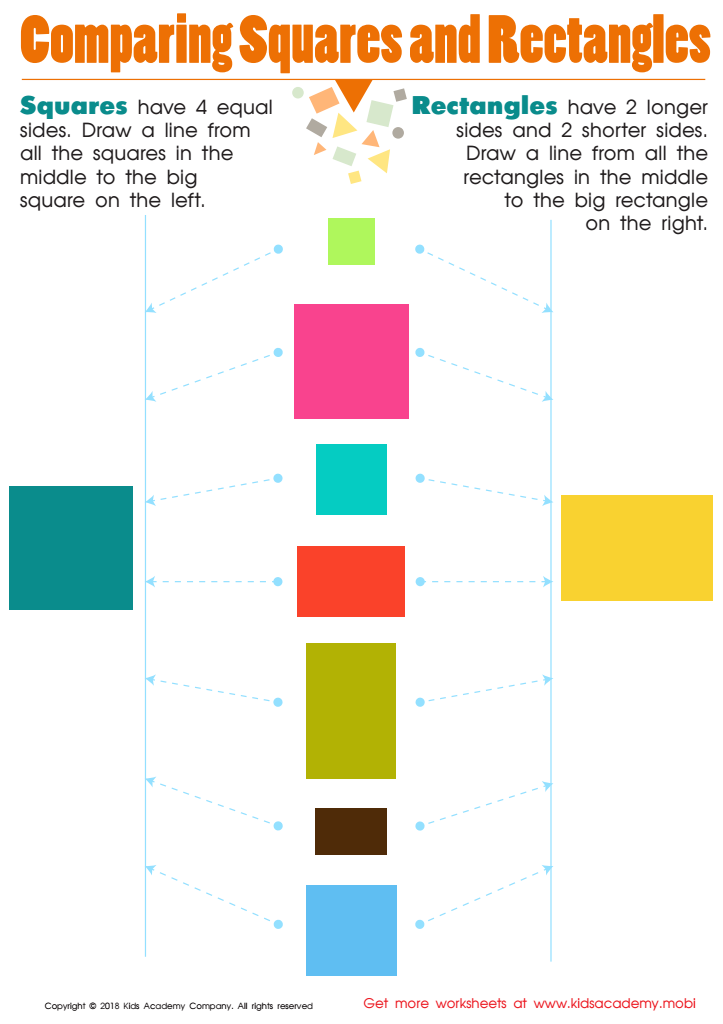
Comparing Squares Rectangles Worksheet
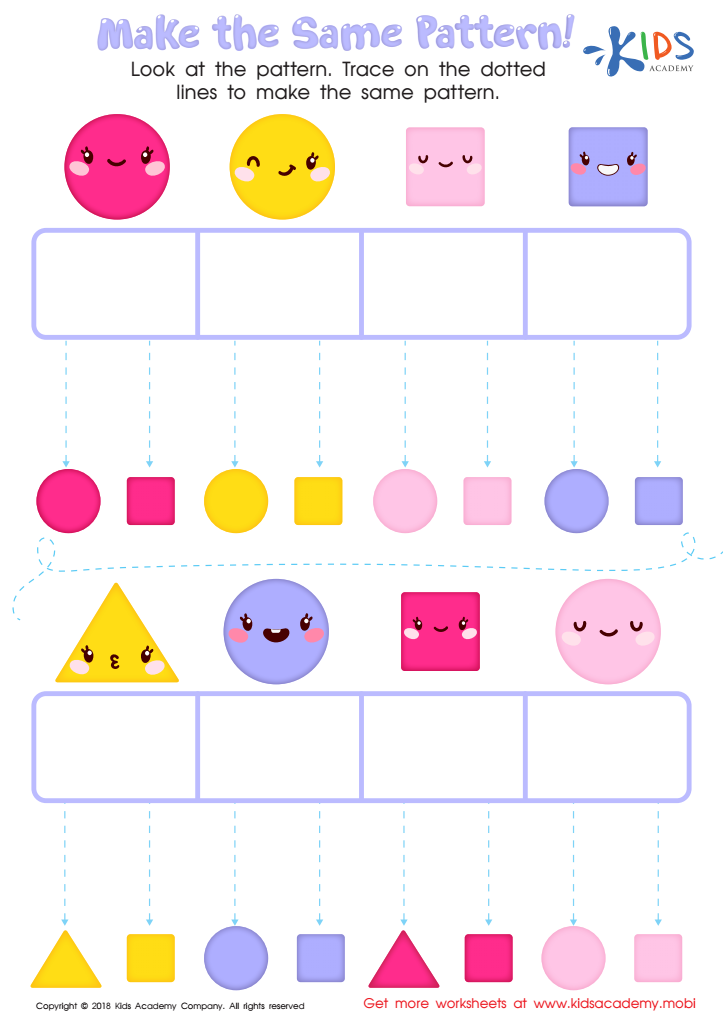
Make the Same Pattern Worksheet
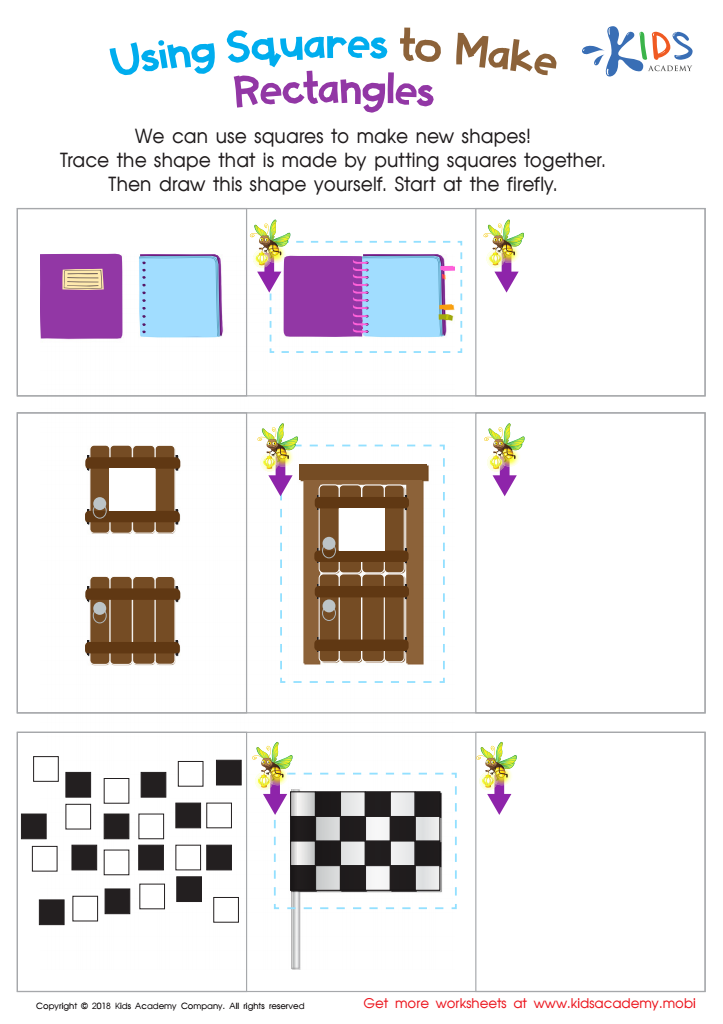
Using Squares to Make Rectangles Worksheet








Understanding 2D shapes forms the foundation for critical thinking skills crucial in early childhood development. At ages 3-9, children are at a stage where cognitive abilities rapidly evolve, making it essential for parents and teachers to emphasize activities involving 2D shapes. Recognizing and manipulating shapes like squares, triangles, and circles are more than just about geometry; it hones a child's ability to discriminate forms, enhancing visual-spatial skills required for reading and writing.
Moreover, engaging with 2D shapes fosters problem-solving and logical reasoning. When children identify, compare, and contrast shapes, they practice determining attributes, making classifications, and understanding relationships. This encourages analytical thinking and supports competencies necessary across all learning disciplines, including science and mathematics.
For instance, understanding shapes lays the groundwork for grasping more complex math concepts, such as symmetry, fractions, and algebraic reasoning. It also stimulates creativity as children explore artistic expressions through drawing and composing various shapes.
Additionally, activities with shapes nurture a growth mindset. When children solve shape puzzles and build patterns, they experience perseverance and the rewarding sensation of reaching solutions. Therefore, incorporating critical thinking involving 2D shapes in early education aids in holistic development, laying a crucial pathway for lifelong academic and personal success.