Subtraction practice Addition and Subtraction Word Problems Worksheets for Ages 3-9
19 filtered results
-
From - To
Welcome to our comprehensive Subtraction Practice and Word Problems Worksheets designed for children ages 3-9! These engaging worksheets focus on reinforcing subtraction skills through fun and relatable word problems. Ideal for home or classroom learning, our carefully crafted activities help young learners develop critical thinking and problem-solving abilities while enhancing their mathematical comprehension. With various difficulty levels, our resources accommodate different learning styles and capabilities, ensuring every child can succeed. Explore our colorful and interactive worksheets to make subtraction an enjoyable experience that fosters a love for math and builds basic arithmetic foundations! Start your journey to math mastery today!
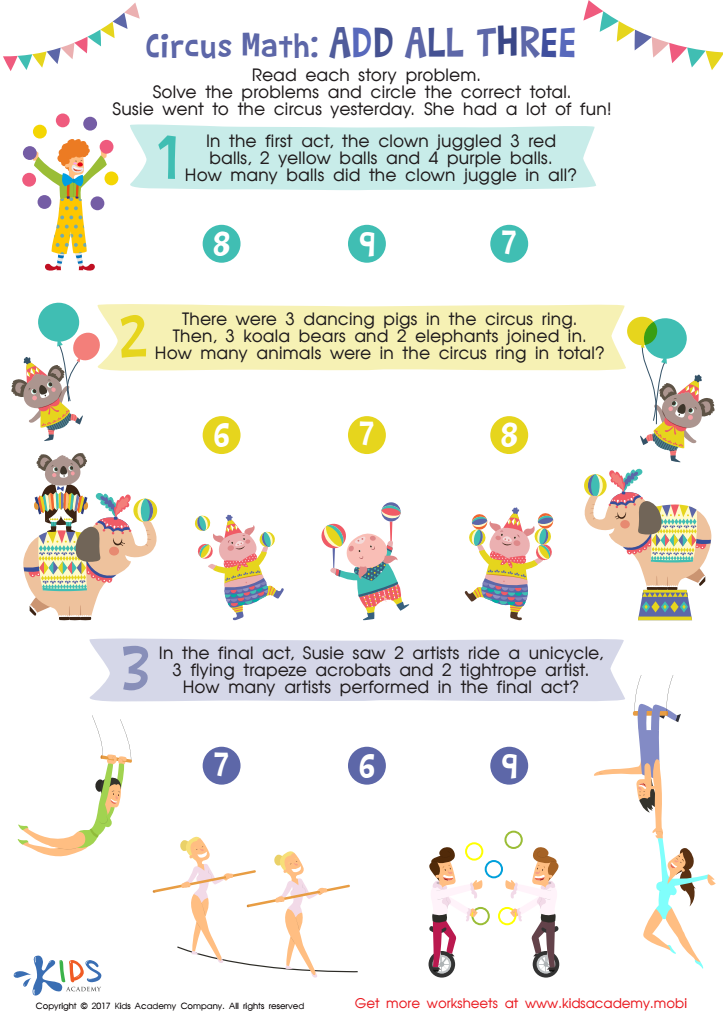
Circus Math Printable
 Assign to My Students
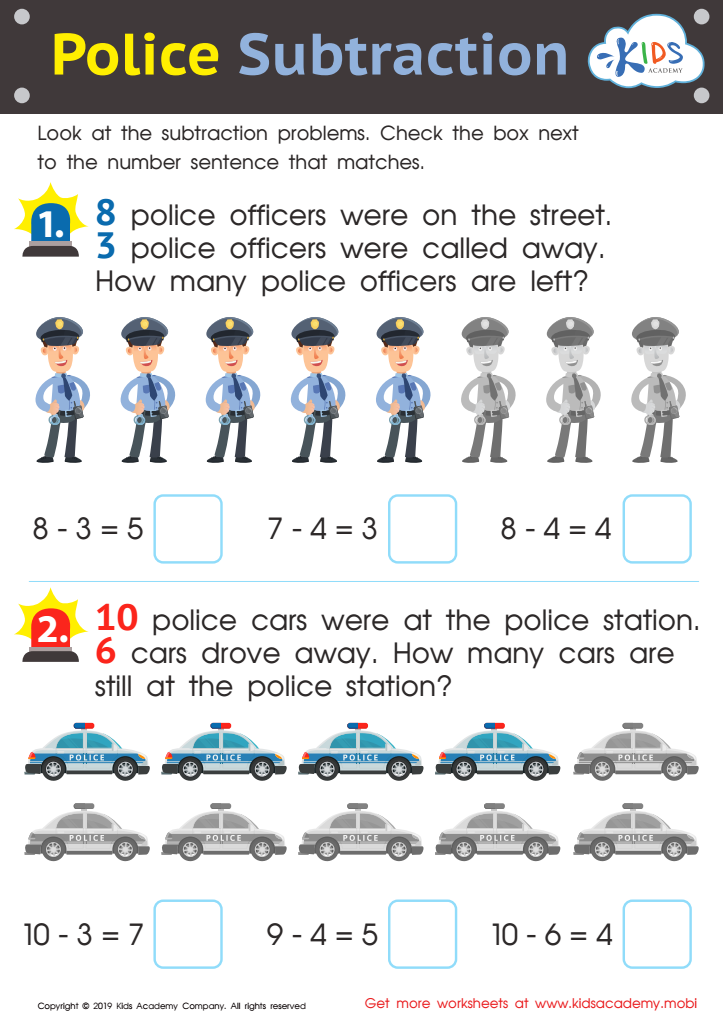
Police Subtraction Worksheet
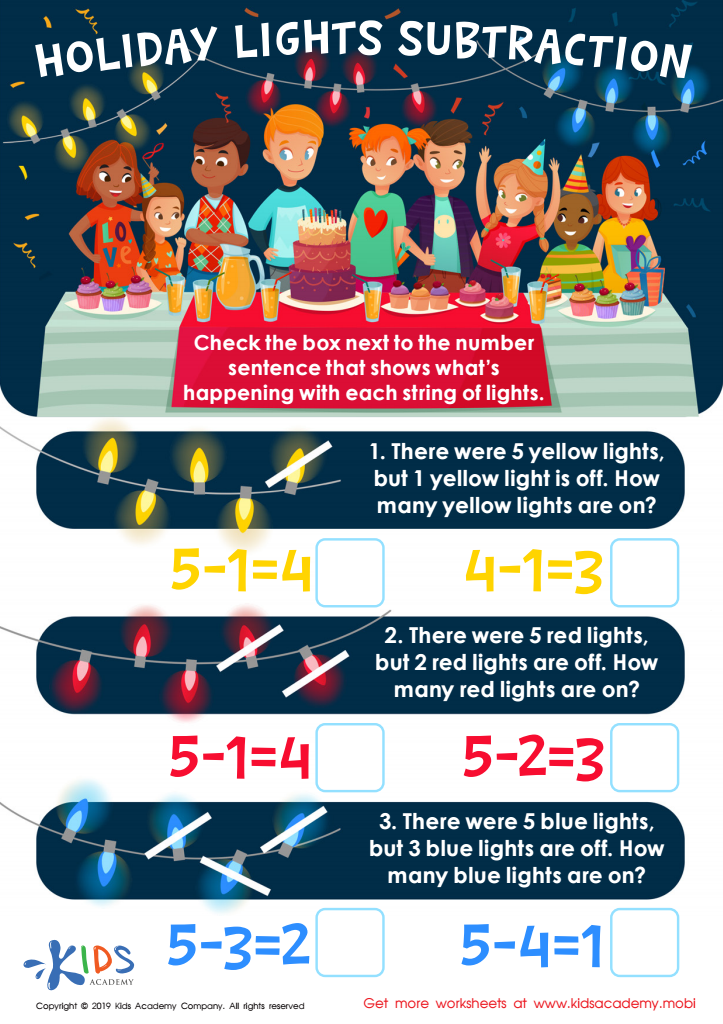
Holiday Lights Subtraction Worksheet
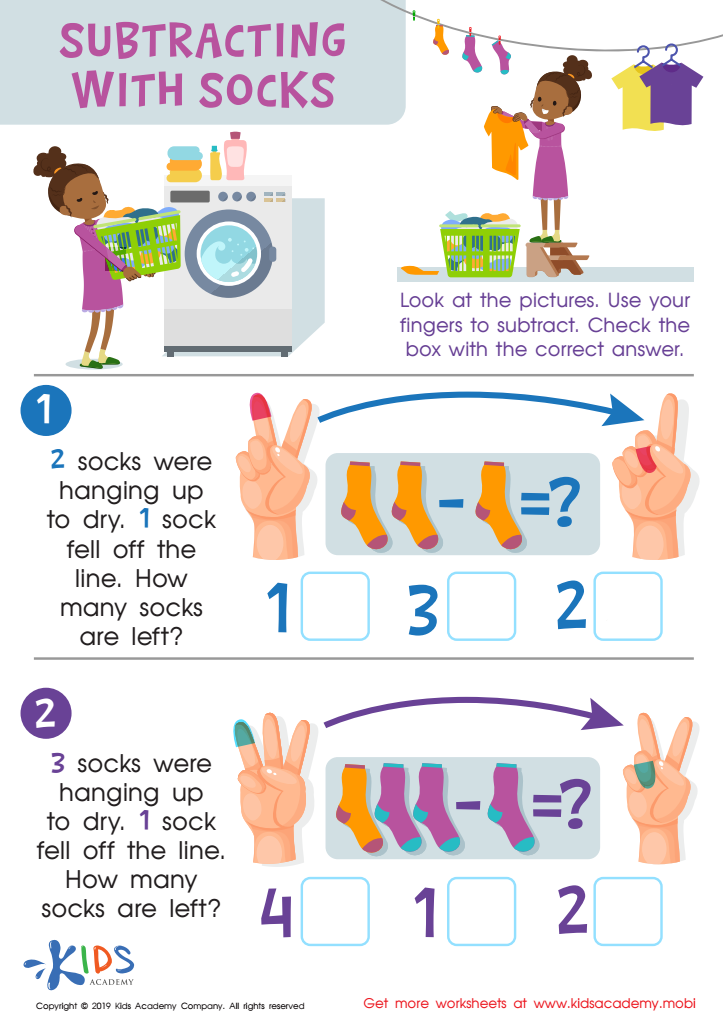
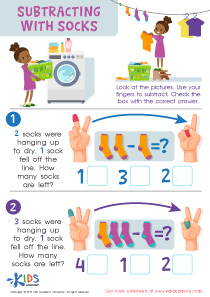
Subtracting Socks Worksheet
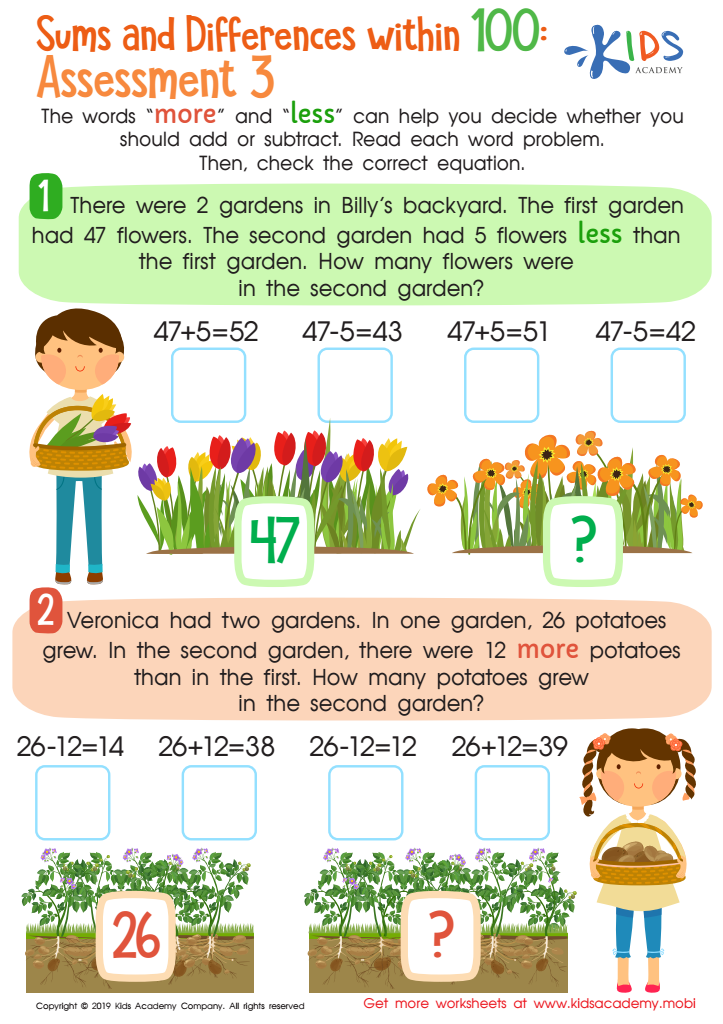
Sums and Differences Within 1 - Assessment 1 Worksheet
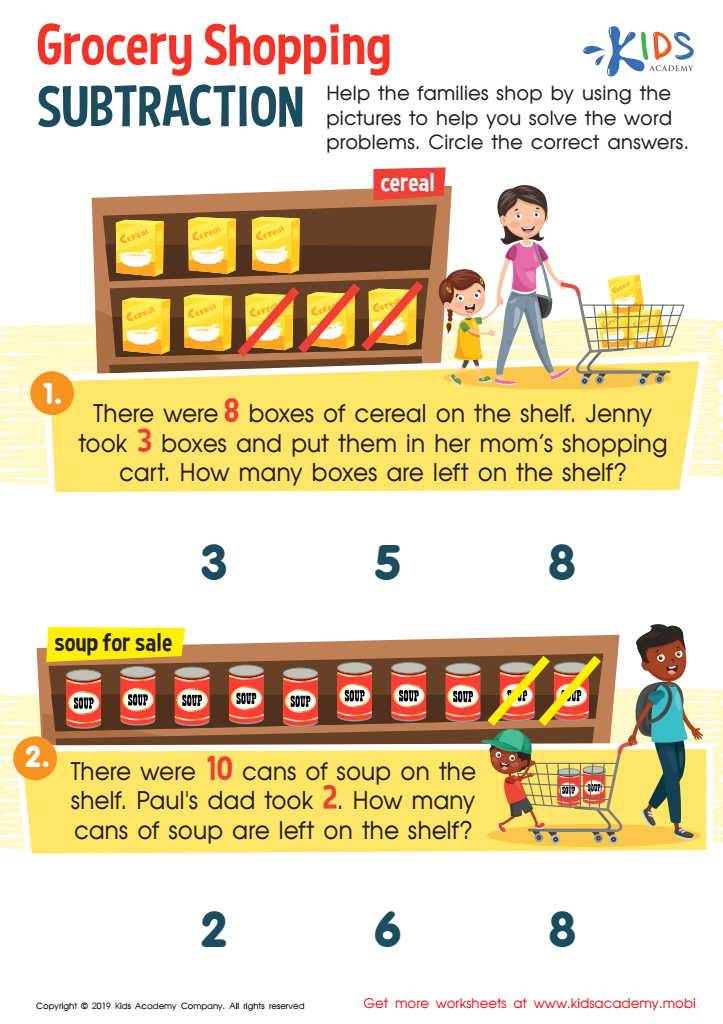
Grocery Shopping Subtraction Worksheet
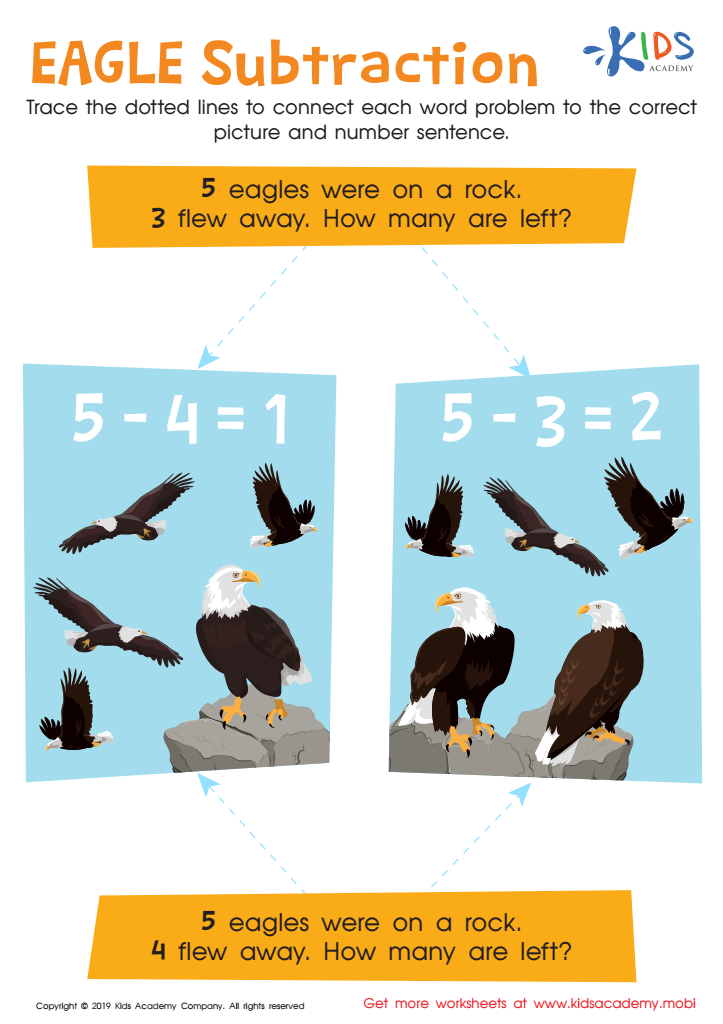
Eagle Subtraction Worksheet
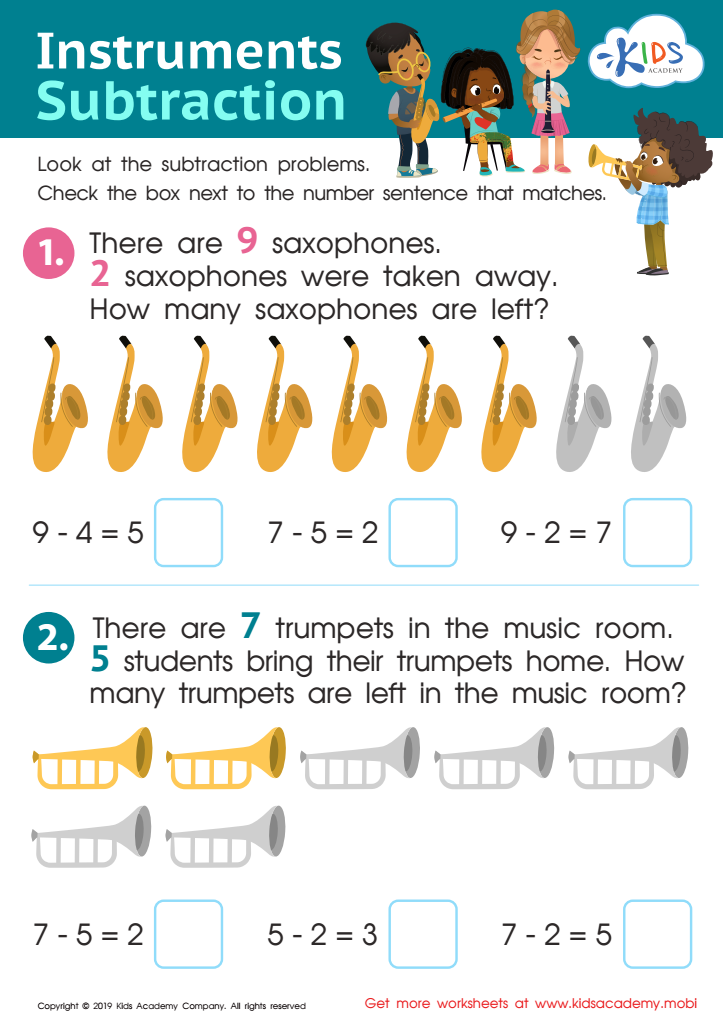
Instrument Subtraction Worksheet
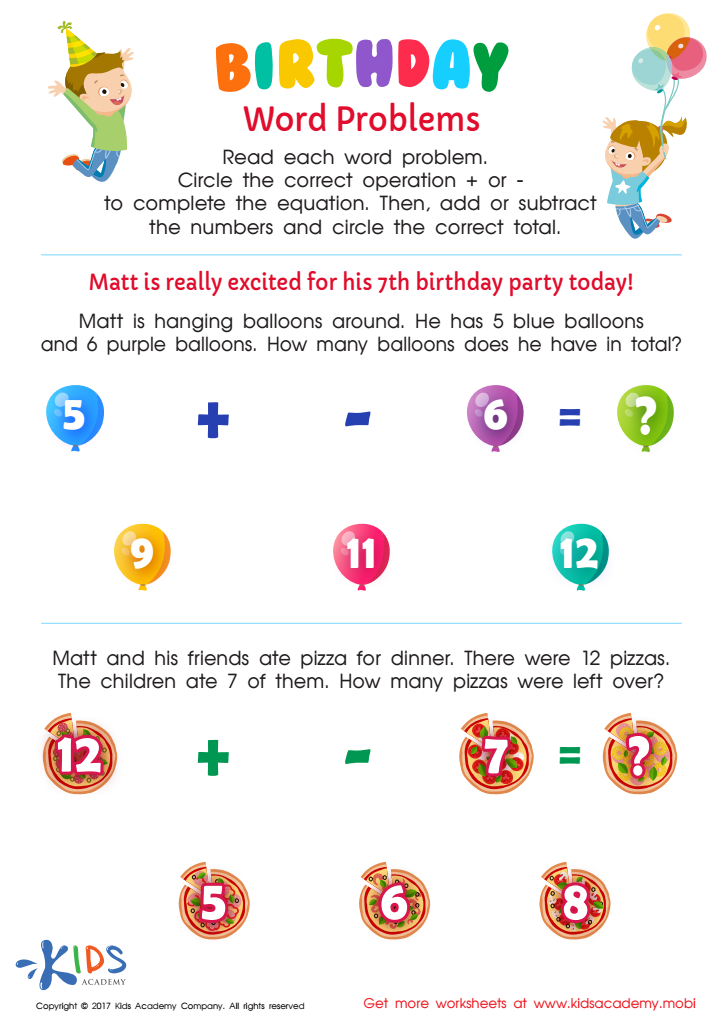
Birthday Word Problems Substraction Worksheet
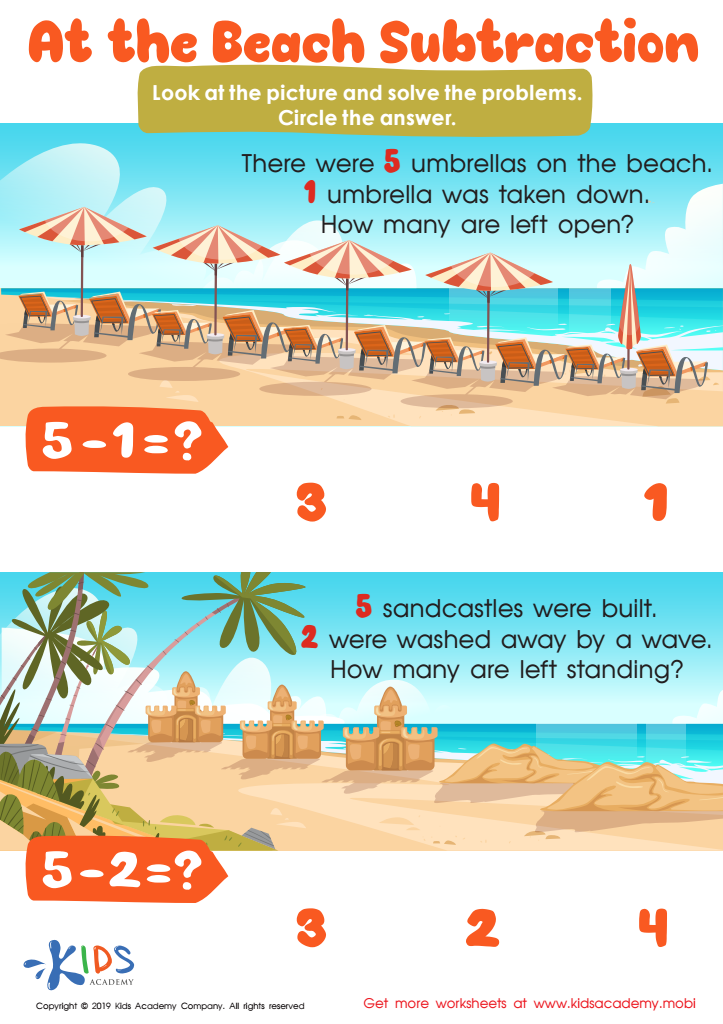
At the Beach Subtraction Worksheet
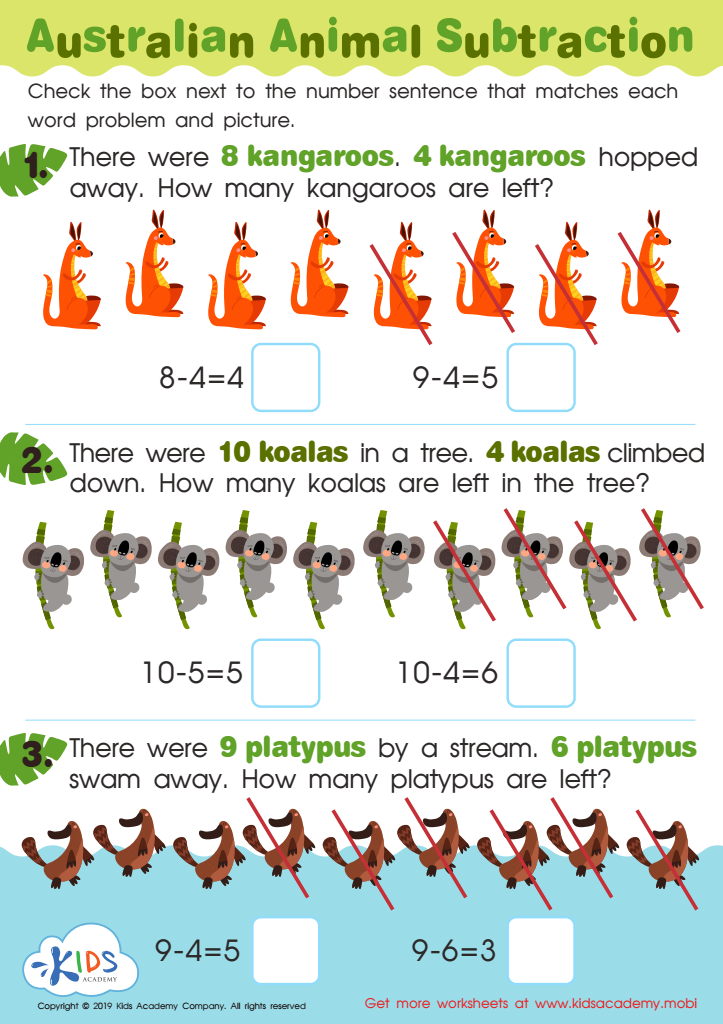
Australian Animal Subtraction Worksheet
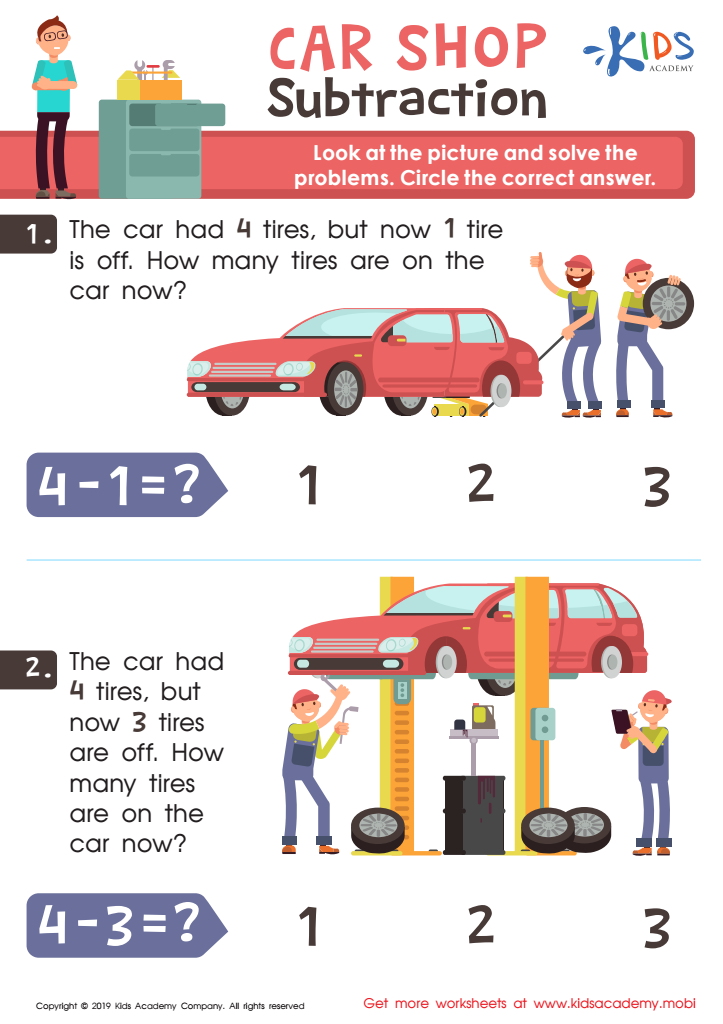
Car Shop Subtraction Worksheet
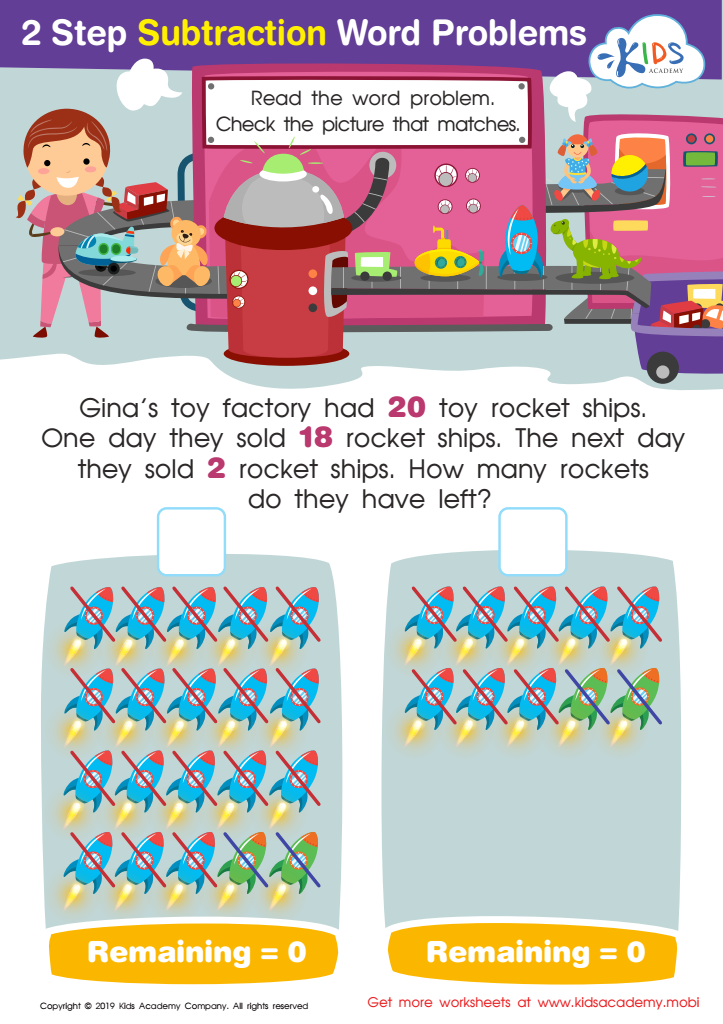
Step Subtraction Word Problems Worksheet
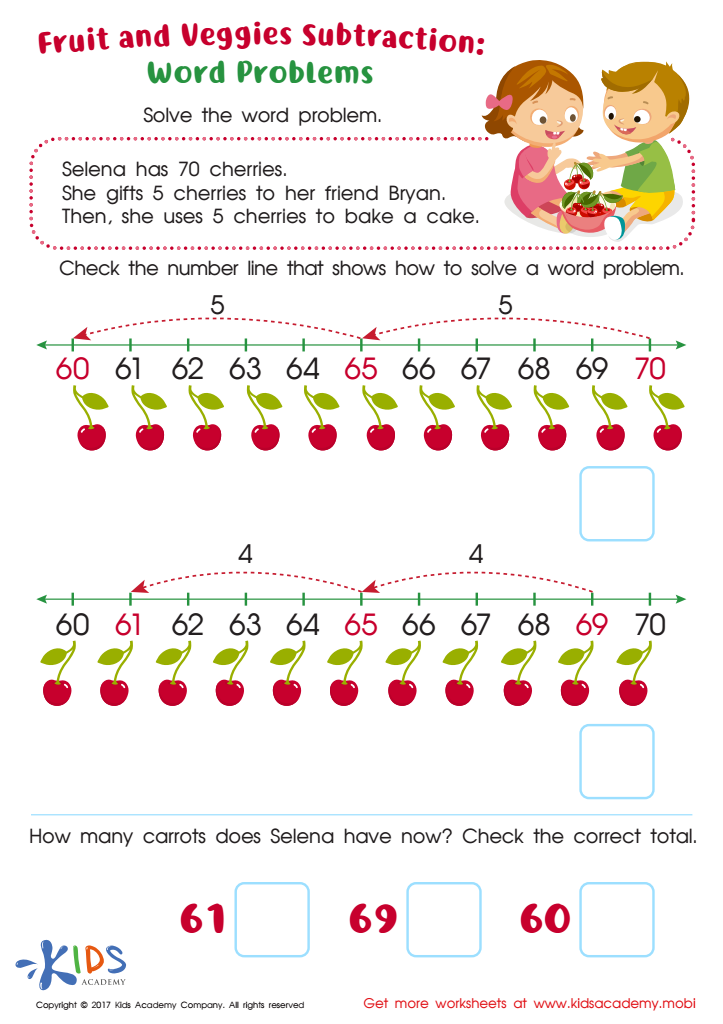
Subtraction Word Problems Free Printable
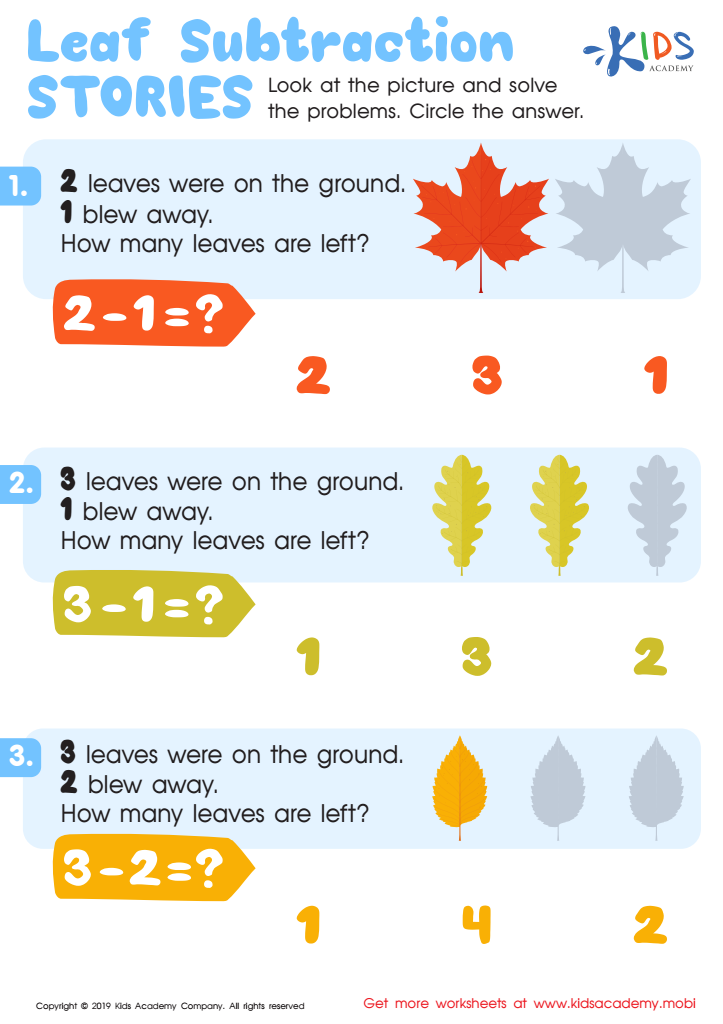
Leaf Subtraction Stories Worksheet
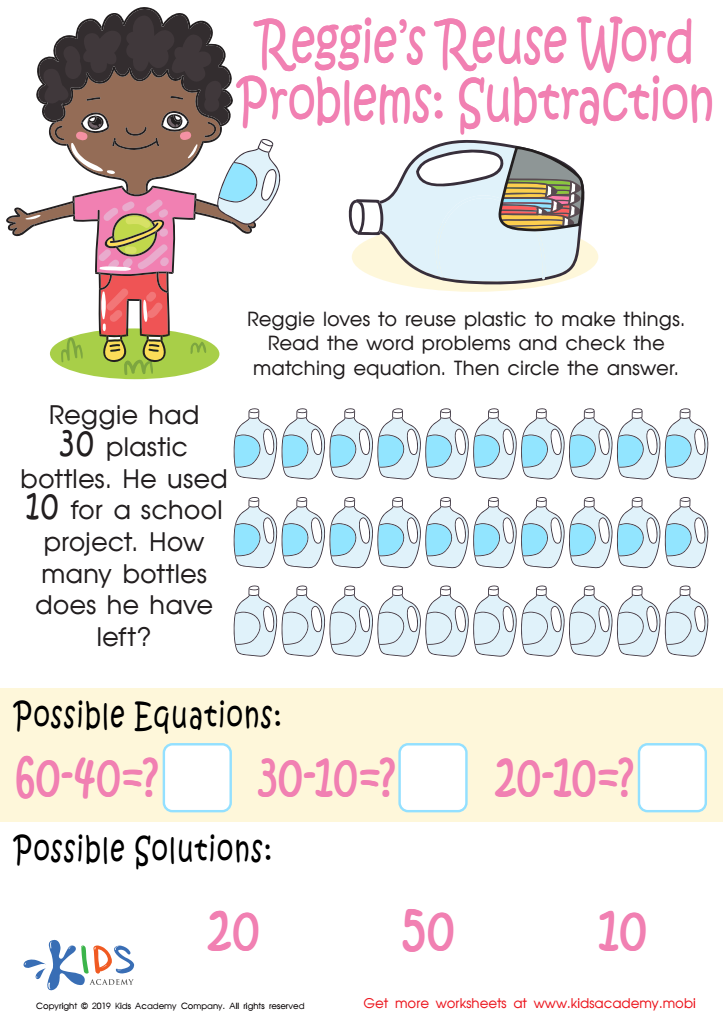
Reggie's Reuse Word Problems: Subtraction Worksheet
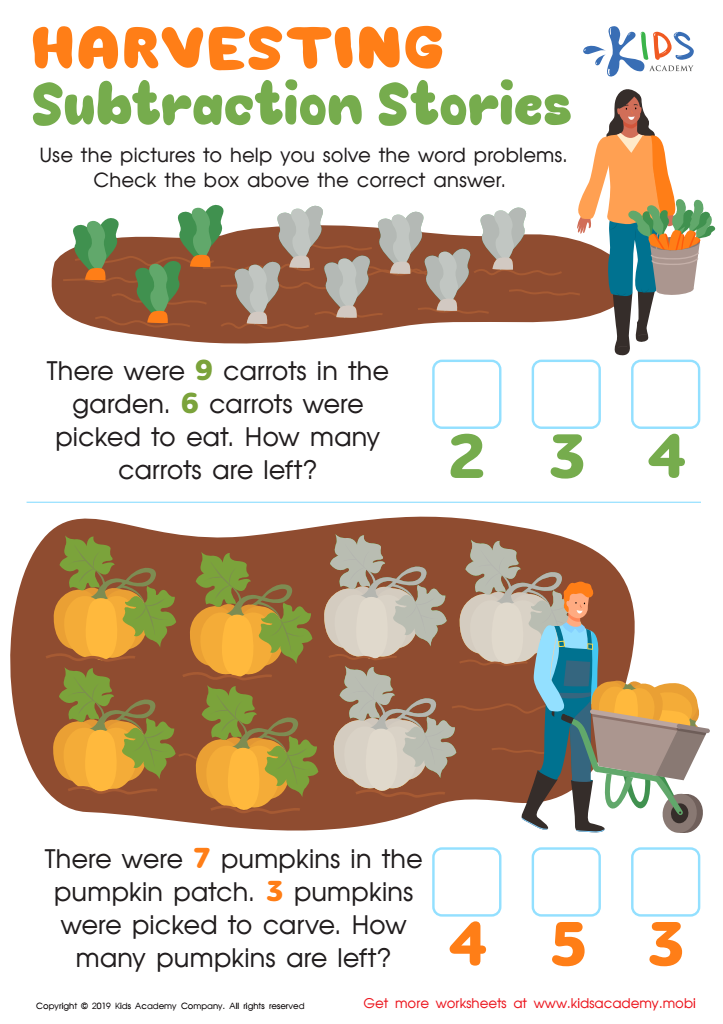
Harvesting Subtraction Stories Worksheet
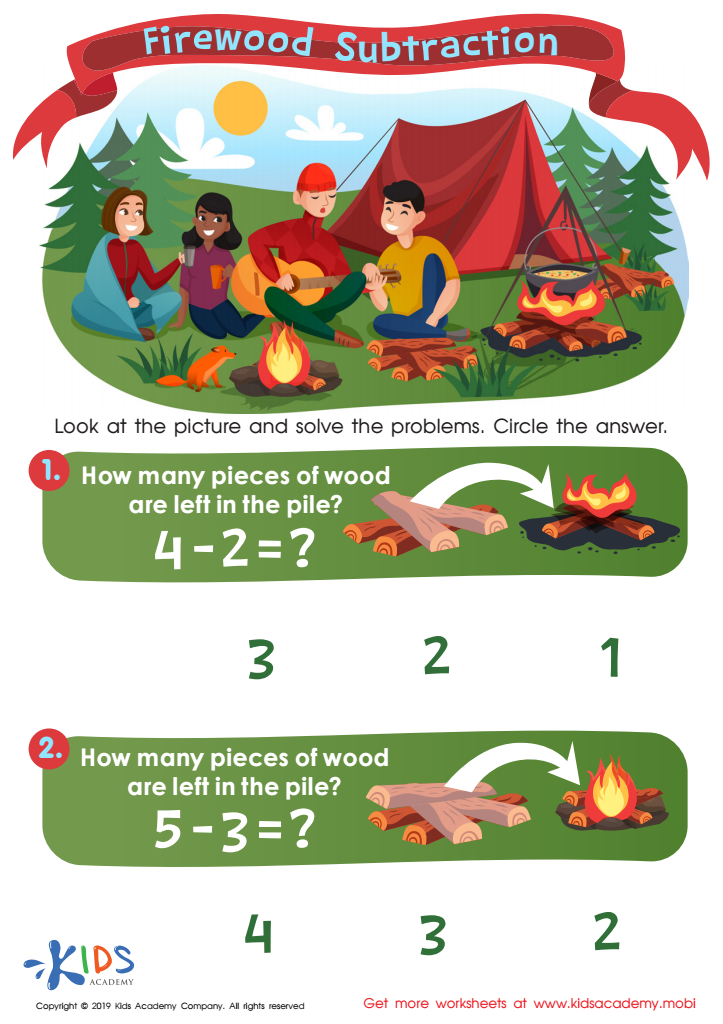
Firewood Subtraction Worksheet
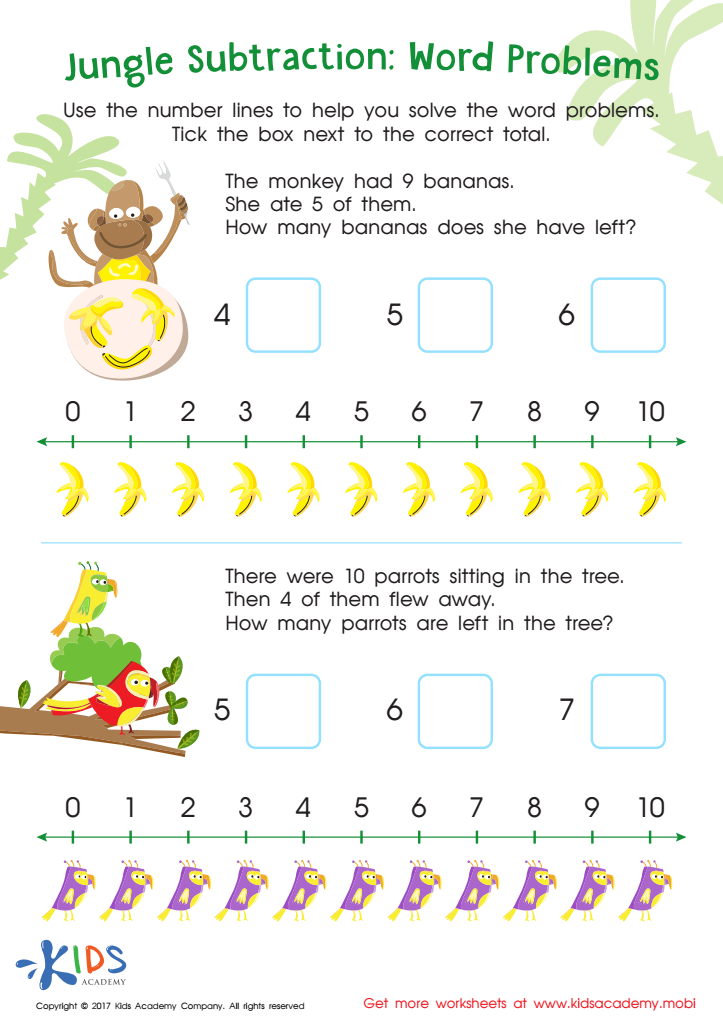
Jungle Subtraction Word Problems Substraction Worksheet








Subtraction practice and word problems play a crucial role in early childhood education for children aged 3-9, as they lay the foundation for essential mathematical understanding. Firstly, subtraction is a vital skill that children encounter in everyday life, from sharing toys to managing money. By practicing subtraction, children develop not only their numerical skills but also their logical thinking and problem-solving abilities.
Addition and subtraction word problems are particularly beneficial because they help children learn to apply mathematical concepts in real-world situations. This connection to practical scenarios enhances comprehension and retention. Furthermore, such problems promote critical thinking as children must analyze the context and figure out which operations to use.
Additionally, parents and teachers should recognize the importance of fostering a positive attitude toward mathematics. Engaging children in subtraction practice and word problems cultivates confidence and a sense of accomplishment, mitigating math anxiety as they grow. Encouraging these skills at a young age also paves the way for more complex mathematical areas in the future.
In summary, subtraction practice and word problems are not just exercises; they are instrumental in helping children build a solid mathematical framework, problem-solving prowess, and self-assurance in their abilities.