Filters

21 filtered results

Clear all filters
Favorites
With answer key
Interactive

21 filtered results

Difficulty Level

Grade


Explore our engaging collection of Basic Addition and Subtraction worksheets designed for children aged 3 to 9. Perfect for early learners, these worksheets provide a fun and interactive way to develop foundational math skills. Each activity is crafted to enhance understanding of basic arithmetic, helping kids master simple addition and subtraction concepts through colorful visuals and exciting exercises. Whether at home or in the classroom, our resources foster a love for learning while building confidence in math. Download your printable worksheets today and watch your child's mathematical skills blossom as they playfully tackle each challenge!
Check out this FREE Trial Lesson on Addition & Subtraction for age 3-9!

Short and Long Vowel Sort

Favorites
With answer key
Interactive
  • 3-9
  • Basic Addition
  • Addition & Subtraction
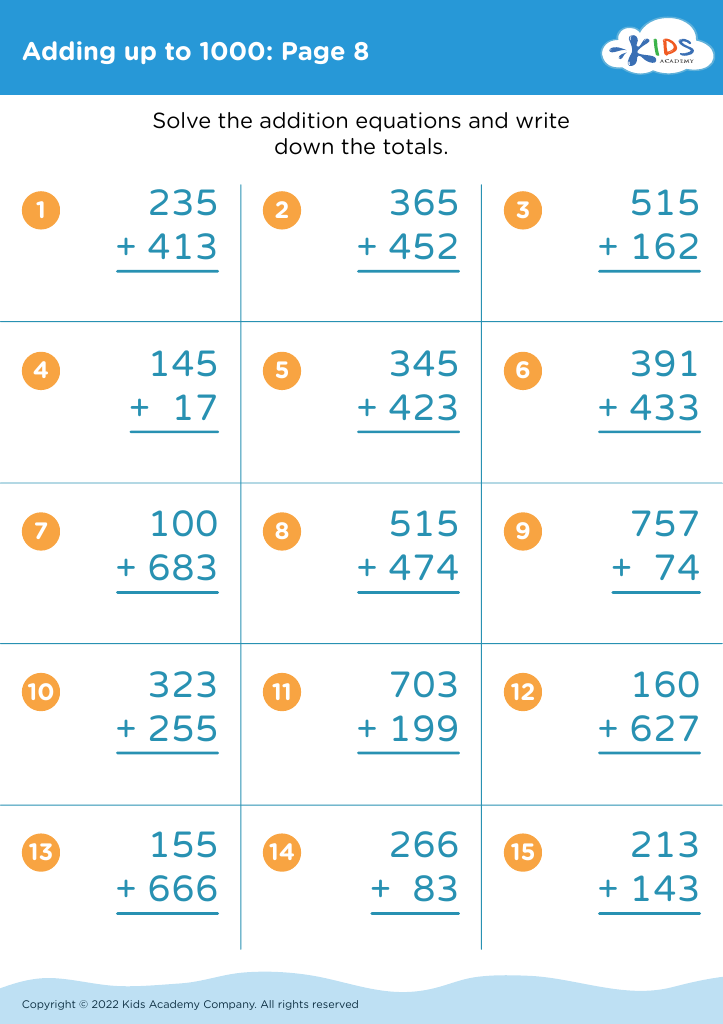
Adding up to 1000: Page 8

Adding up to 1000: Page 8

Adding up to 1000: Page 8
Worksheet
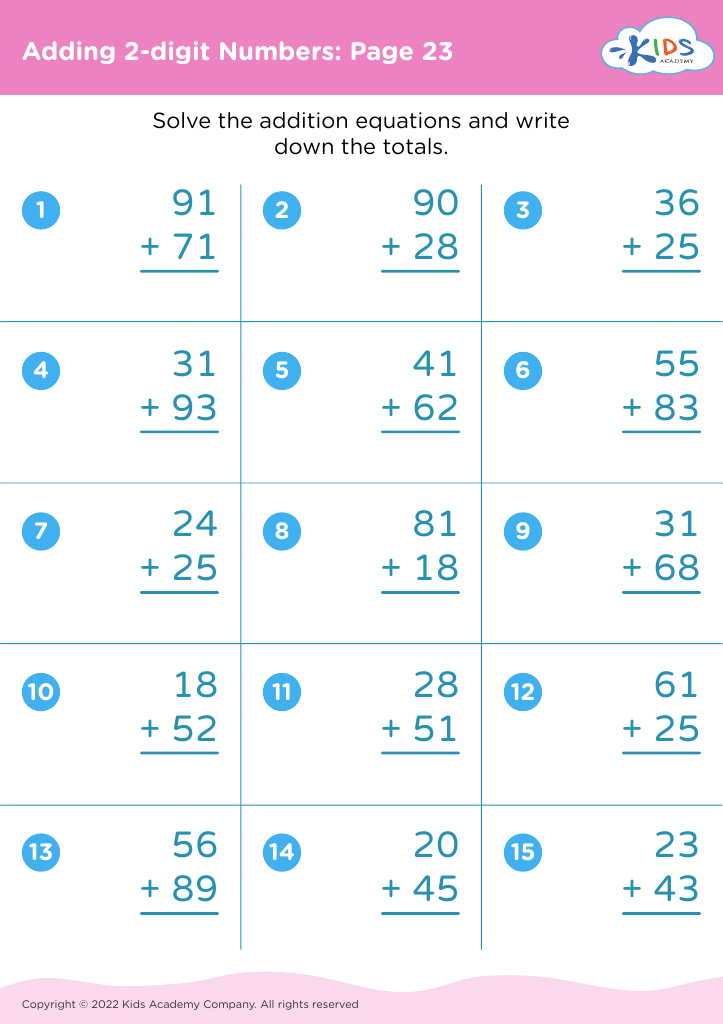
Adding 2-digit Numbers: Page 23

Adding 2-digit Numbers: Page 23

Adding 2-digit Numbers: Page 23
Worksheet
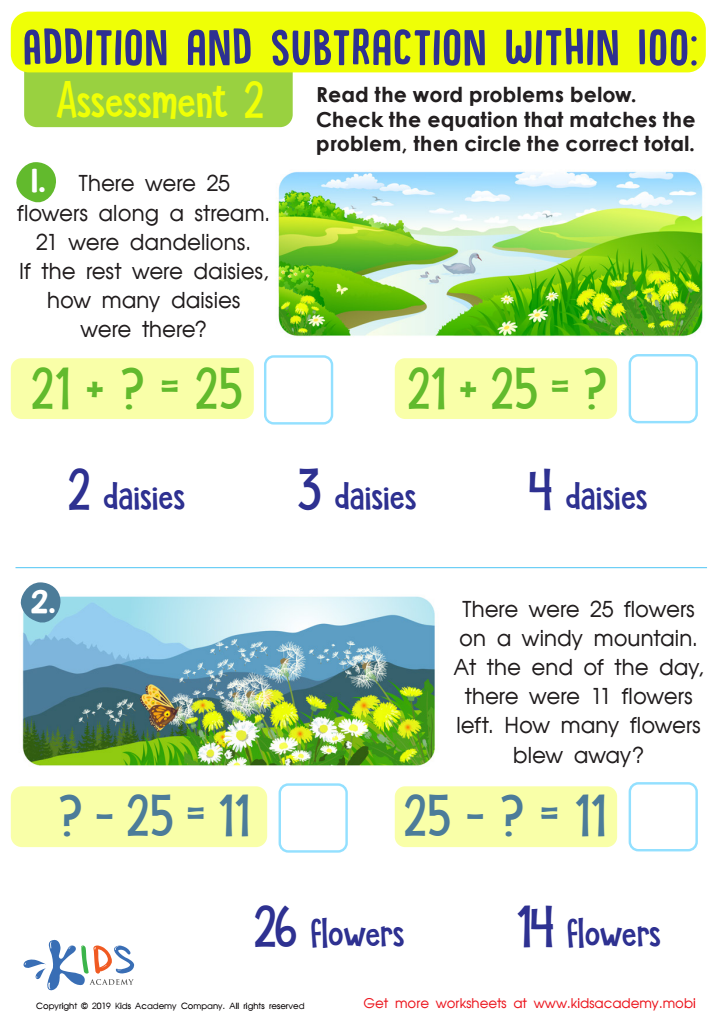
Assessment 2 Math Worksheet

Assessment 2 Math Worksheet

Using fun exercises and pictures, you can get kids excited about math. With practice and reminders of what they've learnt, they'll be solving simple addition and subtraction equations with ease. Read the word problems in the picture to them, then help them check the equation and choose the correct answer.
Assessment 2 Math Worksheet
Worksheet
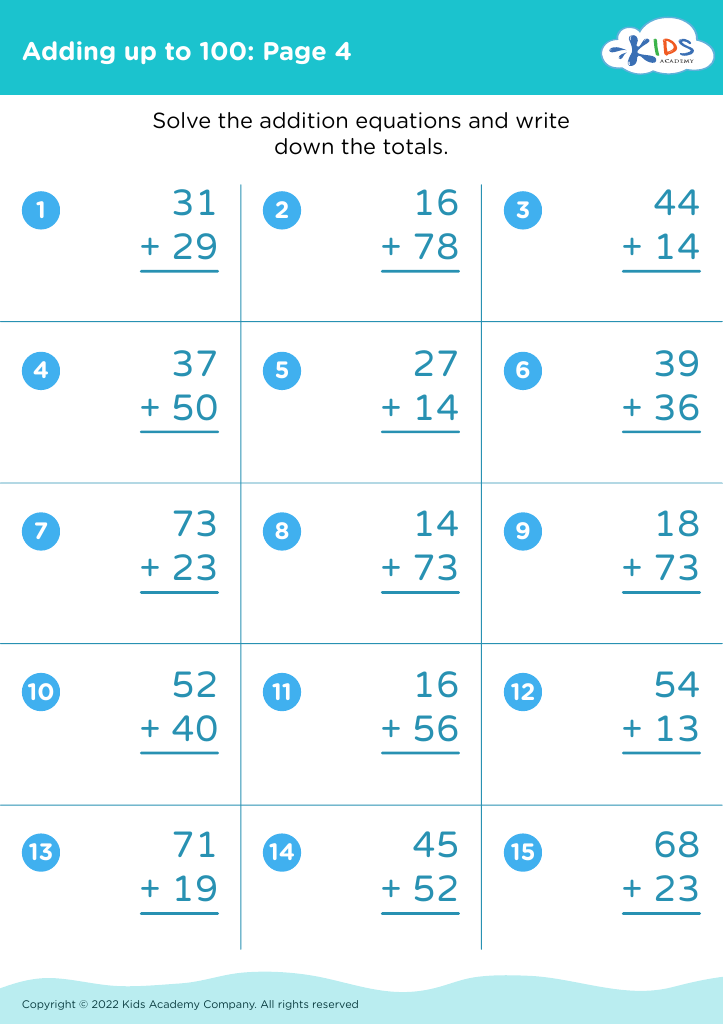
Adding up to 100: Page 4

Adding up to 100: Page 4

Adding up to 100: Page 4
Worksheet
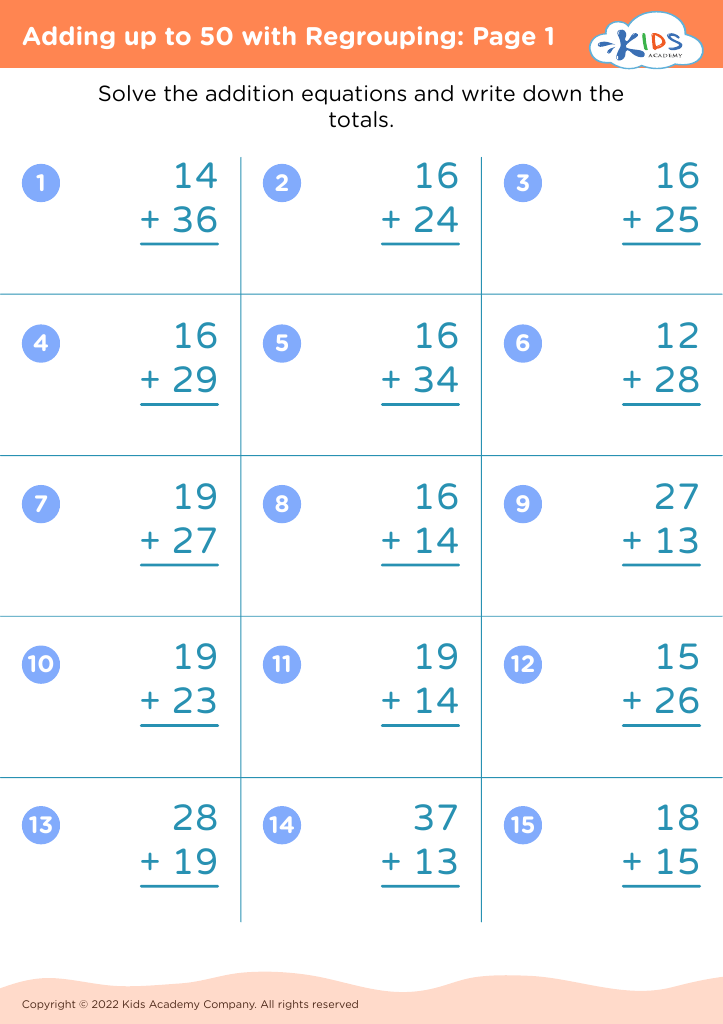
Adding up to 50 with Regrouping: Page 1
Worksheet
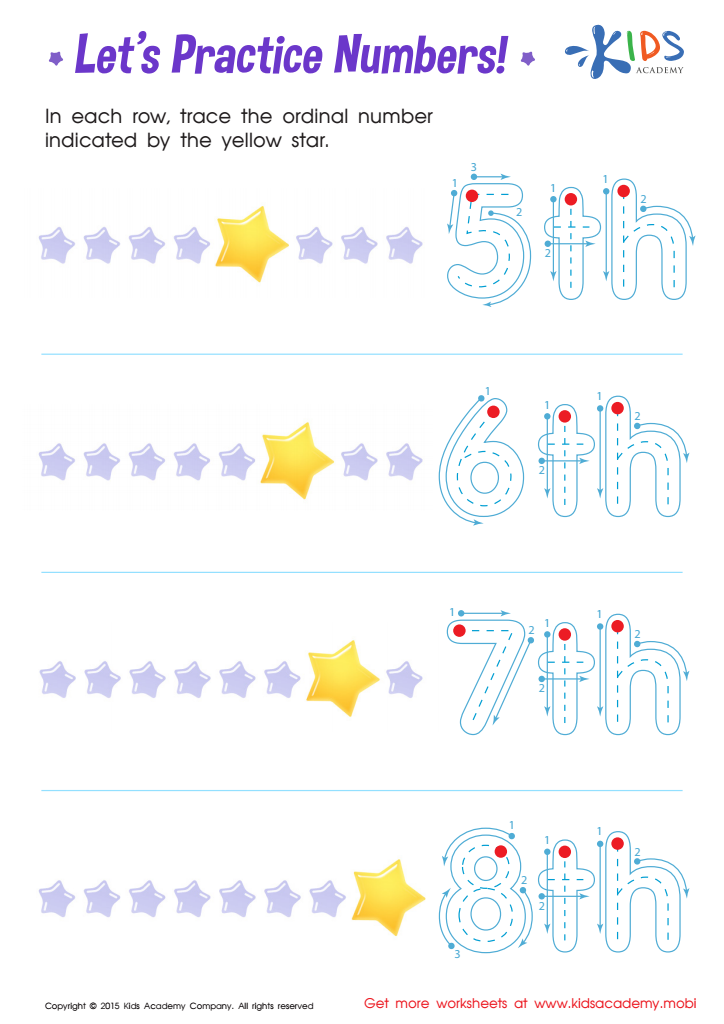
Practice Ordinal Numbers Worksheets PDF
Ordinal Numbers: Let's Practice Numbers Printable
Worksheet
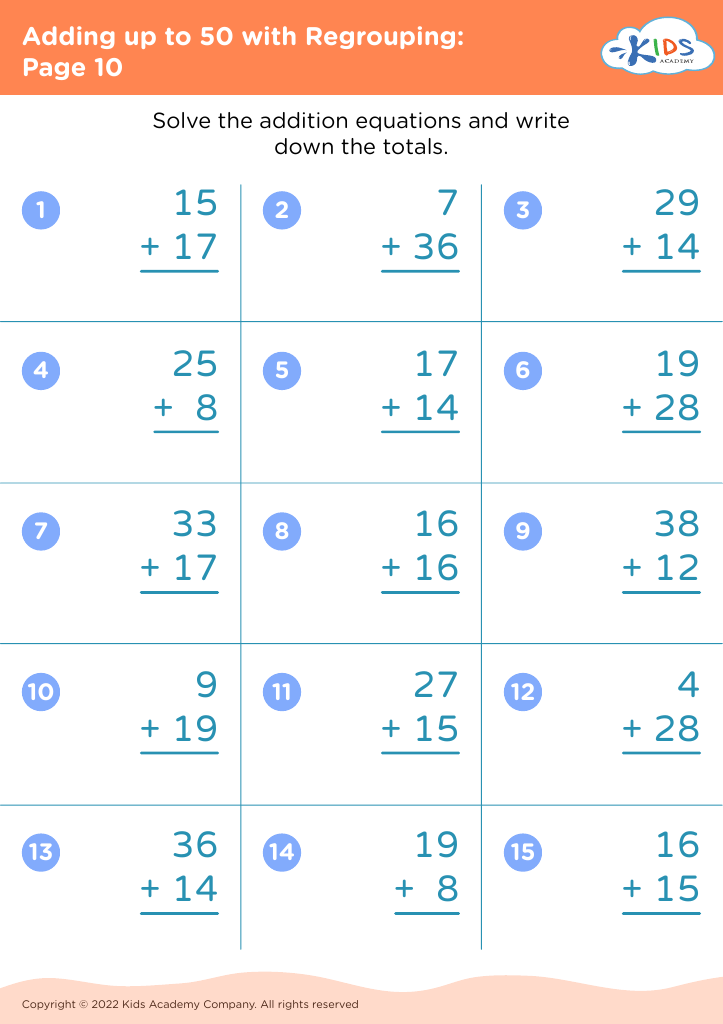
Adding up to 50 with Regrouping: Page 10
Worksheet
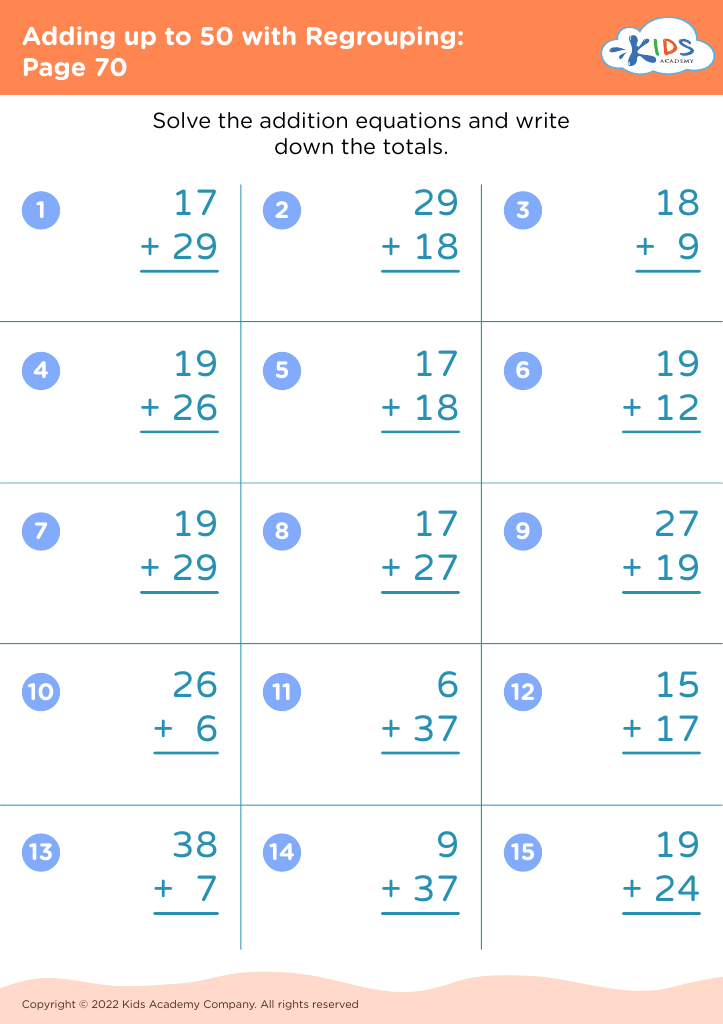
Adding up to 50 with Regrouping: Page 70
Worksheet
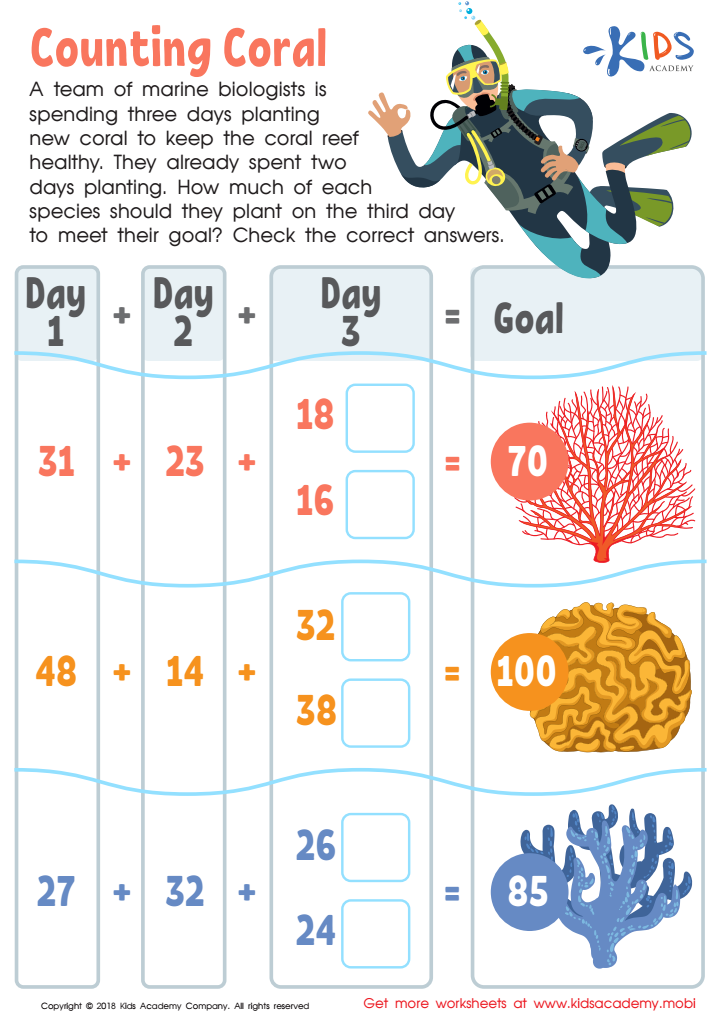
Counting Coral Worksheet

Counting Coral Worksheet

Introduce your child to the team of marine biologists planting coral to keep a reef healthy. They've planted for two days and need to figure out how much of each specie to plant on the third day to reach their goal. Help your child answer the questions on the printout and learn what it takes to be a marine biologist.
Counting Coral Worksheet
Worksheet
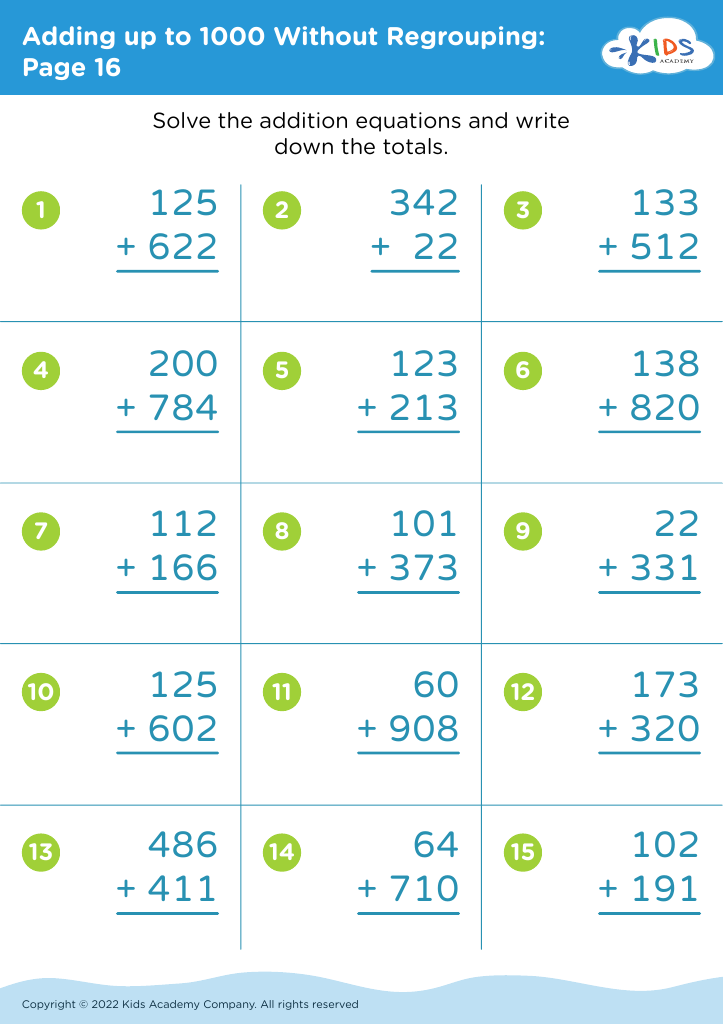
Adding up to 1000 Without Regrouping: Page 16
Worksheet
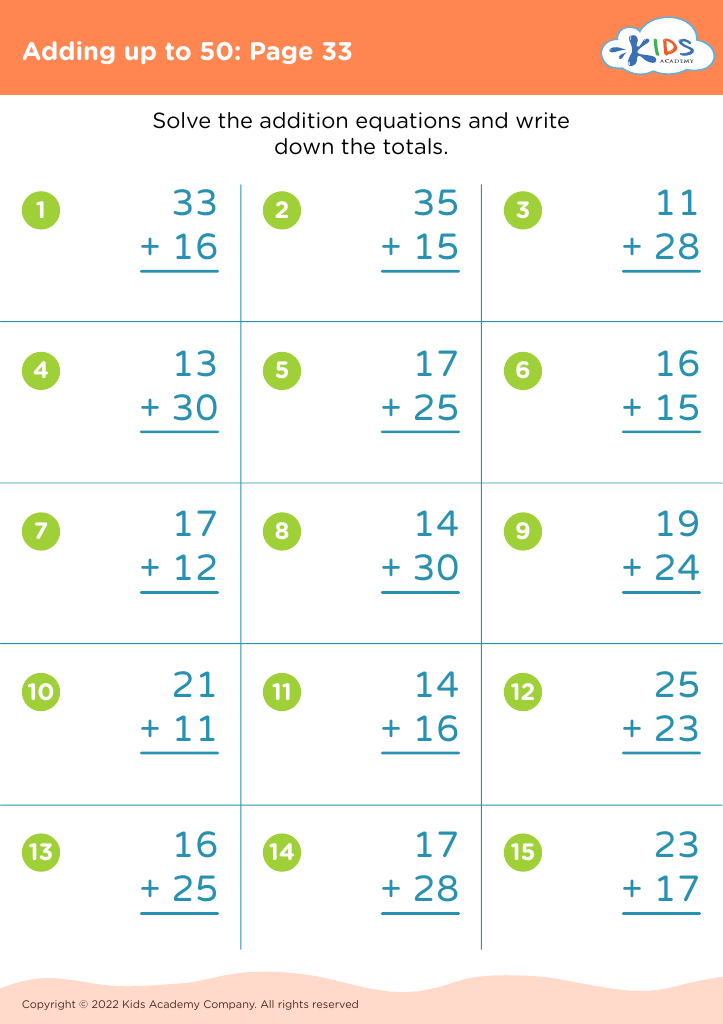
Adding up to 50: Page 33

Adding up to 50: Page 33

Adding up to 50: Page 33
Worksheet
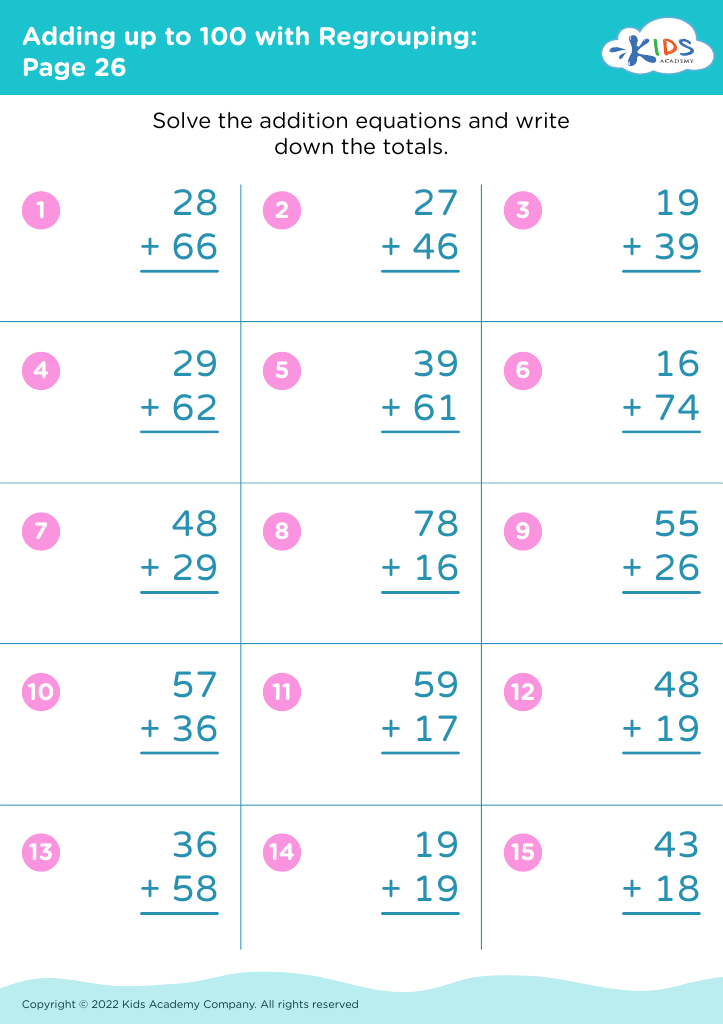
Adding up to 100 with Regrouping: Page 26
Worksheet
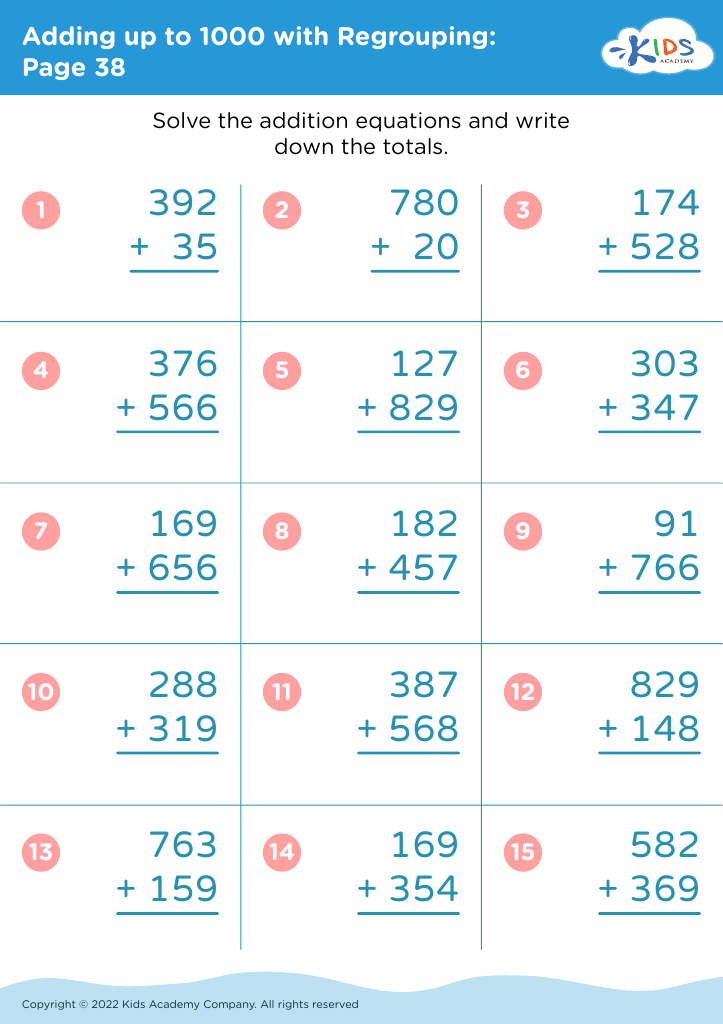
Adding up to 1000 with Regrouping: Page 38
Worksheet
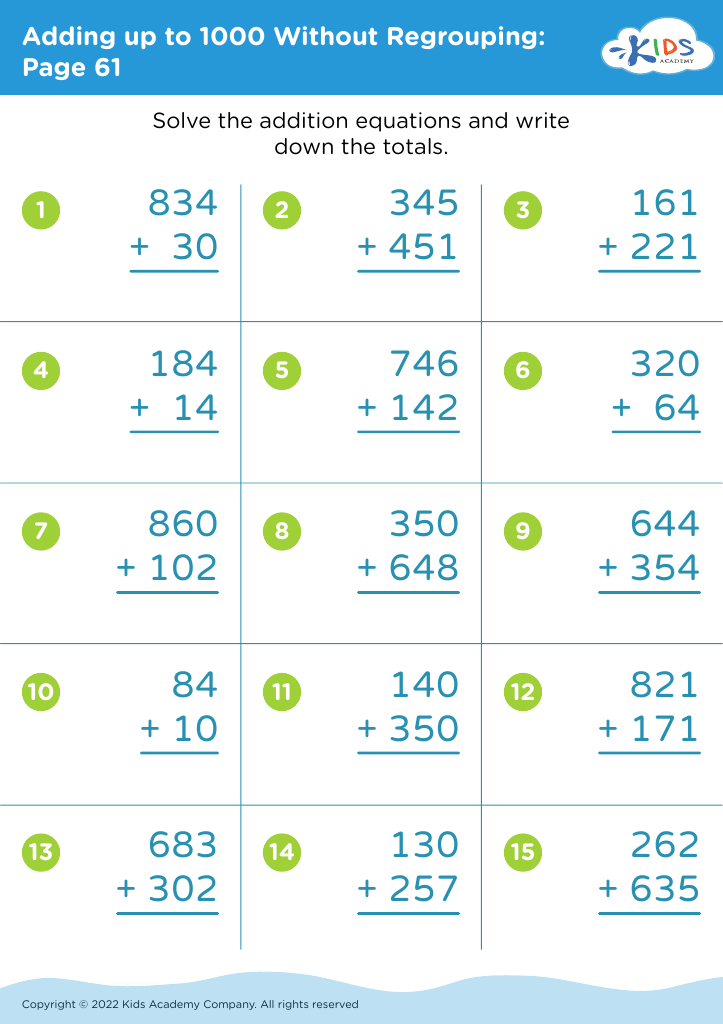
Adding up to 1000 Without Regrouping: Page 61
Worksheet
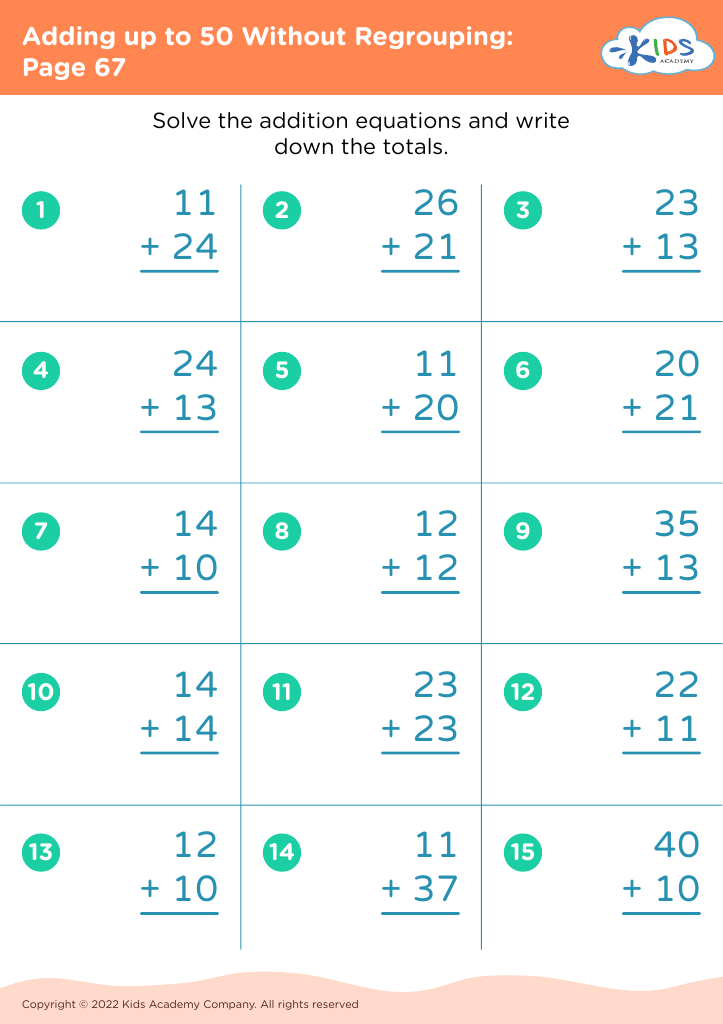
Adding up to 50 Without Regrouping: Page 67
Worksheet
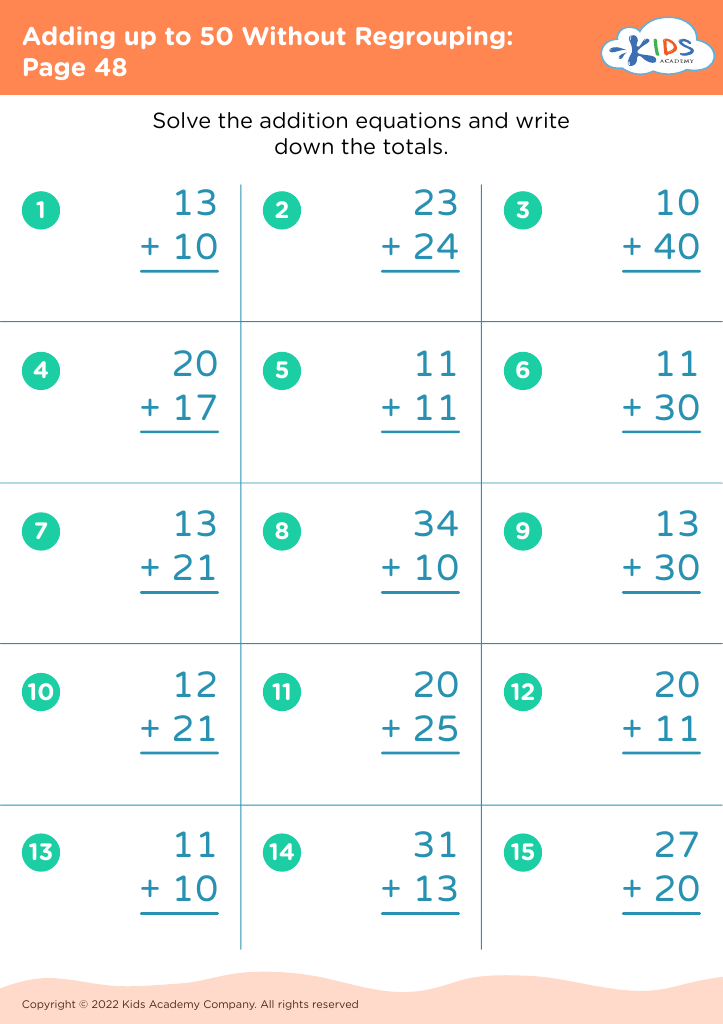
Adding up to 50 Without Regrouping: Page 48
Worksheet
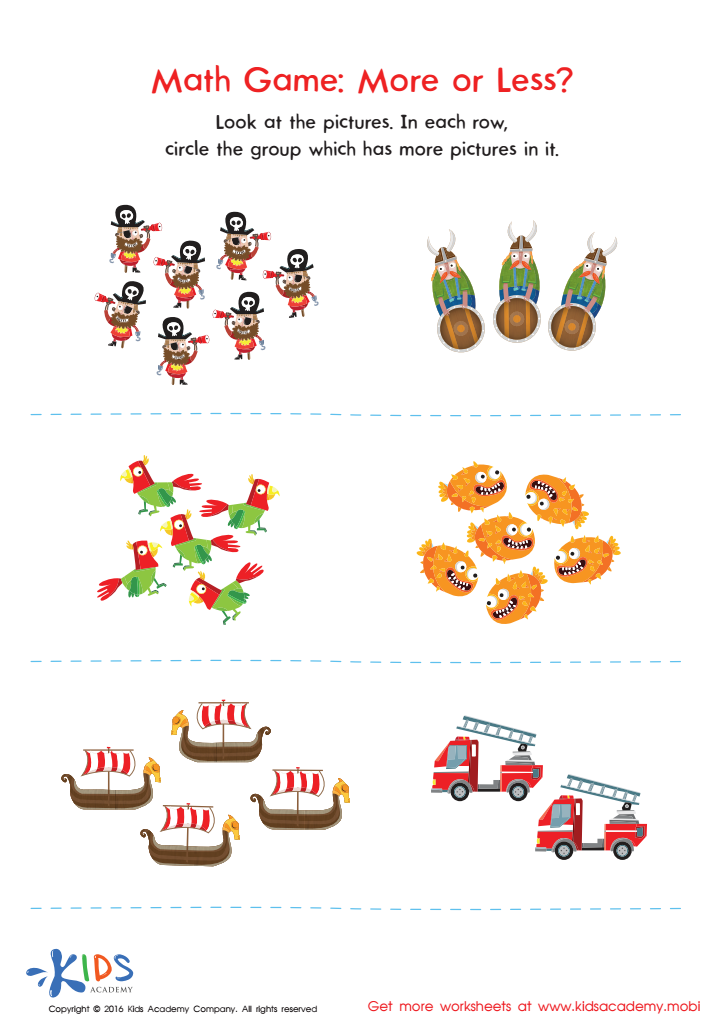
Free Printable More or Less Worksheets for Kindergarten

More or Less Worksheet

Counting and understanding quantity are essential skills for kindergarteners. Get your free printable more or less worksheet now!
More or Less Worksheet
Worksheet
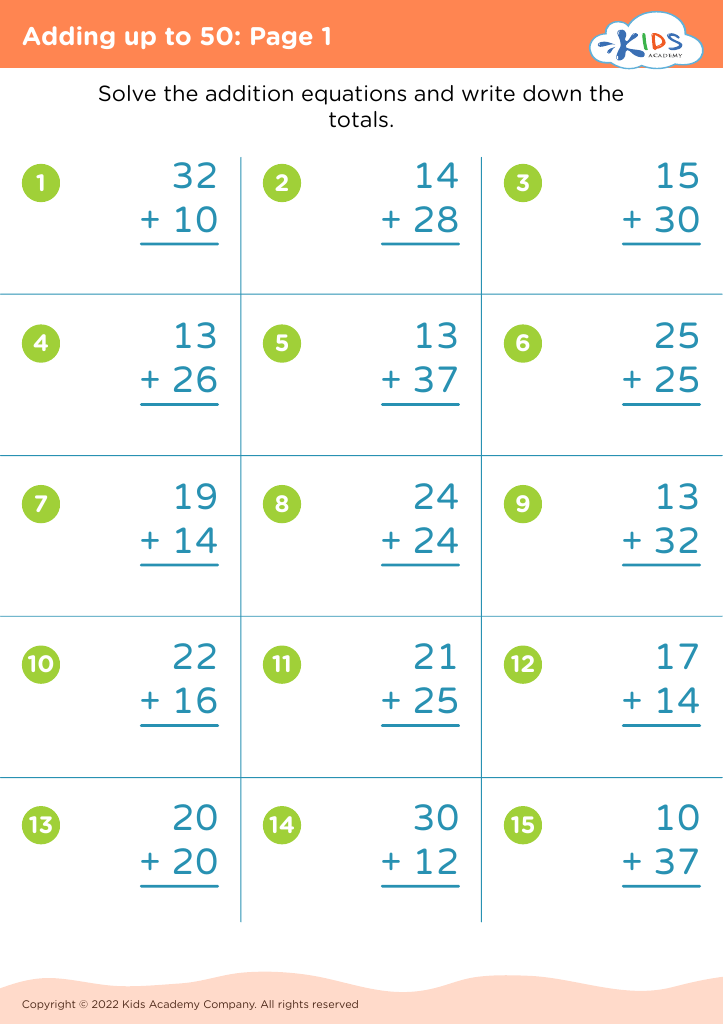
Adding up to 50: Page 1

Adding up to 50: Page 1

Adding up to 50: Page 1
Worksheet
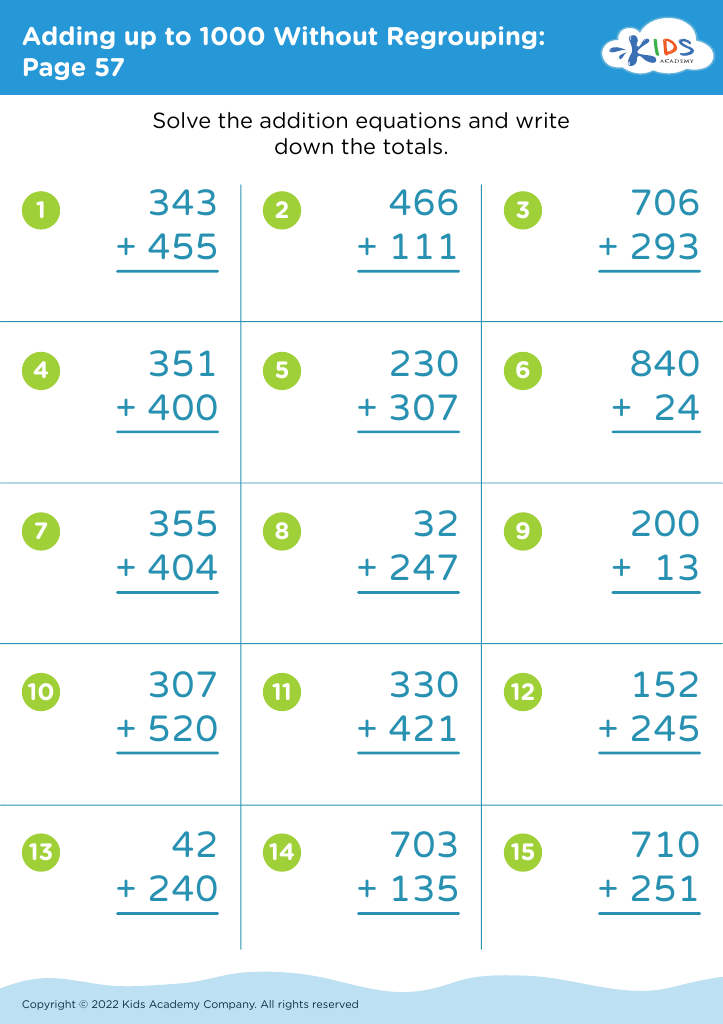
Adding up to 1000 Without Regrouping: Page 57
Worksheet
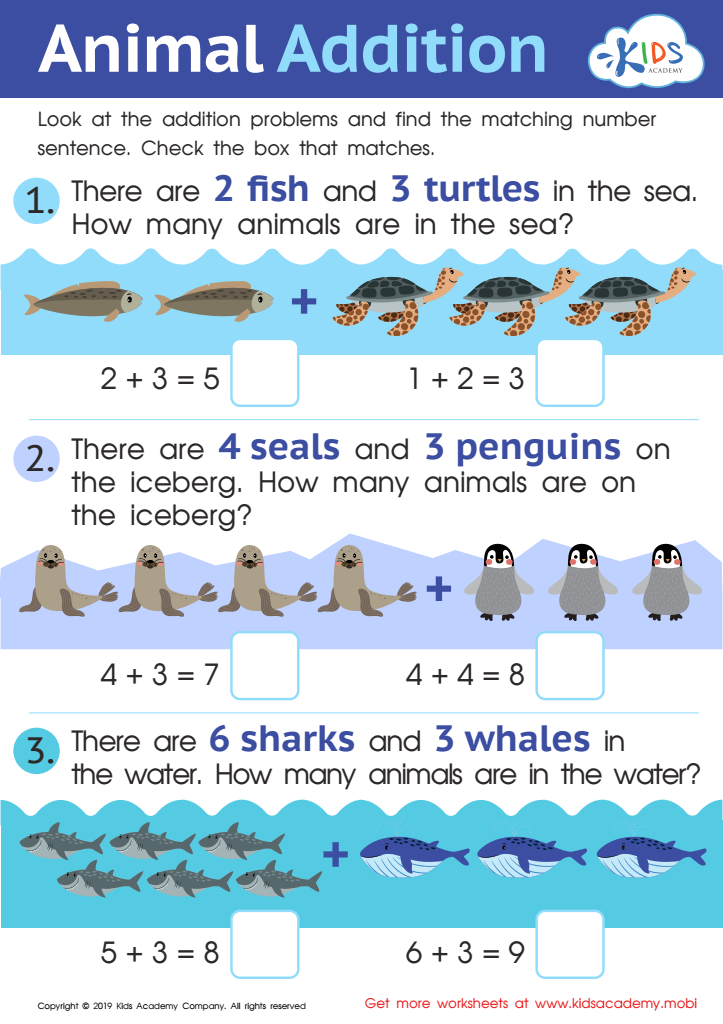
Animal Addition Worksheet

Animal Addition Worksheet

Get your kids learning addition and subtraction with this fun worksheet! Show them that solving equations can be enjoyable and help them match number sentences to the correct boxes. By doing this together, you'll create a positive learning experience that your kids won't forget.
Animal Addition Worksheet
Worksheet
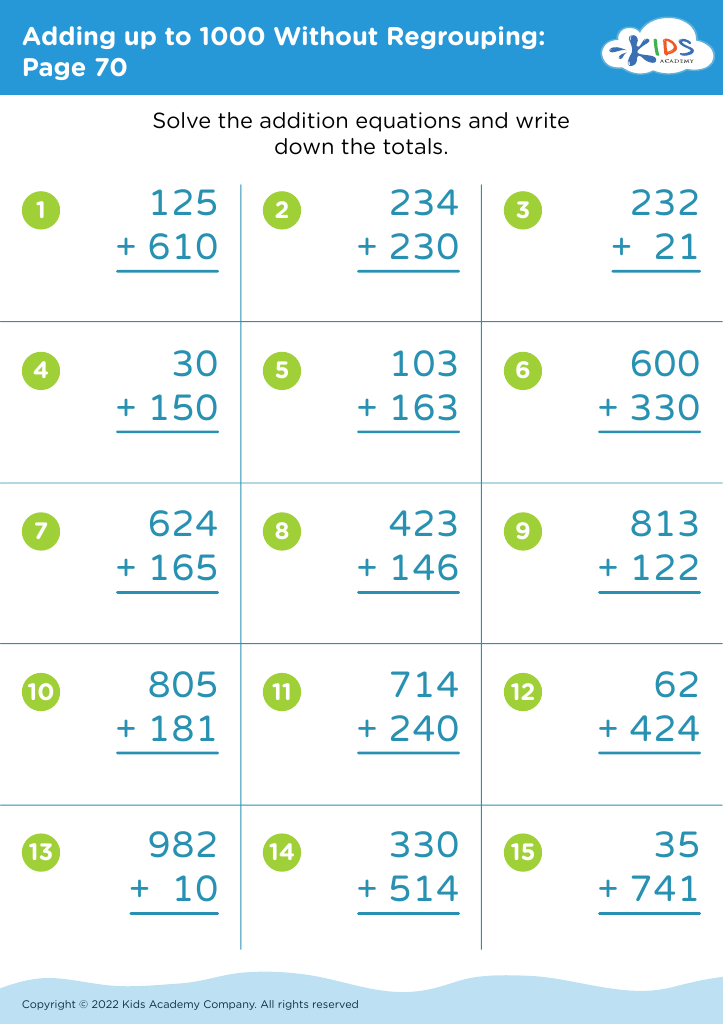
Adding up to 1000 Without Regrouping: Page 70
Worksheet


Basic addition and subtraction are foundational skills that form the bedrock of a child’s mathematical understanding and overall cognitive development. For children aged 3 to 9, mastering these concepts not only builds confidence, but also enhances critical thinking and problem-solving skills vital for future learning. Early exposure to these mathematical concepts encourages curiosity and exploration, vital for a child’s intellectual growth.

Parents and teachers play a crucial role in this learning process. They can create a supportive environment rich with engaging activities that incorporate basic math skills into everyday contexts, such as counting toys, sharing snacks, or playing age-appropriate games. This practical application makes math relatable and fun, fueling a love for learning.

Furthermore, strong foundational skills in addition and subtraction are directly tied to future academic success. Children who struggle with these basic operations may find it challenging to grasp more complex mathematical concepts later on. Early intervention and support from parents and teachers can prevent this.

By prioritizing basic addition and subtraction, parents and teachers not only equip children with essential skills but also foster a positive attitude toward math, setting them up for a lifetime of success in all academic areas. Making math enjoyable today will lead to more proficient problem solvers in the future.