
Counting proficiency Addition Worksheets for Ages 3-9
11 filtered results
Difficulty Level
Grade
Age
-
From - To
Subject
Activity
Standards
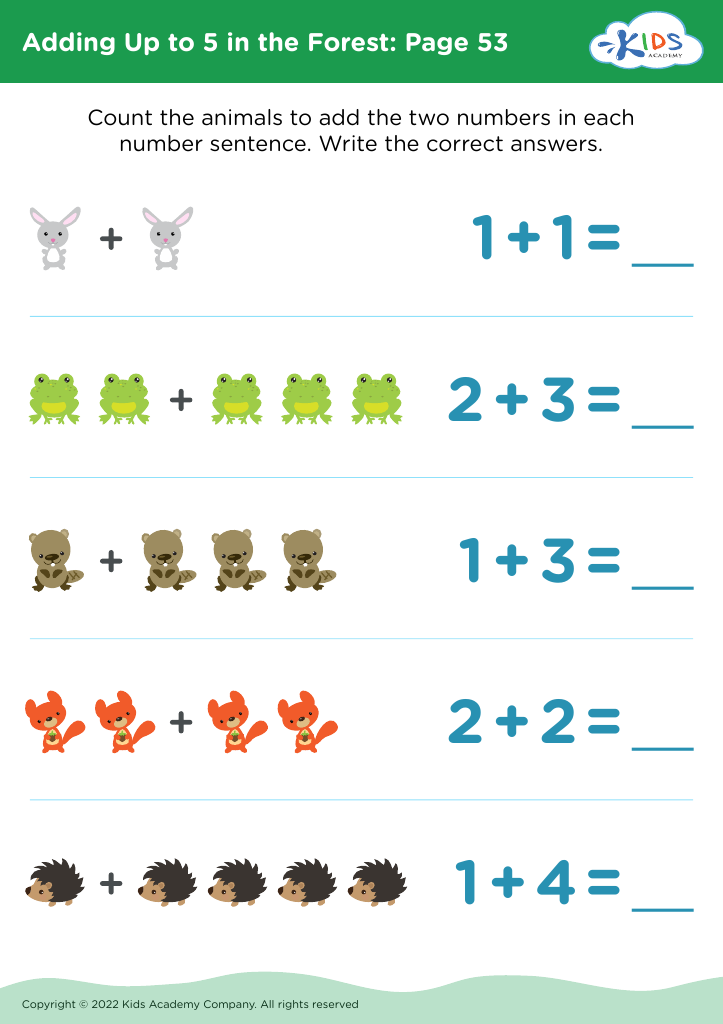
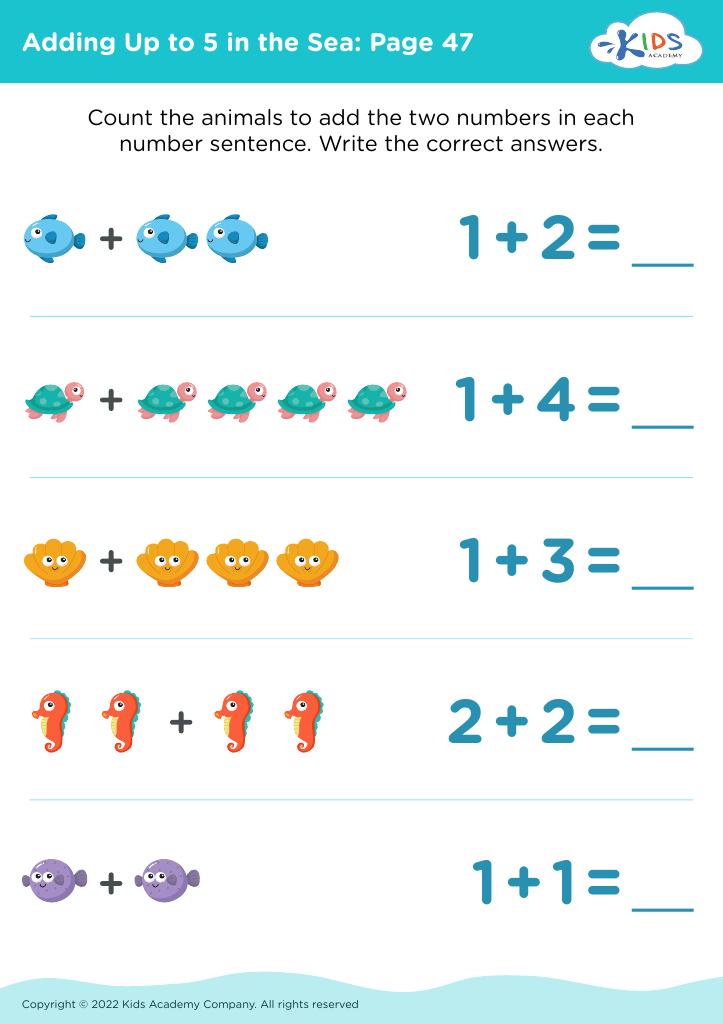
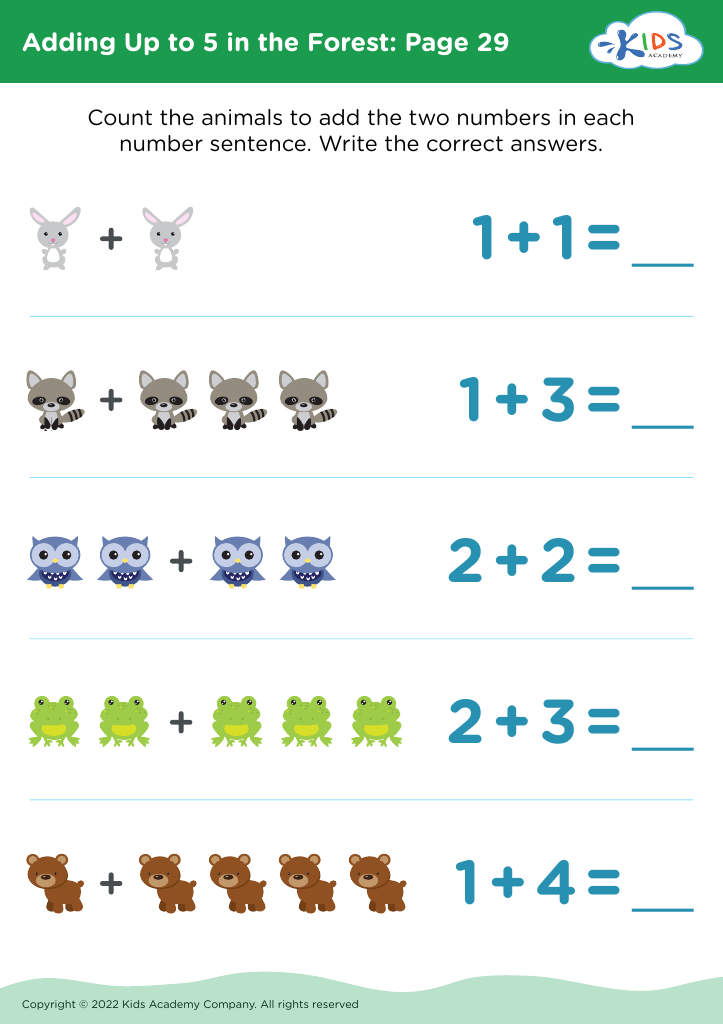
Enhance your child's counting skills with our Counting Proficiency Addition Worksheets for Ages 3-9. Designed to build a strong foundation in math, these engaging worksheets help kids practice addition in a fun and interactive way. Perfect for early learners, each worksheet is crafted to improve proficiency, boost confidence, and develop problem-solving abilities. With vibrant illustrations and simple instructions, children will enjoy learning and mastering addition. Ideal for classroom use or home study, our worksheets are a valuable resource for parents and teachers aiming to support young students in their educational journey.
Favorites
With answer key
Interactive
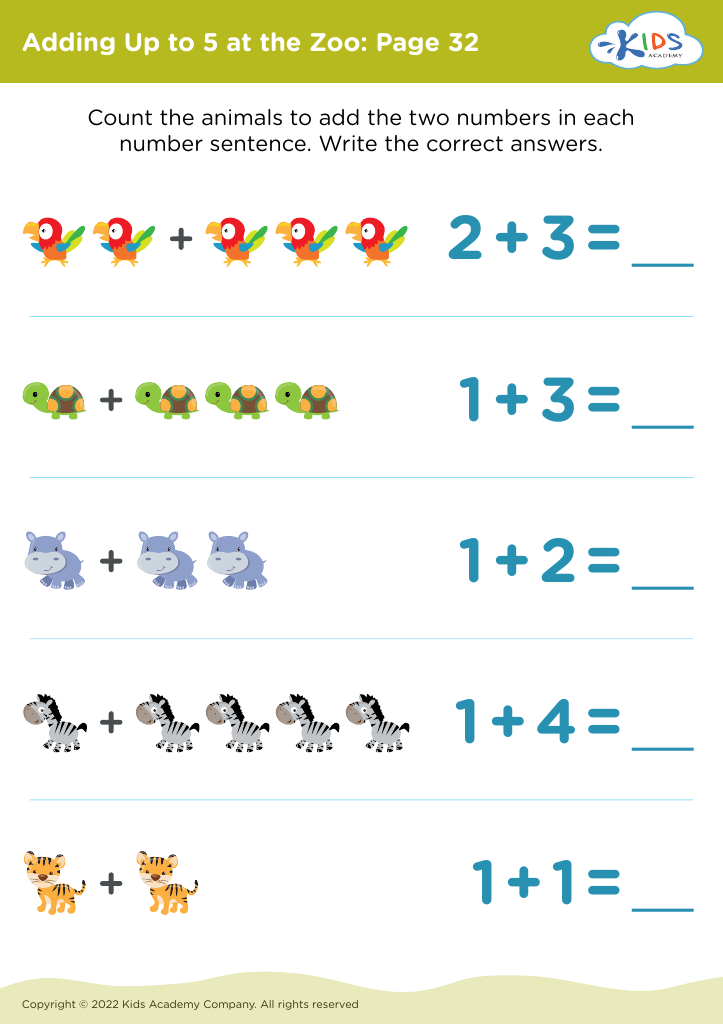
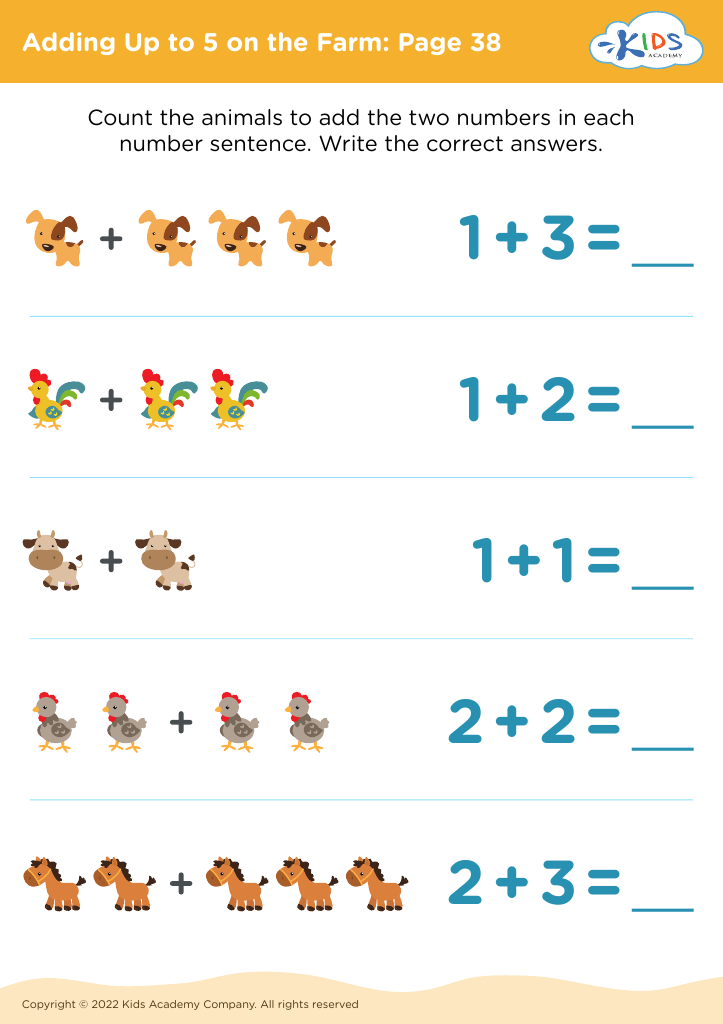
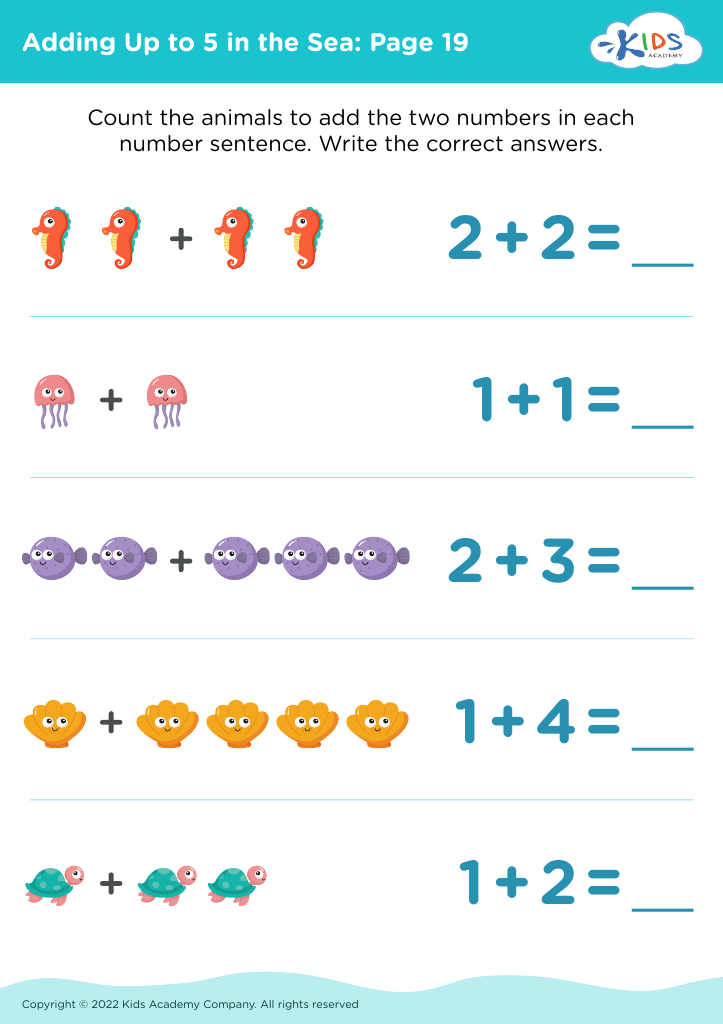
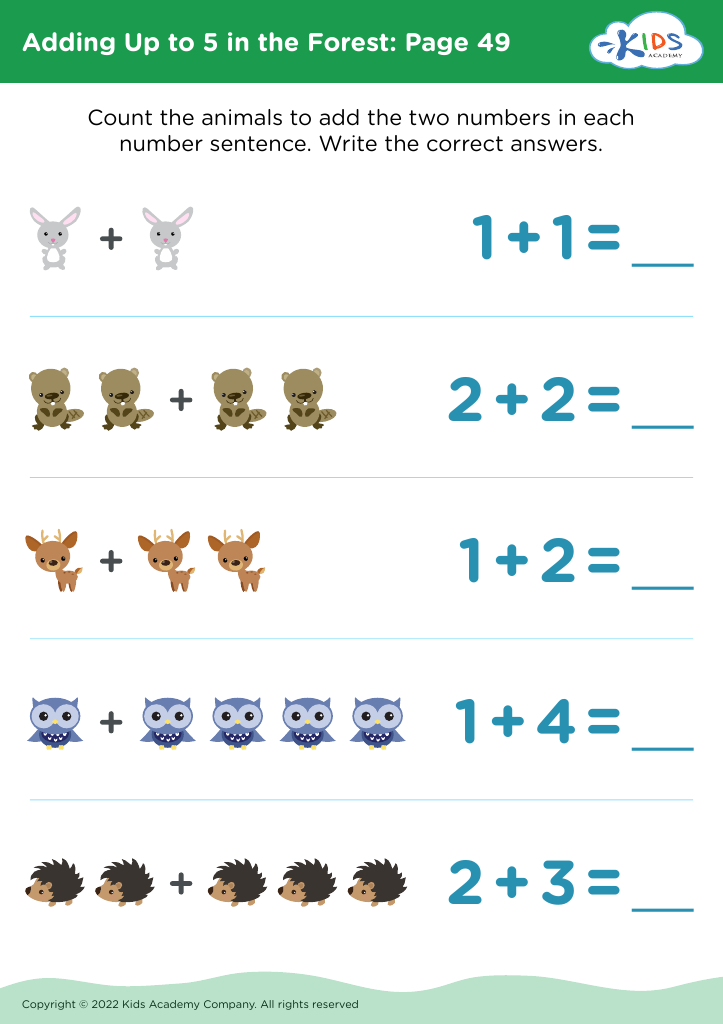
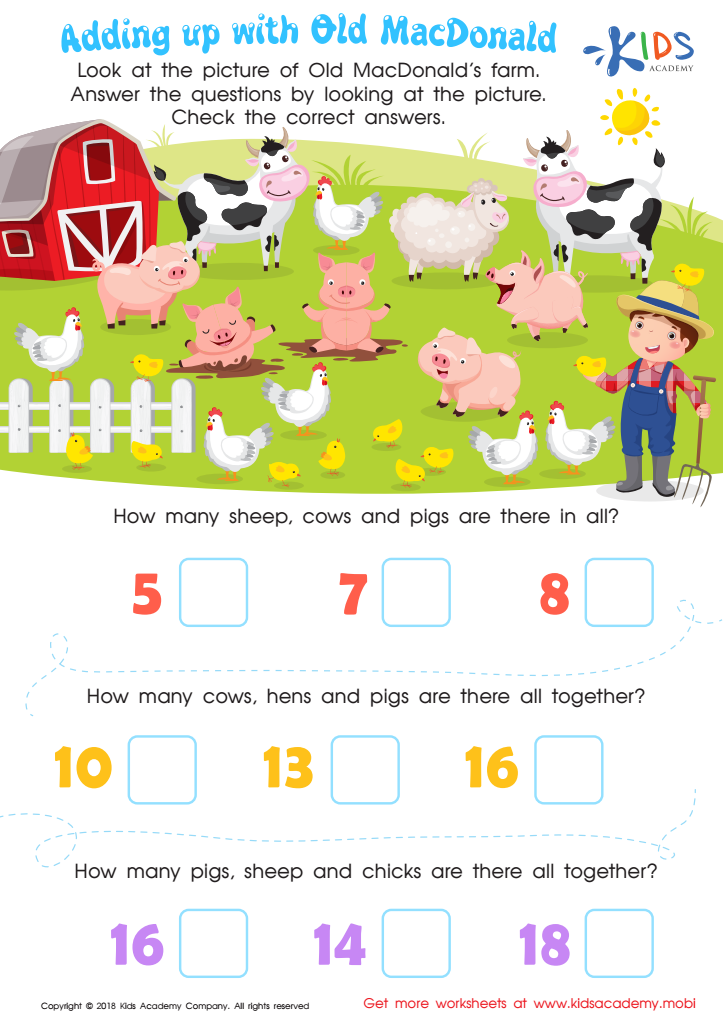
Adding Up with Old MacDonald Worksheet
Old MacDonald needs help counting his animals! Give your little math whiz a fun challenge with a free PDF worksheet. They'll love counting the animals and doing basic addition with two or three addends. Who knew math could be so much fun on the farm?
 Assign to My Students
Adding Up with Old MacDonald Worksheet
Worksheet
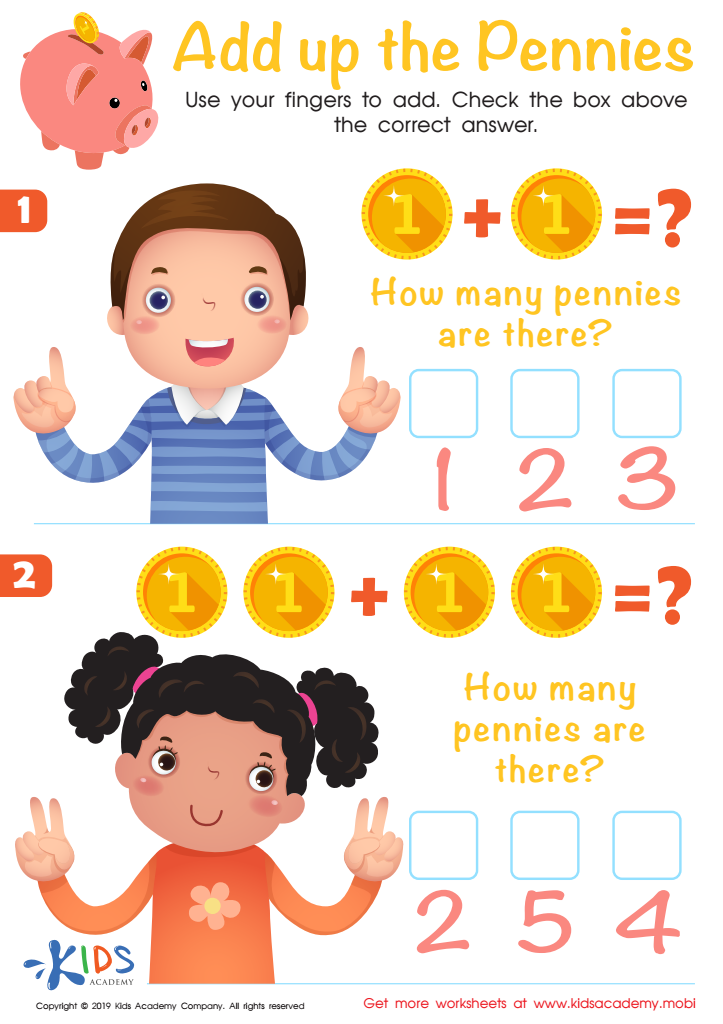
Add up the Pennies Worksheet
Help your kids ace their math skills with this simple worksheet! You can guide them to use their fingers to add numbers and then check the box above the correct answer. With practice and your support, they can become faster and better at adding numbers. No sweating required!
Add up the Pennies Worksheet
Worksheet
Join Kids Academy for Free
Who is primarily going to use this learning content?





.jpg)


Counting proficiency and basic addition skills are foundational aspects of early childhood education that substantially impact children's academic and life success. For ages 3-9, these skills are particularly important in providing conceptual frameworks for more advanced mathematical concepts. Children who acquire these skills early on develop critical thinking, problem-solving, and logical reasoning abilities.
Counting proficiency helps children understand numeration and value, enabling them to comprehend how numbers relate to real-world objects and situations. This understanding is crucial for tackling more complex arithmetic operations in the future. Basic addition skills extend this knowledge, allowing children to see relationships between numbers, gain confidence in managing numerical information, and build a mental arithmetic foundation.
For parents, fostering these skills supports children’s overall cognitive development and ensures they are better prepared for subsequent educational challenges. For teachers, early mastery in counting and addition sets students on a trajectory of mathematical competency that will ease transitions into more advanced topics such as subtraction, multiplication, and division.
Moreover, proficiency in these basic math skills correlates with improved performance in other subjects, as mathematical thinking fosters analytical skills useful across the curriculum. Ultimately, emphasizing counting and addition in early years forms a bedrock for success in school and daily life, shaping self-confidence and lifelong learning habits.








