Shape Recognition Comparison Worksheets for Ages 3-9
3 filtered results
-
From - To
Explore our engaging Shape Recognition Comparison Worksheets designed for children ages 3-9! These worksheets provide a fun and interactive way to help young learners identify and compare various shapes. With colorful visuals and simple instructions, kids will enjoy honing their shape recognition skills while developing critical thinking abilities. Perfect for both classroom and home practice, these printables encourage hands-on learning and promote early math readiness. Let your child discover the world of shapes through delightful activities that enhance their cognitive development and foster a love for learning. Get started today and watch your little learner thrive in their shape knowledge journey!
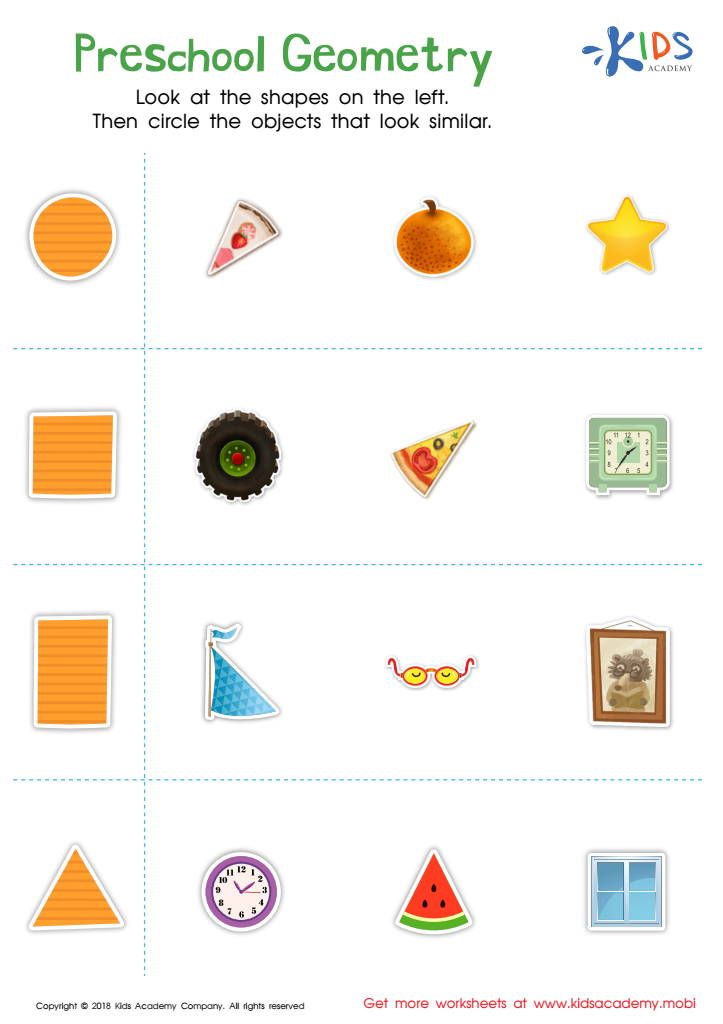
Preschool Geometry Worksheet
 Assign to My Students
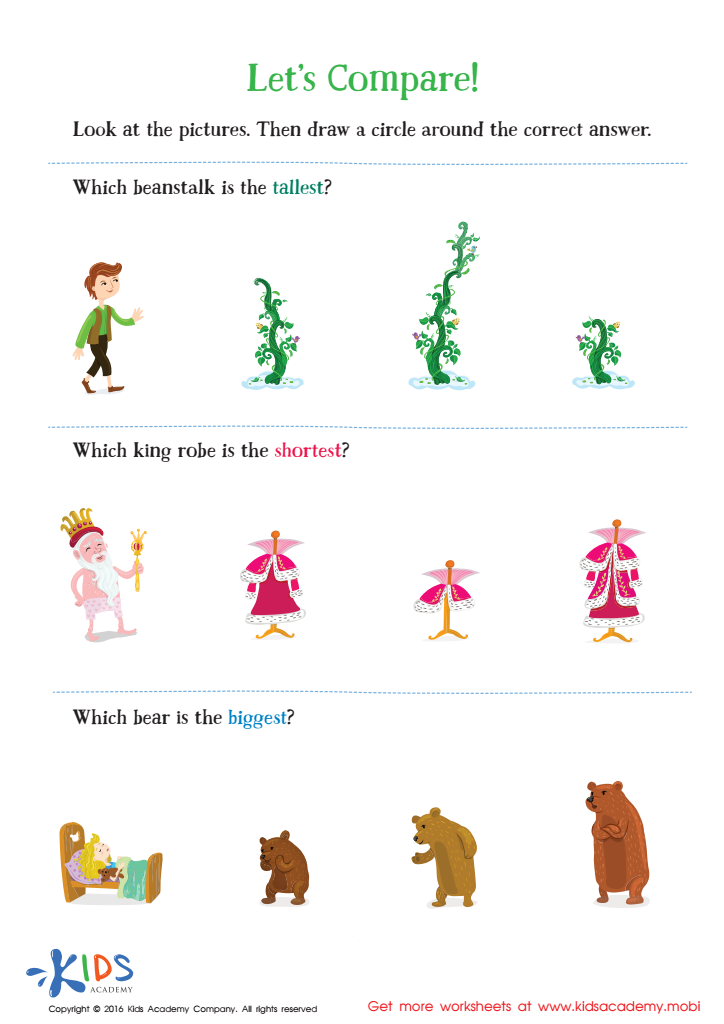
Fairy Tale Worksheet: Let's Compare
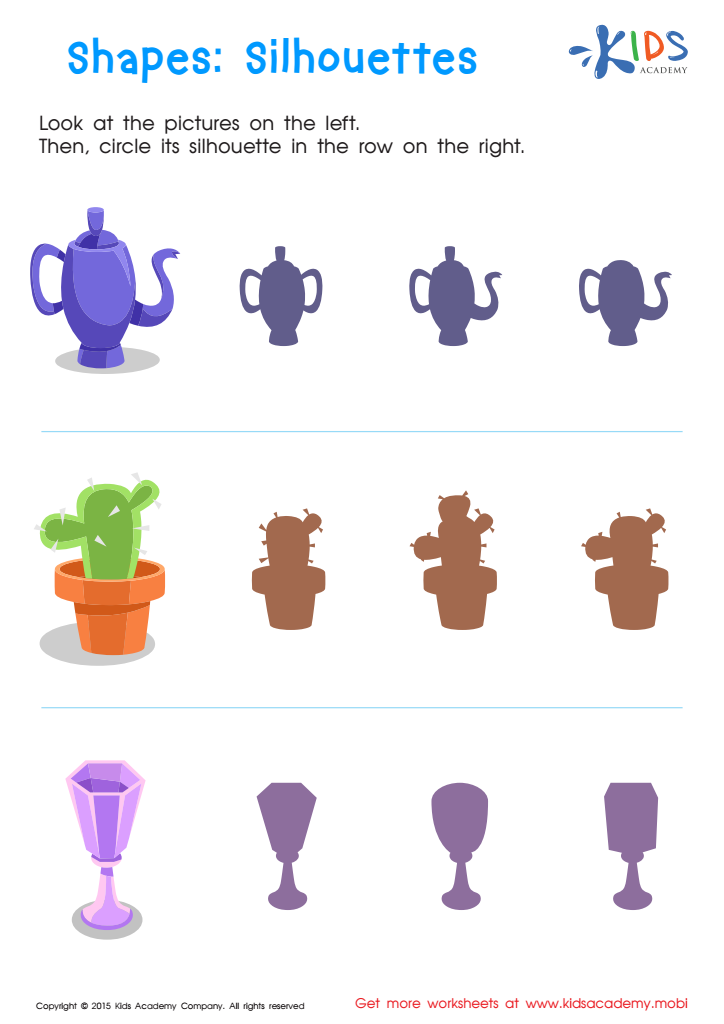
Silhouettes – Shapes Worksheet



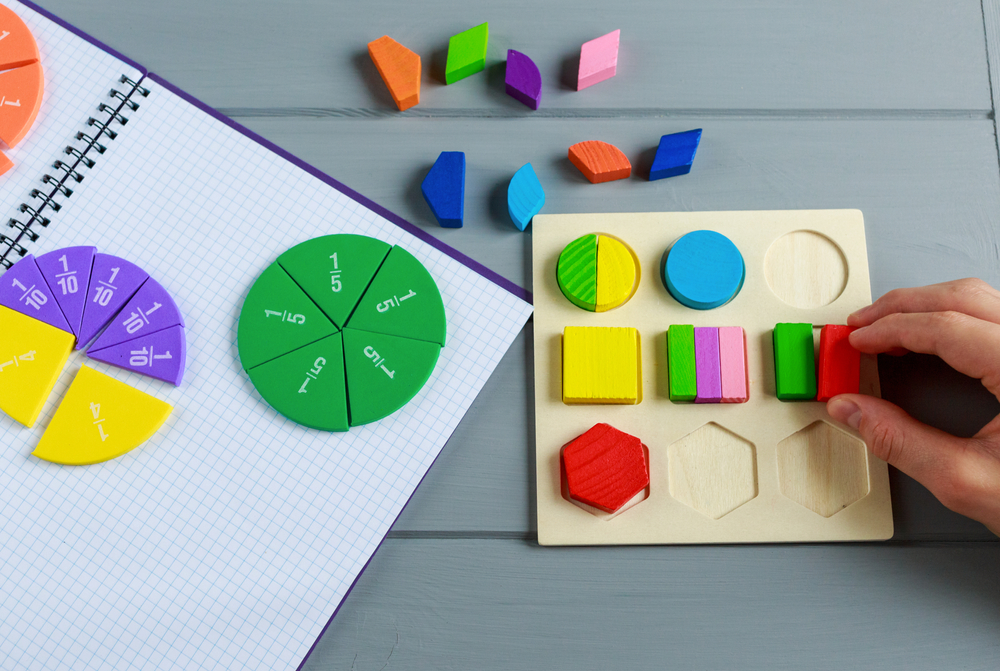



Shape recognition comparison is a crucial aspect of early childhood education, particularly for children aged 3-9. This foundational skill not only aids in cognitive development but also enhances critical thinking and problem-solving abilities. Recognizing and comparing shapes helps children understand spatial relationships and improves their ability to classify and identify objects in their environment.
For teachers and parents, promoting shape recognition comparison fosters mathematical readiness. Early exposure to geometric concepts allows children to grasp more complex mathematical ideas later in their education. Engaging children in activities that involve sorting, categorizing, and comparing shapes also boosts their language development as they learn new vocabulary and descriptive terms related to size, shape, and position.
Additionally, creating a learning-rich environment that emphasizes shape recognition supports imaginative play and creativity. Children often encounter shapes in arts and crafts, allowing them to express themselves while reinforcing their understanding of geometric forms.
Ultimately, supporting shape recognition comparison is essential for holistic development, as it builds the foundation for academic success in subjects like math and science. Therefore, both parents and teachers should prioritize these activities in their educational practices, enabling children to explore and connect with the world around them effectively.








