Hand-eye Coordination Geometry Worksheets for Ages 3-9
7 filtered results
-
From - To
Explore our engaging Hand-eye Coordination Geometry Worksheets designed for children aged 3-9! These fun and interactive activities help young learners develop essential hand-eye coordination skills while exploring geometric shapes. Each worksheet promotes learning through play, making it easy for kids to understand concepts like shapes, sizes, and spatial awareness. Tailored to ignite creativity and curiosity, these resources are perfect for classrooms or home learning environments. Download our worksheets today to support your child’s growth in geometry and fine motor skills, ensuring a solid foundation for future learning. Encourage confidence and exploration with these wonderful educational tools!
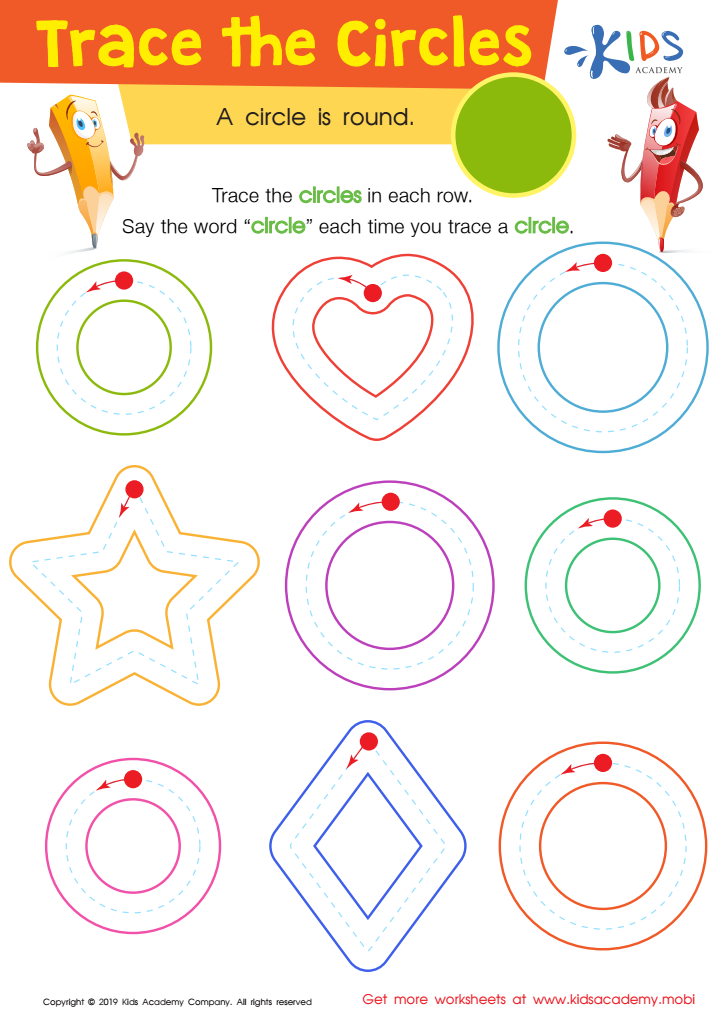
Trace The Circles Worksheet
 Assign to My Students











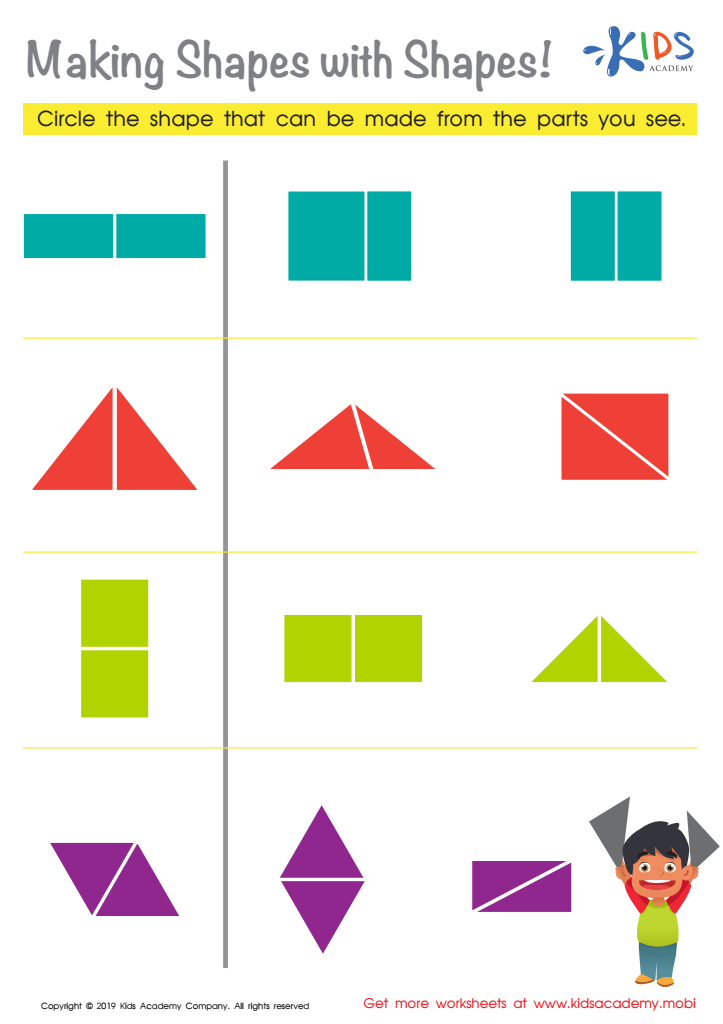
Making Shapes with Shapes Worksheet
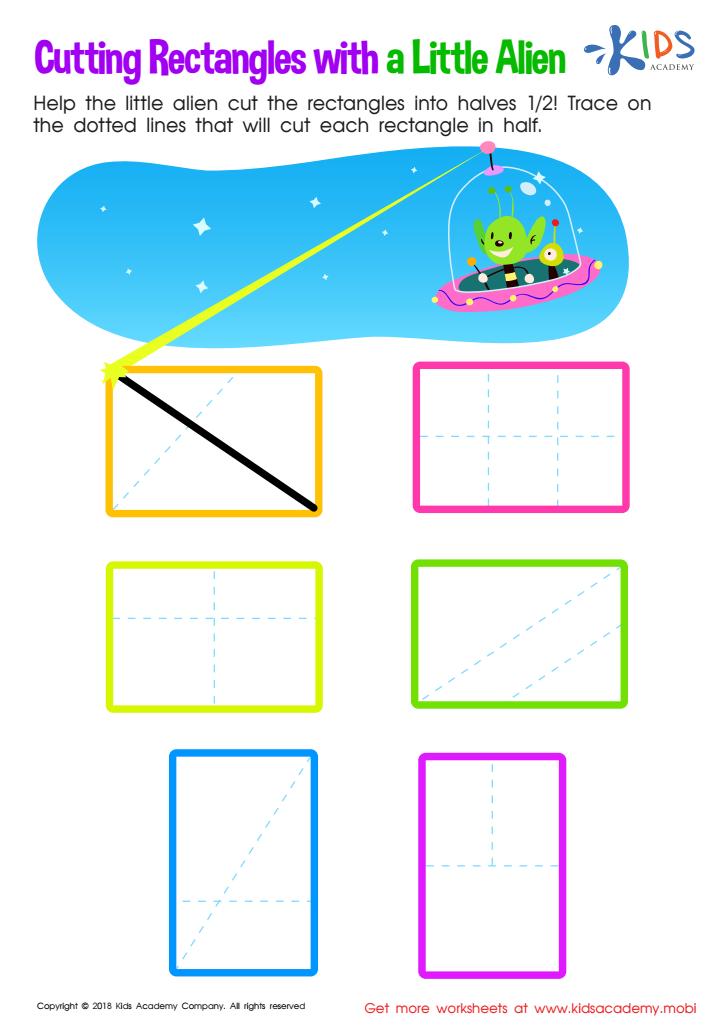
Cutting Rectangles with Alien Worksheet
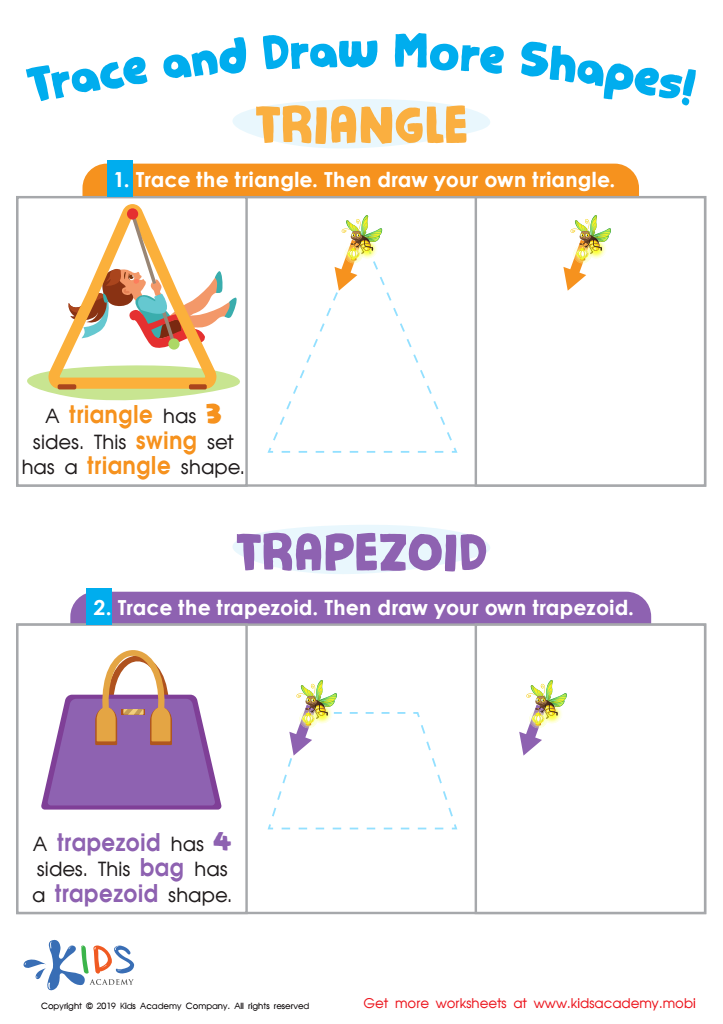
Trace and Draw More Shapes Worksheet
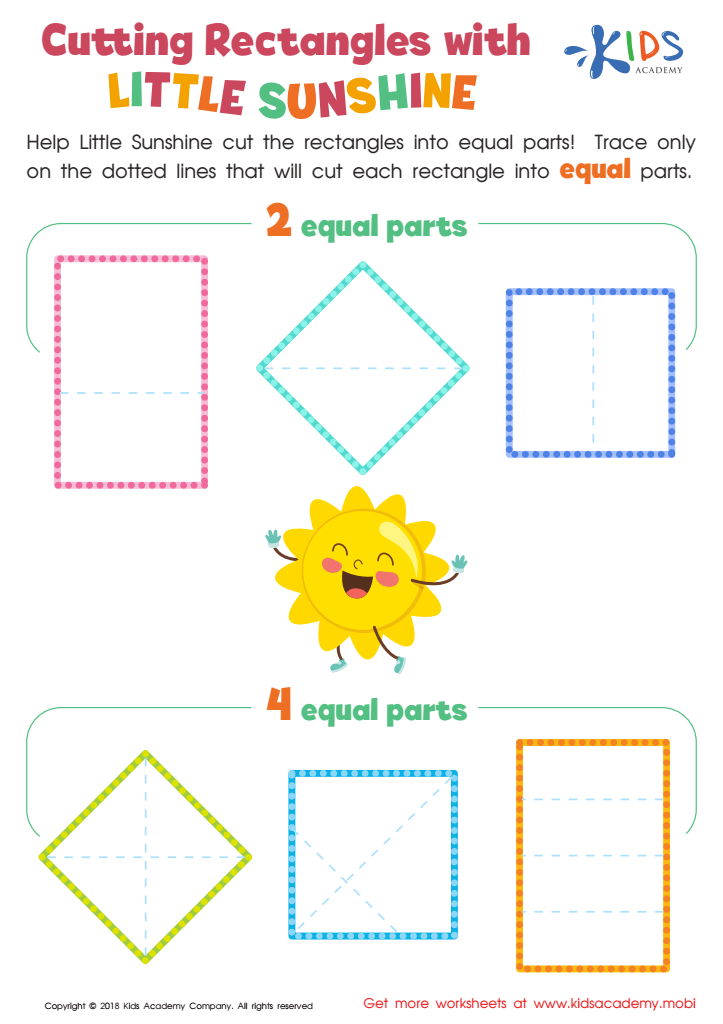
Cutting Rectangles with Little Sunshine Worksheet
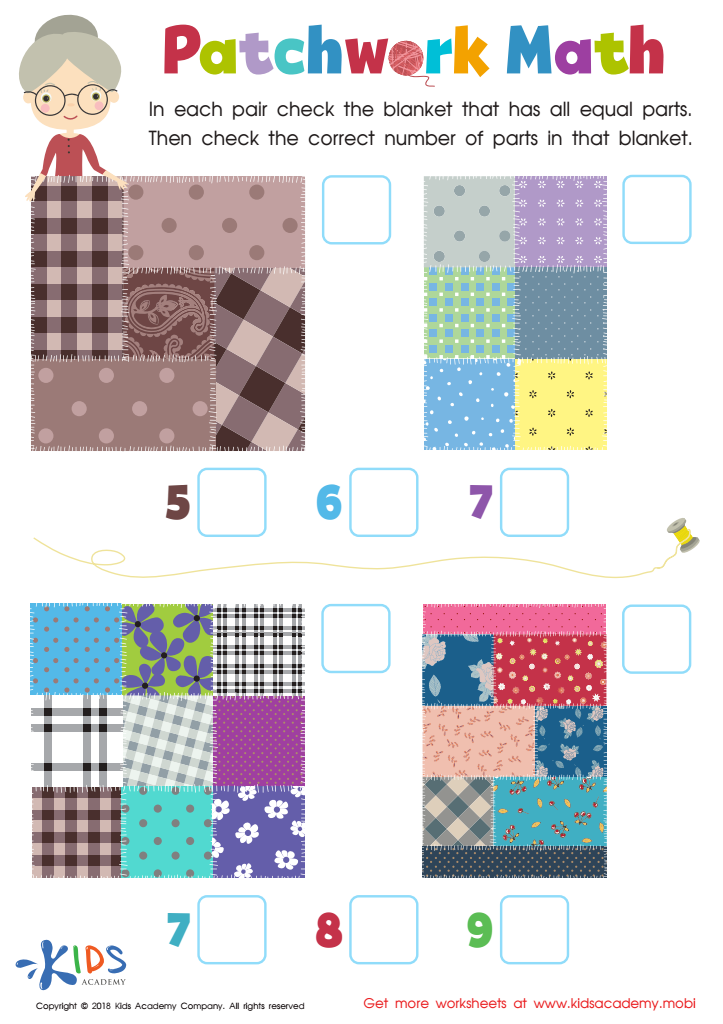
Patchwork Math Worksheet








Hand-eye coordination is a crucial developmental skill for children ages 3-9, and understanding its geometric implications can significantly enhance their learning experience. This coordination allows children to synchronize visual input with physical actions, which is fundamental for a range of activities, including writing, sports, and eventually, technological tasks. By engaging in geometrically-focused activities—such as building blocks or puzzles—children not only refine their hand-eye coordination but also develop spatial awareness and problem-solving skills.
Parents and teachers should care about this development as it lays the groundwork for later academic success in subjects such as mathematics and science. Geometry, being the study of shapes and their properties, closely relates to both hand-eye coordination and fine motor skills. Activities that involve shapes encourage children to recognize patterns and relationships, fostering critical thinking skills.
Moreover, encouraging hand-eye coordination through geometry-related play can boost a child's confidence and motivation. It offers opportunities for social interaction and collaboration when children work together on these fun activities. Ultimately, investing in hand-eye coordination geometric skills can enrich a child’s overall development, support their cognitive growth, and prepare them for the more complex learning ahead.








