Problem-solving abilities Geometry Worksheets for Ages 3-9
5 filtered results
-
From - To
Enhance your child's problem-solving skills with our engaging Geometry Worksheets designed for ages 3-9! These printable resources foster critical thinking through fun, hands-on activities that teach geometric concepts in an interactive way. Children will enjoy exploring shapes, understanding spatial relationships, and developing logical reasoning as they work through a variety of challenges. Tailored to suit different learning paces, our worksheets empower young learners to confidently tackle problems while sparking their curiosity about the world around them. Explore our collection today and equip your child with the foundation they need for future math success!
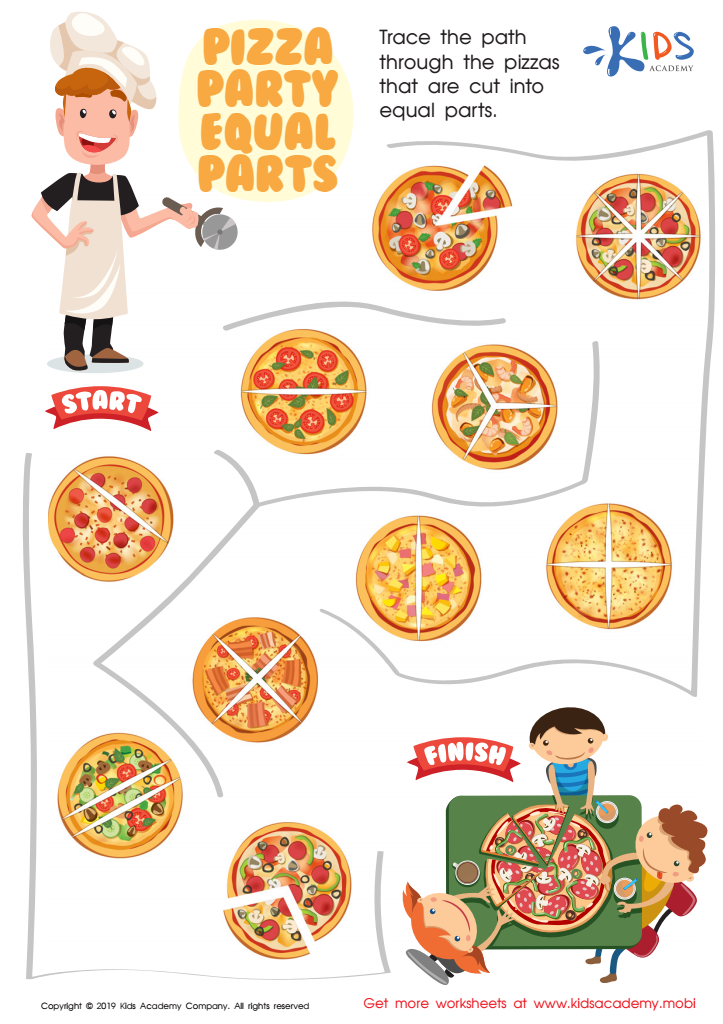
Pizza Party Equal Parts Worksheet
 Assign to My Students











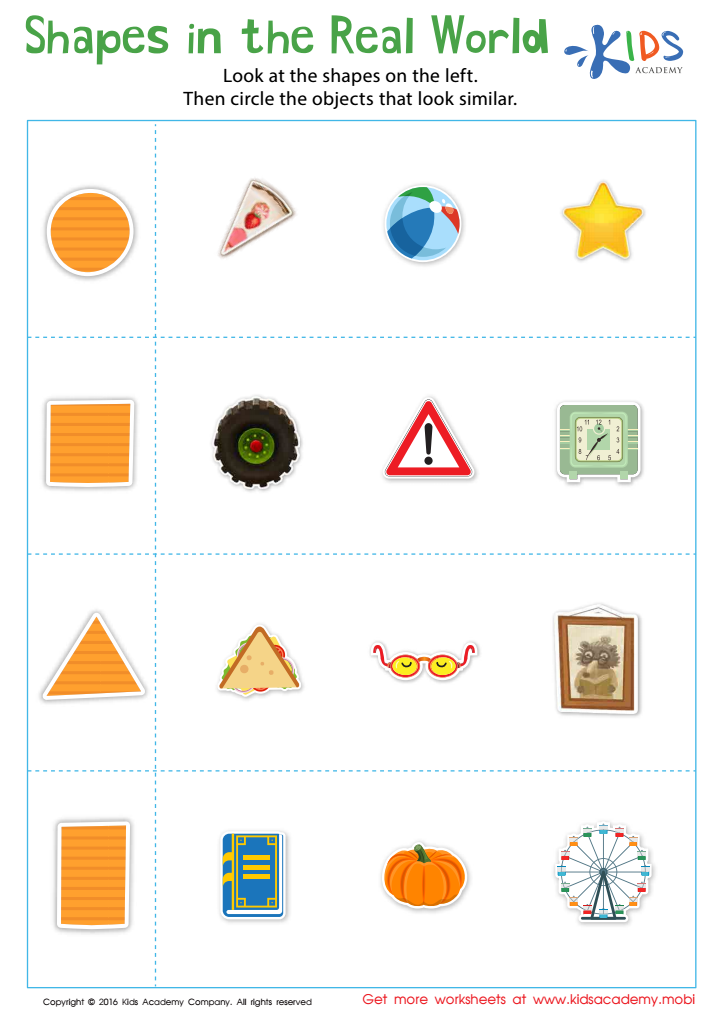
Shapes in the Real World Worksheet
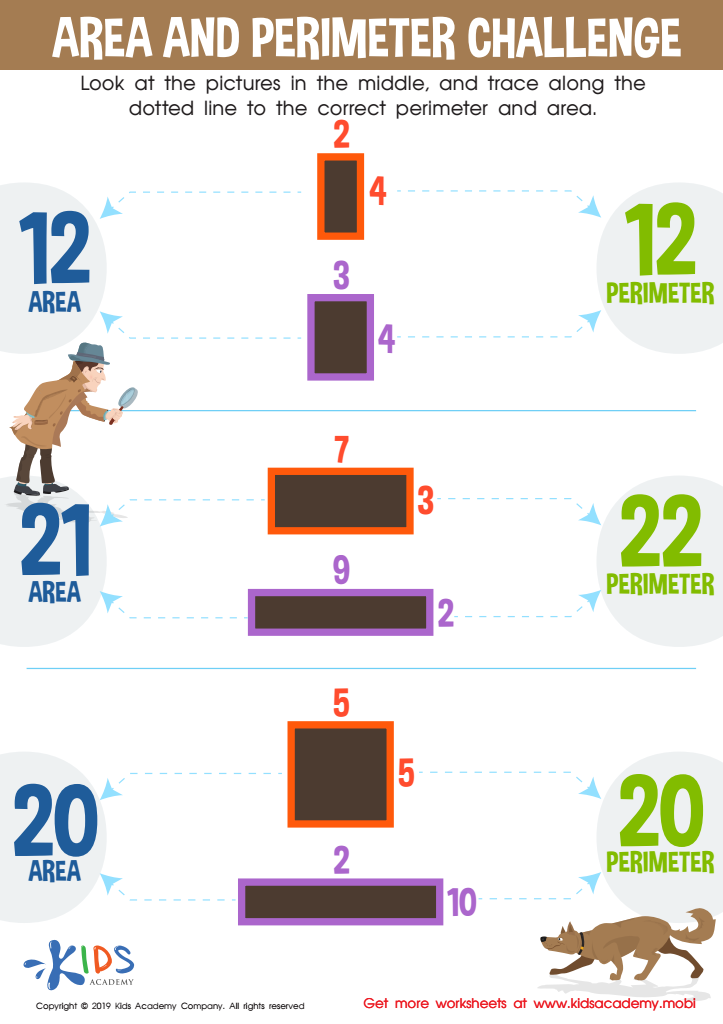
Area and Perimeter Challenge Worksheet
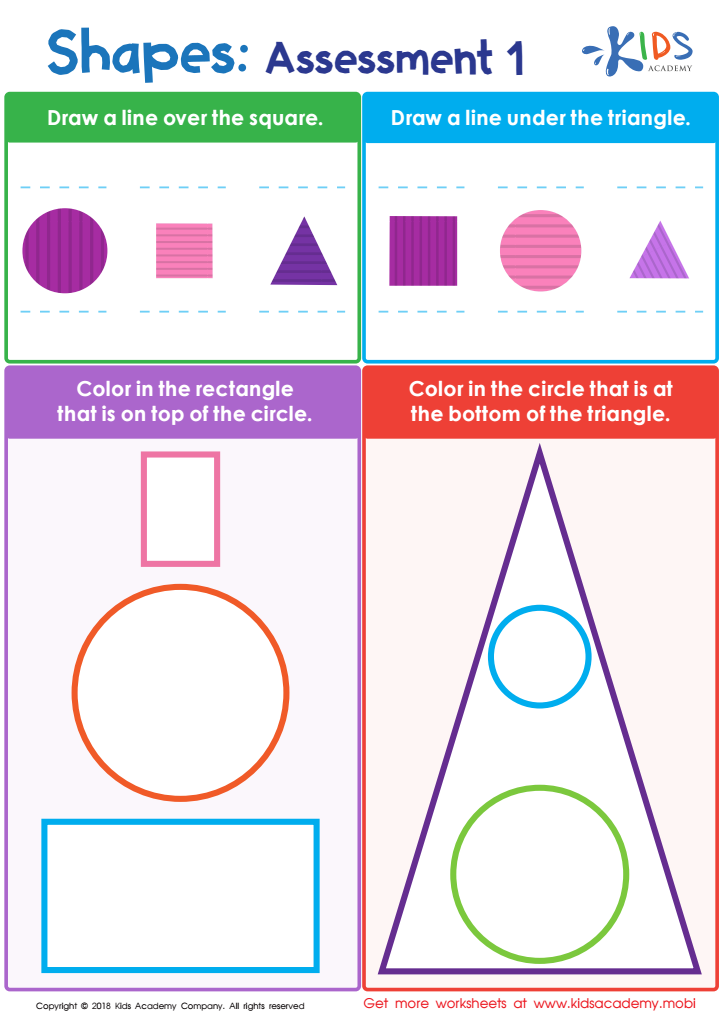
Shapes: Assessment 1 Worksheet
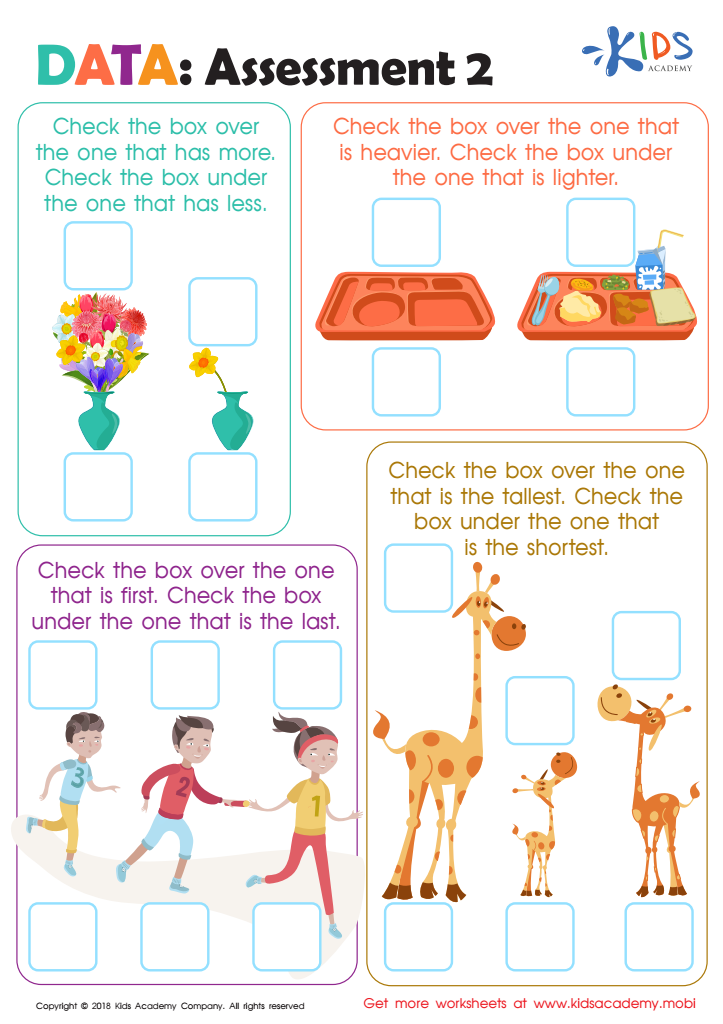
Data: Assessment 2 Worksheet








Problem-solving abilities in geometry are crucial for young children, ages 3-9, because they lay the foundation for critical thinking, spatial awareness, and logical reasoning. During these formative years, children naturally explore shapes, sizes, and spatial relationships through play and interaction with their environment. Engaging with geometric concepts enhances their ability to recognize patterns, categorize objects, and visualize solutions—all of which are essential cognitive skills.
As parents and teachers nurture these abilities, they also encourage creativity and curiosity in children. Exploring geometry through hands-on activities like building with blocks, drawing shapes, or participating in games introduces mathematical concepts in an enjoyable manner. This hands-on experience not only strengthens their problem-solving capabilities but also promotes perseverance as children learn to approach challenges methodically.
Furthermore, early exposure to geometric problem-solving has lasting academic benefits. Children who develop strong foundations in geometry are better prepared for more advanced mathematical concepts later in life and are likely to excel in STEM fields. Ultimately, investing time in fostering these skills supports holistic development and opens doors for future learning opportunities, reinforcing the importance for both parents and teachers to prioritize geometric problem-solving in early education.








