
Associative learning Numbers Worksheets for Ages 3-9
4 filtered results
Difficulty Level
Grade
Age
-
From - To
Subject
Activity
Standards
Discover our Associative Learning Numbers Worksheets designed for ages 3-9 at Kids Academy! These engaging worksheets help young learners build crucial math skills through fun, interactive exercises. By associating numbers with visual cues and relatable objects, children easily grasp numerical concepts, enhancing their cognitive development and number sense. Perfect for preschool and elementary students, our worksheets cover counting, number recognition, and simple arithmetic, ensuring a solid math foundation. Foster a love for learning with colorful designs and captivating activities that make math enjoyable. Visit Kids Academy today for high-quality resources that prepare your child for academic success!
Favorites
With answer key
Interactive
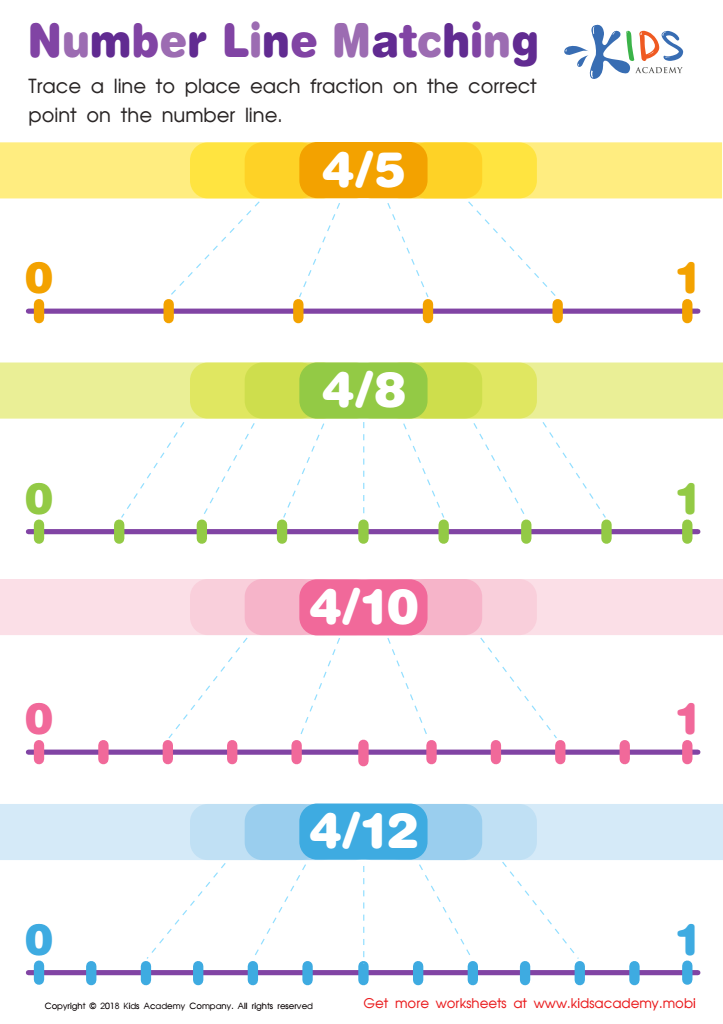
Number Line Matching Worksheet
Math can be fun! Have your child count points on the number line, then identify and trace fractions above it. It's a great way for them to learn and have some fun!
 Assign to My Students
Number Line Matching Worksheet
Worksheet
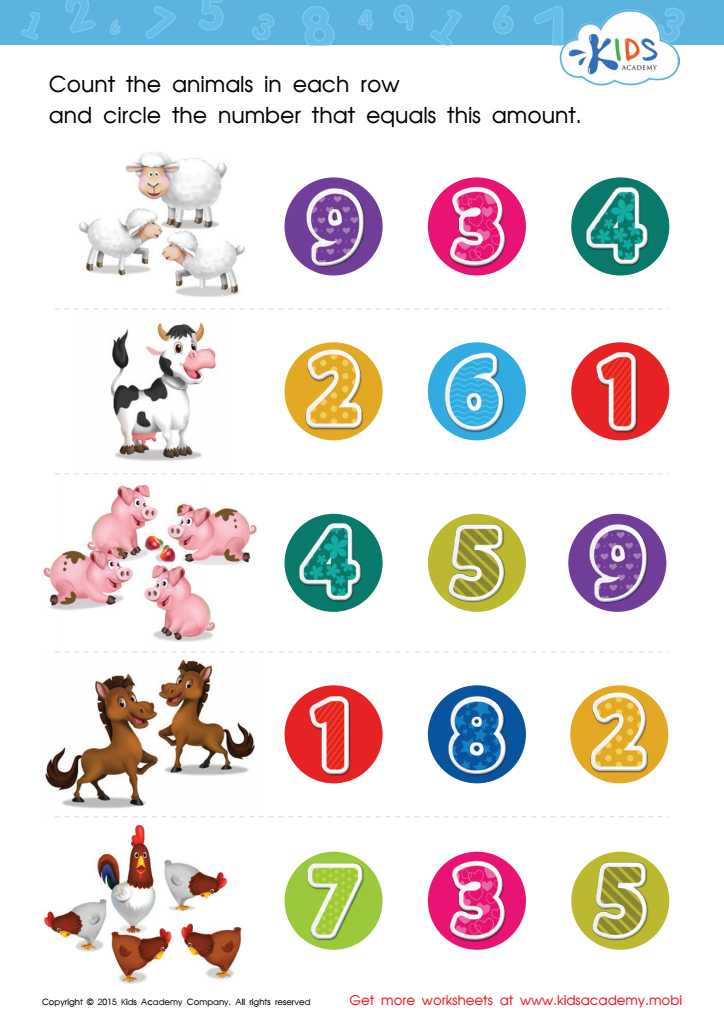
Count and Match 1 – 5 Math Worksheet
Find the colorful worksheet aimed to help your little learner develop their math skills. Count the cute animals and identify the correct numbers based on the Singapore Math method. This worksheet is a fantastic way to start your kid on their mathematical journey.
Count and Match 1 – 5 Math Worksheet
Worksheet
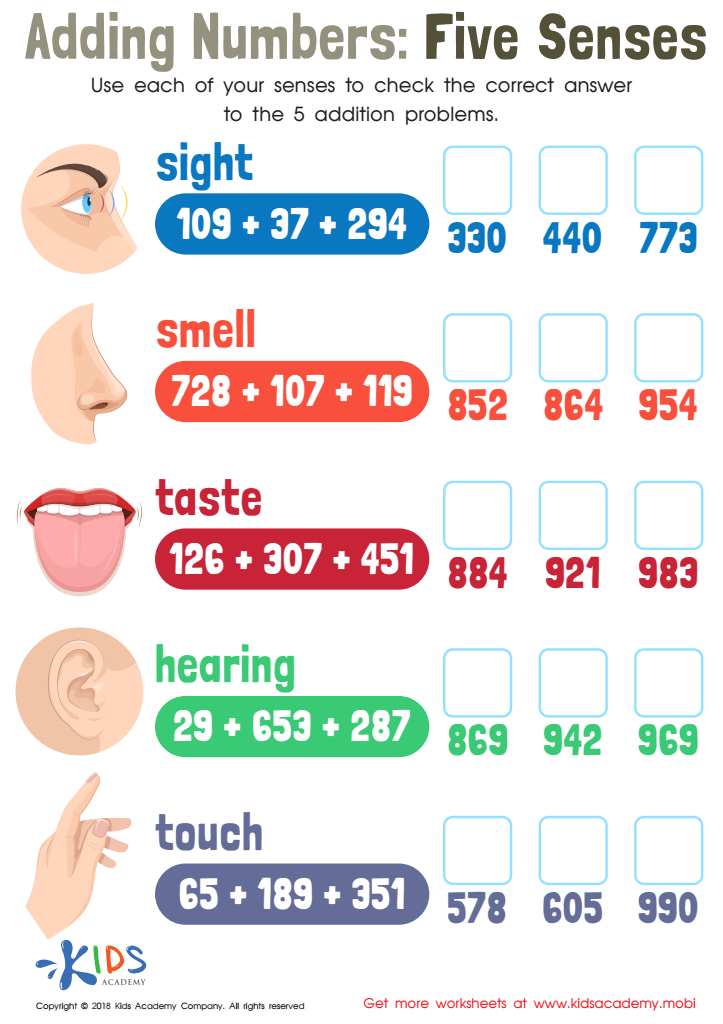
Adding Numbers: Five Senses Worksheet
Help your child identify the five senses on their body: eye, nose, tongue, ear, and skin. Explain that they're used for seeing, smelling, tasting, hearing and touching. Then, have them solve the five addition problems in the worksheet and check the correct answers.
Adding Numbers: Five Senses Worksheet
Worksheet
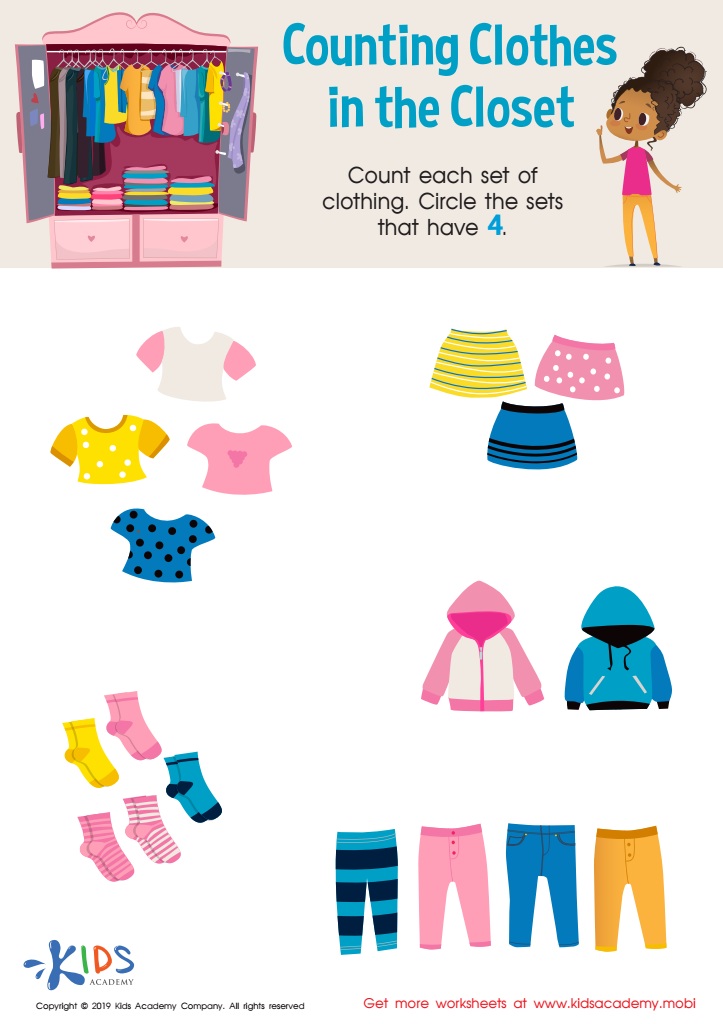
Counting Clothes Worksheet
Help your kids become better counters with fun exercises and objects they can relate to. Print out this worksheet and assist your kid in counting 5 sets of clothing. Have them circle the sets that have 4 so they can master counting small numbers. Strengthen their math skills with your help.
Counting Clothes Worksheet
Worksheet
Join Kids Academy for Free
Who is primarily going to use this learning content?








Associative learning with numbers is essential for young children aged 3-9 because it lays a foundational understanding of mathematical concepts in a relatable and engaging manner. At this developmental stage, children's brains are highly receptive to making connections between ideas and experiences. Associative learning utilizes this natural tendency by linking numbers with familiar objects, stories, or experiences, making the abstract concept of numbers more concrete and comprehensible.
For parents and teachers, focusing on associative learning facilitates the development of critical thinking and problem-solving skills. By associating numbers with everyday activities, such as counting apples, identifying shapes in a playground, or sequencing events in a story, children can understand the practical application of math. This method not only helps in grasping number sense but also in retaining information longer.
Moreover, associative learning often involves multiple sensory experiences, which cater to different learning styles, whether a child is a visual, auditory, or kinesthetic learner. This inclusive approach ensures that no child is left behind.
Lastly, fostering a positive association with numbers at an early age can build a child's confidence and enthusiasm towards math, counteracting potential math anxiety. This positive mindset serves them well throughout their academic journey and beyond, providing a strong base for future complex mathematical concepts.








