
Number representation Numbers Worksheets for Ages 3-9
3 filtered results
Difficulty Level
Grade
Age
-
From - To
Subject
Activity
Standards
Discover our engaging Number Representation Worksheets tailored for children ages 3 to 9! These worksheets are designed to enhance your child's understanding of numbers through interactive activities that foster early math skills. From counting and matching to identifying numbers in various forms, our resources provide a fun and effective learning experience. Perfect for homeschoolers and classroom settings alike, these printable worksheets aid in visualizing numbers and their values. Help your child build a strong foundation in math with our thoughtfully crafted materials that cater to different learning styles. Start exploring the world of numbers today and watch their confidence soar!
Favorites
With answer key
Interactive
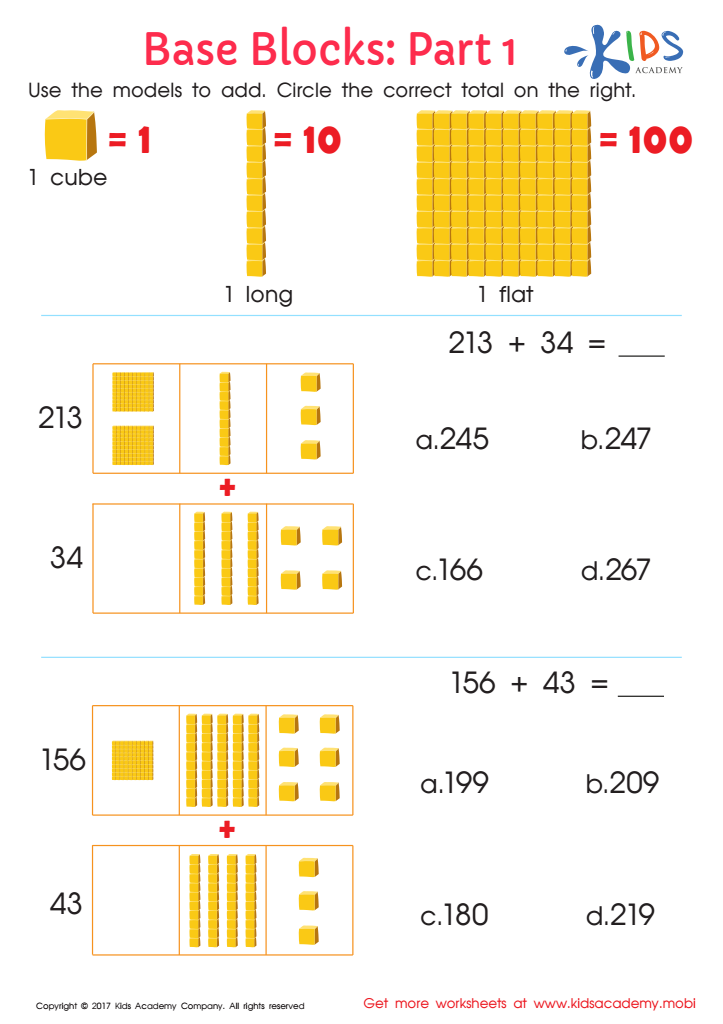
Base Ten Blocks Worksheet: Part 1
They promote numeracy and are a great substitute when kids don't have access to physical blocks.
 Assign to My Students
Base Ten Blocks Worksheet: Part 1
Worksheet
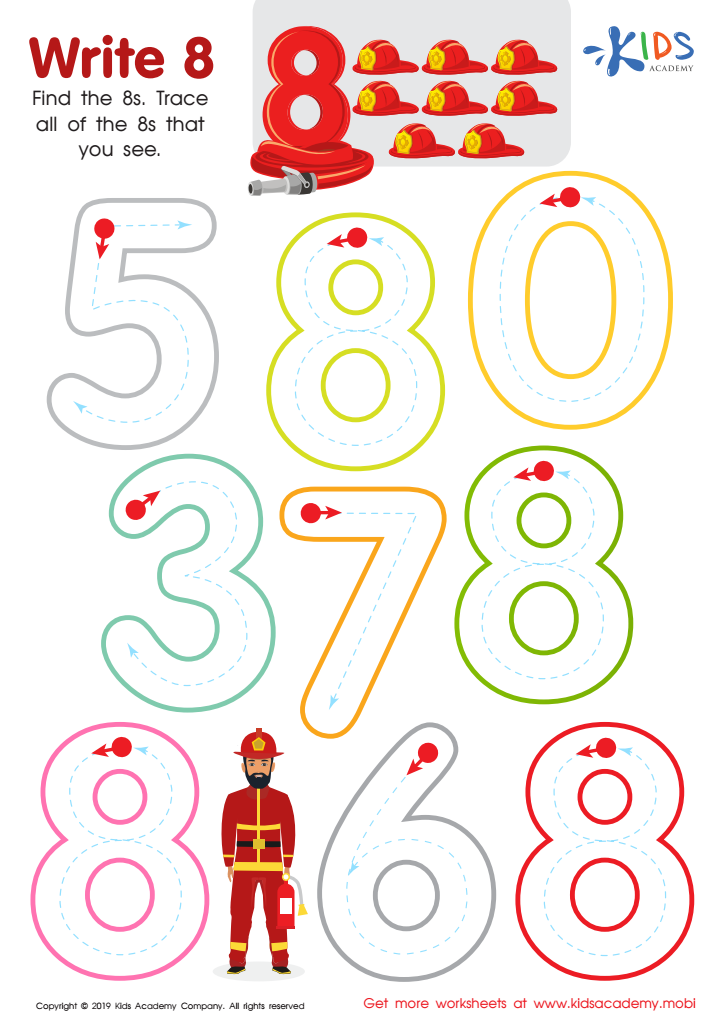
Write 8 Worksheet
Once your kids can count small numbers, it's time to learn how to write them. With your help and patience, they will soon be pros! This worksheet will make learning easier. Help them spot the 8s in the picture, then help them trace them.
Write 8 Worksheet
Worksheet
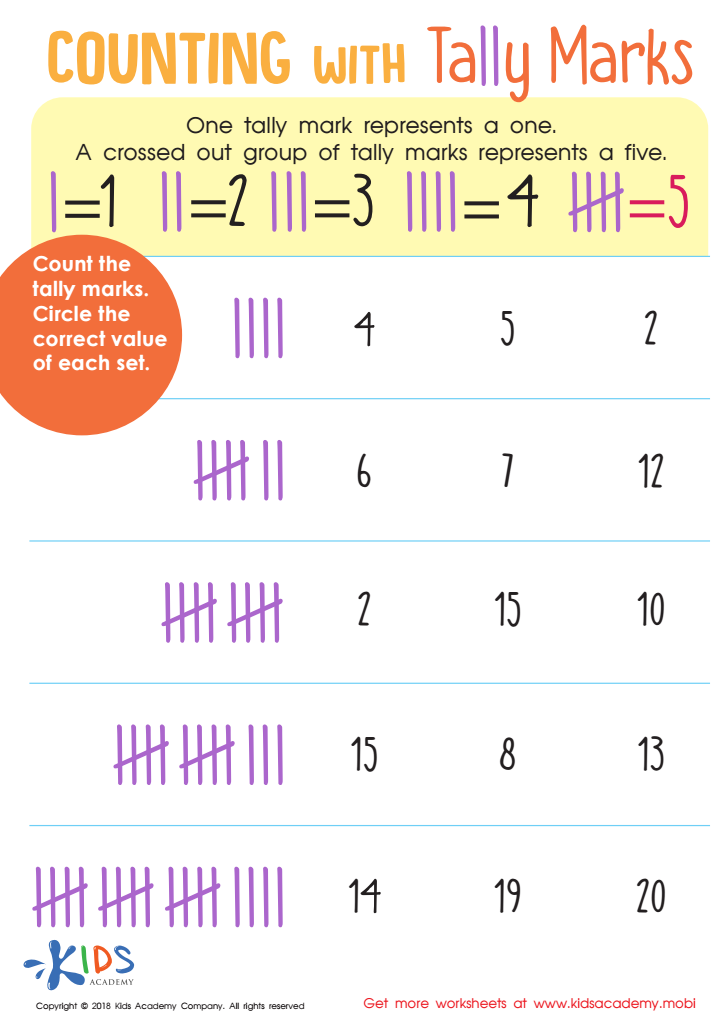
Counting with Tally Marks Worksheet
Young mathematicians can use tally marks to count on or back, and learn to give larger numbers value with efficiency. This PDF teaches them that each tally equals one and five can be grouped together to add/subtract quickly and accurately. They can then use tallies for math problems and scorekeeping during games with friends.
Counting with Tally Marks Worksheet
Worksheet
Join Kids Academy for Free
Who is primarily going to use this learning content?







Understanding number representation is crucial for children aged 3-9, as it lays the foundation for their mathematical skills and overall cognitive development. At this age, children encounter various ways to represent numbers, including words, symbols, and physical objects. Parents and teachers should care about this for several reasons.
First, number representation enhances a child's ability to recognize patterns and relationships between numbers. This foundational skill is essential for advanced math concepts later on. Early exposure to different representations—like tally marks, fingers, and number lines—helps children grasp abstract ideas in a tangible way.
Second, children learn through play and exploration. Engaging with objects, such as blocks or beads, promotes hands-on learning that makes math both fun and relatable. This active involvement fosters a positive attitude towards math, cultivating a lifelong appreciation for the subject.
Lastly, a strong understanding of number representation supports critical thinking and problem-solving skills. Children who master these concepts develop a confidence that extends beyond math to other academic areas.
In conclusion, by emphasizing number representation, parents and teachers equip children with vital tools for success in school and everyday life. Investing attention in this early stage significantly benefits their overall development.








