Understanding tens Numbers Worksheets for Ages 3-9
4 filtered results
-
From - To
Discover our enriching "Understanding Tens Numbers Worksheets for Ages 3-9" at Kids Academy! Designed to build robust foundational math skills, our worksheets help children effortlessly grasp the concept of tens. Engaging and age-appropriate activities provide young learners with fun exercises and effective practice. Whether recognizing groups of tens or mastering the transition from unit to tens positions, our materials cater to diverse learning styles. Equip your children with the skills they need to progress confidently in their math journey. Visit Kids Academy today for vibrant, educational resources that make learning numbers both enjoyable and easy!
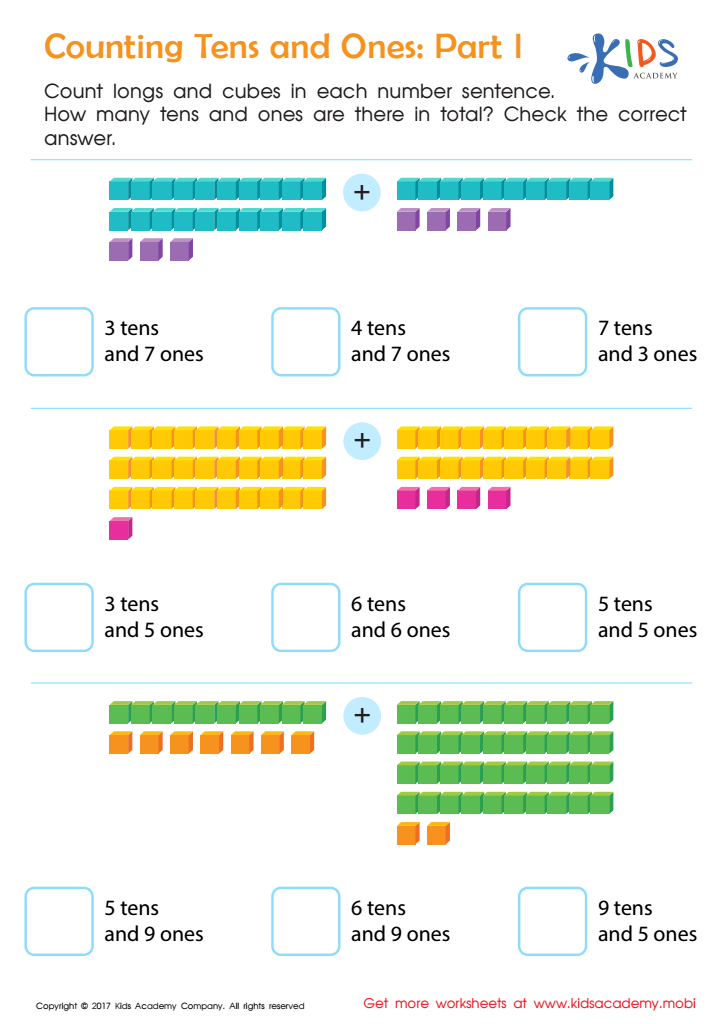
Counting Tens and Ones: Part 1 Worksheet
 Assign to My Students
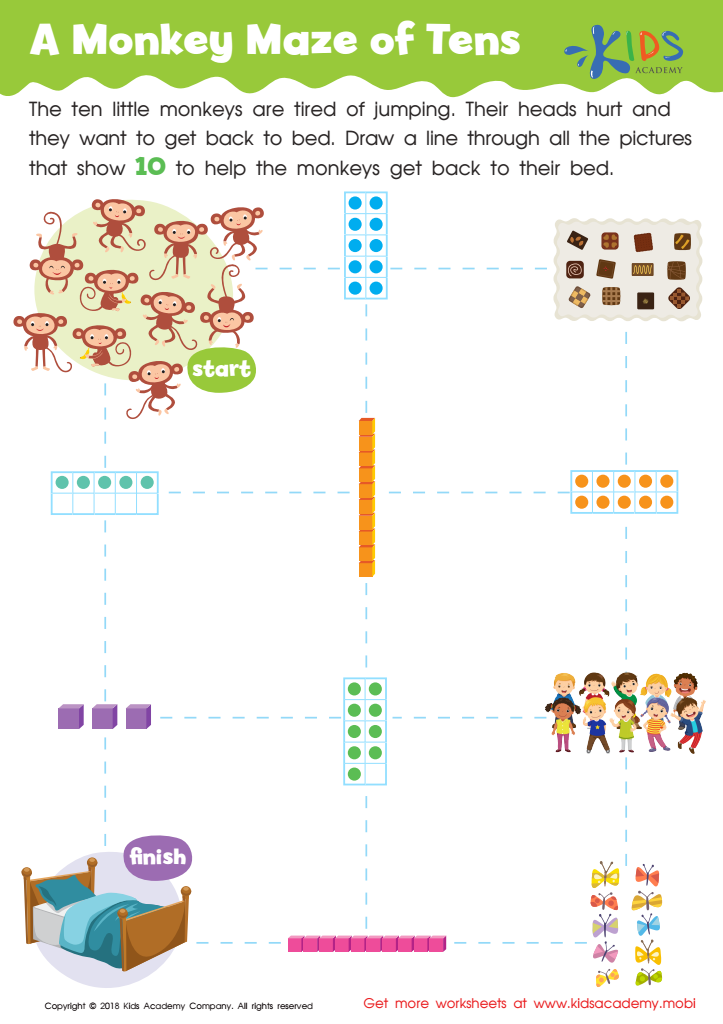
A Monkey Maze of Tens Worksheet
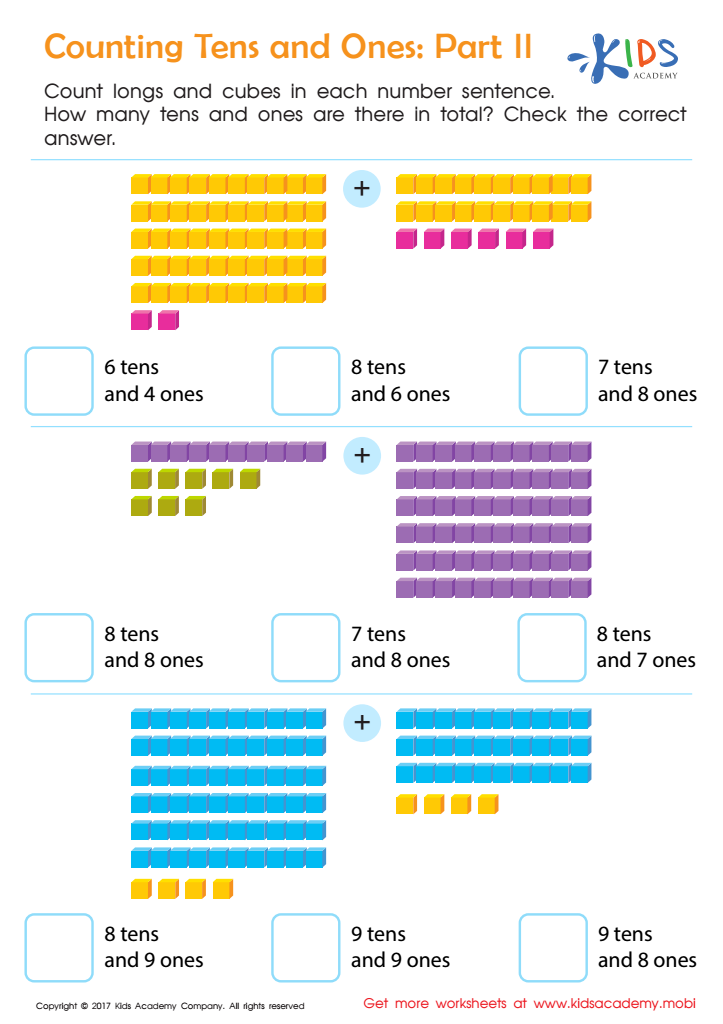
Counting Tens and Ones: Part 2 Worksheet
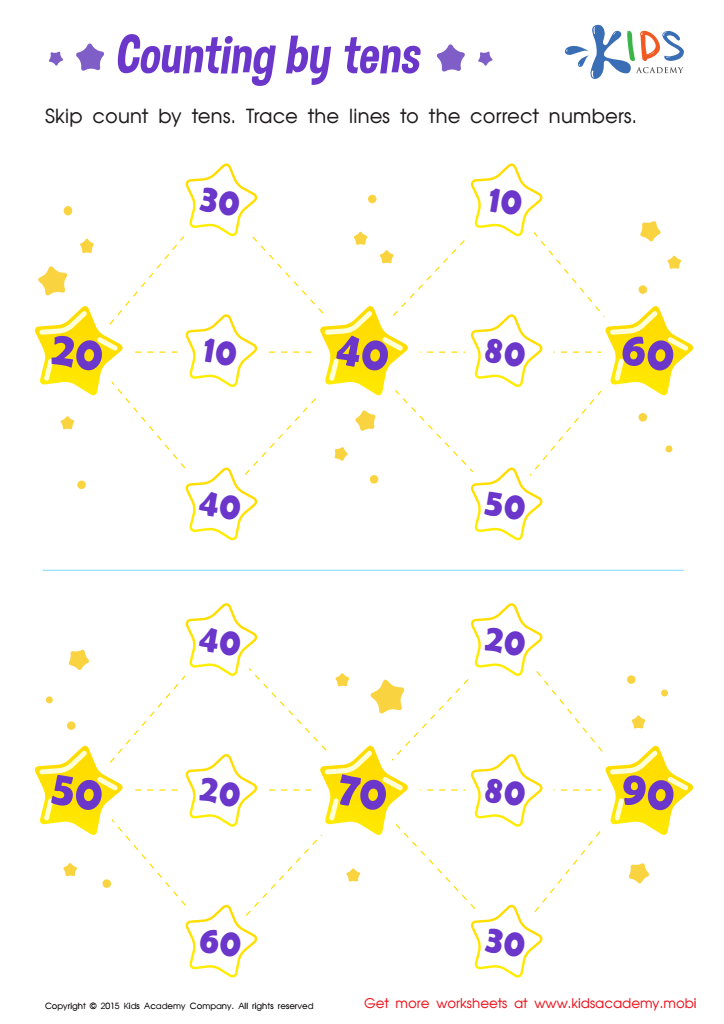
Learn Dozens: Counting by Tens Printable








Understanding "tens" numbers, or the concept of place value with tens and units, is foundational for children's mathematical development and is crucial for ages 3-9. This early comprehension sets the stage for more advanced mathematical learning, literacy, and life skills.
Firstly, grasping the concept of tens helps children easily manage larger numbers, making addition, subtraction, and other arithmetic operations more intuitive. For instance, recognizing that 12 is made up of 1 ten and 2 ones accelerates their ability to add and subtract efficiently.
Secondly, a solid understanding of tens provides a basis for later mathematical concepts like multiplication, division, and even fractions. When children see numbers in groups of ten, it helps them visualize and manipulate numbers more easily.
Additionally, early exposure to the concept boosts problem-solving skills and logical thinking. It encourages children to think about numbers in more flexible ways, fostering a deeper understanding that will benefit them throughout their education.
Finally, in practical life, understanding tens is crucial for skills like counting money, measuring items, and telling time. By mastering this concept early on, children are not only preparing for academic success but also gaining essential life skills. Therefore, parents and teachers should prioritize teaching “tens” to ensure a strong mathematical foundation.








