Fine Motor Skills (coloring) Math Worksheets for Ages 3-9
9 filtered results
-
From - To
Nurture your child's growth with our Fine Motor Skills (coloring) Math Worksheets designed for ages 3-9. These engaging worksheets seamlessly blend fun and education, featuring a variety of math-focused coloring activities that bolster essential fine motor skills. Children will improve their pencil grip, hand-eye coordination, and dexterity while exploring fundamental math concepts such as shapes, numbers, and patterns. Perfect for classroom or home use, our printable worksheets offer an enjoyable way to develop precision and creativity, ensuring your child builds a strong foundation for future learning. Embrace a hands-on approach to math education today!
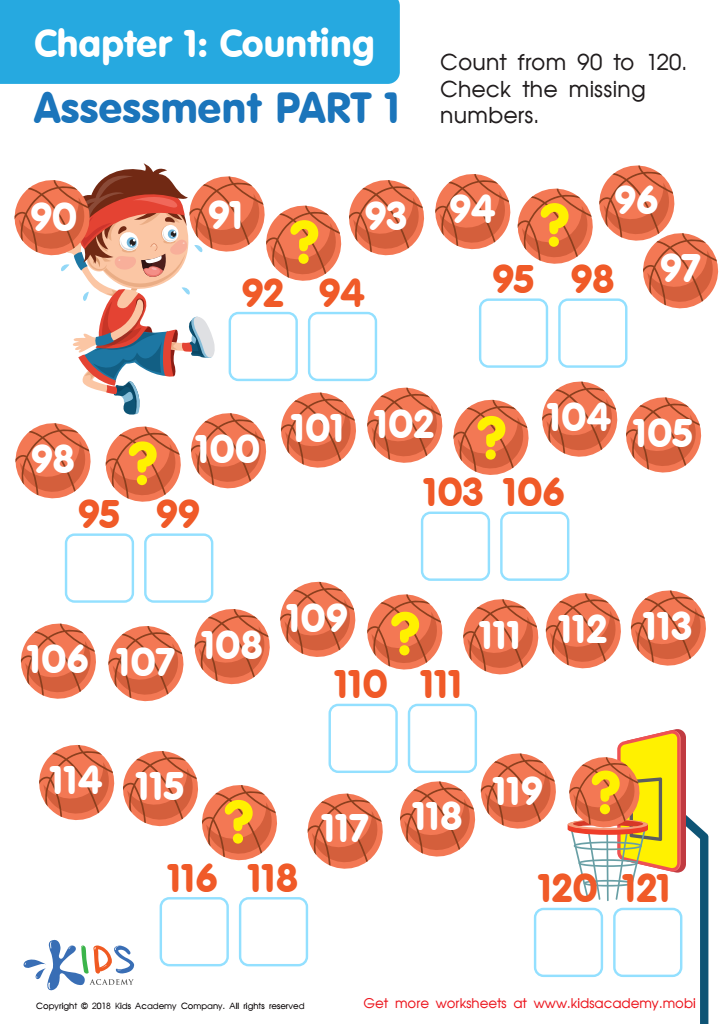
Counting Past 1: Assessment 1 Worksheet
 Assign to My Students
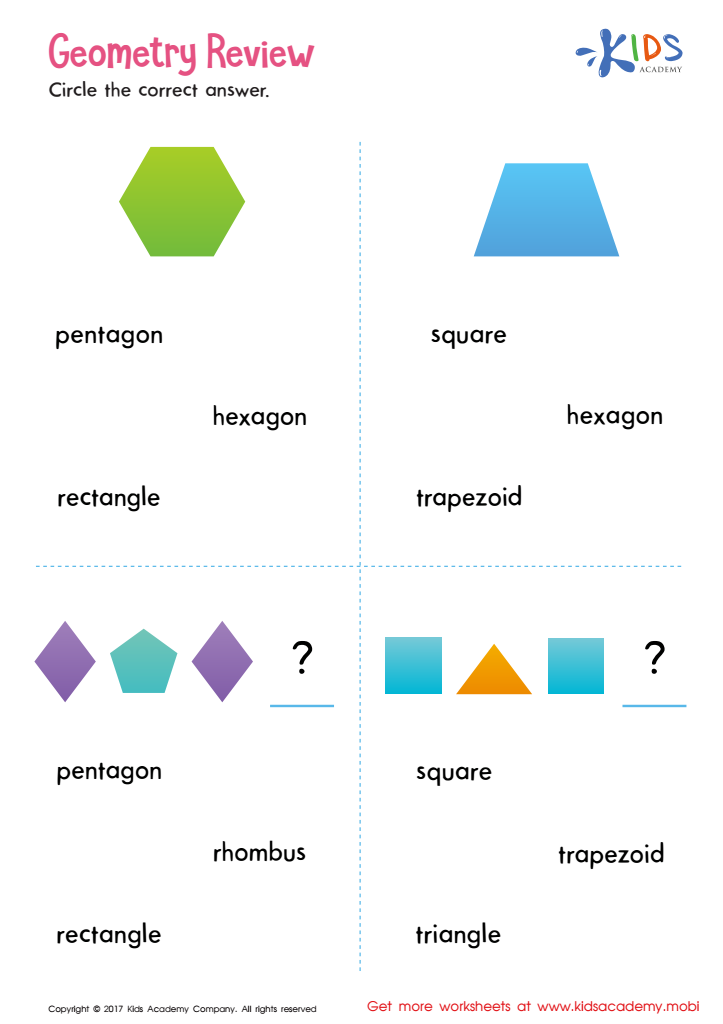
Geometry Review Printable
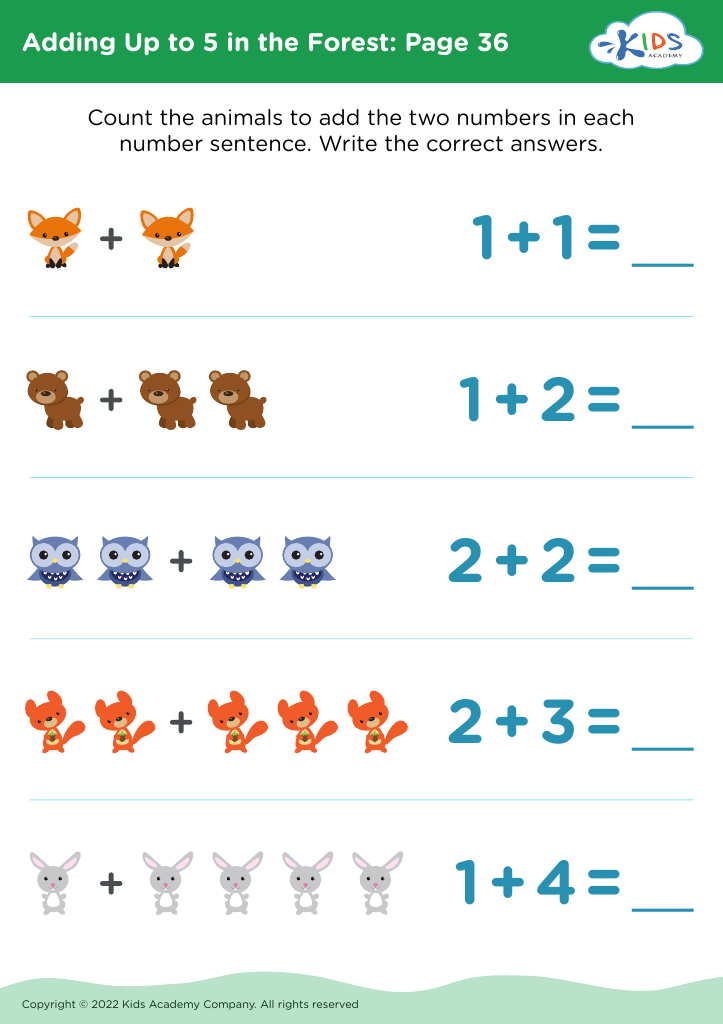
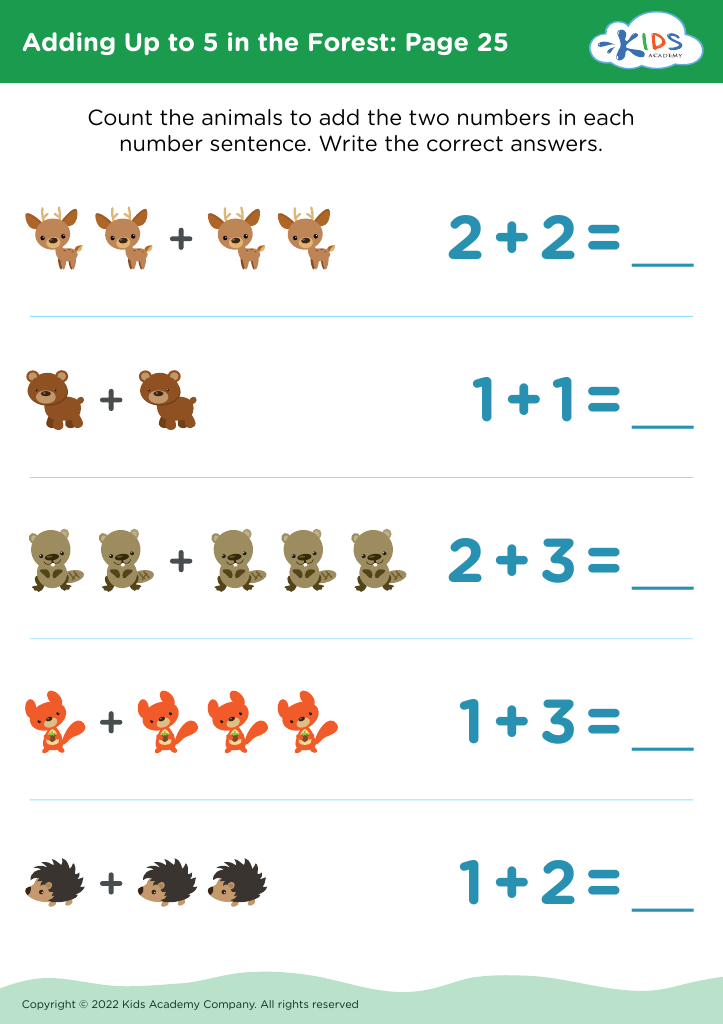
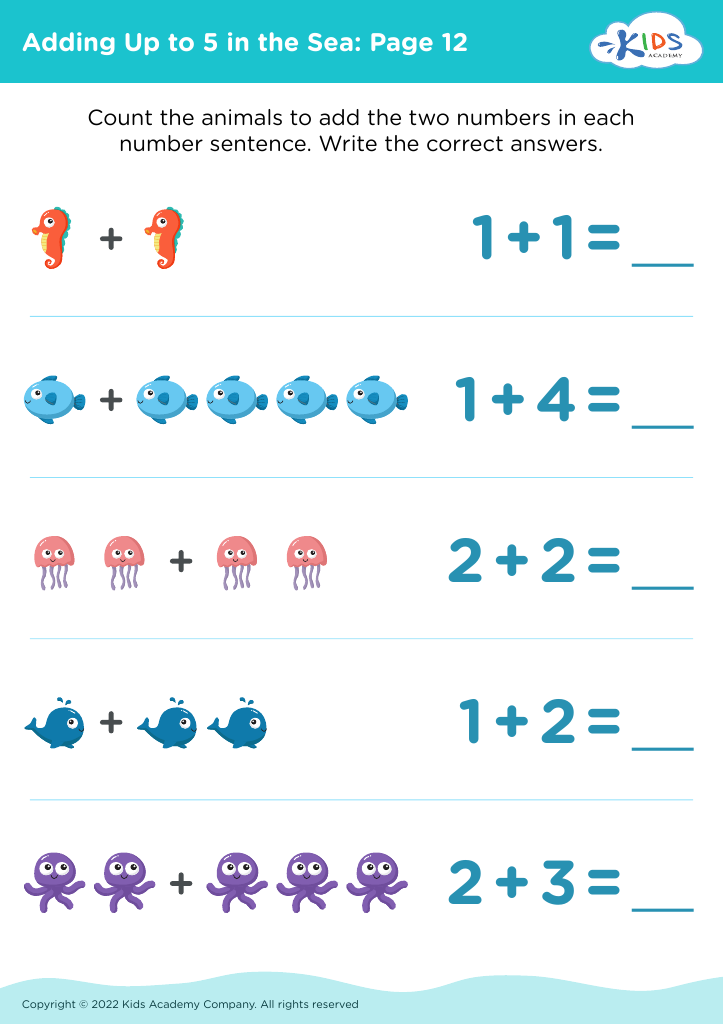
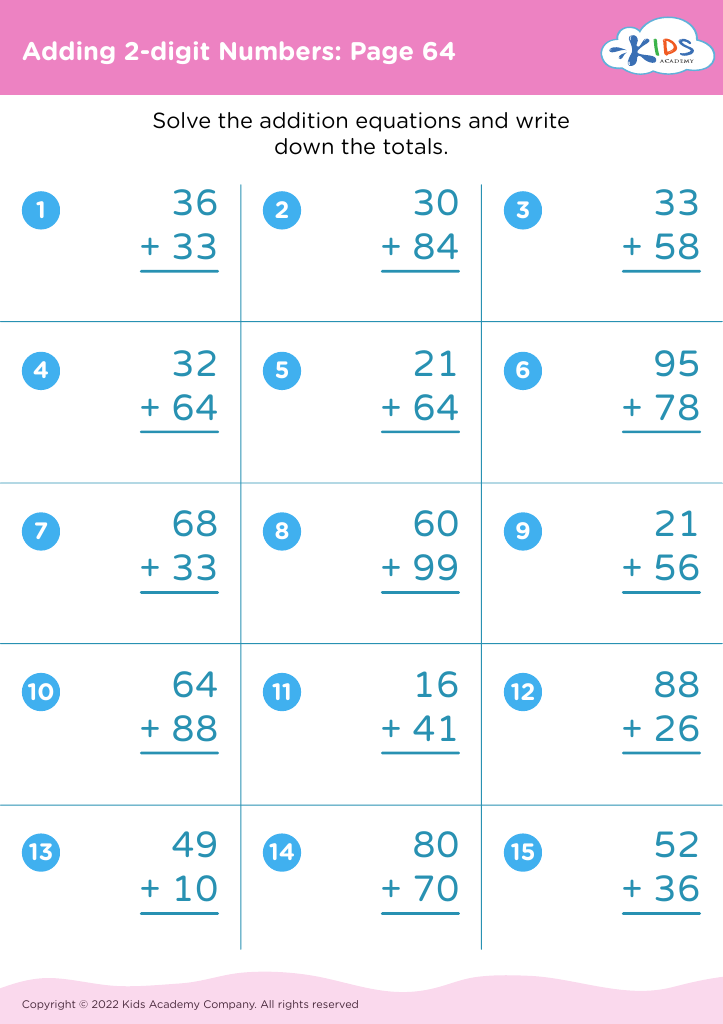
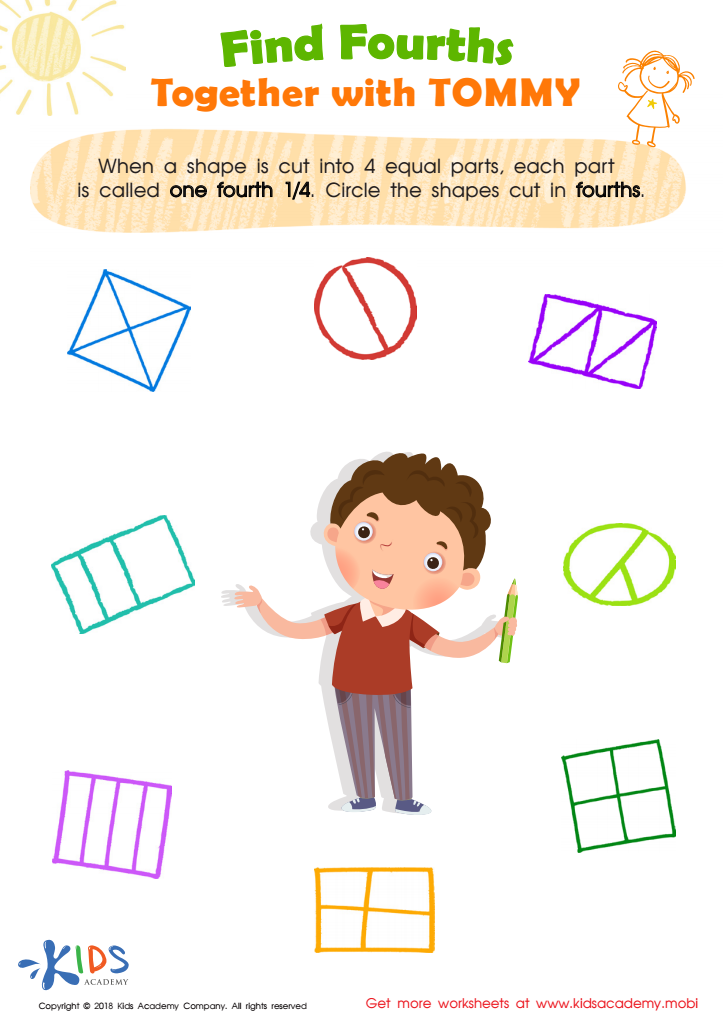
Find Fourths Together with Tommy Worksheet








Fine motor skills in the context of math for children ages 3-9 are crucial for several developmental and educational reasons. These skills involve the coordination of small muscles in the hands and fingers, enabling tasks such as coloring, tracing, and manipulating small objects, which are foundational for academic and everyday activities.
Firstly, developing fine motor skills enhances children's ability to grasp and manipulate writing instruments, crucial for writing numbers and drawing geometric shapes accurately. This basic competency is fundamental for engaging with math activities that require precision, such as measuring, counting, and creating patterns.
Secondly, activities like coloring within patterns and shapes can help children understand spatial relationships and geometry, laying the groundwork for more advanced math concepts. These activities also cultivate attention to detail and perseverance, attributes that are beneficial across all learning areas.
Additionally, fine motor skill development is linked to better hand-eye coordination. Effective hand-eye coordination helps children transition to more complex tasks such as using rulers, compasses, and other mathematical tools in later years.
Lastly, fine motor skills activities often incorporate visual-spatial reasoning and cognitive development, aiding comprehension of abstract math concepts through tangible experiences. Engaging young children in these practices fosters a positive, hands-on approach to math, building confidence and encouraging a love for learning from an early age.








