
Shape Recognition Math Worksheets for Ages 3-9
113 filtered results
Difficulty Level
Grade
Age
-
From - To
Subject
Activity
Standards
Explore our engaging Shape Recognition Math Worksheets tailored for children ages 3-9! These fun and interactive resources will help young learners identify, categorize, and understand various shapes through hands-on activities. Our worksheets are designed to enhance critical thinking skills, build visual-spatial awareness, and foster a love for learning. Whether in the classroom or at home, our age-appropriate exercises make shape recognition enjoyable. From colorful illustrations to creative exercises, each worksheet encourages exploration and discovery. Perfect for early education, these resources support foundational math skills and set the stage for future learning in mathematics. Get started on your shape recognition journey today!
Favorites
With answer key
Interactive
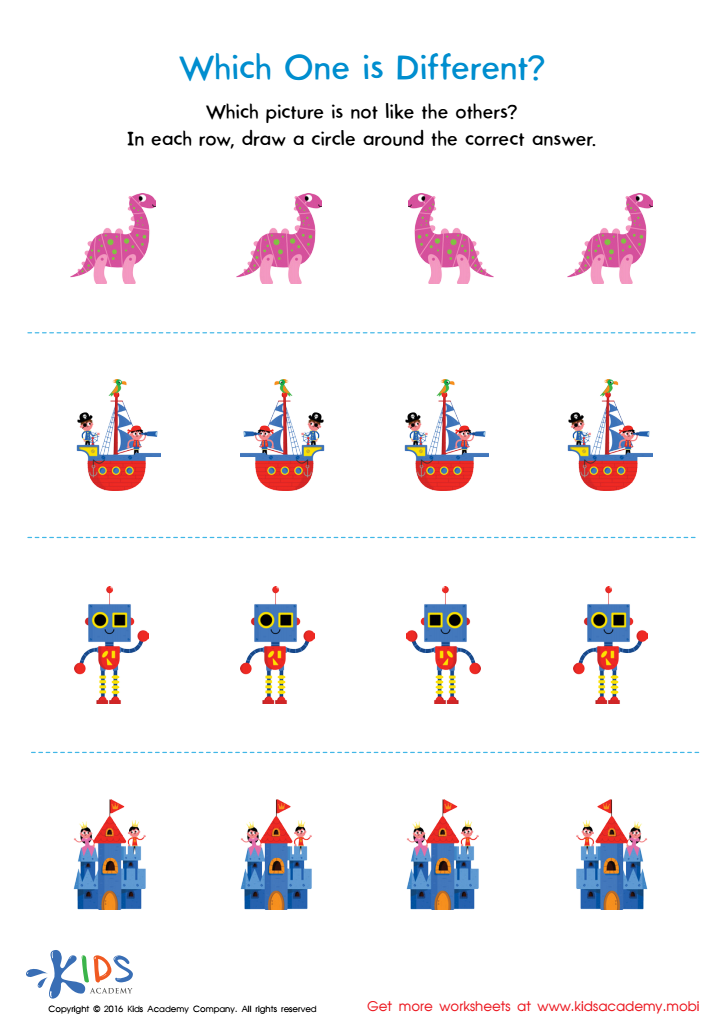
Which One Is Different Worksheet
Preschoolers can hone logical reasoning and critical analysis skills with this "Which one is Different?" worksheet. Kids must look closely and pick out unique attributes of objects and images. It's a skill that can serve them throughout their lifetime.
 Assign to My Students
Which One Is Different Worksheet
Worksheet
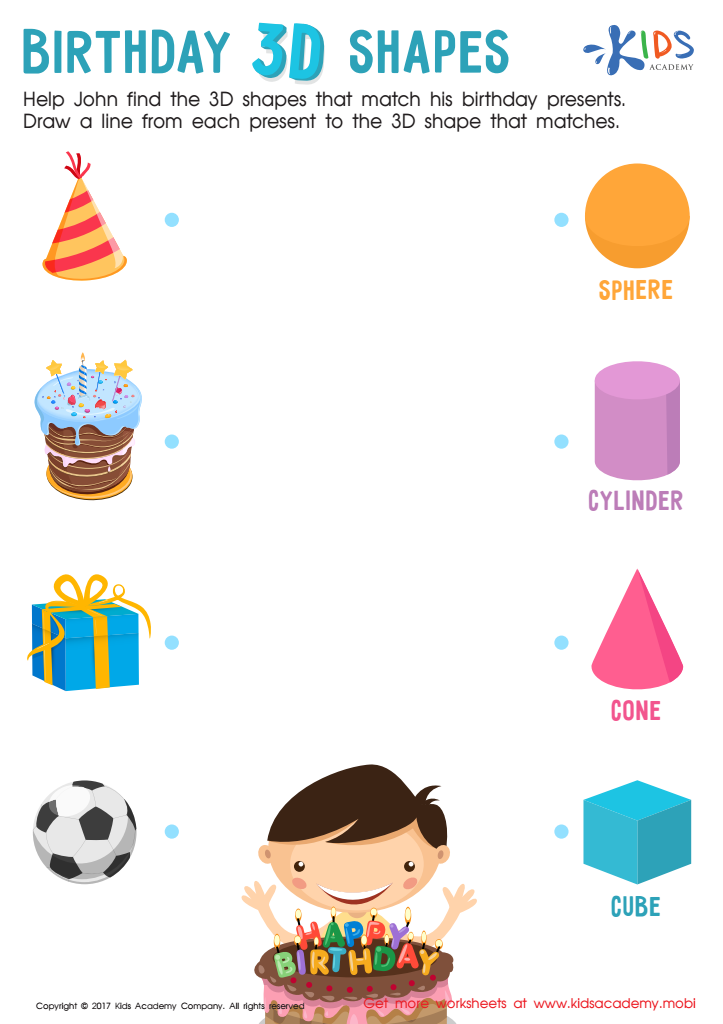
Birthday 3D Shapes Worksheet
It's John's birthday and he needs your help. Ask your kids to draw a line from each present to the matching 3D shape. First, check they understand the difference between 2D and 3D shapes. Then, they can help John figure out which 3D shape matches each present.
Birthday 3D Shapes Worksheet
Worksheet
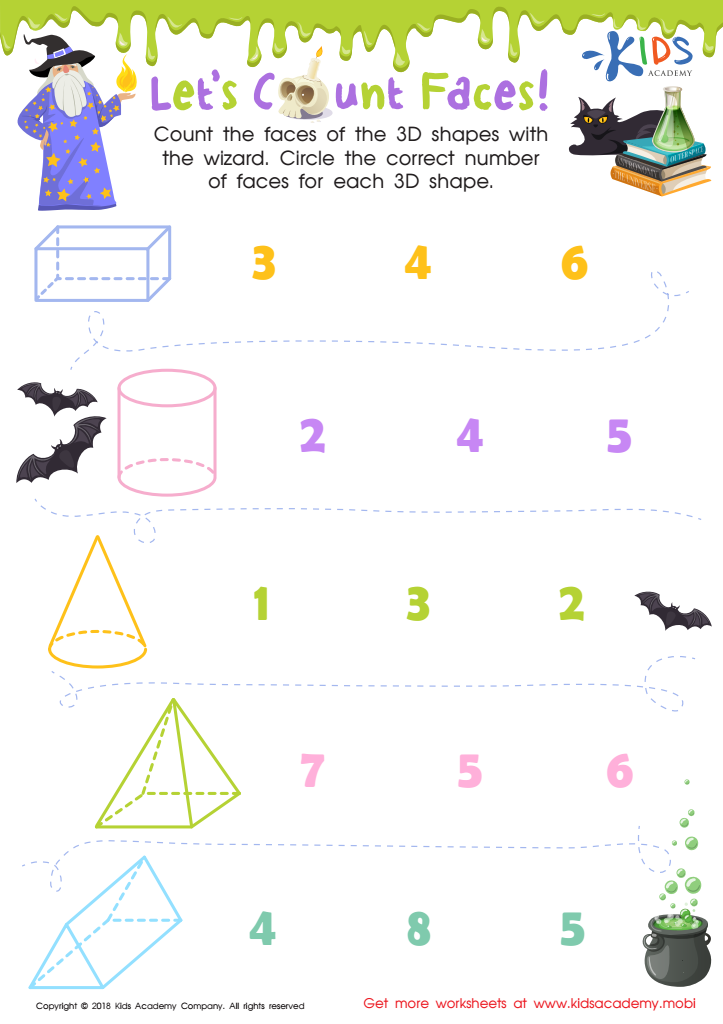
Let's Count Faces! Worksheet
Help the wizard count the faces of 3D shapes! Ask your kids to identify the shapes before beginning, then have them circle the correct number of faces. Enjoy this fun wizard-themed worksheet with your kids!
Let's Count Faces! Worksheet
Worksheet
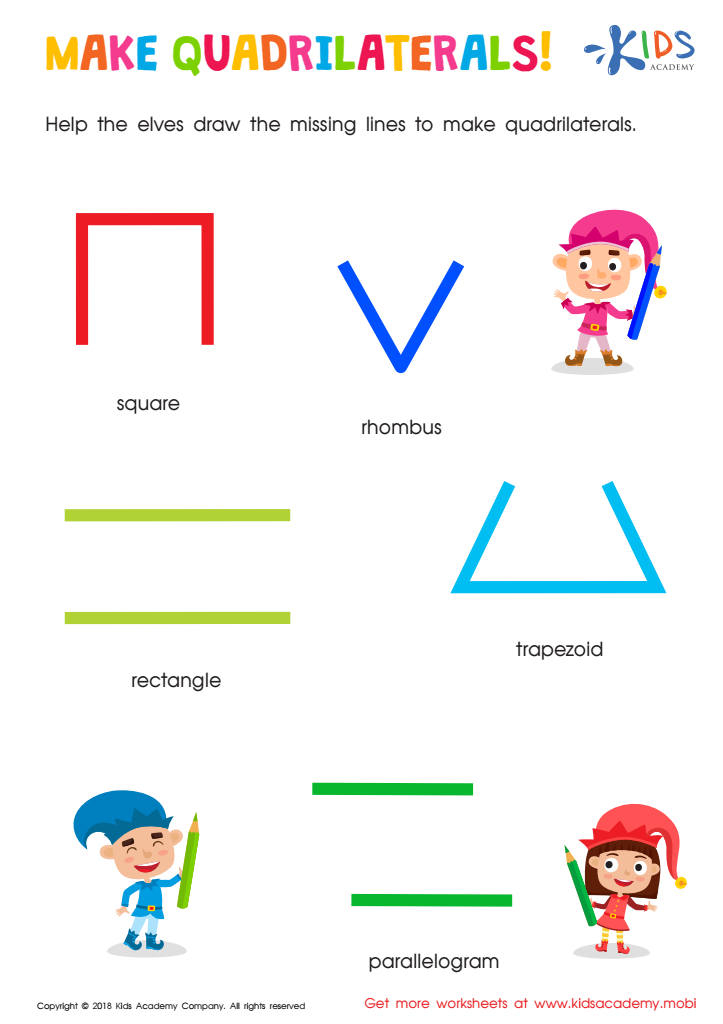
Make Quadrilaterals Worksheet
This fun and colorful worksheet will help your child understand and identify quadrilaterals. It's simple and encourages them to draw lines to create a square, rectangle, rhombus, trapezoid, and parallelogram. Stimulate their minds and watch them learn while they have fun!
Make Quadrilaterals Worksheet
Worksheet
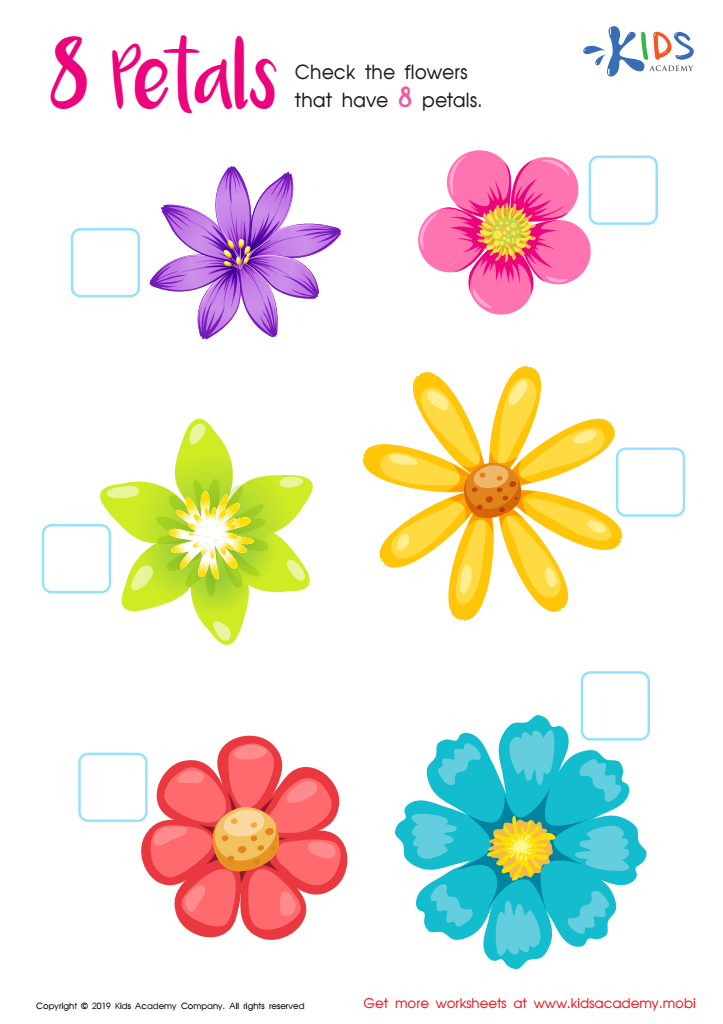
8 Petals Worksheet
Help your children master counting with this fun worksheet. It's filled with colorful flowers and they must count the petals and check the flowers with 8 petals. It's a great way to practice their counting skills and have some fun too!
8 Petals Worksheet
Worksheet
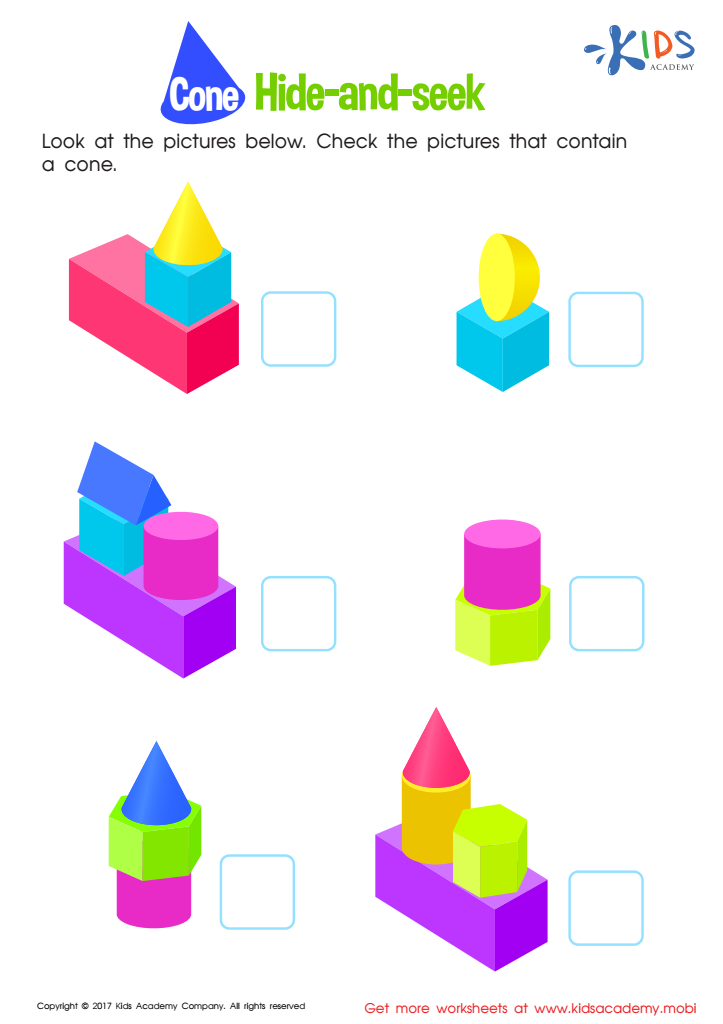
Cone Hide-and-Seek Worksheet
Prior to starting this worksheet, quiz your kid on shapes. If they gave quite a few, you've done well! This pdf will teach them more about cones; show them the pictures in the printout and have them identify which ones contain a cone.
Cone Hide-and-Seek Worksheet
Worksheet
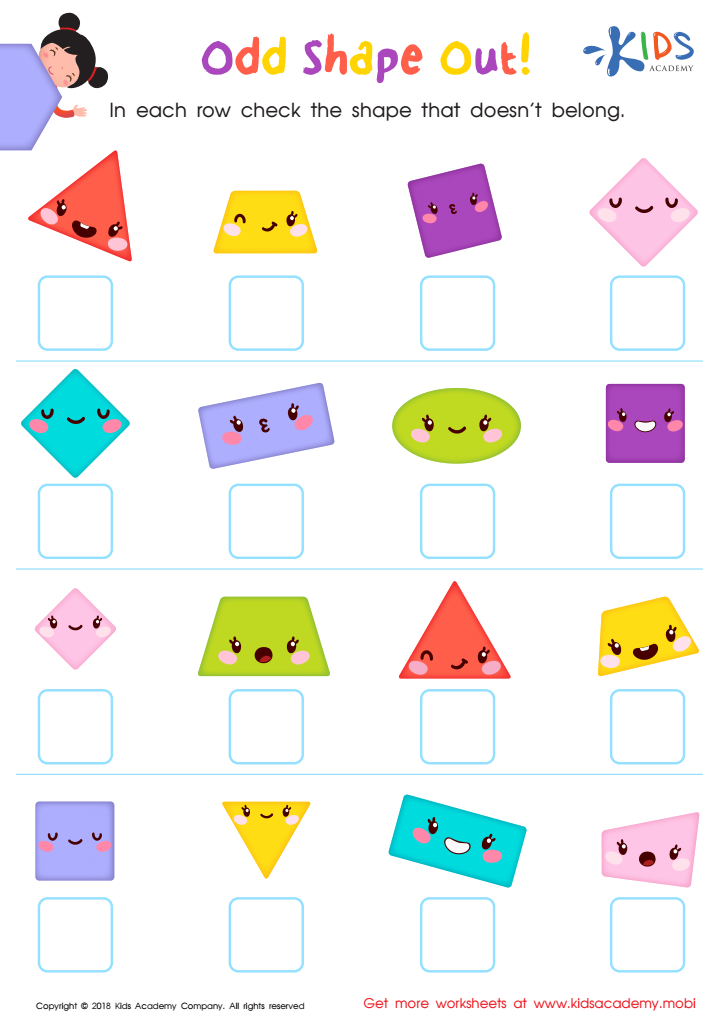
Odd Shape Out Worksheet for Grade 3
Time to test your child's shape knowledge! With this worksheet, help them find the odd shape out in each row and check the box under it. Print out the pdf and look through it with them – each row has four brightly colored shapes. See if they can spot any differences among them and then check the box below the shape that does not belong.
Odd Shape Out Worksheet for Grade 3
Worksheet
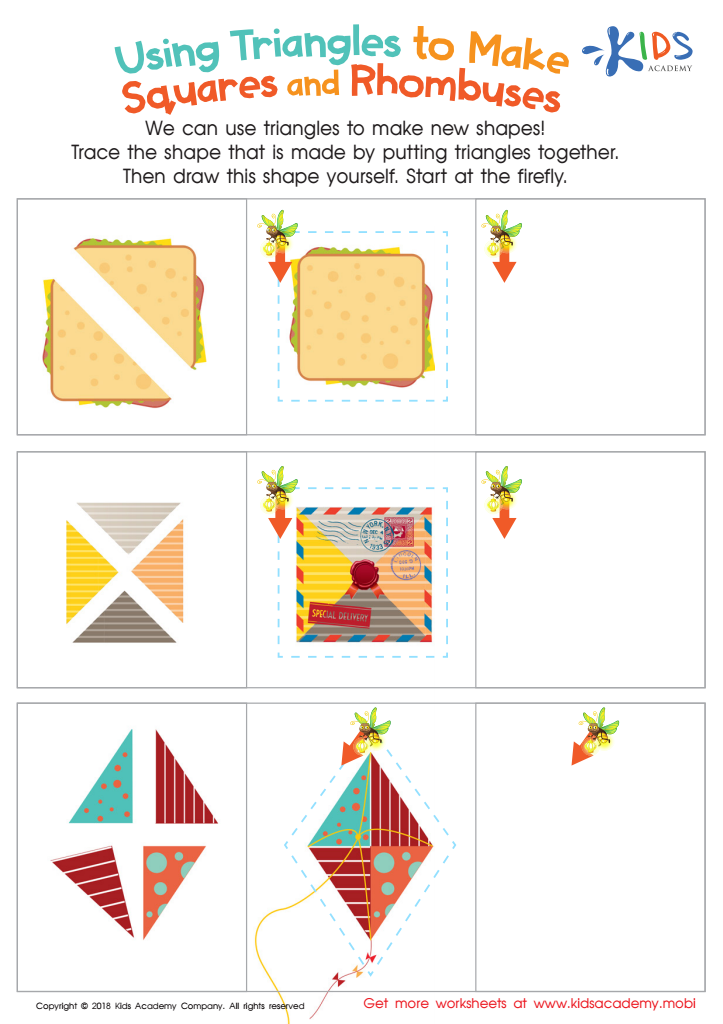
Using Triangles to Make Squares and Rhombuses Worksheet
Learning shapes is a fun way to boost spatial skills and critical thinking. This worksheet shows children how to use triangles to construct squares and rhombuses. Clear illustrations and a printout help children draw the new shape. A great activity for the math classroom! 80 words.
Using Triangles to Make Squares and Rhombuses Worksheet
Worksheet
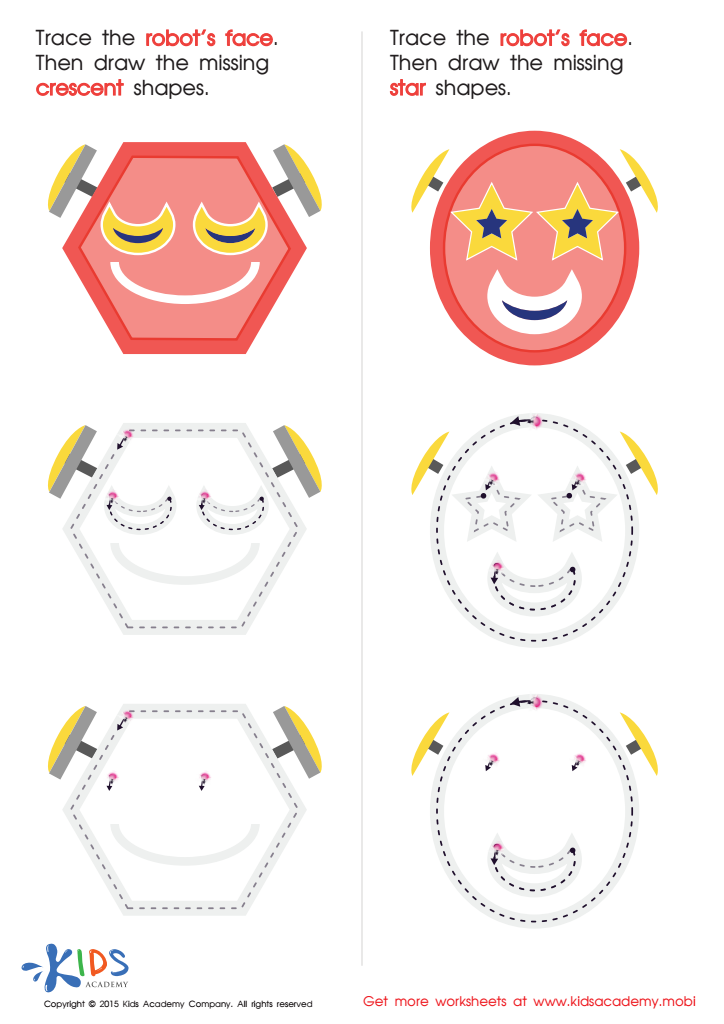
Composing a Robot's Face of Crescents And Stars Worksheet
Get free math geometry worksheets at Kids Academy! Help your child learn by practicing together - trace the robot's face and draw the missing crescent and star shapes. Be sure to remember their names! Have fun and learn with shapes for kids.
Composing a Robot's Face of Crescents And Stars Worksheet
Worksheet
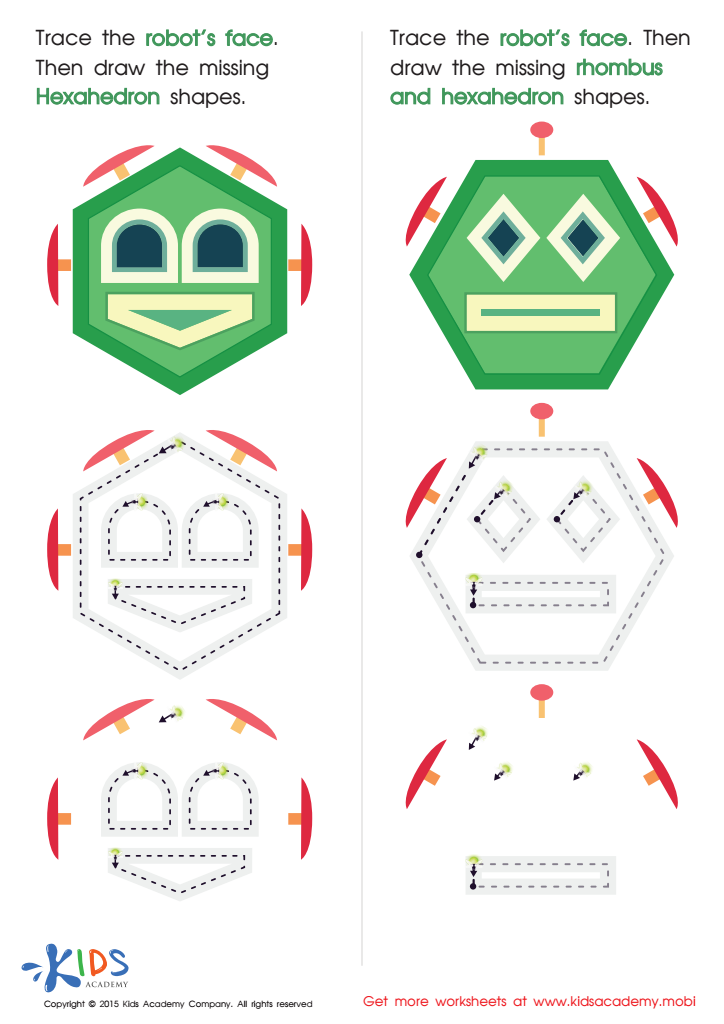
Practice Drawing Hexahedrons And a Rhombus Worksheet
Trace the Robot's face, draw hexahedron and rhombus shapes, then trace again. Our tracing shapes worksheets make it easy for kids to learn geometry. Get more materials from Kids Academy to practice all the shapes.
Practice Drawing Hexahedrons And a Rhombus Worksheet
Worksheet
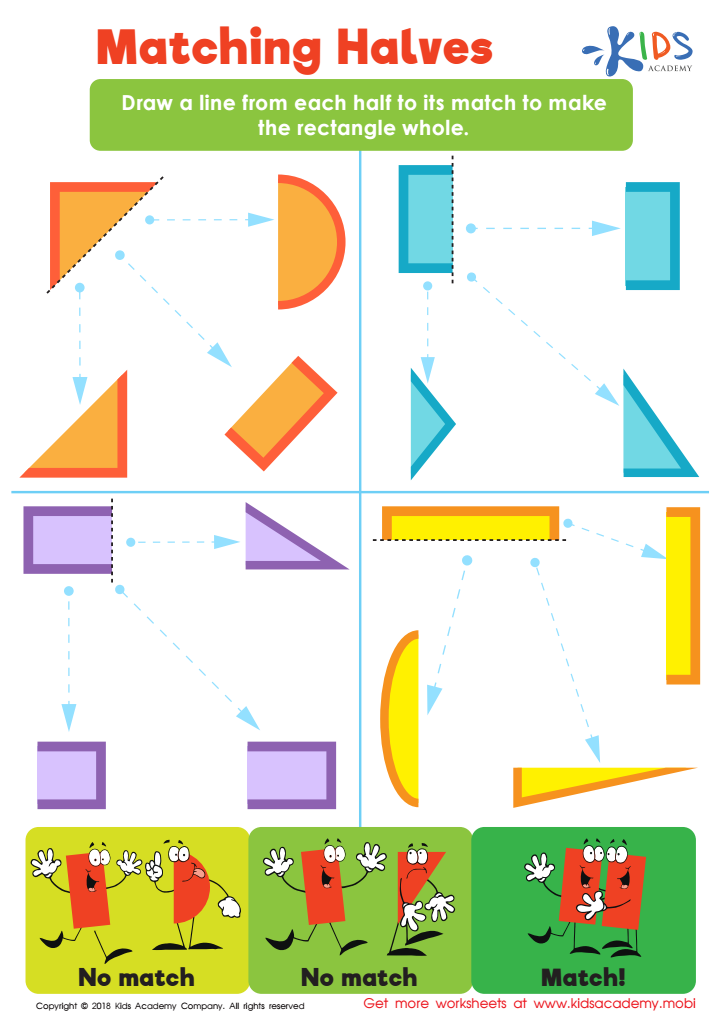
Matching Halves Worksheet
See how your child fares in matching two halves to form a complete rectangle. Provide them with four options, and ask them to draw a line connecting the two correct halves. Put their shape knowledge to the test with this simple worksheet!
Matching Halves Worksheet
Worksheet
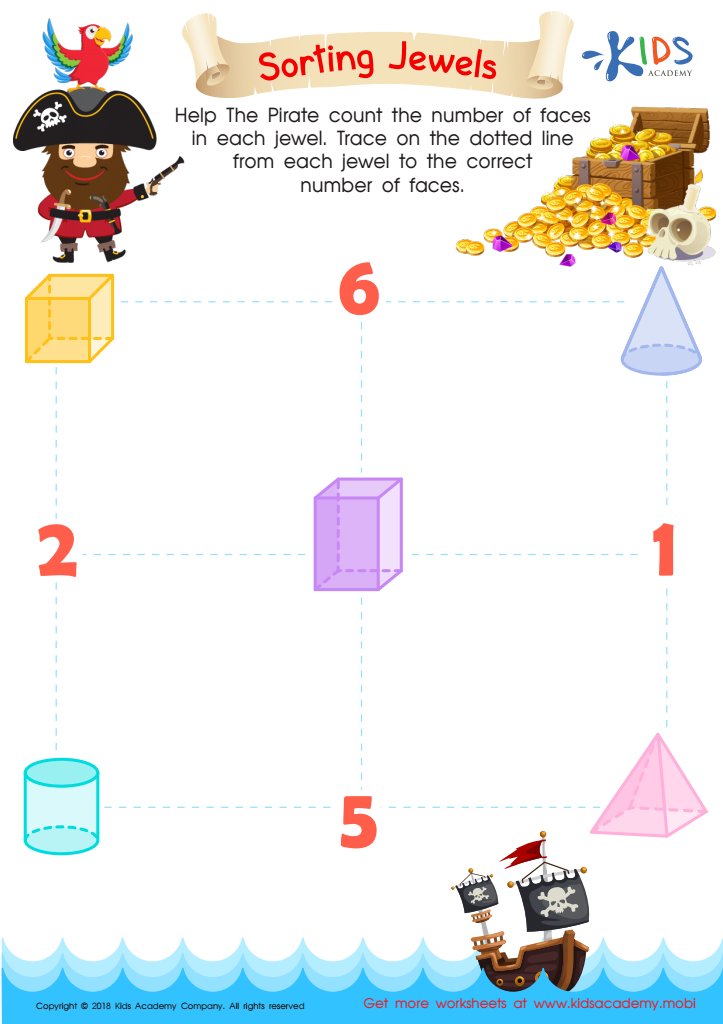
Sorting Jewels Worksheet
Help your kids explore their pirate fantasies with this tracing sheet. Ask them to count the number of faces in each jewel and then trace the dotted line to the correct number. How many faces does a rectangle have? What about a triangle and a cone? This fun worksheet is a great way to teach your kids the basics of identifying the number of faces on shapes.
Sorting Jewels Worksheet
Worksheet
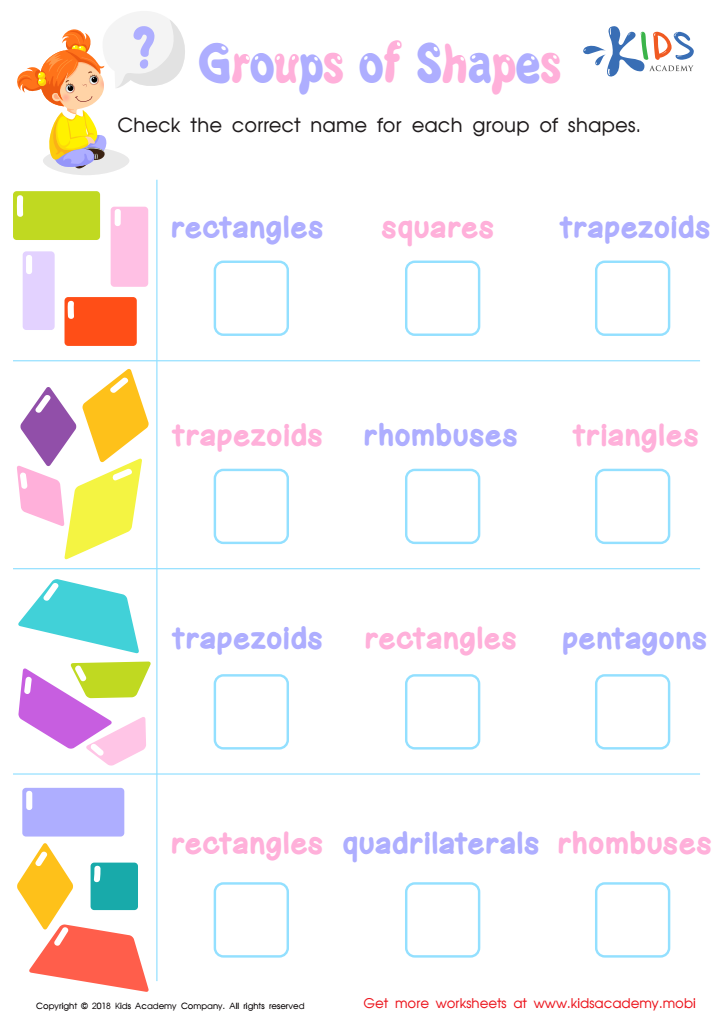
Groups of Shapes Worksheet
Can your child identify and name shapes? Help them learn the unique features of each and have them check the correct name for each group in the colorful pictures on this worksheet.
Groups of Shapes Worksheet
Worksheet
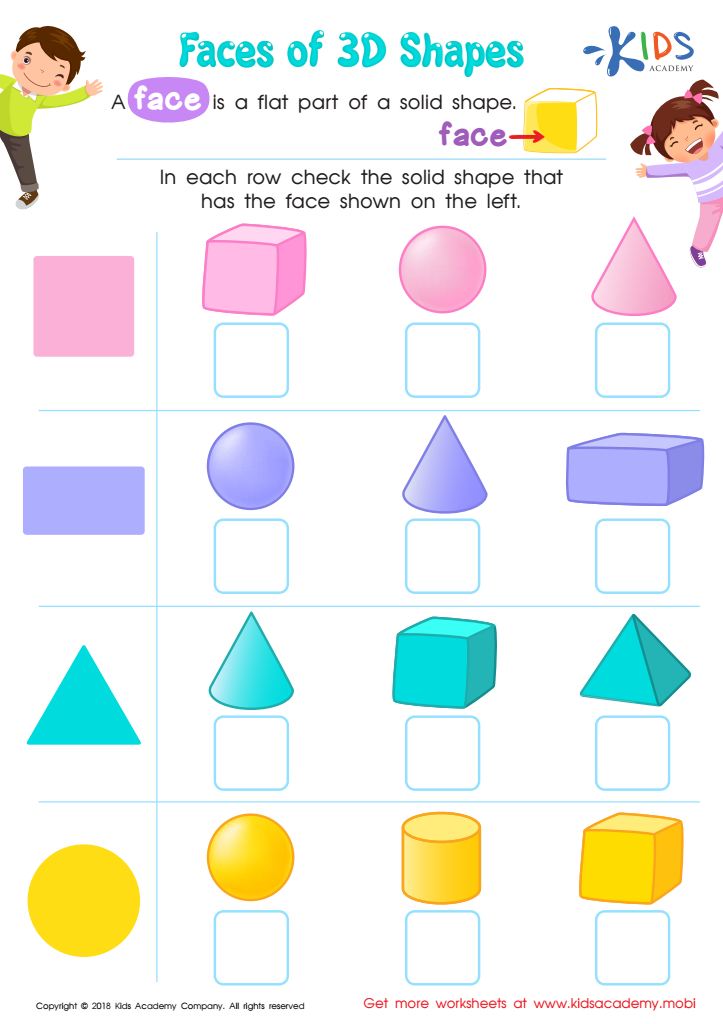
Faces of 3D Shapes Worksheet
Point at random body parts and ask your child to name them. Point to their face and ask them to identify it. Use this worksheet to show how "face" doesn't just refer to body parts - it can also mean the flat surface of a solid shape. Check the picture to find the matching solid shape for each face shown.
Faces of 3D Shapes Worksheet
Worksheet
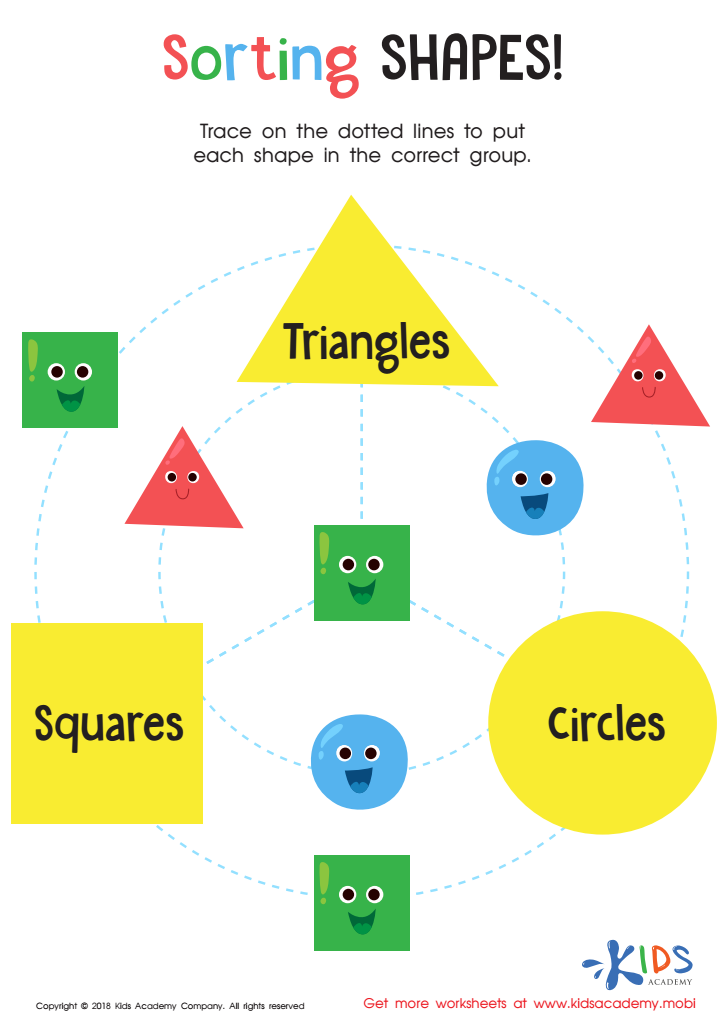
Sorting Shapes - Part 3 Worksheet
Download this fun PDF to help your kiddos recognize basic shapes like circles, squares, and triangles. It'll sharpen their fine motor skills as they trace and sort shapes by color, size, and sides. Your kids won't even realize they're learning with these cheery shapes!
Sorting Shapes - Part 3 Worksheet
Worksheet
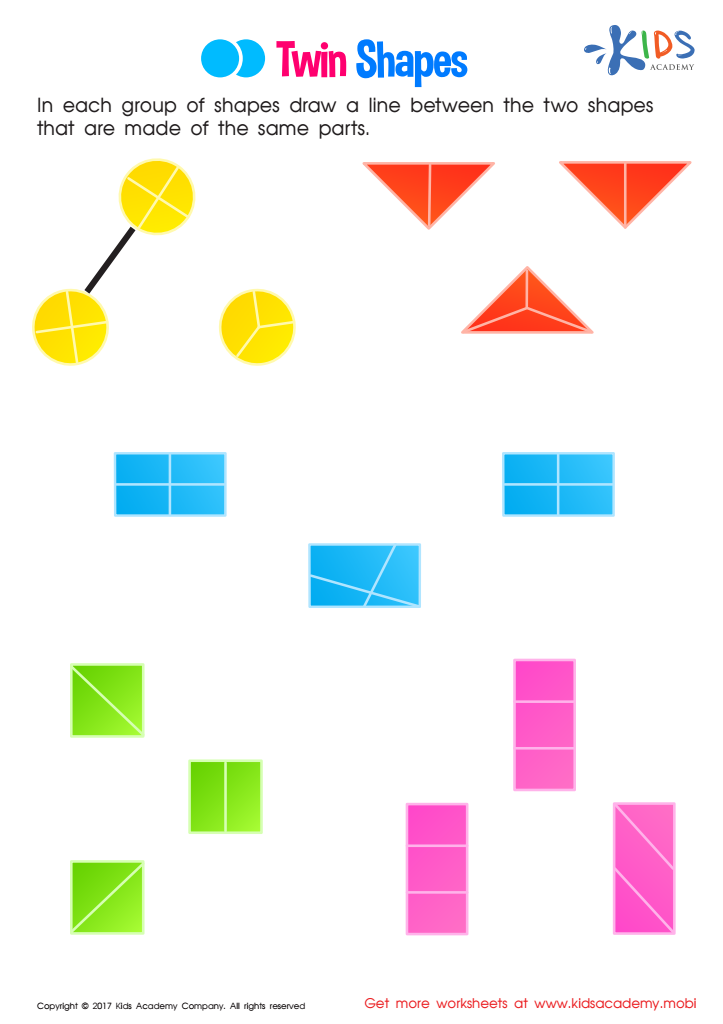
Twin Shapes Worksheet
Your students' goal in this worksheet is to find the twin shapes: drawing a line between two shapes made of the same parts. Likely, the first shapes encountered were circles, triangles, rectangles and squares - examples of which are seen frequently in everyday life. Encourage them to apply what they know and work out which is the twin shape!
Twin Shapes Worksheet
Worksheet
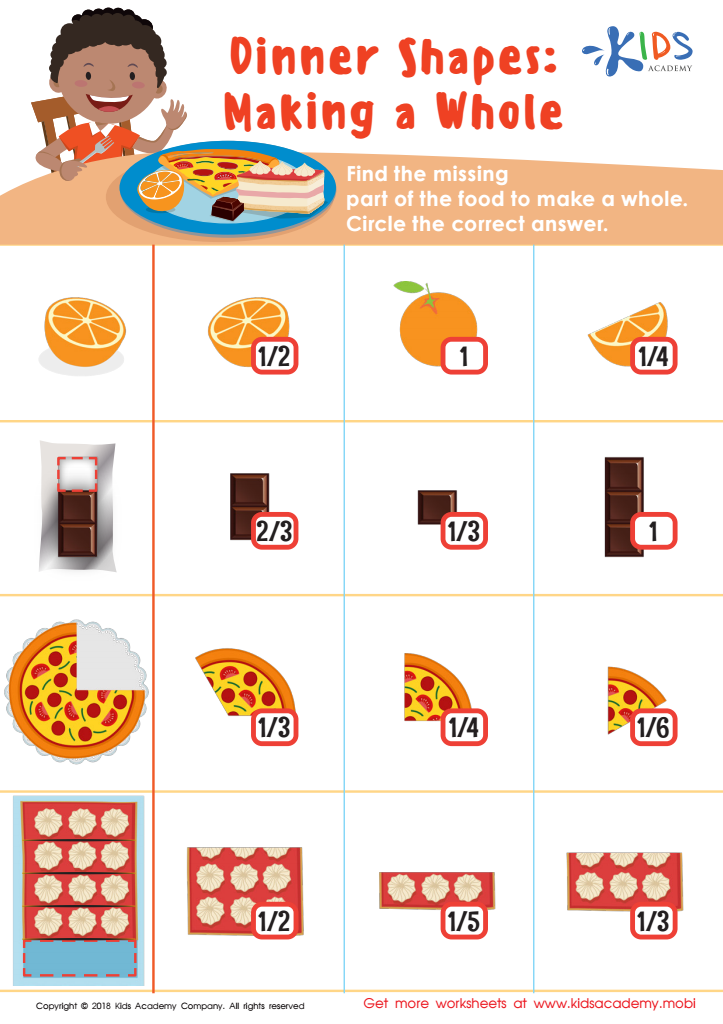
Dinner Shapes: Making a Whole Worksheet
Using food and snacks to stimulate learning and interest in topics is a great strategy. Fractions can prove tricky, but this worksheet can help your child become an expert. Have them look for the missing parts of the food to make a whole, then circle the answer.
Dinner Shapes: Making a Whole Worksheet
Worksheet
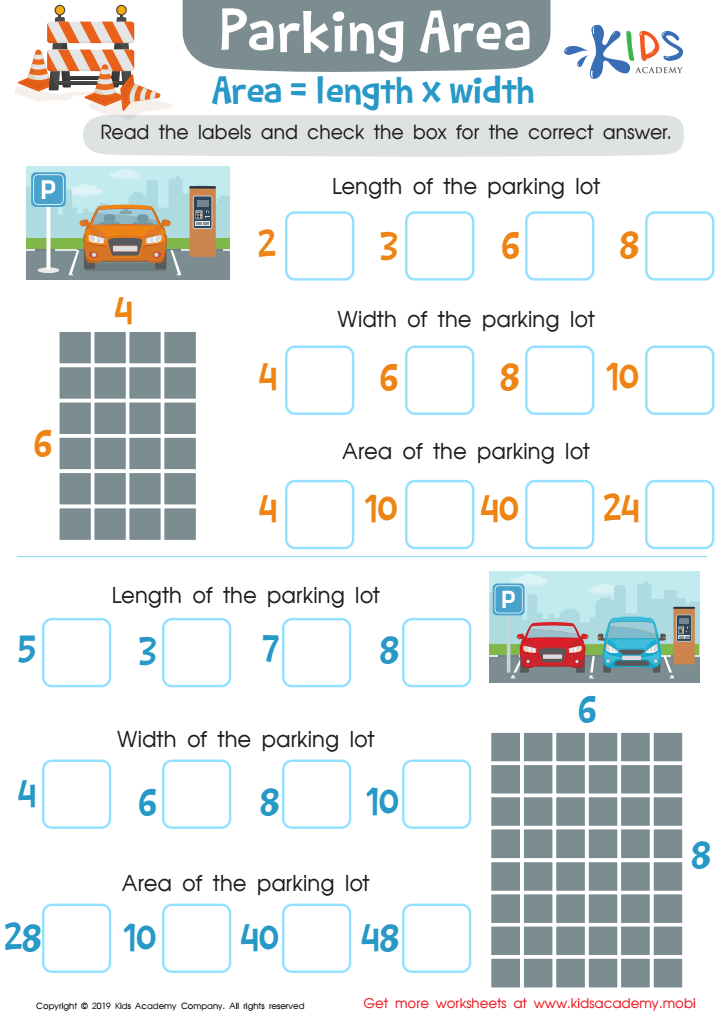
Parking Area Worksheet
Math may not be your child's favorite, but that doesn't mean they can't excel. Math can seem intimidating, but with practice, they can learn it's not so hard. In this worksheet, your kids will calculate the area of a parking lot, by adding length and width. Help them read the labels and select the correct answer.
Parking Area Worksheet
Worksheet
Join Kids Academy for Free
Who is primarily going to use this learning content?







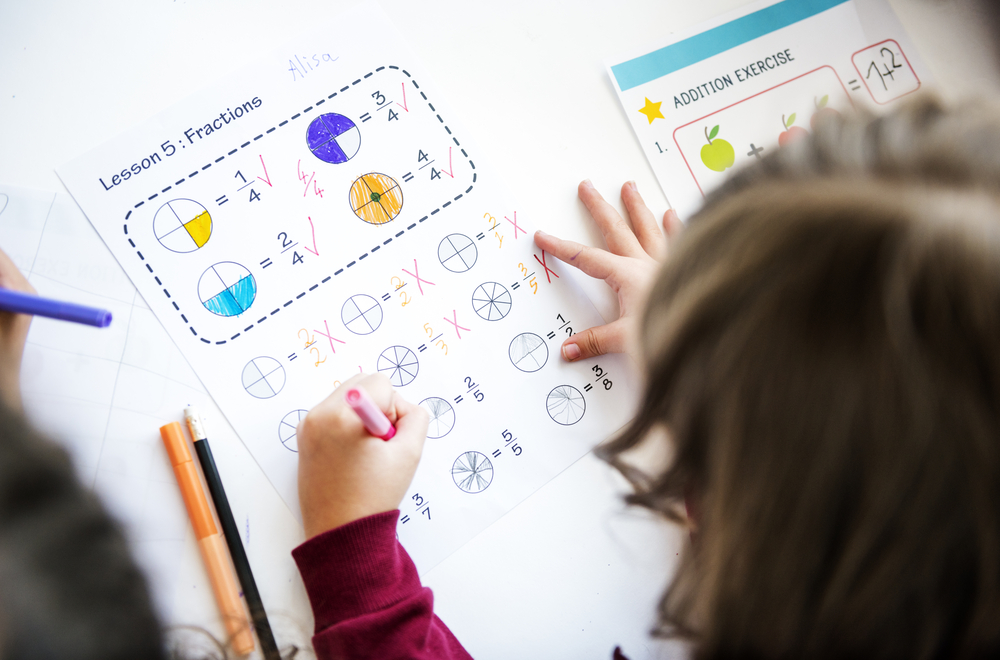
Shape recognition is a fundamental aspect of early childhood education that contributes significantly to a child's cognitive development. For children ages 3-9, mastering shape recognition lays the groundwork for more complex mathematical concepts. Engaging with shapes helps children understand their properties, fostering skills in classification, comparison, and spatial awareness.
Parents and teachers should care about shape recognition because it enhances critical thinking and problem-solving abilities. Recognizing and naming shapes allow young learners to identify patterns and relationships in their environment, skills that are crucial in math and science education. Additionally, shape recognition nurtures visual literacy and motor skills, as children often manipulate geometric shapes through drawing, cutting, and assembling.
Regular engagement with shapes can be integrated into daily activities, making learning fun and interactive. Whether it’s through educational games, art projects, or nature explorations, building shape recognition reinforces a positive attitude towards learning.
Furthermore, a strong foundation in shape recognition encourages confidence and curiosity in children, setting the stage for future academic success. By prioritizing shape recognition in early education, parents and teachers provide essential tools for lifelong learning, fostering a love for mathematics and problem-solving that persists beyond the primary years.








