
Multiplication practice Multiplication Worksheets for Ages 3-9
64 filtered results
Difficulty Level
Grade
Age
-
From - To
Subject
Activity
Standards
Boost your child's math skills with our engaging multiplication worksheets designed for ages 3-9. These educational resources offer a fun way to practice and master multiplication, suitable for beginners and advancing learners alike. Our printables cover a variety of topics, from basic facts to more complex problems, ensuring comprehensive learning. Perfect for both classroom and at-home practice, these worksheets foster confidence in young mathematicians, making math enjoyable. Start their mathematical journey today with precision-crafted sheets to reinforce key concepts and support progressive learning in a creative and supportive environment. Free and easy to use!
Favorites
With answer key
Interactive
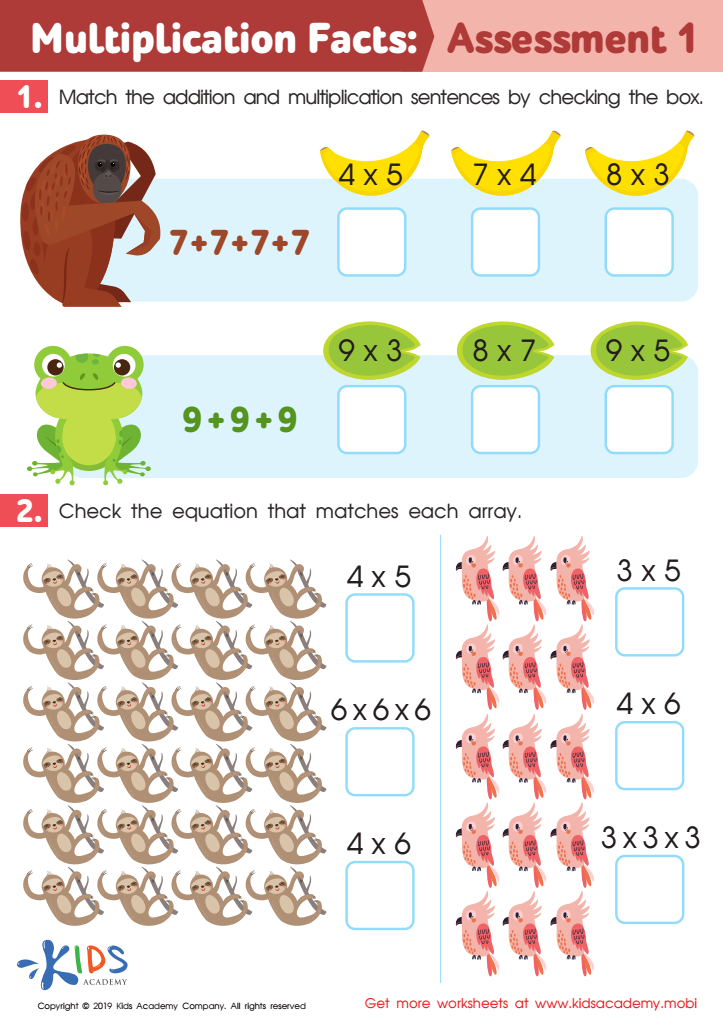
Multiplication Facts: Assessment 1 Worksheet
Teach your kids math with diligence, patience and practice. This colorful worksheet helps by matching addition and multiplication sentences, then checking the equation that matches each array. Perfect for kids having difficulty or to give extra practice. Help your little ones master mathematics with this printout.
 Assign to My Students
Multiplication Facts: Assessment 1 Worksheet
Worksheet
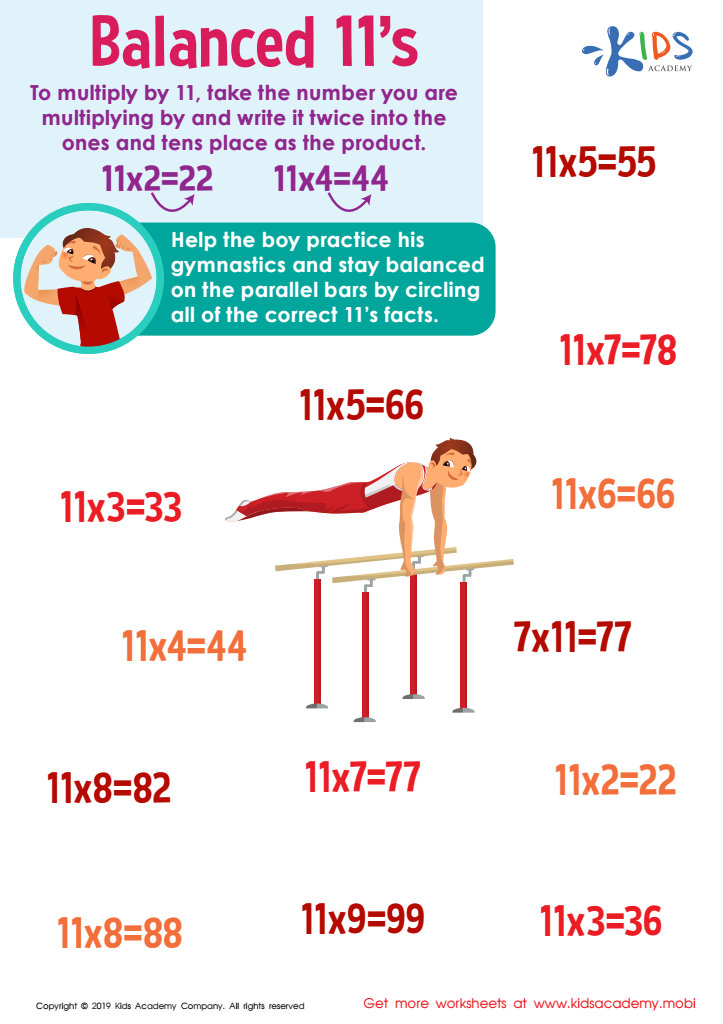
Balanced 11s Worksheet
Explain to your kids that there are tricks for solving complex multiplication problems. Read the worksheet explaining how to multiply by 11 and have them practice with the boy in the picture. Show them how to circle the correct 11's facts for an easier understanding. This will help build better multiplication skills and understanding of figures.
Balanced 11s Worksheet
Worksheet
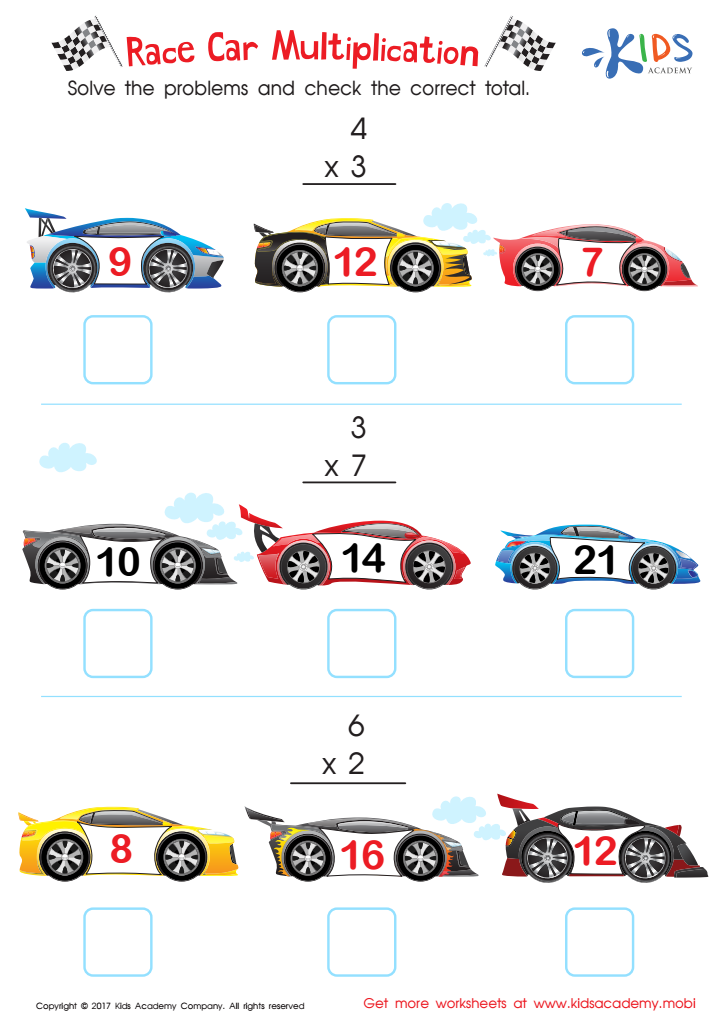
Race Car Worksheet
Race to the finish with this fun worksheet featuring race cars! Multiplication PDF worksheets for 3rd graders offer kids fun math practice in short bursts. Give kids 3 new multiplication problems with this free worksheet!
Race Car Worksheet
Worksheet
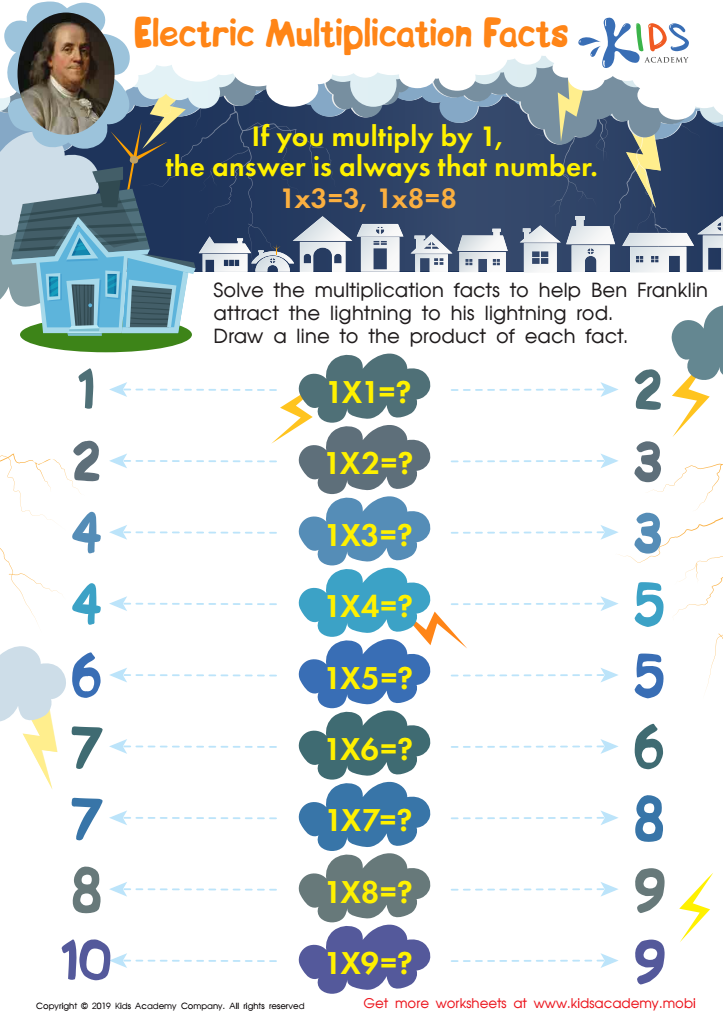
Electric Multiplication Facts Worksheet
Assisting your kids with math homework has no limits. After mastering addition and subtraction, the next step is multiplication. Initially, it can be intimidating. However, with the right tips and worksheets like this one, they'll see it's not so tricky. Show them how multiplying by 1 keeps the number the same. Use the tracing sheet to help them work through multiplication facts.
Electric Multiplication Facts Worksheet
Worksheet
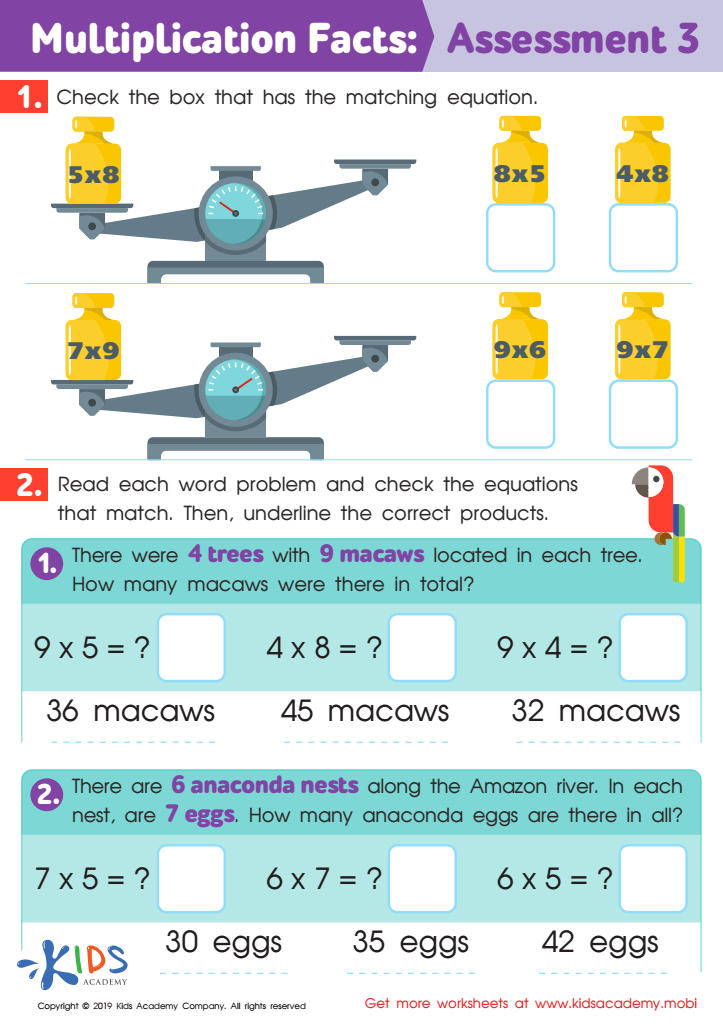
Multiplication Facts: Assessment 3 Worksheet
Test your kid's maths skills with this easy to use worksheet! Help them check the box that matches the equation in the first part, then read each word problem and underline the right answers to the second part. Assess your child's muliplication knowledge and find out where they need extra help.
Multiplication Facts: Assessment 3 Worksheet
Worksheet
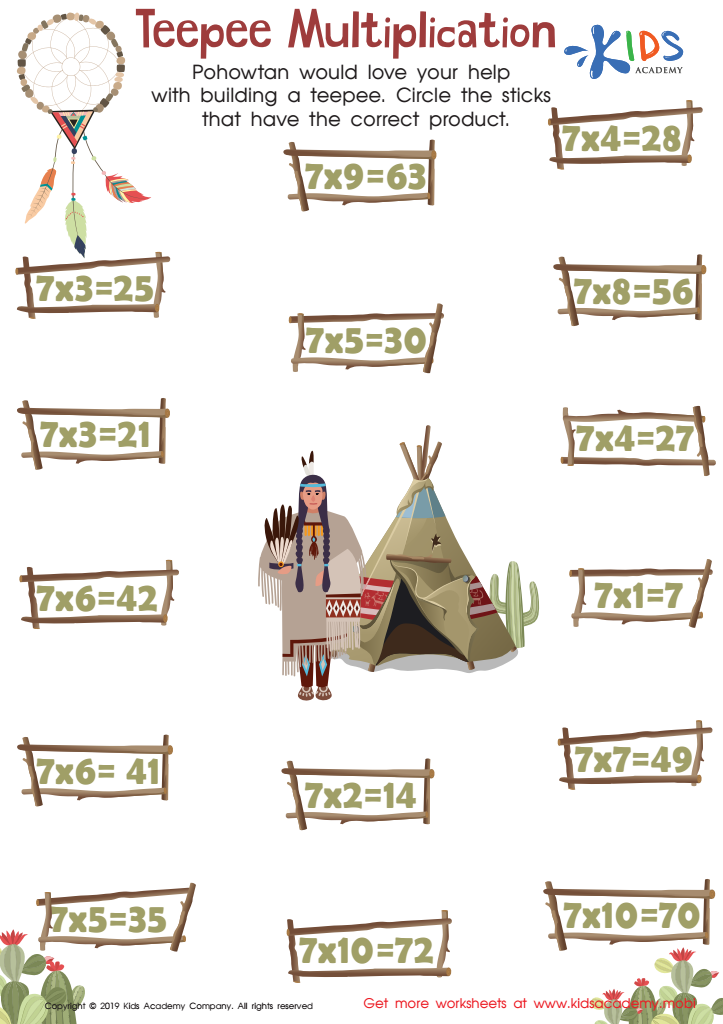
Teepee Multiplication Worksheet
Help the Native American man build his teepee by checking multiplication facts! Learners are given purpose and excitement with this fun math worksheet. Check each set of sticks, find, and circle the ones with the correct product to complete.
Teepee Multiplication Worksheet
Worksheet
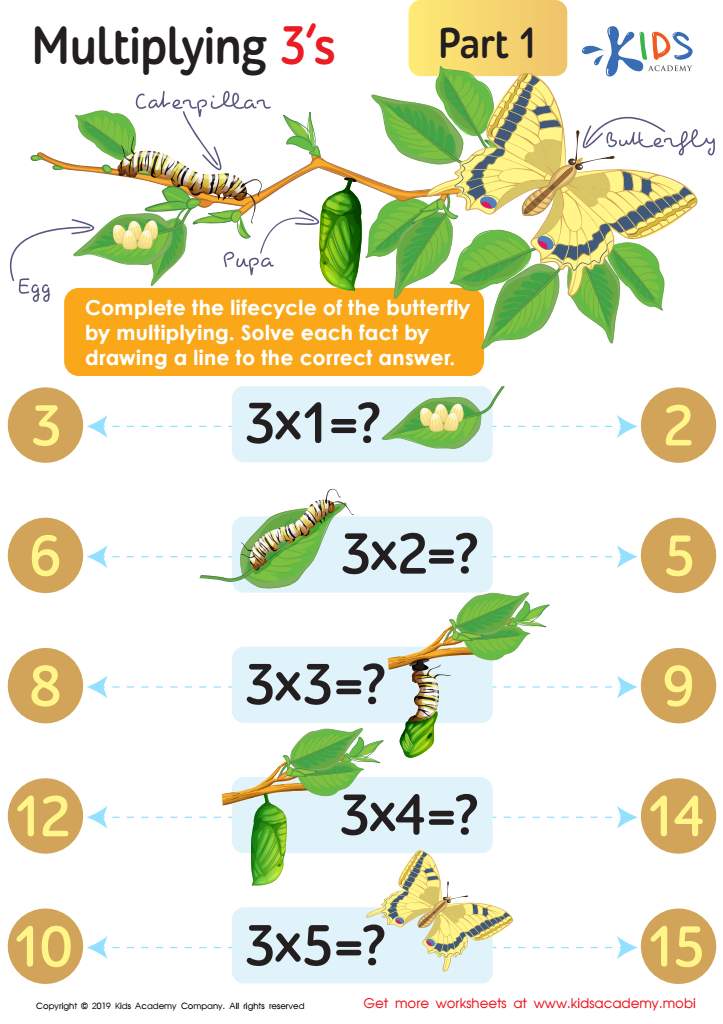
Multiplying 3’s Part 1 Worksheet
Once an egg, then a caterpillar, then a cocoon, then a beautiful butterfly: the lifecycle of the butterfly! Complete the worksheet with your kids and help them draw the lines to get the correct answers for each fact. Let them explore the fascinating transformation of this creature!
Multiplying 3’s Part 1 Worksheet
Worksheet
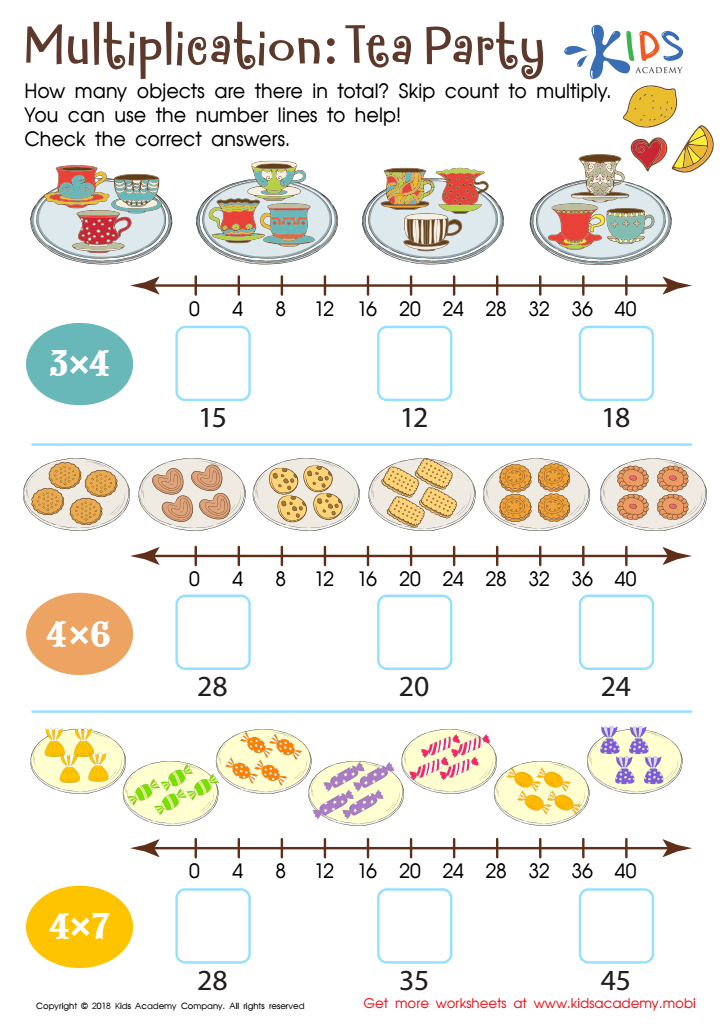
3rd Grade Math Worksheet Multiplication
Our 3rd-grade multiplication math worksheets are great fun! Kids practice using a number line and skip counting, and will feel like throwing a tea party after completing these! Perfect for honing in on multiplication skills.
3rd Grade Math Worksheet Multiplication
Worksheet
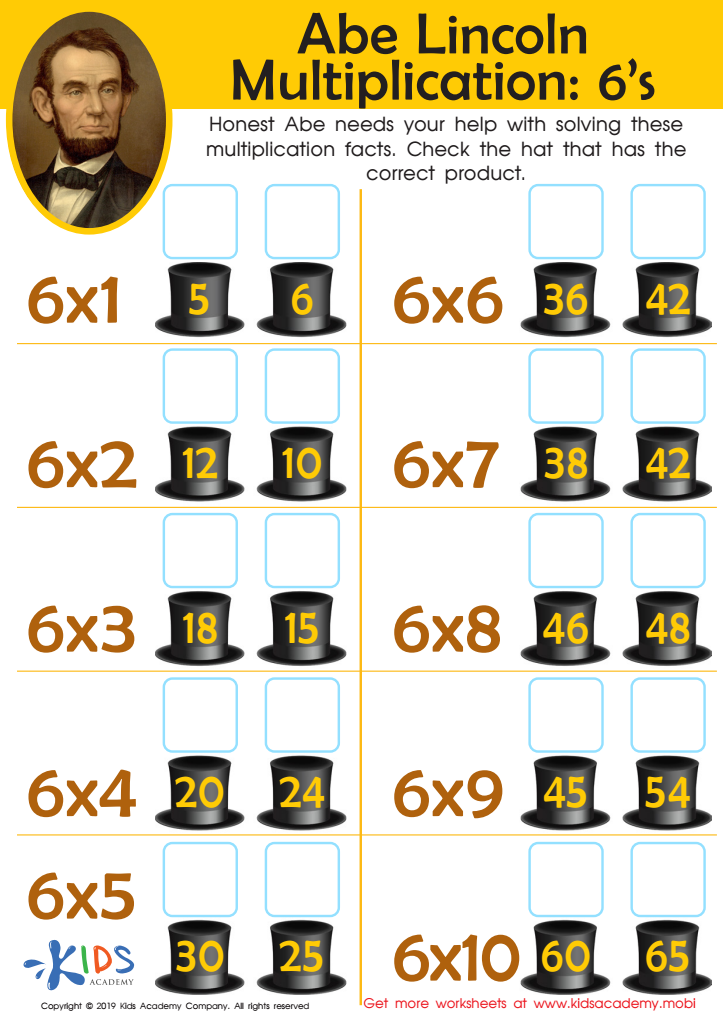
Abe Lincoln Multiplication: 6’s Worksheet
Abraham Lincoln is a key figure in US history. Remind your kids of his contributions and challenge them with this multiplication worksheet! Ask them to solve the facts in the picture and check the hat with the correct product.
Abe Lincoln Multiplication: 6’s Worksheet
Worksheet
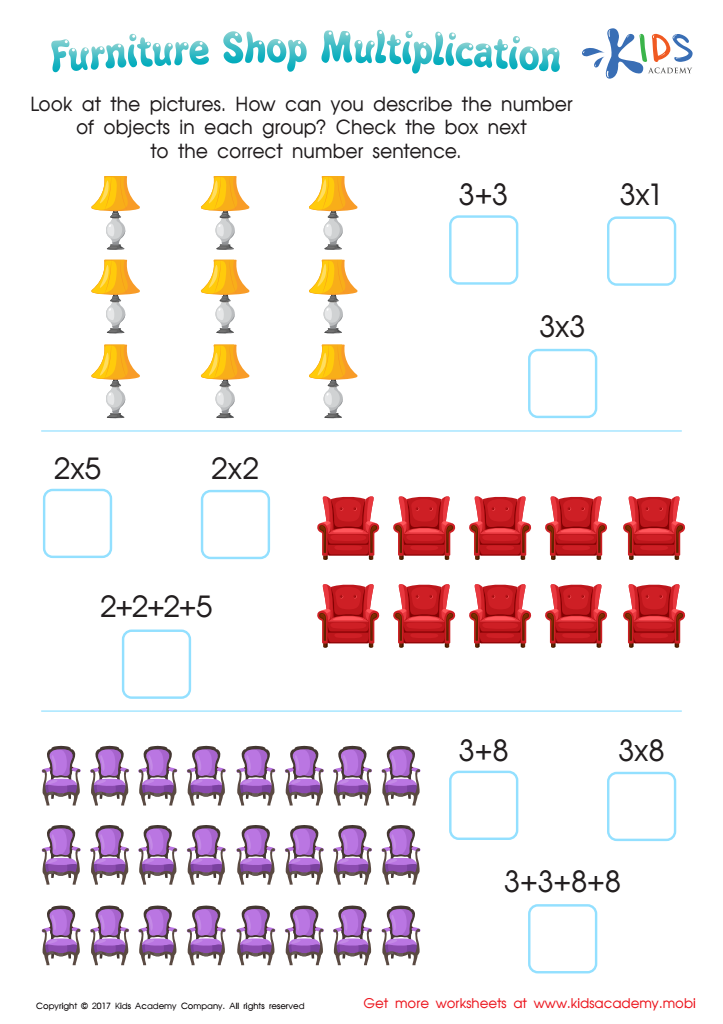
Furniture Shop Worksheet
Our multiplication PDF worksheets for 3rd grade use a visual strategy to help kids understand multiplication. Fun and colorful furniture engages kids as they use number sentences to describe each picture, aiding in memorizing multiplication tables.
Furniture Shop Worksheet
Worksheet
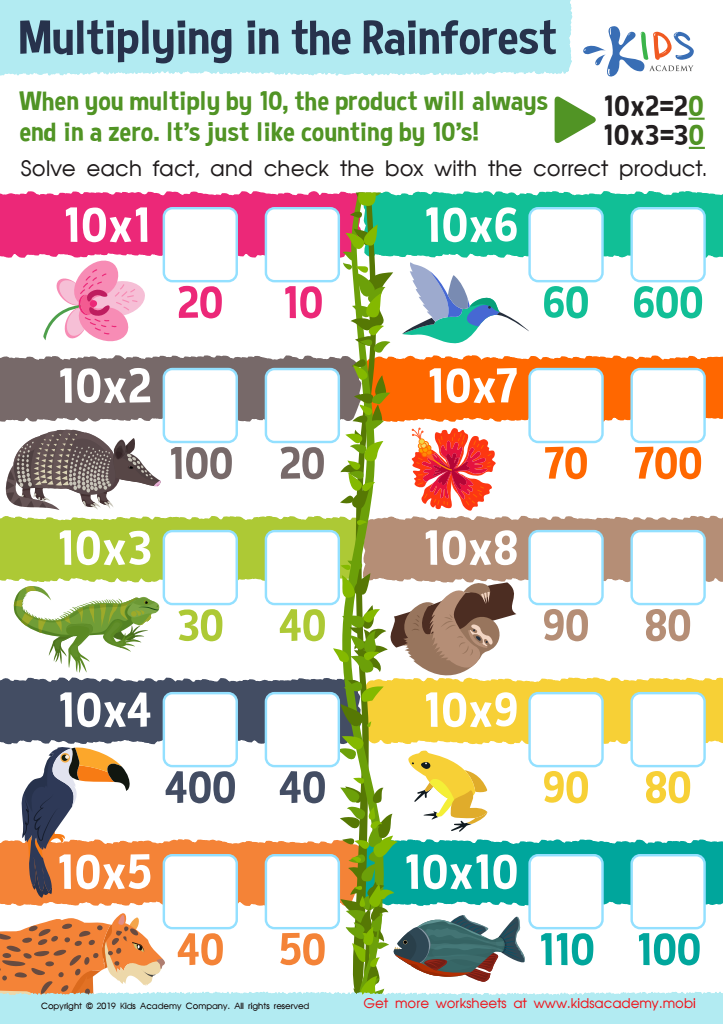
Multiplying in the Rainforest Worksheet
Teaching your child multiplication can be tricky. Help them out with some easy tips! Teach them that when multiplying by 10, the answer always ends in 0. Just like counting by 10's. Show them examples and encourage them to solve the facts, checking their answer with the correct product.
Multiplying in the Rainforest Worksheet
Worksheet
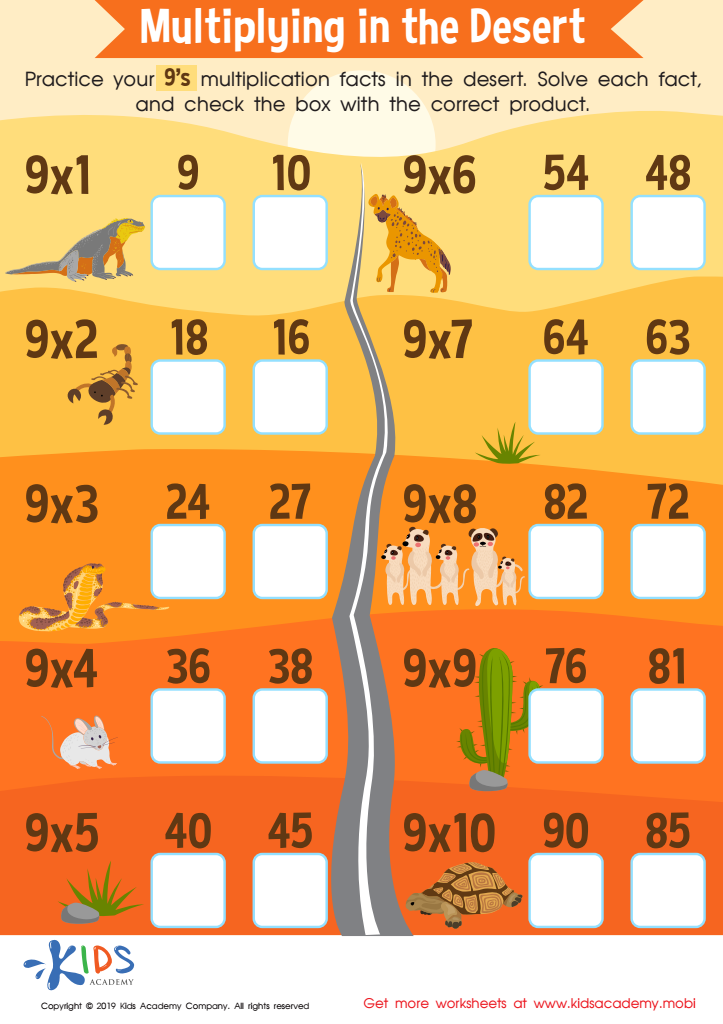
Multiplying in the Desert Worksheet
Help your kids learn the multiplication table faster by introducing them to this fun worksheet! It allows them to learn at a more engaging pace, with the added challenge of naming desert animals. Solve each fact and check the correct product, for an enjoyable and effective way to practice their 9’s multiplication facts.
Multiplying in the Desert Worksheet
Worksheet
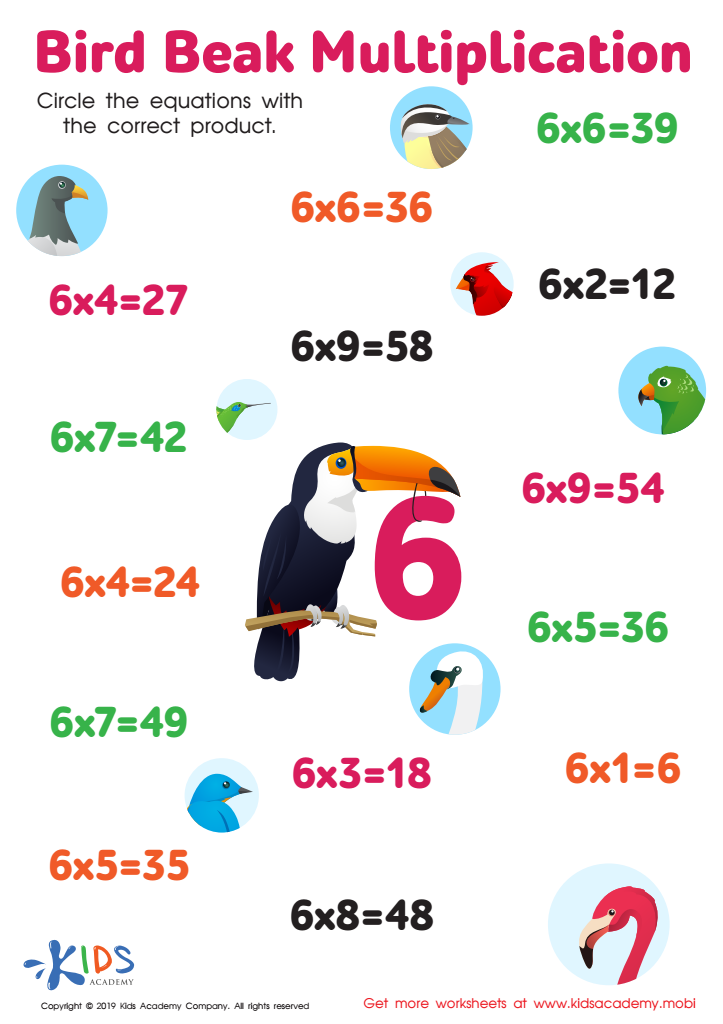
Bird Beak Multiplication Worksheet
Ask your kids to identify the birds in the pic and help them solve the equations. Then, have them circle the correct product. Encourage your kids to explore the wonders of nature with this bird-themed worksheet that'll take their interest to a whole new level, especially if they already have a pet bird or love birds!
Bird Beak Multiplication Worksheet
Worksheet
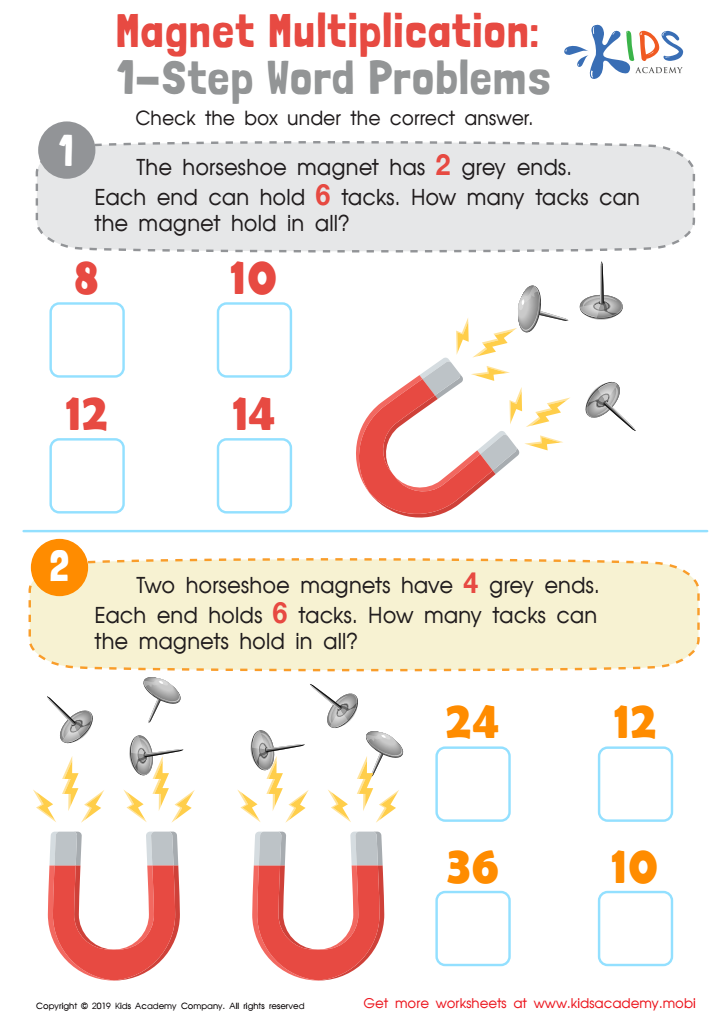
Magnet Multiplication: 1-Step Word Problems Worksheet
Refresh your students' knowledge about magnets with a simple math worksheet. Download the PDF with two word problems, along with pictures to help. Read the problems to the class, and help them identify the correct answer by checking the box. This activity will help them harness their science knowledge and practice their math skills.
Magnet Multiplication: 1-Step Word Problems Worksheet
Worksheet
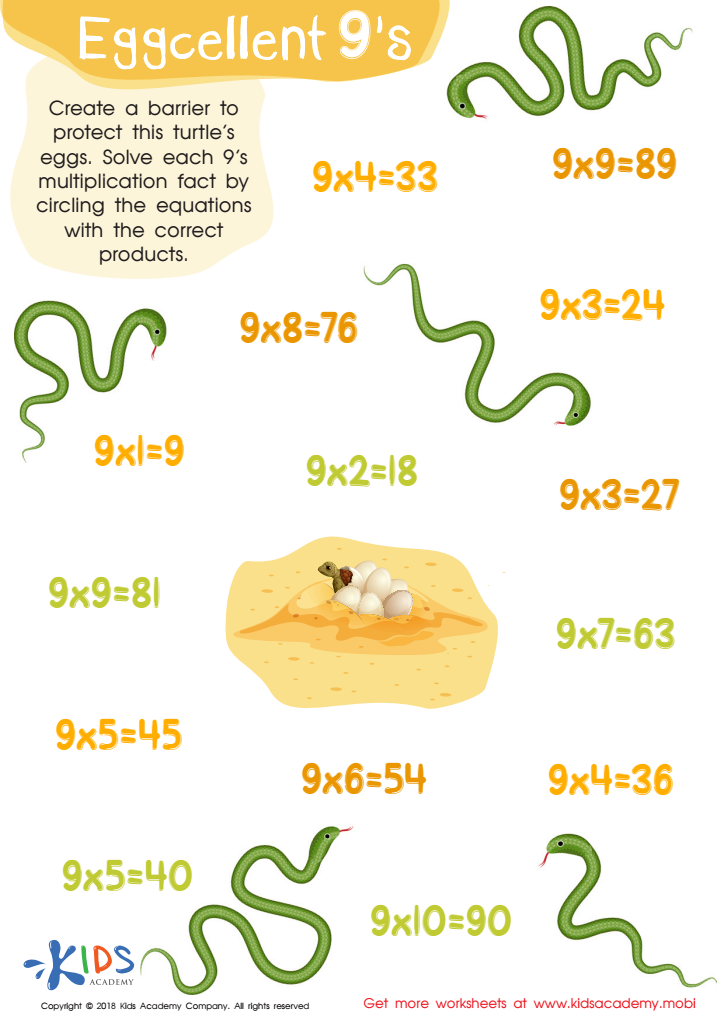
Eggcellent 9’s Worksheet
Help your kids save turtle eggs in this worksheet! Have them create a barrier by solving 9's multiplication facts, then circling the equations with the correct product. Finish up this exercise and show them how they can help protect turtle eggs from predators.
Eggcellent 9’s Worksheet
Worksheet
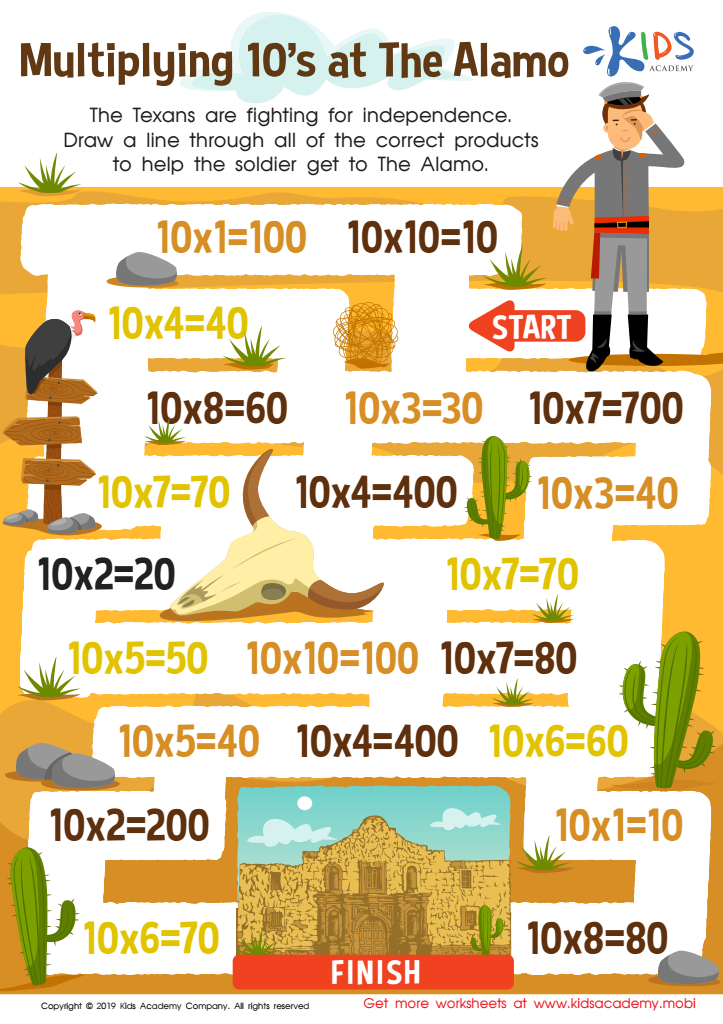
Multiplying 10’s at The Alamo Worksheet
Teach your kids easy tricks to simplify any multiplication problem. For example, when multiplying any number by 10, the result will always end in a zero. To help the Texans in this worksheet, draw a line through all of the correct products to get them to The Alamo.
Multiplying 10’s at The Alamo Worksheet
Worksheet
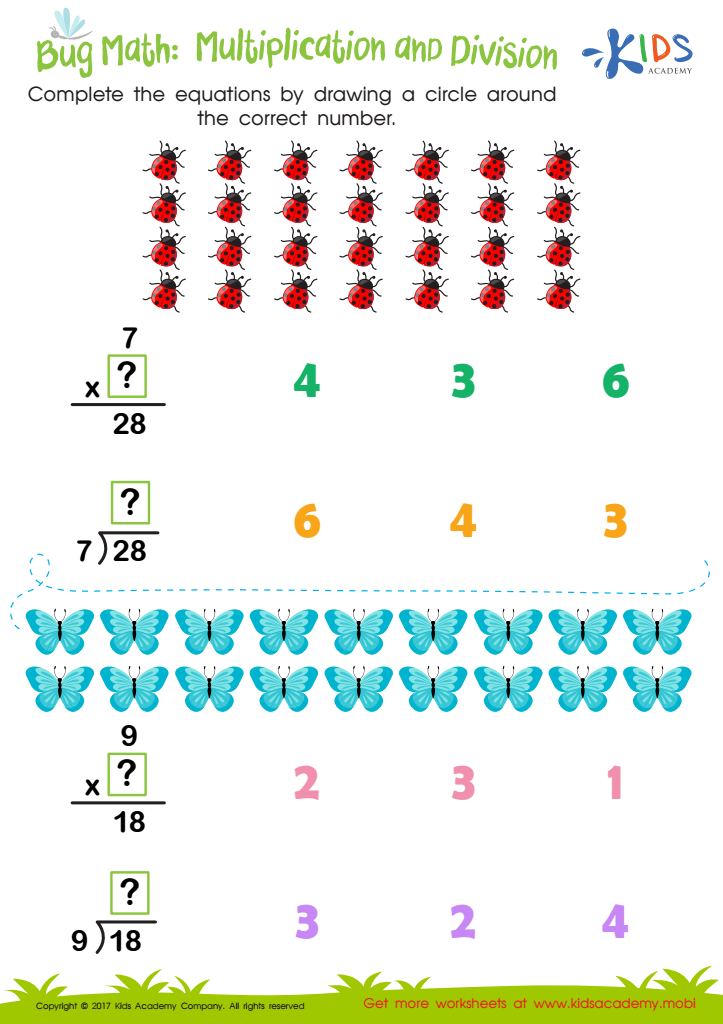
Multiplication and Division Worksheet
Third graders can solve tricky multiplication and division problems with visuals of springtime bugs. Pictures guide them through the process, making it easier to understand. Plus, it's fun!
Multiplication and Division Worksheet
Worksheet
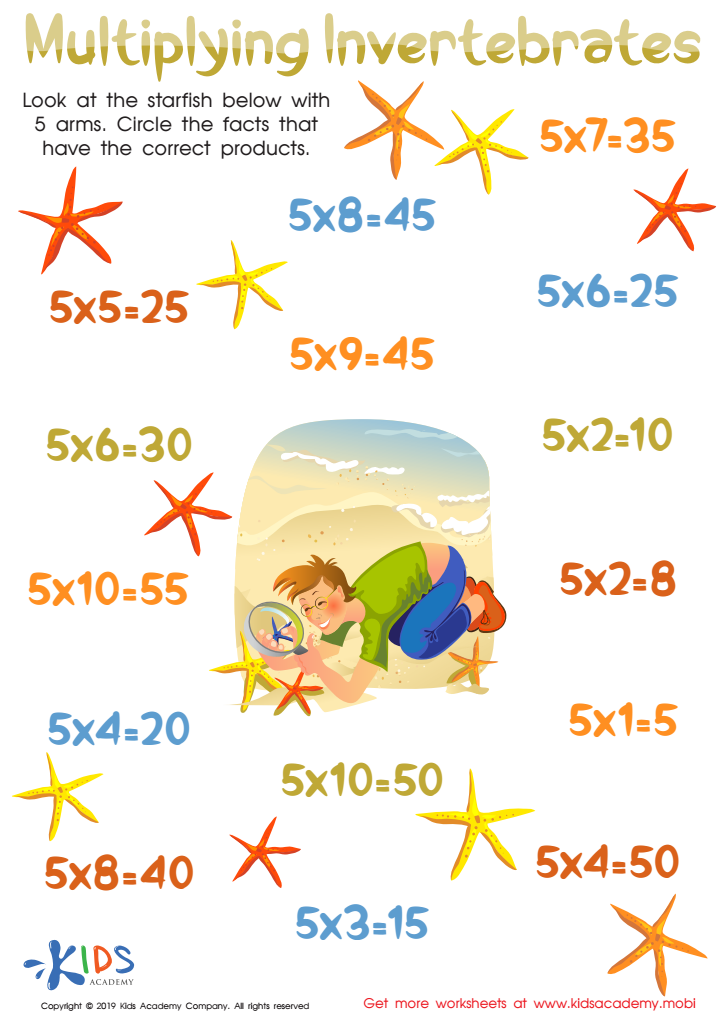
Multiplying Invertebrates Worksheet
Explain to your kids an invertebrate is an animal without a backbone. Examples: squid, jellyfish, octopus. Now, look at the starfish in the picture and help your kids circle the correct facts.
Multiplying Invertebrates Worksheet
Worksheet
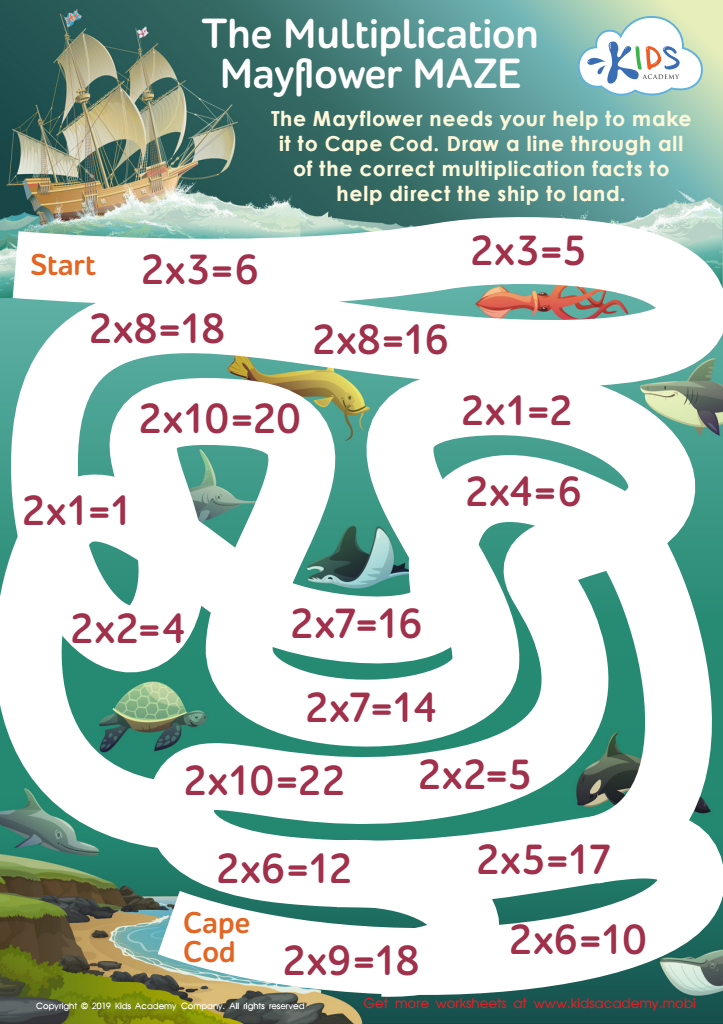
The Multiplication Mayflower Maze Worksheet
Math may not be a favorite subject but it must be tackled. To get minds engaged, use colorful, fun worksheets like this one. Ask students to draw a line connecting all the correct multiplication facts to help the Mayflower get to Cape Cod.
The Multiplication Mayflower Maze Worksheet
Worksheet
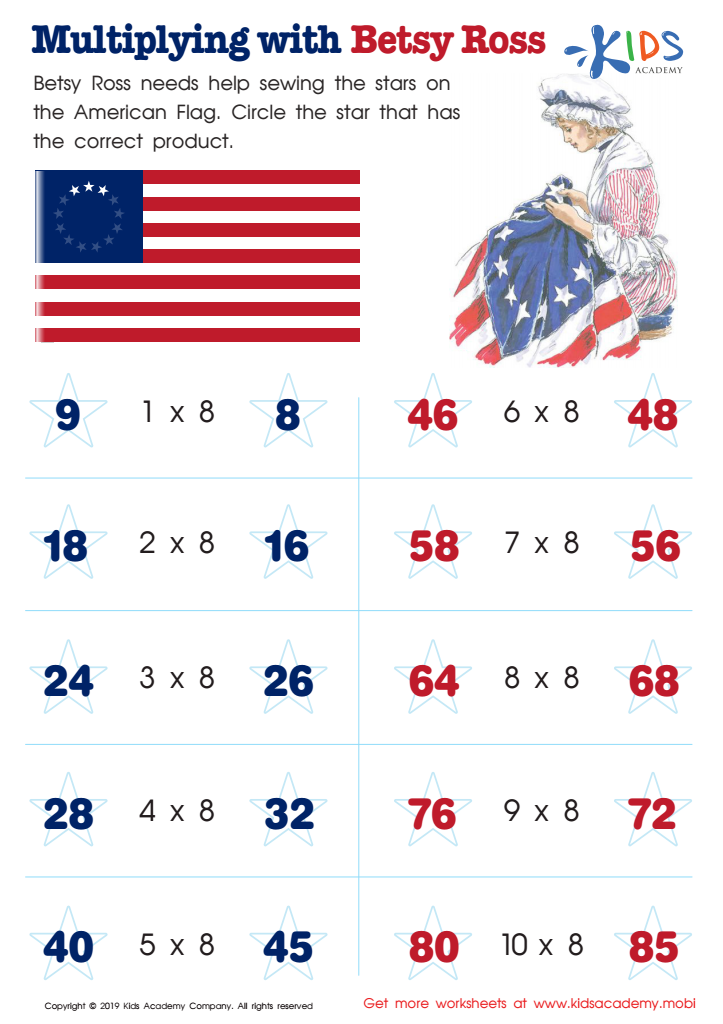
Multiplying with Betsy Ross Worksheet
Before getting into the worksheet, have your students take a quick history lesson on Betsy Ross. Ask them if they know her role in American history. On the printout, ask your kids to identify what Betsy Ross is doing - sewing the stars on the American Flag. Have them circle the star that has the correct pattern.
Multiplying with Betsy Ross Worksheet
Worksheet
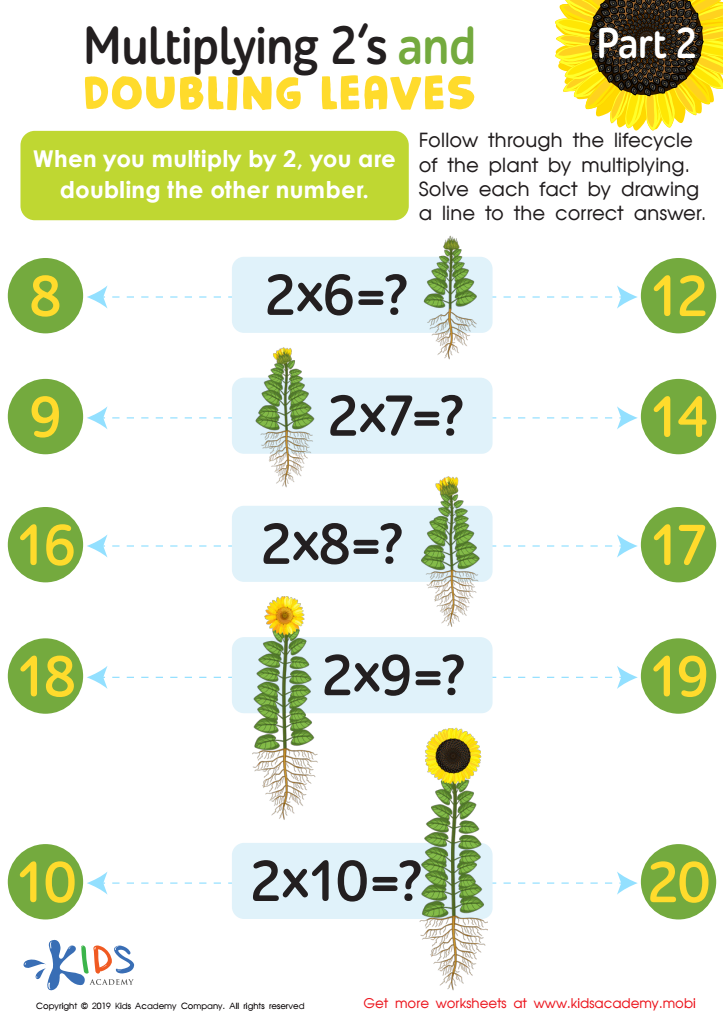
Multiplying 2’s and Doubling Leaves Part 2 Worksheet
Help your students master multiplication with these simple tips. Double the number for multiplying by 2 and use this interactive tracing sheet for solving each fact. Plus, it's colorful making it fun for your students to learn.
Multiplying 2’s and Doubling Leaves Part 2 Worksheet
Worksheet
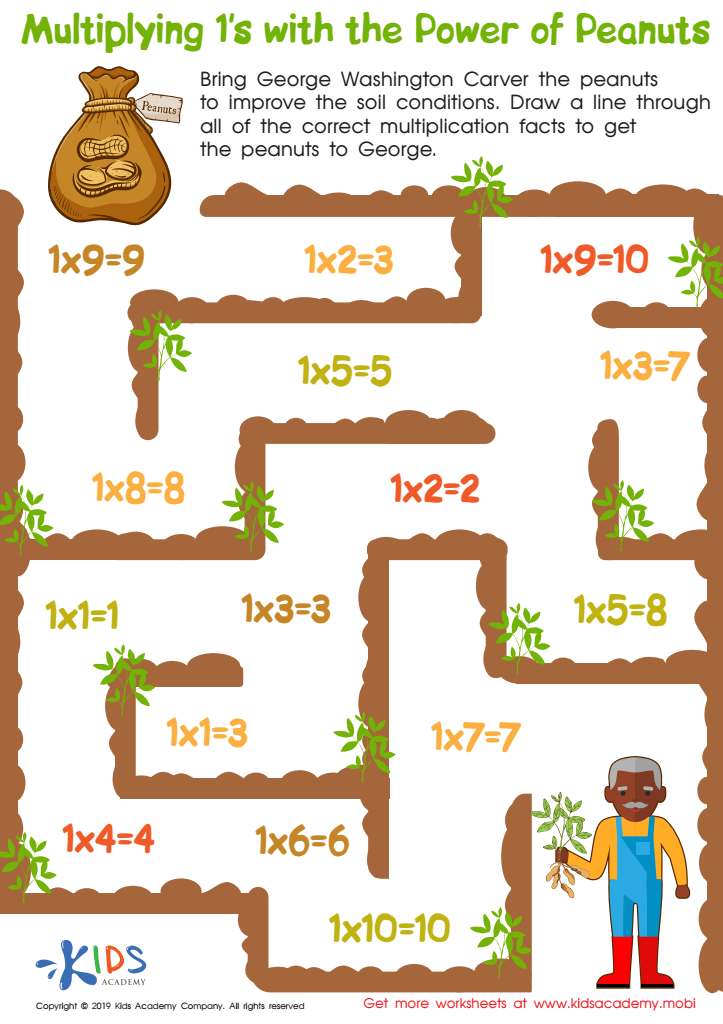
Multiplying 1’s With the Power of Peanuts Worksheet
Help your kids learn about George Washington Carver with this fun worksheet! Assist them in bringing peanuts to Carver by drawing a line through the correct multiplication facts. Introduce them to Carver's genius creations and show them how he used peanuts to improve the soil condition.
Multiplying 1’s With the Power of Peanuts Worksheet
Worksheet
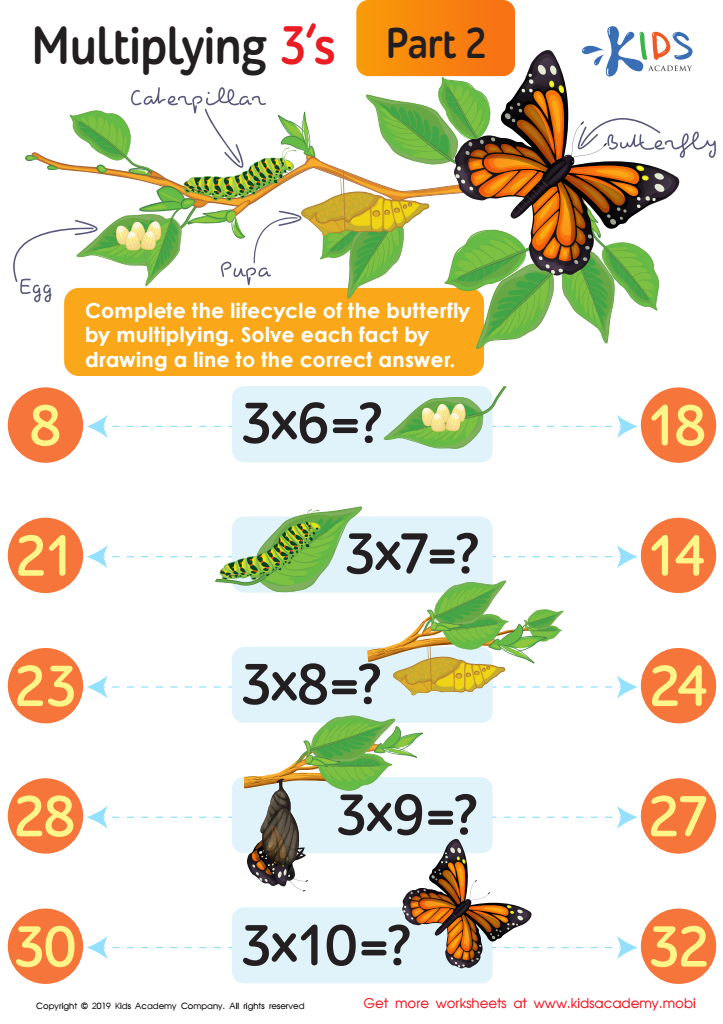
Multiplying 3s Part 2 Worksheet
Once a tiny egg, a butterfly goes through its life cycle. From egg to caterpillar to cocoon to beautiful winged creature! Ask your kids to complete the lifecycle by solving the facts on the worksheet. Help them draw a line to the right answer and let them marvel at the butterfly's amazing transformation!
Multiplying 3s Part 2 Worksheet
Worksheet
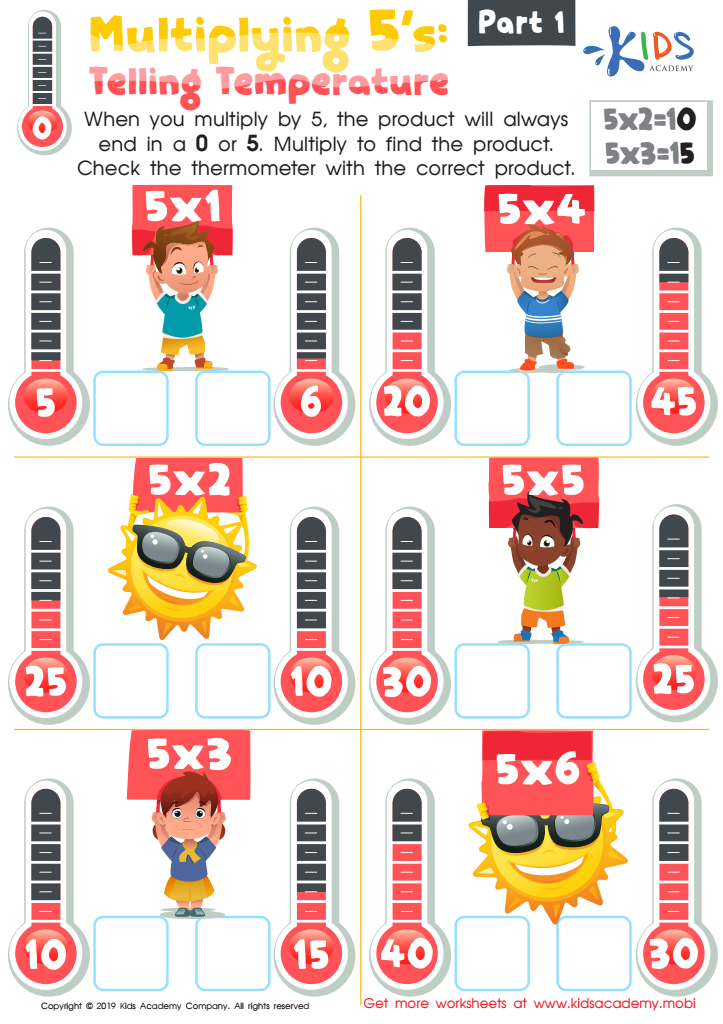
Multiplying 5’s: Telling Temperature Worksheet
To help your child learn their times tables, here's two tips. When multiplying by 10s, the product always ends in a 0. When multiplying by 5s, the product will end in either 0 or 5. Have a look at the problems in this worksheet, help them find the product and check the thermometer to verify the answer.
Multiplying 5’s: Telling Temperature Worksheet
Worksheet
Join Kids Academy for Free
Who is primarily going to use this learning content?





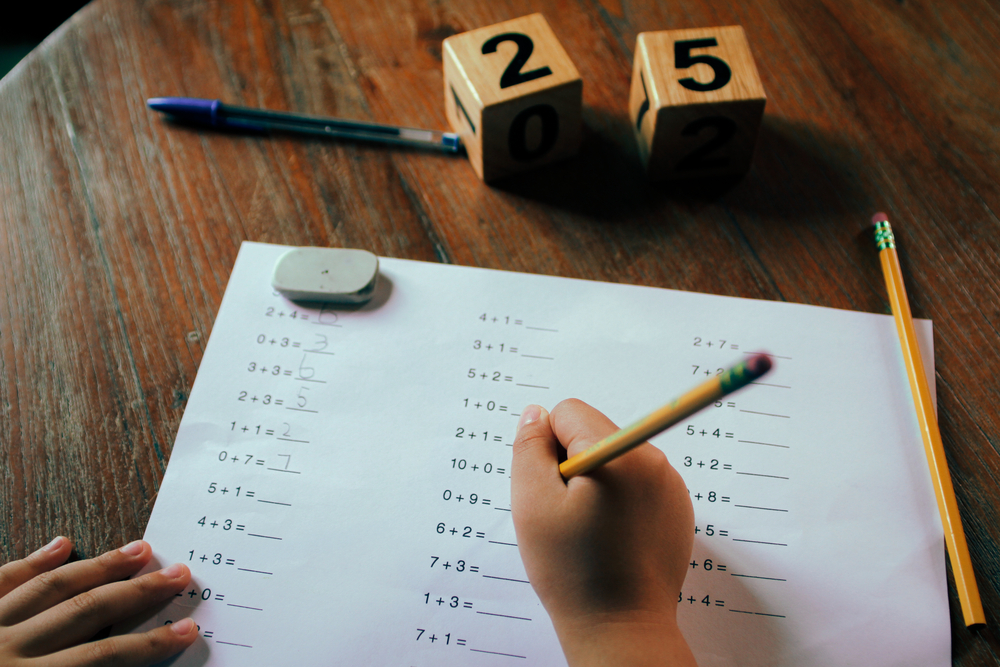

Parents and teachers should care about multiplication practice for children ages 3-9 because it sets a crucial foundation for their future mathematical understanding and cognitive development. At this young age, children's brains are highly adaptable and primed for learning new concepts. Introducing multiplication early helps them build numerical fluency, a key component in later mathematics such as division, fractions, and algebra.
Multiplication is more than just memorizing tables; it fosters logical thinking and problem-solving abilities. These critical thinking skills are essential not only within mathematics but across all subjects and everyday life. Regular multiplication practice can boost children's confidence, allowing them to approach complex tasks with a more positive mindset.
Moreover, early exposure to multiplication strengthens memory and improves focus. Children who practice regularly are better at recognizing patterns and making connections, which can be beneficial in diverse academic pursuits. They learn perseverance and the value of practice, instilling a growth mindset that can carry them through various challenges.
Additionally, engaging in multiplication activities can be fun and interactive, particularly through games, puzzles, and hands-on activities. This engagement makes learning more enjoyable and differentiates educational experiences. By prioritizing multiplication practice, parents and teachers equip children with the tools they need for long-term academic and personal success.








