Enhance critical thinking Reading Worksheets for Ages 3-9
3 filtered results
-
From - To
Boost your child's analytical abilities with our Enhance Critical Thinking Reading Worksheets for ages 3-9. Our expert-designed worksheets focus on fostering comprehension, inference making, and problem-solving skills. Each exercise encourages young learners to think deeply about what they read and draw meaningful conclusions. With engaging content tailored for various developmental stages, we support continuous intellectual growth. Benefit from a range of themes that make learning both educational and enjoyable. Start today and watch your child's critical thinking flourish with our dynamic and effective reading worksheets! Visit Kids Academy for more resources to nurture essential learning skills.
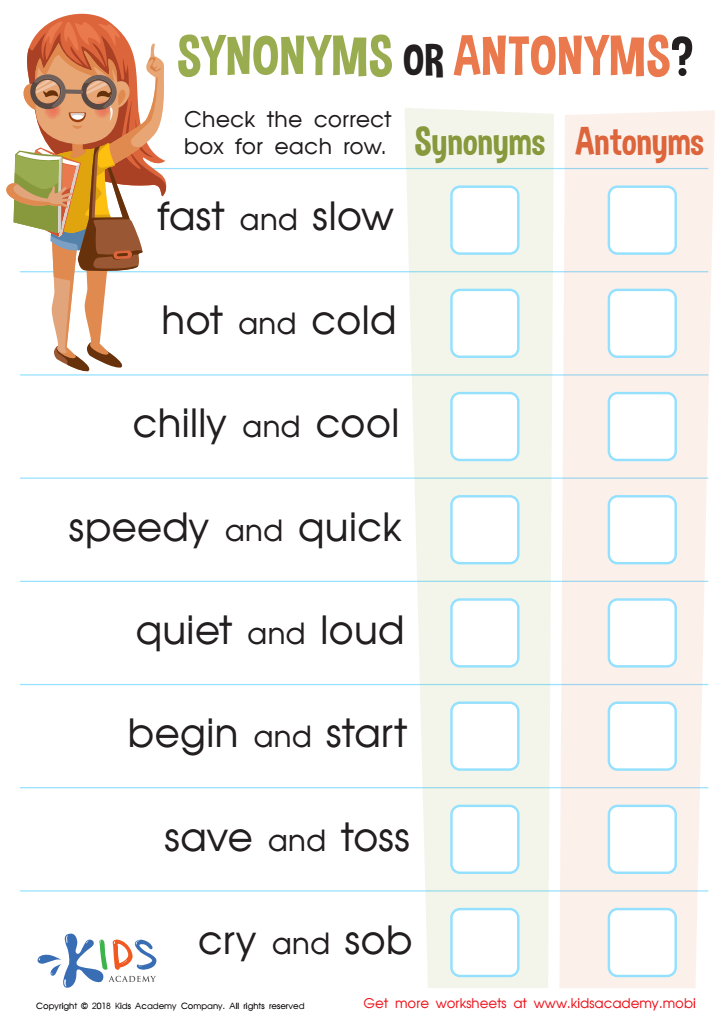
Synonyms or Antonyms: Assessment Worksheet
 Assign to My Students
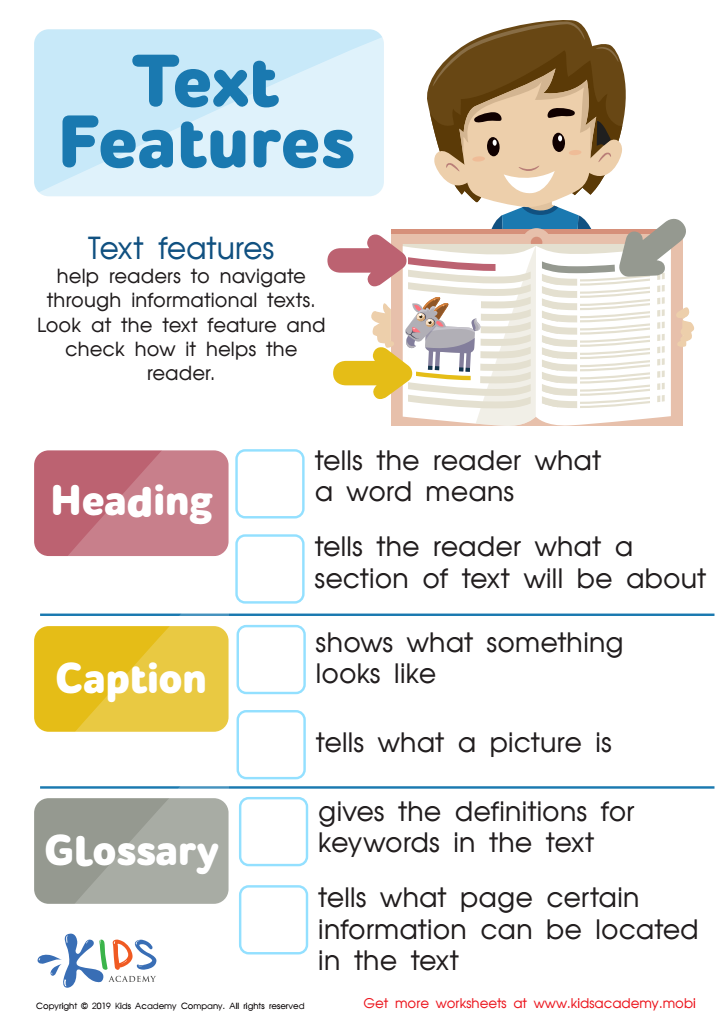
Text Features Worksheet
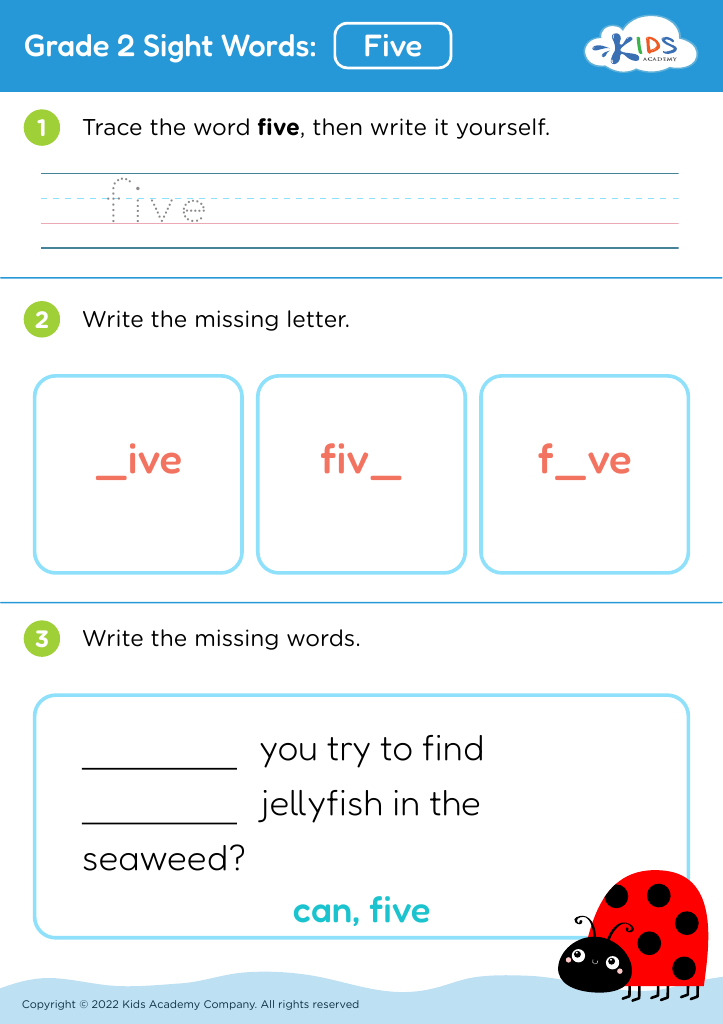


.jpg)





Parents and teachers play essential roles in the early development of children's cognitive abilities, and enhancing critical thinking through reading for ages 3-9 is one of the most effective strategies. Firstly, this age range is a critical period for brain development. Young children are highly receptive and capable of learning new concepts quickly. Critical thinking through reading helps them interpret stories, understand logical sequences, and make predictions, thus developing their analytical skills.
Moreover, introducing critical thinking activities in early childhood sharpens problem-solving abilities. When children engage with texts that encourage them to ask questions or connect ideas, they learn to think independently and make informed decisions. This is not only beneficial for academic success but also for everyday life.
Another benefit is improved language comprehension and vocabulary. By reading diverse materials that challenge their thought processes, children expand their vocabulary and improve their understanding of complex language structures. This advanced language skill becomes foundational for future learning tasks.
Finally, fostering critical thinking promotes curiosity and a lifelong love for learning. When children experience the joy of discovering answers on their own, they develop a positive attitude towards learning, which can greatly influence their educational journeys. parents and teachers can thus lay a robust foundation for future intellectual and emotional development by enhancing critical thinking through reading.








