Identifying story elements Reading Worksheets for Ages 3-9
4 filtered results
-
From - To
Explore our engaging "Identifying Story Elements Reading Worksheets" designed for children aged 3-9! These worksheets offer a fun way for young learners to discover essential story components such as characters, setting, plot, and conflict. With vibrant images and relatable contexts, kids will enhance their reading comprehension and analytical skills while enjoying each activity. Our resources support parents, educators, and caregivers in guiding children through the enchanting world of storytelling. Perfect for classroom use or at-home practice, these worksheets encourage creative thinking and spark a love for literature. Dive into the adventure of reading with our thoughtfully crafted materials!
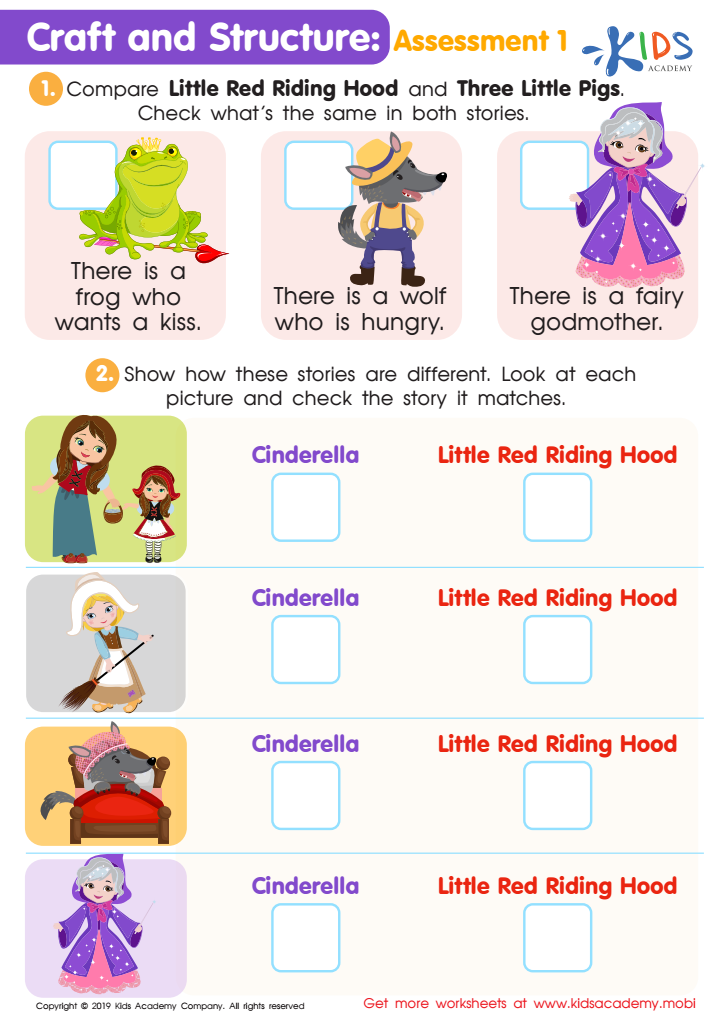
Craft and Structure: Assessment 1 Worksheet
 Assign to My Students
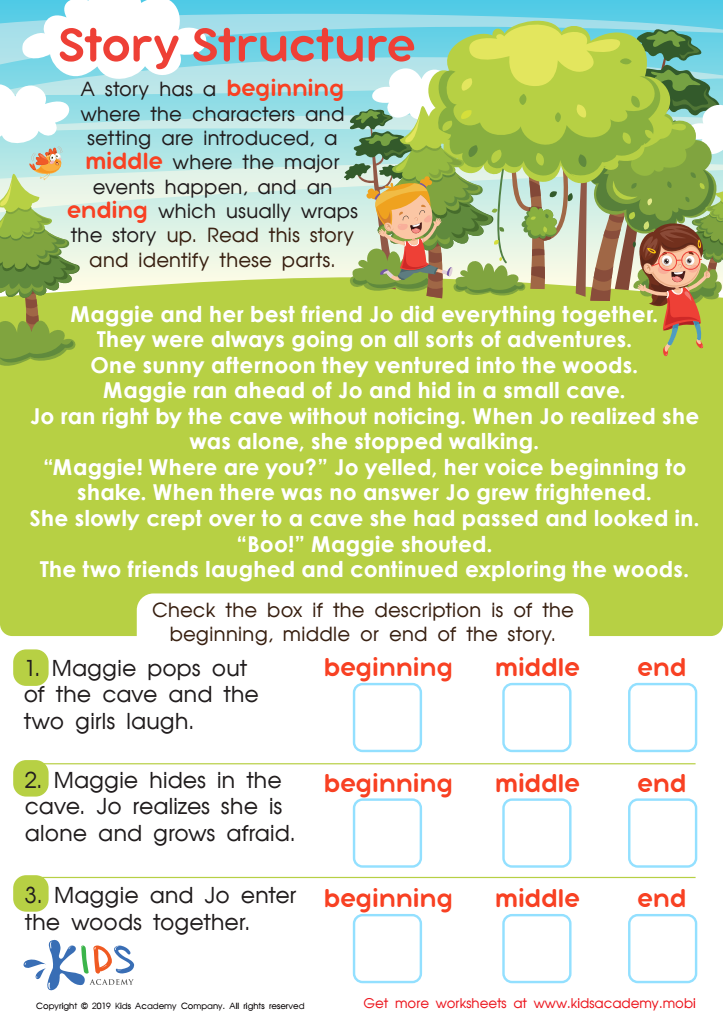
Story Structure Worksheet
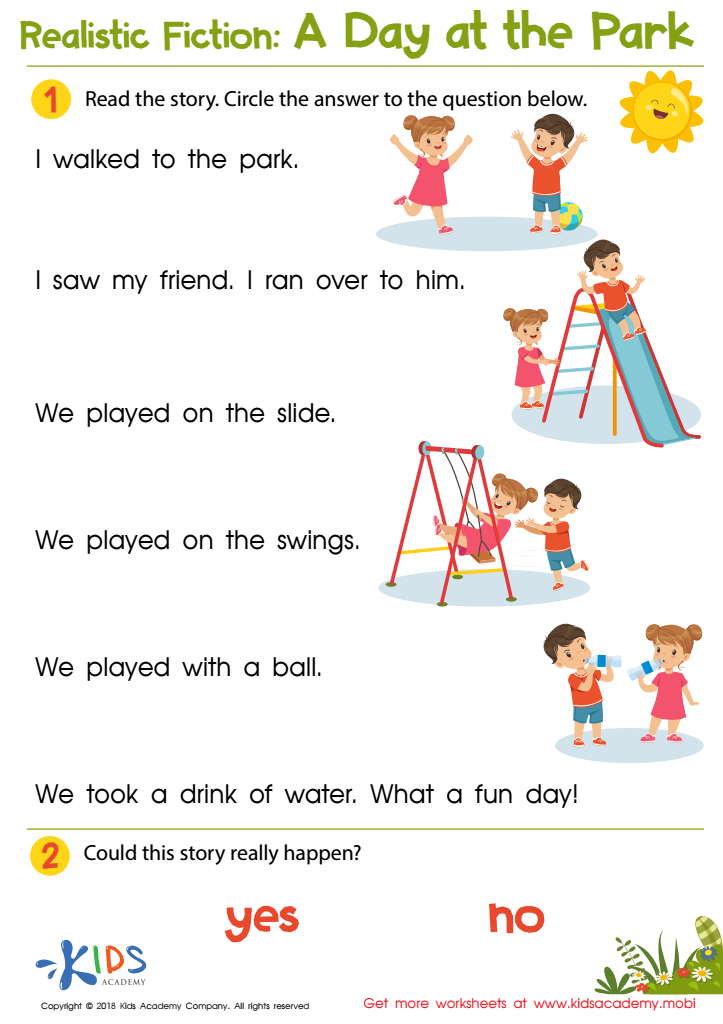
A Day at the Park Worksheet
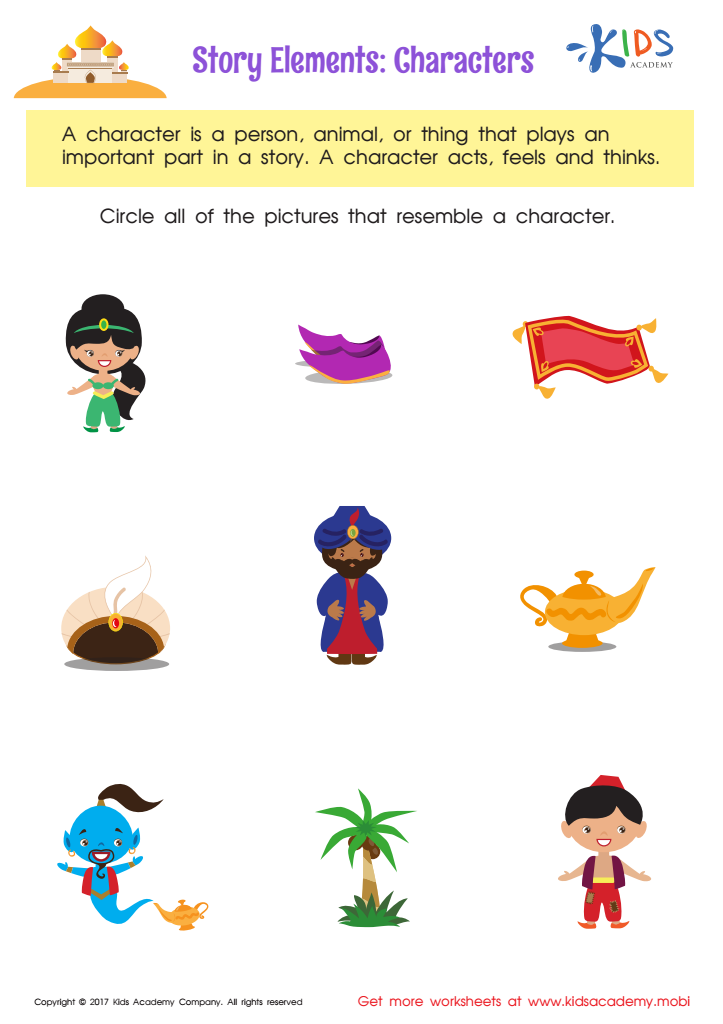
Story Elements Printable






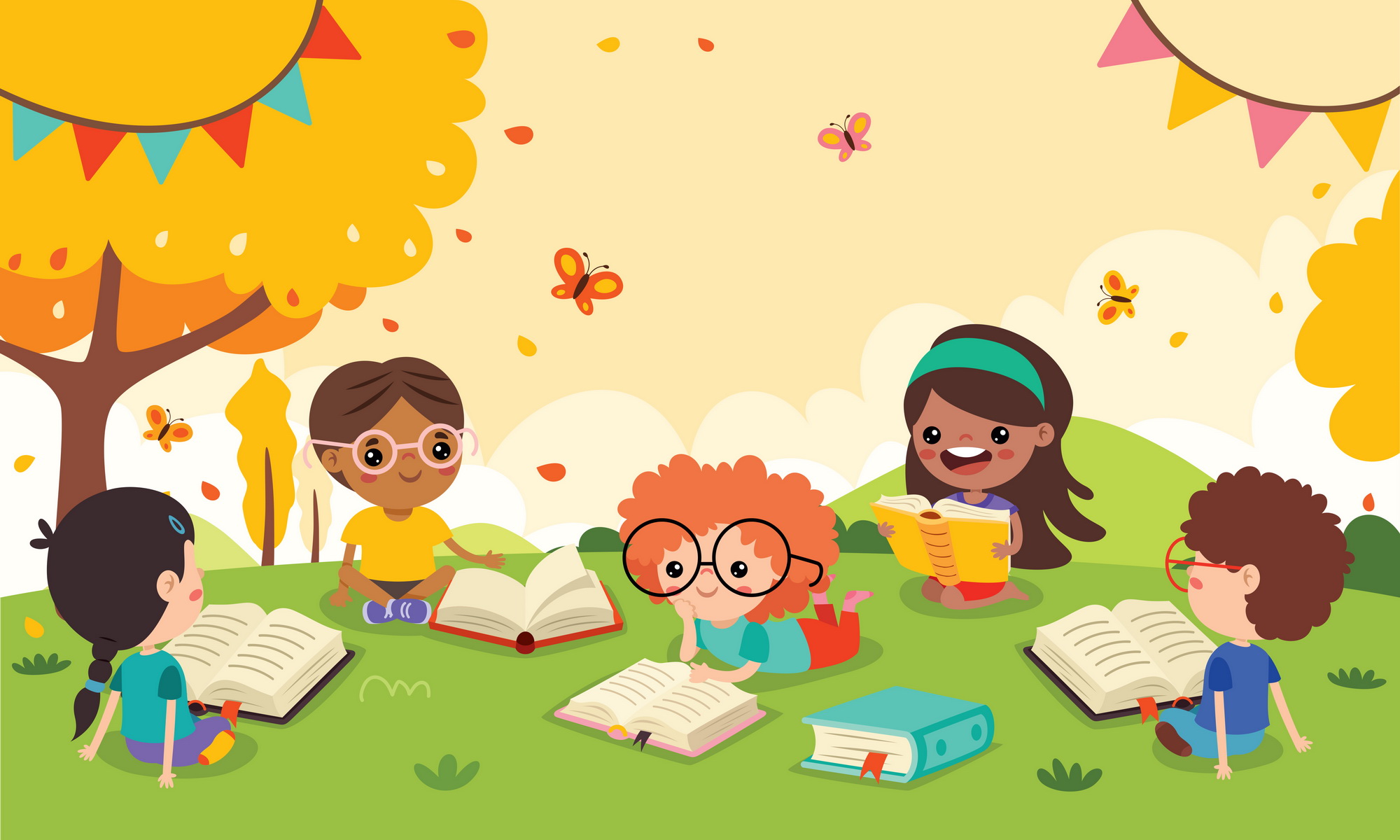

Identifying story elements is crucial for children aged 3-9 as it lays the foundation for reading comprehension and critical thinking skills. Understanding elements like character, setting, plot, conflict, and resolution helps children grasp the structure of narratives, enabling them to make sense of what they read. This comprehension fosters a love for reading and encourages children to engage deeply with texts.
For parents and teachers, nurturing these skills is essential in developing a child's ability to express thoughts and ideas. When children can identify story elements, they enhance their vocabulary, improve their narrative skills, and become more adept at retelling stories. These abilities not only support literacy but also encourage empathy as children relate to characters and their experiences.
Additionally, awareness of story elements aids in discussions about stories, promoting social interaction and enhancing listening skills. As children articulate their understanding of literature, they develop confidence in their communication abilities, which are valuable throughout their educational journey.
Ultimately, identifying story elements empowers children to become thoughtful readers and storytellers, setting them on a path for academic success and a lifelong passion for learning. Therefore, parents and teachers play a pivotal role in guiding and supporting this essential learning process.








