
Understanding multiplication Reading Worksheets for Ages 3-9
5 filtered results
Difficulty Level
Grade
Age
-
From - To
Subject
Activity
Standards
Discover our "Understanding Multiplication" reading worksheets tailored for children ages 3-9. These engaging worksheets are designed to introduce the fundamental concepts of multiplication in a fun and interactive way. Through vibrant illustrations and simple explanations, young learners will grasp the basics of multiplying numbers, enhancing their mathematical skills and confidence. Our resources promote critical thinking and problem-solving abilities, ensuring a solid foundation for future math success. With a variety of activities that cater to different learning styles, these worksheets make exploring multiplication a delightful experience. Start your child's journey into the world of math with our carefully crafted educational materials today!
Favorites
With answer key
Interactive
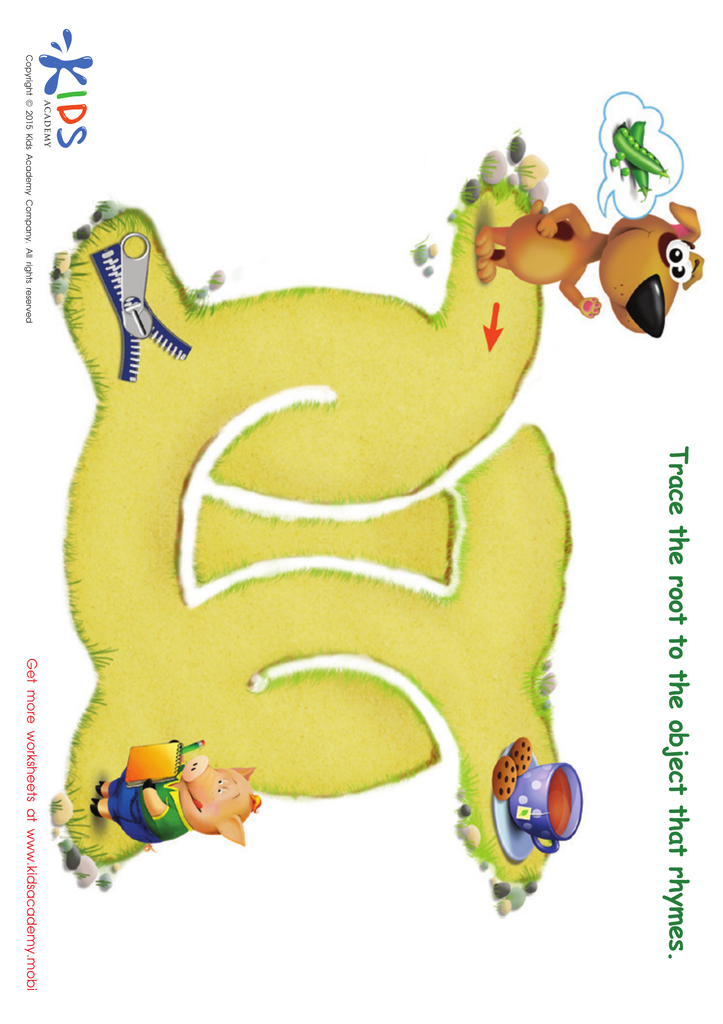
Pea Rhyming Words Worksheet
Check out our free printable worksheet that helps kids learn new words through rhyming. Your child needs to trace the root between the rhyming words and remember them better. Enjoy learning!
Pea Rhyming Words Worksheet
Worksheet
Join Kids Academy for Free
Who is primarily going to use this learning content?






Understanding multiplication is vital for children aged 3-9 as it lays the groundwork for their future mathematical skills and overall cognitive development. At this early age, kids absorb concepts more effectively through engaging and interactive methods, making it the perfect time to introduce multiplication in age-appropriate ways.
Teachers and parents play a crucial role in this process, as they can create a supportive learning environment that fosters curiosity and confidence. Early exposure to multiplication helps children recognize patterns, develop problem-solving skills, and understand mathematical operations in a fun context, such as through games or everyday situations.
Moreover, mastering multiplication aids children's progress in higher-level math, which is essential for academic success in school. Inculcating a positive attitude towards math early on can diminish anxiety around the subject in later years.
Parental and teacher involvement can make learning effective and enjoyable, ensuring that children not only grasp the concept of multiplication but also appreciate its significance in everyday life. By taking a proactive approach to teaching multiplication, parents and teachers can empower children with essential skills for their academic journey and beyond.








