Understanding prepositions Reading Worksheets for Ages 3-9
6 filtered results
-
From - To
Enhance your child’s language skills with our "Understanding Prepositions Reading Worksheets" designed for ages 3-9. These engaging and interactive worksheets help young learners grasp the essential concept of prepositions, fostering their reading comprehension and vocabulary development. Featuring colorful illustrations and relatable contexts, our resources make learning fun and effective. Kids will practice identifying and using prepositions in sentences while cultivating critical thinking skills. Ideal for both home and classroom settings, these worksheets provide a solid foundation in language arts, setting the stage for a lifelong love of learning. Download now and watch your child’s confidence soar as they master prepositions!
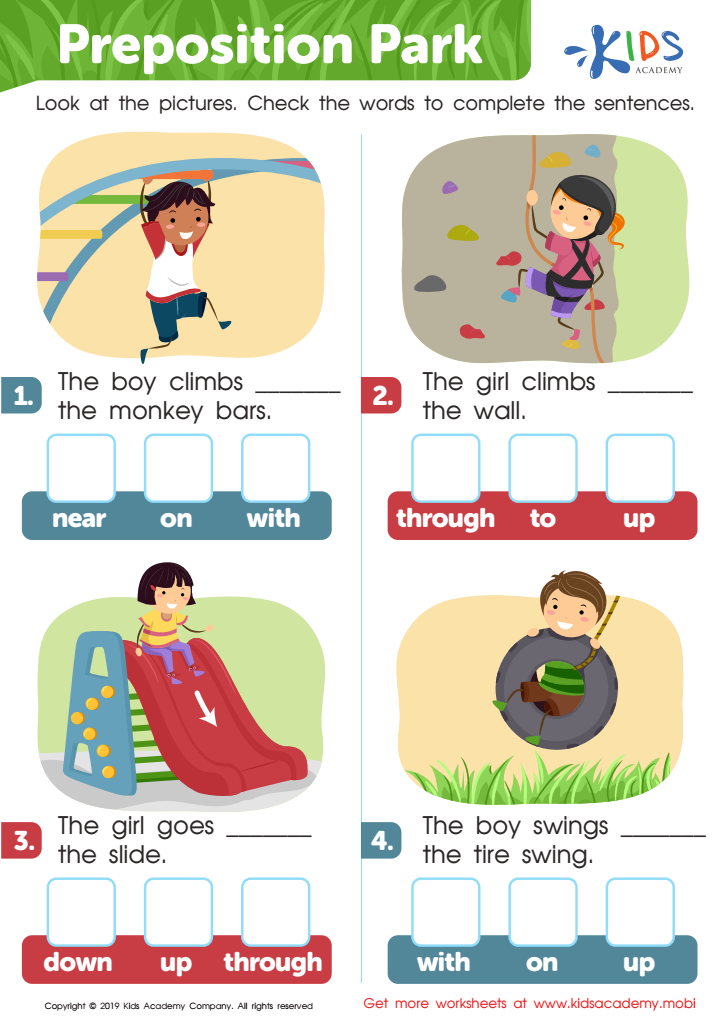
Preposition Park Worksheet
 Assign to My Students
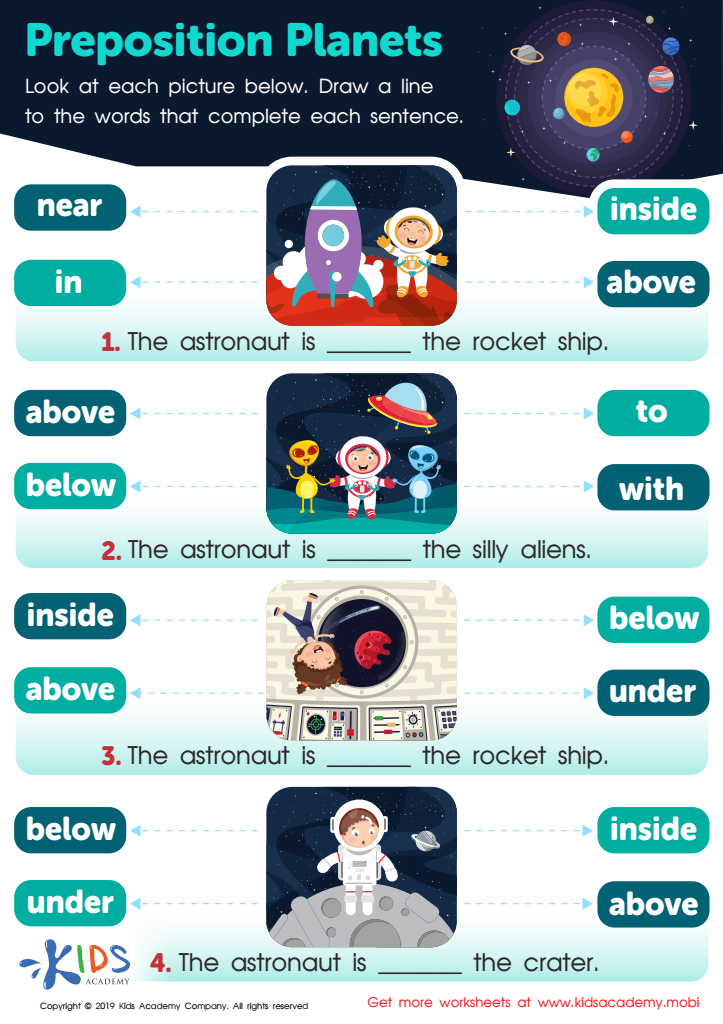
Preposition Planets Worksheet
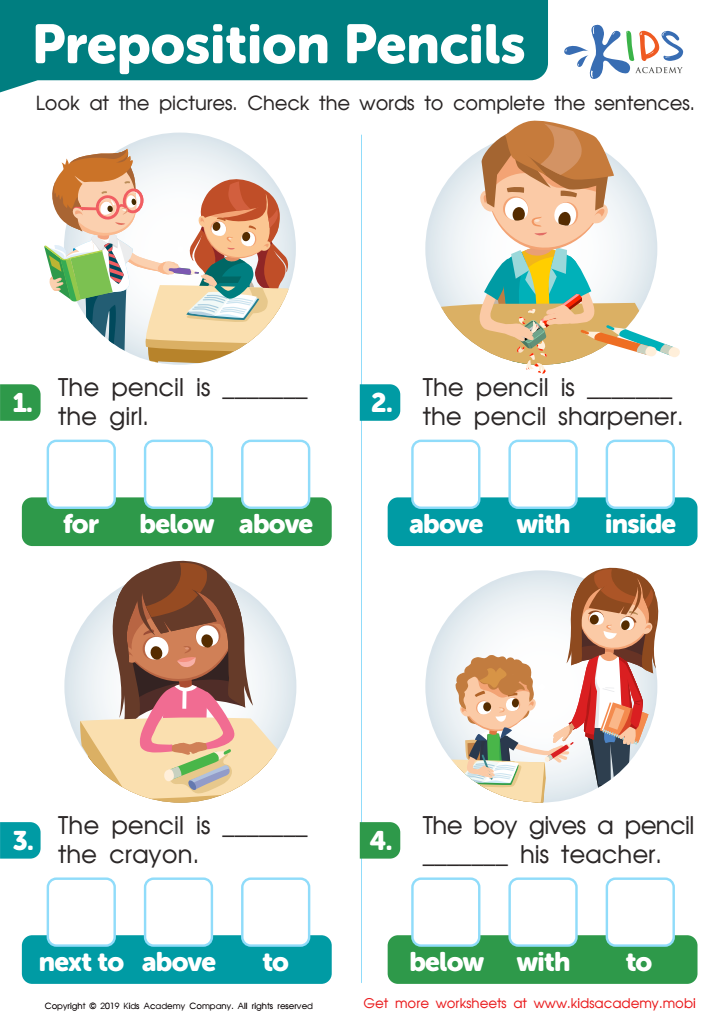
Preposition Pencils Worksheet
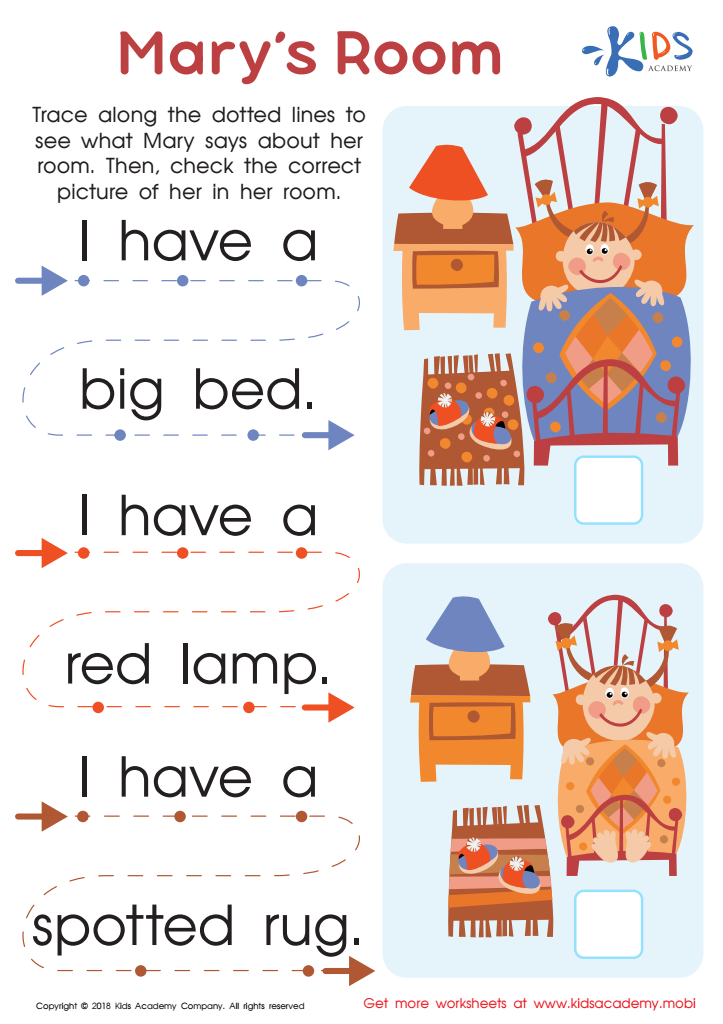
Mary's Room Worksheet






Understanding prepositions is crucial for children aged 3-9 as they form a foundational element of language comprehension and communication skills. Prepositions help express relationships between objects, people, and locations, enhancing a child's ability to articulate thoughts clearly. For parents and teachers, fostering this understanding encourages more effective interaction with language, contributing to better listening and reading skills.
Prepositions enrich children's vocabulary and enable them to construct meaningful sentences, facilitating better storytelling and conversations. Engaging with texts that emphasize prepositions during reading time allows children to grasp context, improving their comprehension skills significantly.
Additionally, being proficient with prepositions supports their performance in school, as many subjects, including mathematics and science, use spatial language to describe concepts. Helping children understand prepositions also encourages cognitive development; they learn to identify relationships in the world around them.
Finally, teaching prepositions through fun activities enhances parent-child or teacher-student bonding, making learning an enjoyable experience. By prioritizing prepositions, adults can support children in becoming confident communicators, laying the groundwork for their future academic success and social interactions.








