Animal identification Reading Comprehension Worksheets for Ages 3-9
4 filtered results
-
From - To
Discover our engaging Animal Identification Reading Comprehension Worksheets, designed for children ages 3-9! These worksheets foster essential reading skills while introducing young learners to the fascinating world of animals. Each activity encourages kids to read, understand, and identify various animals through colorful illustrations and interactive questions. Perfect for early childhood classrooms or at-home learning, our resources support vocabulary development and critical thinking. With a variety of worksheets tailored to different age groups, your little ones will enjoy exploring the animal kingdom in a fun and educational way. Start nurturing your child's reading abilities today with our captivating materials!
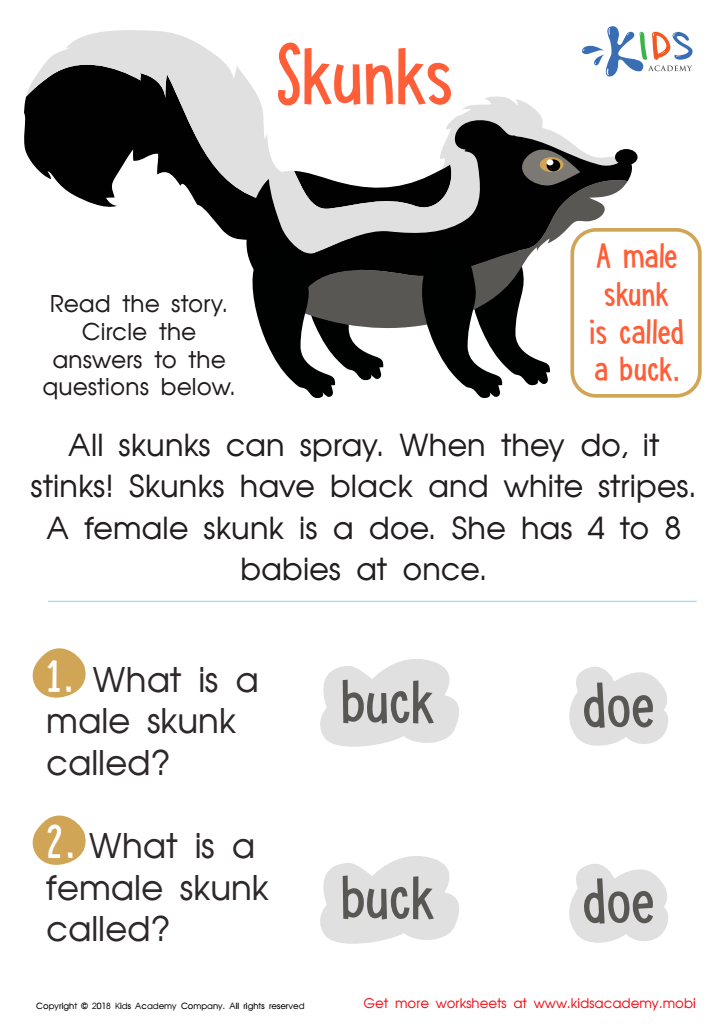
Skunks Worksheet
 Assign to My Students
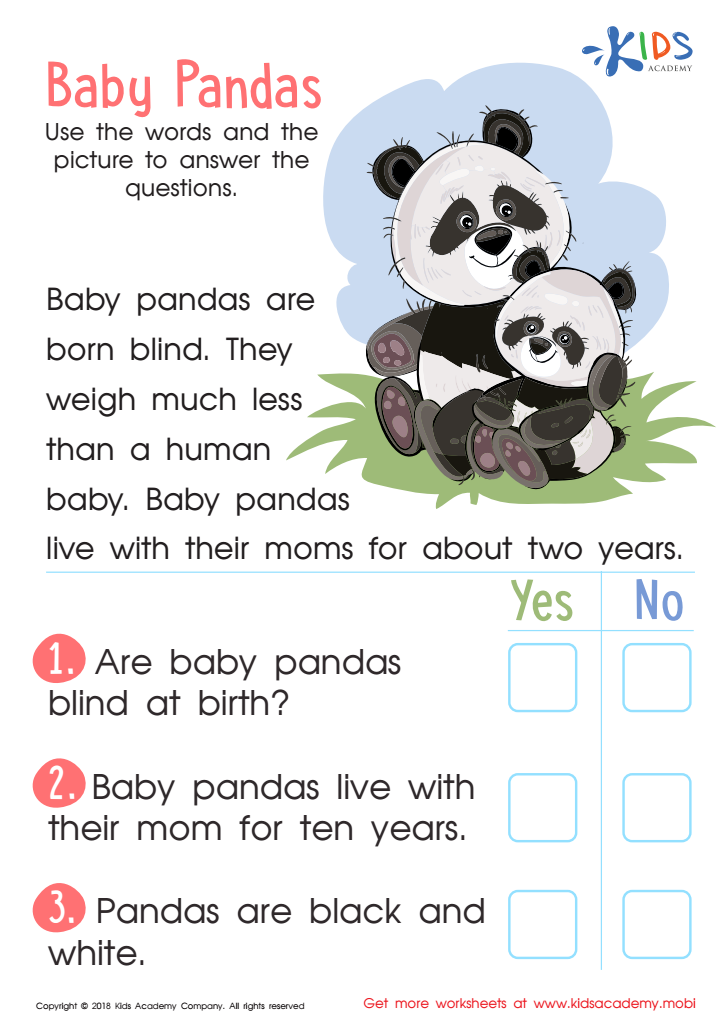
Baby Pandas Worksheet
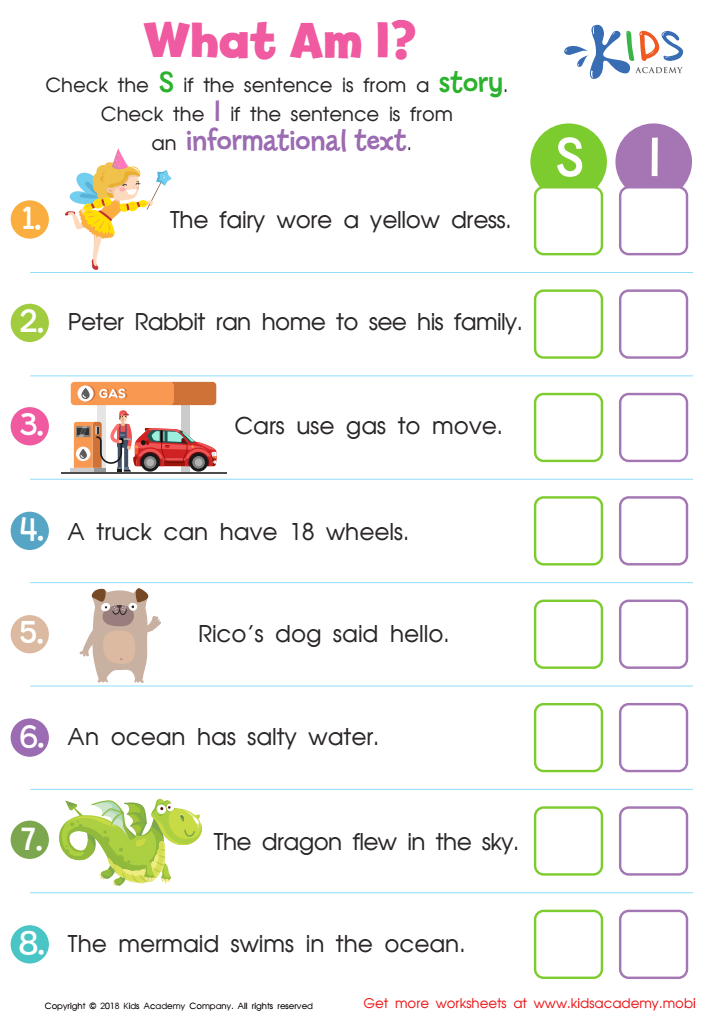
What Am I? Worksheet
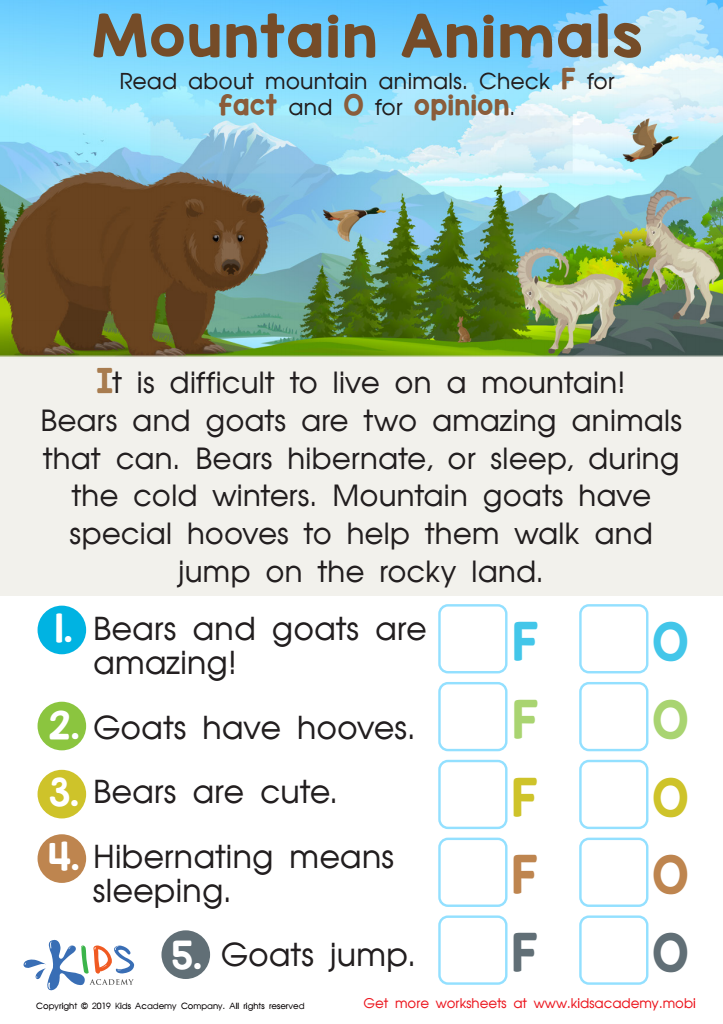
Mountain Animals Worksheet





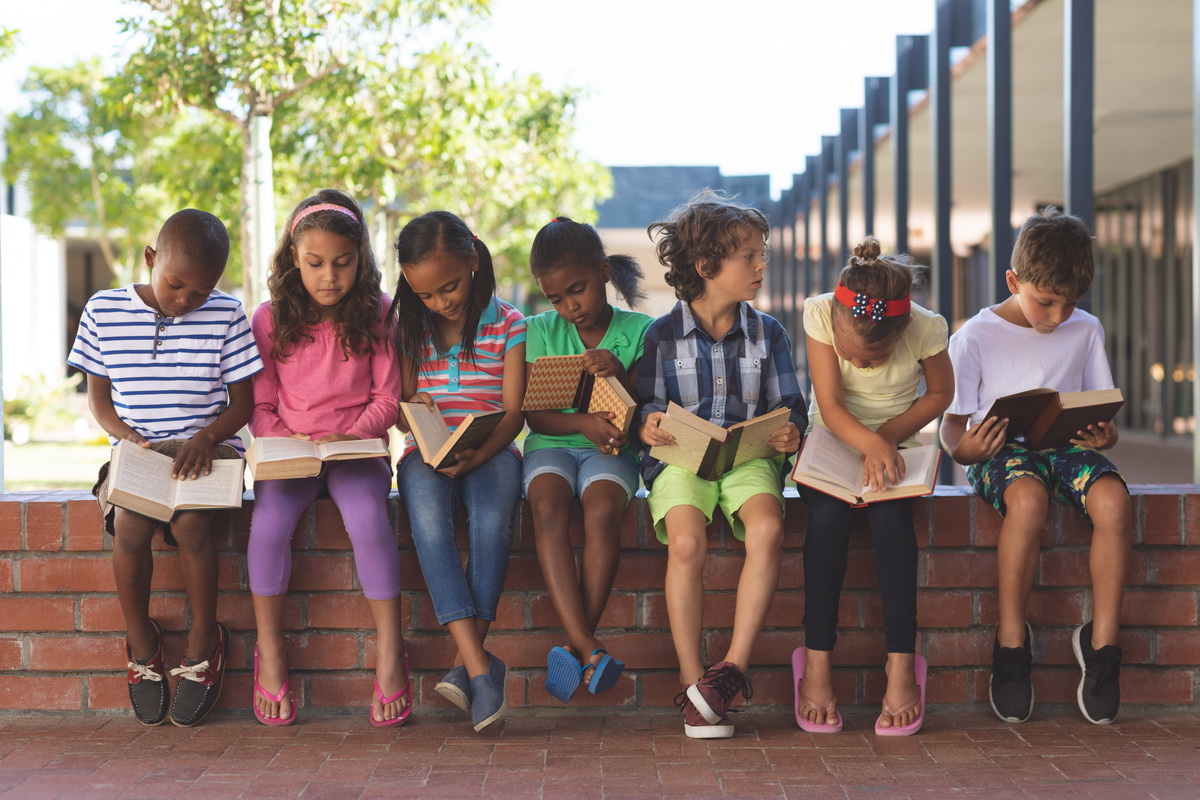


Animal identification reading comprehension is crucial for children aged 3-9 for several reasons. First, it fosters early literacy skills, enabling children to recognize words and phrases associated with animals. This not only builds their vocabulary but also enhances their ability to understand and interact with text, which lays a foundation for future reading success.
Second, introducing children to various animal species teaches them about biodiversity and the importance of animals in our ecosystem. Understanding different animals helps cultivate curiosity and empathy towards living creatures, encouraging responsible attitudes towards nature and environmental conservation.
Moreover, common animal themes in stories and educational materials engage young learners. Identifying animals in texts boosts cognitive development, as children learn to make connections between words and images, improving their critical thinking skills.
Parents and teachers can utilize animal identification reading comprehension to promote discussions, allowing children to express their thoughts and ideas verbally. This interaction not only strengthens language skills but also nurtures social skills through collaborative learning activities.
In essence, animal identification reading comprehension provides children aged 3-9 with essential literacy, cognitive, and social skills, equipping them for lifelong learning and responsible citizenship.








