Information retention Reading Comprehension Worksheets for Ages 3-9
4 filtered results
-
From - To
Discover our engaging "Information Retention Reading Comprehension Worksheets" designed specifically for children aged 3 to 9! These thoughtfully crafted worksheets aim to enhance young learners' ability to retain and understand key information from reading materials. Each activity is tailored to develop critical thinking skills and promote comprehension through fun and interactive tasks. With vibrant illustrations and age-appropriate content, children will enjoy the learning process while building essential skills for academic success. Perfect for classroom use or at-home practice, these worksheets provide a valuable resource for parents and educators seeking to strengthen children's reading comprehension abilities. Unlock your child's potential today!
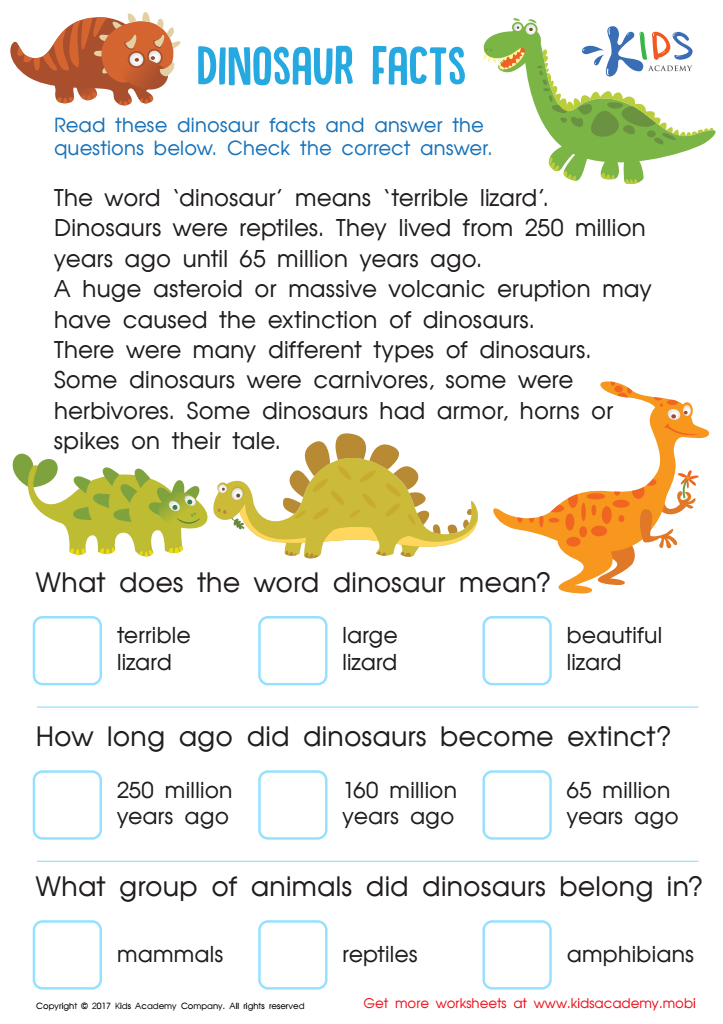
Dinosaur Facts Worksheet
 Assign to My Students
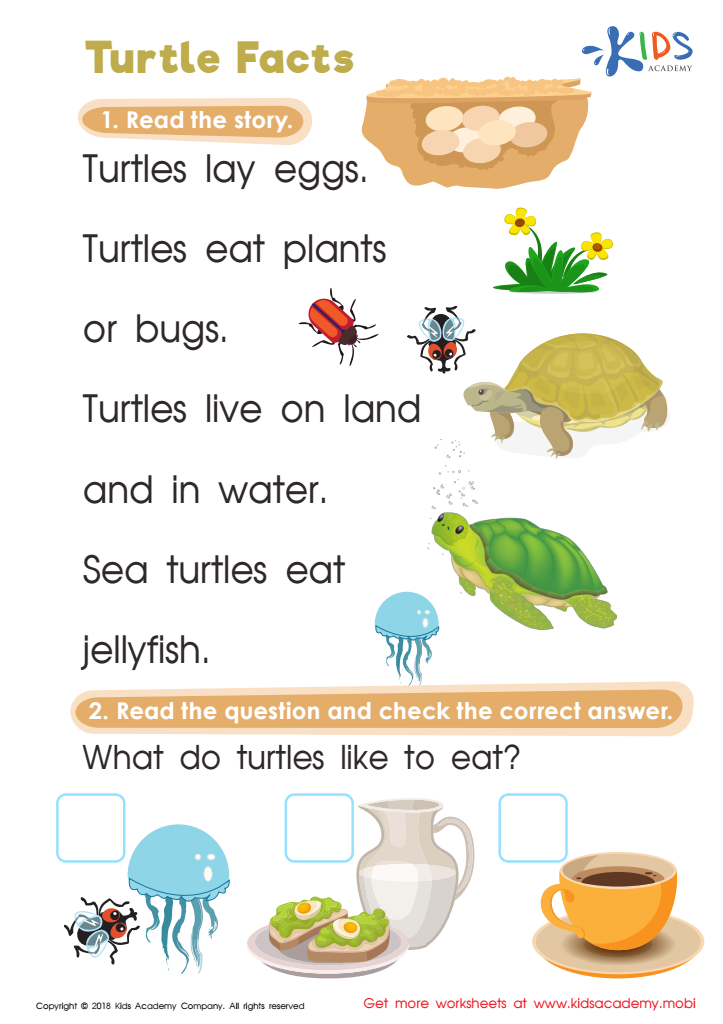
Turtle Facts Worksheet
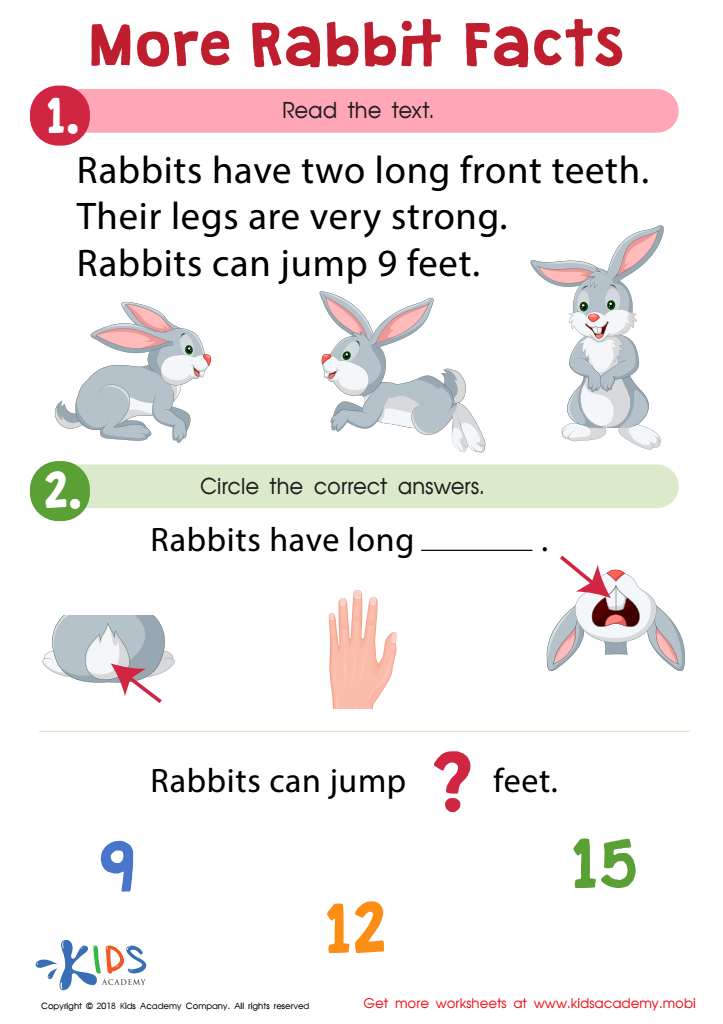
More Rabbit Facts Worksheet

More About the White House Worksheet








Information retention and reading comprehension are crucial for children aged 3-9, as these skills form the foundation for lifelong learning. During these early years, a child's cognitive abilities are rapidly developing. Effective reading comprehension enables children to decode text, understand meaning, and critically engage with content, helping them to form connections and express thoughts clearly.
Parents and teachers play a vital role in this developmental phase. Engaging children with age-appropriate texts fosters a love for reading, while active discussions about stories stimulate critical thinking and vocabulary acquisition. When children can recall and discuss the material they've read, it boosts their confidence and motivation. Moreover, strong comprehension skills are closely linked to academic success across subjects, laying the groundwork for future learning in STEM fields and humanities alike.
Supporting information retention enhances overall cognitive development, aiding memory, focusing skills, and problem-solving abilities. This is especially important as classroom demands increase in later years. By prioritizing reading comprehension, parents and teachers impact a child's social skills and emotional literacy, enabling them to articulate feelings and navigate interpersonal relationships. Ultimately, investing in these skills ensures a better chance for children to thrive both academically and personally as they move through life's various stages.








