Reading Non-Fiction Worksheets for Ages 3-9 - Page 5
97 filtered results
-
From - To
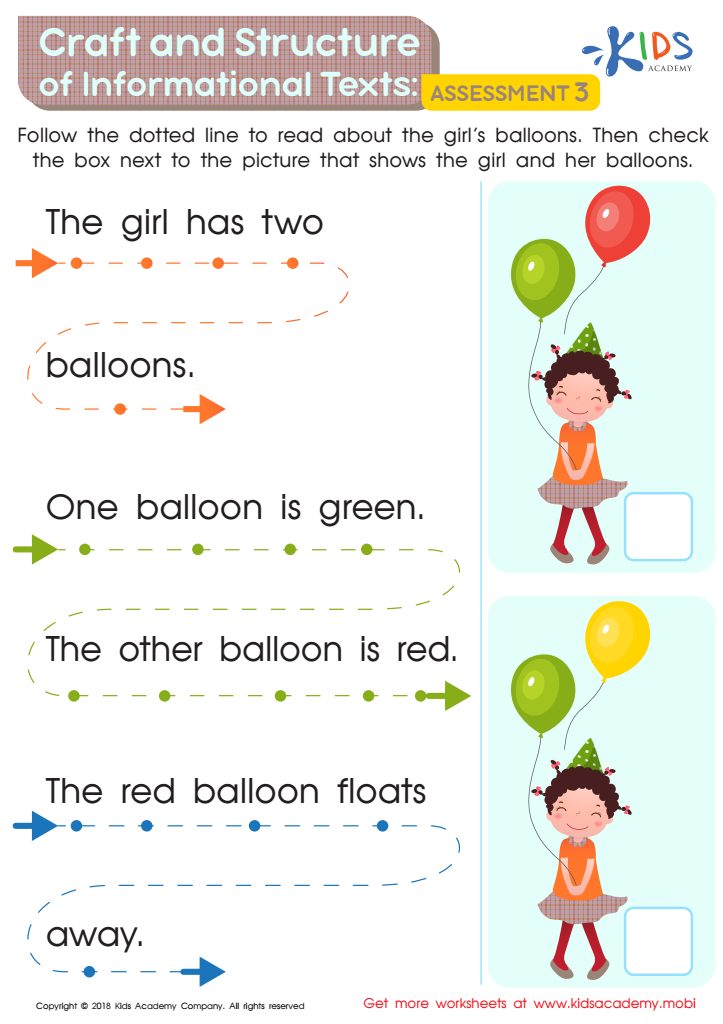
Craft and Structure of Informational Texts: Assessment 3 Worksheet
 Assign to My Students







Reading non-fiction for children aged 3-9 is essential for several reasons. Firstly, it fosters curiosity and encourages a love for learning. At this age, children are naturally inquisitive, and exposing them to non-fiction texts helps satisfy their desire to understand the world around them. It introduces them to real-life concepts, different cultures, animals, processes, and historical events, expanding their horizons beyond storytelling.
Secondly, non-fiction reading enhances critical thinking skills. Children learn to analyze information, understand the difference between facts and opinions, and draw conclusions based on evidence. These skills are foundational for academic success and informed decision-making later in life.
Furthermore, non-fiction builds vocabulary and concentration. Engaging with diverse text types exposes children to a broader range of words and phrases, enhancing their comprehension and articulation skills. This genre also caters to various learning styles, making it accessible for auditory, visual, and kinesthetic learners.
Finally, non-fiction can spark interests and passions that may last a lifetime. Whether it's in science, history, or the arts, early exposure allows children to explore and discover potential career paths or hobbies. Therefore, teachers and parents should prioritize reading non-fiction to cultivate informed, curious, and articulate children.








