Historical Knowledge Science Worksheets for Ages 3-9
5 filtered results
-
From - To
Introduce your young explorers to the fascinating world of history with our "Historical Knowledge Science Worksheets for Ages 3-9". Tailored for toddlers to young children, these engaging printables help develop an early understanding of historical events and figures through fun, age-appropriate activities. Our worksheets promote critical thinking, chronological ordering, and science-based learning, making history come alive in the classroom or at home. With vibrant visuals and stimulating exercises, you'll see budding historians connect the past to their present. Perfect for enhancing learning skills while sparking curiosity about the world's rich history, these worksheets are a valuable educational addition.
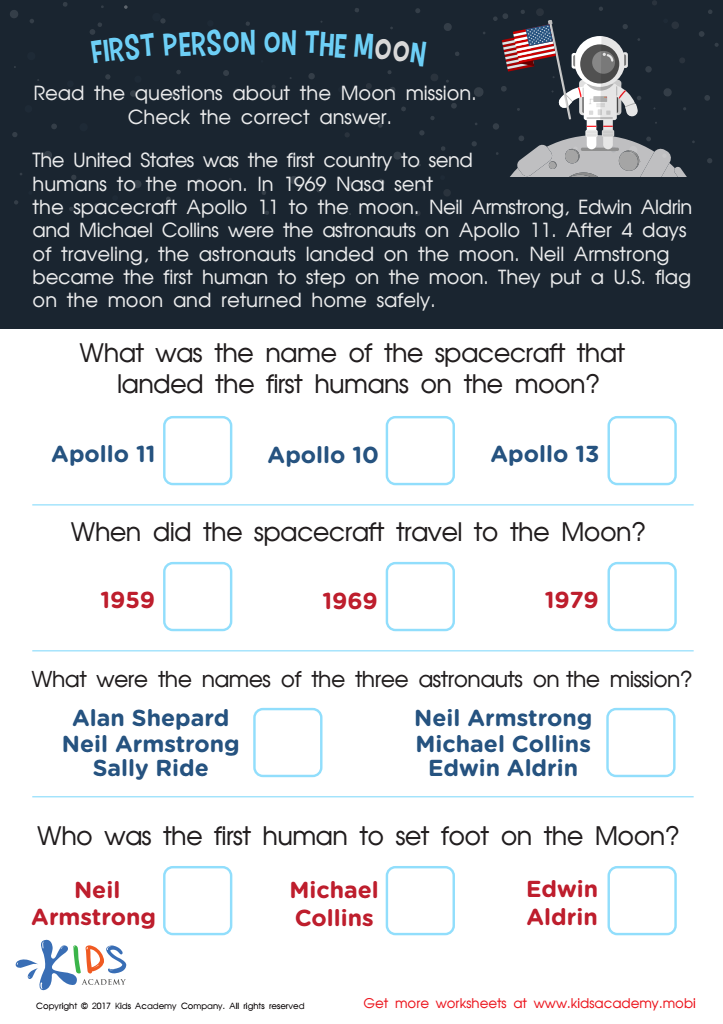
First Person on the Moon Worksheet
 Assign to My Students
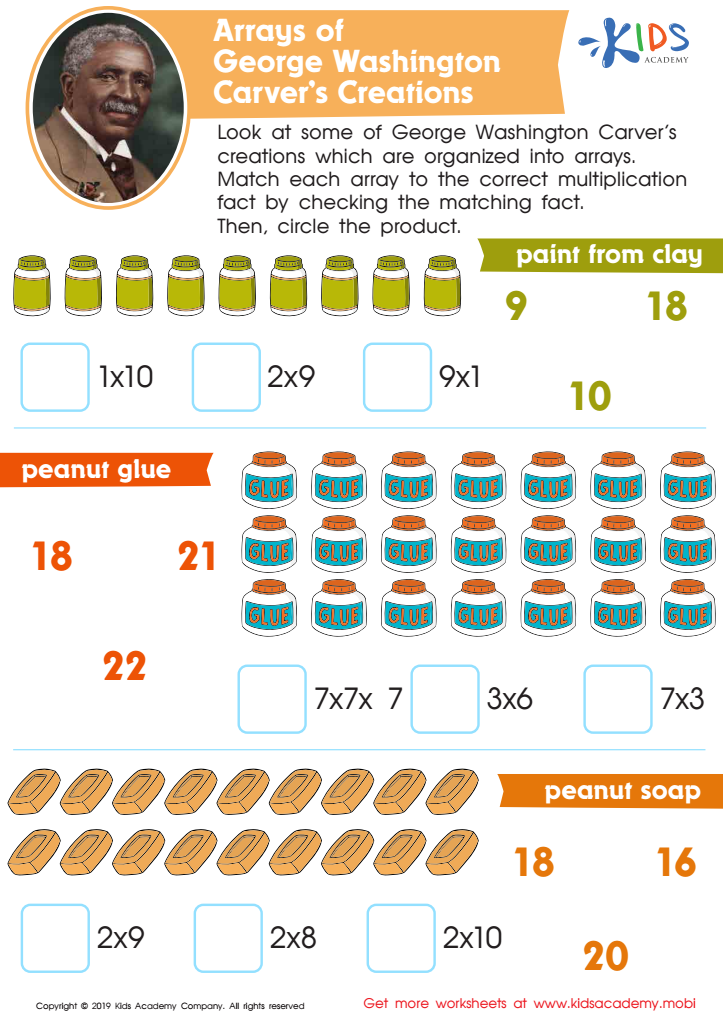
Arrays of George Washington Carver’s Creations Worksheet
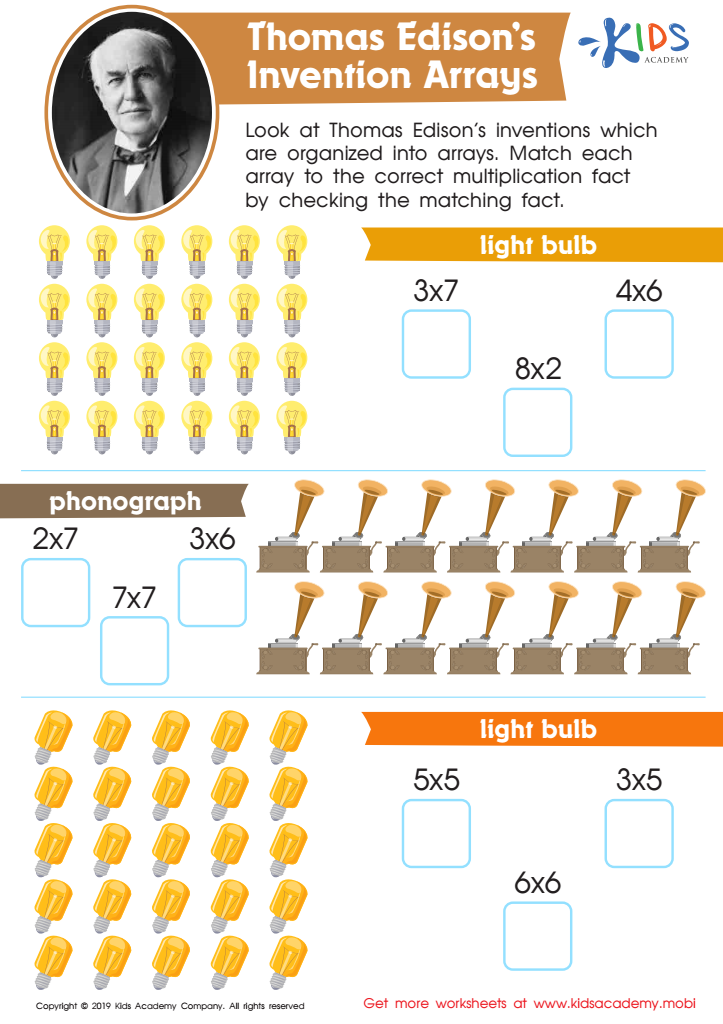
Thomas Edison’s Invention Arrays Worksheet
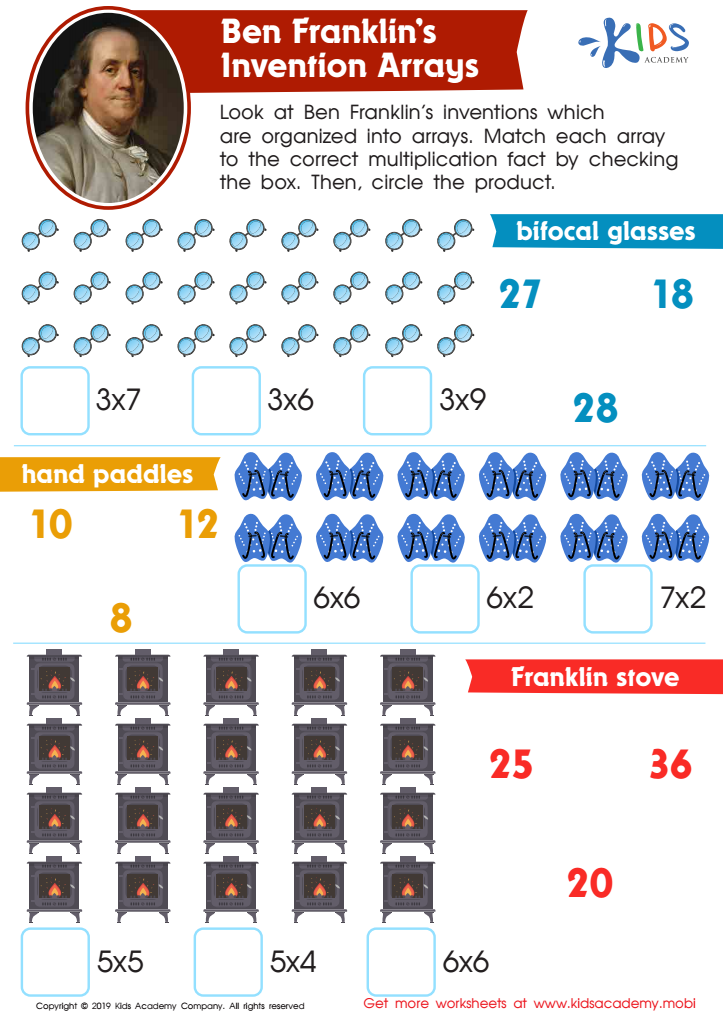
Ben Franklin’s Invention Arrays Worksheet
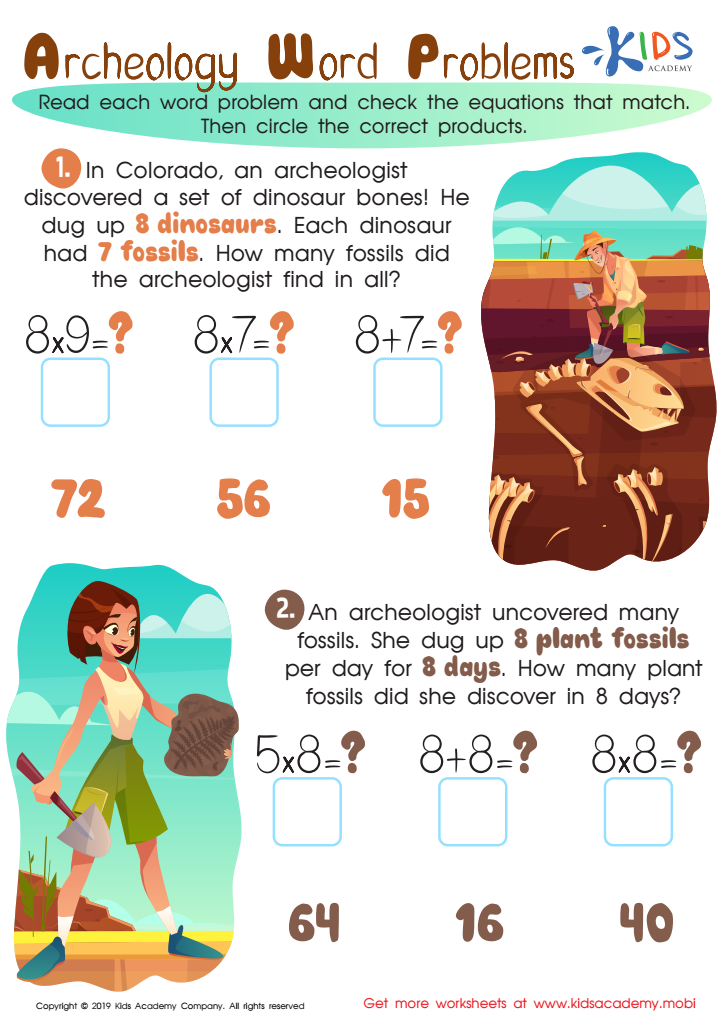
Archeology Word Problems Worksheet







Historical Knowledge Science for children aged 3 to 9 is critically important for a range of developmental and educational reasons. At a young age, children are immensely curious, and tapping into this curiosity by introducing historical concepts can help cultivate a lifelong interest in learning. Learning about history at an early age aids in the development of empathy and perspective-taking, as children begin to understand different cultures, time periods, and ways of life, which enrich their social and emotional growth.
Furthermore, early exposure to history encourages critical thinking and analytical skills. When children learn to consider why events happened or why people made certain decisions, they are practicing reasoning and problem-solving abilities. These competencies are foundational for success in a wide array of academic disciplines.
Additionally, understanding historical context helps young children make sense of the world around them. It creates a framework for understanding current events, societal norms, and the evolution of technology and cultures, making them more informed and insightful individuals.
For teachers and parents, integrating historical knowledge into science, storytelling, activities, and discussions offers a multidisciplinary approach to education that is both engaging and effective. By weaving history into early learning experiences, we help children build a robust intellectual foundation that supports their overall educational journey.







