Identifying Animals Science Worksheets for Ages 3-9
3 filtered results
-
From - To
Explore our comprehensive "Identifying Animals Science Worksheets" designed specifically for children aged 3-9. These engaging worksheets help young learners classify and recognize different animals, fostering foundational science skills. Detailed activities, vibrant images, and interactive tasks make learning fun and educational. Perfect for homeschooling, classroom use, or additional practice, our worksheets enhance cognitive development and build critical thinking. Ideal for ages 3-9, they cater to various educational stages, making complex concepts simple and enjoyable. Start your child’s journey of discovering the animal kingdom today with our expertly crafted worksheets, aligning with educational standards to ensure a quality learning experience.
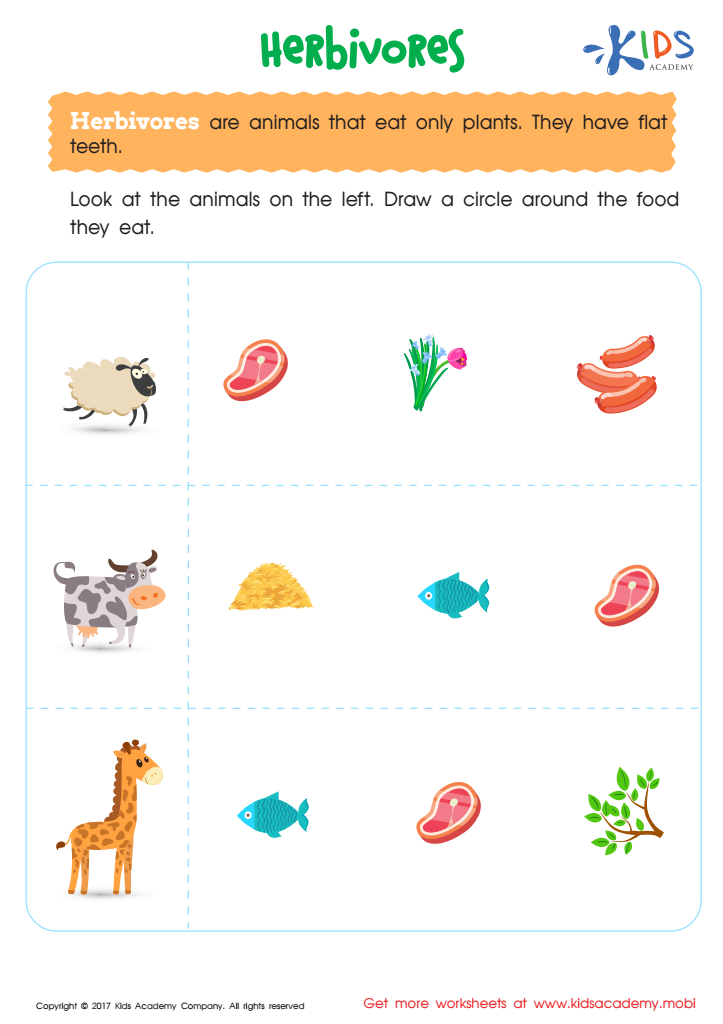
Herbivores Printable
 Assign to My Students
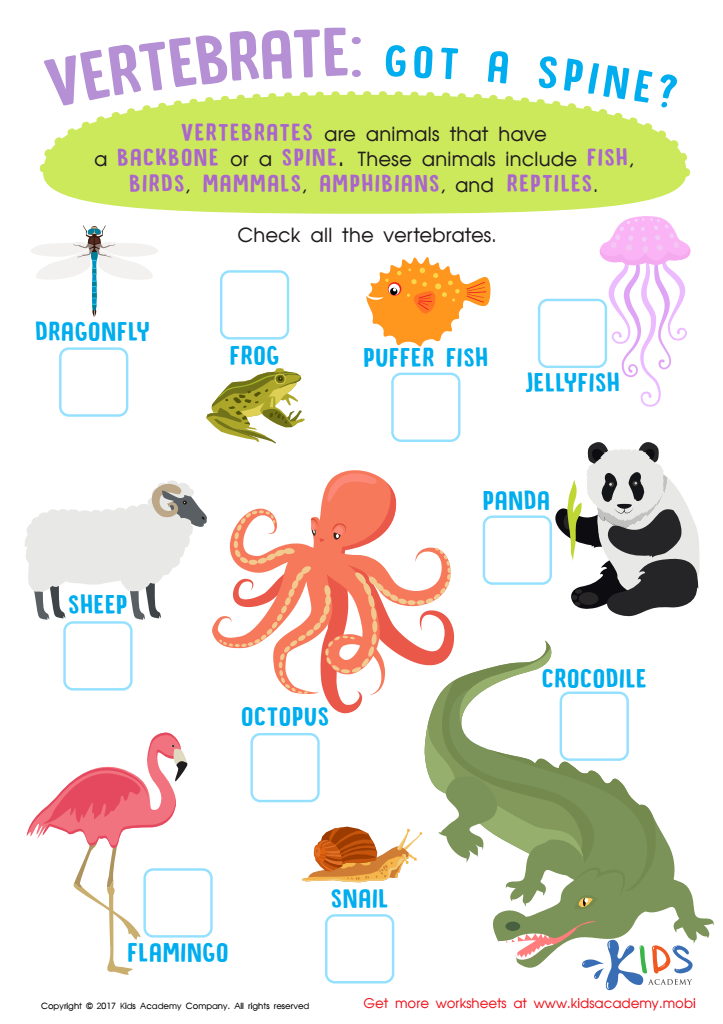
Vertebrates Animals Worksheet for 3rd Grade
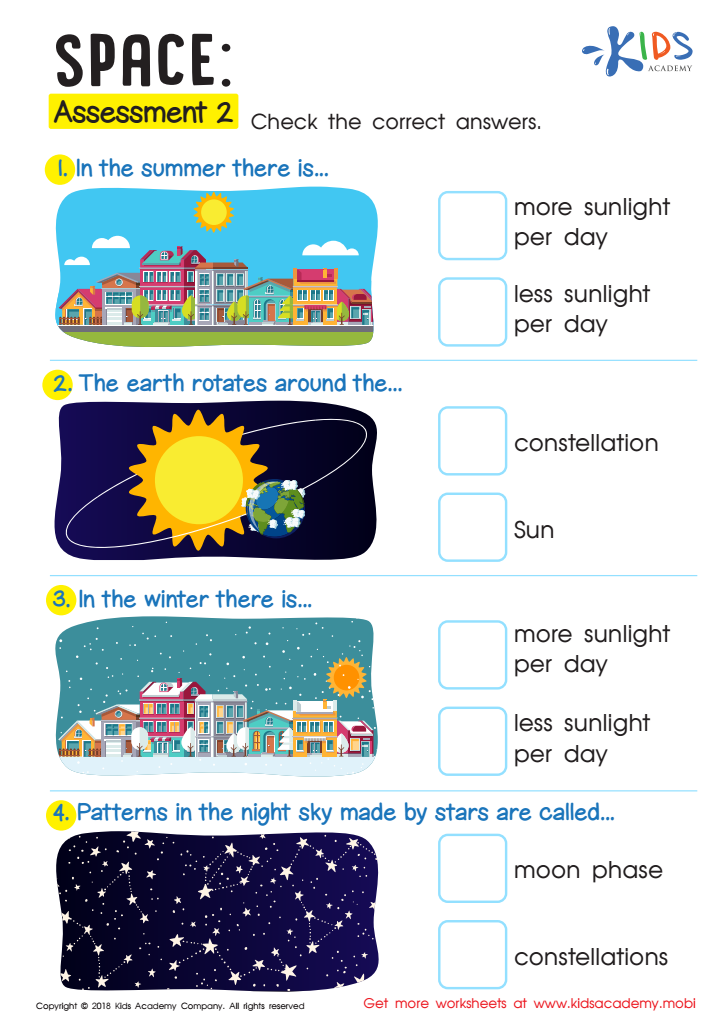
Space: Assessment 2 Worksheet








Identifying animals is a fundamental aspect of early childhood science education that brings numerous benefits for children aged 3-9, fostering a sense of curiosity and wonder about the natural world. At this stage, children are naturally curious and exceptionally perceptive, making it an ideal time to introduce them to the diversity of animal species. Understanding animals and their habitats encourages observational skills, critical thinking, and cognitive development. By distinguishing between various animals, children learn to categorize and compare, essential skills in early scientific thinking.
Moreover, learning about animals builds empathy and a sense of responsibility toward other living beings. When young children learn about different animals and their needs, they foster an awareness of environmental and conservation issues that can last a lifetime. This knowledge can instill a love for nature and a commitment to protecting it. Additionally, identifying animals can be made interactive and enjoyable through activities like field trips, nature walks, and classroom projects, making learning both fun and memorable.
For parents and educators, focusing on animal science provides an excellent opportunity to lay the foundation for a scientifically literate and ecologically conscious generation. It’s about more than just knowing different species; it's about cultivating inquisitive minds that appreciate and protect their world.







