Reading practice Science Worksheets for Ages 3-9
5 filtered results
-
From - To
Boost your child's reading skills with our engaging Science Worksheets tailored for ages 3-9! Designed to make learning fun, our resources combine essential scientific concepts with reading practice, ensuring young learners hone their literacy while exploring the wonders of science. Each worksheet features colorful illustrations and age-appropriate activities that foster comprehension, vocabulary enrichment, and critical thinking. From identifying plant life to understanding weather patterns, children will enjoy interactive content that sparks curiosity and imagination. Perfect for classrooms or at-home learning, these worksheets offer a valuable tool for early education, empowering your little ones to become confident readers while delving into the world of science!
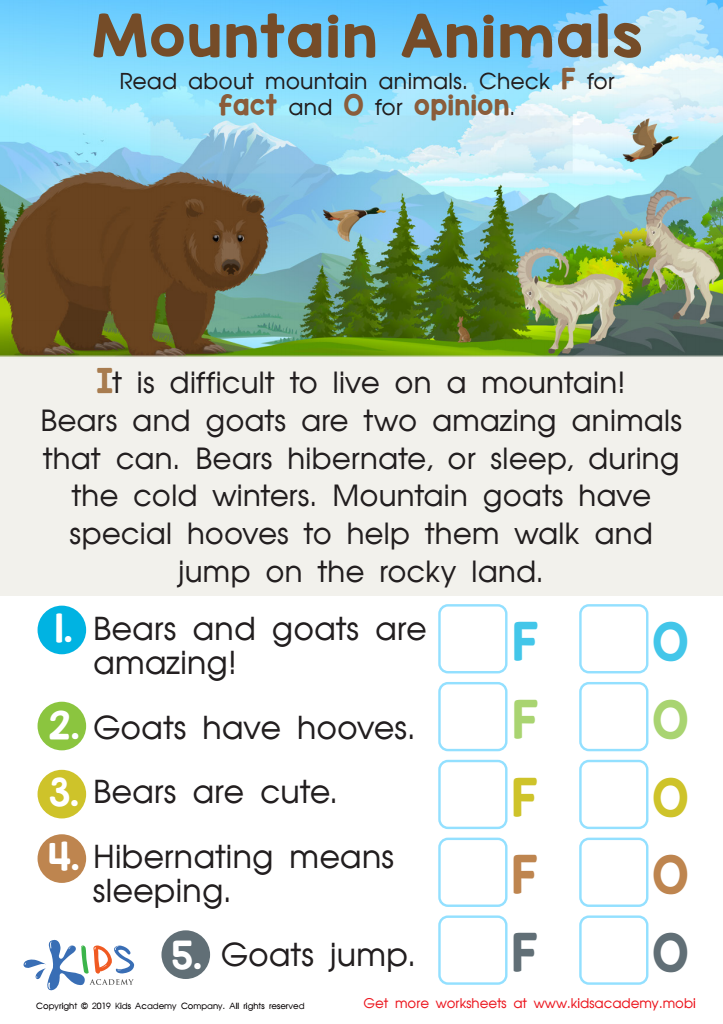
Mountain Animals Worksheet
 Assign to My Students
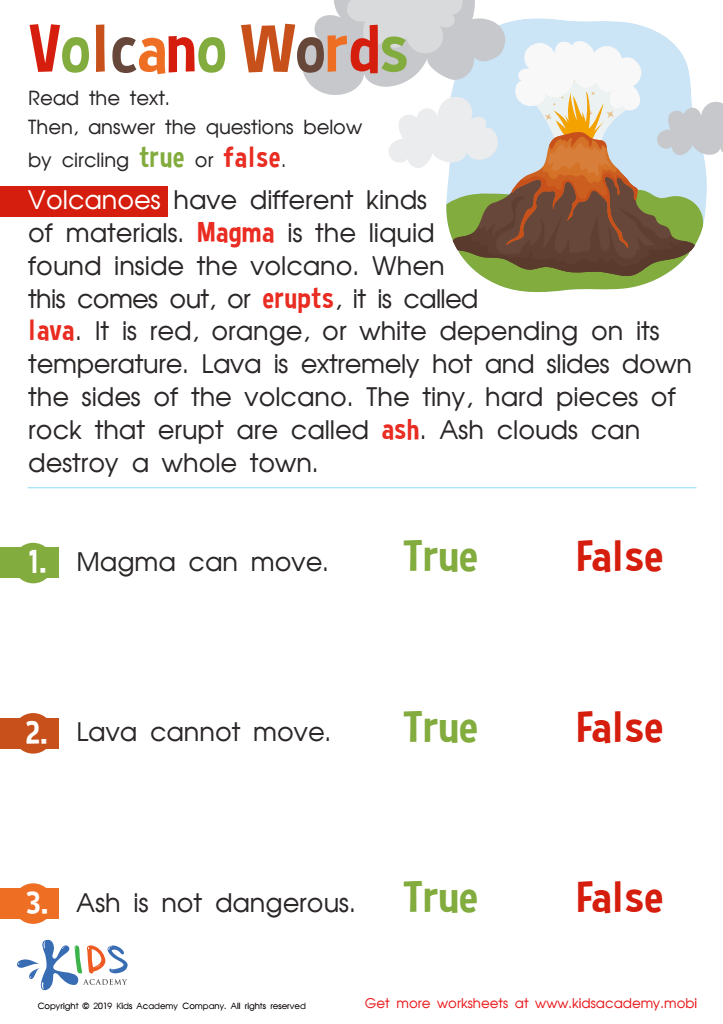
Volcano Words Worksheet
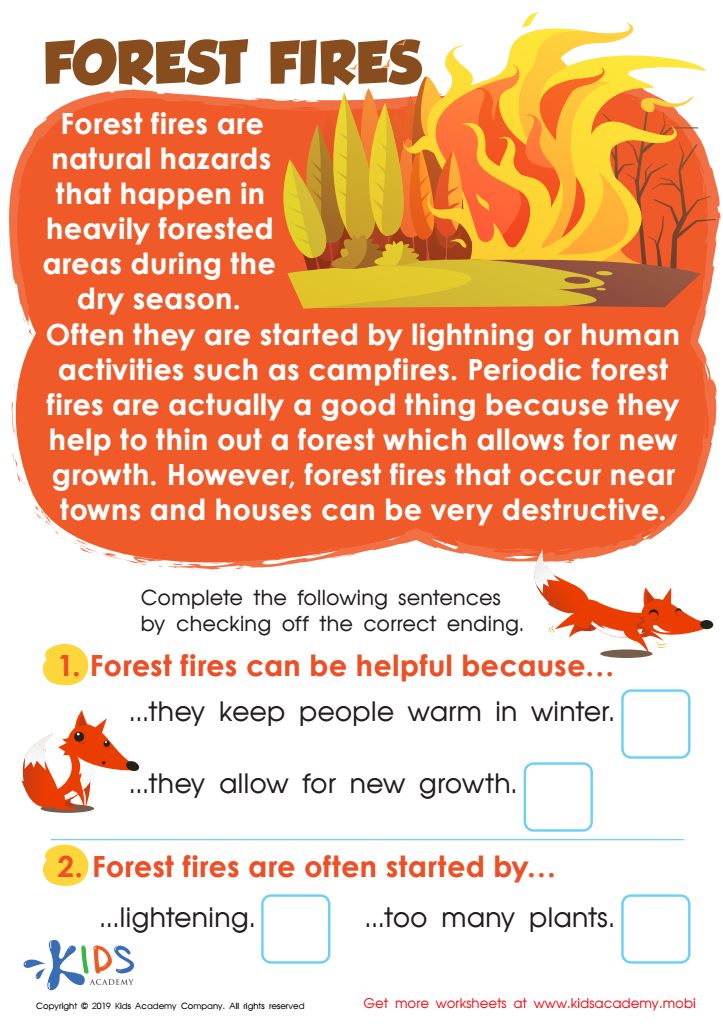
Forest Fires Worksheet
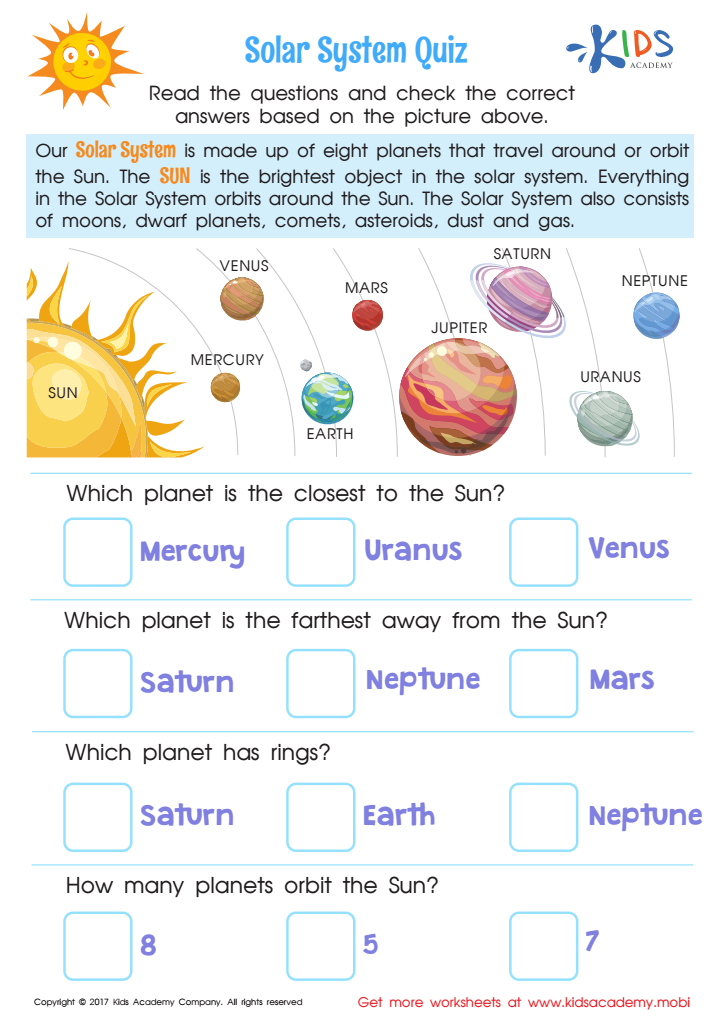
Solar System Quiz Printable







Parents and teachers should prioritize reading practice in science for children aged 3-9 because it fosters critical thinking and curiosity at a young age. Engaging children in scientific topics through reading helps them develop foundational literacy skills while simultaneously introducing them to key concepts about the world around them. This interdisciplinary approach nurtures a love for learning and encourages independent exploration.
At this formative stage, children are naturally inquisitive, making it an ideal time to cultivate their interest in science. Reading age-appropriate scientific texts not only enhances vocabulary and comprehension but also promotes analytical skills by encouraging students to ask questions, draw conclusions, and connect ideas.
Moreover, incorporating science reads into daily routines can spark conversations between parents and children, reinforcing their bond while deepening their understanding of complex topics. Greater exposure to diverse scientific concepts also promotes inclusivity, showing children that science is for everyone.
In essence, reading science together can inspire the next generation of thinkers and problem-solvers, preparing them for future academic endeavors and addressing real-world challenges, thereby benefiting both individuals and society as a whole. Prioritizing reading practice in science lays a strong educational foundation for lifelong learning.







