Understanding landforms Science Worksheets for Ages 3-9
3 filtered results
-
From - To
Discover our "Understanding Landforms Science Worksheets for Ages 3-9" designed to engage young learners in exploring the diversity of Earth's landscapes. These fun, interactive worksheets introduce kids to various landforms such as mountains, valleys, plains, and plateaus. Curated to complement early childhood education, our activities enhance observation, critical thinking, and problem-solving skills while fostering a love for environmental science. Perfect for both classroom and at-home learning, these printable resources provide a foundational understanding of geography, encouraging children to appreciate and understand the natural world around them through hands-on exploration and engaging illustrations.
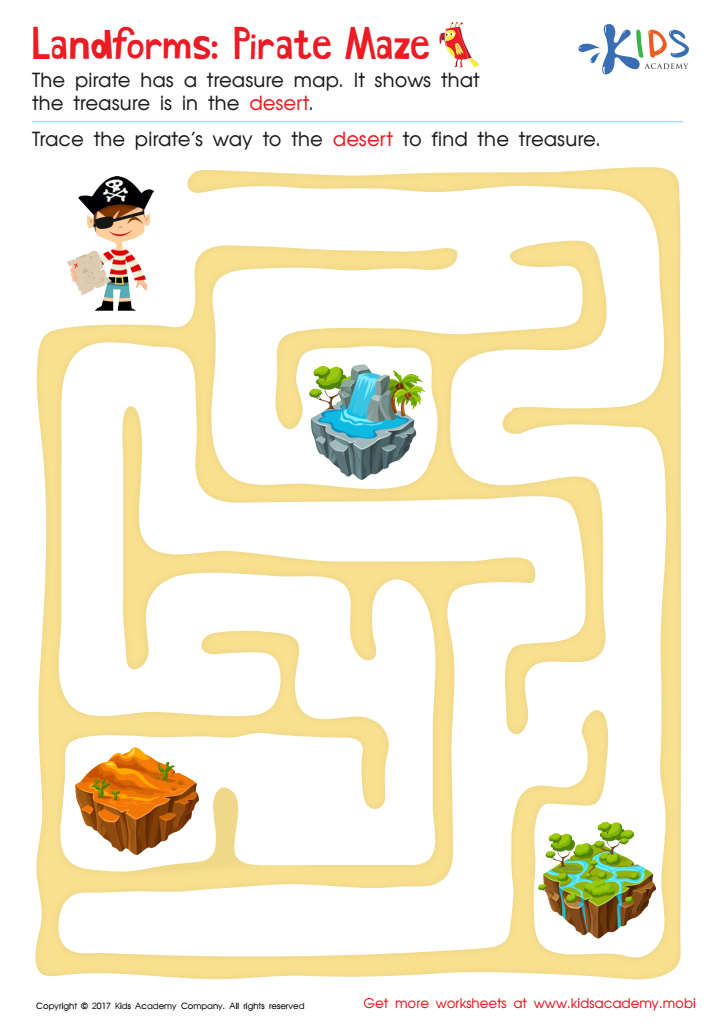
Landforms: Pirate Maze Printable
 Assign to My Students
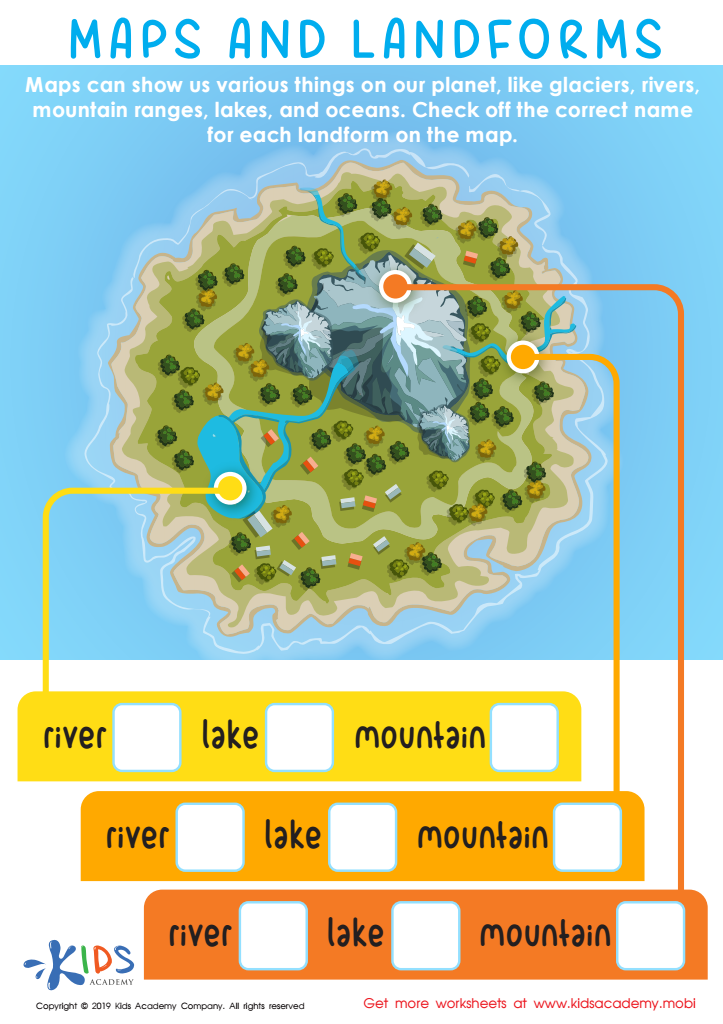
Maps and Landforms Worksheet
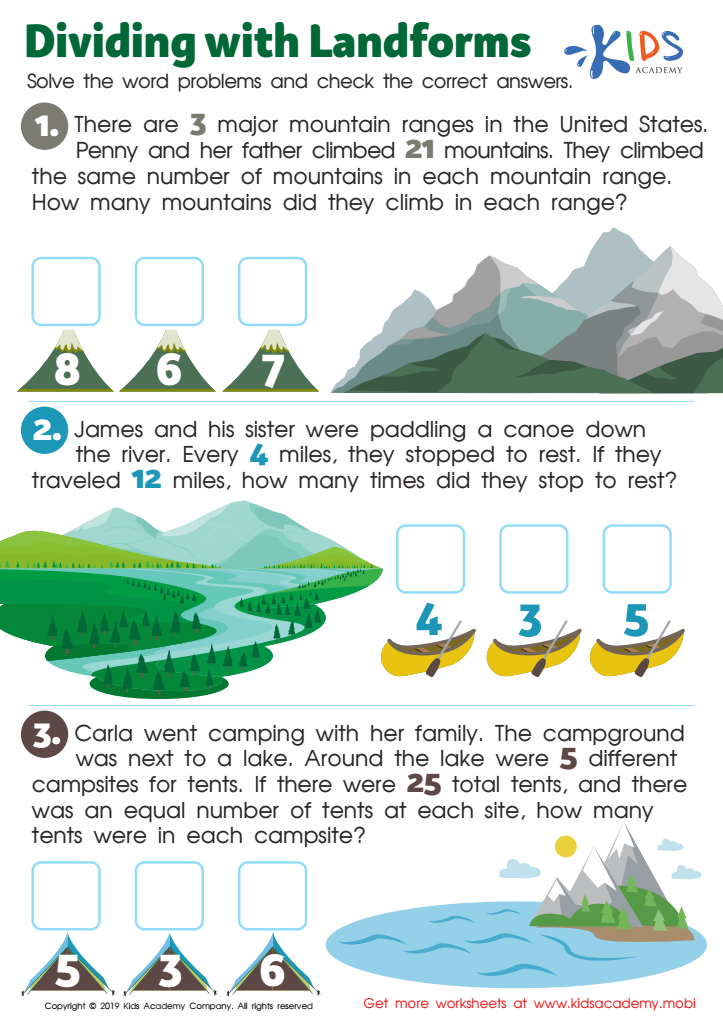
Dividing with Landforms






Understanding landforms is a vital part of early science education for children aged 3-9 as it lays a strong foundation for both intellectual and practical reasons. At this age, children are naturally curious and eager to explore the world around them. Teaching them about different landforms like mountains, valleys, rivers, and plains cultivates this curiosity, helping them develop an appreciation for the natural world and its diverse landscapes.
From an intellectual standpoint, learning about landforms enhances a child's vocabulary and boosts their comprehension skills. Terms like "hill," "island," and "desert" become part of their lexicon, enriching their language abilities. In addition, understanding these concepts builds fundamental geography skills, which are essential for interdisciplinary learning in subjects like history, social studies, and environmental science.
Practically, knowledge of landforms fuels a child's power of observation, making outdoor activities more educational and engaging. It also introduces them to the concepts of natural resources, ecosystems, and even the rudiments of earth sciences, sparking a love for lifelong learning and possibly guiding future career interests.
For parents, grounding their children in these basics equips them with the tools to make informed decisions about their environment. For teachers, it supports curriculum standards and paves the way for comprehensive educational development.







