Understanding symmetry Science Worksheets for Ages 3-9
3 filtered results
-
From - To
Discover the world of symmetry with our engaging Science Worksheets designed for children ages 3-9! These worksheets introduce young learners to the concept of symmetry through fun activities and colorful visuals. Kids will explore geometric shapes, mirror images, and nature's patterns, enhancing their observational skills and critical thinking. With easy-to-follow instructions, these worksheets make learning about symmetry enjoyable and interactive. Ideal for parents and teachers alike, they support early science education and foster creativity. Encourage your child's curiosity about the world around them while building foundational math and science skills. Start exploring symmetry today for a playful learning experience!
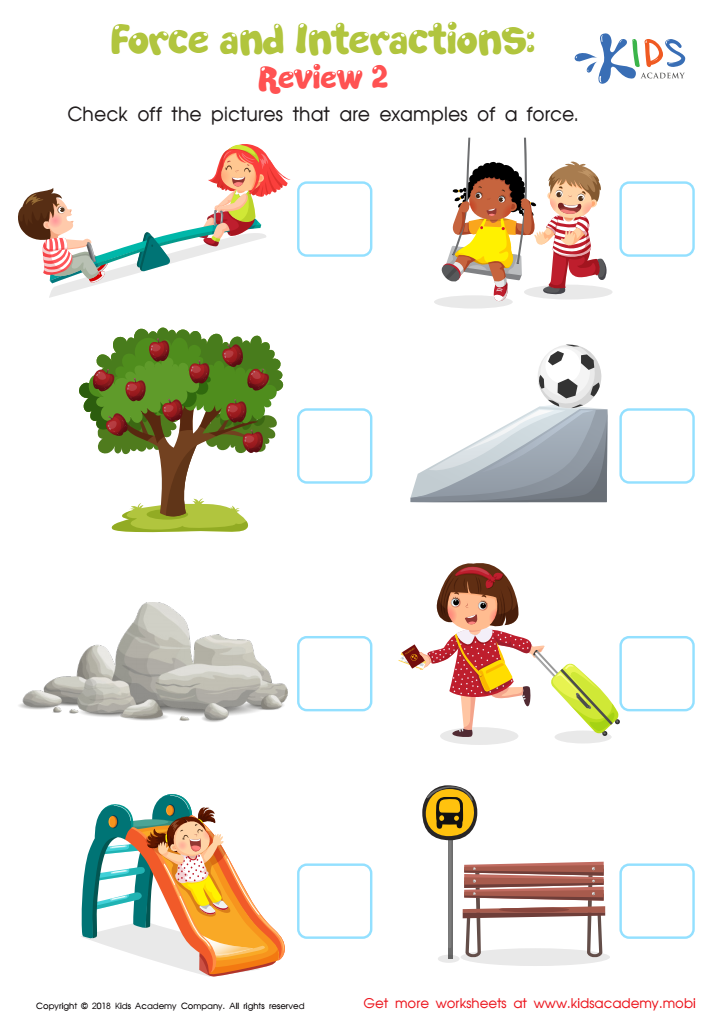
Force and Interactions: Review 2 Worksheet
 Assign to My Students
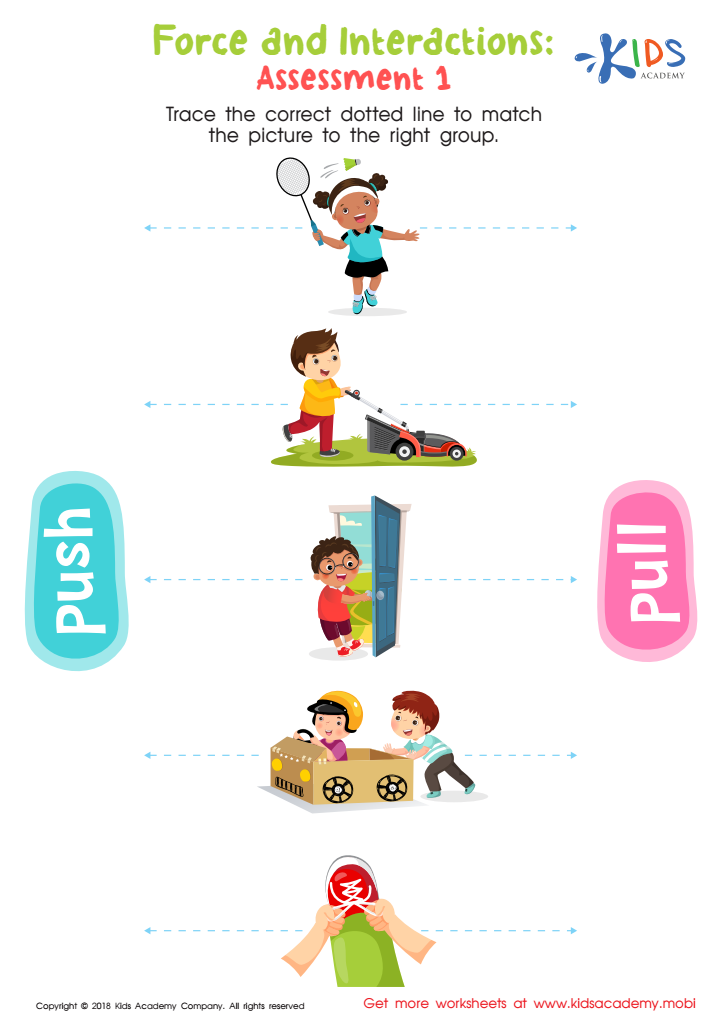
Force and Interactions: Assessment 2 Worksheet
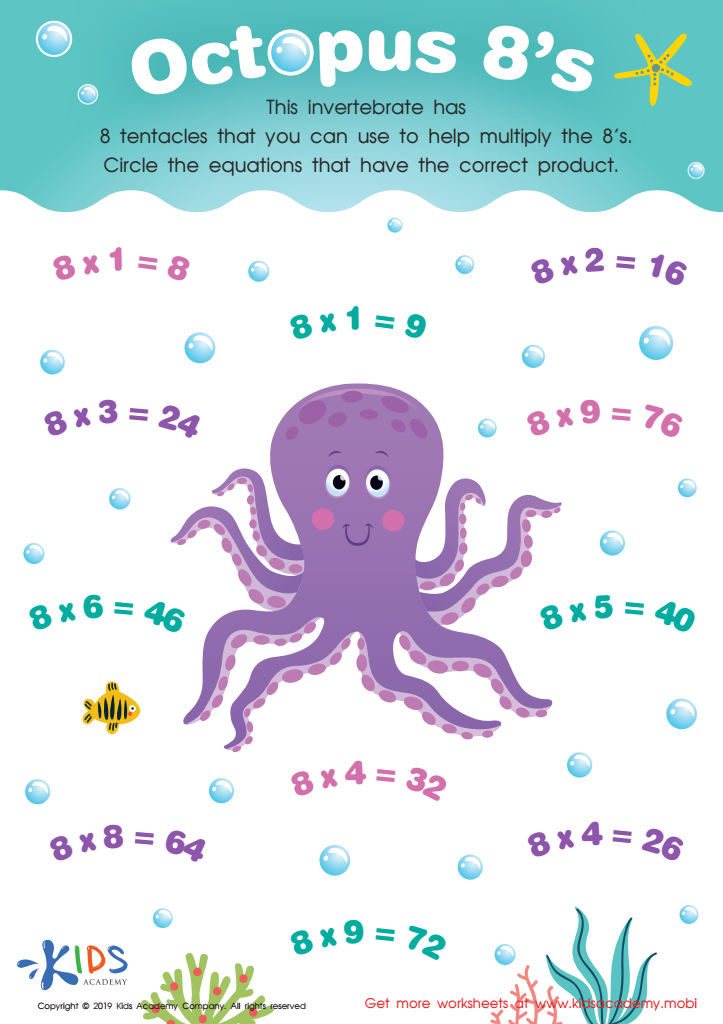
Octopus 8’s Worksheet







Understanding symmetry is essential for early education, particularly for children aged 3 to 9, as it lays the foundation for critical thinking and problem-solving skills. Symmetry language helps children identify patterns in their environment, enhancing their observational abilities. By recognizing symmetrical shapes, they learn essential concepts about balance and order, which can translate into improved spatial awareness.
Teaching symmetry also encourages creativity and artistic expression. As children explore symmetrical designs in art and nature, they engage in imaginative play, fostering cognitive and emotional development. Moreover, these lessons often integrate math concepts, such as geometry and measurements, helping to bridge subjects in a coherent learning experience.
For teachers and parents, nurturing children's understanding of symmetry can significantly enhance their early mathematical skills and stimulate their curiosity. It promotes a hands-on learning environment where children can explore through play, making education enjoyable and meaningful. Engaging activities involving mirrors, folding, and tracing can solidify these concepts in a practical way. As children develop in these areas, they become more prepared for complex topics in later education, setting a solid foundation for a lifelong love of learning in science and math.







