Analyzing data Our Planet and Environment Worksheets for Ages 3-9
5 filtered results
-
From - To
Explore our "Analyzing Data: Our Planet and Environment Worksheets for Ages 3-9" collection, designed to introduce young learners to critical thinking and data analysis within the context of Earth's ecosystems. These engaging resources help children develop essential science skills through fun, age-appropriate activities. Kids will learn how to observe, record, and interpret data related to various environmental topics such as weather patterns, plant growth, and animal habitats. Perfect for early education settings, these worksheets foster a love for science while promoting analytical skills and environmental awareness. Encourage your child’s curiosity and learning with these fantastic, educational tools!
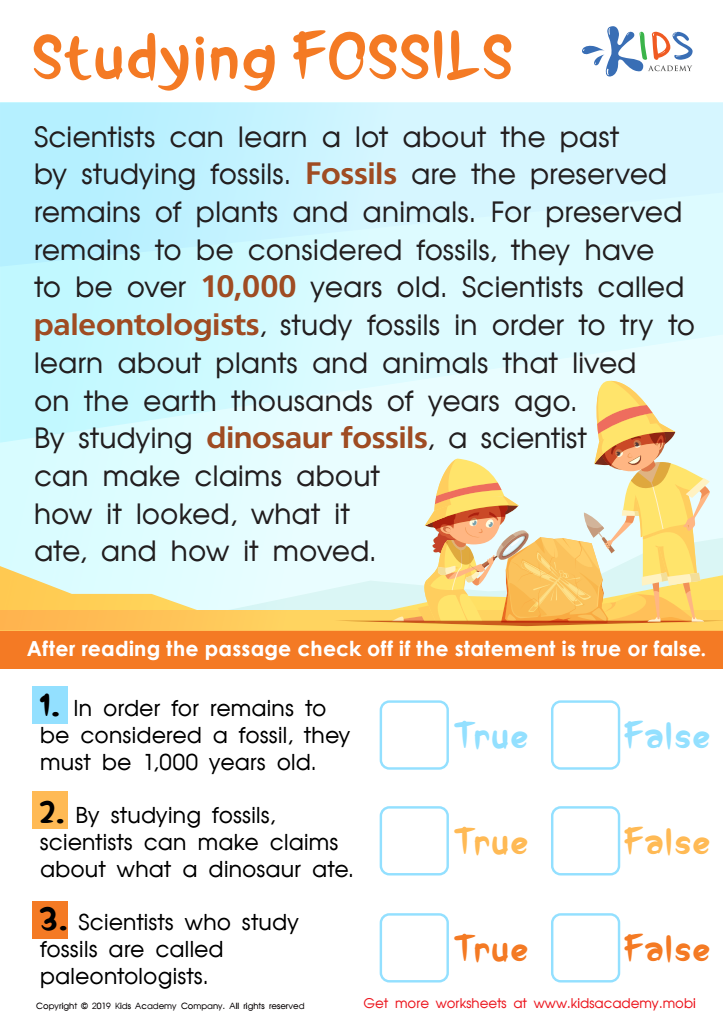
Studying Fossils Worksheet
 Assign to My Students
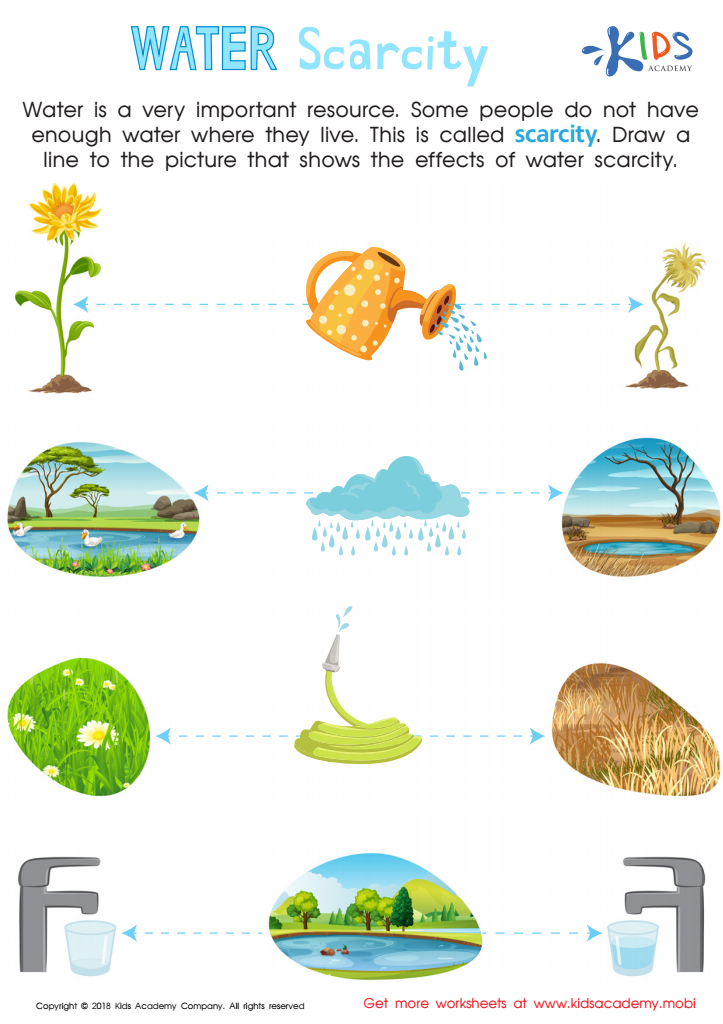
Water Scarcity Worksheet
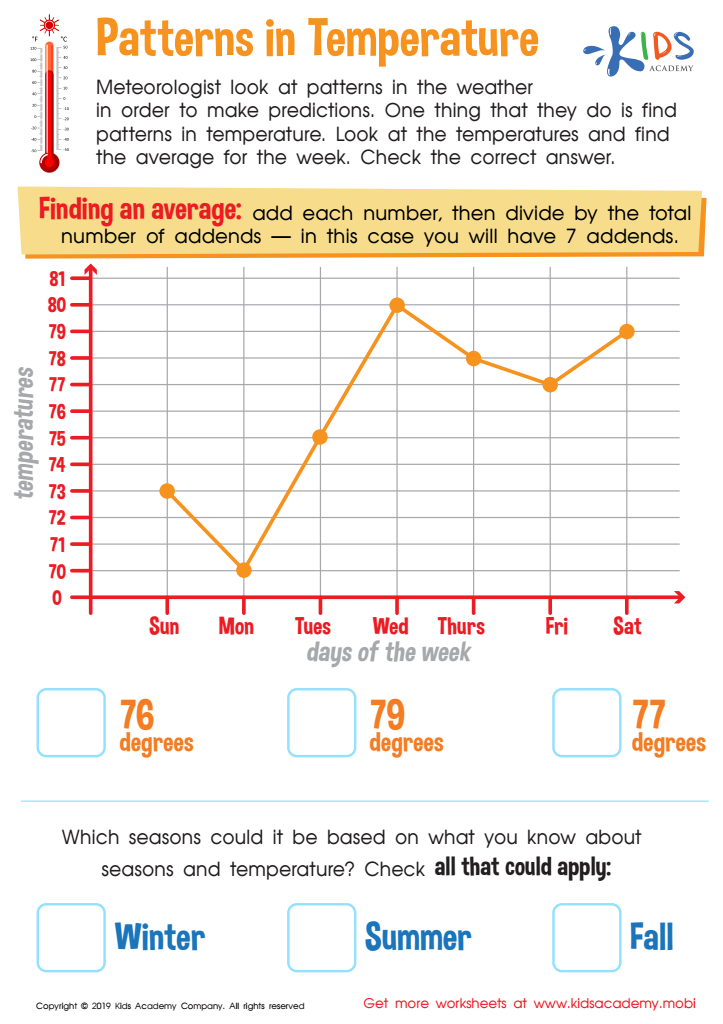
Patterns in Temperature Worksheet
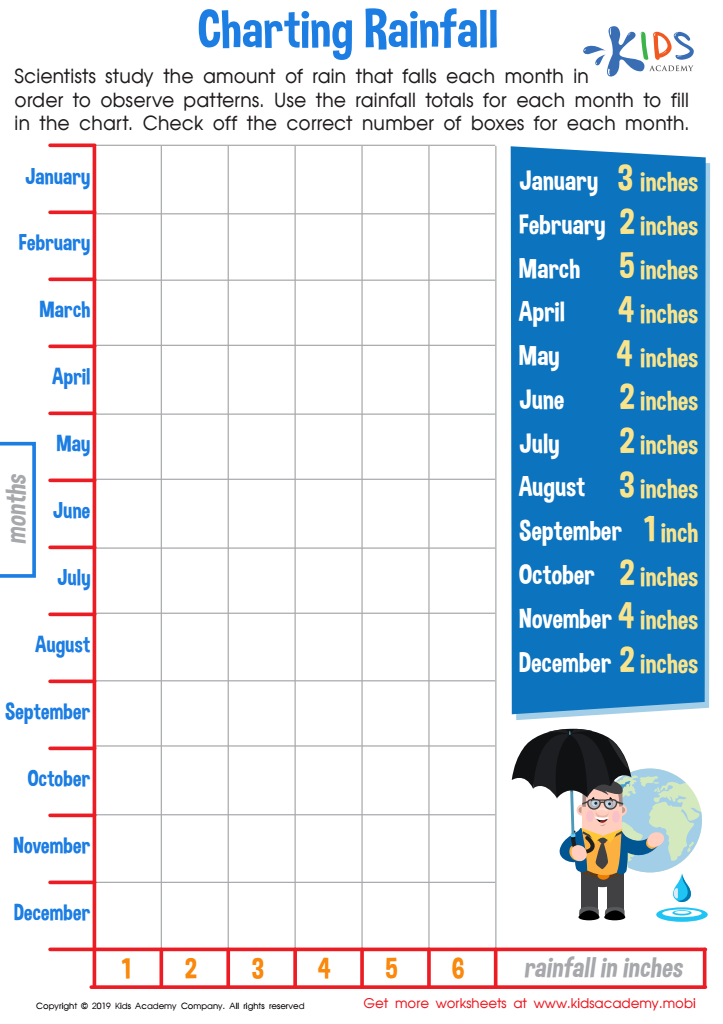
Charting Rainfall Worksheet
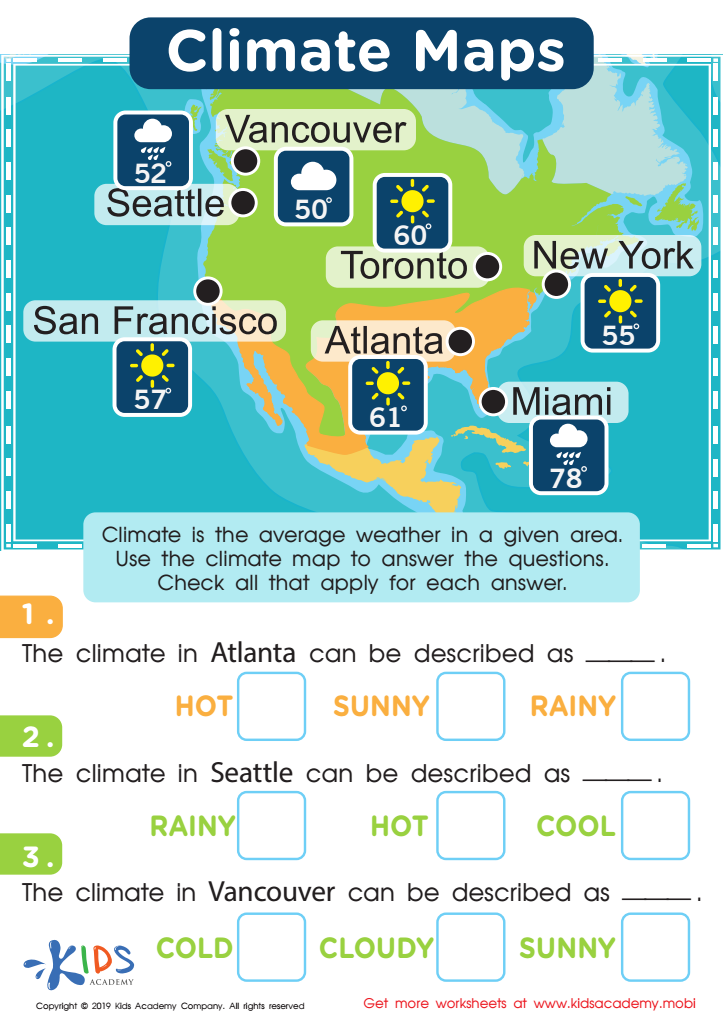
Climate Maps Worksheet







Understanding data about our planet and environment is crucial for children ages 3-9 because it forms the foundation of their learning and future decision-making. Parents and teachers have a unique opportunity to cultivate this awareness early on.
Firstly, introducing young children to simple data concepts helps develop critical thinking skills. Analyzing pictures, charts, and graphs about weather patterns, animal habitats, or recycling practices can make these concepts accessible and engaging for young minds.
Secondly, early exposure to environmental data fosters a sense of curiosity and responsibility towards the planet. If children learn about endangered species, deforestation, or pollution, they are more likely to adopt sustainable habits, like recycling or conserving water, as they grow older. This awareness lays the groundwork for environmentally responsible citizens.
Additionally, understanding our planet and its challenges nurtures empathy and a global perspective. By seeing how issues like climate change affect people and animals worldwide, children begin to understand the importance of taking care of their surroundings.
Integrating data analysis into learning for young children not only builds foundational skills in math and science but also instills values essential for creating a sustainable future. Thus, it is vital for parents and teachers to prioritize this aspect of education right from the early years.







