
Basic Addition Plants and Animals Worksheets for Ages 3-9
4 filtered results
Difficulty Level
Grade
Age
-
From - To
Subject
Activity
Standards
Discover an engaging selection of Basic Addition Plants and Animals Worksheets designed specifically for children ages 3-9. These worksheets combine essential math skills with the fascinating world of nature, helping young learners develop their addition abilities through colorful visuals and interactive activities. Each worksheet features delightful illustrations of various plants and animals, making math fun and relatable. Ideal for parents, teachers, and homeschooling, these resources promote a hands-on learning experience while nurturing curiosity about the environment. Encourage your child’s early math skills today with our vibrant and educational worksheets that seamlessly integrate science and math concepts! Explore and download now!
Favorites
With answer key
Interactive
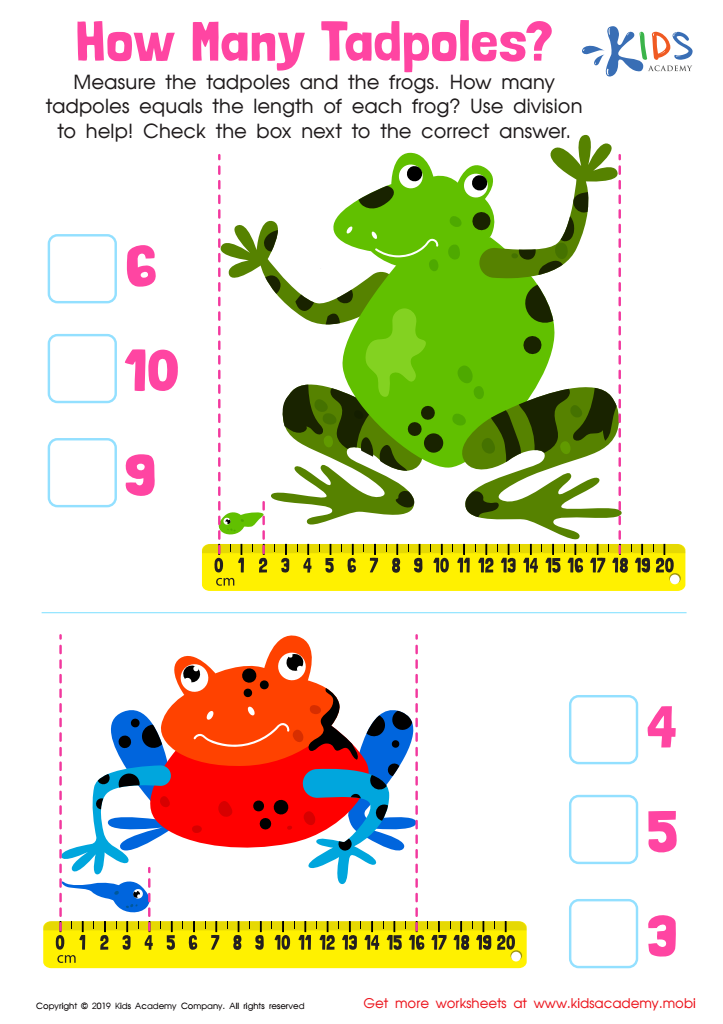
How Many Tadpoles Worksheet
Kids love tadpoles! They'll have fun using them to work out the measurements of their frog friends. By dividing the length of the frogs by the length of the tadpoles, children can deduce how many tadpoles it takes to equal a frog. With the use of 'how many' and 'each' they'll solve math problems without realizing it!
 Assign to My Students
How Many Tadpoles Worksheet
Worksheet











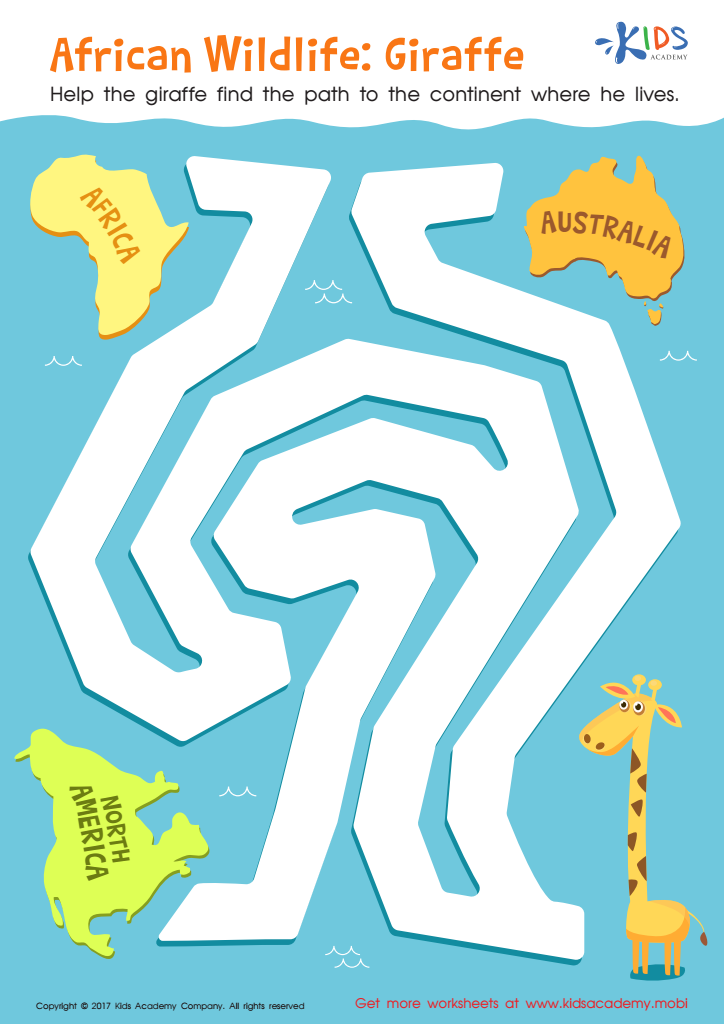
African Wildlife: Giraffe Worksheet
Help the giraffe get home! This African wildlife giraffe worksheet will boost your child's logical reasoning skills while they complete a maze to help the giraffe navigate choppy waters. Learn about different continents and their unique climates, practice problem solving and expand knowledge of the world and its habitats. Perfect for inspiring little learners!
African Wildlife: Giraffe Worksheet
Worksheet
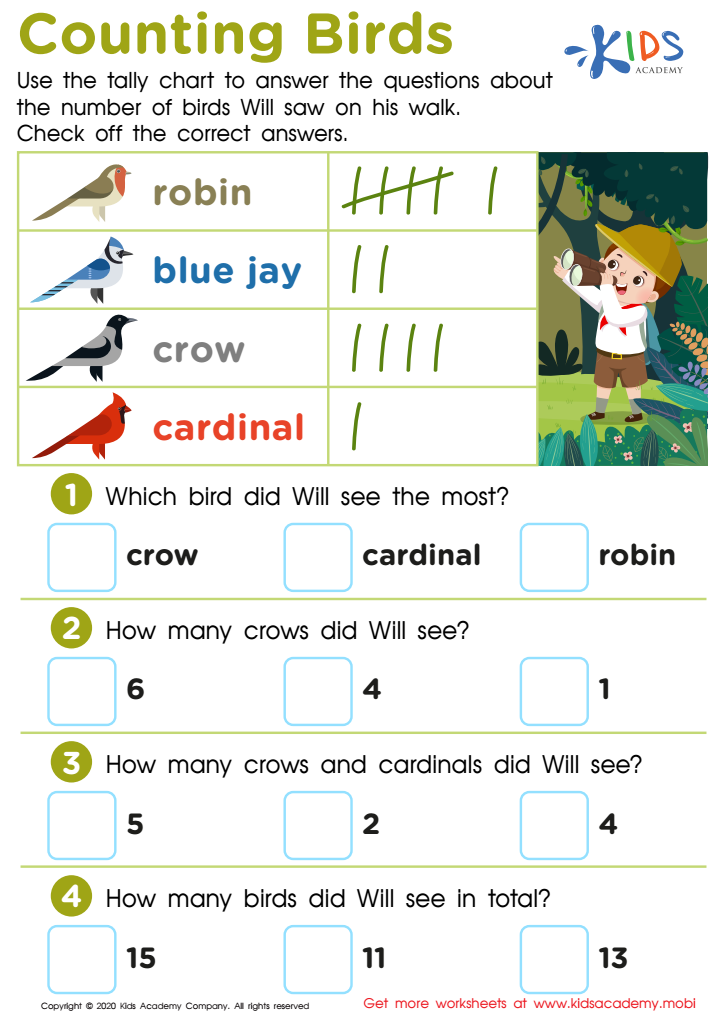
Counting Birds Worksheet
Introduce your child to the exciting activity of bird watching! This PDF worksheet features a tally chart of the different types of birds Will saw on his walk. Have your kid use the tally chart to organize information and use it to answer the questions that follow, thus boosting early science and math skills.
Counting Birds Worksheet
Worksheet
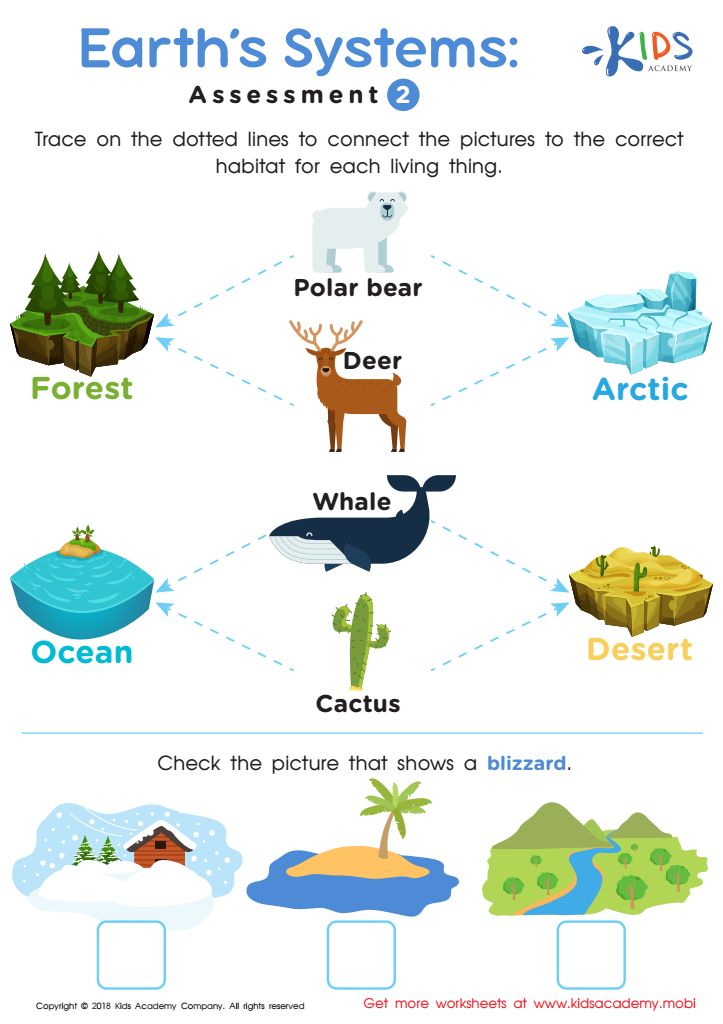
Earth's Systems: Assessment 2
Kids will love this free printable worksheet to assess their knowledge of habitats and the living creatures found in them. They'll trace the dotted lines to connect the pictures of plants and animals to their respective habitat and identify the type of weather depicted. No, polar bears don't live in the ocean, but they do like to swim in icy waters! With this fun activity, your little learner will master earth science basics.
Earth's Systems: Assessment 2
Worksheet
Join Kids Academy for Free
Who is primarily going to use this learning content?







Parents and teachers should prioritize the concept of Basic Addition as it lays the foundational skills necessary for mathematical understanding and problem-solving. For children ages 3-9, learning basic addition not only develops numeracy skills but also fosters critical thinking and cognitive development. Engaging children with visual and tangible representations, such as sorting or counting plants and animals, makes learning more relatable and enjoyable. By integrating these subjects into math, children can make meaningful connections between their everyday experiences and math concepts.
Furthermore, approaching addition through themes like plants and animals encourages a love for nature and boosts ecological awareness, important aspects in early education. It promotes curiosity and exploration, turning learning into an interactive experience that enhances comprehension. As children work with addition related to diverse forms of life, they also gain insights into nurturing habits and respect for all living things.
In summary, incorporating Basic Addition and themed learning for ages 3-9 helps children grasp essential math skills while nurturing a holistic education. This not only prepares them academically but also fosters a love for learning and understanding in both mathematics and the natural world.








