Comprehension skills Plants and Animals Worksheets for Ages 3-9
4 filtered results
-
From - To
Unlock the wonders of nature with our "Comprehension Skills: Plants and Animals Worksheets for Ages 3-9". Specially crafted for young learners, these engaging worksheets enhance reading comprehension while teaching fascinating facts about wildlife and flora. Children will explore diverse topics through fun activities, reinforcing their understanding of science, and boosting critical thinking skills. Ideal for classroom use or at-home learning, each worksheet is designed to captivate and educate your child. Help them discover the beauty of the natural world while improving their reading and comprehension skills. Start their journey today with our expertly designed plant and animal modules!
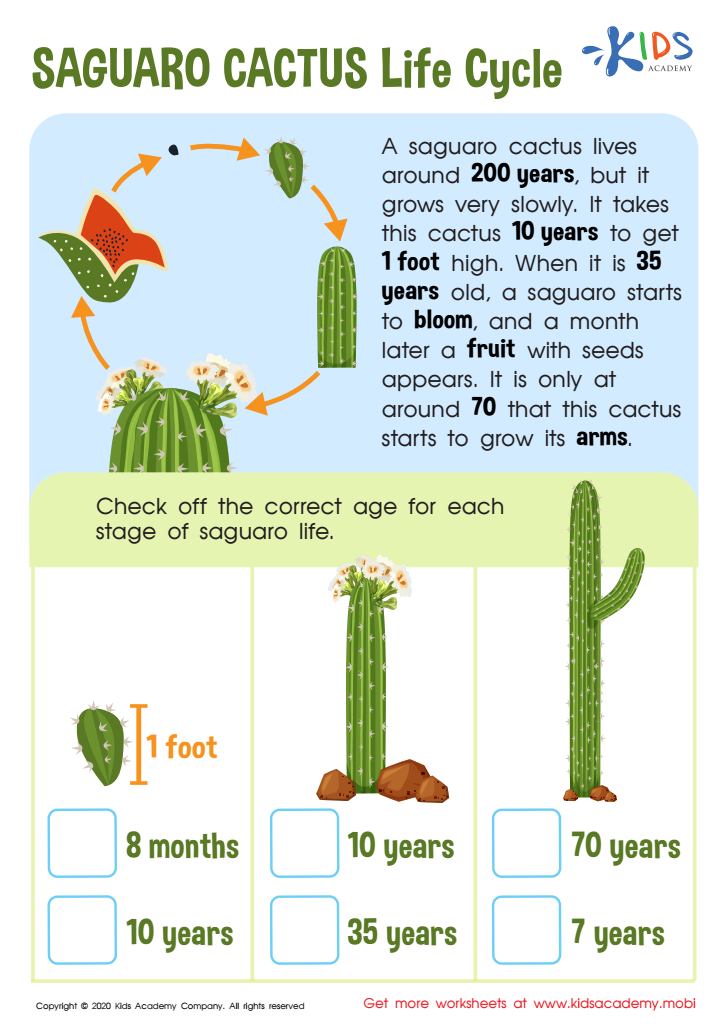
Saguaro Cactus Life Cycle Worksheet
 Assign to My Students











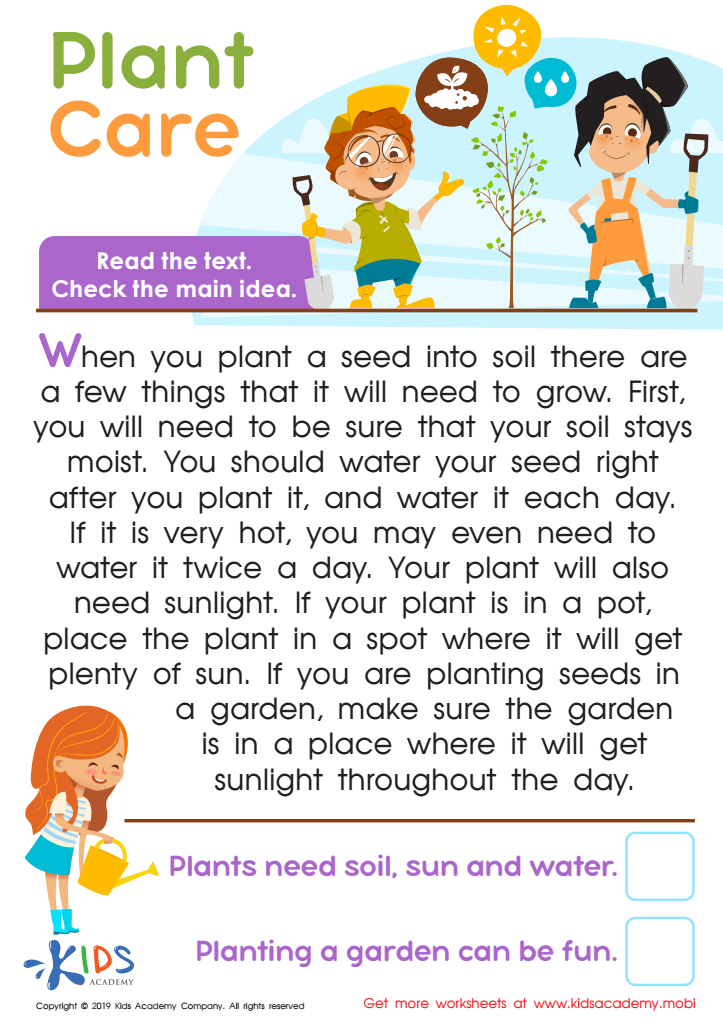
Plant Care Worksheet
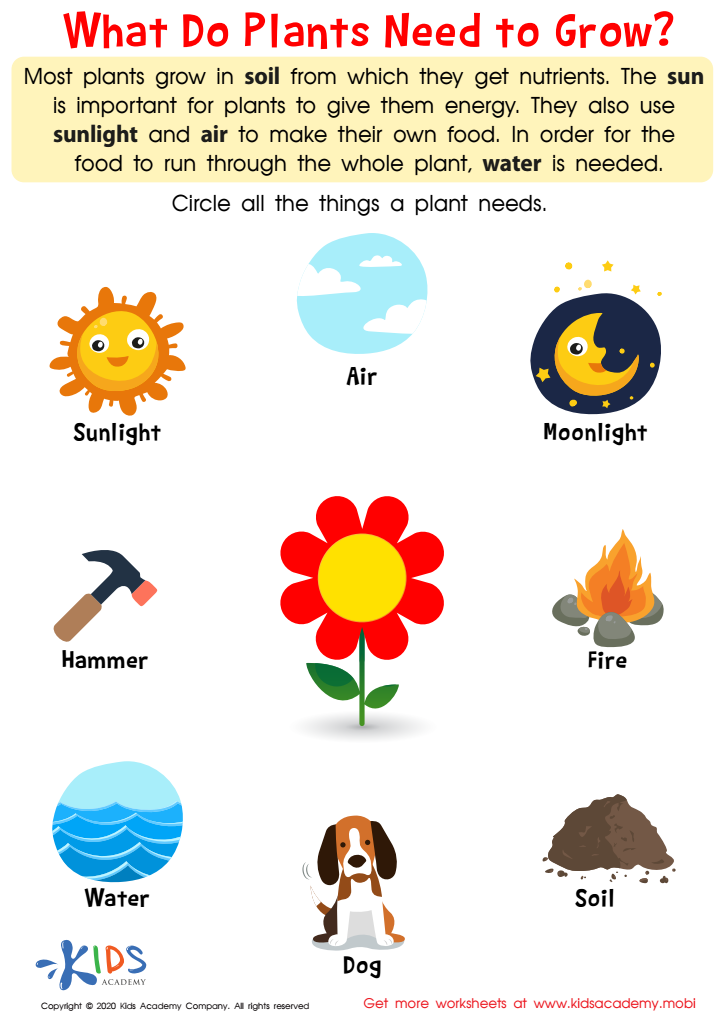
What Do Plants Need to Grow Worksheet
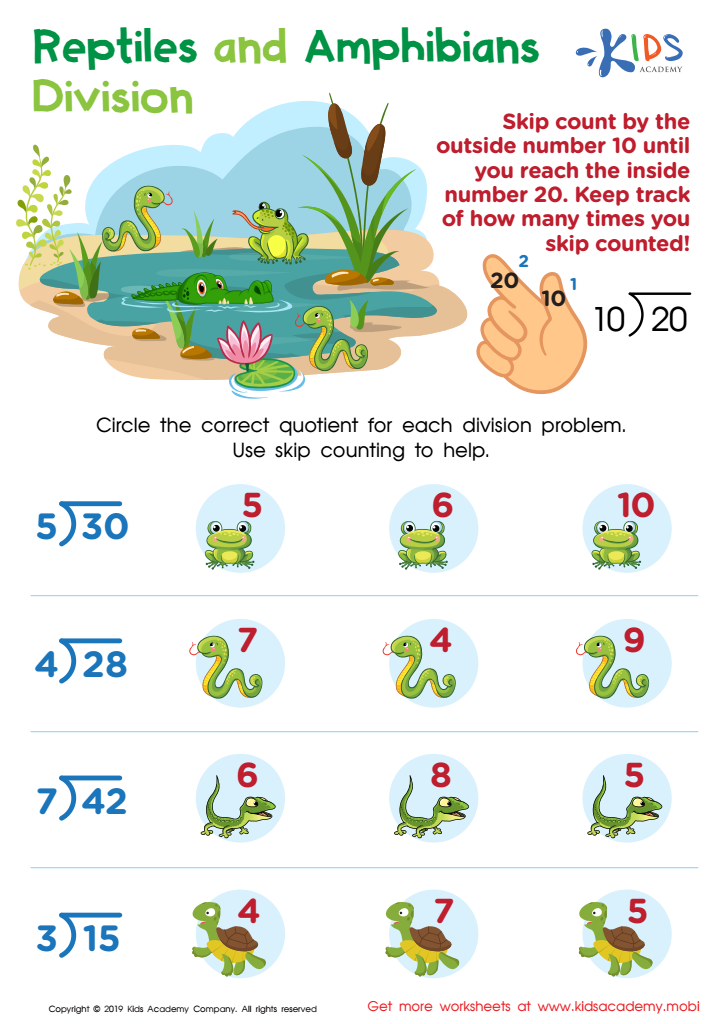
Reptile and Amphibians Division Worksheet







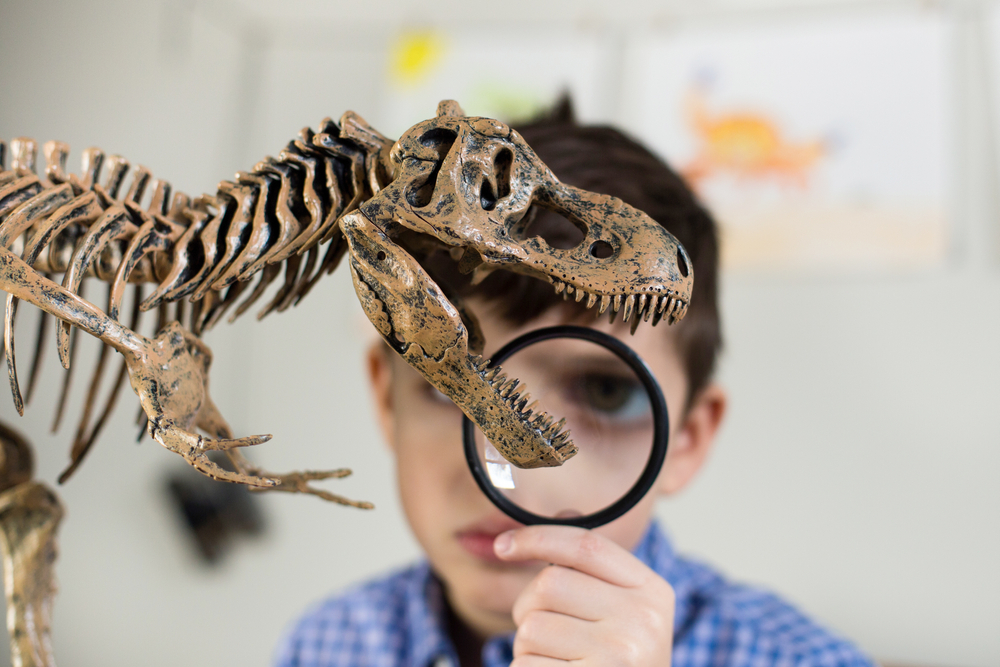
Comprehension skills in children, particularly regarding plants and animals, are vital for their cognitive growth and emotional development. For ages 3-9, building an understanding of the natural world facilitates curiosity, critical thinking, and empathy.
-
Curiosity and Learning: When children learn about plants and animals, they become more curious about their surroundings. This curiosity drives a lifelong love for learning and science. Simple concepts can pave the way for more complex scientific ideas.
-
Language Development: Discussing plants and animals helps expand their vocabulary and enhance language skills. Words like "photosynthesis" or "hibernate" become intriguing, laying the groundwork for academic success.
-
Empathy and Responsibility: Understanding the needs and lives of living things fosters empathy. Children learn responsibility by understanding how to care for plants or pets, which can translate into caring behavior towards other people and the environment.
-
Integrated Skills: Comprehending plants and animals incorporates multiple educational domains. For example, measuring the growth of plants involves math skills, while recounting observations improves literacy.
-
Health and Well-being: Outdoor activities, often centered around exploring nature, enrich physical and mental health. Building comprehension in this area can enhance their happiness and holistic wellness.
Overall, parents and teachers should prioritize these comprehension skills as they promote well-rounded development, preparing children for a better future in an interconnected world.








