
Counting practice Plants and Animals Worksheets for Ages 3-9
3 filtered results
Difficulty Level
Grade
Age
-
From - To
Subject
Activity
Standards
Discover our engaging Counting Practice Plants and Animals Worksheets designed for children ages 3 to 9! These worksheets encourage young learners to explore the fascinating world of flora and fauna while enhancing their counting skills. With vibrant illustrations and age-appropriate exercises, students will practice counting various plants and animals, promoting both math proficiency and a love for nature. Ideal for both classroom and at-home learning, our resources foster critical thinking and creativity. Whether your child is just starting to learn numbers or ready for more advanced counting challenges, our worksheets provide a fun and interactive way to develop essential skills!
Favorites
With answer key
Interactive
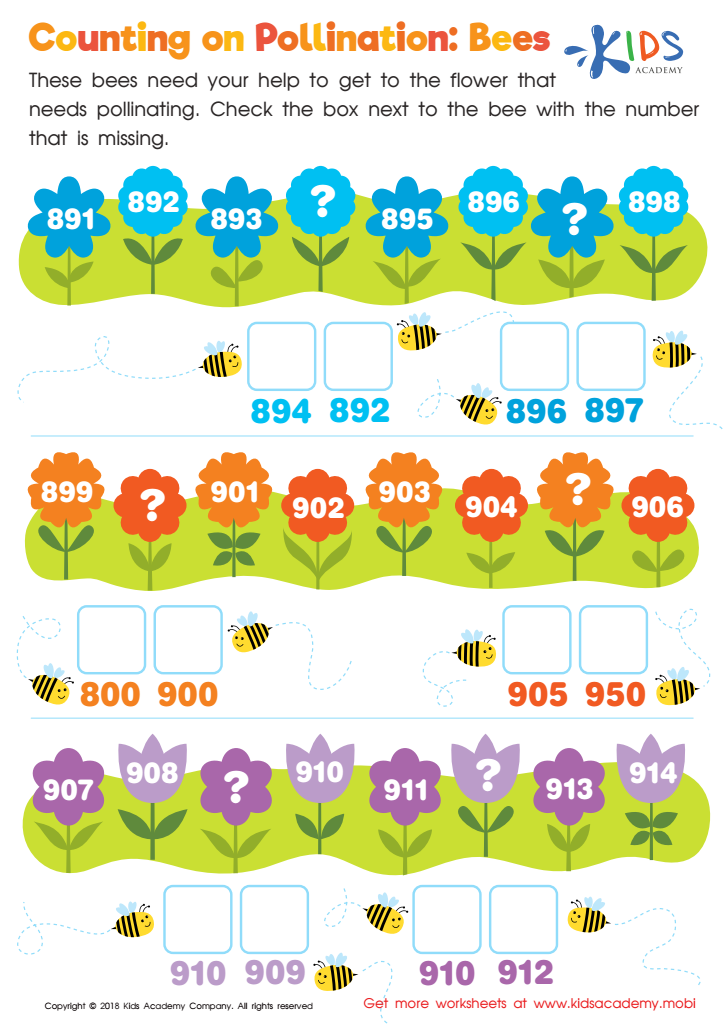
Counting on Pollination: Bees Worksheet
This downloadable worksheet helps kids improve their math skills while having fun - they'll help the bees pollinate the flowers by finding the missing number. It's an entertaining way to practice number patterns, sequences and number line skills, aiding in fast and efficient math computations.
 Assign to My Students
Counting on Pollination: Bees Worksheet
Worksheet











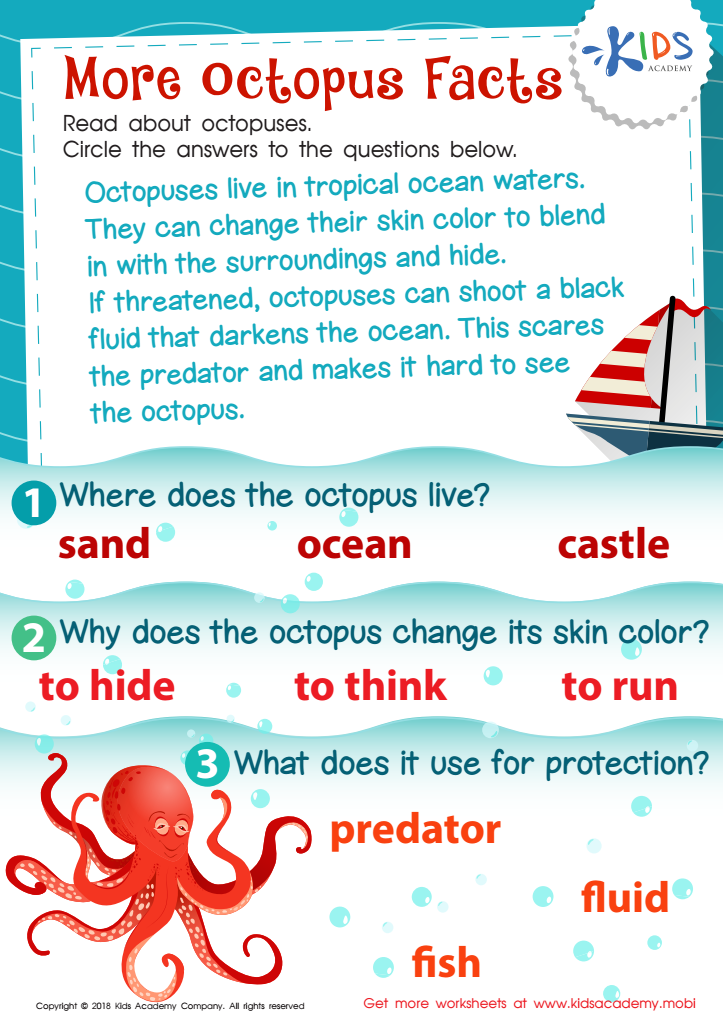
More Octopus Facts Worksheet
This worksheet will help your kids learn about the Octopus. Read the text carefully and have kids read with you. Now, ask them questions based on it and help them answer them by circling the right choices. Teaching your kids facts about animals will help them in the long run.
More Octopus Facts Worksheet
Worksheet
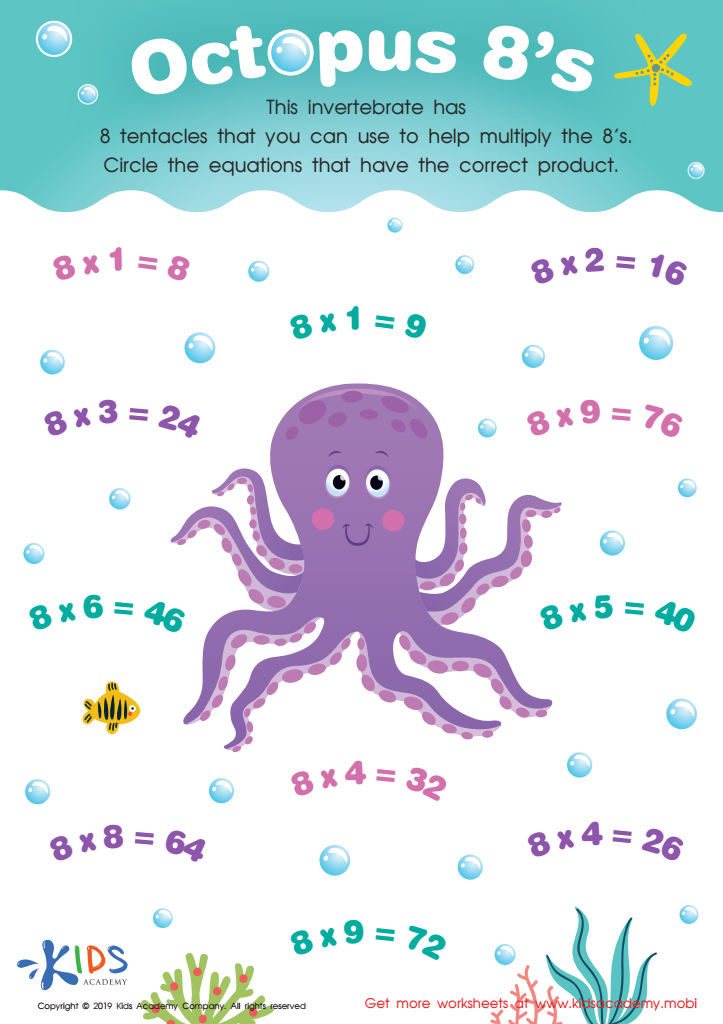
Octopus 8’s Worksheet
Can your child identify the octopus in the worksheet? It's an invertebrate with 8 tentacles. Have your child circle the equations with the correct products, and see if they can tell you some other features of the octopus too.
Octopus 8’s Worksheet
Worksheet
Join Kids Academy for Free
Who is primarily going to use this learning content?








Counting practice involving plants and animals is crucial for children's cognitive development, particularly for ages 3-9. Engaging with the natural world helps children explore mathematical concepts in a relatable and enjoyable way. By counting plants and animals, children strengthen their understanding of numbers while also fostering essential skills such as observation and categorization.
Integrating counting into outdoor activities provides hands-on experiences that enhance learning. For example, counting the number of leaves on a tree or the petals of a flower solidifies numerical concepts and encourages critical thinking. Furthermore, it nurtures a sense of curiosity about nature, making learning more meaningful and relevant.
Beyond academics, these activities promote environmental awareness and an appreciation for biodiversity. Early exposure to the environment can instill responsibility and compassion towards living things. Parents and educators play a pivotal role in this transformative stage, guiding children to make connections between math, science, and the world around them.
In summary, counting practice related to plants and animals is a multifaceted approach that benefits children academically and socially, making it essential for caregivers to prioritize such learning experiences in order to support holistic development.








