Weather Vocabulary Weather Worksheets for Ages 3-9
4 filtered results
-
From - To
Discover "Weather Vocabulary Weather Worksheets" designed for children aged 3-9 at Kids Academy! These engaging and educational worksheets help young learners explore and understand essential weather-related terminology. Through fun activities and exercises, kids can easily grasp concepts such as sunny, rainy, cloudy, and more. Our expertly crafted worksheets foster early science skills and critical thinking, making learning about weather both enjoyable and informative. Perfect for parents and educators alike, these printables are an excellent resource for introducing children to the wonders of weather. Visit Kids Academy to access these enriching weather vocabulary worksheets today!
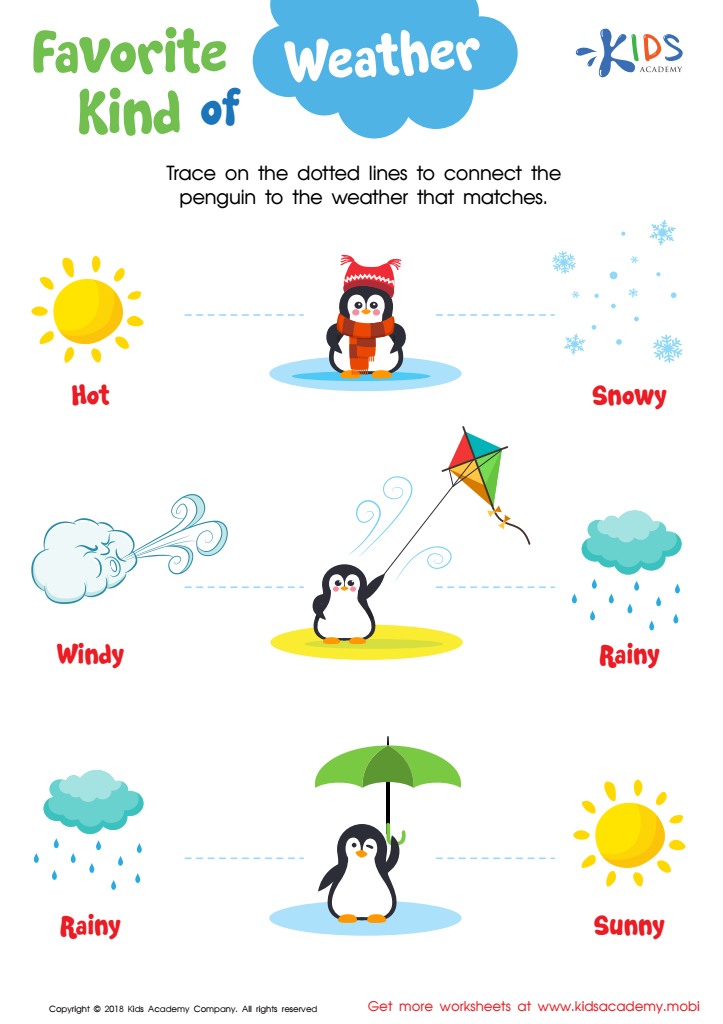
Favorite Kind of Weather Worksheet
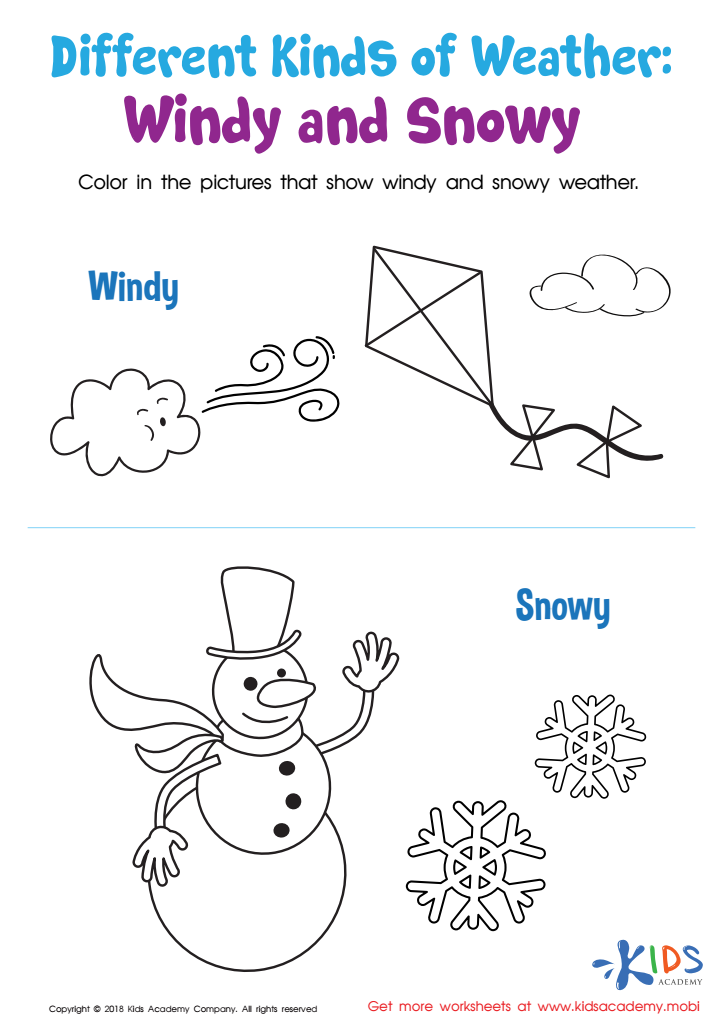
Different Kinds of Weather: Windy and Snowy Worksheet
 Assign to My Students
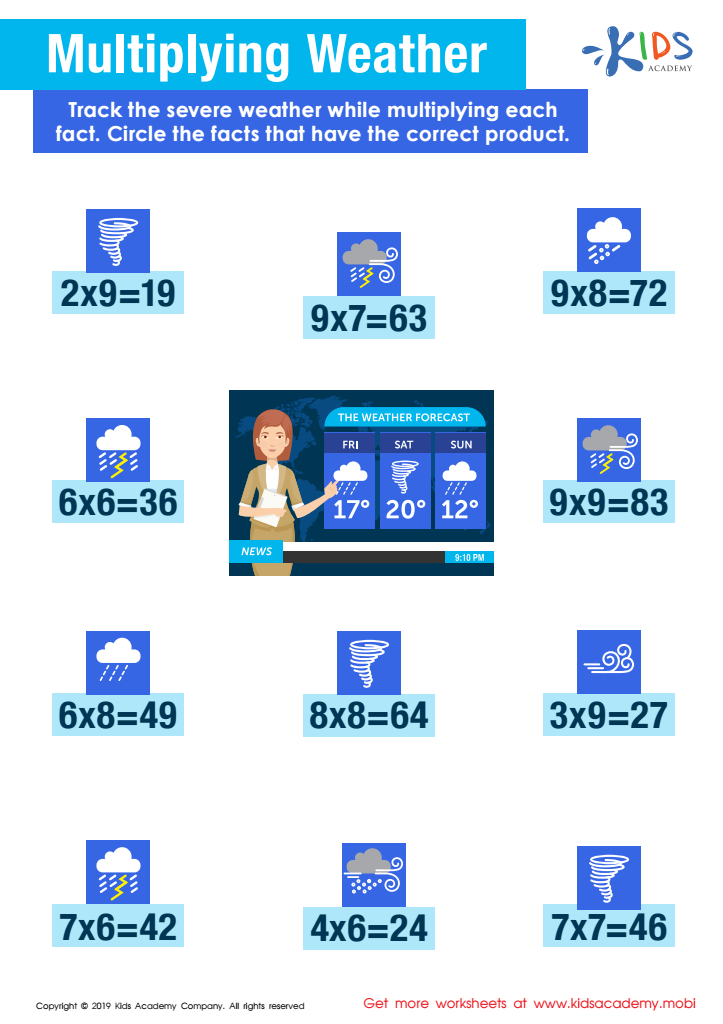
Multiplying Weather Worksheet








Understanding weather vocabulary is crucial for young children, as it forms a foundational aspect of their daily experiences and learning. For ages 3-9, acquiring weather-related terms such as sunny, rainy, windy, and snowy helps enhance their communication skills, allowing them to express observations and engage in conversations about the environment. Weather discussions can also broaden their comprehension of the world around them, fostering curiosity and promoting scientific reasoning from an early age.
Incorporating weather vocabulary into everyday learning is beneficial for both cognitive and social development. It supports literacy skills by introducing new words and concepts, and aids in conceptual understanding through context-based learning. Simple weather charts or hands-on activities, like creating weather crafts or singing weather songs, make the learning process interactive and enjoyable.
Furthermore, understanding weather vocabulary is essential for safety and preparedness. Young children equipped with the knowledge to identify different weather conditions can better grasp the importance of dressing appropriately and responding to weather-related emergencies.
Overall, building weather vocabulary enriches early education, encourages inquisitiveness, and equips children with practical knowledge that’s useful throughout their lives. Parents and teachers play a key role in nurturing this understanding, ensuring children develop a well-rounded awareness of their environment.







