Geographic Understanding Social Studies Worksheets for Ages 3-9
3 filtered results
-
From - To
Enhance your child's geographic knowledge with our vibrant selection of social studies worksheets designed for ages 3-9! Our engaging activities introduce young learners to maps, landforms, directions, and cultural diversity, fostering a deeper understanding of the world around them. Each worksheet is thoughtfully crafted to suit various developmental stages, making learning both fun and effective. Through interactive exercises, puzzles, and coloring sheets, children will build essential skills like spatial awareness and critical thinking. Start your little explorer's journey today with Kids Academy's expertly designed worksheets and watch them discover the wonders of geography!
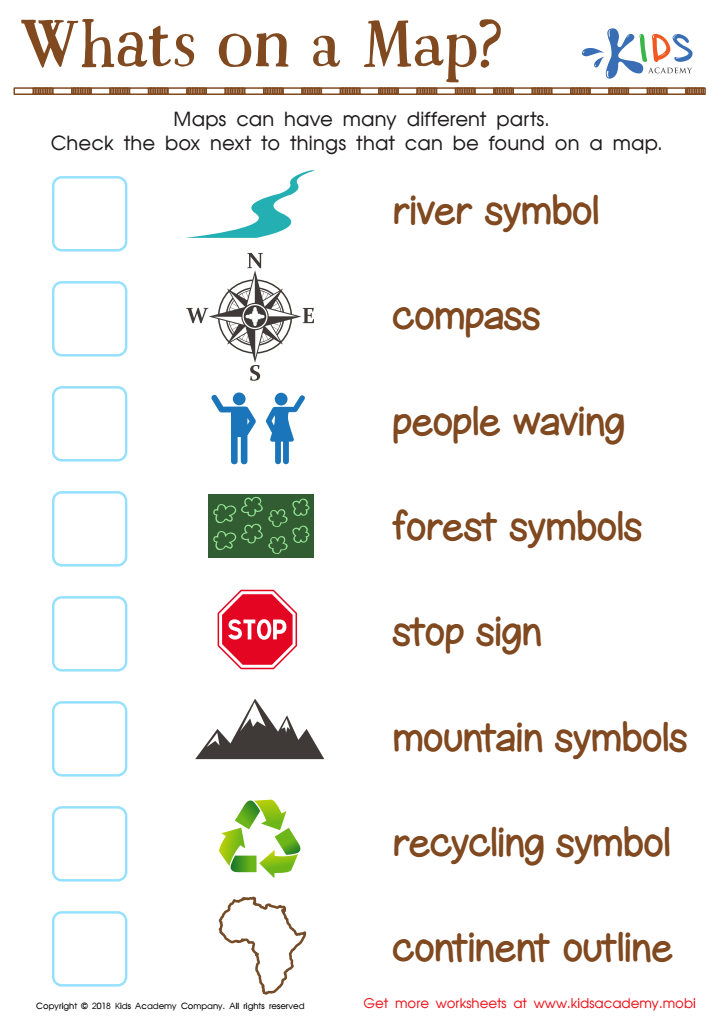
Whats on a Map? Worksheet
 Assign to My Students
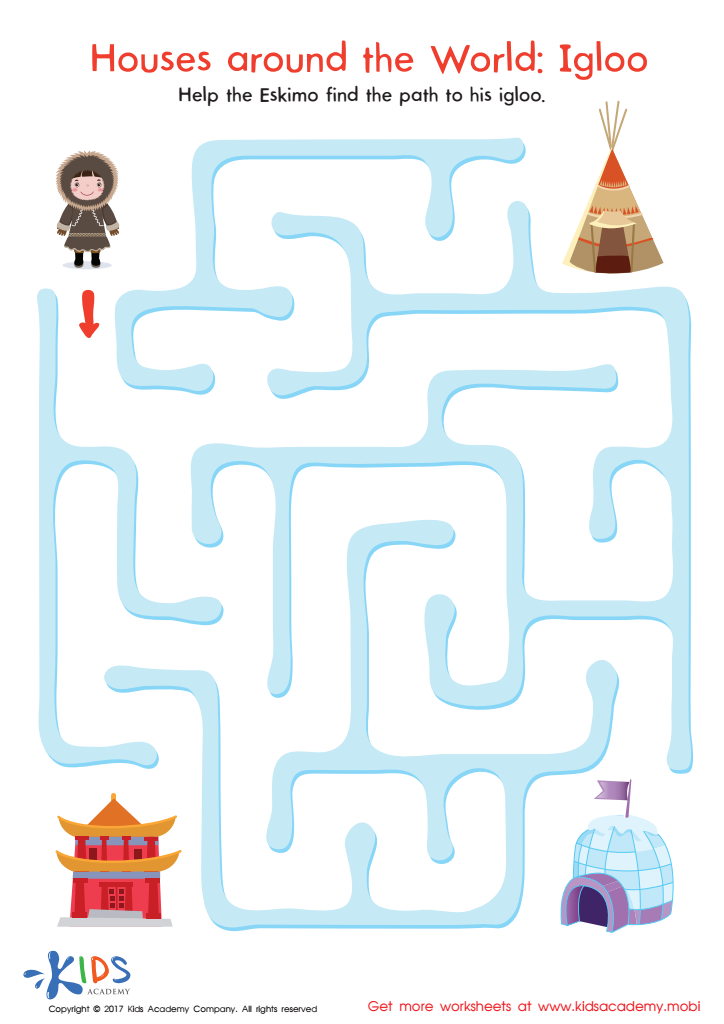
Houses Around the World: Igloo Printable
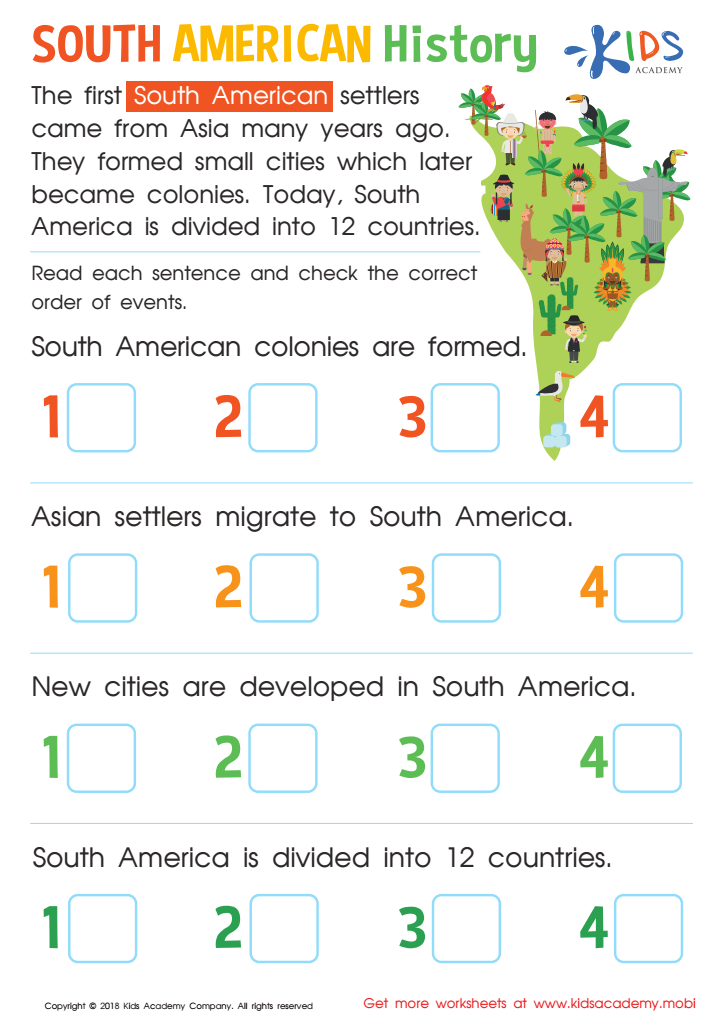
South American History Worksheet







Geographic understanding in social studies is vital for young children, ages 3-9, for several reasons. First, it foundationally broadens their comprehension of the world. Grasping basic concepts such as maps, different landforms, and cultural diversity opens up a child's mind to global awareness, making them more empathetic and curious about their surroundings. This type of learning nurtures cognitive development by teaching kids to observe, compare, and analyze different geographic entities.
Moreover, introducing geography at a young age builds essential skills like critical thinking and spatial awareness. Understanding locations, directions, and distances helps children interpret and categorize their immediate environment accurately. Fun and engaging activities like map-drawing or exploring different climates can make learning an enjoyable experience, sparking further interest in the subject.
Additionally, a good grip on geography aids in better citizenship. Kids who are more knowledgeable about their own and other countries are likely to grow up as more informed and socially responsible adults. It helps them appreciate diversity, understand global issues such as climate change, and recognize the interconnectedness of communities worldwide. Therefore, parents and teachers should prioritize geographic understanding to cultivate well-rounded, perceptive, and responsible individuals.








