
Hand-eye Coordination Cursive Writing Worksheets for Ages 3-9
8 filtered results
Difficulty Level
Grade
Age
-
From - To
Subject
Activity
Standards
Enhance your child’s writing skills with our Hand-eye Coordination Cursive Writing Worksheets for ages 3-9. These carefully crafted worksheets help young learners develop fine motor skills by combining engaging activities with the practice of cursive writing. By tracing and writing beautifully designed letters and words, children enhance their hand-eye coordination, promoting smoother, more confident writing. Perfect for preschool through early elementary school, these worksheets keep learning fun and interactive. Visit Kids Academy to explore a variety of exercises designed to support your child's educational journey in a playful and effective manner. Start building solid writing foundations today!
Favorites
With answer key
Interactive
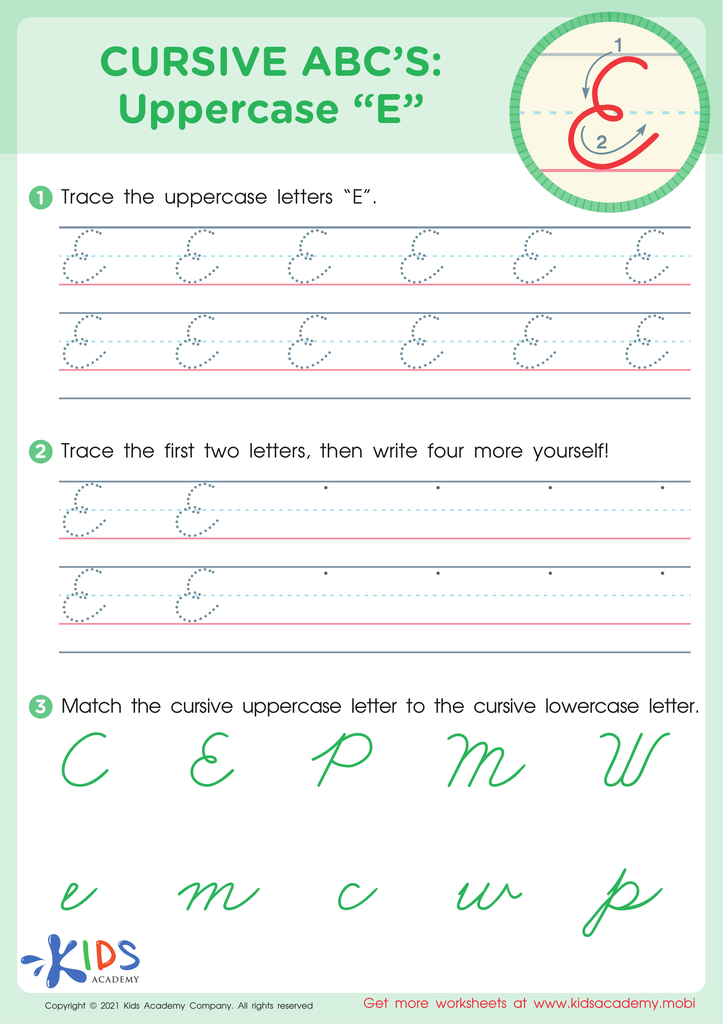
Cursive ABCs: Uppercase E
Ask your child if they can identify the letter 'E' and give examples. Each letter is unique, so provide coaching. Have them trace cursive 'E' to become familiar and boost confidence. Then, ask them to write it on their own.
Cursive ABCs: Uppercase E
Worksheet
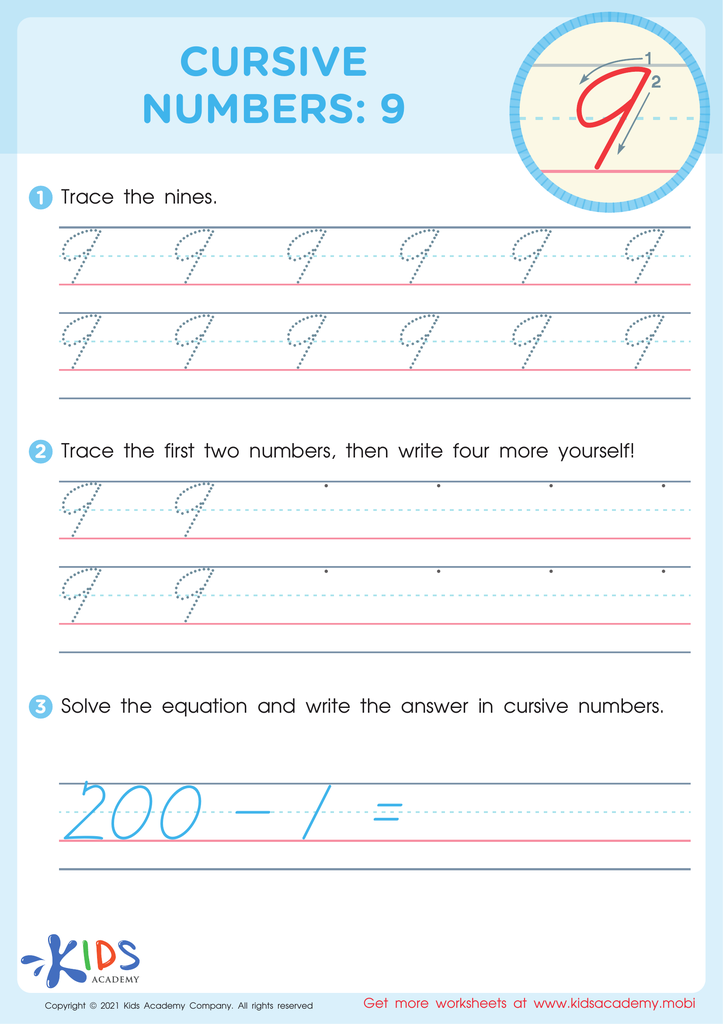
Cursive Numbers: 9 Worksheet
Identifying and writing numbers is key to math success. These worksheets help kids learn to trace the number 9 and build confidence. As they practice, they'll soon be able to write it on their own. Plus, they get to apply their learning and solve a simple equation at the bottom of the page. Writing the answer in cursive is a great way to help them remember!
Cursive Numbers: 9 Worksheet
Worksheet
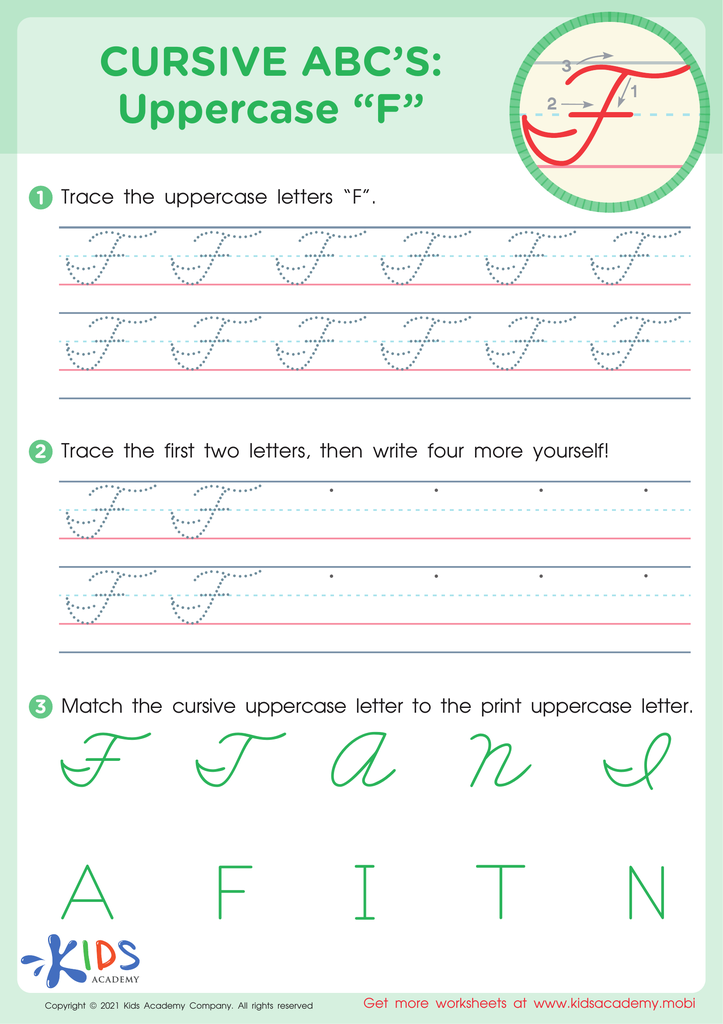
Cursive ABCs: Uppercase F
Help your kids trace the letters in these worksheets and watch their confidence grow as they learn to write cursive uppercase and lowercase letters. Ask them to identify the letters in words and give examples of words that start with an uppercase 'F', then have them write some letters on their own and assess their progress.
Cursive ABCs: Uppercase F
Worksheet
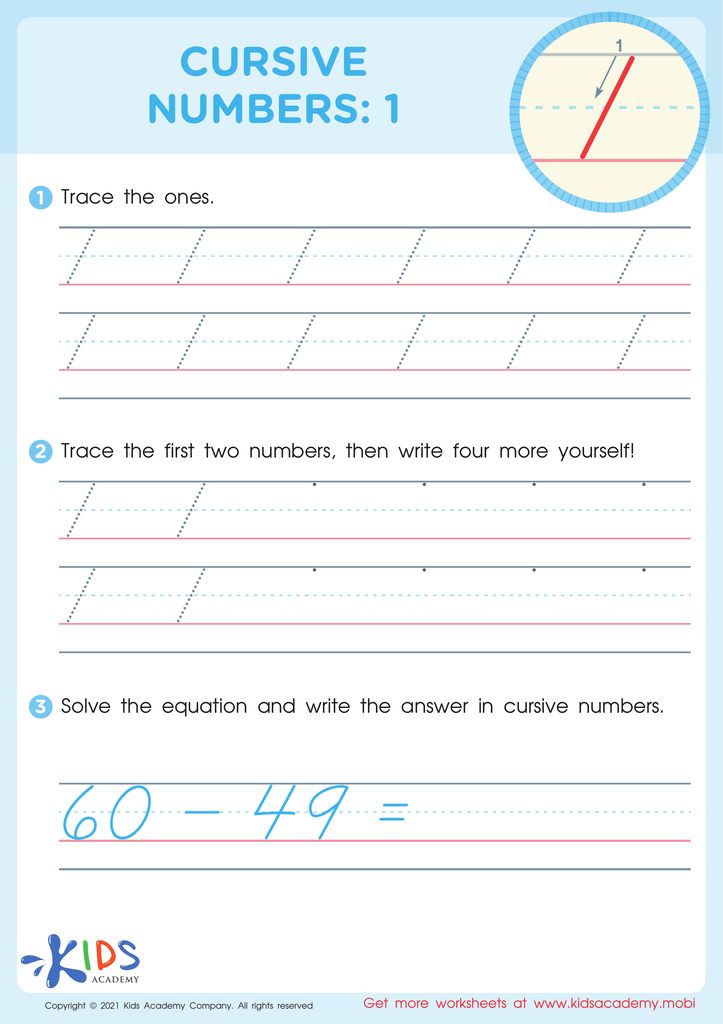
Cursive Numbers: 1 Worksheet
Math and handwriting are connected! Try these traceable worksheets to help your children learn cursive numbers. The tracing lines make it easy to follow, plus there's a simple subtraction exercise at the bottom for them to try. This is perfect for kids who struggle with handwriting and gives them a fun way to practice.
Cursive Numbers: 1 Worksheet
Worksheet
Cursive ABCs: Uppercase C
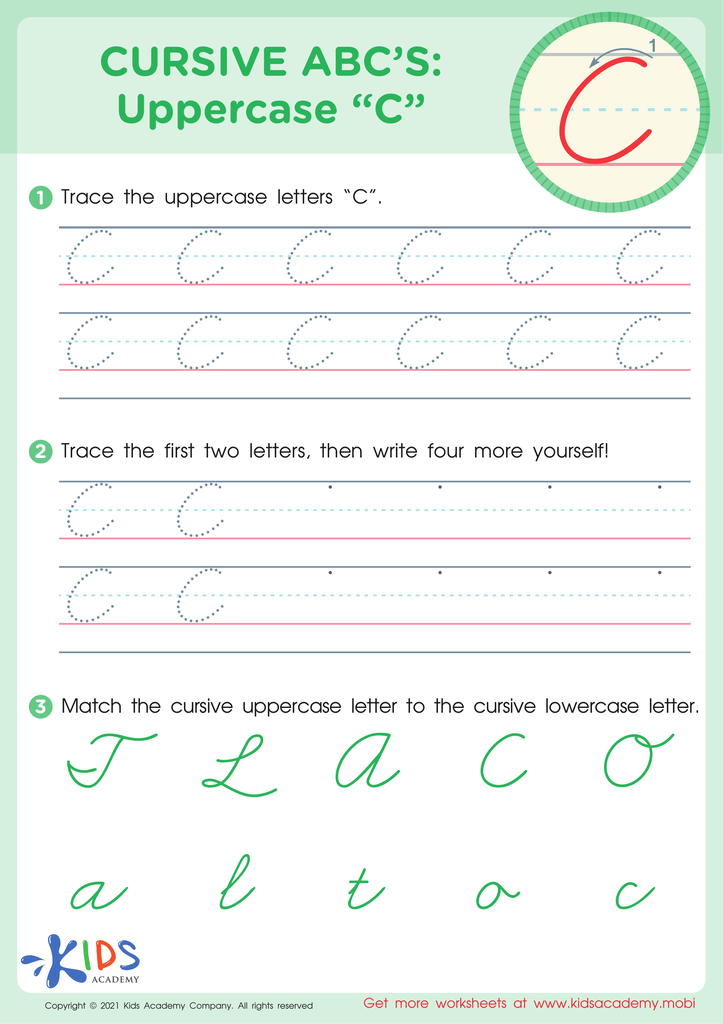
These worksheets are perfect for those wanting to improve their handwriting or learn letter recognition. The tracing exercises help younger students sharpen their writing skills and teach how to write the 'C' in cursive. First, they trace the given examples and then practice writing it solo. A letter recognition test is at the bottom of the page to check progress.
Cursive ABCs: Uppercase C
Worksheet
Cursive ABCs: Lowercase c
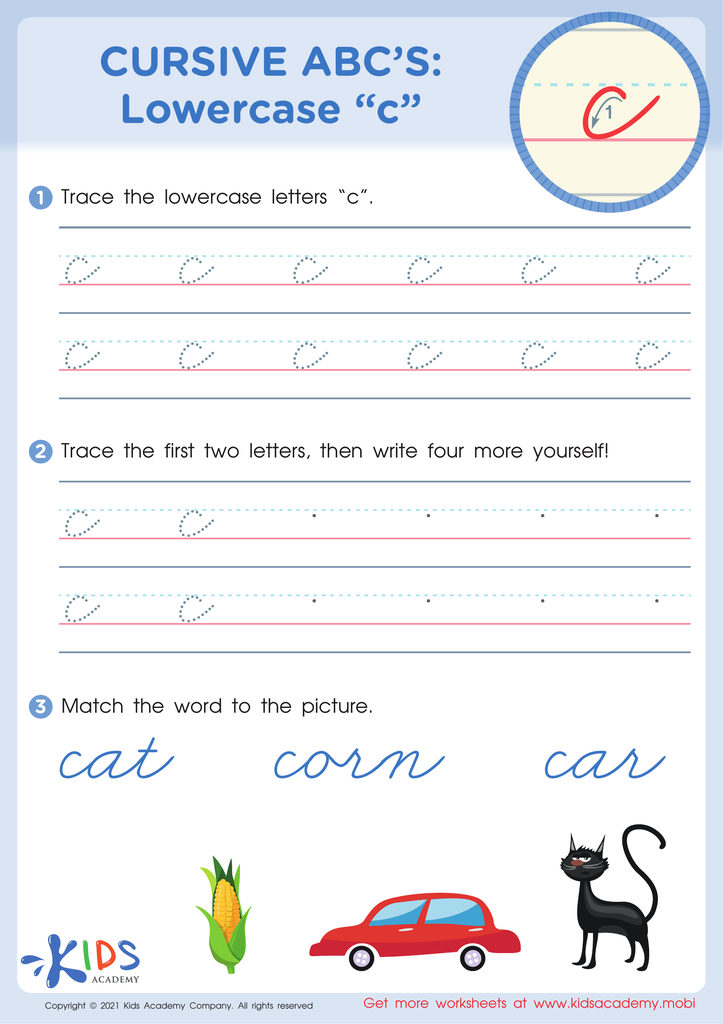
Once your child has successfully printed their letters, help them learn to recognize and write the alphabet in cursive. Struggling? This worksheet is perfect to assist them. Writing is an essential skill for kids to learn, so do all you can to help them. Use these tracing worksheets and guide them as they write the lowercase letter 'c' in cursive.
Cursive ABCs: Lowercase c
Worksheet
Cursive ABCs: Lowercase h
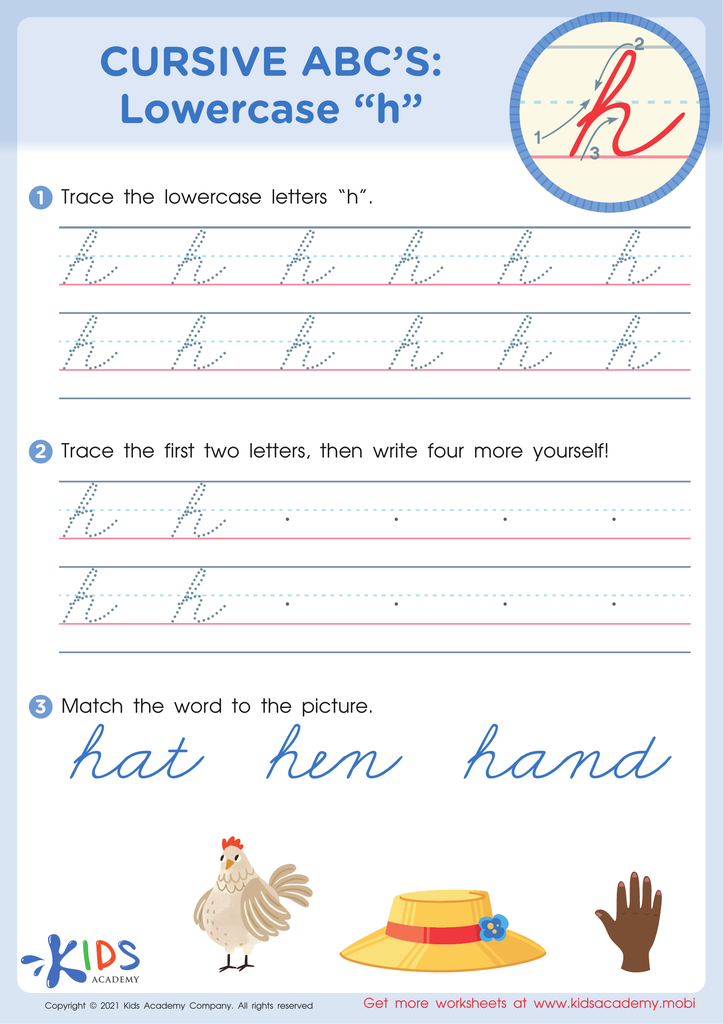
Your children will need more than just reciting the alphabet; they need to learn how to identify and write it. Cursive writing helps with neatness, and these tracing worksheets are great learning aids and offer exercises to practice writing lowercase 'h'. With these, your children get better writing skills and learn new words.
Cursive ABCs: Lowercase h
Worksheet
Cursive ABCs: Uppercase H
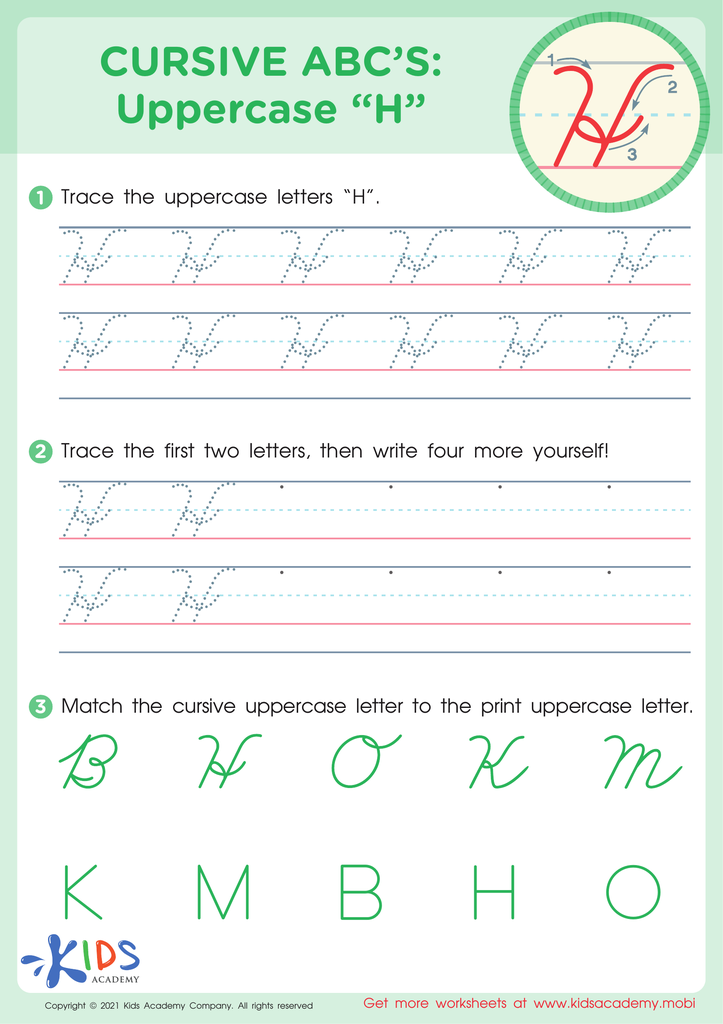
Have your child recite the alphabet and give you words beginning with H. This tracing sheet is perfect to help them improve their handwriting. Guide their hands as they trace the uppercase H, then have them practise writing it alone. At the bottom is an exercise to check their letter recognition.
Cursive ABCs: Uppercase H
Worksheet
Join Kids Academy for Free
Who is primarily going to use this learning content?



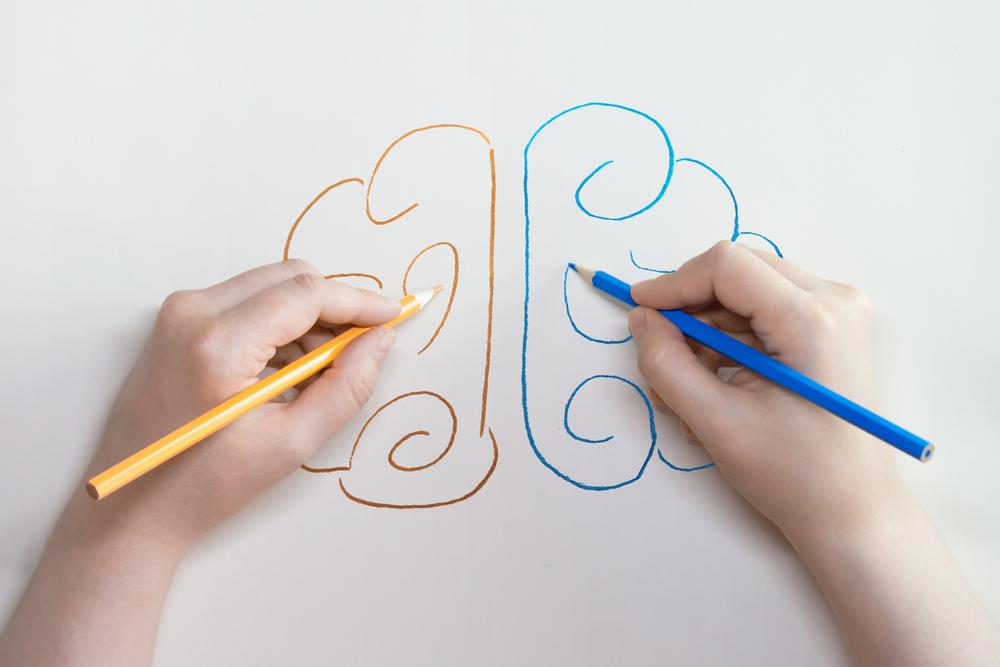



Hand-eye coordination, crucial for writing proficiency and overall development, refers to the ability to use vision to guide hand movements. For children ages 3-9, developing this skill through cursive writing offers numerous benefits. Firstly, cursive writing enhances fine motor skills, requiring kids to control hand movements meticulously as they form looping, connected letters. This practice strengthens their fingers and improves dexterity, aiding in everyday tasks such as tying shoelaces or using utensils.
Furthermore, engaging in cursive writing promotes better cognitive development. It demands focus and spatial awareness, encouraging kids to process and follow complex instructions. This can translate to improved concentration and problem-solving abilities. Additionally, cursive provides a structured way to practice sequencing, aligning with literacy development by helping children understand the order and flow of written language.
Emotional benefits are also noteworthy. Mastering cursive writing can boost a child’s confidence, as achieving this skill offers a sense of accomplishment. The rhythmic, flowing nature of cursive can even be relaxing, reducing anxiety.
Therefore, incorporating cursive writing into early education supports comprehensive development—enhancing fine motor skills, cognitive growth, and emotional well-being. Parents and teachers should thus appreciate its role in shaping well-rounded, capable young learners.








