Logical thinking Writing Worksheets for Ages 3-9
4 filtered results
Difficulty Level
Grade
Age
-
From - To
Subject
Activity
Standards
Introduce your child to the world of logical thinking with our engaging writing worksheets designed for ages 3-9. These resources focus on enhancing critical thinking skills through fun and interactive activities. Your little learners will explore patterns, sequences, and problem-solving exercises that promote cognitive development and organization in their writing. Each worksheet is varied and creative, ensuring children remain excited and motivated to learn. Perfect for home or classroom use, our logical thinking writing worksheets provide endless opportunities for young minds to expand their reasoning abilities while improving writing skills. Nurture your child's intellectual growth today!
Favorites
With answer key
Interactive
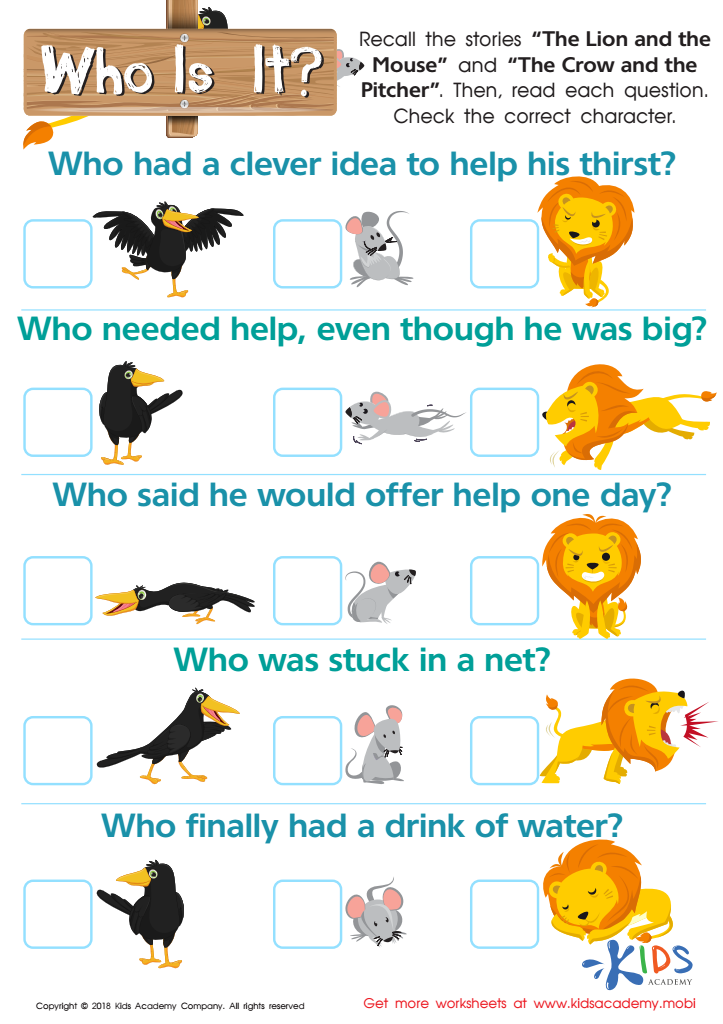
Who Is It? Worksheet
This worksheet helps students recall details from The Crow and the Pitcher and The Lion and the Mouse stories. Students will answer questions about the characters' actions. Use it to assess their understanding of both stories, as this is a key comprehension skill.
 Assign to My Students
Who Is It? Worksheet
Worksheet
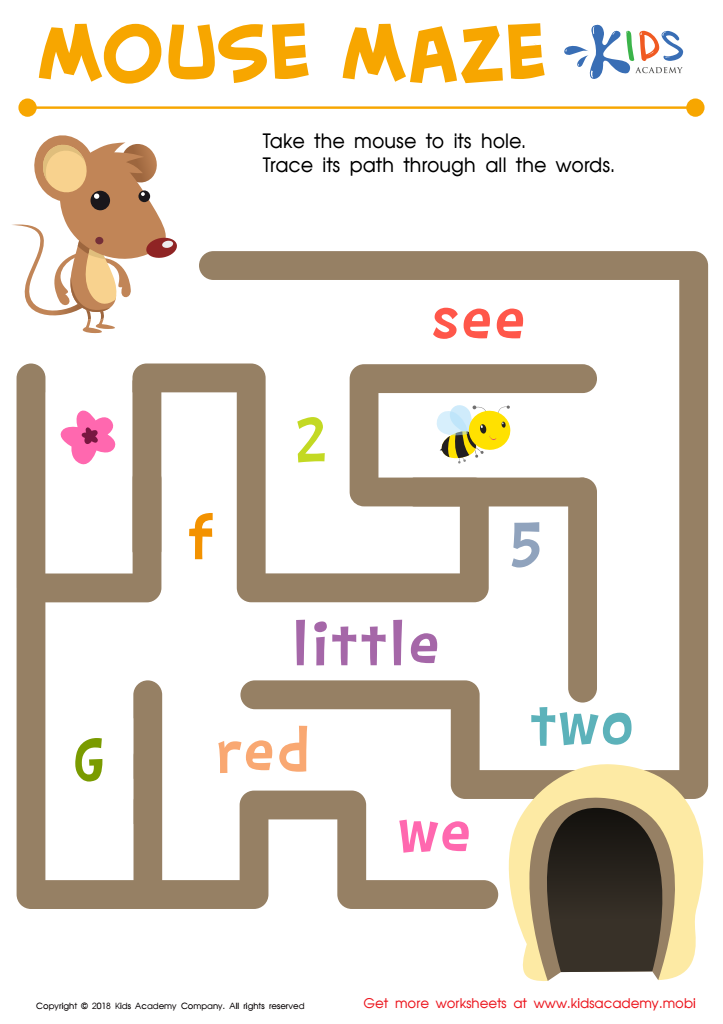
Find Words Mouse Maze Worksheet
Help your child identify words and guide the mouse home! Ask them to point out the colorful animal on the worksheet, then take their hand and show them how to trace the path, going through all the words in the maze to get the mouse back to its hole.
Find Words Mouse Maze Worksheet
Worksheet
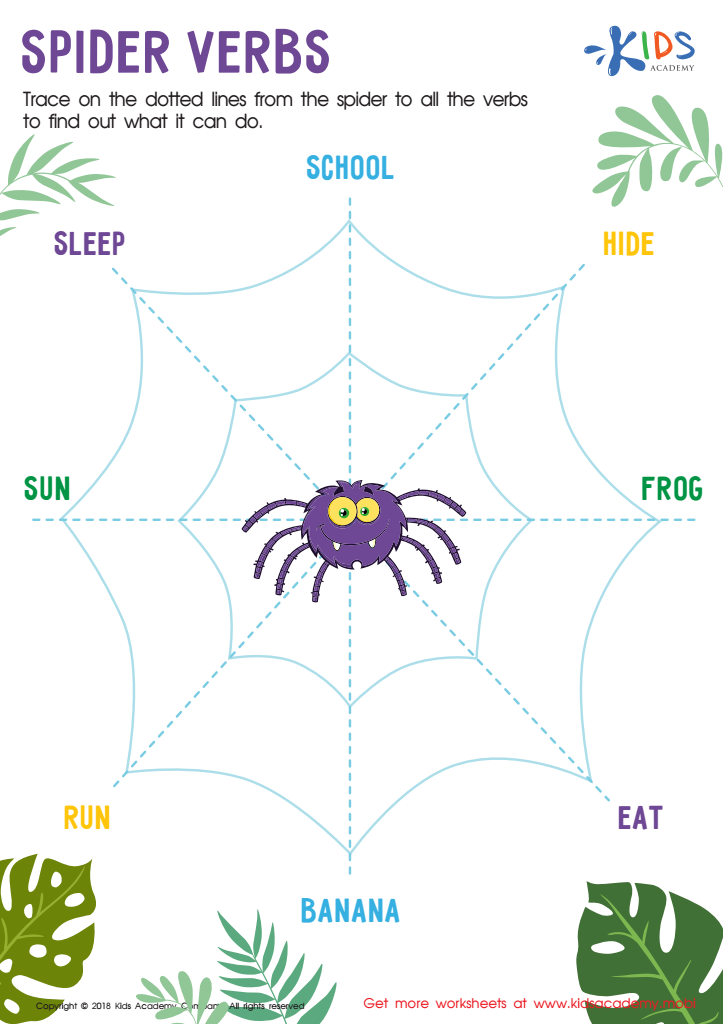
Spider Verbs Worksheet
Verbs are action words. Examples: run, play, talk. Show your child this tracing sheet for them to learn about verbs. Ask them to trace the dotted lines from the spider to the words that are verbs. These words are what the spider can do.
Spider Verbs Worksheet
Worksheet
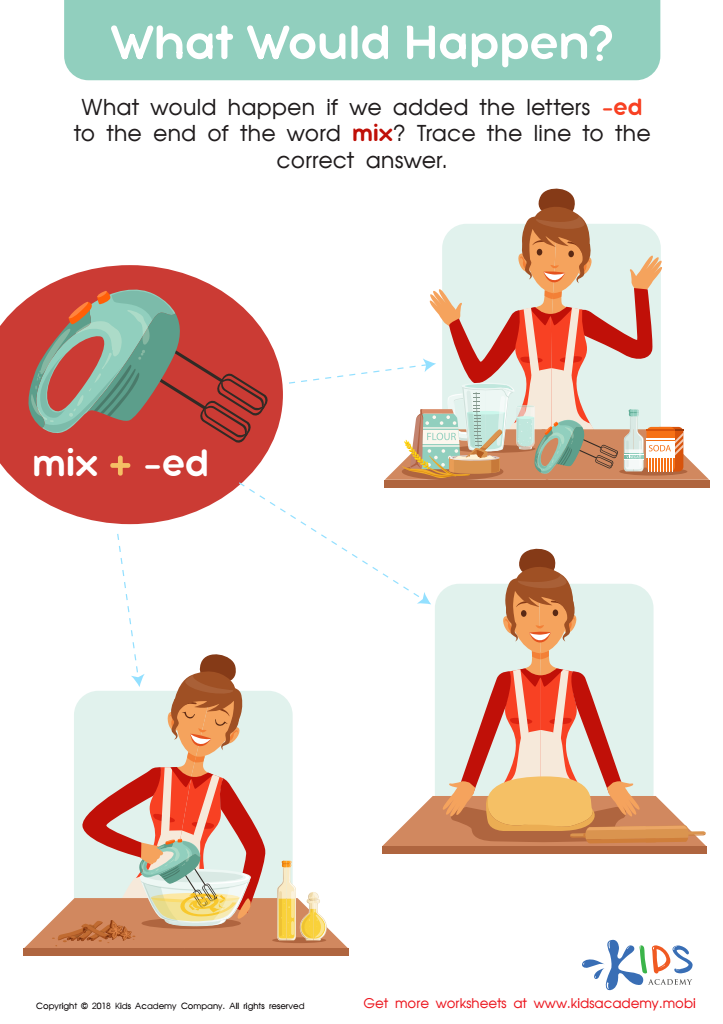
What Would Happen? Worksheet
Are your kids struggling with tenses? Use this worksheet to help them. See what they know by asking them to add '-ed' to the end of 'mix'. Guide them through the tracing sheet as they look for the correct answer.
What Would Happen? Worksheet
Worksheet
Join Kids Academy for Free
Who is primarily going to use this learning content?








Logical thinking and writing for ages 3-9 are vital skills that shape a child's cognitive development and communication abilities. During these formative years, children begin to grasp the foundational concepts of reasoning, problem-solving, and structured expression. By encouraging logical thinking, parents and teachers help children learn to analyze information, identify patterns, and draw conclusions, which are essential skills across all subjects and later life stages.
Writing, when intertwined with logical thinking, fosters clarity and coherence in a child's ability to convey ideas. As they learn to organize their thoughts and express them in written form, children develop a sense of narrative structure and improve their vocabulary, leading to better communication skills overall. Moreover, logical thinking aids in developing critical thinking—an essential skill for navigating challenges in school and social situations.
For parents and teachers, nurturing these abilities means equipping children with the essential tools they need for academic success and personal growth. Engaging in activities that promote these skills, such as storytelling, puzzles, or structured writing exercises, not only enriches children's learning experiences but also lays a strong foundation for their future education and lifelong learning tendencies. Ultimately, investing in logical thinking and writing during these early years prepares children for a more analytical and articulate future.