Phonics recognition Writing Worksheets for Ages 3-9
5 filtered results
-
From - To
Unlock the magic of early literacy with our Phonics Recognition Writing Worksheets for ages 3-9. These engaging, expertly designed printables enhance phonemic awareness by helping children recognize sounds and letter patterns. From beginner to advanced levels, our worksheets cover letter sounds, blends, digraphs, and more, building a strong foundation for reading and writing. Whether practicing at home or in the classroom, kids will enjoy these fun, interactive activities, while parents and teachers will love the clear, structured learning paths. Boost your child's language skills and confidence with our comprehensive phonics worksheets.
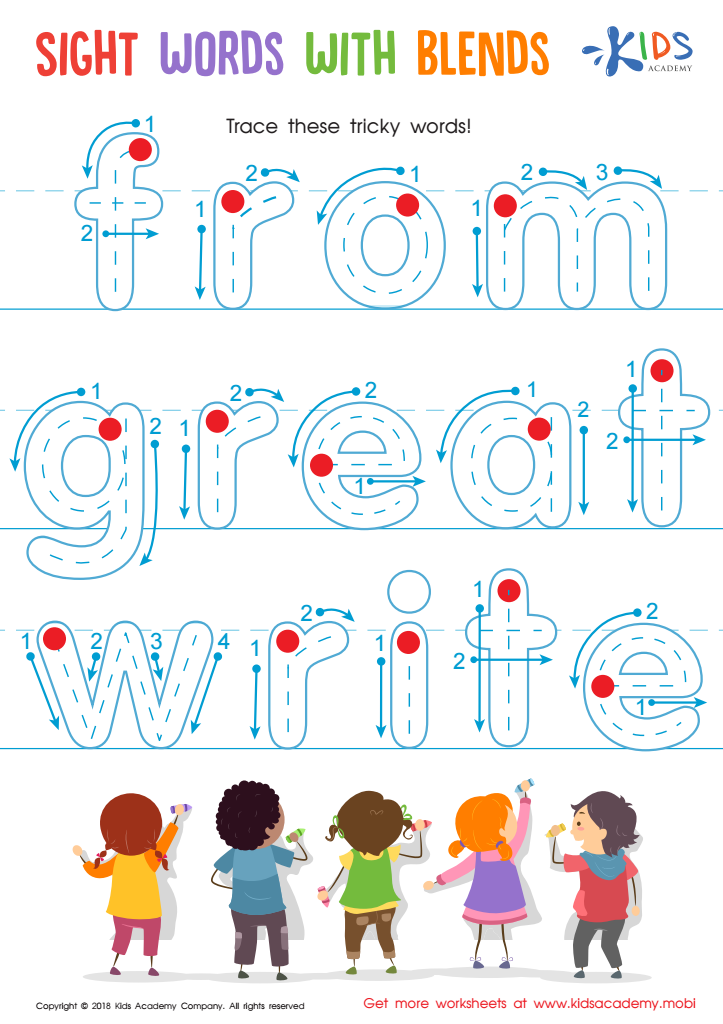
Sight Words with Blends Worksheet
 Assign to My Students
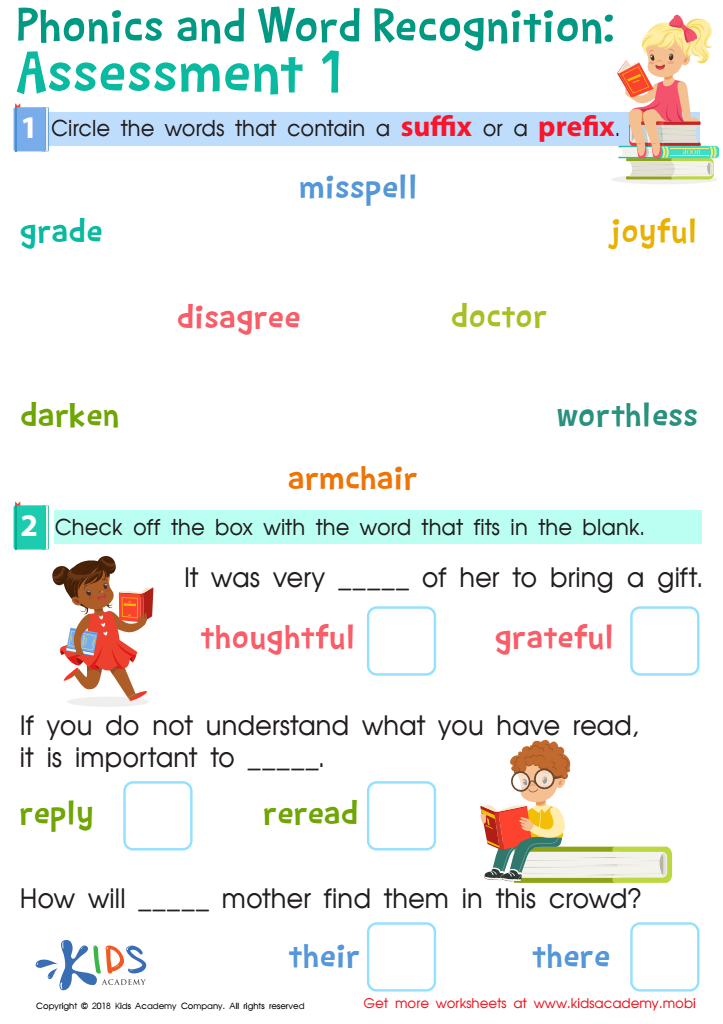
Phonics and Word Recognition: Assessment 1 Worksheet
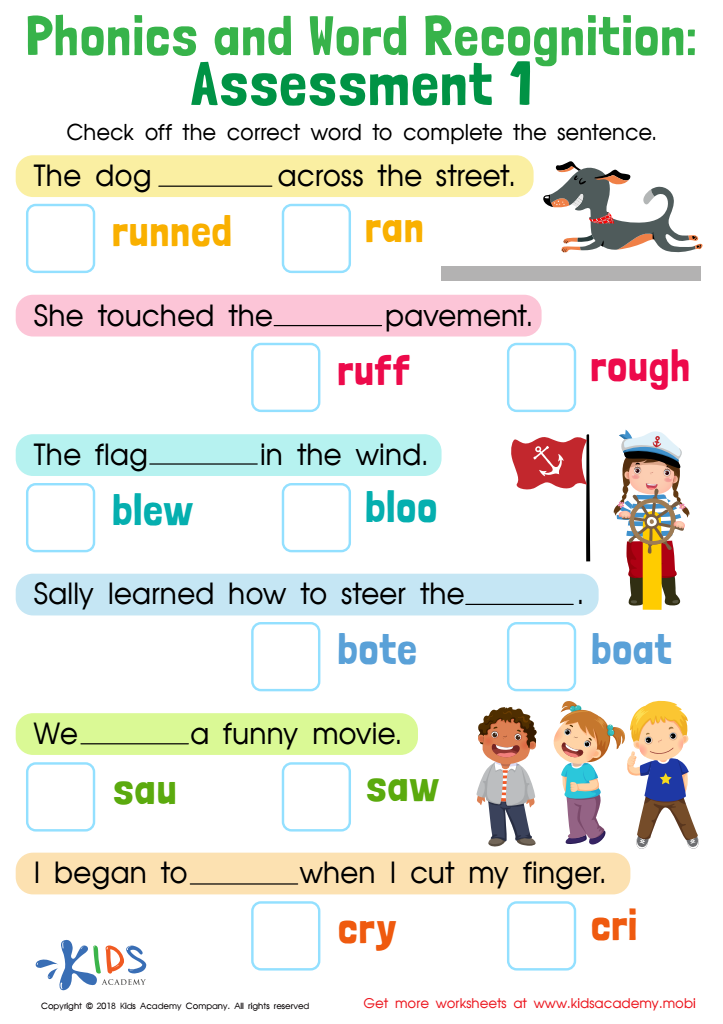
Phonics and Word Recognition: Assessment 1 Worksheet
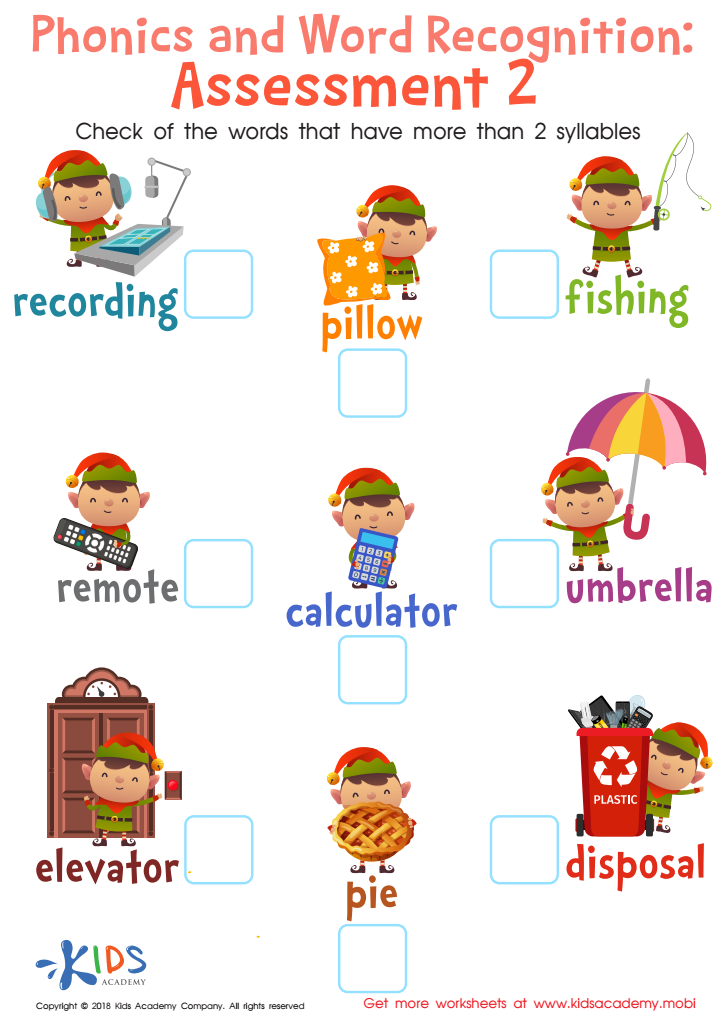
Phonics and Word Recognition: Assessment 2 Worksheet
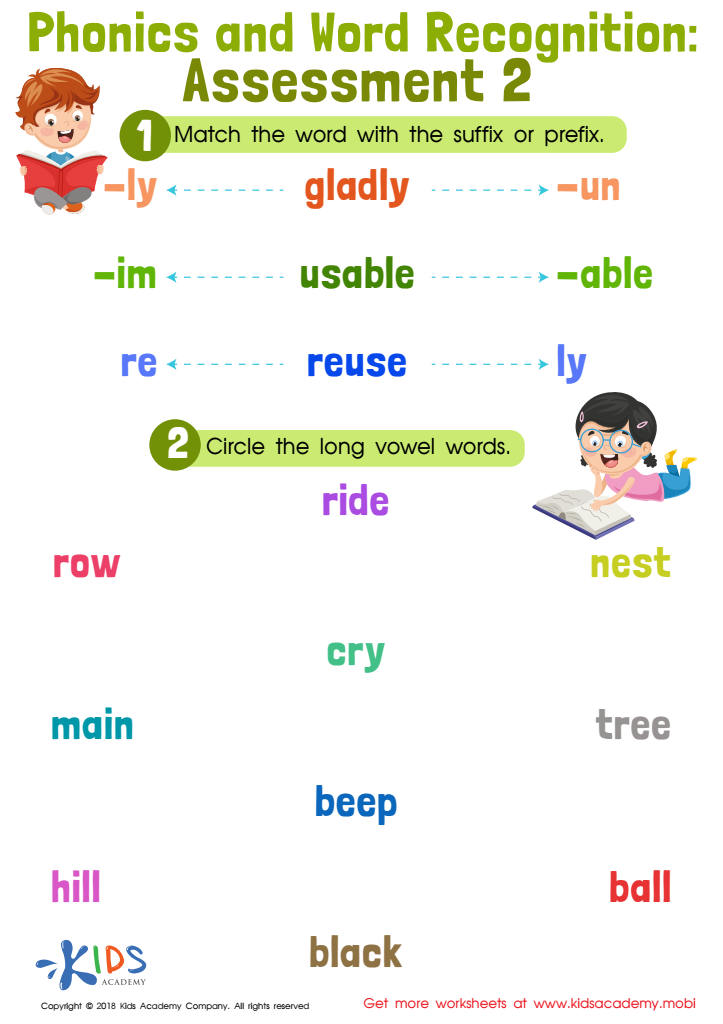
Phonics and Word Recognition: Assessment 2




.jpg)


Phonics recognition and writing are foundational skills for children ages 3-9, crucial for their literacy development. Parents and teachers should prioritize these skills because they form the building blocks of reading and writing. Phonics teaches children the relationship between sounds and their corresponding letters or letter groups, allowing them to decode new words independently.
In early childhood, recognition of phonics helps children improve their vocabulary as they connect sounds to meaning. This automatic decoding skill enhances reading fluency and comprehension, making reading a more enjoyable and fruitful activity. Additionally, children learn spelling patterns, making it easier to commit new words to memory and promoting accuracy in their writing.
Writing, supported by phonics knowledge, allows children to express their thoughts clearly and creatively. As children become confident readers and writers, they are more likely to engage positively with their learning environment, boosting overall academic performance.
Furthermore, strong phonics skills lay a foundation for lifelong literacy, critical thinking, and effective communication, which are paramount in all areas of education and personal growth. Therefore, investing time and resources into developing phonics recognition and writing abilities is a crucial step in ensuring children achieve academic success and are well-prepared for future learning challenges.








