
Alphabet understanding Alphabet Worksheets for 3-Year-Olds
6 filtered results
Difficulty Level
Grade
Age
-
From - To
Subject
Activity
Standards
Unlock the joy of learning with our engaging "Alphabet Understanding Worksheets" designed specifically for 3-year-olds! These worksheets aim to cultivate foundational literacy skills by introducing young learners to letter recognition and phonetics in a fun and interactive way. Each worksheet features colorful illustrations, simple activities, and rhymes that capture their imagination, making the alphabet exciting to explore. Ideal for parents and educators, these resources foster critical thinking and early writing skills while promoting cognitive development. Encourage your child to embark on their educational journey with our delightful alphabet worksheets that pave the way for a lifelong love of learning and reading!
Favorites
With answer key
Interactive
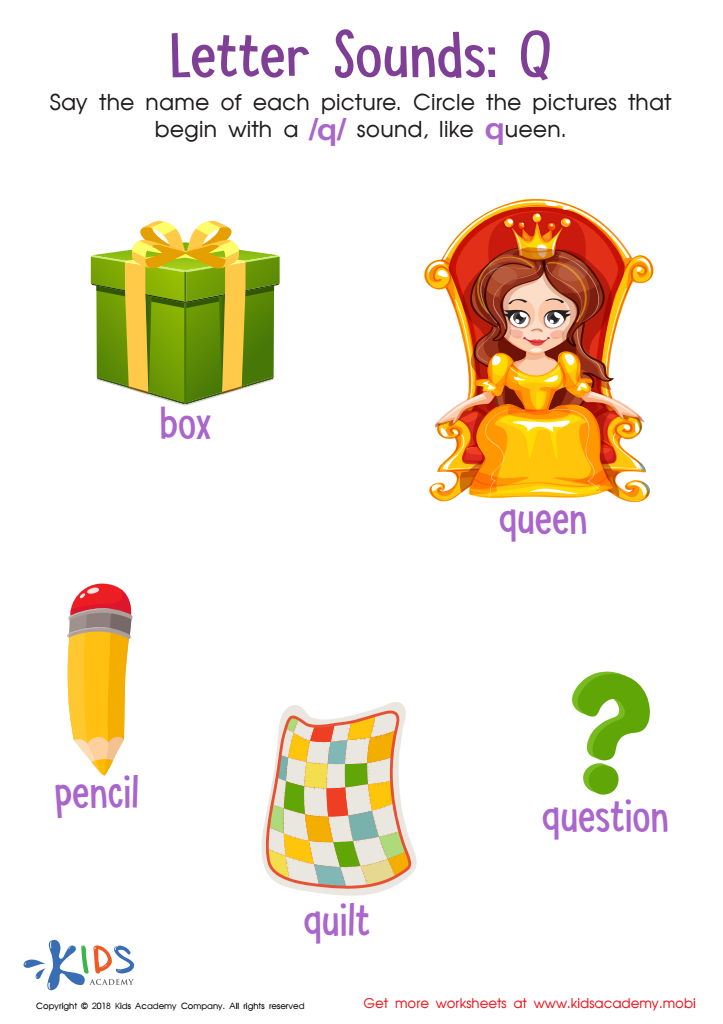
Letter Q Sounds Worksheet
Kids can get confused between "K" and "Q" sounds. Help them learn with this phonics worksheet. They'll name each image and read the word underneath. Point out that words with "Q" also have a "U" which affects how it sounds. Have them circle the matching pictures and watch as they learn this unique letter sound.
Letter Q Sounds Worksheet
Worksheet
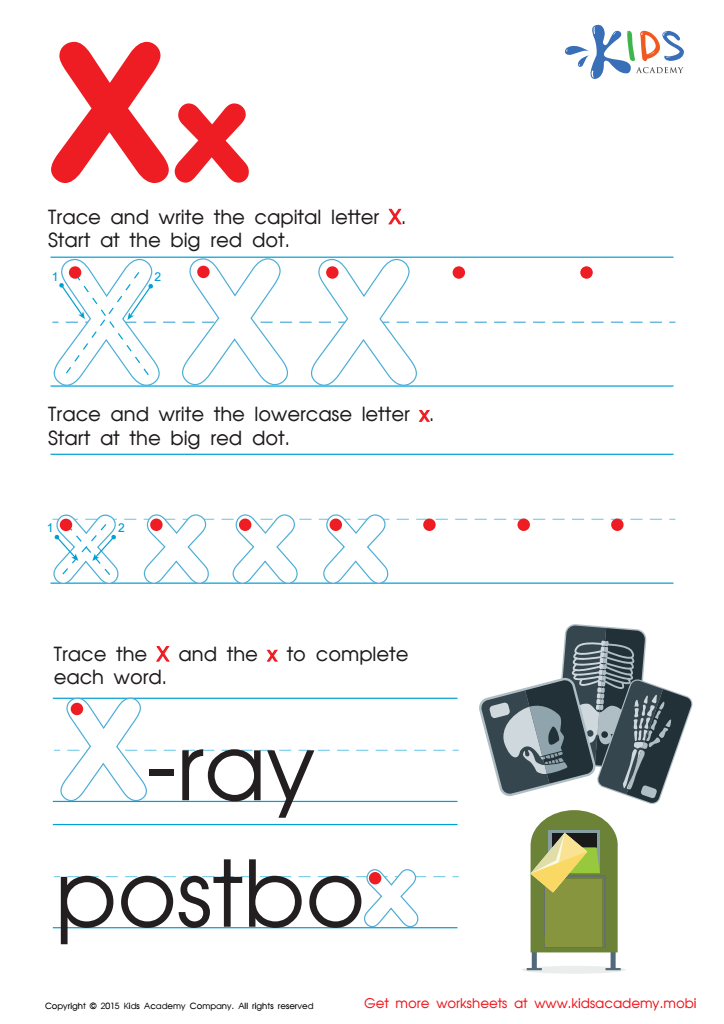
Letter X Tracing Page
Trace the uppercase letter "X" to learn, then write it yourself and practice. Then do the same with the lowercase "x" before completing the words "X-ray" and "postbox". Enjoy our alphabet printables!
Letter X Tracing Page
Worksheet
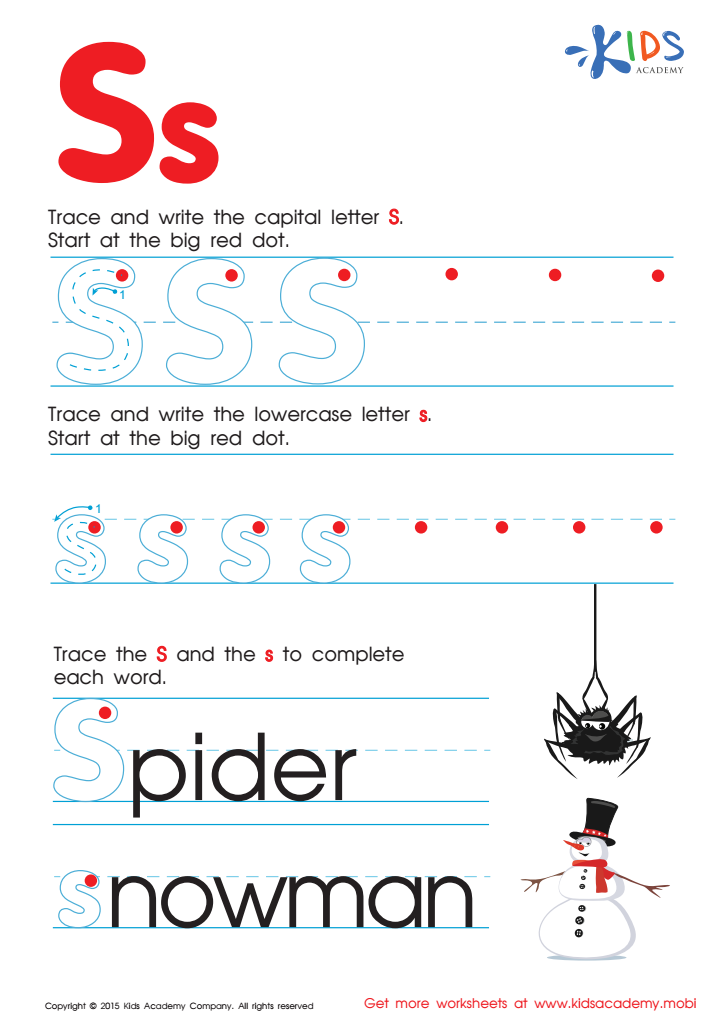
Letter S Tracing Page
Trace and write the capital and lowercase "S" on this ABC worksheet for kindergarten. Start with the big red dot and be careful. When you finish, help the spider and snowman in the pictures restore their words with the capital and lowercase letters. Continue learning the alphabet with Kids Academy.
Letter S Tracing Page
Worksheet
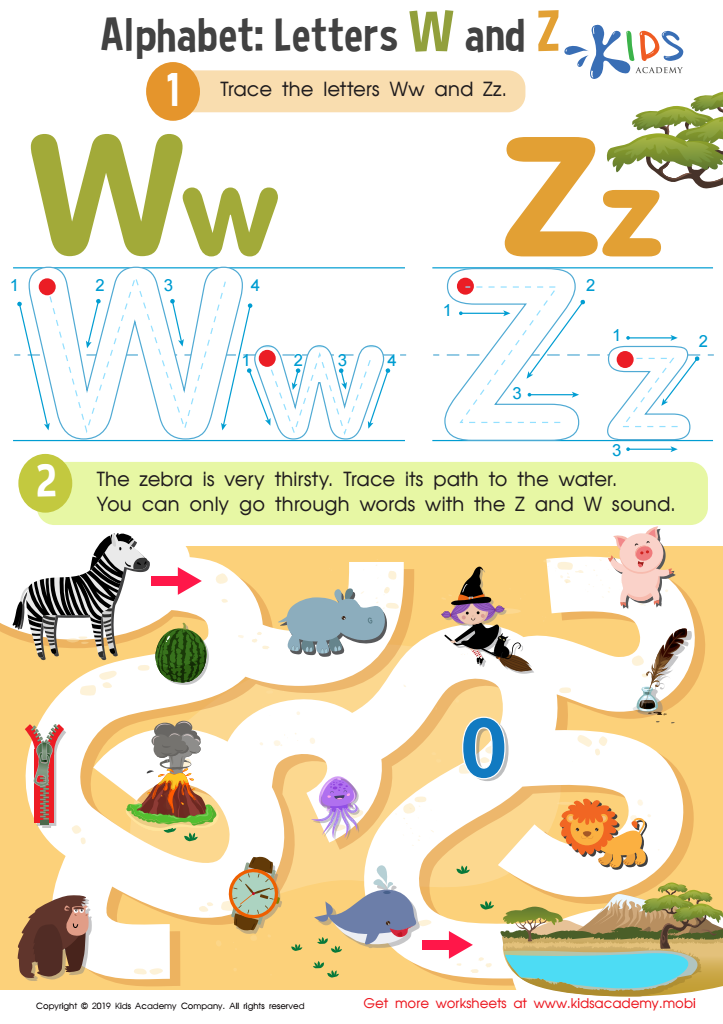
Letters W and Z Tracing Worksheet
Kids will go on a safari exploration of letters W and Z with this worksheet. Students will trace «W» and «Z» and then help the zebra find their watering hole, only following the path of the «W» and «Z» words among many others. It'll be a fun learning activity!
Letters W and Z Tracing Worksheet
Worksheet
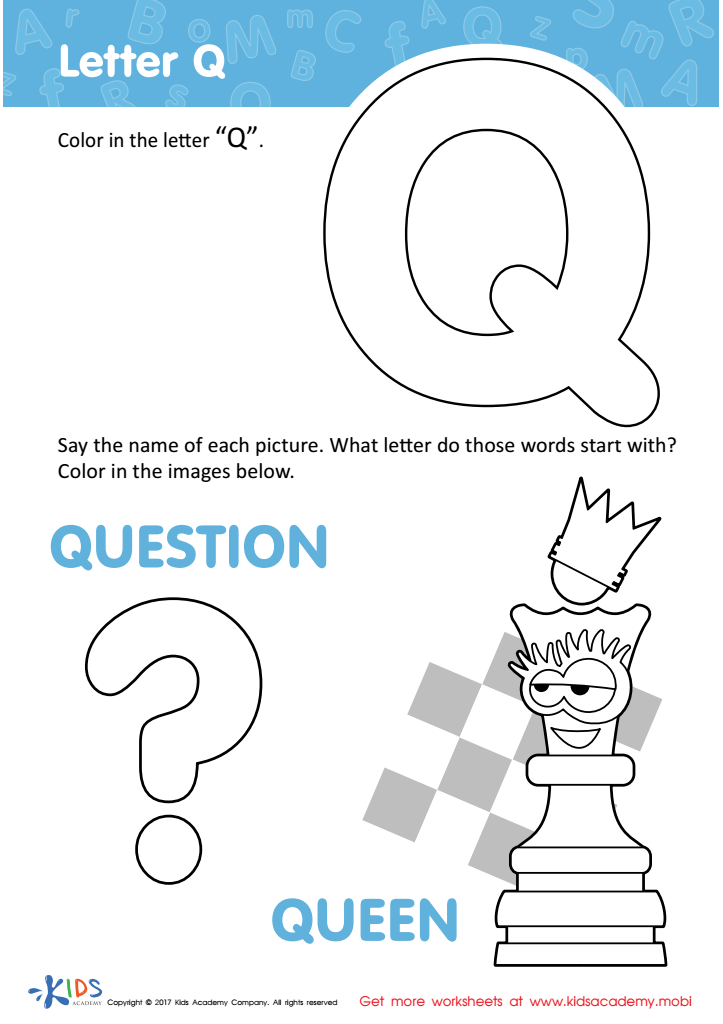
Letter Q Coloring Sheet
Kids need practice with letters not seen often. Give your child a boost with this letter "Q" coloring page! Have them color in the queen and question mark, while learning the sound "Q" makes. Fun and educational!
Download (PDF)
 Assign to My Students
Assign to My Students
Letter Q Coloring Sheet
Worksheet
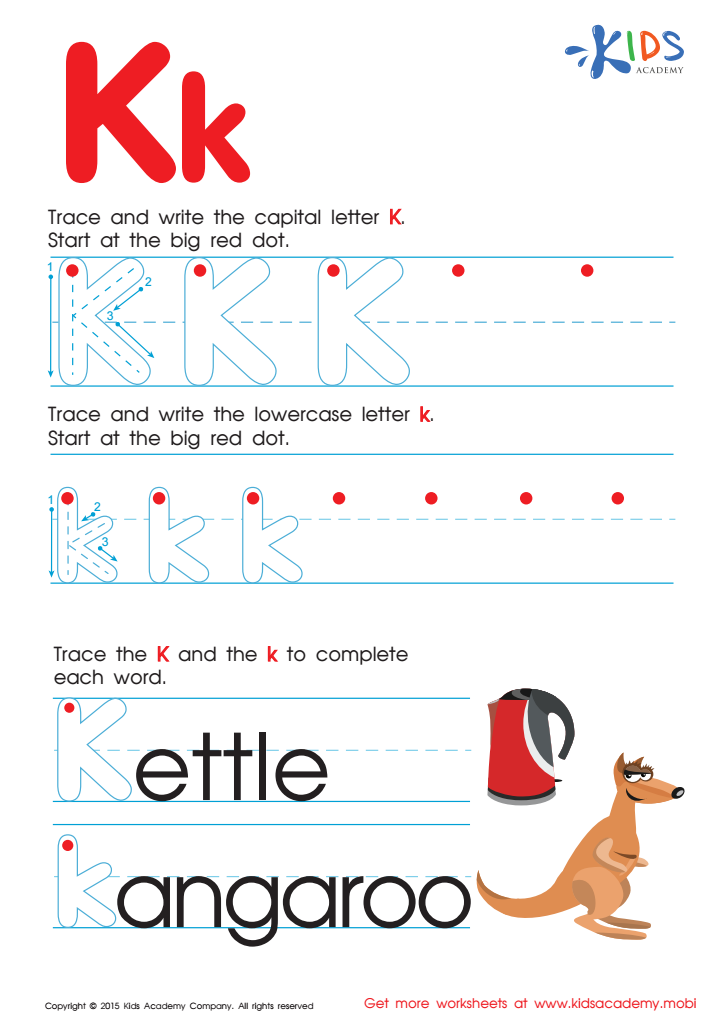
Letter K Tracing Page
Trace and write the letter K; start at the big red dot. Use it to complete words like "Kettle" and "Kangaroo". Visit Kids Academy for more free alphabet worksheets for kindergarten.
Letter K Tracing Page
Worksheet
Join Kids Academy for Free
Who is primarily going to use this learning content?








Understanding the alphabet is foundational for young children, and parents and teachers play a crucial role in fostering this development for 3-year-olds. Alphabet knowledge serves as a building block for reading and writing, skills that are essential for academic success. When children recognize letters and their associated sounds, they begin to unlock the world of words.
At this early age, exposure to the alphabet introduces patterns and structures of language, encouraging cognitive, verbal, and motor skills. Engaging children in fun activities, such as songs, games, and storytelling, makes learning enjoyable and impactful. This playful approach nurtures a love for learning that can last a lifetime.
Additionally, a strong grasp of the alphabet enhances children's vocabulary and comprehension skills. As they become familiar with letters, they gain confidence in their abilities to communicate and express themselves.
For parents and teachers, actively participating in a child's introduction to the alphabet strengthens the parent-child or teacher-student bond. It creates a supportive learning environment that can lead to long-term educational benefits. Ultimately, prioritizing alphabet understanding at this age lays the groundwork for literacy, setting children on a pathway to academic achievement and a bright future.







