Rhyming skills development Alphabet Worksheets for 3-Year-Olds
4 filtered results
-
From - To
Enhance your 3-year-old's learning journey with our engaging Rhyming Skills Development Alphabet Worksheets! Designed to captivate young minds, these worksheets introduce children to the fascinating world of words and sounds. Each activity promotes literacy, phonemic awareness, and imaginative play through fun rhyming exercises that boost retention. Kids will enjoy tracing letters, identifying pictures that rhyme, and completing playful activities, helping them build fundamental early reading skills. Perfect for parents and educators, our printable resources make learning enjoyable and effective. Watch your child develop confidence in language while having fun! Download your free worksheets today and spark their love for learning!
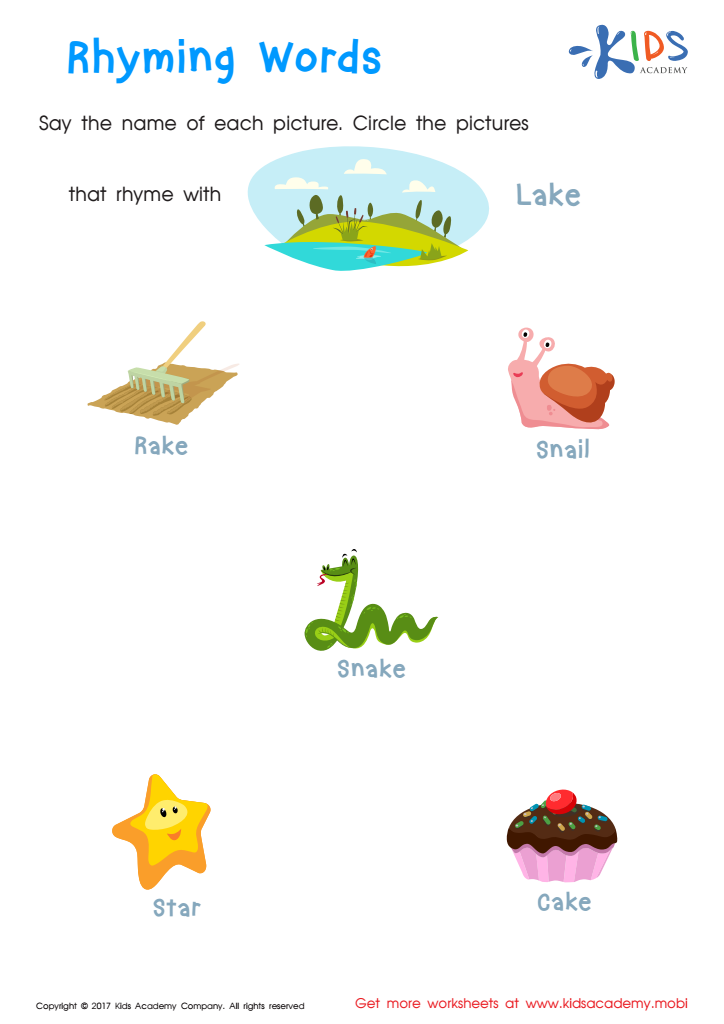
Rhyming Words Rhyming Worksheet
 Assign to My Students
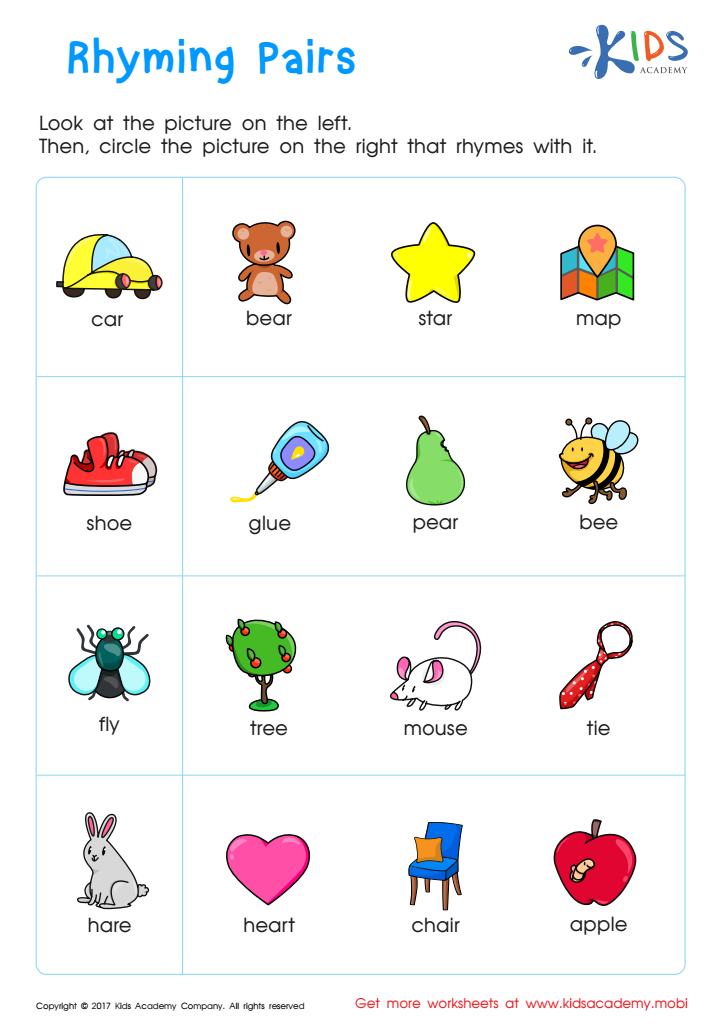
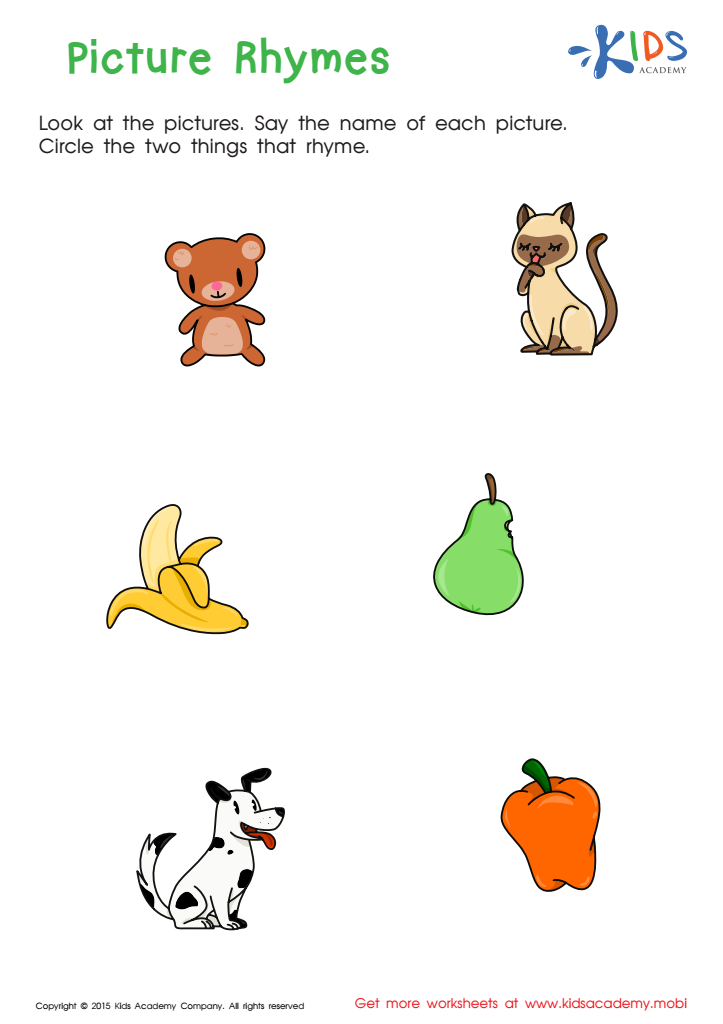
First Words: Picture Rhymes Worksheet
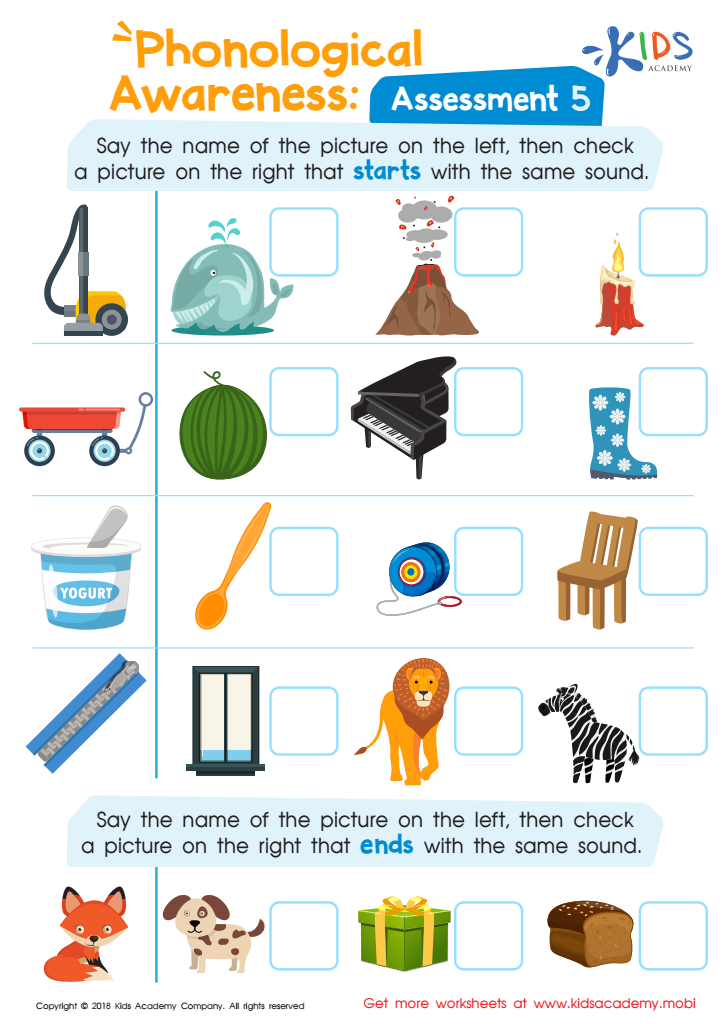
Phonological Awareness: Assessment 5 Worksheet







Rhyming skills are a crucial part of early literacy development for 3-year-olds, and both parents and teachers should prioritize this aspect of learning. Rhyming helps children develop phonemic awareness, which is the ability to recognize and manipulate the sounds in words. This skill is foundational for reading and writing as it promotes an understanding of how letters combine to form sounds, thus aiding in future decoding abilities.
Engaging children in rhyming activities supports vocabulary expansion and comprehension. When children hear and produce rhymes, they learn new words and their meanings in context, making learning more engaging and memorable. Additionally, rhyming can spark creativity and enhance language development, aiding in storytelling and expressive skills.
Furthermore, rhyming contributes to cognitive skills and memory. Recognizing patterns in rhyme encourages analytical thinking and helps children anticipate word endings, which improves phonetic processing. Parents and teachers can incorporate rhyming through songs, nursery rhymes, and interactive games to create a fun learning atmosphere.
Ultimately, fostering rhyming skills not only makes early literacy enjoyable but also lays a strong foundation for future reading success, boosting children's confidence in their language abilities as they enter school readiness.







