Boost your toddler's counting abilities with our engaging counting proficiency worksheets for 3-year-olds! Perfectly designed for little learners, these colorful and interactive worksheets make mastering numbers fun and easy. From basic number recognition to simple counting exercises, each sheet is tailored to encourage independent learning and reinforce essential early math skills. Our printable resources feature cute illustrations and age-appropriate activities to keep young minds captivated. Ideal for both parents and educators, these worksheets offer the perfect blend of education and entertainment. Watch as your child joyfully embarks on their numerical journey with confidence and enthusiasm!
Check out this FREE "Counting proficiency" Trial Lesson for age 3!

Solve Tricky Number Situations by Drawing (3 numbers) - Part 1

Favorites
With answer key
Interactive
  • 3
  • Counting proficiency
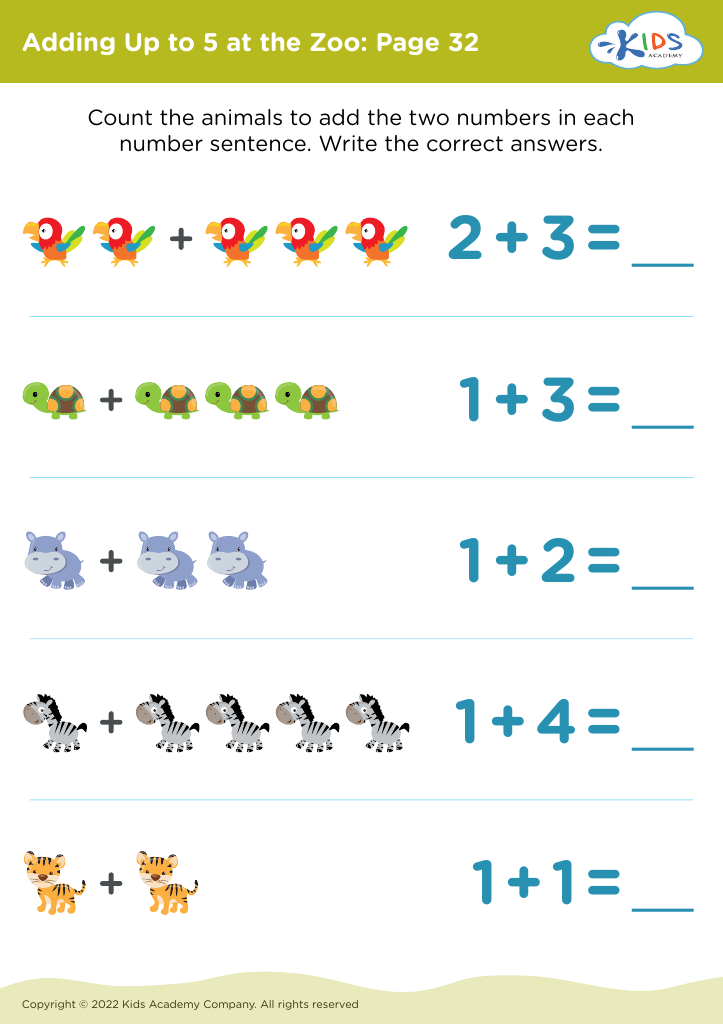
Adding Up to 5 at the Zoo: Page 32
Worksheet
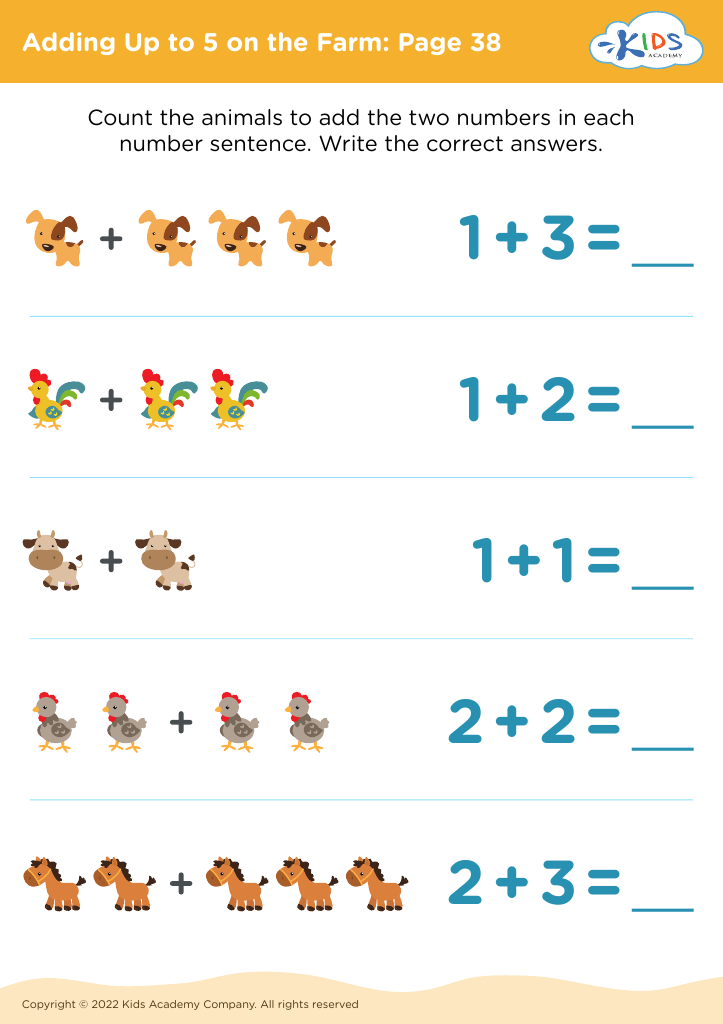
Adding Up to 5 on the Farm: Page 38
Worksheet
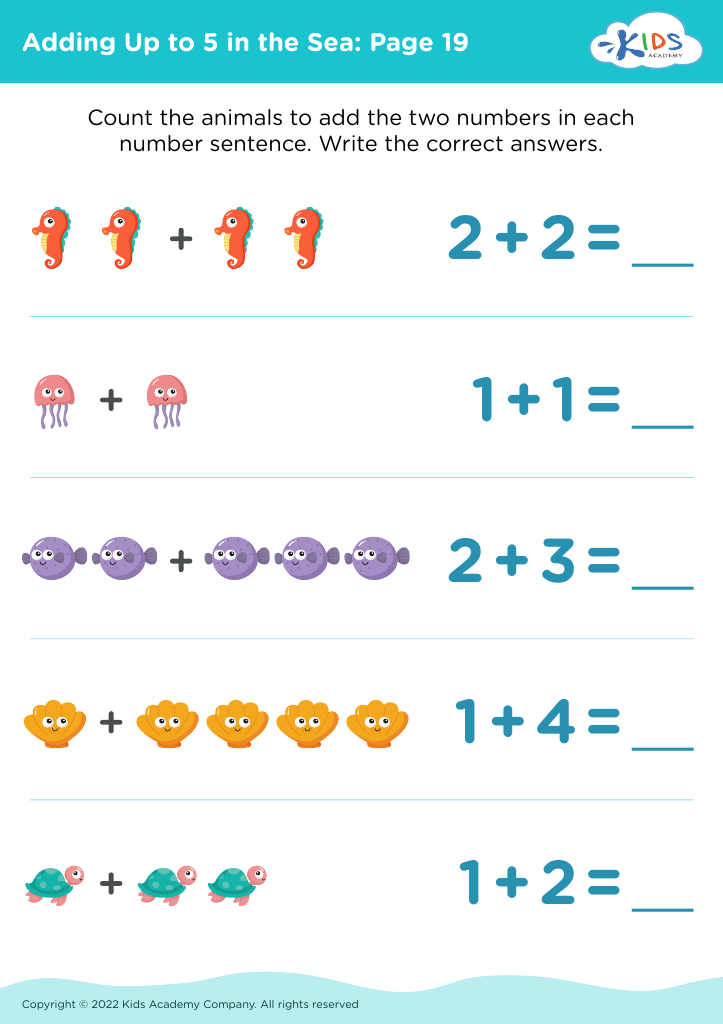
Adding Up to 5 in the Sea: Page 19
Worksheet
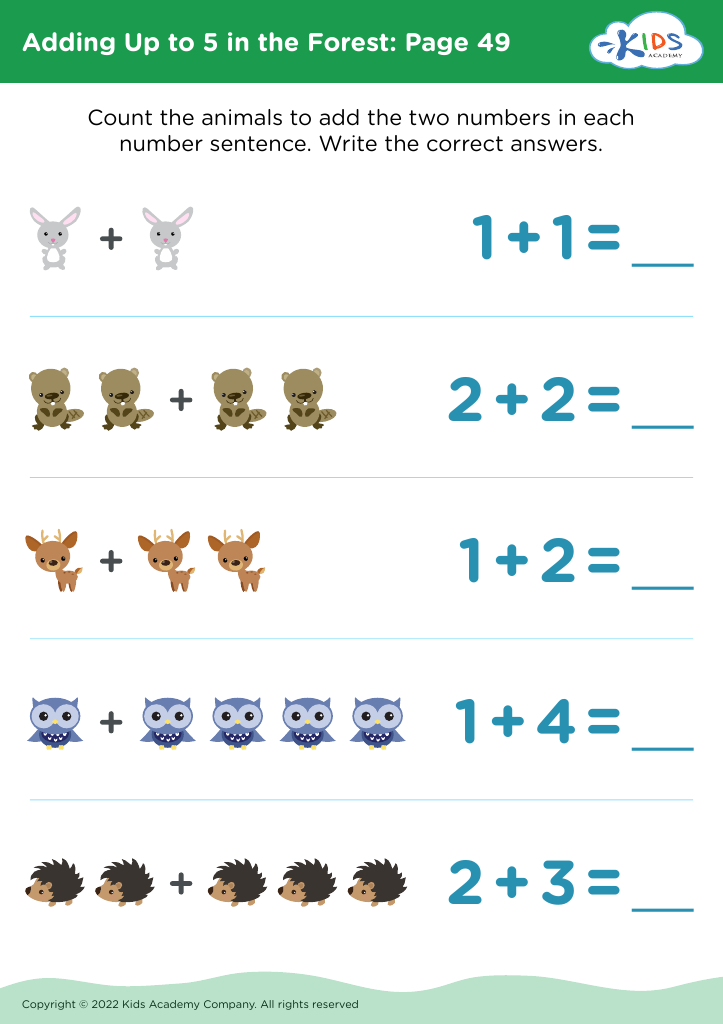
Adding Up to 5 in the Forest: Page 49
Worksheet
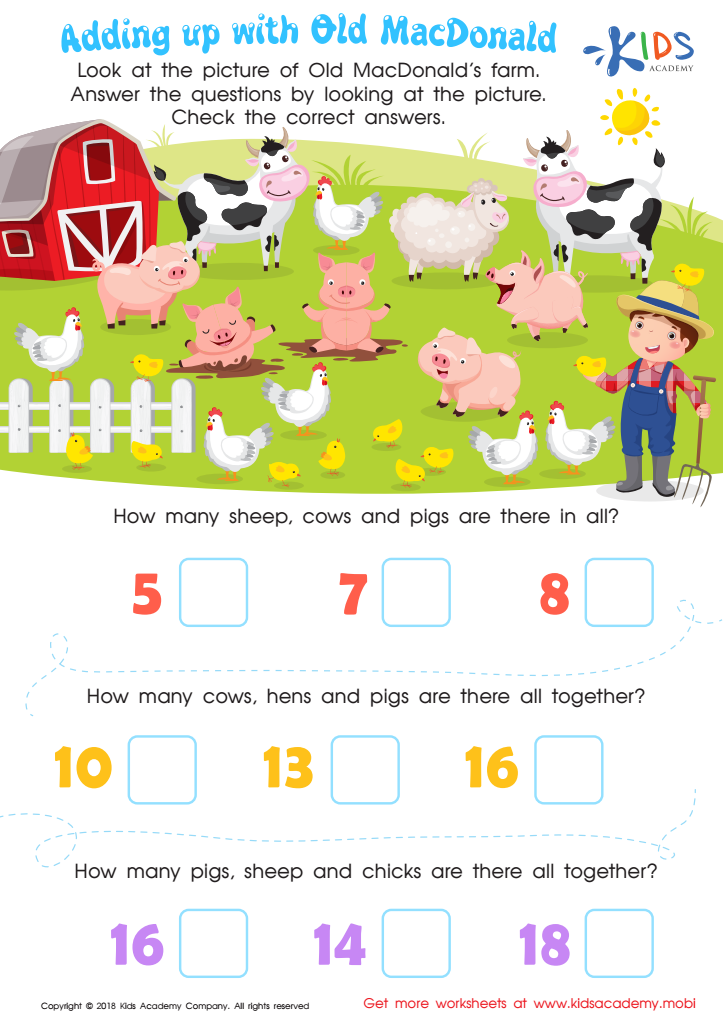
Adding Up with Old MacDonald Worksheet

Adding Up with Old MacDonald Worksheet

Old MacDonald needs help counting his animals! Give your little math whiz a fun challenge with a free PDF worksheet. They'll love counting the animals and doing basic addition with two or three addends. Who knew math could be so much fun on the farm?
Adding Up with Old MacDonald Worksheet
Worksheet
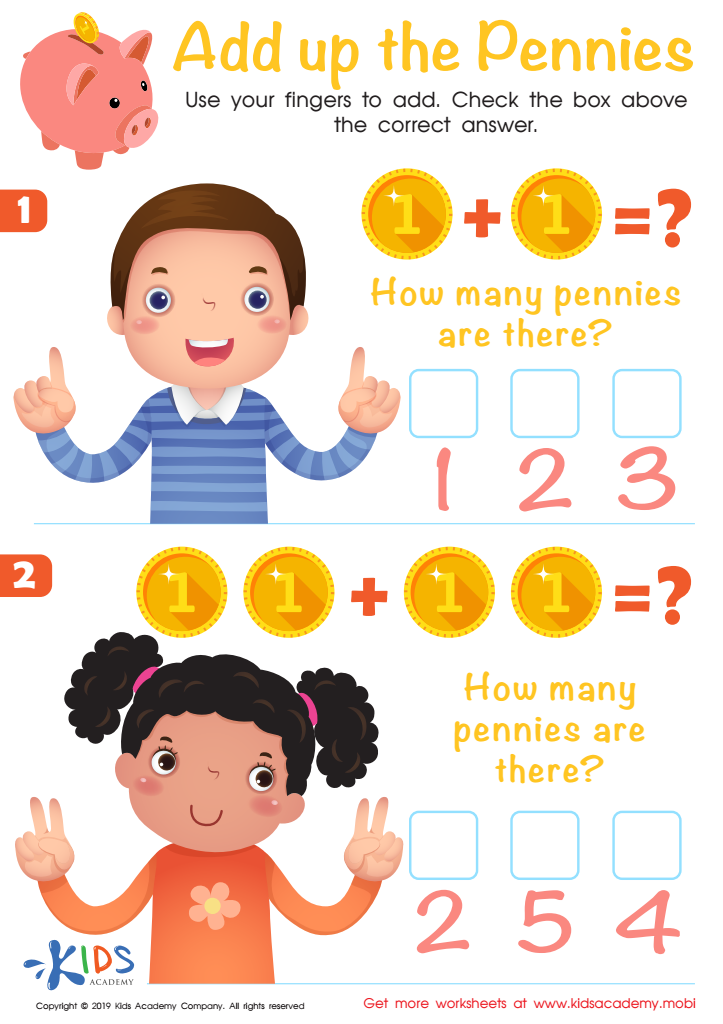
Add up the Pennies Worksheet

Add up the Pennies Worksheet

Help your kids ace their math skills with this simple worksheet! You can guide them to use their fingers to add numbers and then check the box above the correct answer. With practice and your support, they can become faster and better at adding numbers. No sweating required!
Add up the Pennies Worksheet
Worksheet
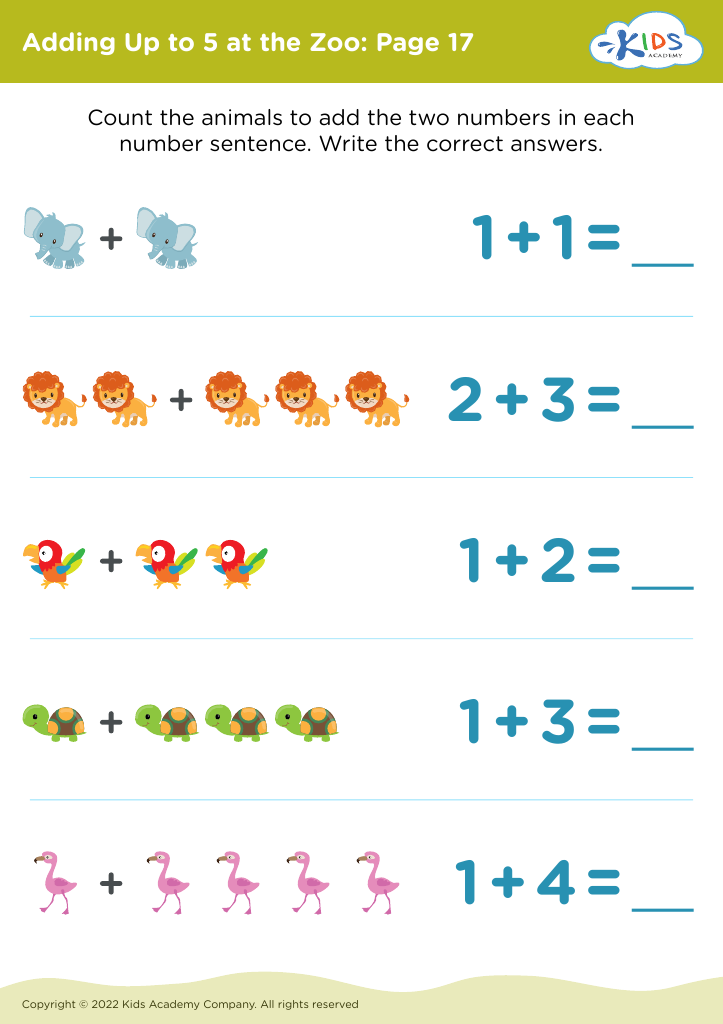
Adding Up to 5 at the Zoo: Page 17
Worksheet
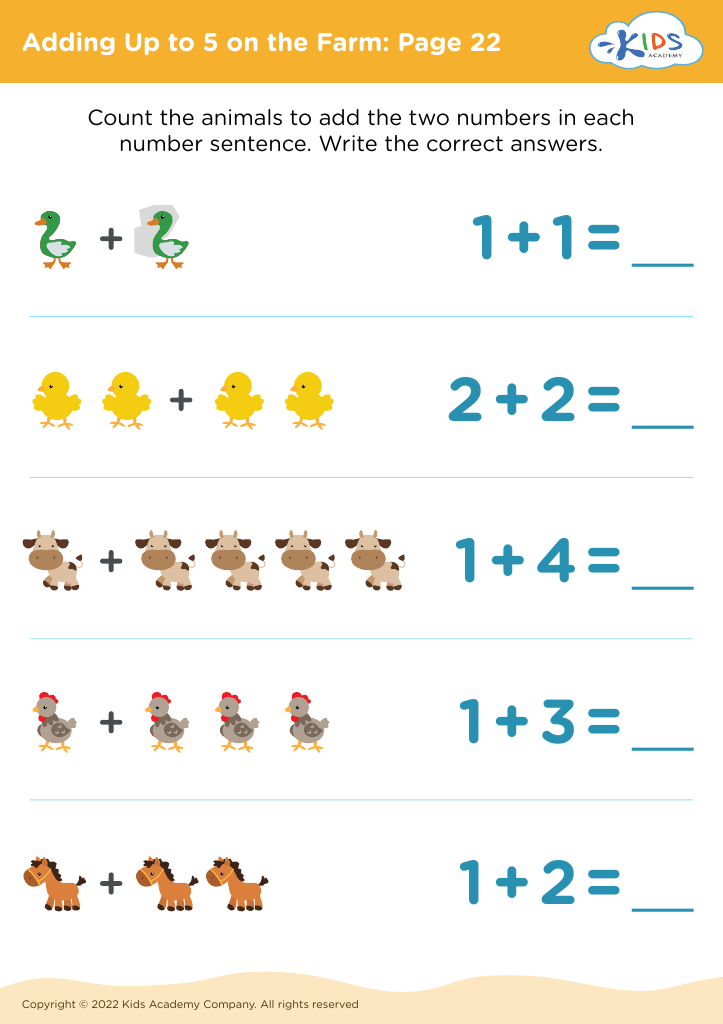
Adding Up to 5 on the Farm: Page 22
Worksheet
Kindergarten Sorting Worksheet

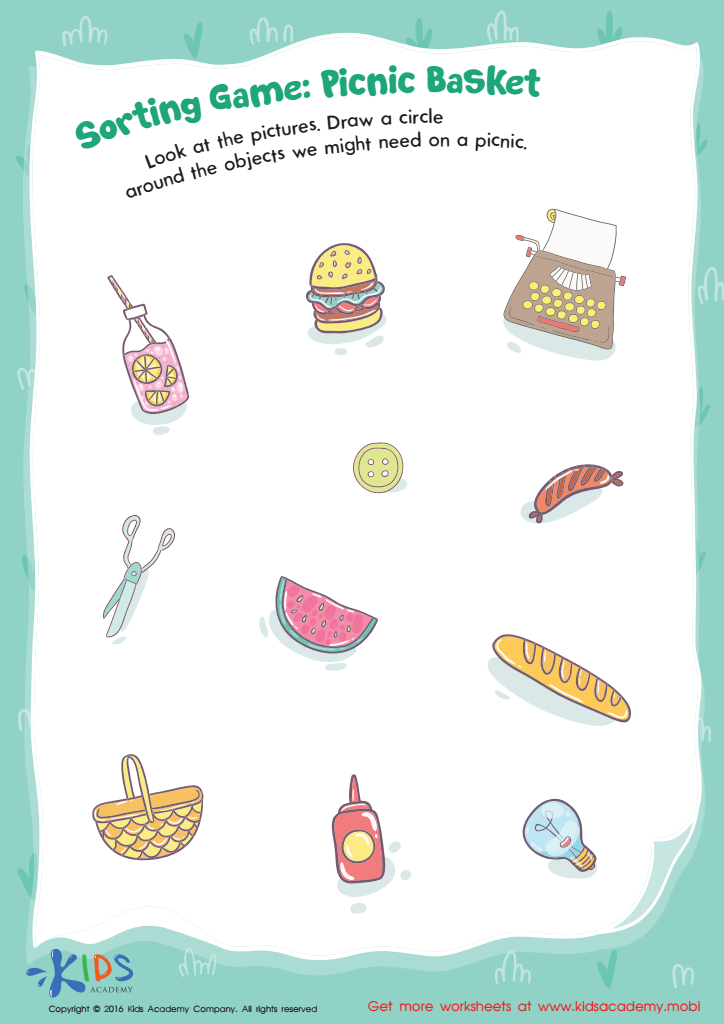
Picnic Basket Sorting Worksheet
Make picnic planning fun with this kindergarten sorting worksheet! Your child will sort everyday objects to find picnic supplies, and then use the worksheet to plan a real or pretend picnic. Extend the learning by discussing the event and its connection to the worksheet. Print out the other worksheets to sharpen sorting and classifying skills in an engaging way!
Picnic Basket Sorting Worksheet

Worksheet
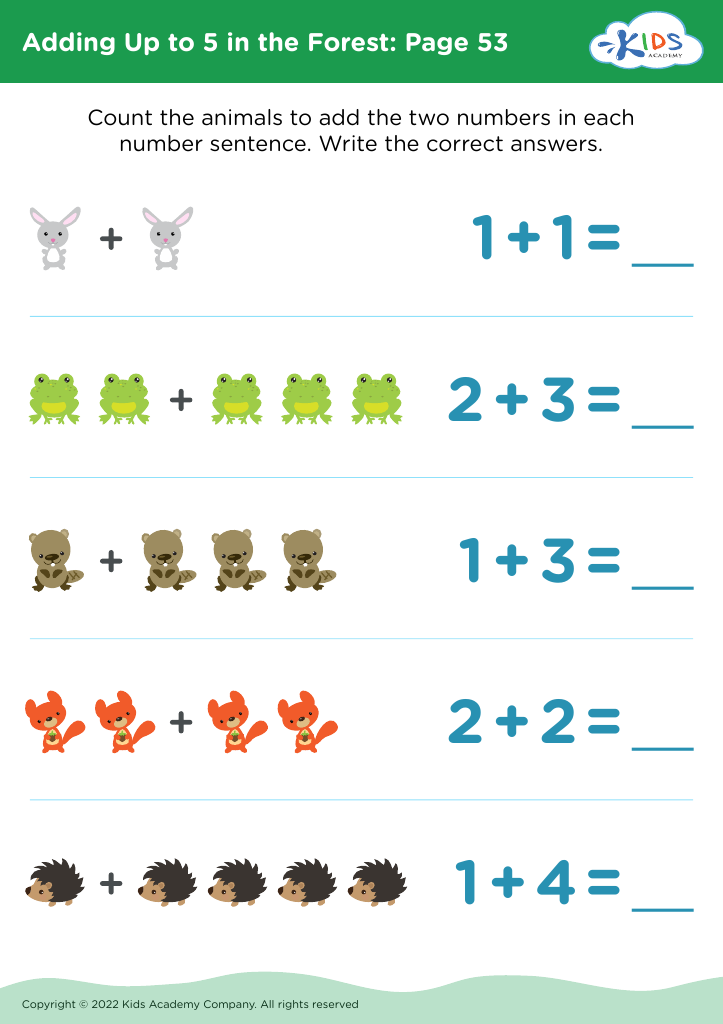
Adding Up to 5 in the Forest: Page 53
Worksheet
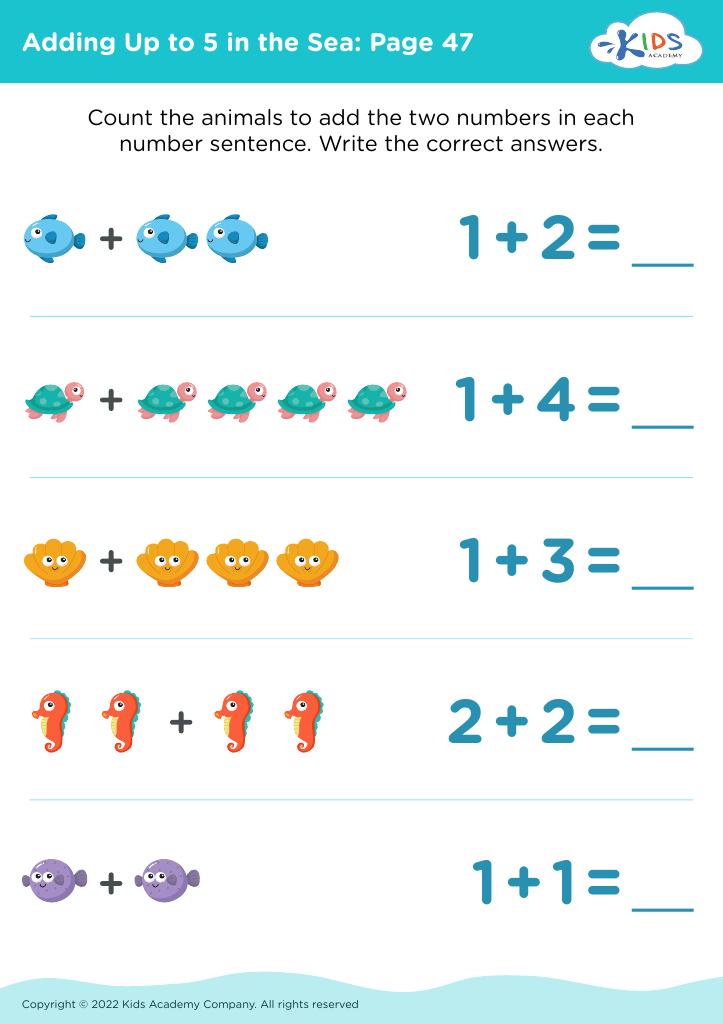
Adding Up to 5 in the Sea: Page 47
Worksheet
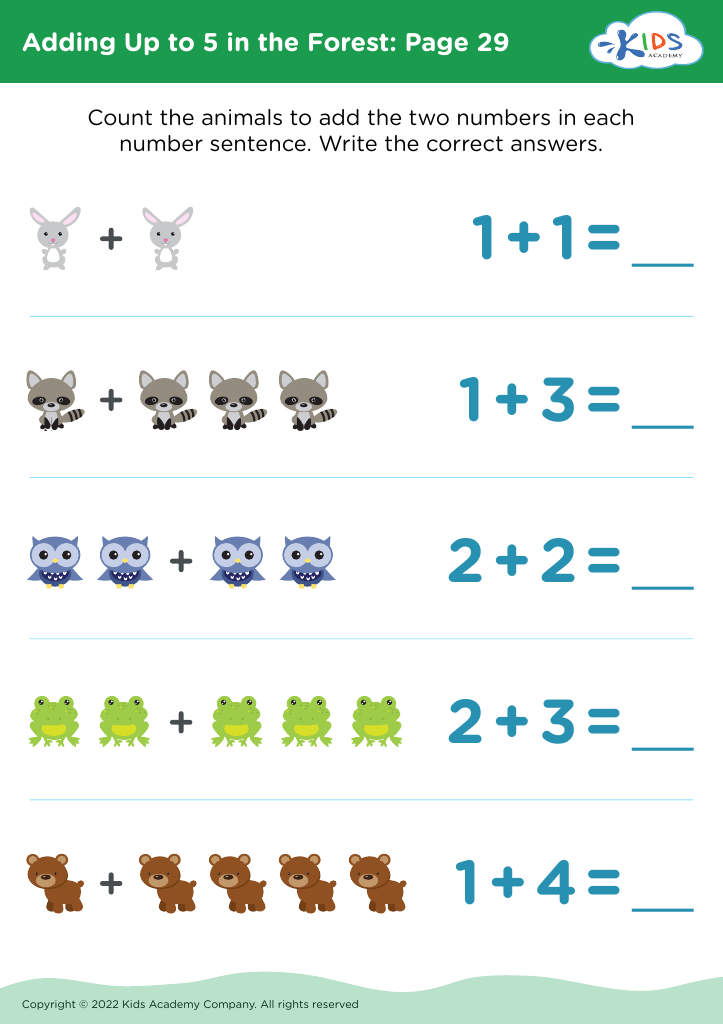
Adding Up to 5 in the Forest: Page 29
Worksheet


Counting proficiency in 3-year-olds is crucial for their overall cognitive and academic development. This skill is a foundational aspect of early numeracy, which underpins more complex mathematical concepts and reasoning they will encounter in school. When parents and teachers focus on counting proficiency, they are essentially nurturing a child's ability to understand numbers, which is a core component of math literacy.

Early counting helps children grasp the concept of quantity, order, and patterns, which are vital for higher-order math skills. It also contributes significantly to developing problem-solving skills and logical thinking. By mastering counting, children gain confidence and are more comfortable moving on to more challenging tasks, leading to a positive feedback loop in learning.

Additionally, counting skills are closely linked to language development. As children learn to articulate numbers and sequences, they improve their vocabulary and language structure, benefiting their overall communication abilities.

Incorporating counting activities enhances attention to detail and memory, essential for both academic achievement and everyday life skills. Therefore, fostering counting proficiency isn't merely about learning numbers; it sets the stage for a lifetime of learning and intellectual growth, making it a priority for both parents and educators.