Visual Learning Adding in the Sea Worksheets for 3-Year-Olds
18 filtered results
-
From - To
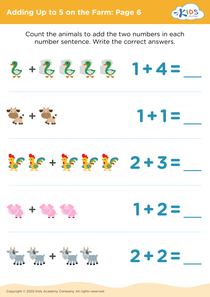
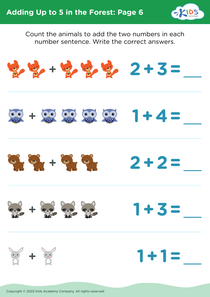
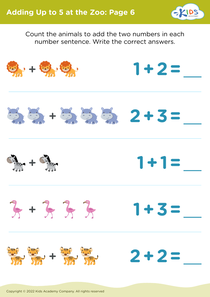
Discover our engaging "Visual Learning Adding in the Sea Worksheets" designed specifically for 3-year-olds! These vibrant worksheets incorporate playful ocean themes to captivate young learners while introducing fundamental math concepts. Packed with visual elements, each activity encourages children to explore addition through colorful sea creatures, fostering both number recognition and counting skills. Ideal for parents and educators alike, these resources enhance early literacy and math understanding in a fun, interactive way. Make learning playful and effective as your little ones dive into a sea of knowledge with our specialized worksheets, perfect for developing essential skills early on. Explore the underwater adventure today!
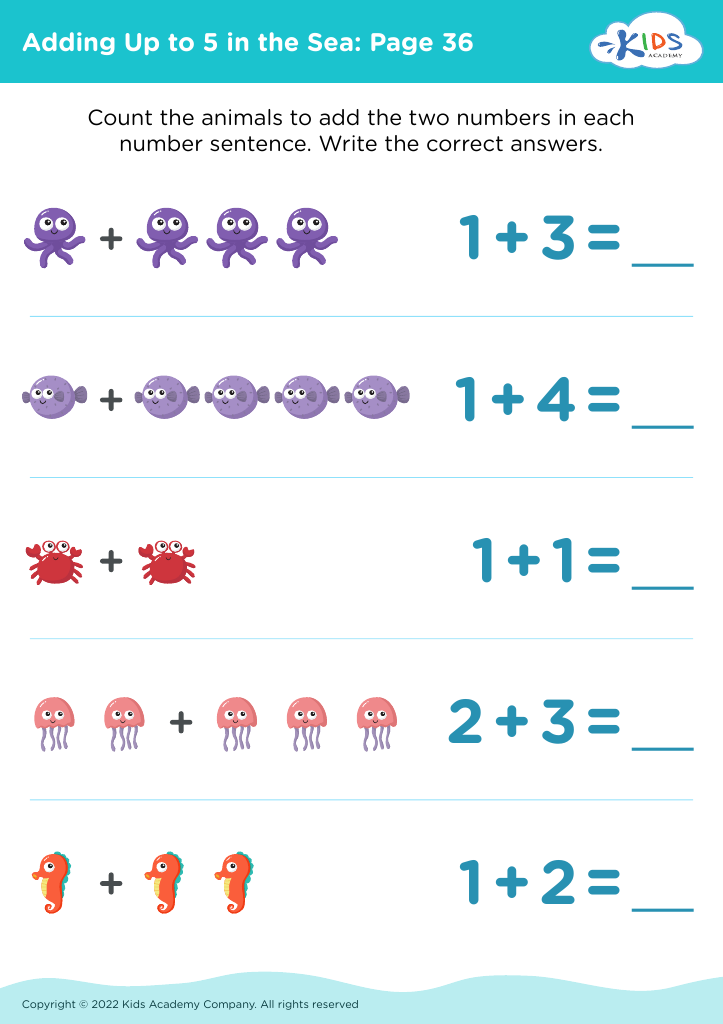
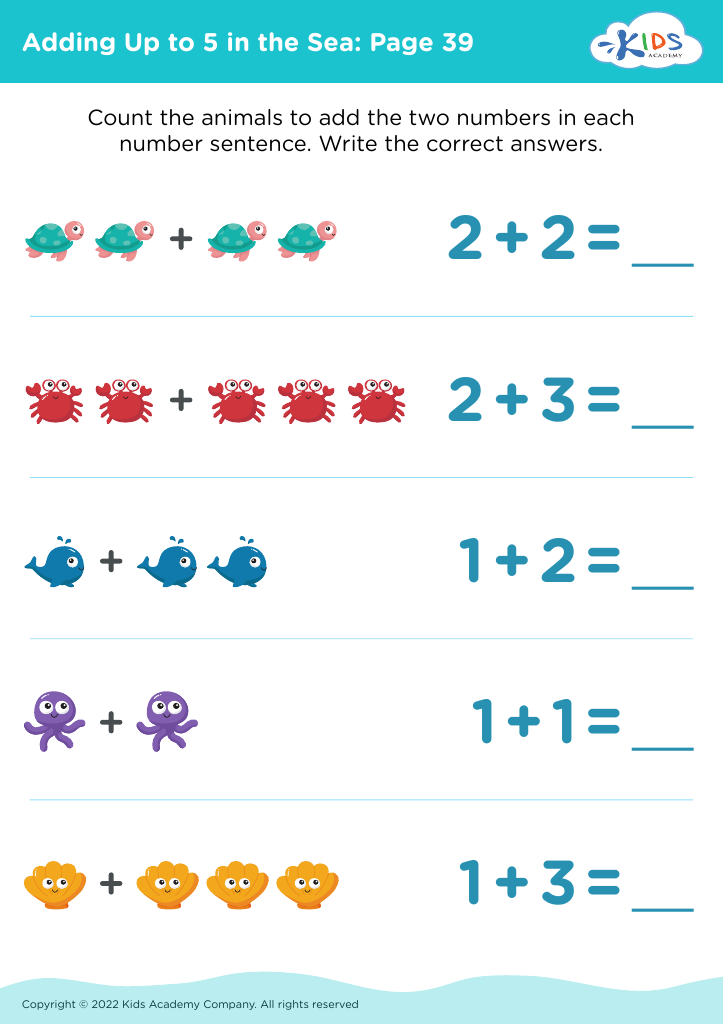
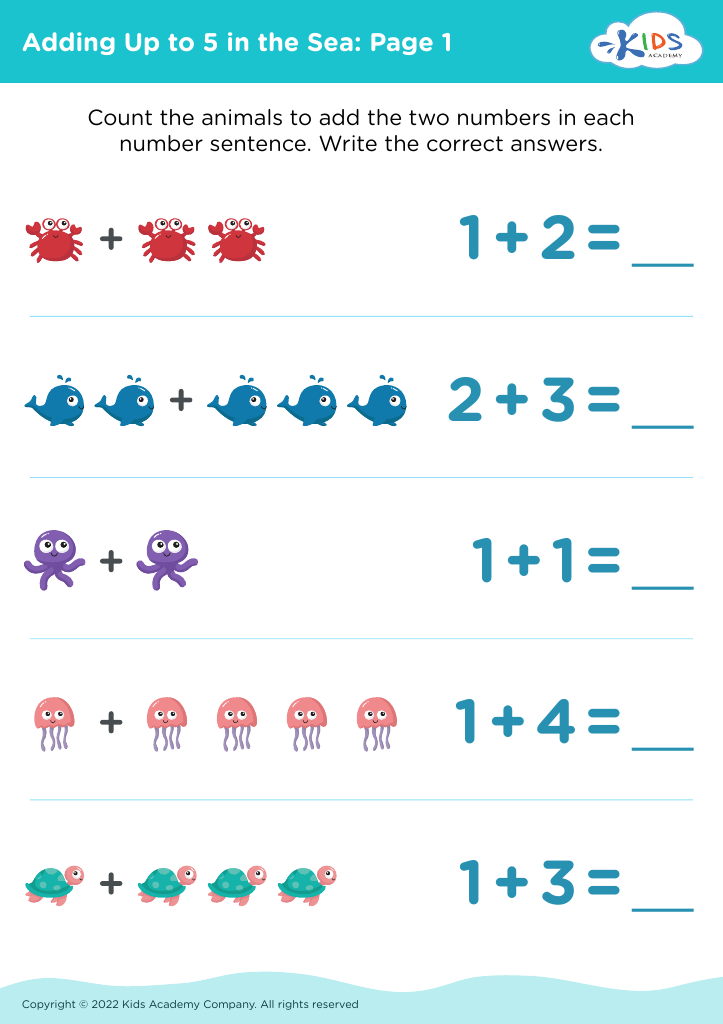
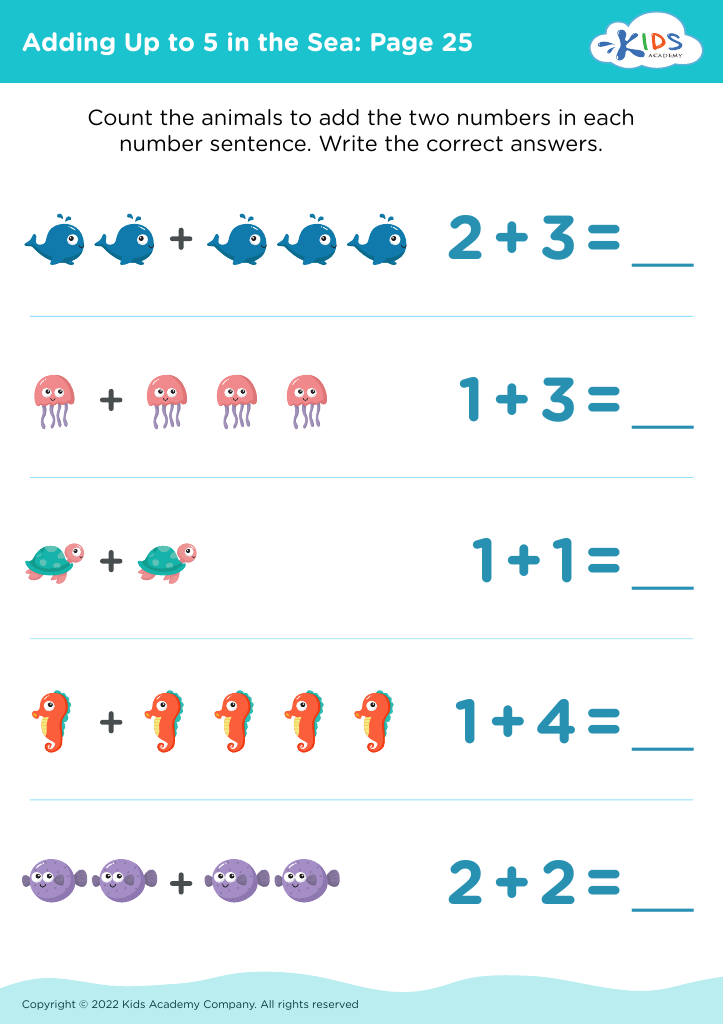
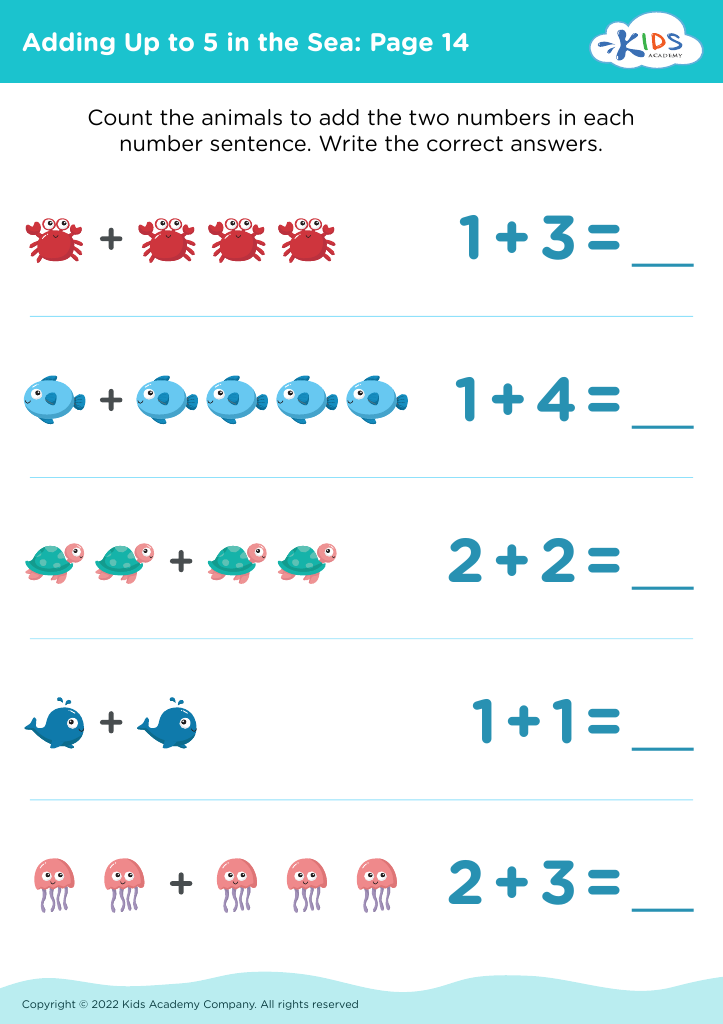
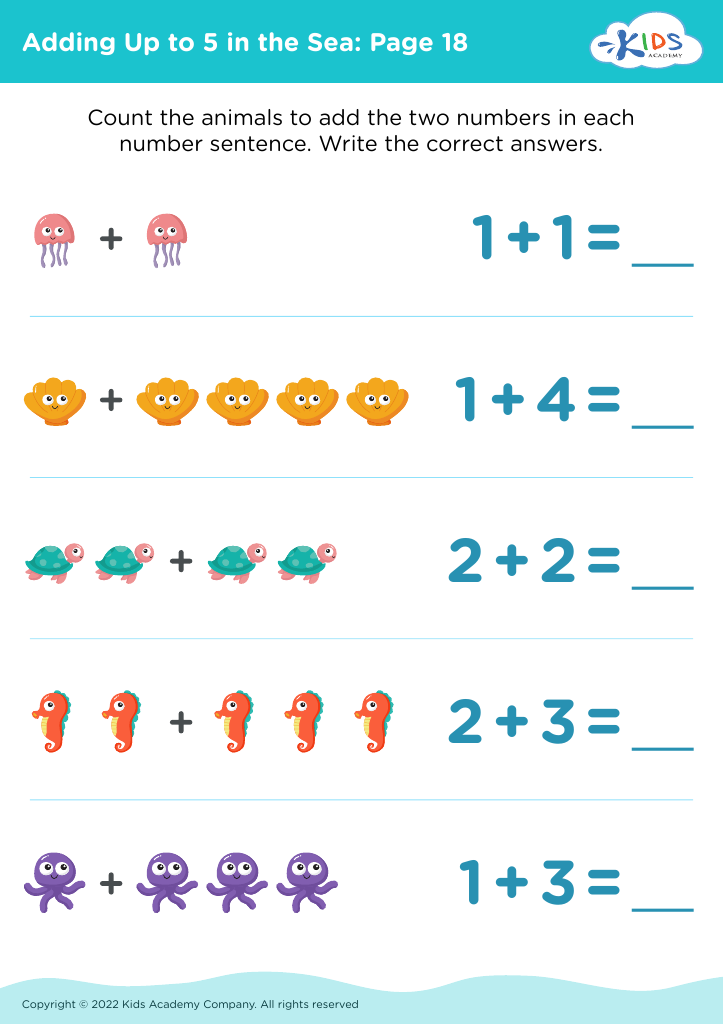
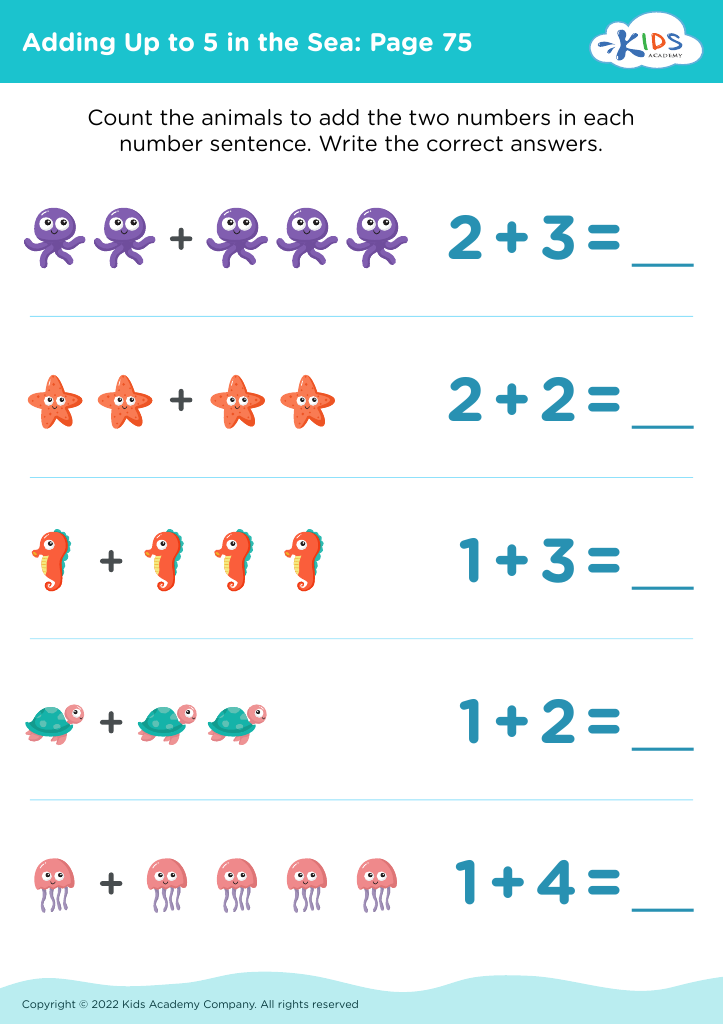
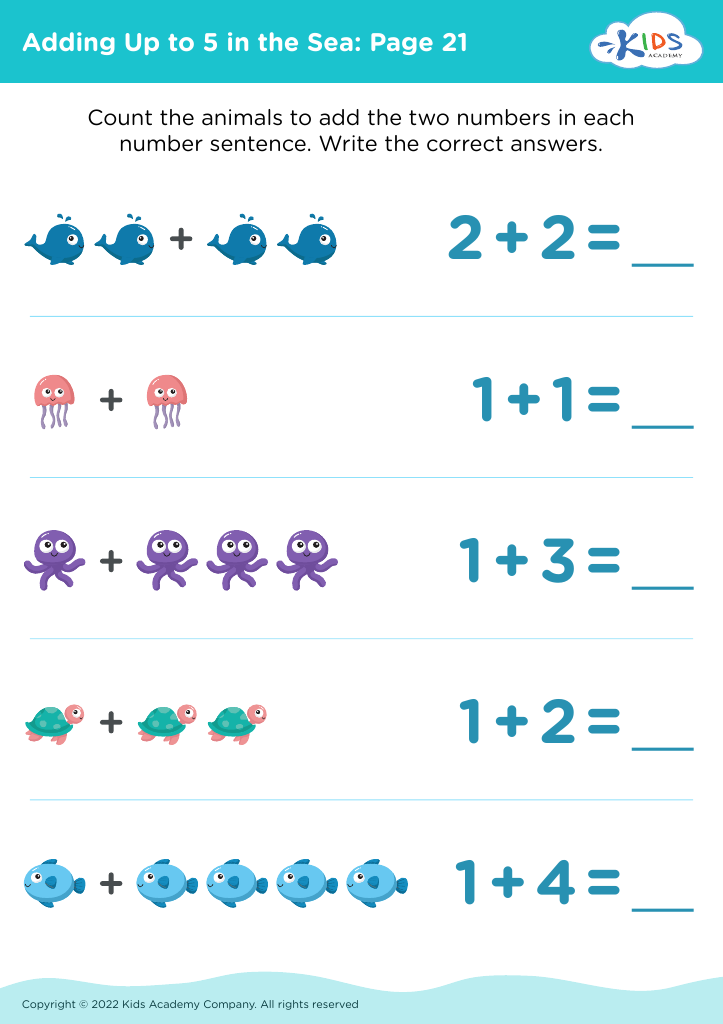
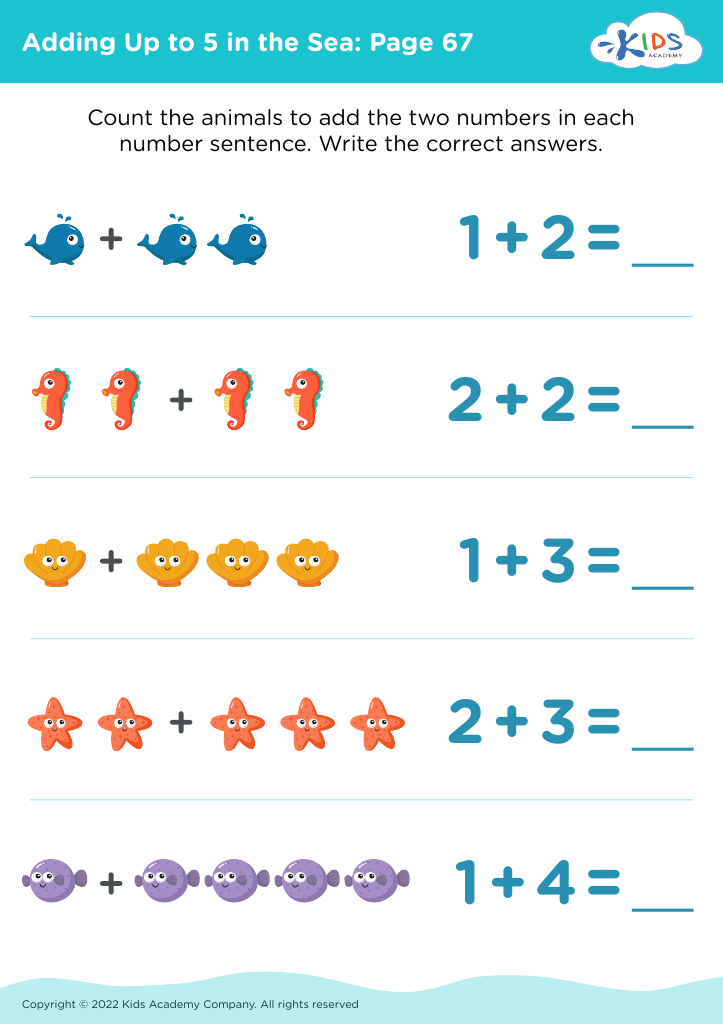
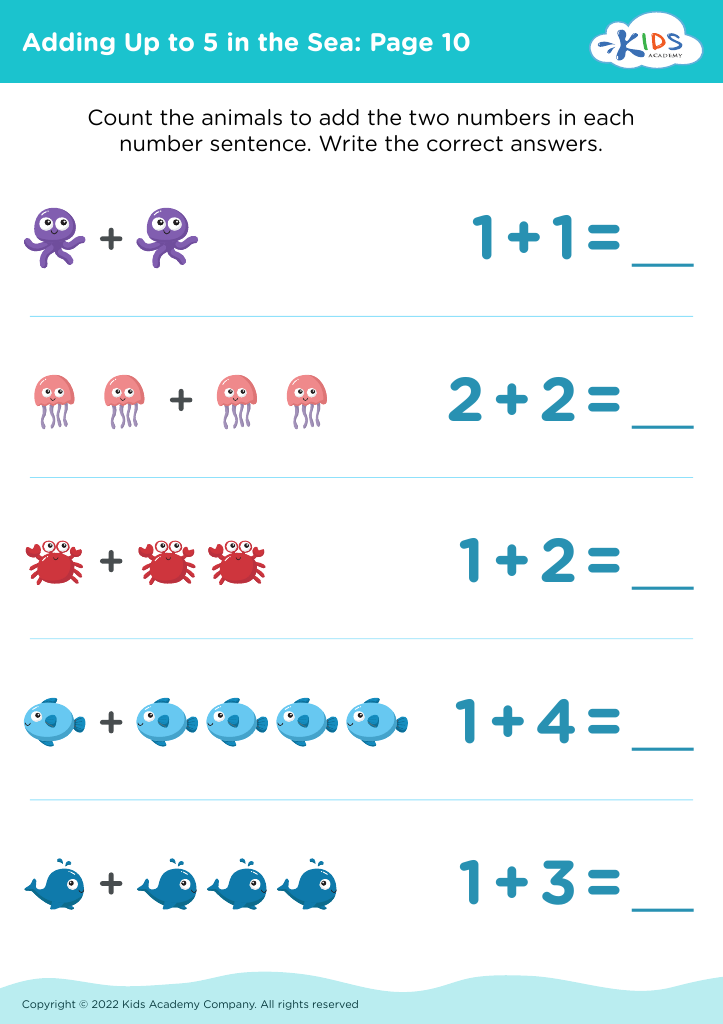
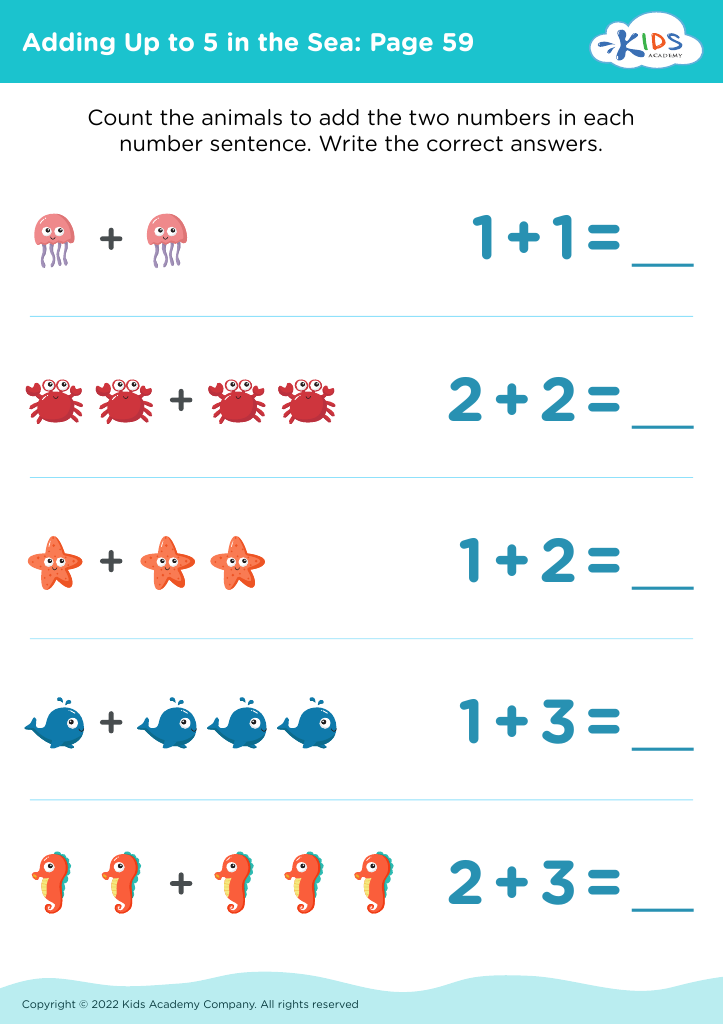
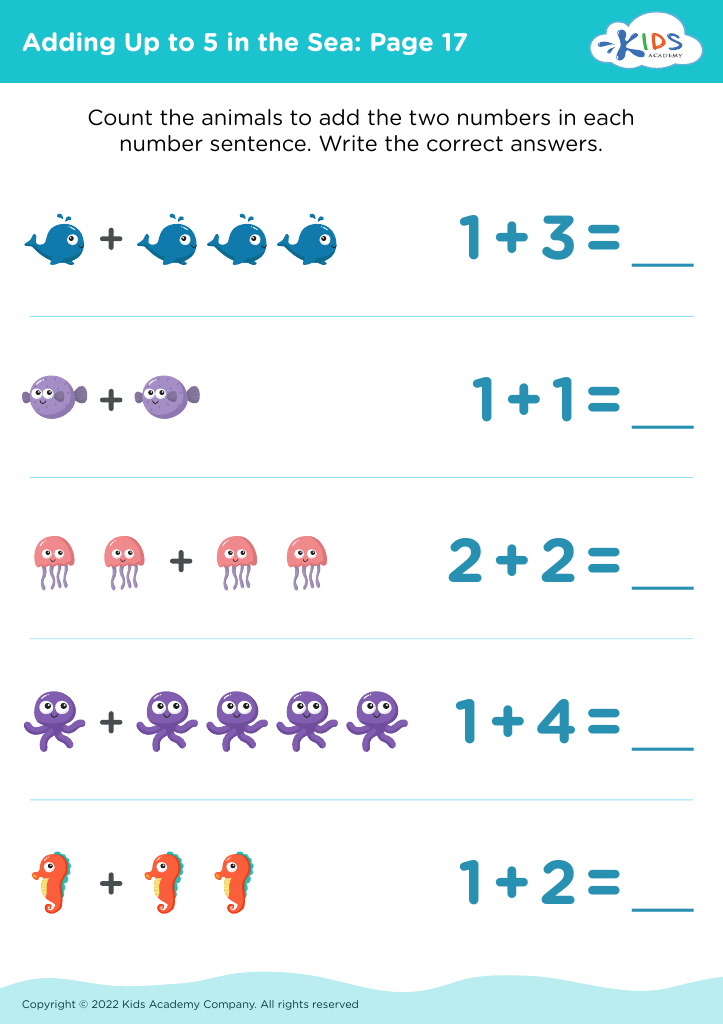
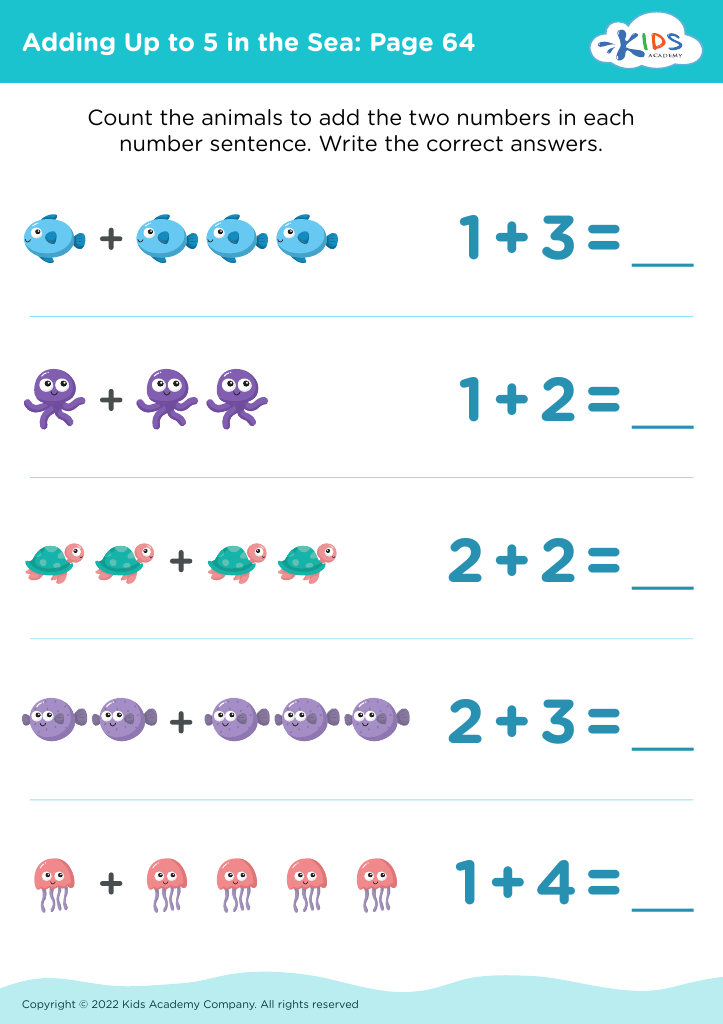
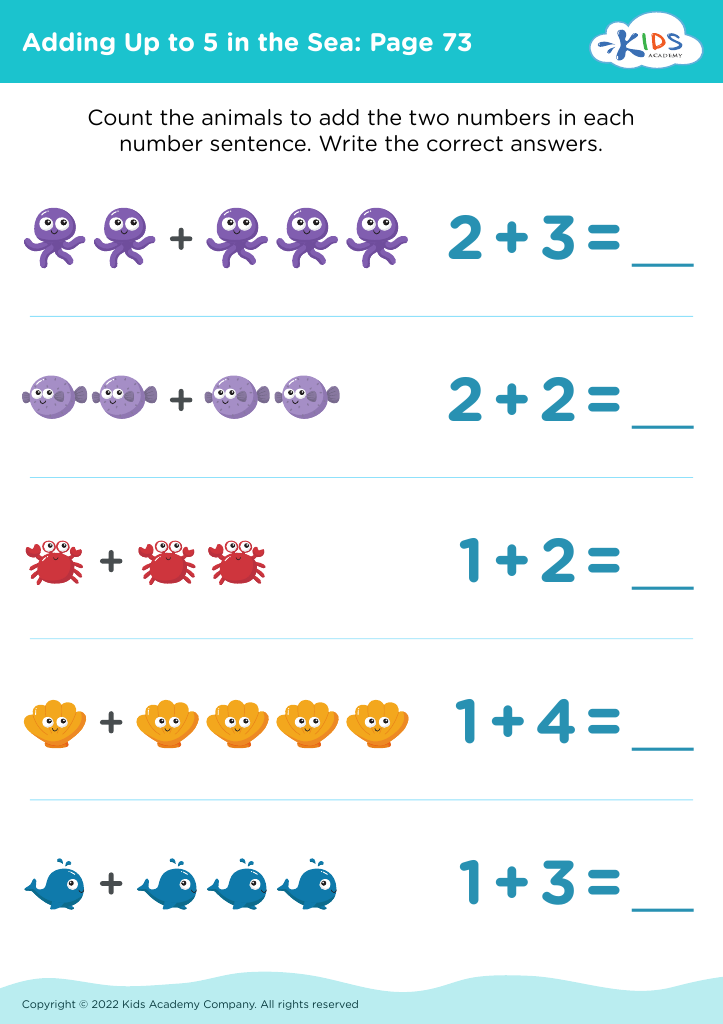
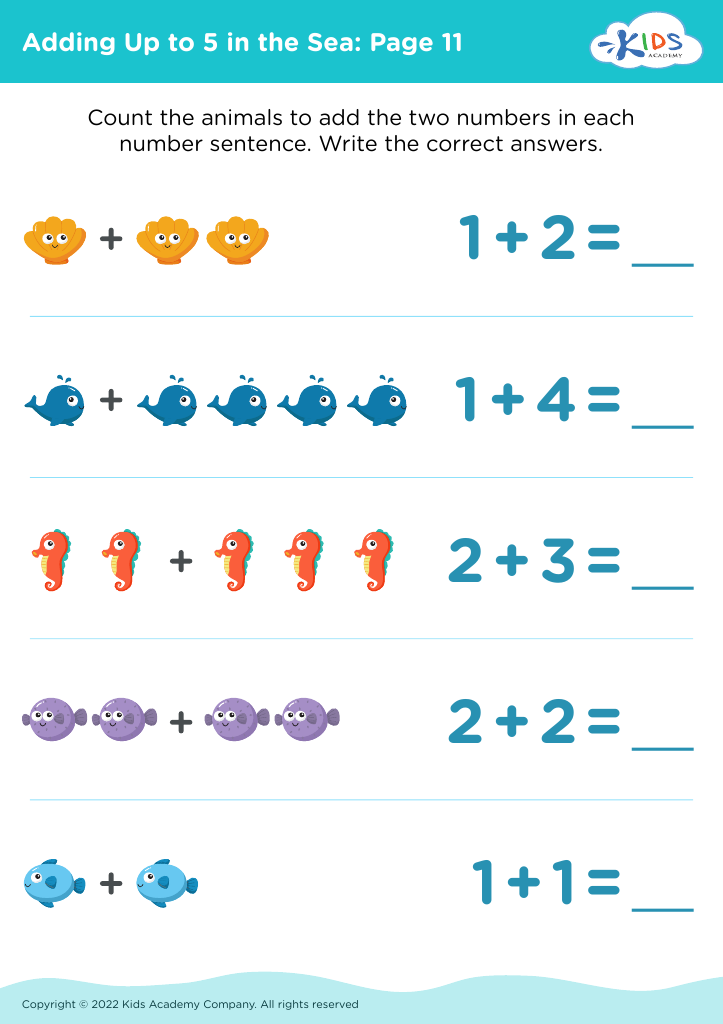
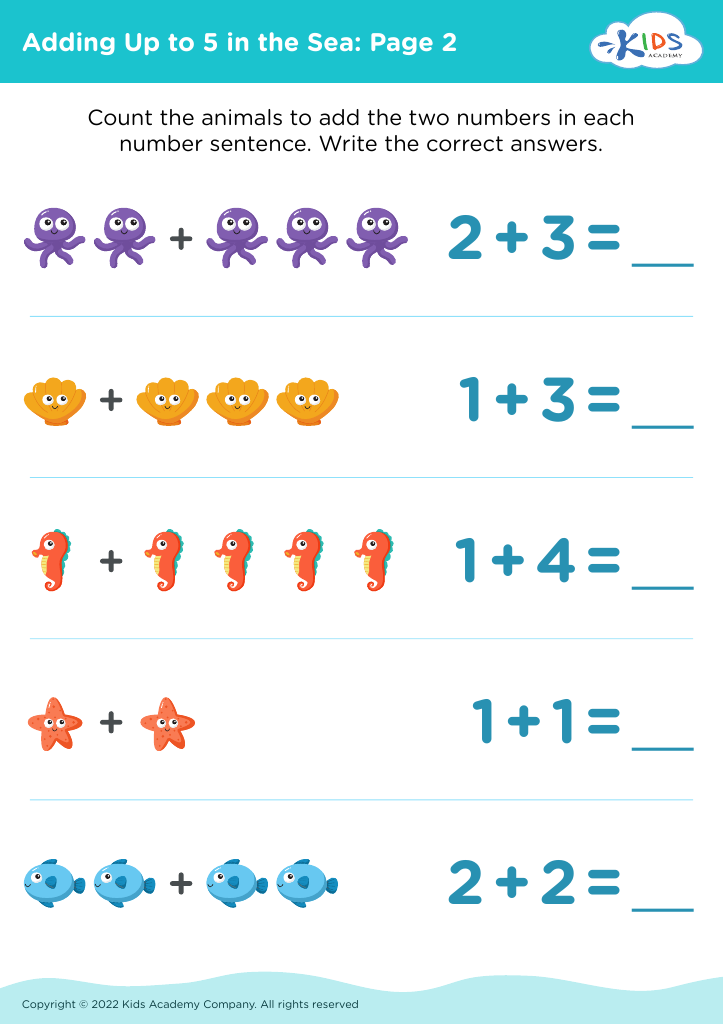
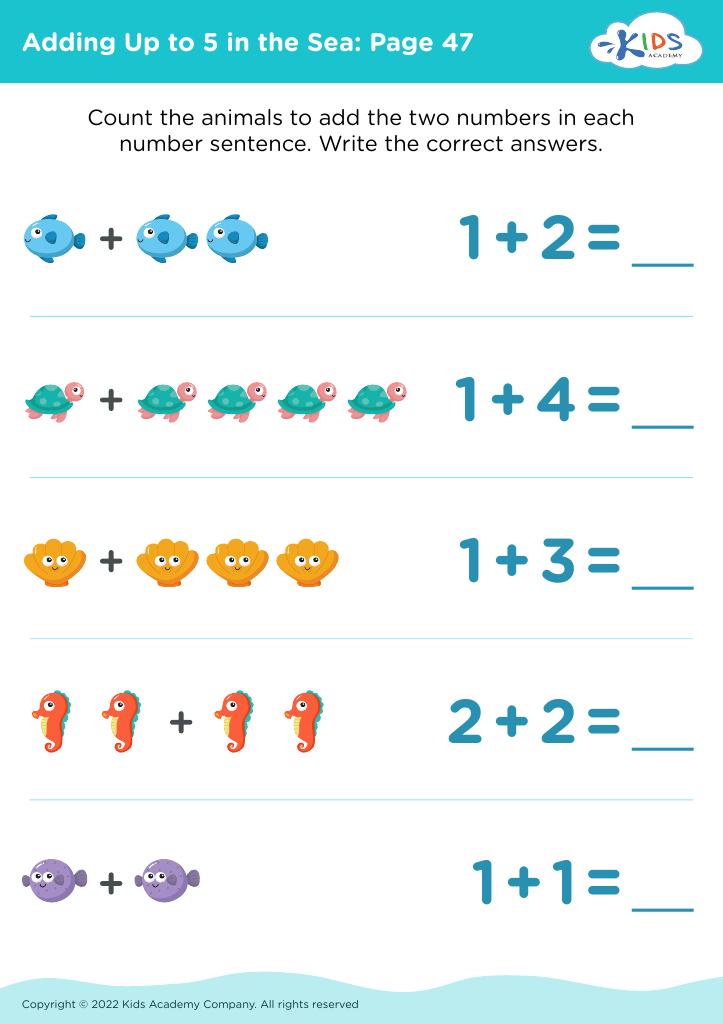
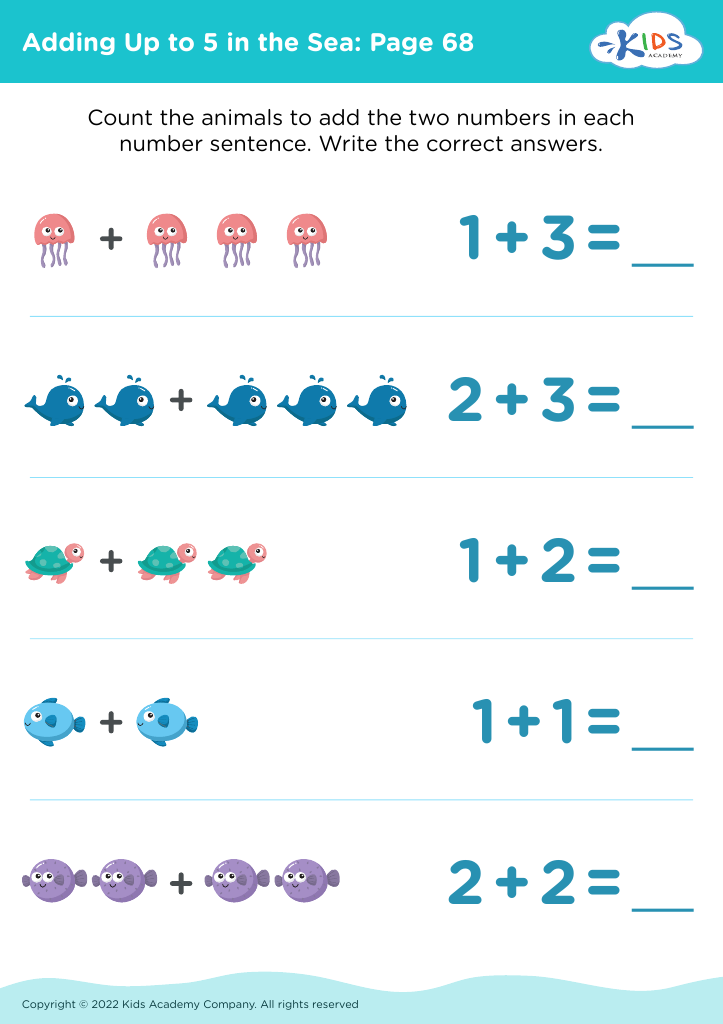



Visual learning is a crucial educational approach for 3-year-olds, as it caters directly to their developmental stage. At this age, children are naturally curious and inclined to explore their environment through their senses, making visual stimuli not just beneficial, but essential for their cognitive growth. Incorporating visual learning activities, especially themed ones like "In the Sea," captivates their attention and encourages engagement through vibrant imagery, hands-on experiences, and imaginative play.
Sea-themed visuals like colorful fish, calming ocean waves, and interesting sea creatures can help children build vocabulary, understand concepts of diverse habitats, and spark their imaginative capabilities. Furthermore, through visual learning, children can improve their observation skills, enhance memory retention, and develop critical thinking abilities.
Parents and teachers who emphasize visual learning provide children with a solid foundation for later learning. This approach fosters creativity and helps them connect concepts in enjoyable ways. Moreover, visual learning activities promote social interactions, as children often collaborate, discuss, and share their observations about what they see. By caring about visual learning, parents and teachers positively influence young children's academic readiness and emotional development, ensuring they thrive both in and outside the classroom.