Check out this FREE Trial Lesson on Adding Up to 5 for age 3!

P

Favorites
With answer key
Interactive
  • 3
  • Visual Learning
  • Adding Up to 5
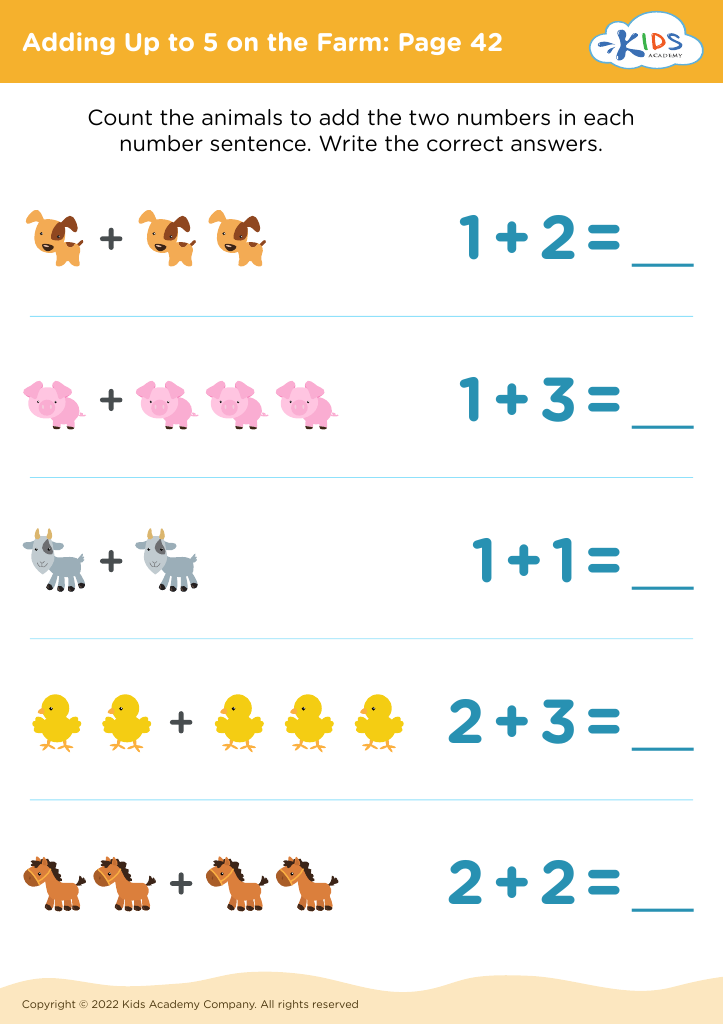
Adding Up to 5 on the Farm: Page 42
Worksheet
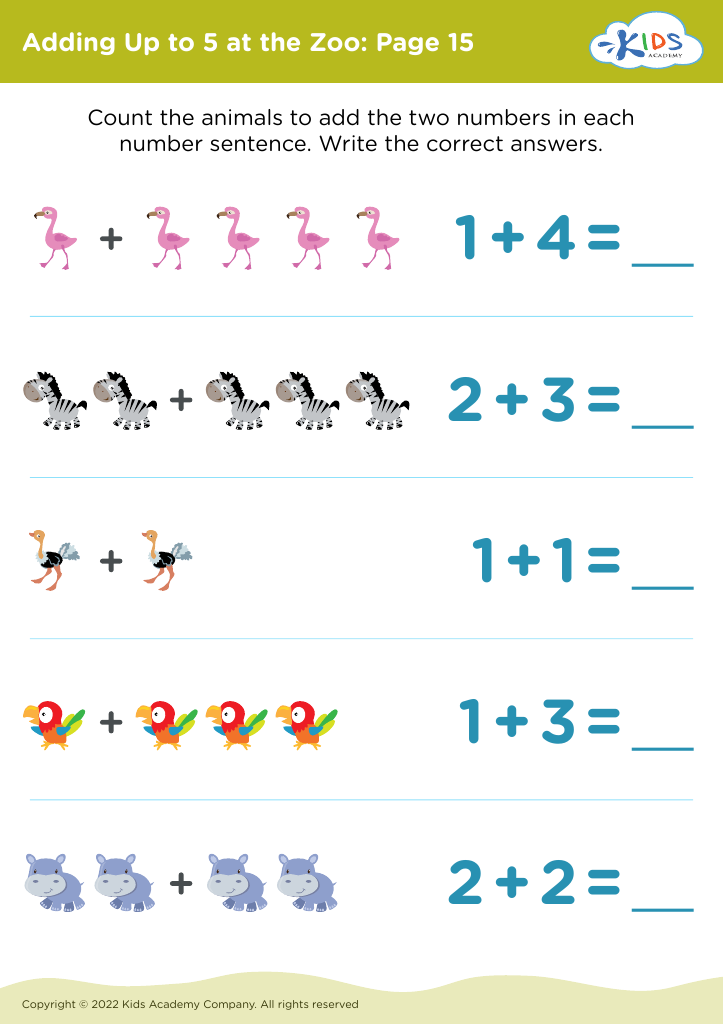
Adding Up to 5 at the Zoo: Page 15
Worksheet
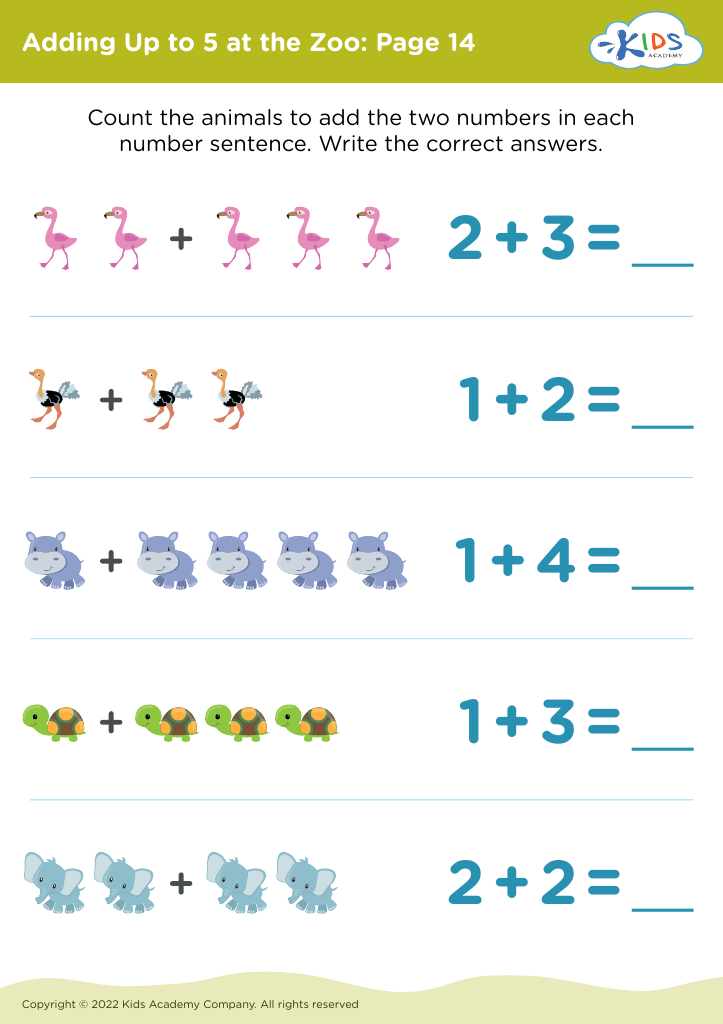
Adding Up to 5 at the Zoo: Page 14
Worksheet
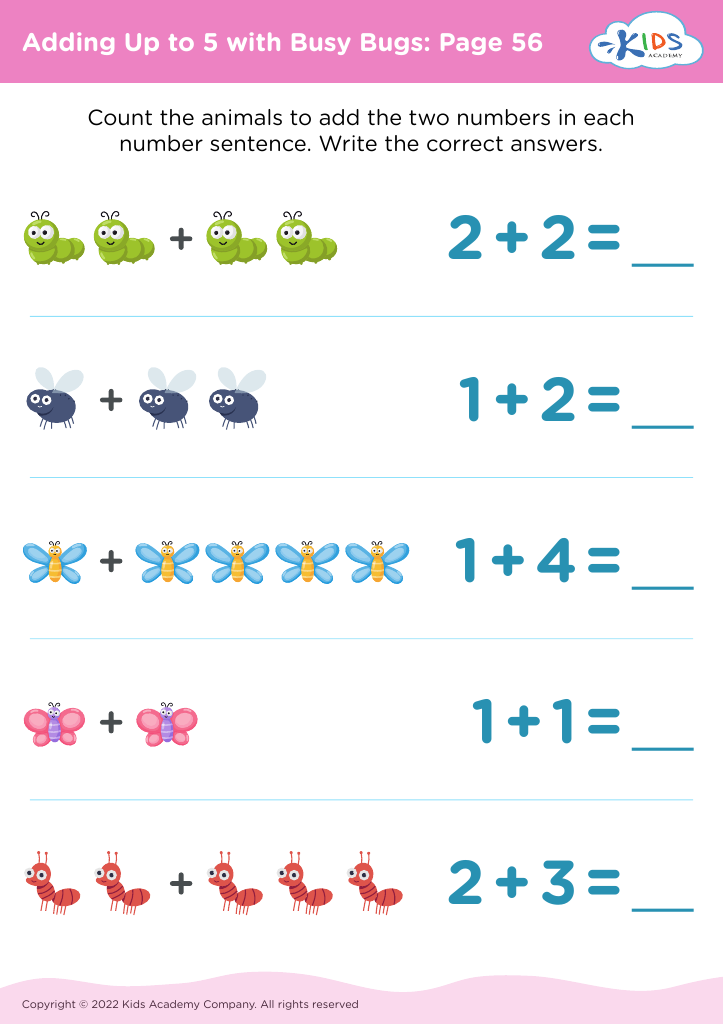
Adding Up to 5 with Busy Bugs: Page 56
Worksheet
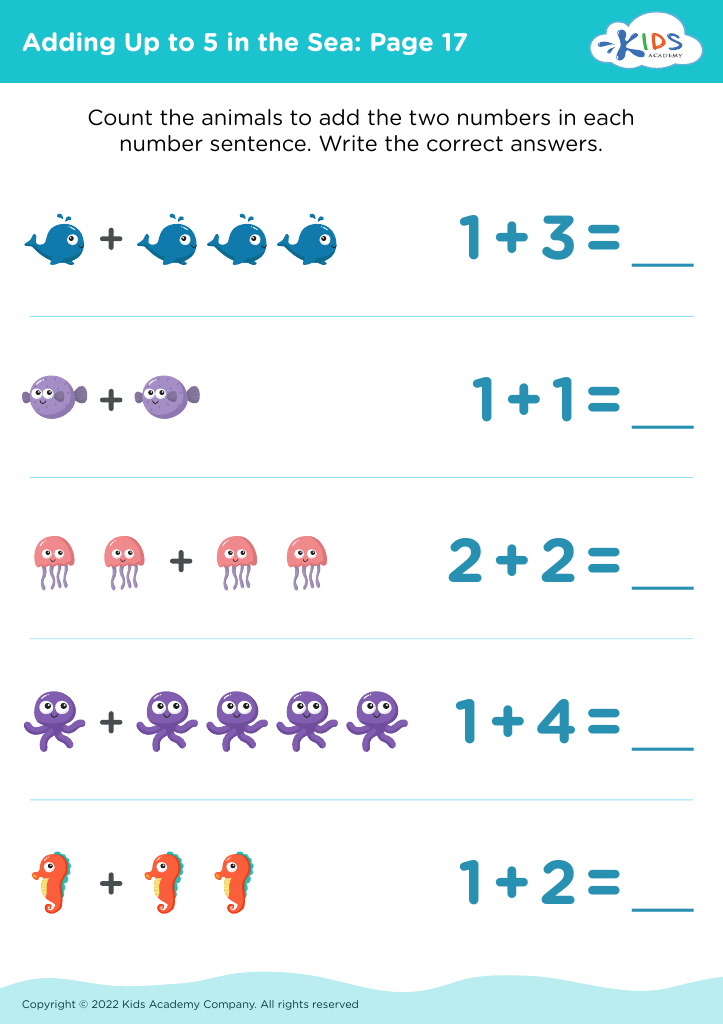
Adding Up to 5 in the Sea: Page 17
Worksheet
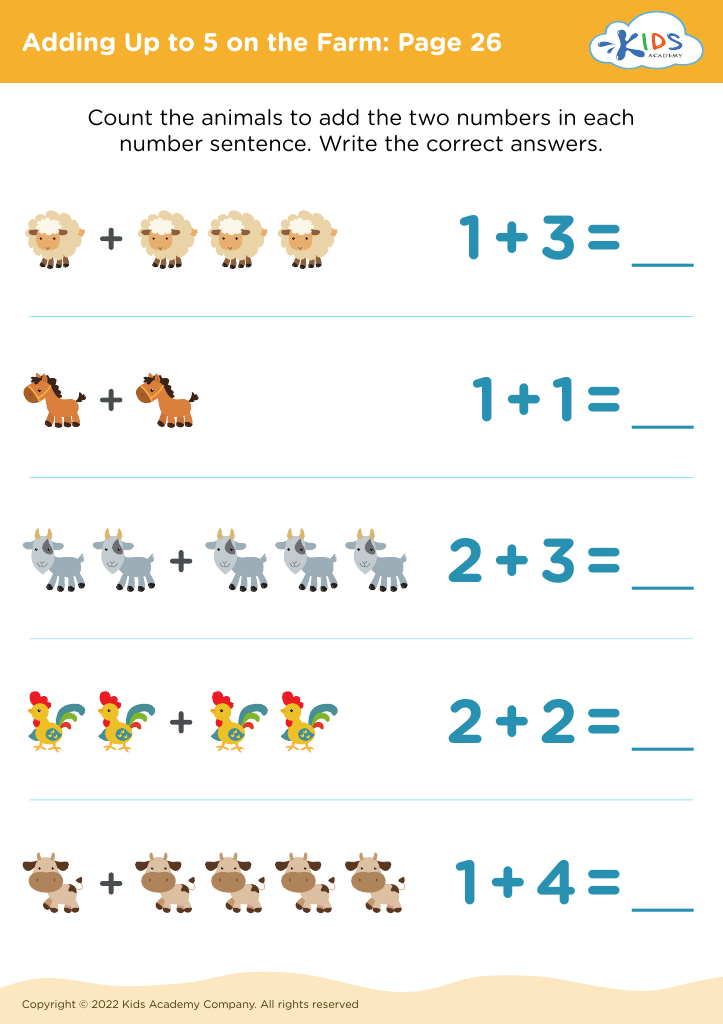
Adding Up to 5 on the Farm: Page 26
Worksheet
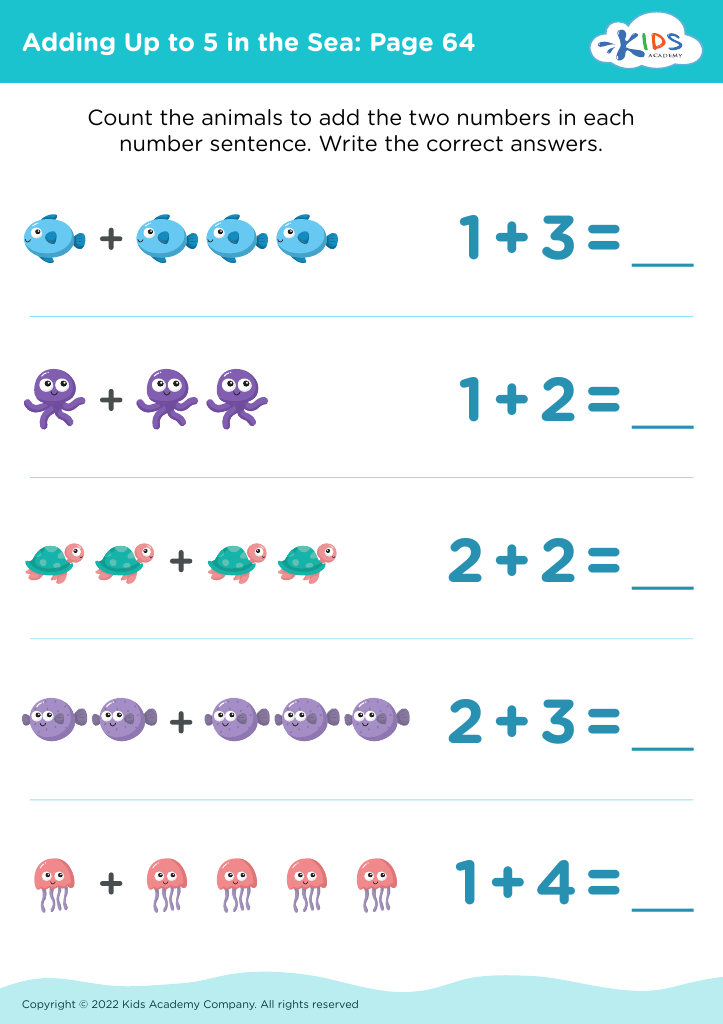
Adding Up to 5 in the Sea: Page 64
Worksheet
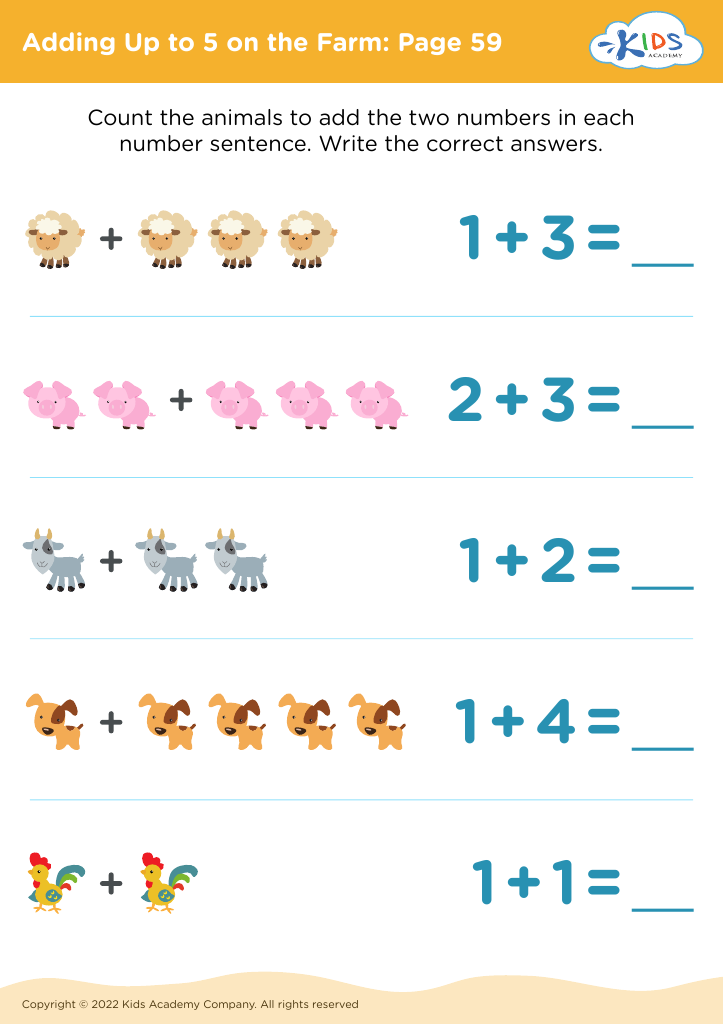
Adding Up to 5 on the Farm: Page 59
Worksheet
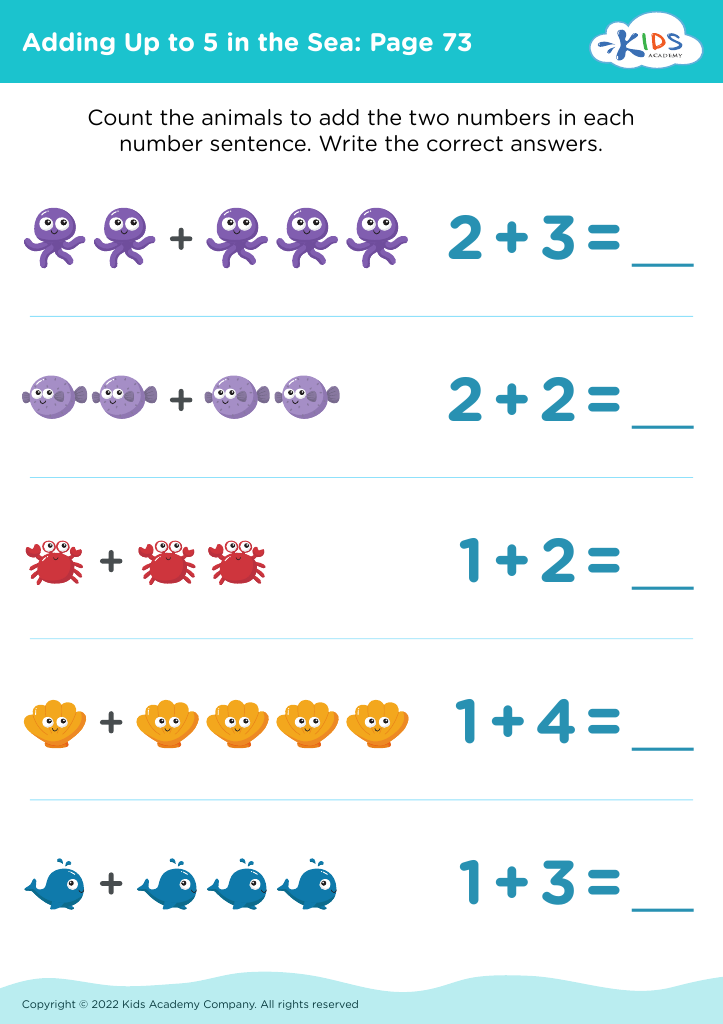
Adding Up to 5 in the Sea: Page 73
Worksheet
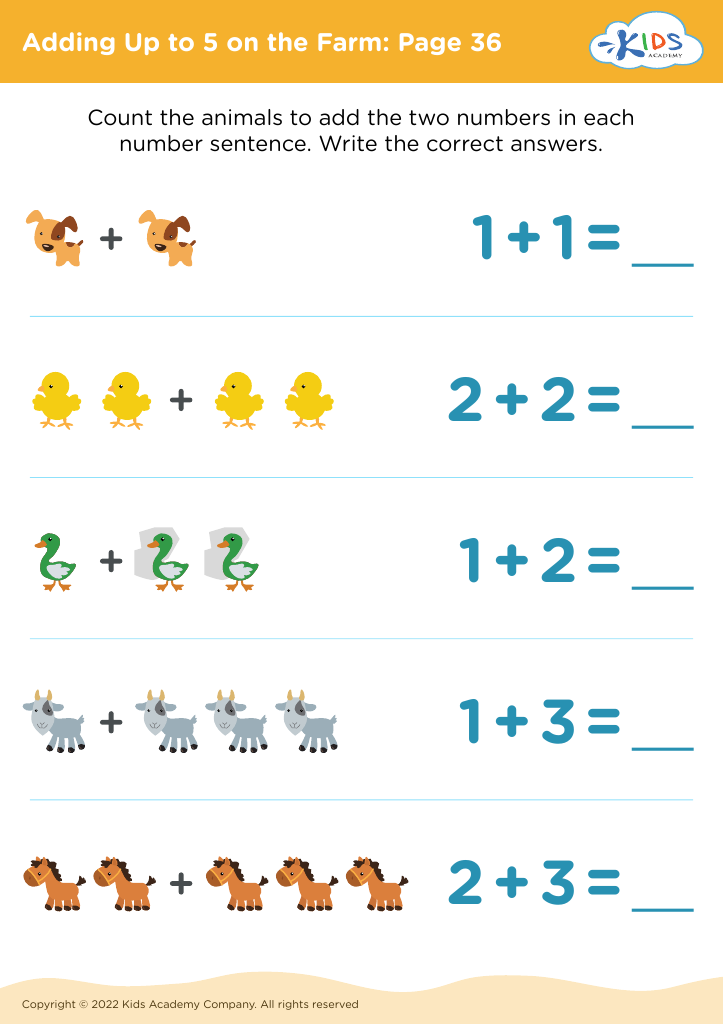
Adding Up to 5 on the Farm: Page 36
Worksheet
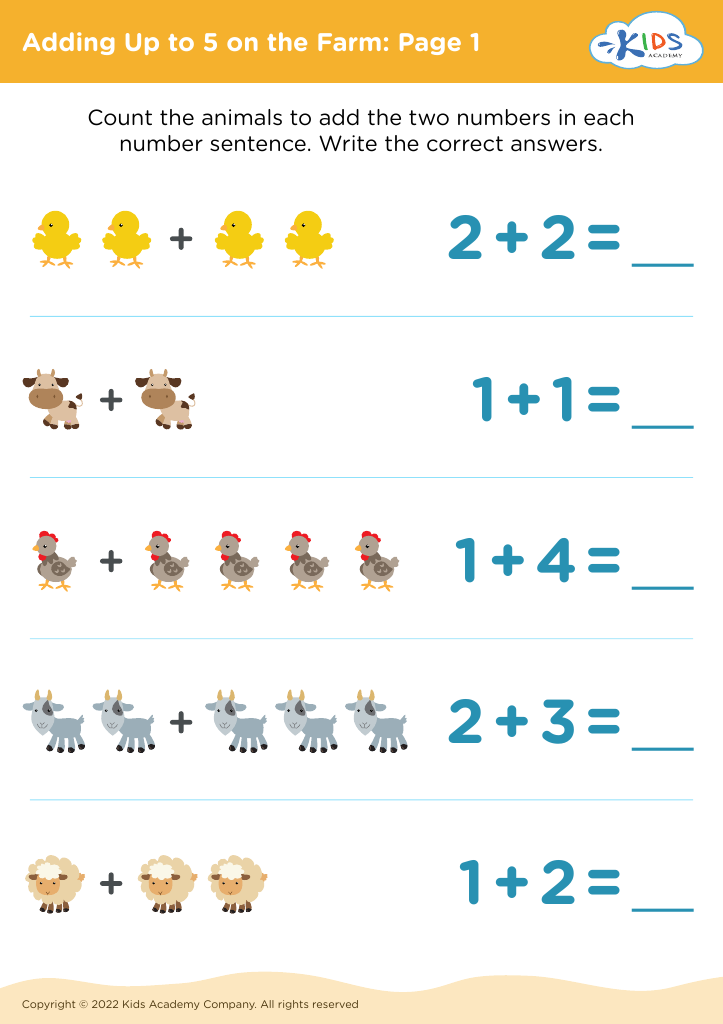
Adding Up to 5 on the Farm: Page 1
Worksheet
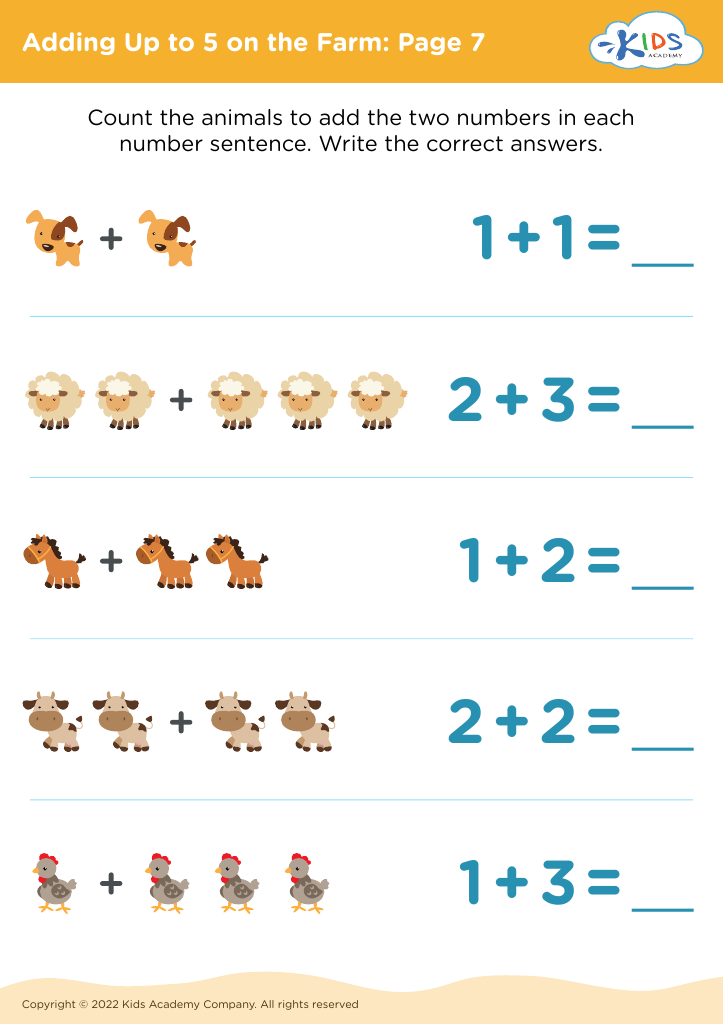
Adding Up to 5 on the Farm: Page 7
Worksheet
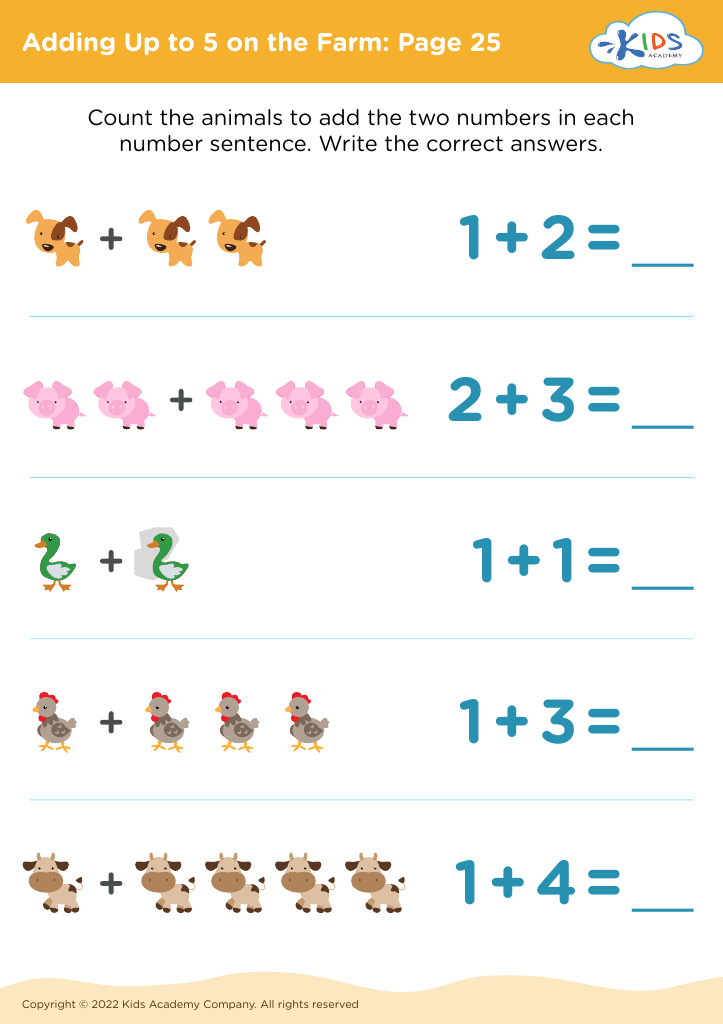
Adding Up to 5 on the Farm: Page 25
Worksheet
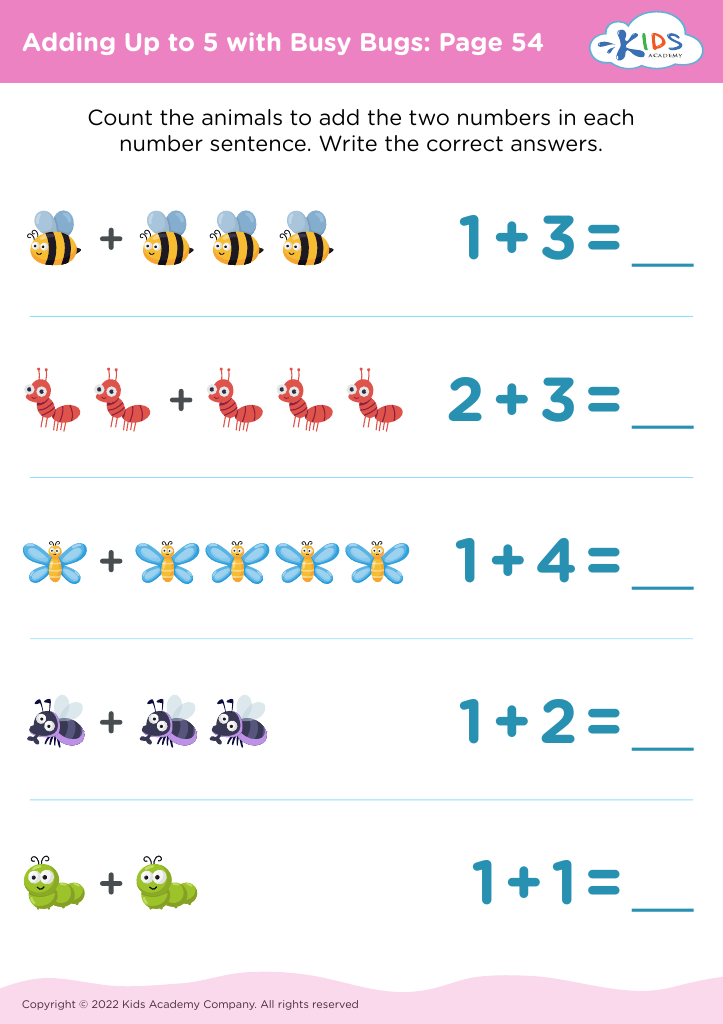
Adding Up to 5 with Busy Bugs: Page 54
Worksheet
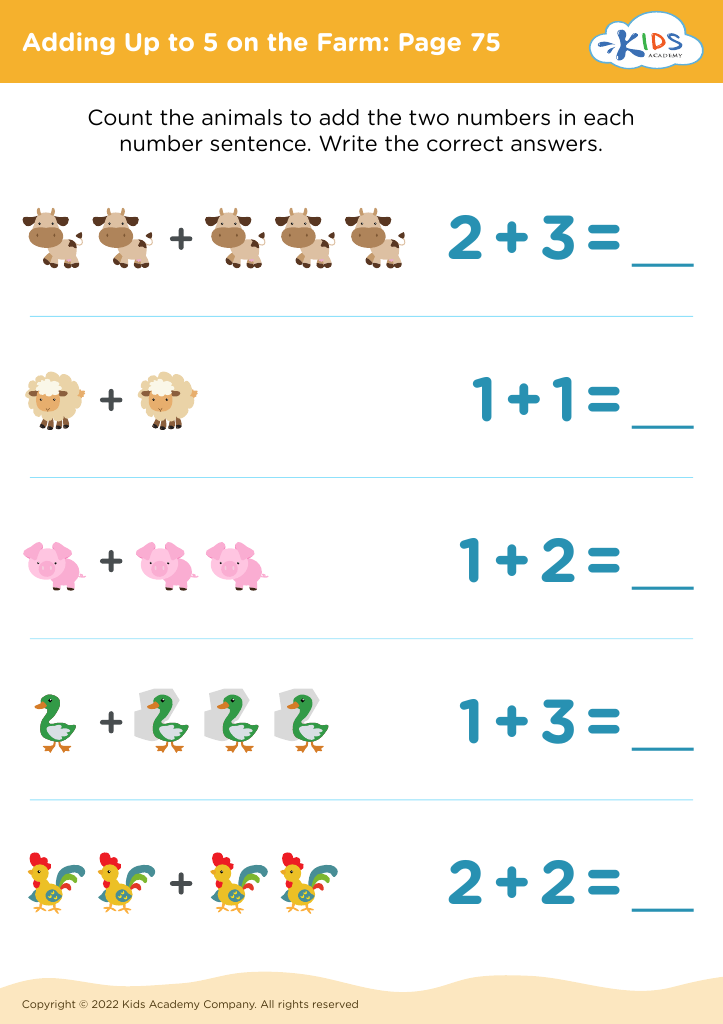
Adding Up to 5 on the Farm: Page 75
Worksheet
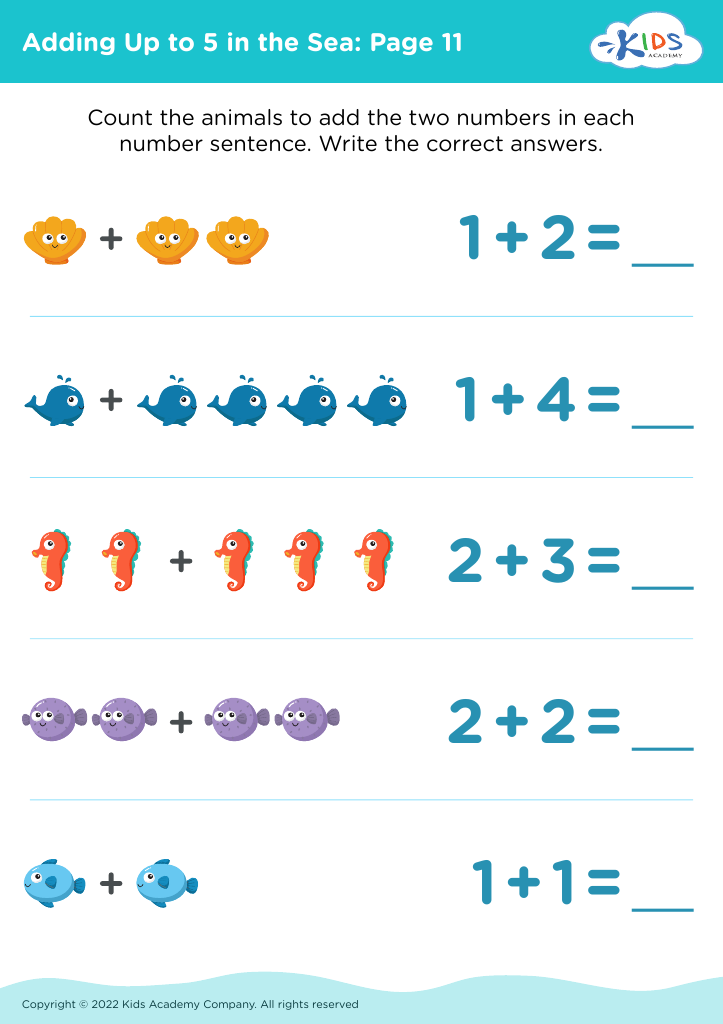
Adding Up to 5 in the Sea: Page 11
Worksheet
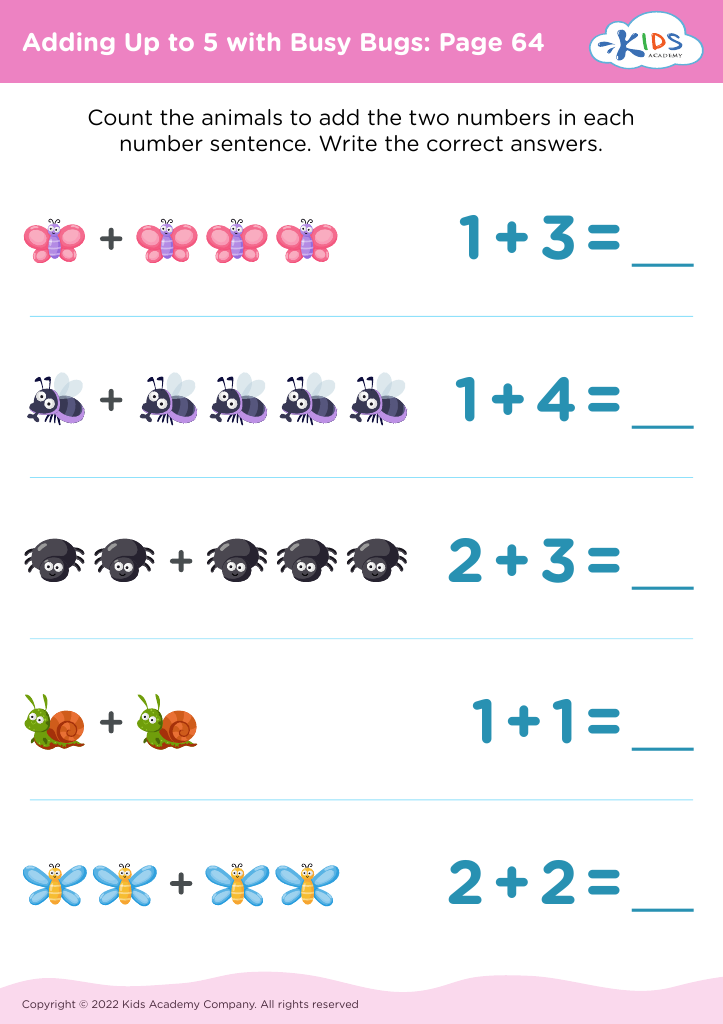
Adding Up to 5 with Busy Bugs: Page 64
Worksheet
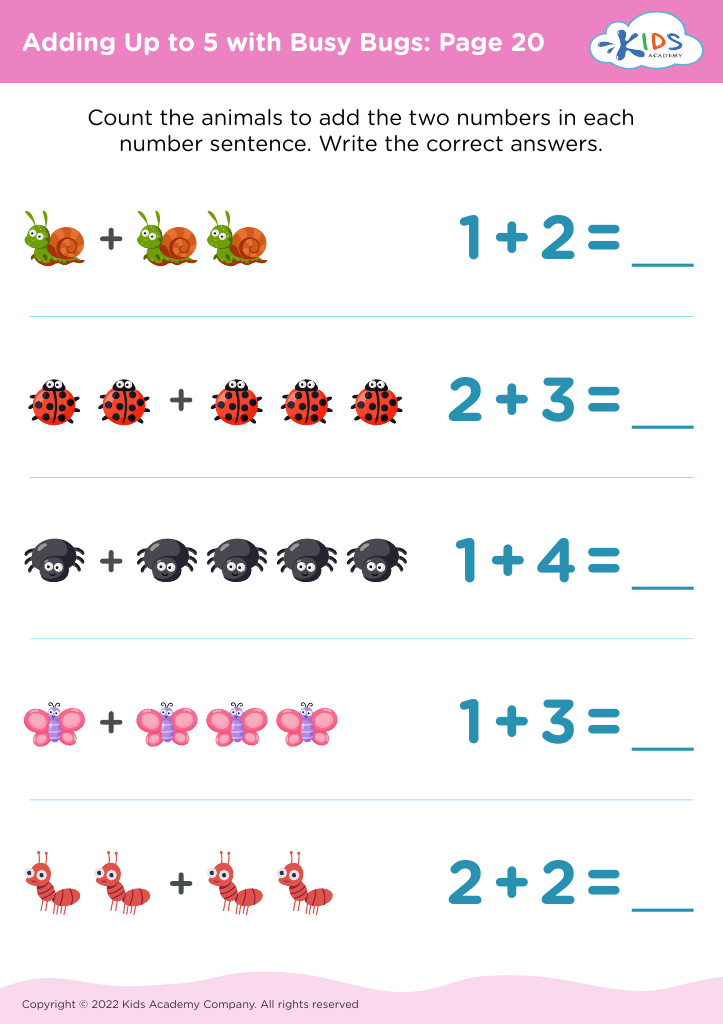
Adding Up to 5 with Busy Bugs: Page 20
Worksheet
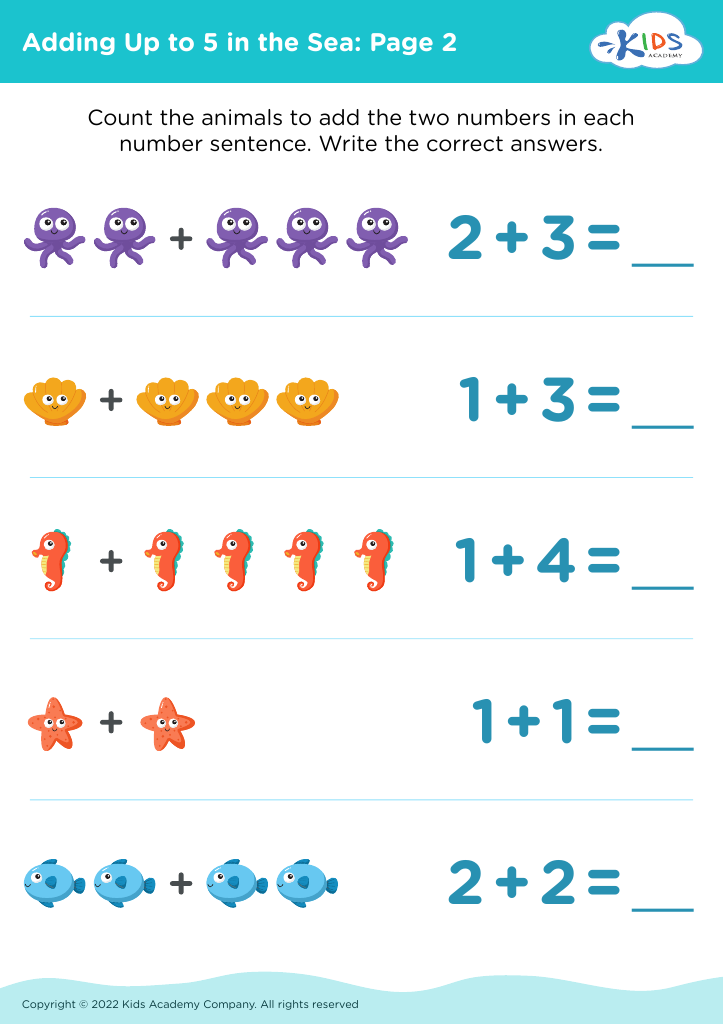
Adding Up to 5 in the Sea: Page 2

Adding Up to 5 in the Sea: Page 2

Adding Up to 5 in the Sea: Page 2
Worksheet
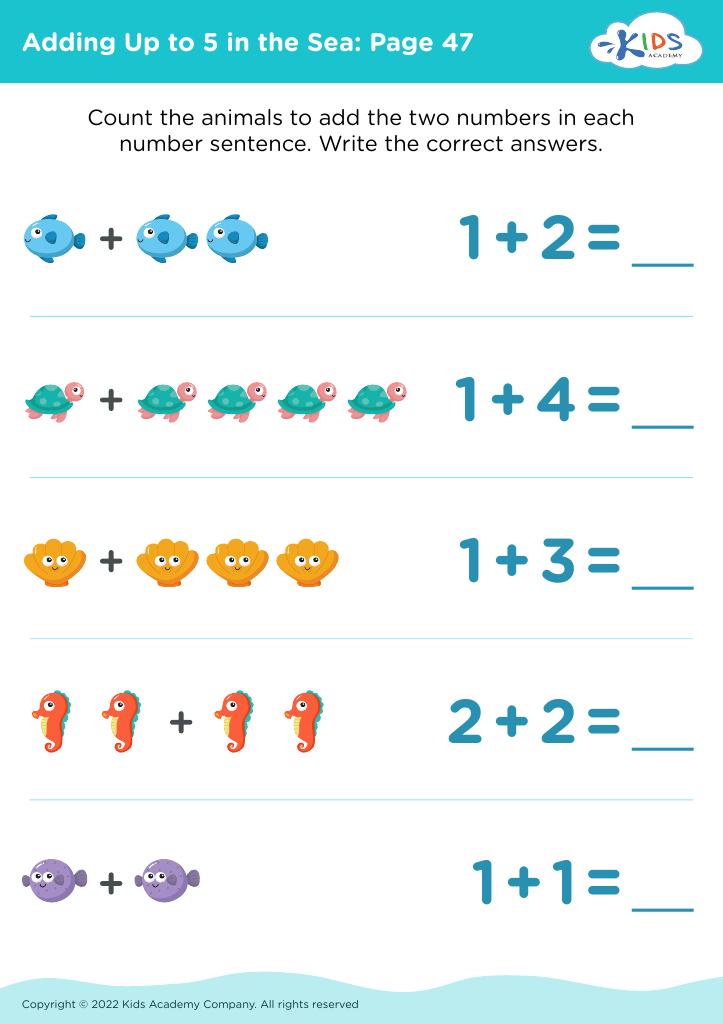
Adding Up to 5 in the Sea: Page 47
Worksheet
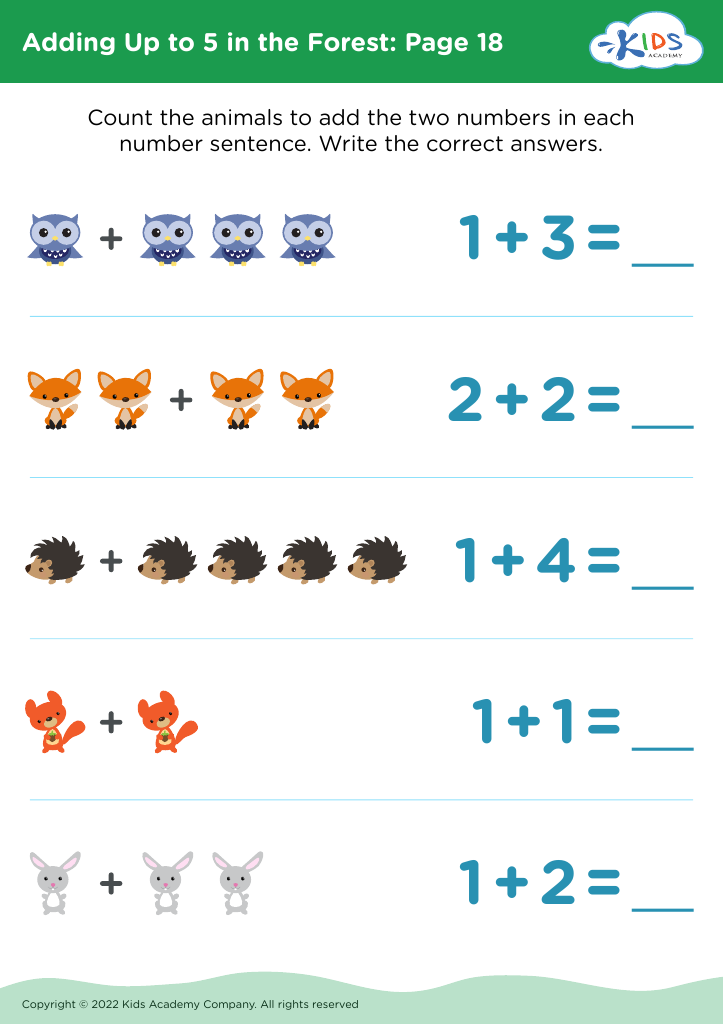
Adding Up to 5 in the Forest: Page 18
Worksheet
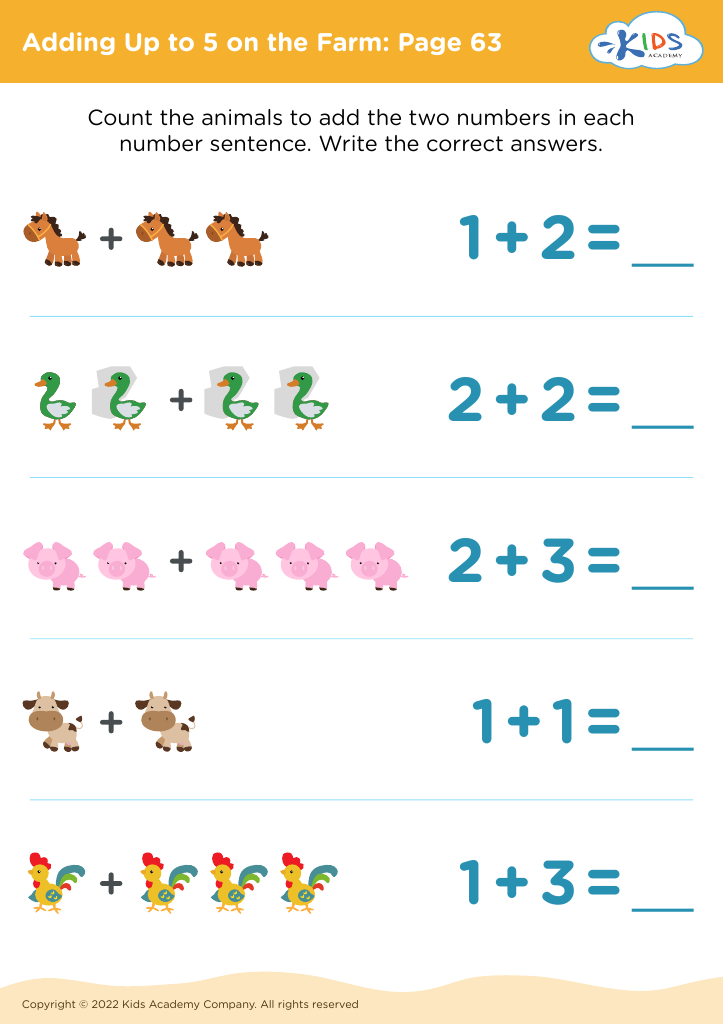
Adding Up to 5 on the Farm: Page 63
Worksheet
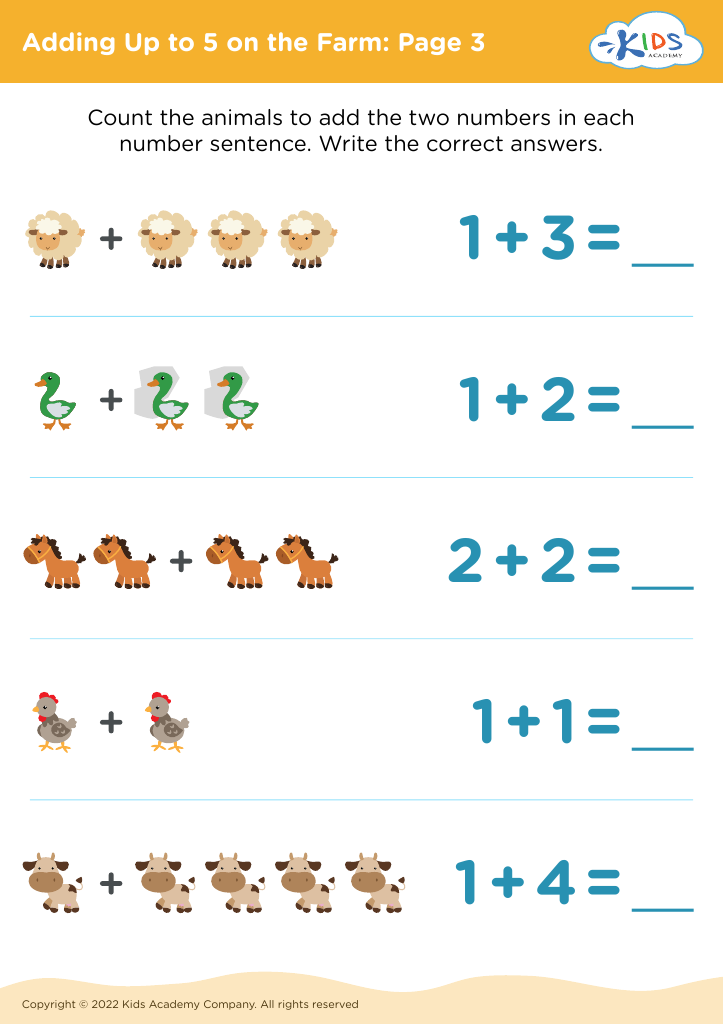
Adding Up to 5 on the Farm: Page 3
Worksheet
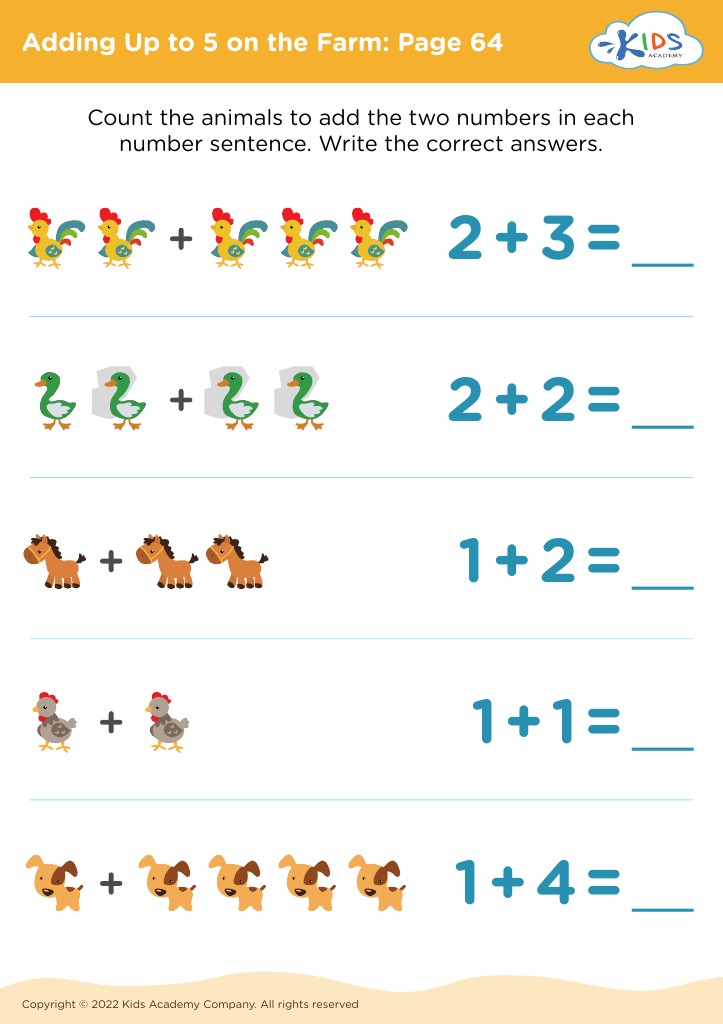
Adding Up to 5 on the Farm: Page 64
Worksheet


Visual learning is a fundamental approach for 3-year-olds, particularly when teaching foundational concepts such as adding up to 5. At this age, children benefit from using images, colors, and shapes to grasp mathematical ideas. Visual aids help make abstract concepts tangible, allowing young learners to engage actively and understand more effectively.

Parents and teachers should care about visual learning because it caters to the natural way young children explore and digest information. By using visual tools like counters, number lines, or illustrated story problems, educators can capture their interest and boost retention. Engaging visuals enhance cognitive development and make learning fun, promoting a positive attitude towards mathematics.

Moreover, early exposure to visual learning fosters critical skills beyond basic math. It enhances problem-solving abilities, encourages creativity, and builds spatial awareness—all vital for future learning. As children see and manipulate visual representations of numbers, they develop a clearer understanding of quantity and relationships, laying a strong groundwork for more complex math skills later on.

In essence, prioritizing visual learning in teaching young children to add up to 5 not only fosters mathematical proficiency but also inspires a lifelong love of learning.