Subtraction skills Addition and Subtraction Word Problems Worksheets for 3-Year-Olds
6 filtered results
-
From - To
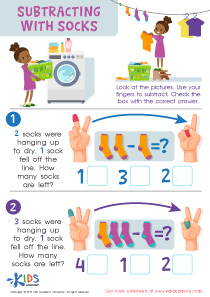
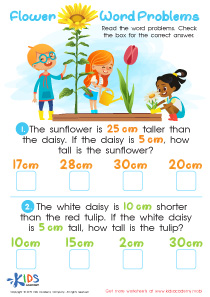
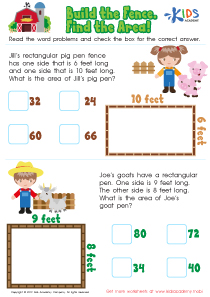
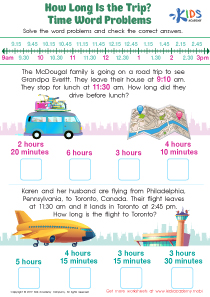
Introduce your little ones to the exciting world of subtraction with our engaging "Subtraction Skills: Addition and Subtraction Word Problems Worksheets" designed specifically for 3-year-olds! These worksheets help children grasp fundamental math concepts through fun and interactive scenarios. Each word problem is crafted to captivate young minds, encouraging them to think critically while developing their counting and subtraction skills. Suitable for both home and preschool environments, our worksheets combine educational value with playful learning, making math enjoyable. Let your child embark on their mathematical journey with these creative tools that nurture curiosity and strengthen foundational skills! Visit us now to discover more!
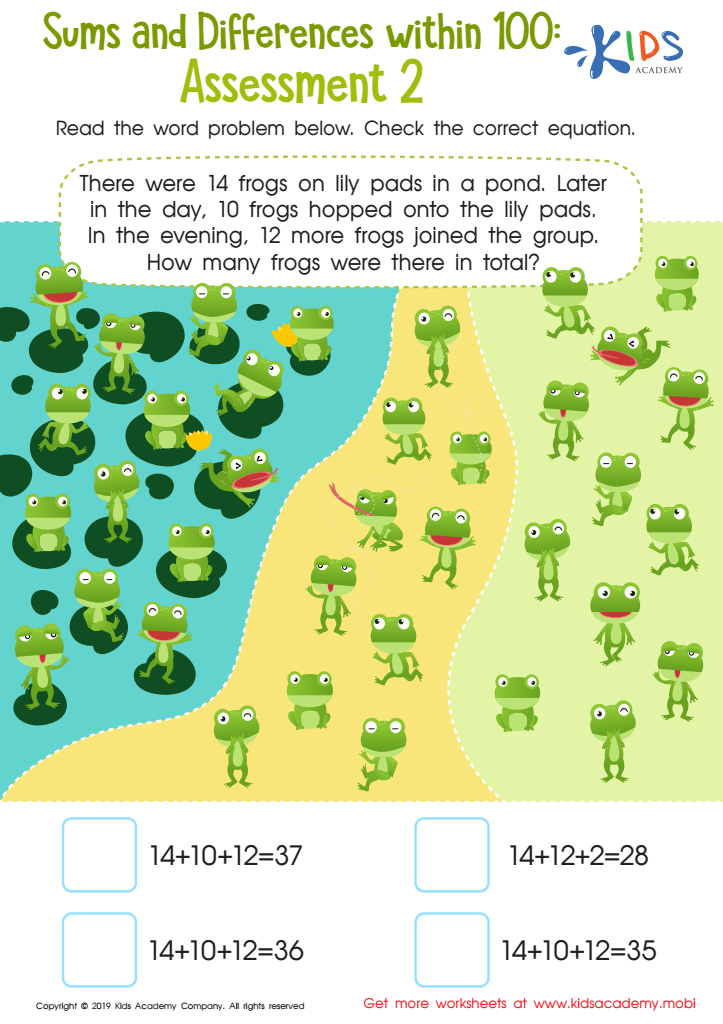
Sums and Differences Within 1 - Assessment 2 Worksheet
 Assign to My Students
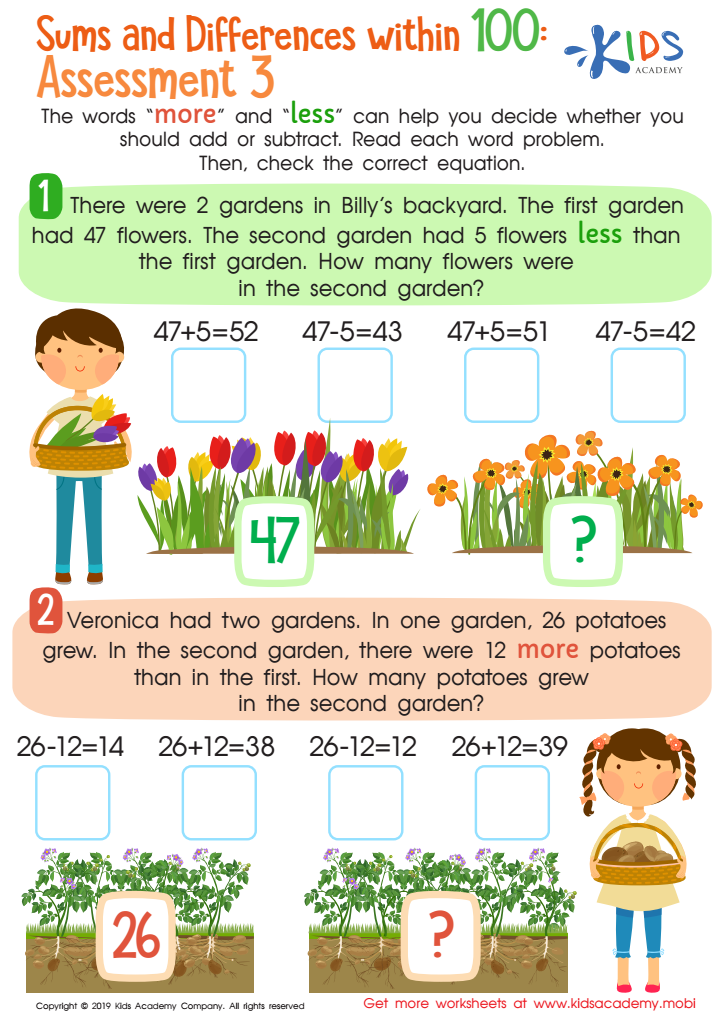
Sums and Differences Within 1 - Assessment 3 Worksheet
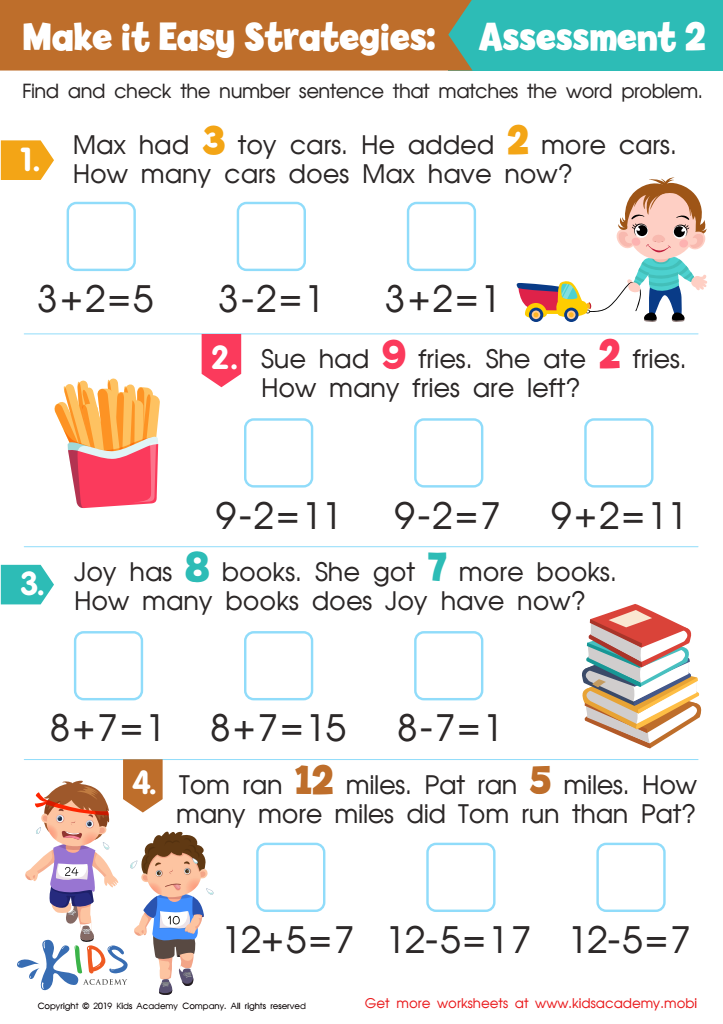
Make it Easy Strategies: Assessment 2 Worksheet
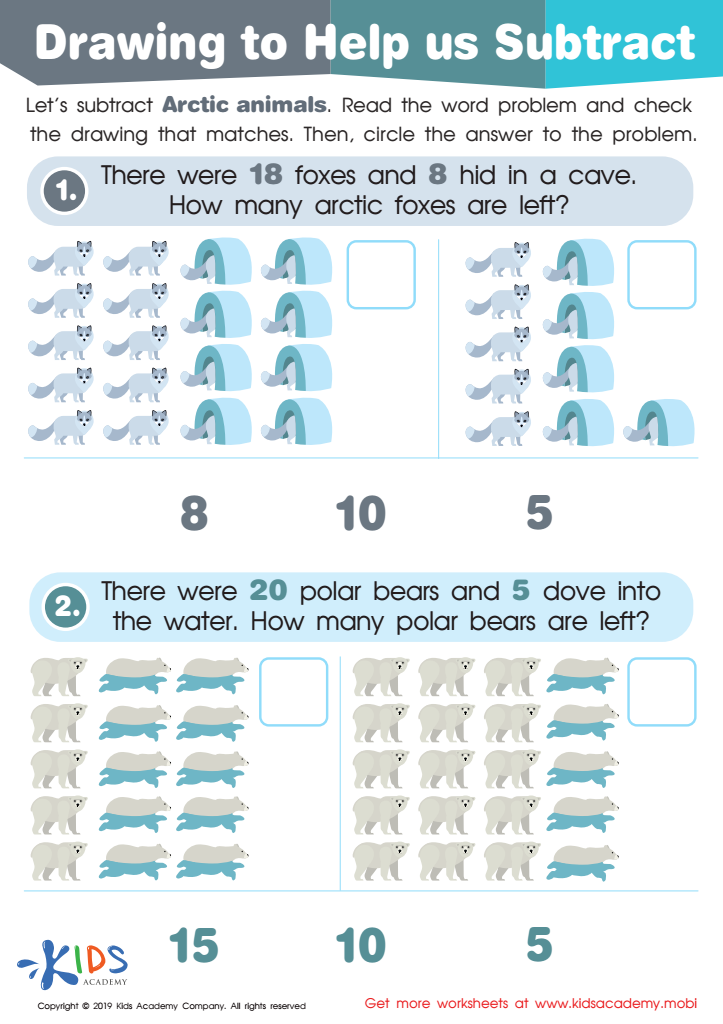
Drawing to Help Us Subtract Worksheet
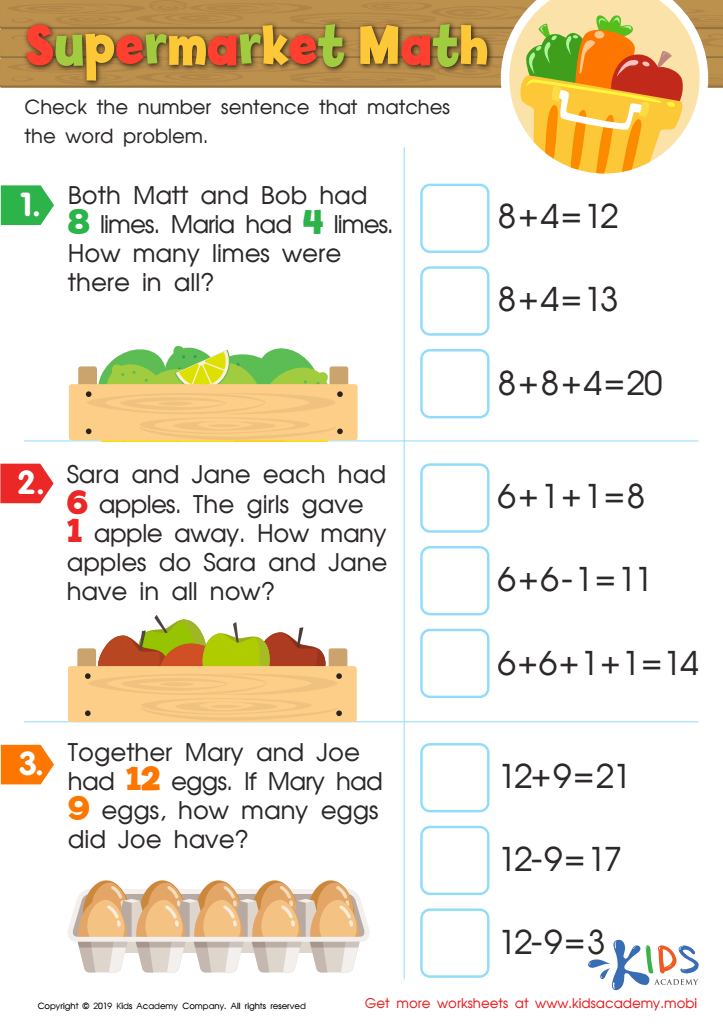
Supermarket Math Worksheet
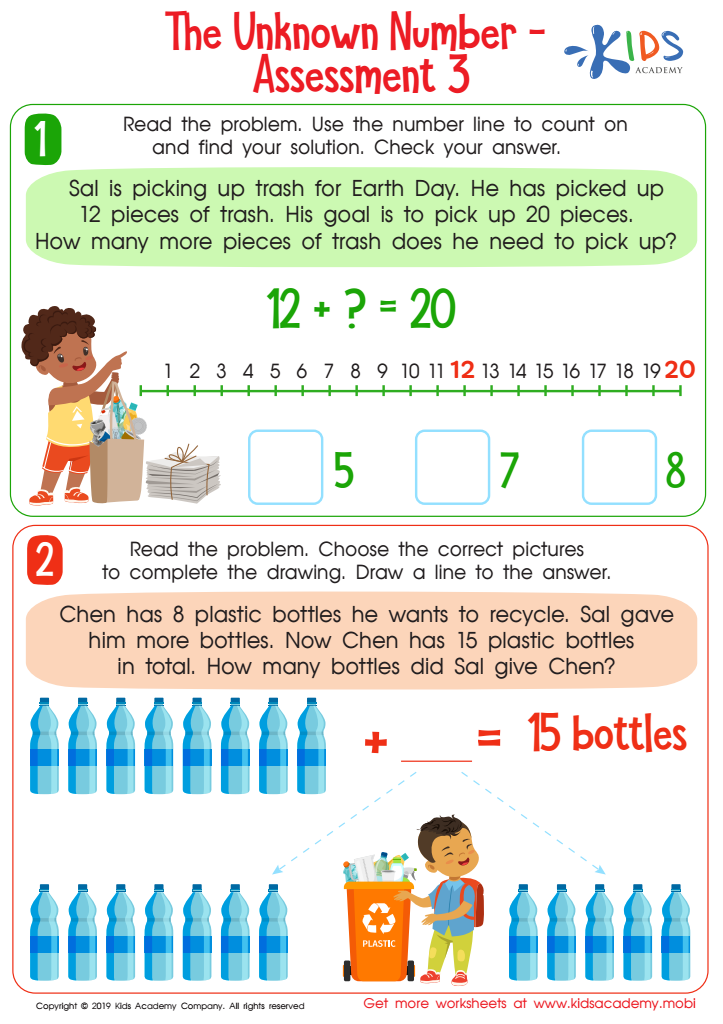
The Unknown Number - Assessment 3 Worksheet








Fostering subtraction skills and introducing addition and subtraction word problems at the age of three are crucial steps in early childhood education. Parents and teachers should care about this foundational learning because it sets the stage for a child's numerical understanding and problem-solving abilities, which are essential for later academic success.
At this age, children are naturally curious and eager to engage with the world around them. Presenting simple subtraction concepts—such as taking away objects during play or storytelling—helps to make math relevant and enjoyable. This approach not only builds their understanding of numbers but also enhances their cognitive skills, like critical thinking and reasoning.
Moreover, engaging with word problems encourages children to use language to express their understanding, which is vital for literacy development. It fosters an environment where they learn to identify and solve problems using everyday scenarios, making math applicable in real life.
Ultimately, when parents and teachers prioritize these skills, they help instill a positive attitude towards math, making children more likely to succeed academically and develop a lasting love for learning. Investing in these early skills lays the groundwork for complex mathematical concepts in later years.