Hand-eye Coordination Addition & Subtraction Worksheets for 3-Year-Olds
18 filtered results
-
From - To
Boost your child's math skills and motor development with our Hand-eye Coordination Addition & Subtraction Worksheets, specially designed for 3-year-olds! Crafted to align with early learning standards, these engaging worksheets blend fun illustrations with simple math problems to enhance numerical understanding and fine motor abilities. Each page encourages young learners to trace, count, and solve addition and subtraction problems, promoting cognitive growth and hand-eye coordination simultaneously. Perfect for home or classroom use, our colorful and interactive worksheets turn math practice into an enjoyable adventure, laying a strong foundation for future academic success. Get started today and watch your child thrive!
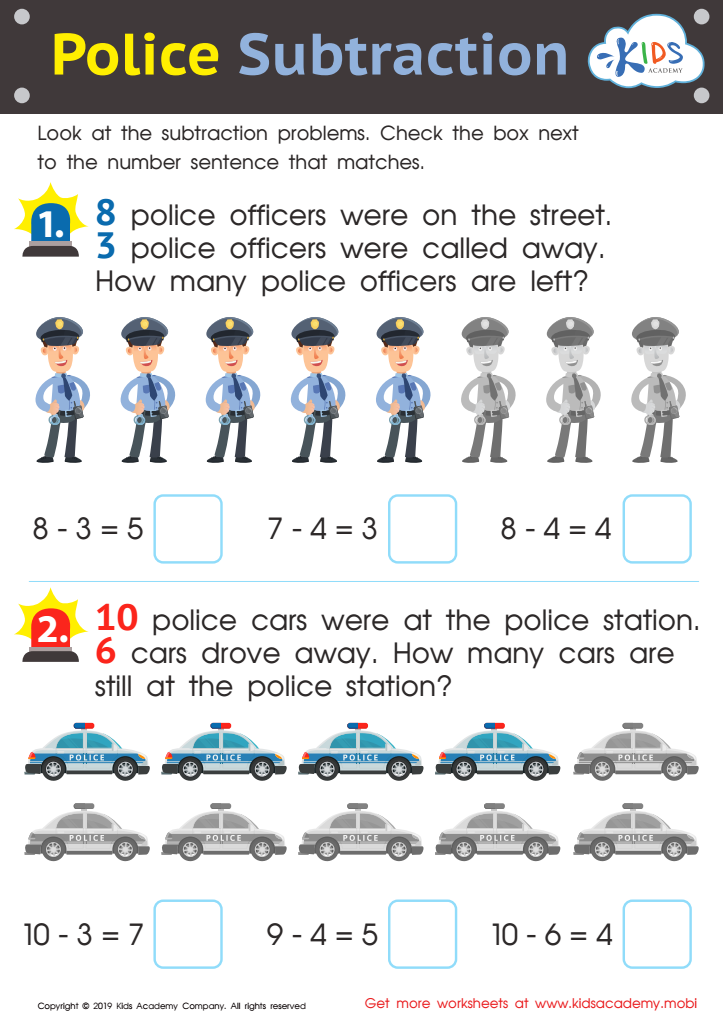
Police Subtraction Worksheet
 Assign to My Students
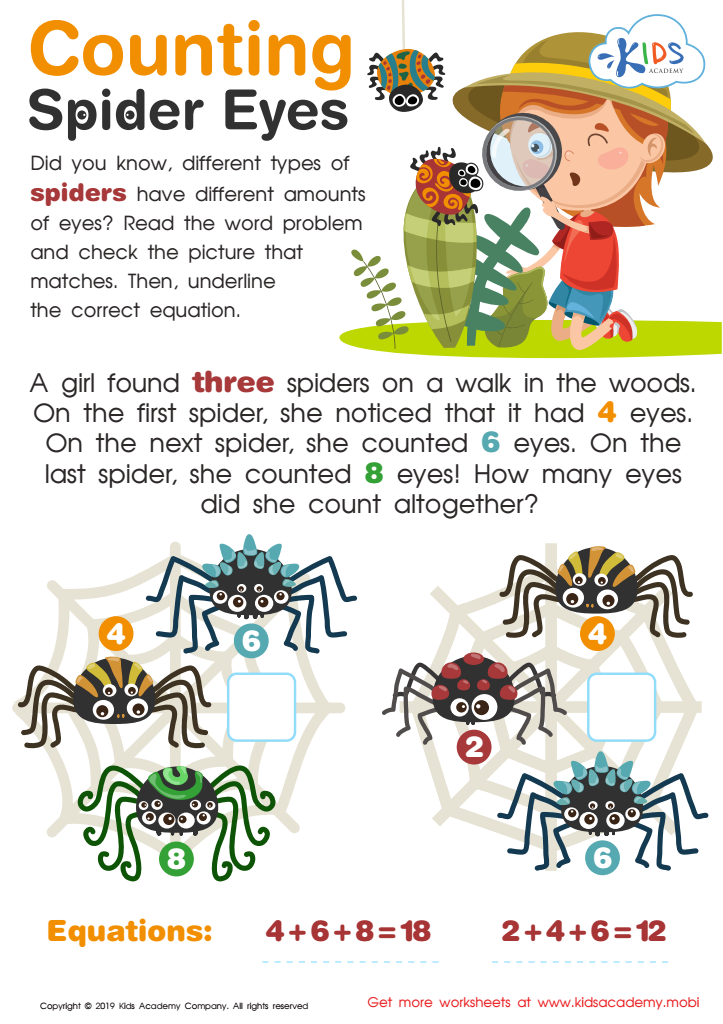
Counting Spider Eyes Worksheet
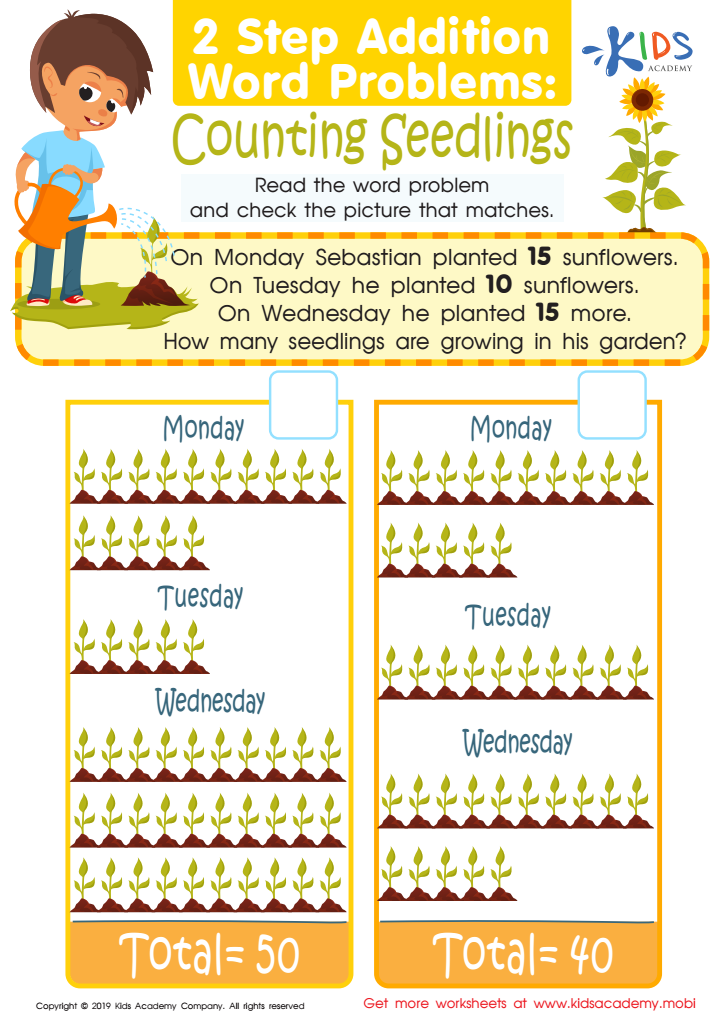
Counting Seedlings Worksheet
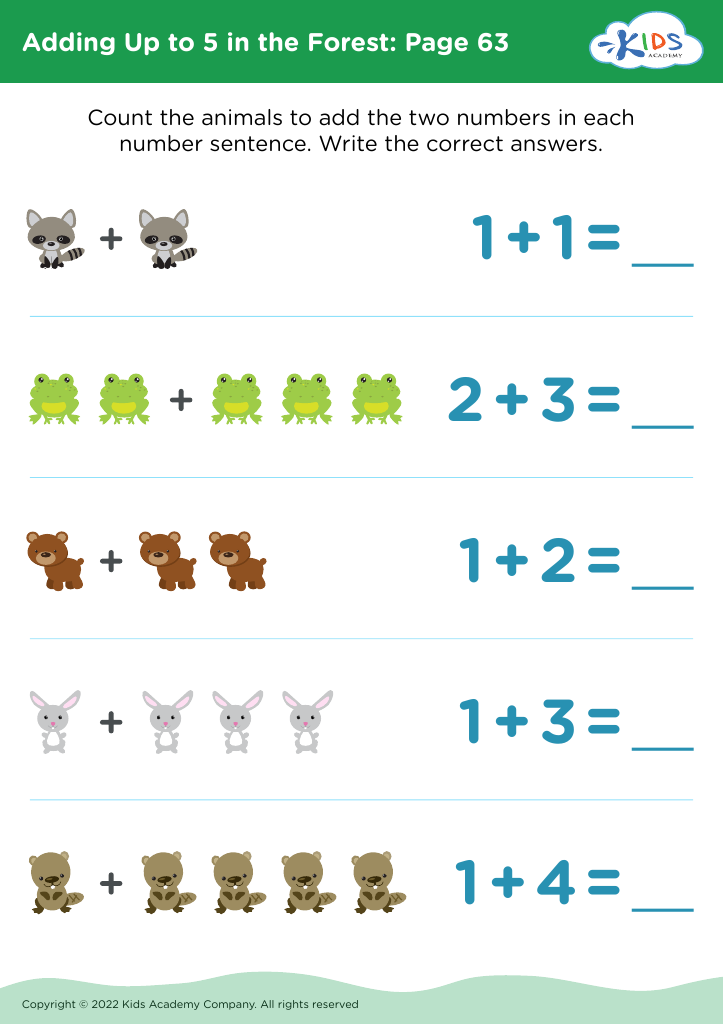
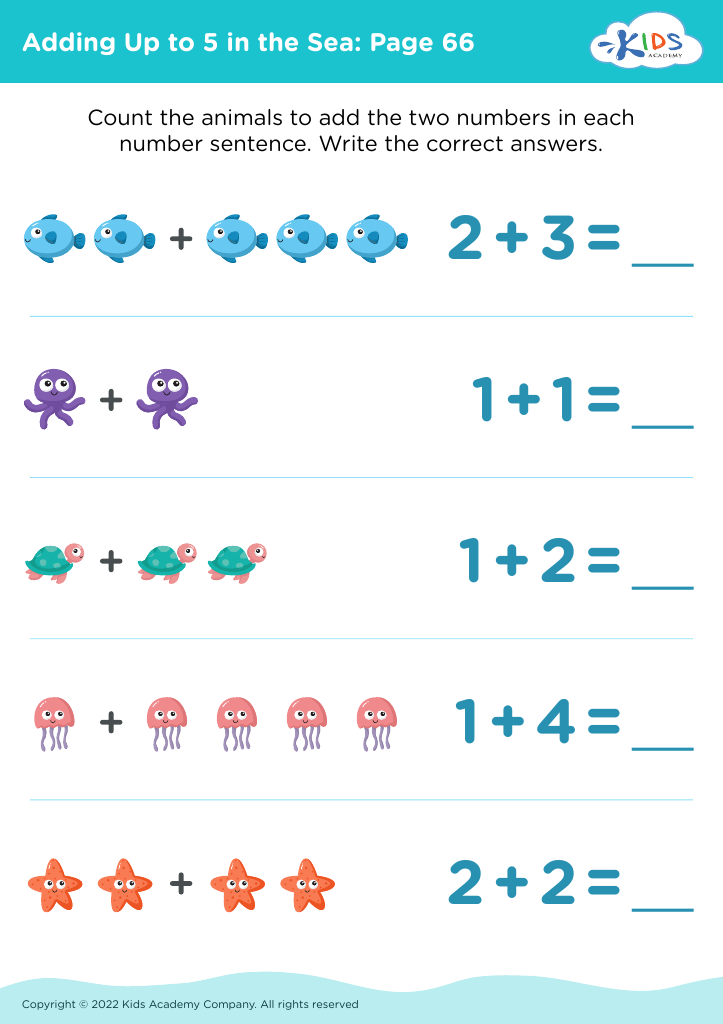
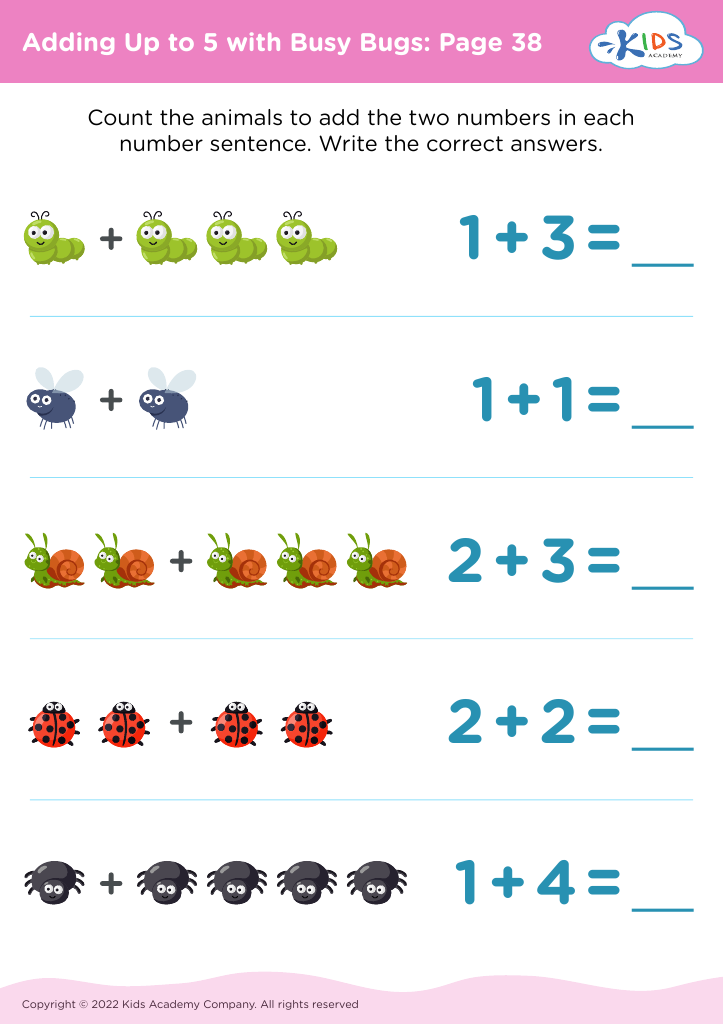
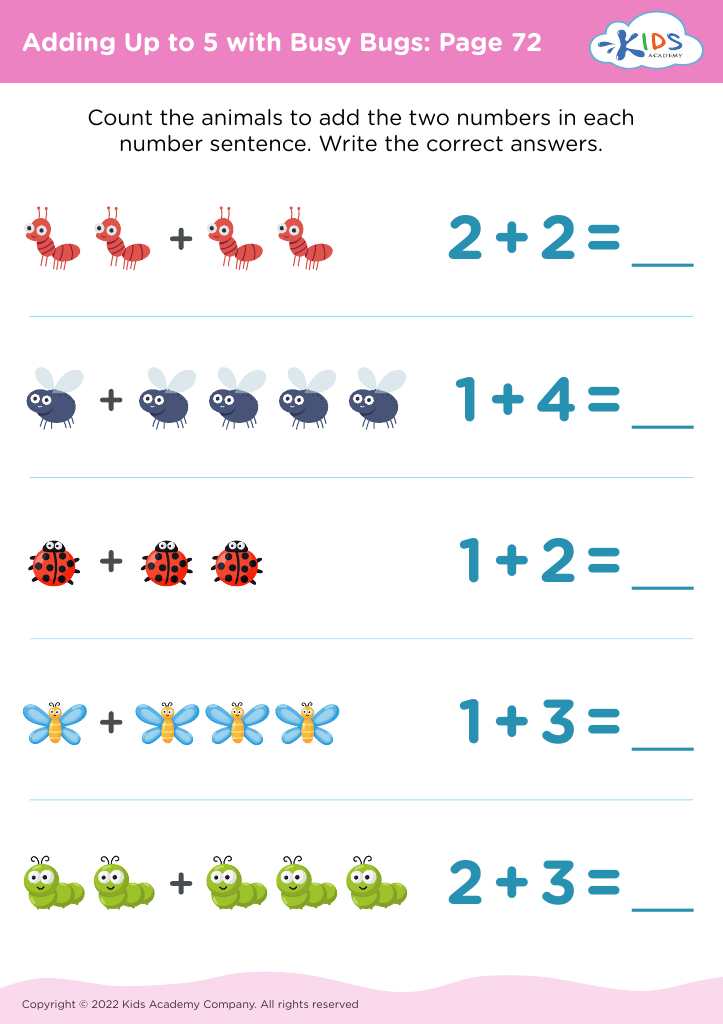
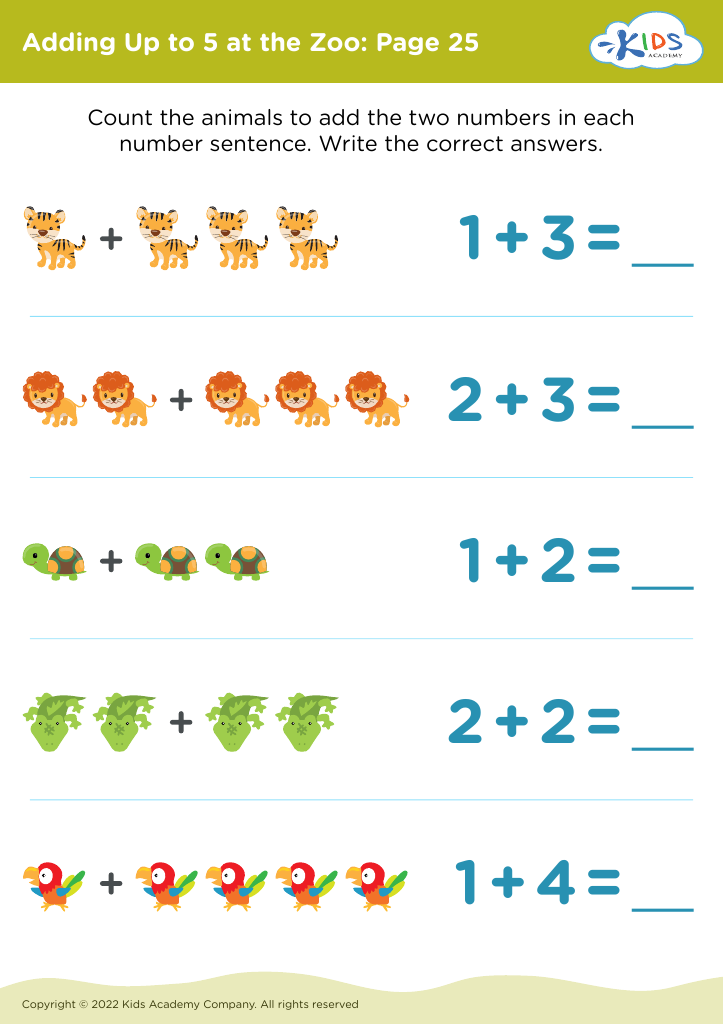
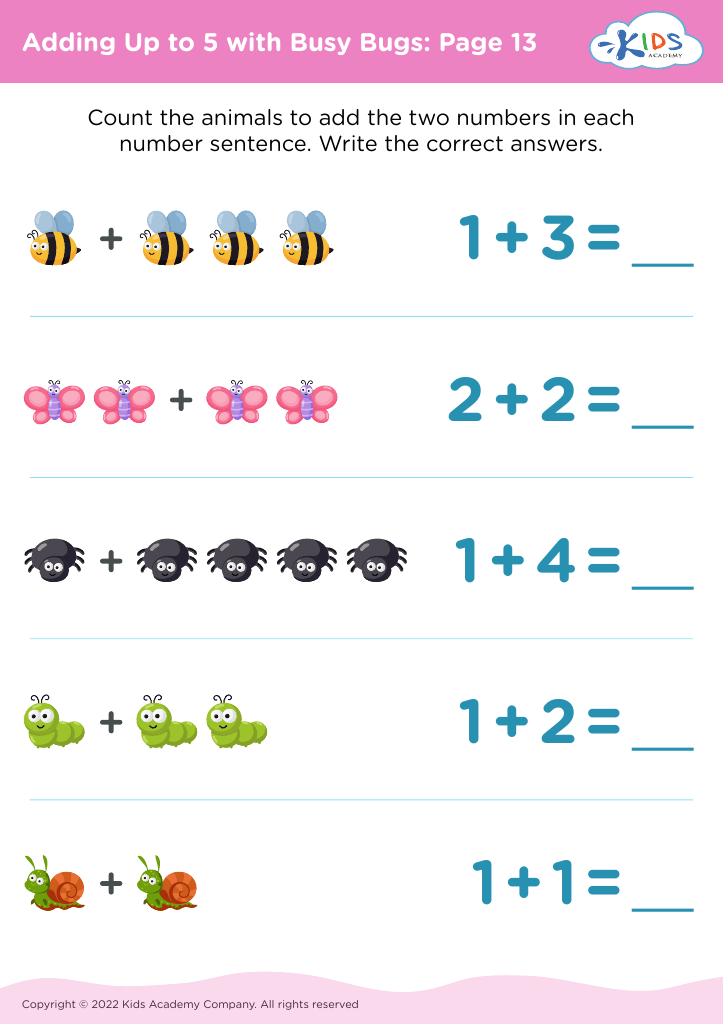
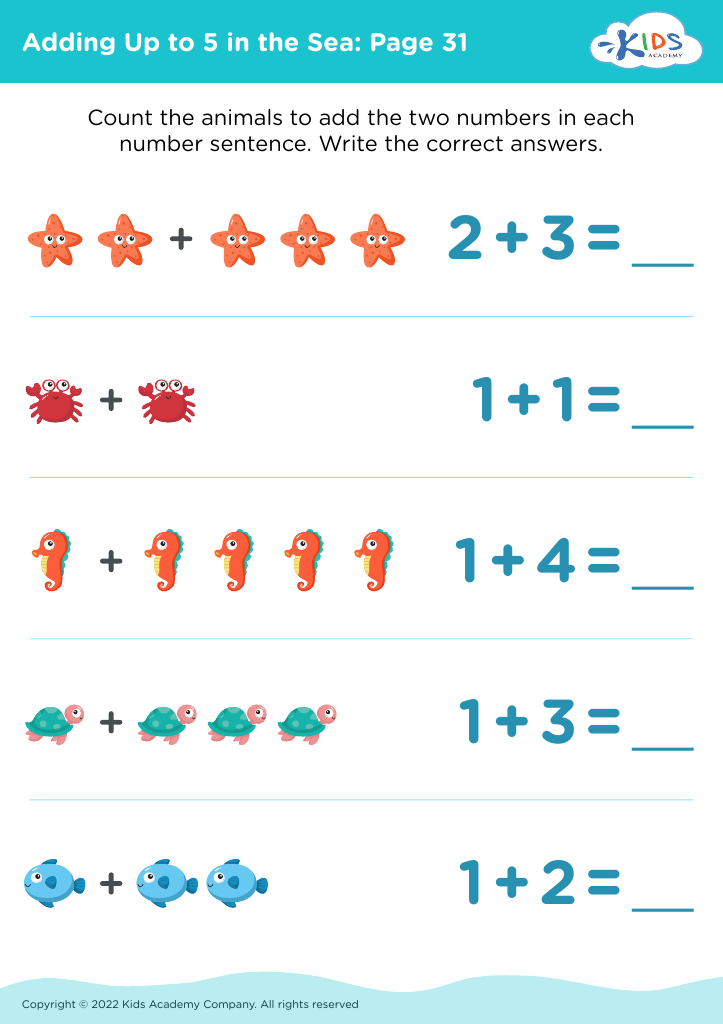
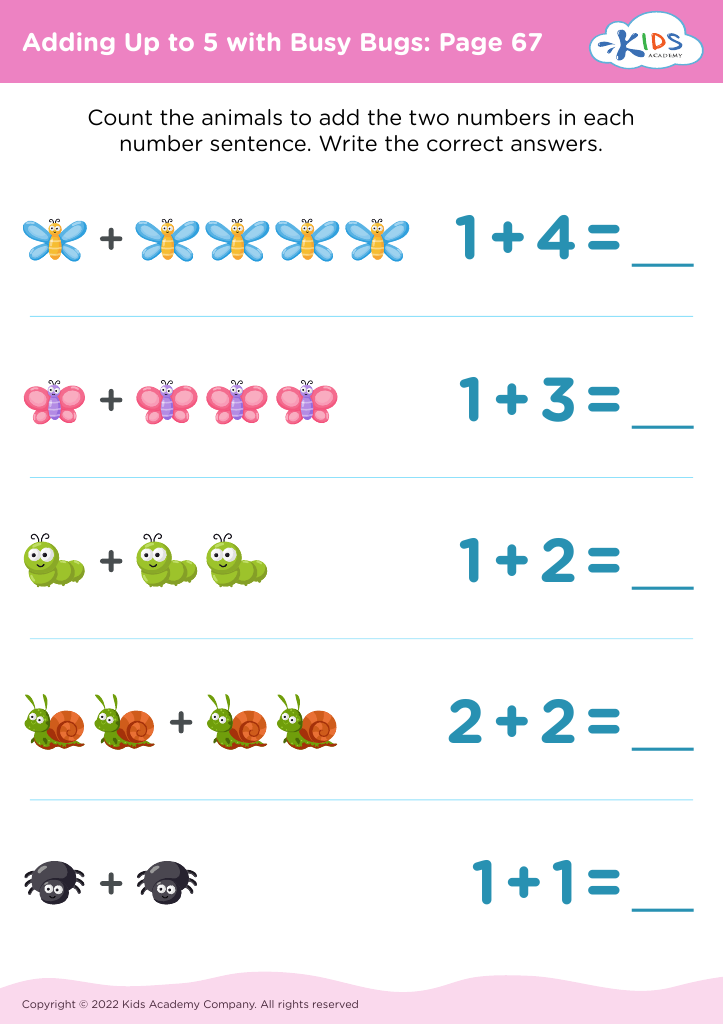
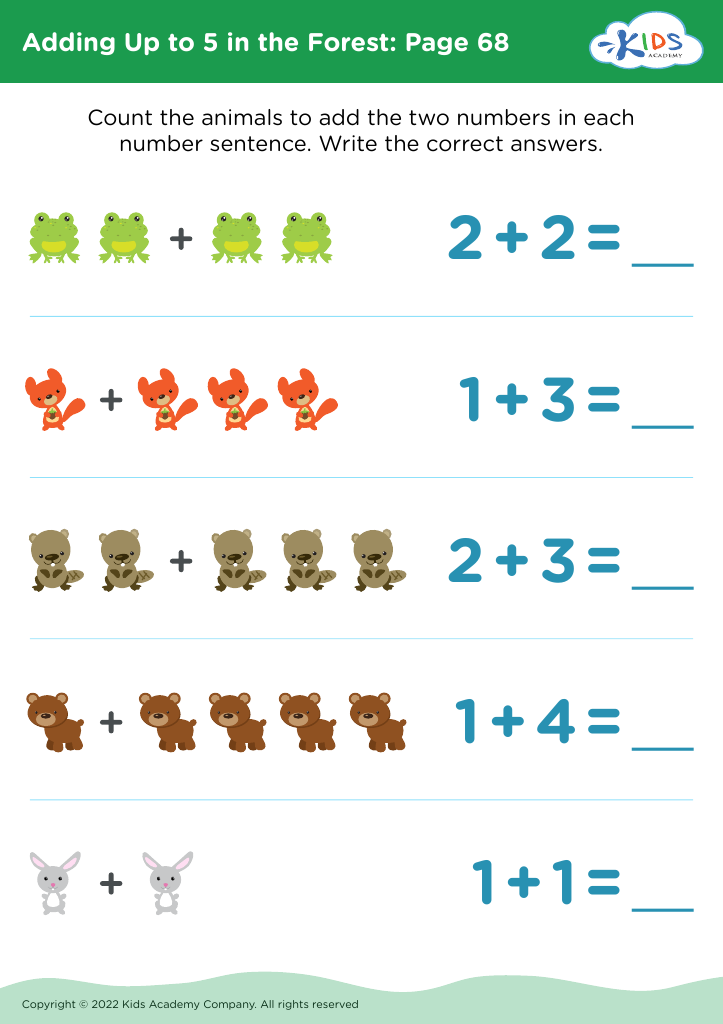
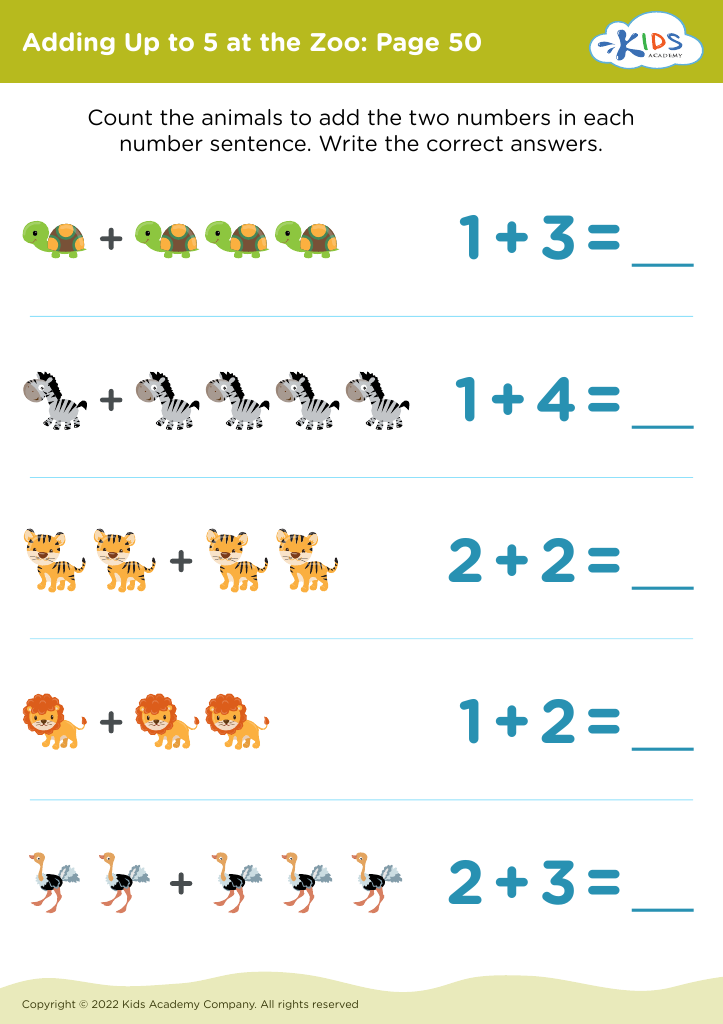








Hand-eye Coordination Addition & Subtraction activity is fundamental for the development of 3-year-olds because it integrates foundational cognitive and motor skills that both parents and teachers should prioritize. At this early developmental stage, children are not just learning to count or differentiate numbers; they are also developing their fine motor skills - abilities that are crucial for daily tasks like writing, tying shoelaces, and buttoning clothes.
First, working on addition and subtraction reinforces basic math concepts, which in turn lay the groundwork for more advanced mathematical understanding as they grow older. This early exposure also helps in fostering a positive attitude towards math, a critical subject in their academic journey.
Hand-eye coordination activities help enhance a child’s ability to synchronize visual information with body movements. This is vital for a child's overall development because it improves their spatial awareness and reaction times, impacting their ability to participate in sports, art, and even in simple playground activities.
Moreover, structured activities that blend math with physical movement hold children's attention longer, making learning enjoyable and effective. Engaging in these tasks helps to develop patience, focus, and problem-solving skills. Teachers and parents, therefore, should embrace these activities as a holistic approach to nurture both cognitive and physical development, setting a strong foundation for their future learning experiences.








