Filters

386 filtered results

Clear all filters
Favorites
With answer key
Interactive

386 filtered results

Difficulty Level

Grade


Check out this FREE Trial Lesson on Addition & Subtraction for age 3!

My Family

Favorites
With answer key
Interactive
  • 3
  • Number Recognition
  • Addition & Subtraction
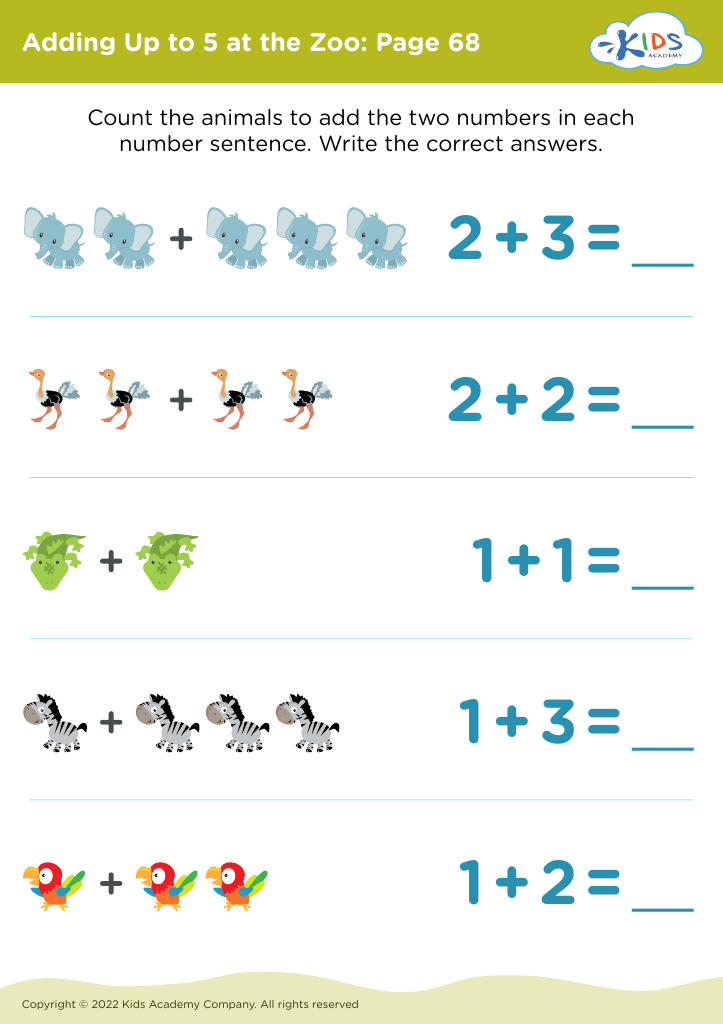
Adding Up to 5 at the Zoo: Page 68
Worksheet
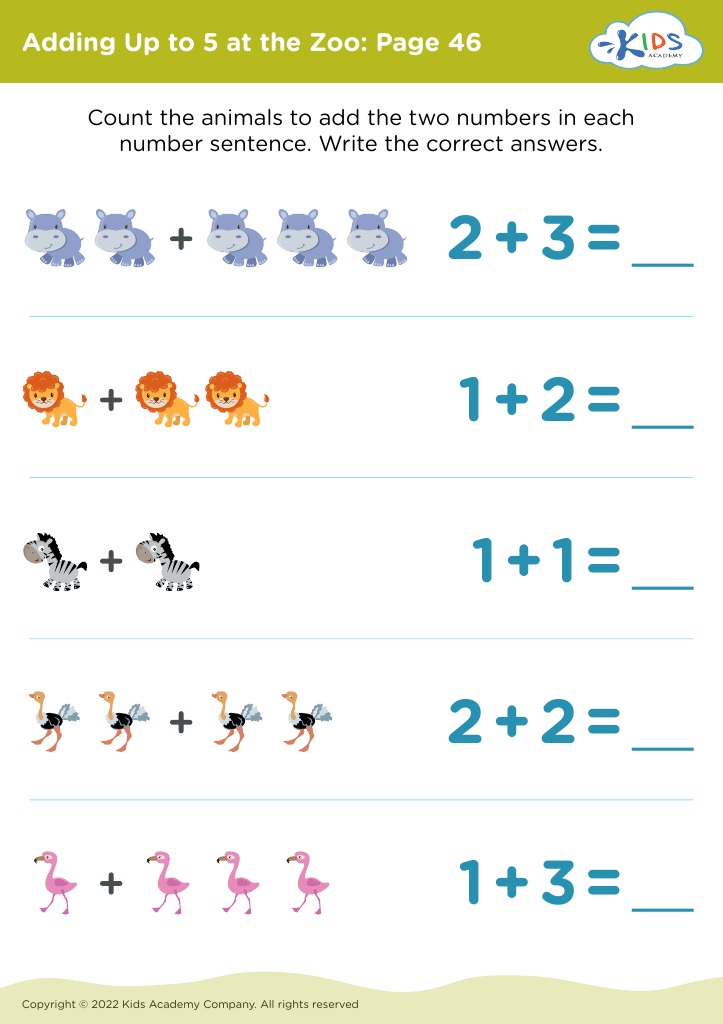
Adding Up to 5 at the Zoo: Page 46
Worksheet
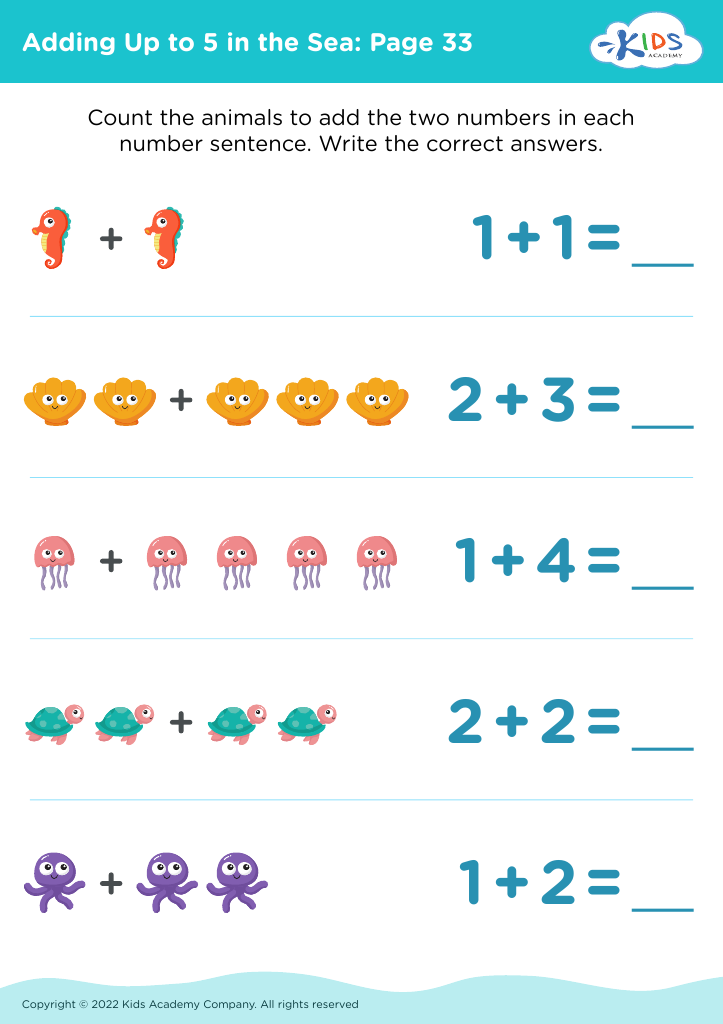
Adding Up to 5 in the Sea: Page 33
Worksheet
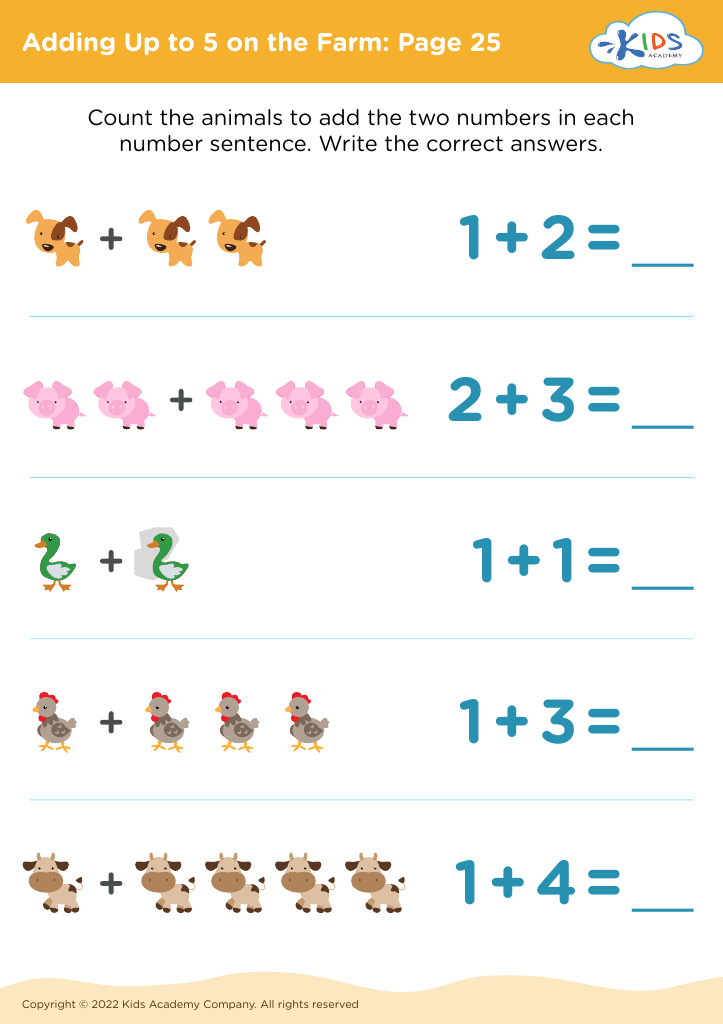
Adding Up to 5 on the Farm: Page 25
Worksheet
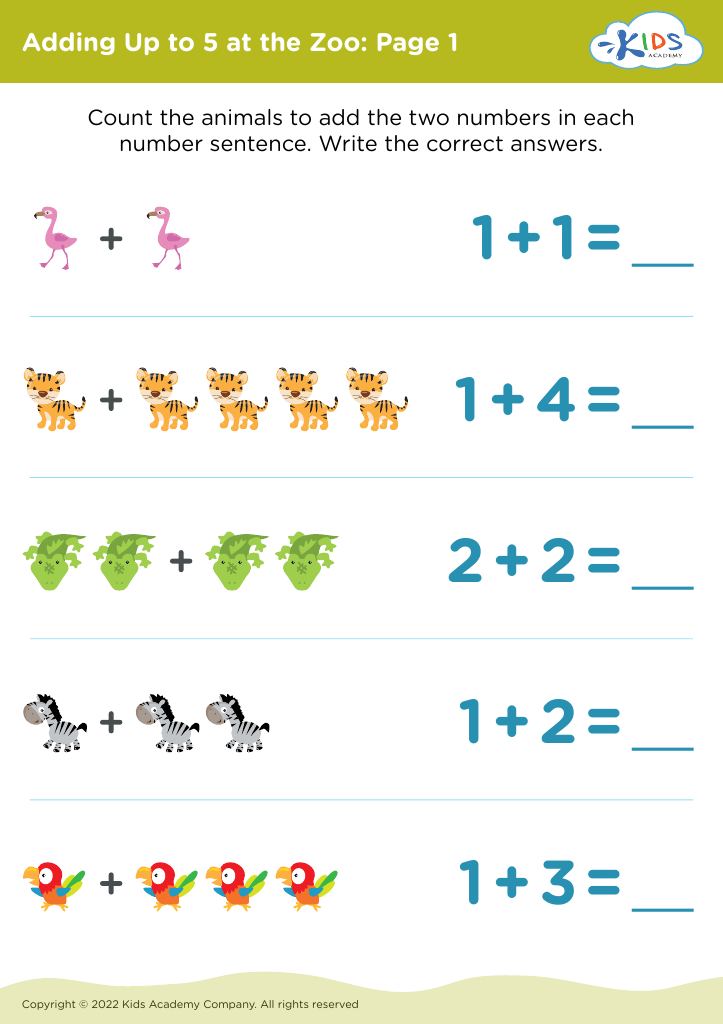
Adding Up to 5 at the Zoo: Page 1

Adding Up to 5 at the Zoo: Page 1

Adding Up to 5 at the Zoo: Page 1
Worksheet
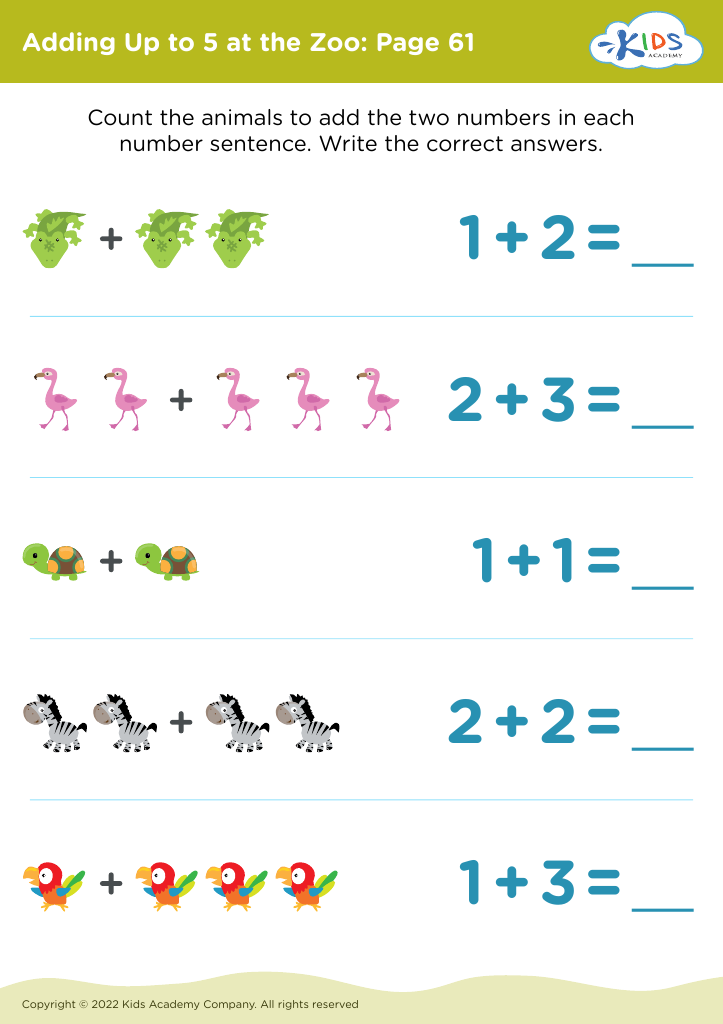
Adding Up to 5 at the Zoo: Page 61
Worksheet
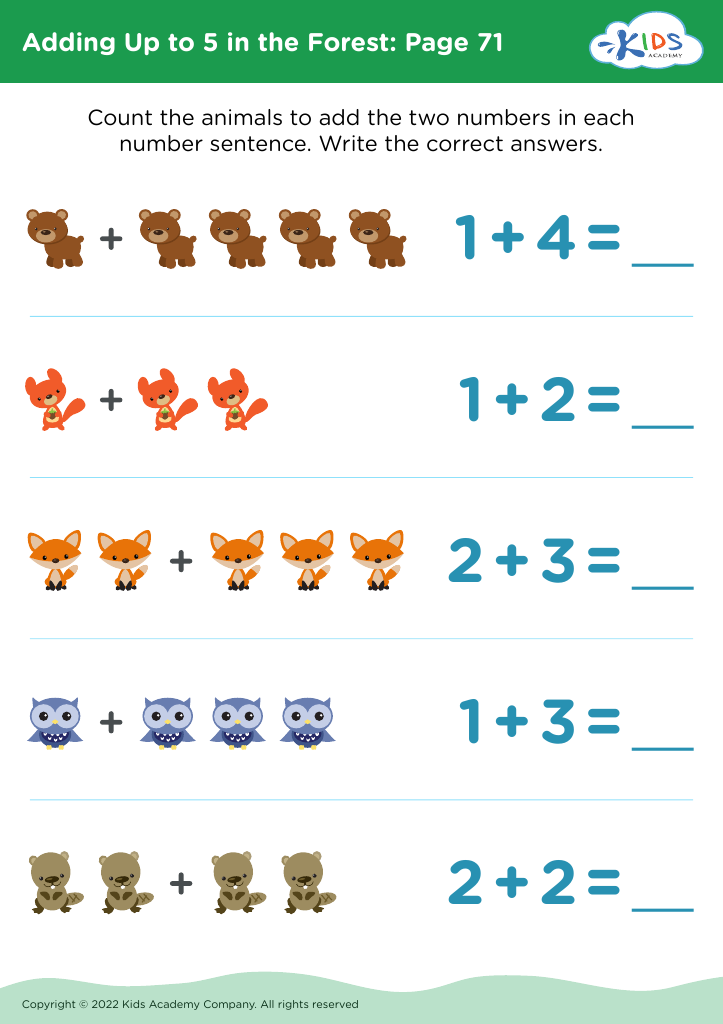
Adding Up to 5 in the Forest: Page 71
Worksheet
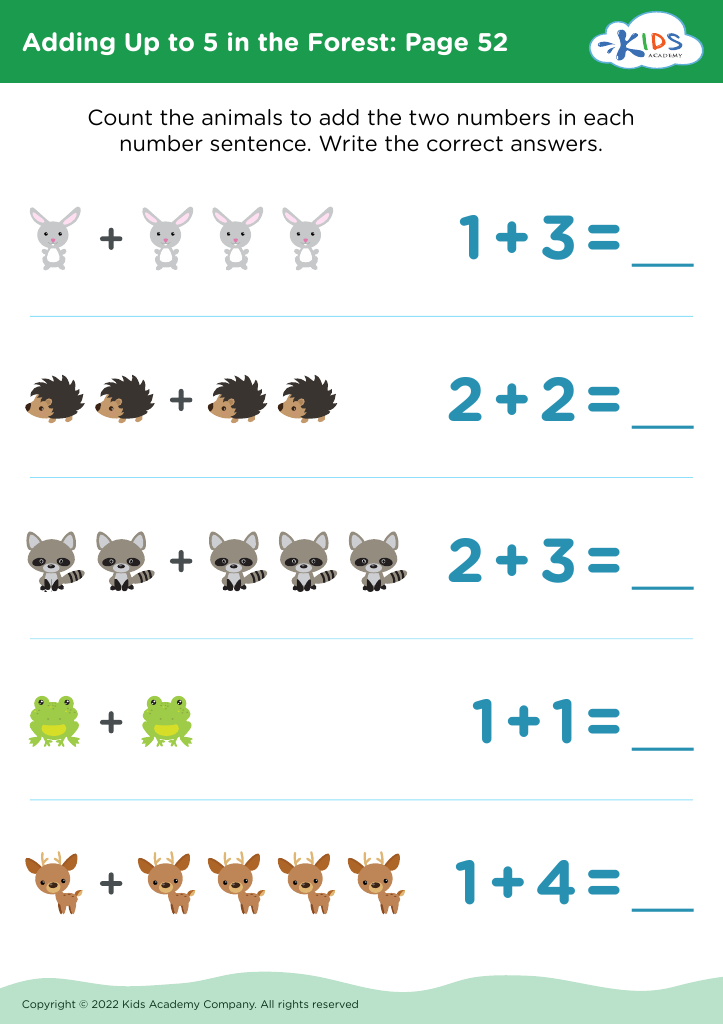
Adding Up to 5 in the Forest: Page 52
Worksheet
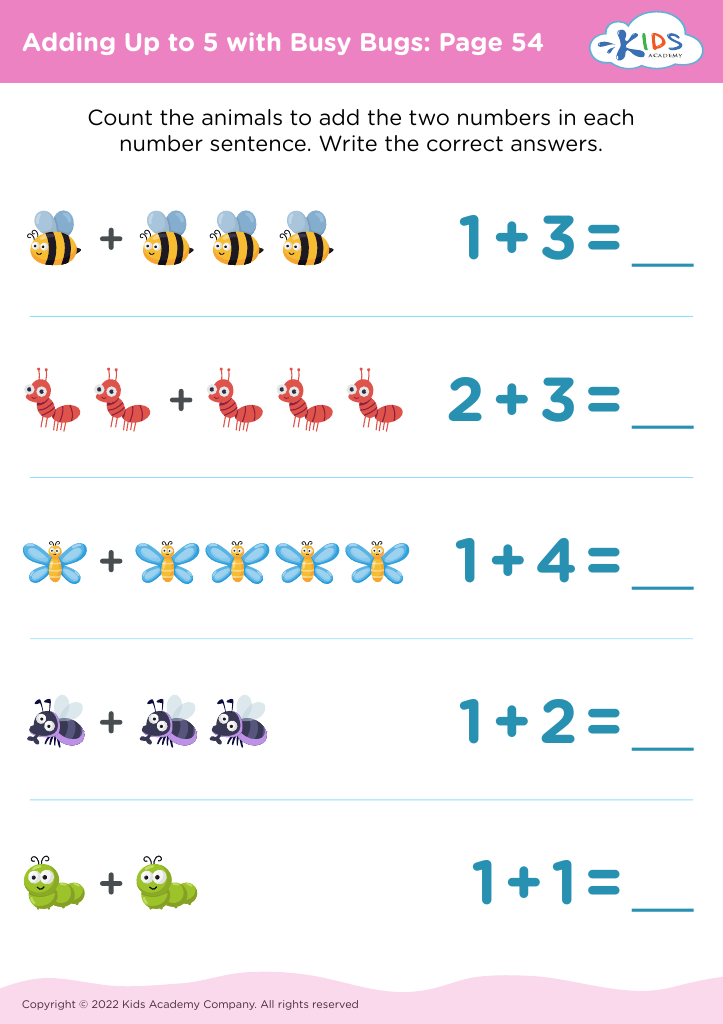
Adding Up to 5 with Busy Bugs: Page 54
Worksheet
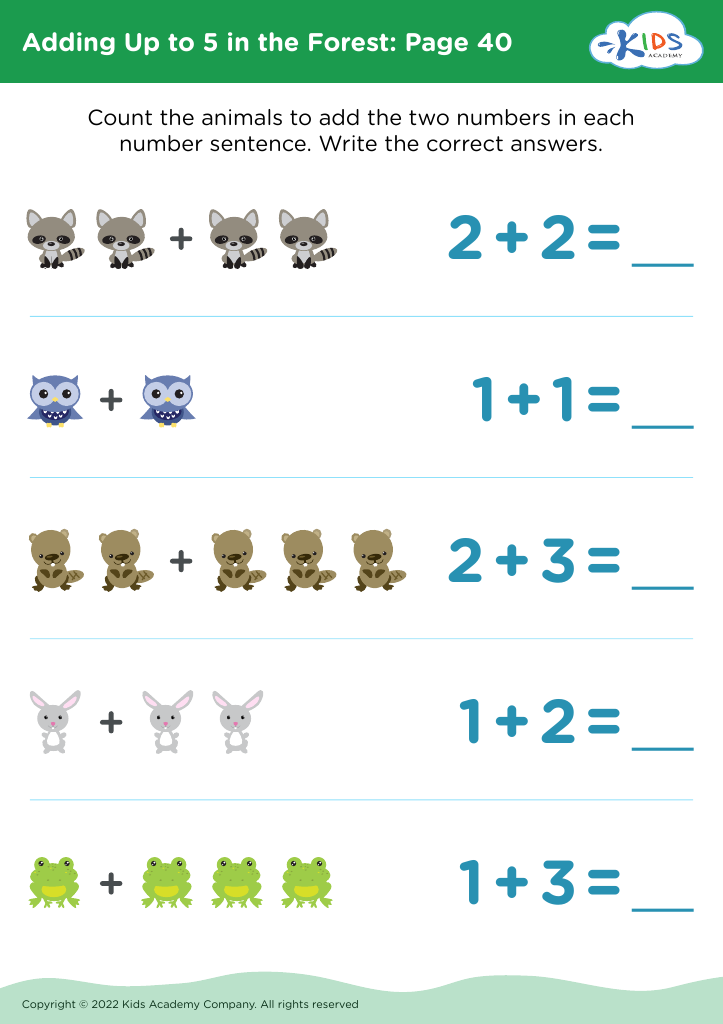
Adding Up to 5 in the Forest: Page 40
Worksheet
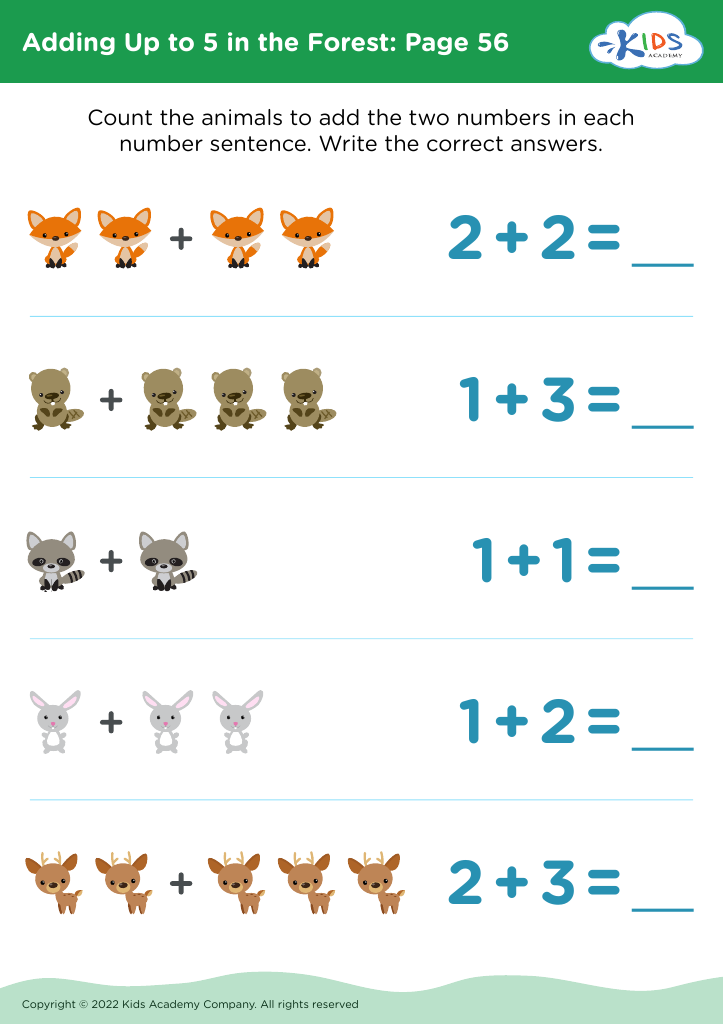
Adding Up to 5 in the Forest: Page 56
Worksheet
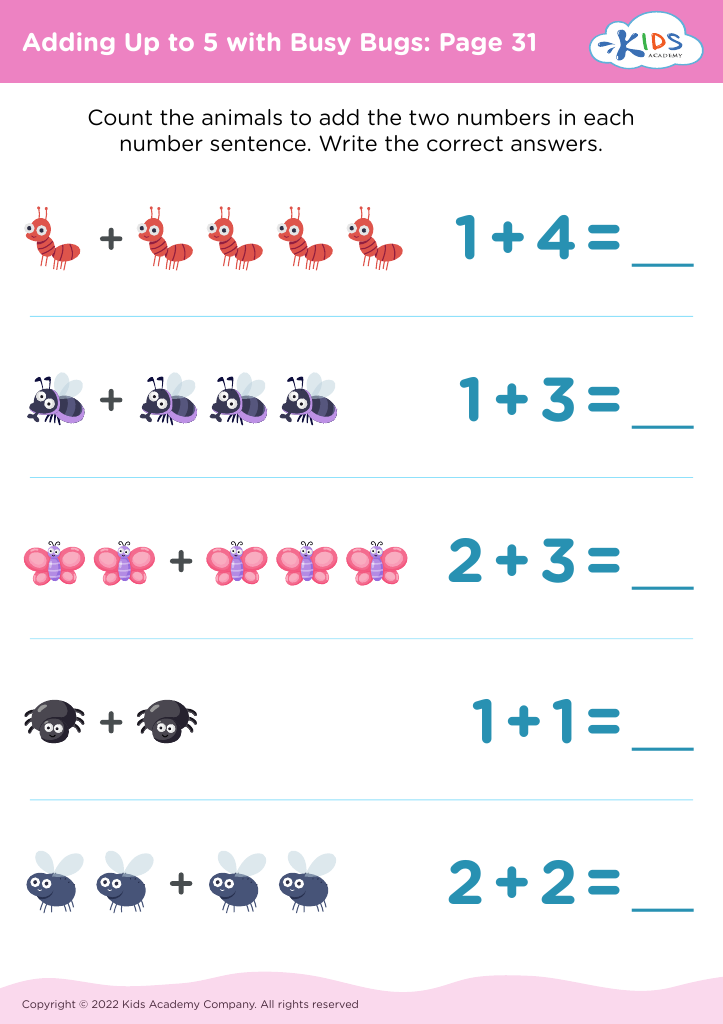
Adding Up to 5 with Busy Bugs: Page 31
Worksheet
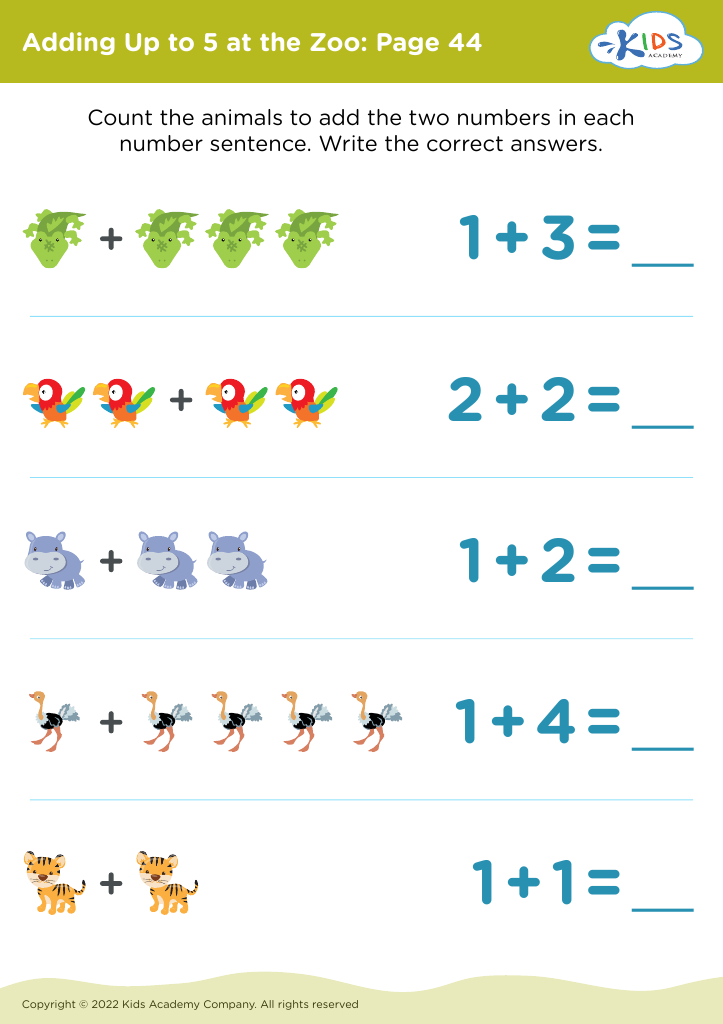
Adding Up to 5 at the Zoo: Page 44
Worksheet
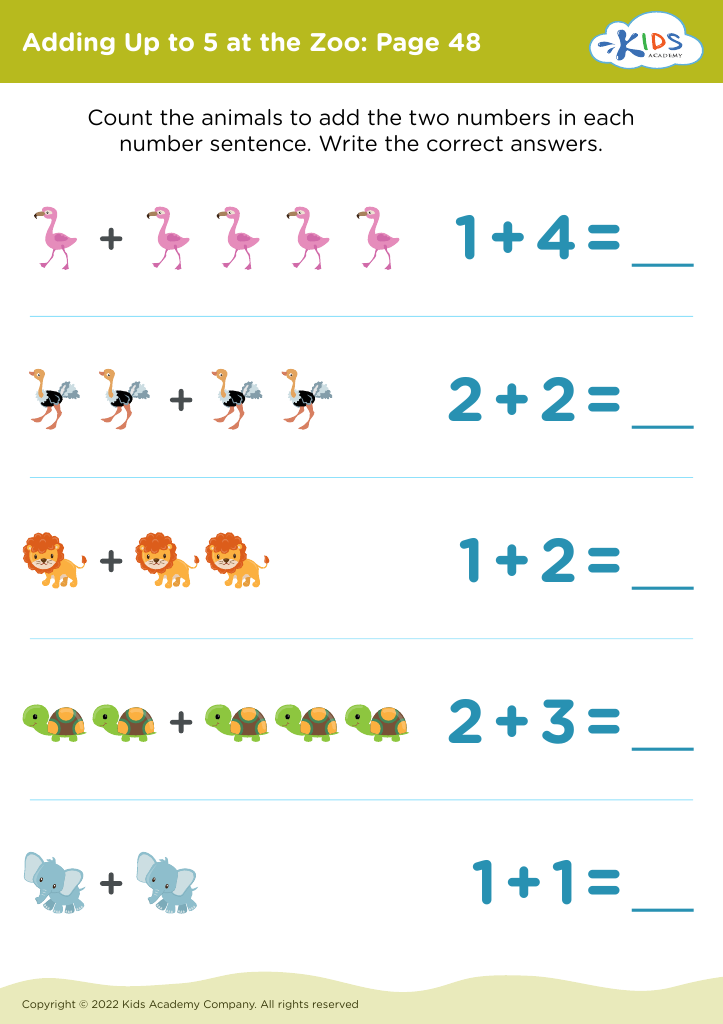
Adding Up to 5 at the Zoo: Page 48
Worksheet
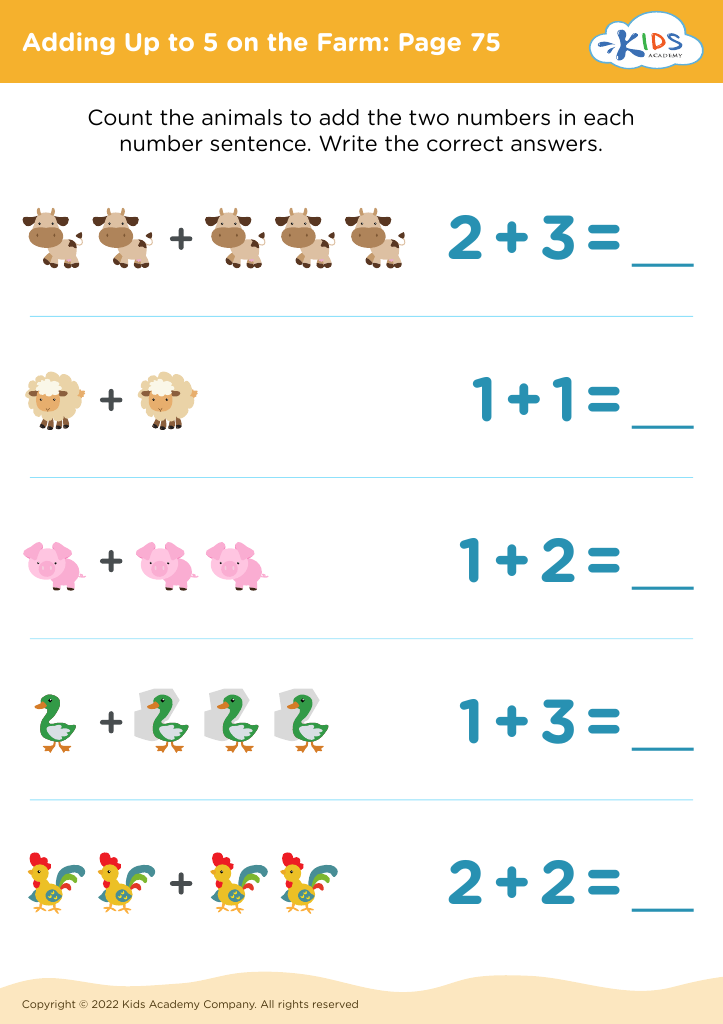
Adding Up to 5 on the Farm: Page 75
Worksheet
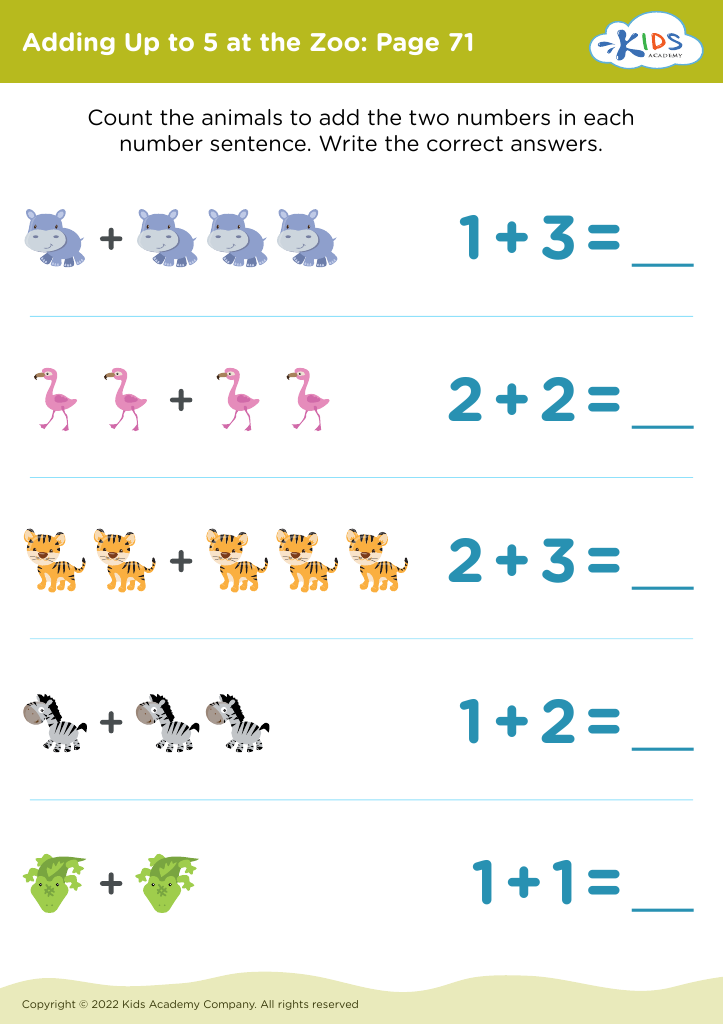
Adding Up to 5 at the Zoo: Page 71
Worksheet
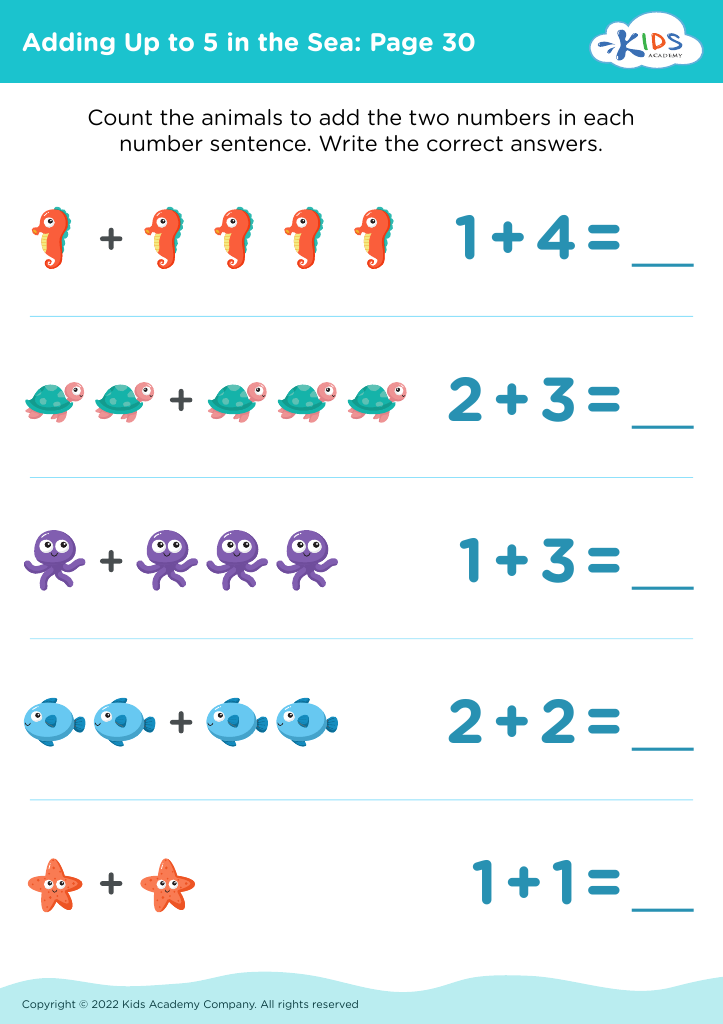
Adding Up to 5 in the Sea: Page 30
Worksheet
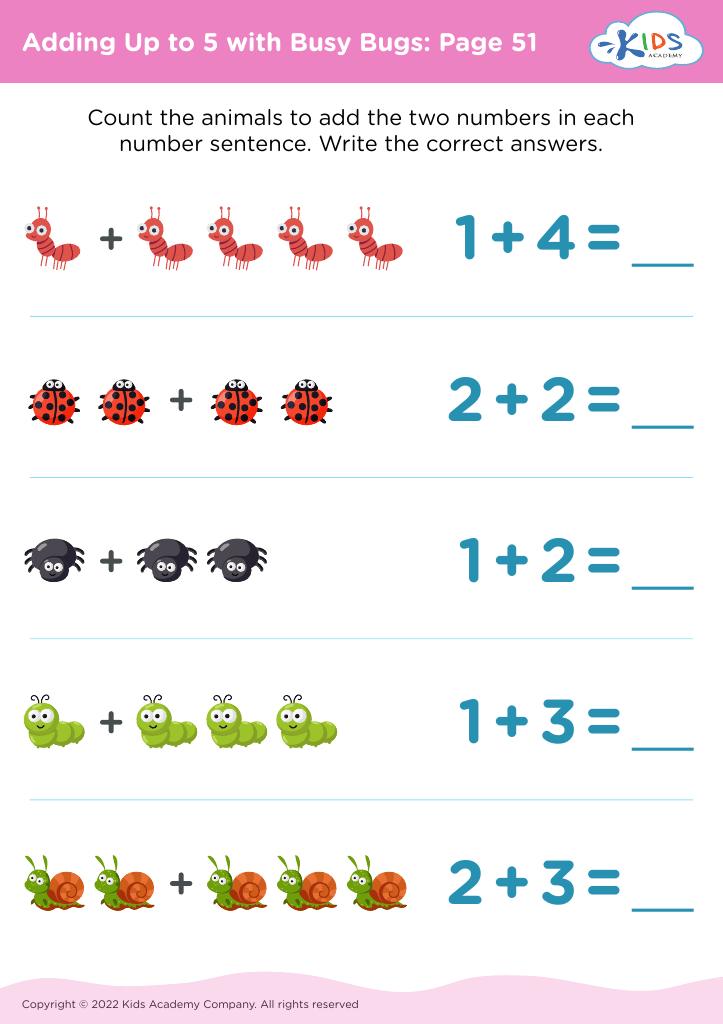
Adding Up to 5 with Busy Bugs: Page 51
Worksheet
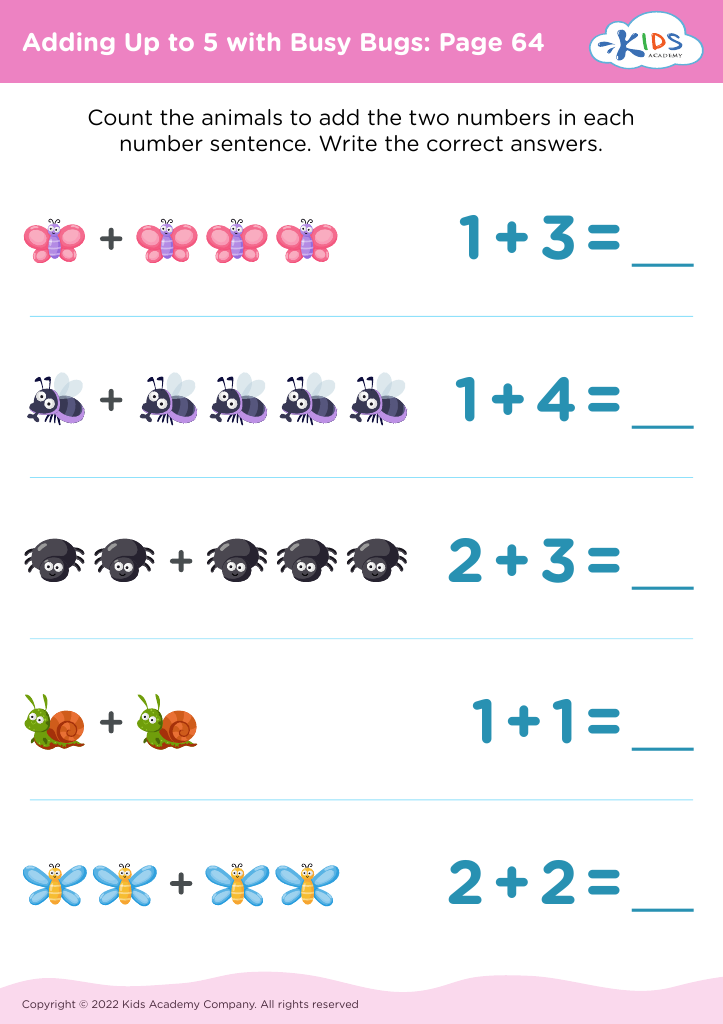
Adding Up to 5 with Busy Bugs: Page 64
Worksheet
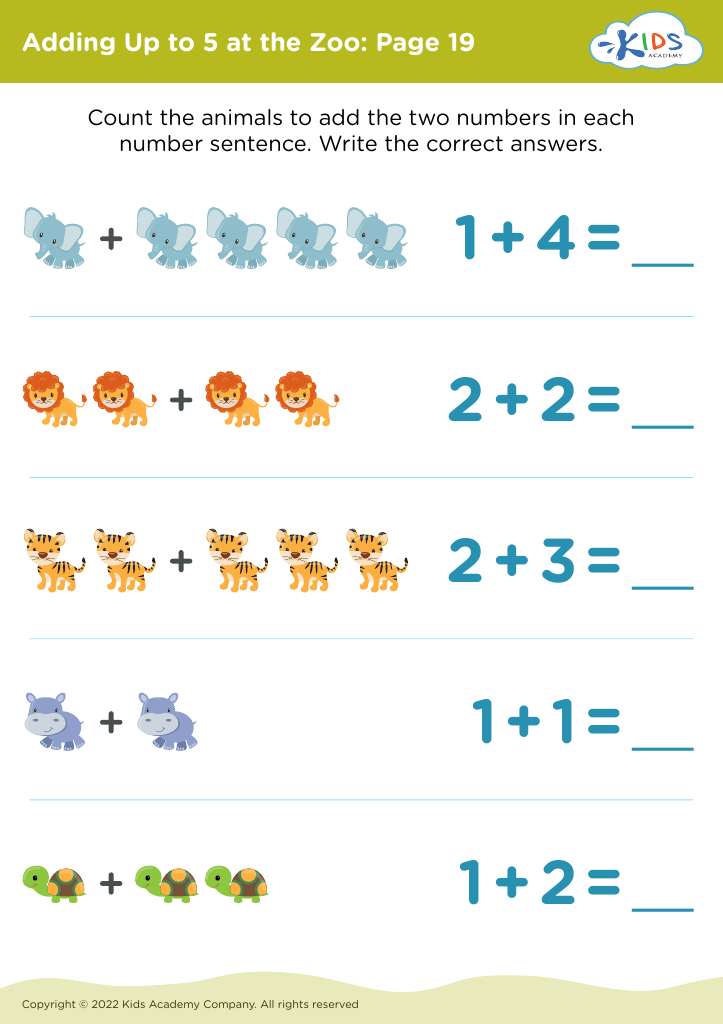
Adding Up to 5 at the Zoo: Page 19
Worksheet
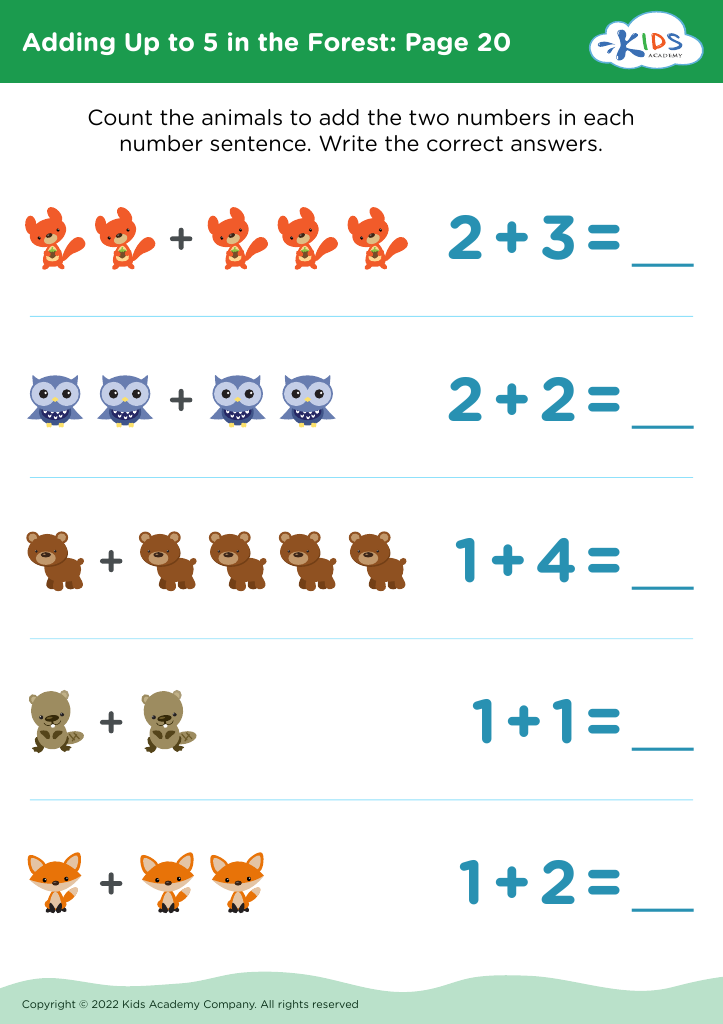
Adding Up to 5 in the Forest: Page 20
Worksheet
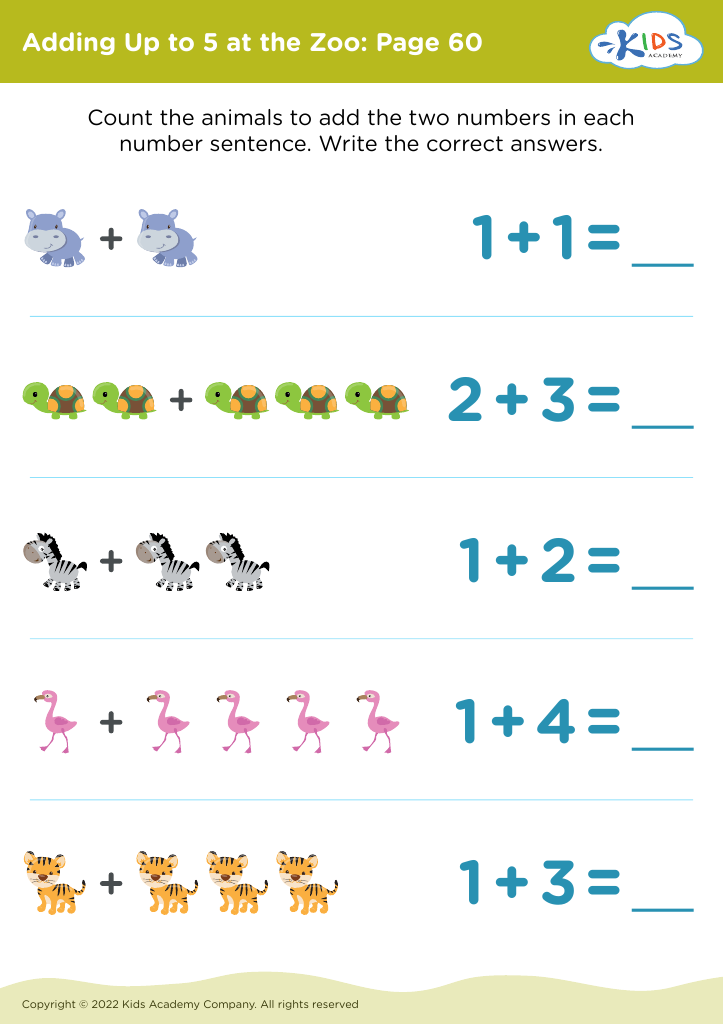
Adding Up to 5 at the Zoo: Page 60
Worksheet
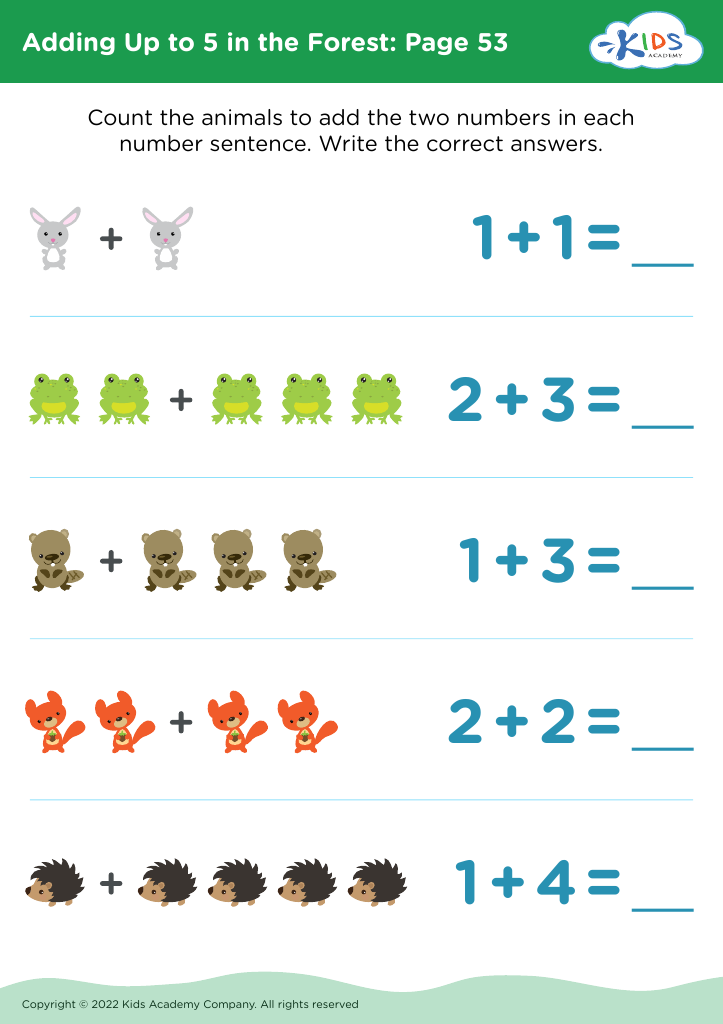
Adding Up to 5 in the Forest: Page 53
Worksheet
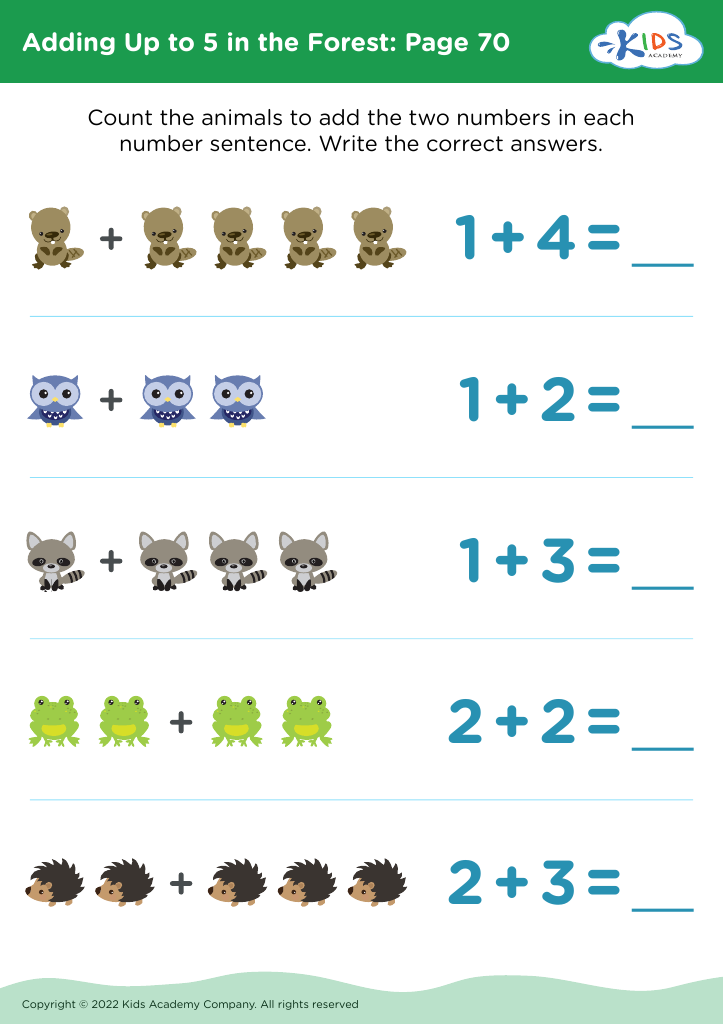
Adding Up to 5 in the Forest: Page 70
Worksheet


Number recognition, along with basic addition and subtraction, is a vital foundational skill that will benefit 3-year-olds throughout their educational journey. At this age, children are developing their cognitive skills rapidly, making it an ideal time for them to start recognizing numbers and understanding basic mathematical concepts.

Teaching number recognition enhances their ability to identify numbers in their environment, which fosters mathematical vocabulary and spatial awareness. It provides a fun way for children to engage with numbers, helping them comprehend the world around them. Furthermore, introducing simple addition and subtraction concepts can aid in developing critical thinking and problem-solving abilities.

Number games and playful activities can make learning enjoyable, encouraging a positive association with mathematics that can last a lifetime. Plus, these skills support success in later academic pursuits, particularly in subjects like math and science.

For parents and teachers, prioritizing these skills reinforces early literacy and numeracy, which are essential indicators of a child’s overall readiness for school. Engaging young learners in basic math through everyday situations can make a significant difference in their confidence and competence in facing future educational challenges.