Number comprehension Addition Worksheets for 3-Year-Olds
3 filtered results
-
From - To
Discover our engaging Number Comprehension Addition Worksheets designed specifically for 3-year-olds! These interactive worksheets offer a delightful introduction to basic addition concepts, helping young learners develop foundational math skills. With colorful illustrations and fun imagery, children will enjoy counting, recognizing numbers, and solving simple addition problems. Our worksheets are tailored to enhance cognitive development while making learning enjoyable. Ideal for preschool classrooms or home schooling, these resources ensure that little ones can grasp essential number comprehension skills in a playful and supportive environment. Foster a love for math early on with our carefully crafted addition worksheets!
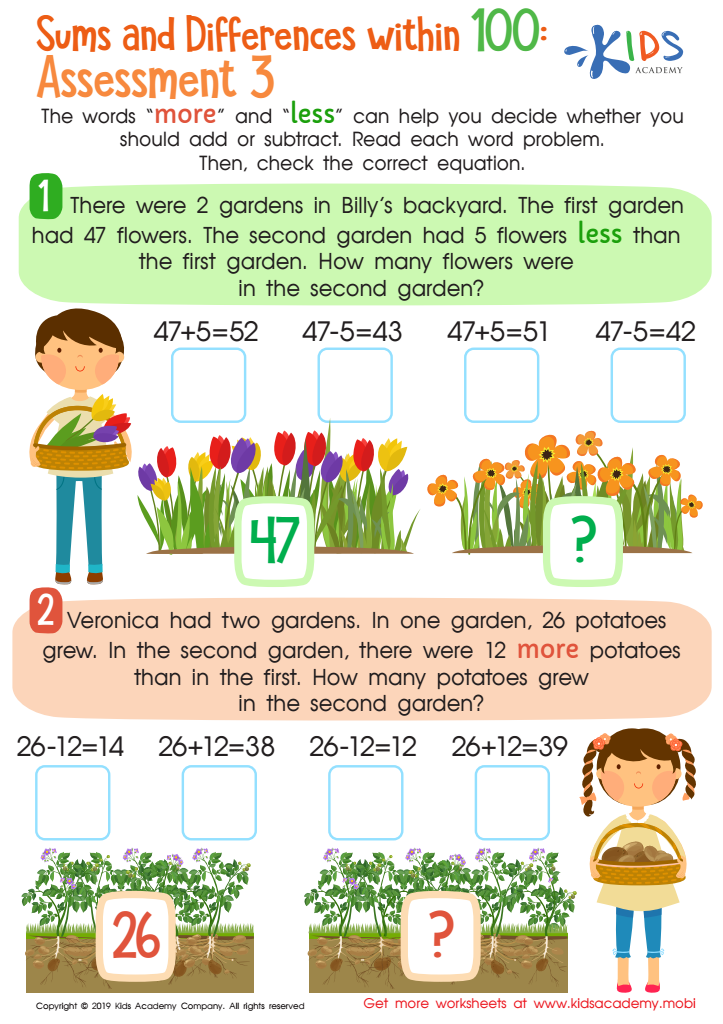
Sums and Differences Within 1 - Assessment 1 Worksheet
 Assign to My Students
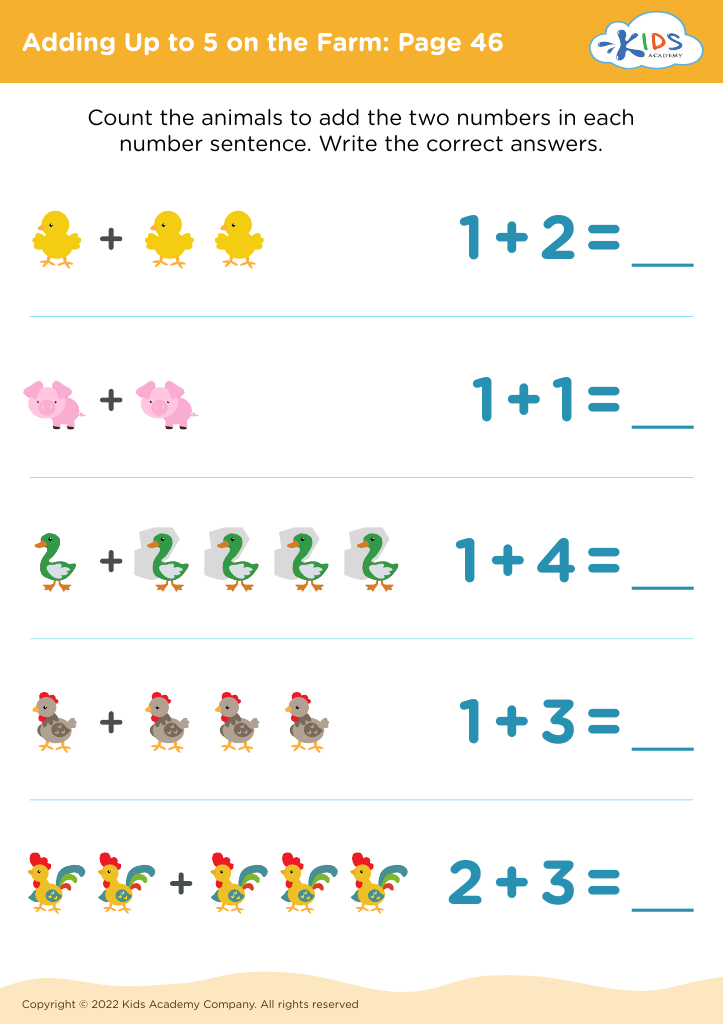
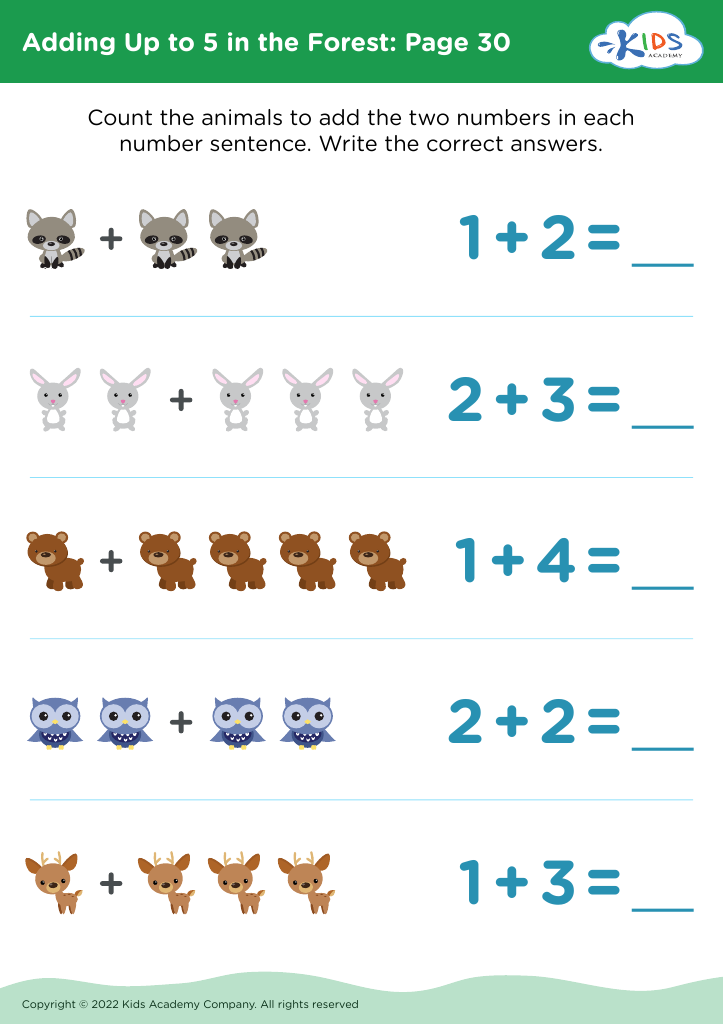








Number comprehension and addition are foundational skills that set the stage for mathematical learning and critical thinking in early childhood. For 3-year-olds, these skills promote cognitive development, enhance problem-solving abilities, and foster a positive attitude towards learning. When parents and teachers prioritize number comprehension and addition, they create engaging environments that encourage children to explore math in fun and interactive ways.
At this age, children learn best through play, making it an ideal time to introduce counting, number recognition, and basic addition using everyday objects like toys, snacks, or blocks. This hands-on approach not only makes learning enjoyable but also builds a strong numerical foundation that they will rely on throughout their educational journeys.
Moreover, early exposure to math concepts helps develop important executive function skills, such as self-regulation and working memory, which are crucial for later academic success. By nurturing these skills now, parents and teachers are paving the way for a lifelong love of learning and a strong competency in mathematics. Ultimately, fostering number comprehension and addition during the early years equips children with essential tools to navigate their world, supporting overall intellectual and social growth.








