Filters

366 filtered results

Clear all filters
Favorites
With answer key
Interactive

366 filtered results

Difficulty Level

Grade


Check out this FREE Trial Lesson on Addition for age 3!

Sorting Objects into 3 Categories

Favorites
With answer key
Interactive
  • 3
  • Number Recognition
  • Addition
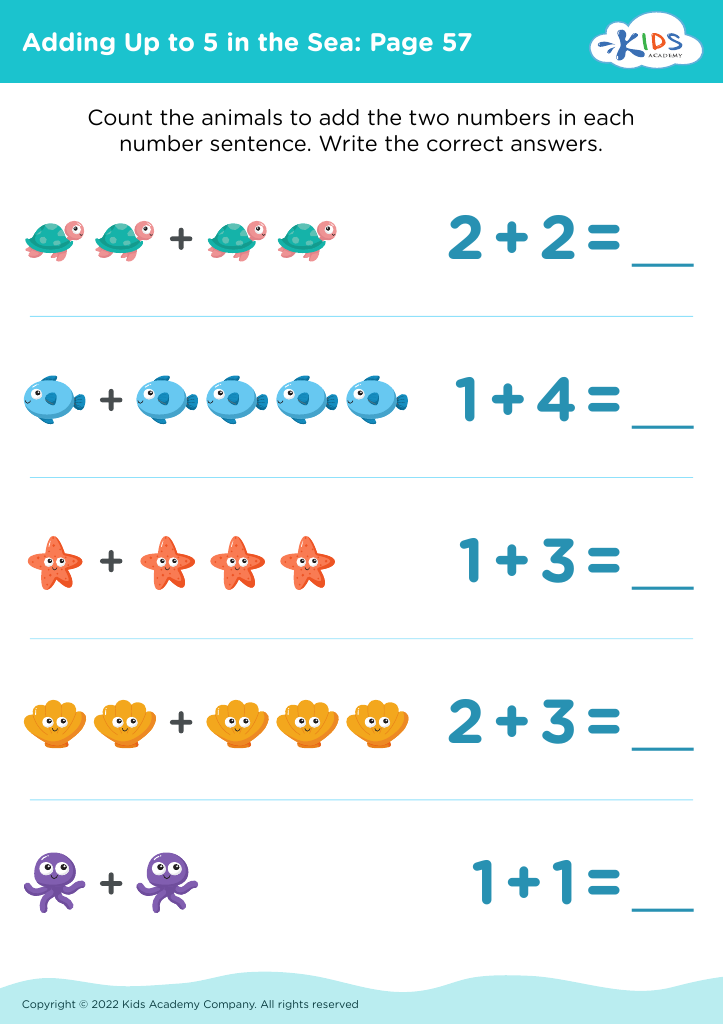
Adding Up to 5 in the Sea: Page 57
Worksheet
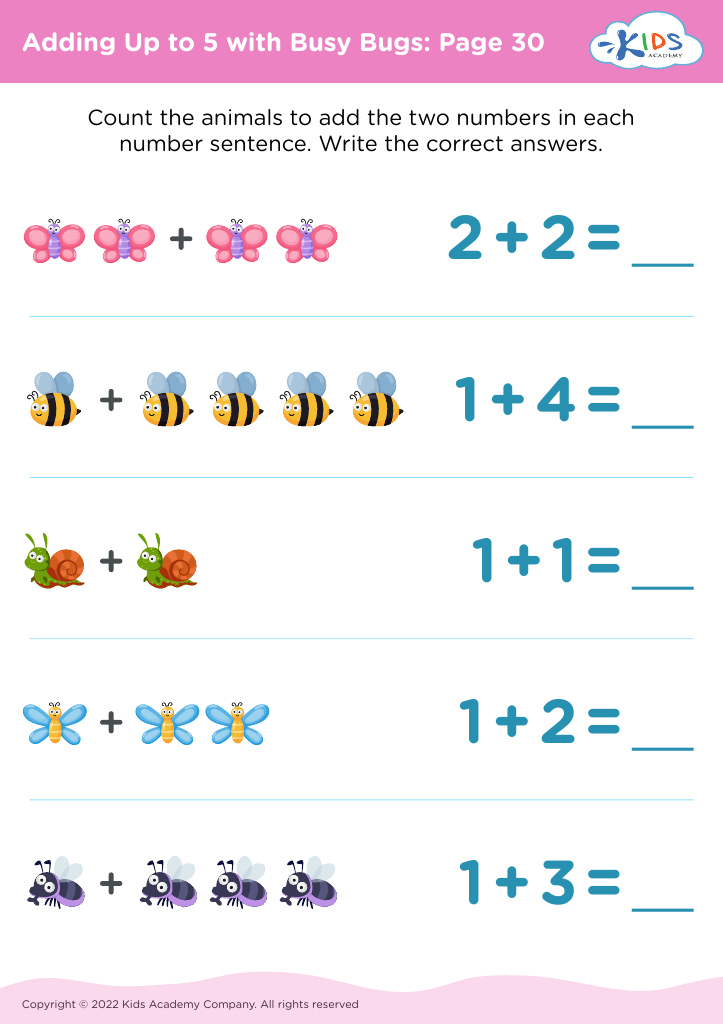
Adding Up to 5 with Busy Bugs: Page 30
Worksheet
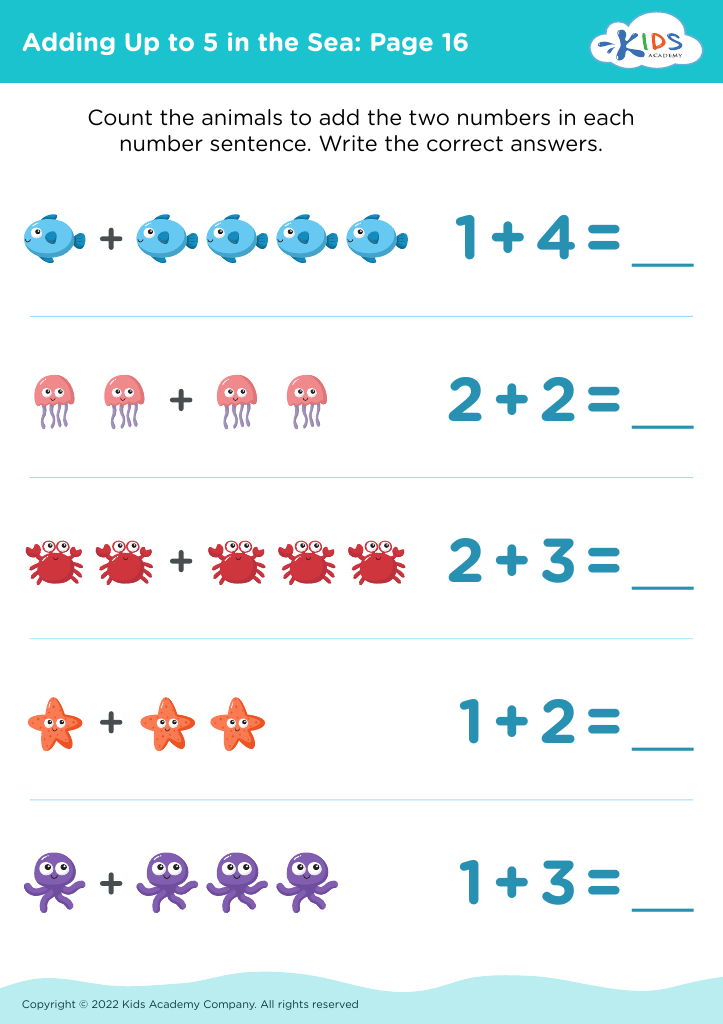
Adding Up to 5 in the Sea: Page 16
Worksheet
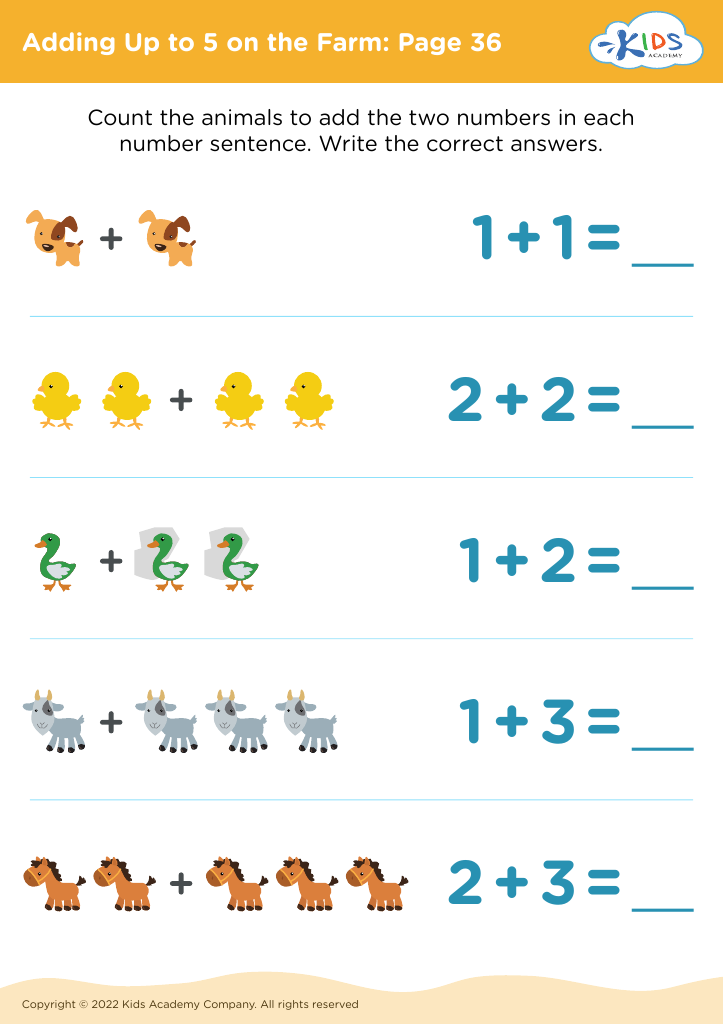
Adding Up to 5 on the Farm: Page 36
Worksheet
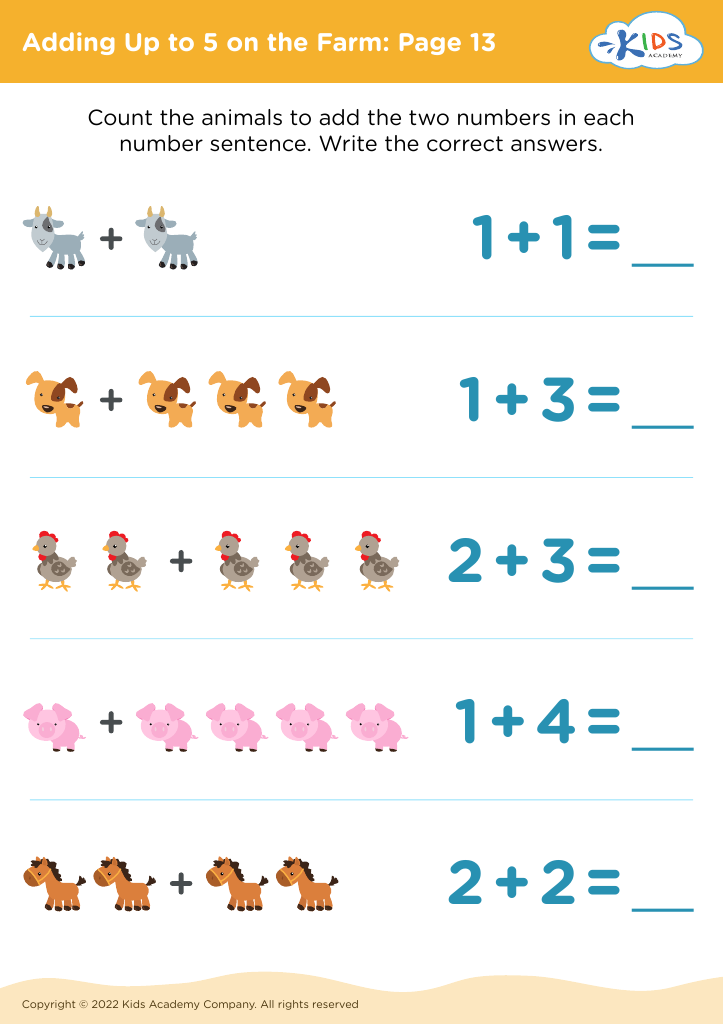
Adding Up to 5 on the Farm: Page 13
Worksheet
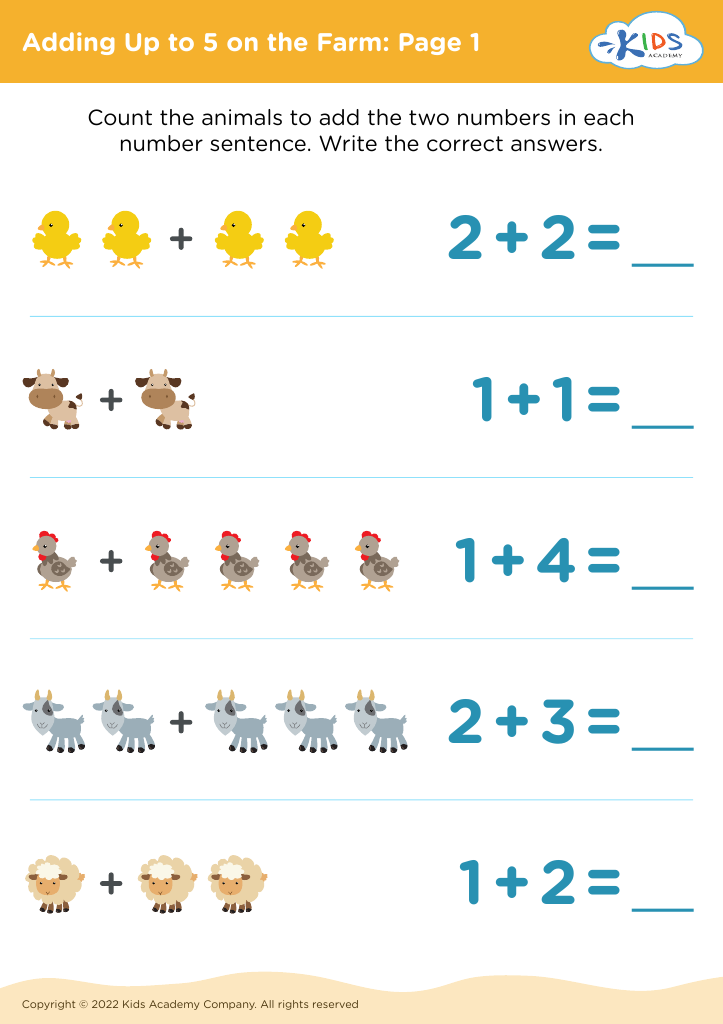
Adding Up to 5 on the Farm: Page 1
Worksheet
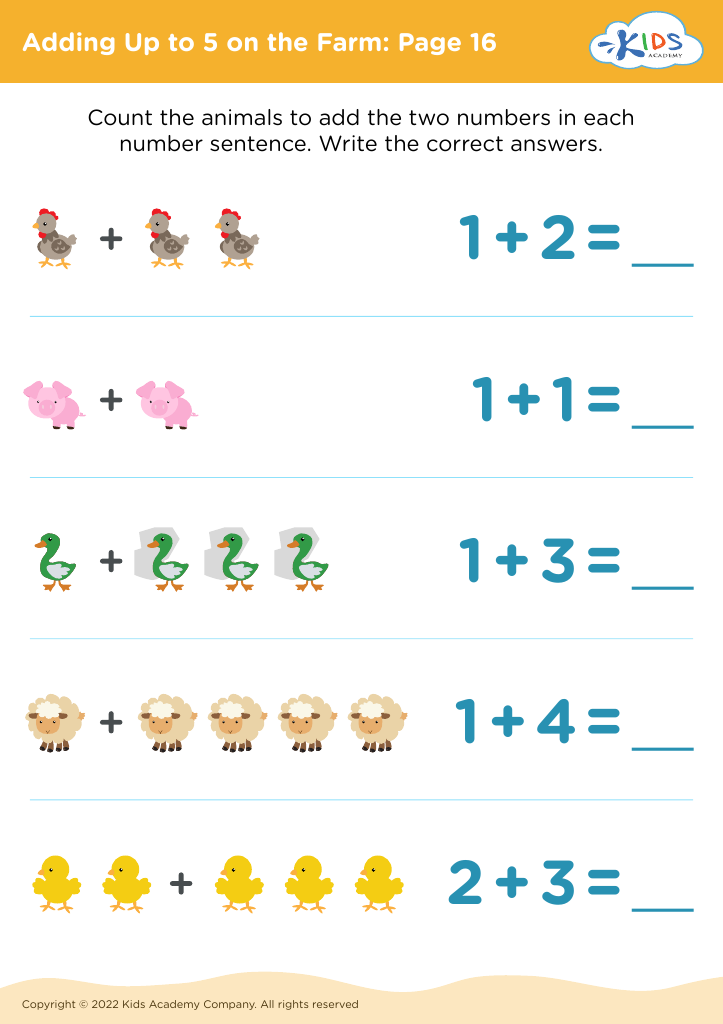
Adding Up to 5 on the Farm: Page 16
Worksheet
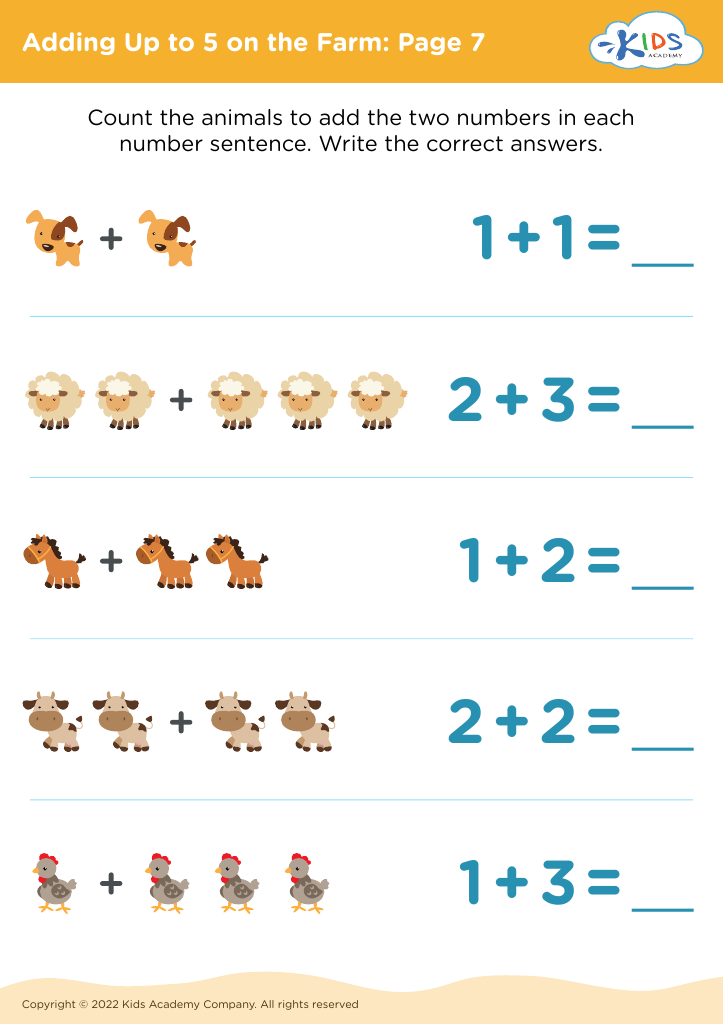
Adding Up to 5 on the Farm: Page 7
Worksheet
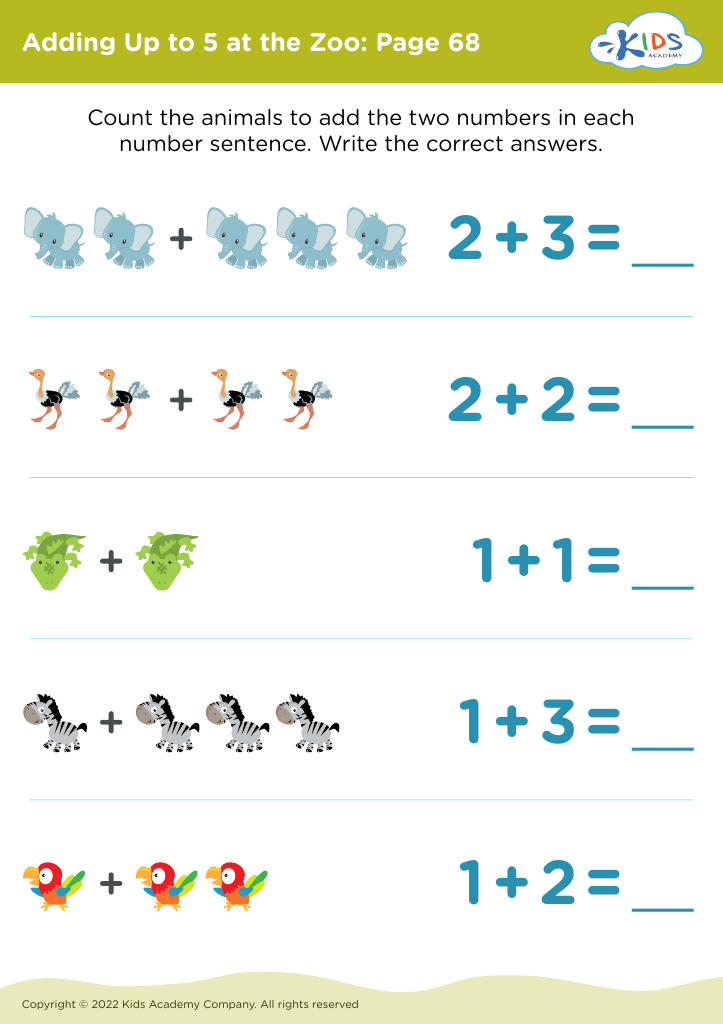
Adding Up to 5 at the Zoo: Page 68
Worksheet
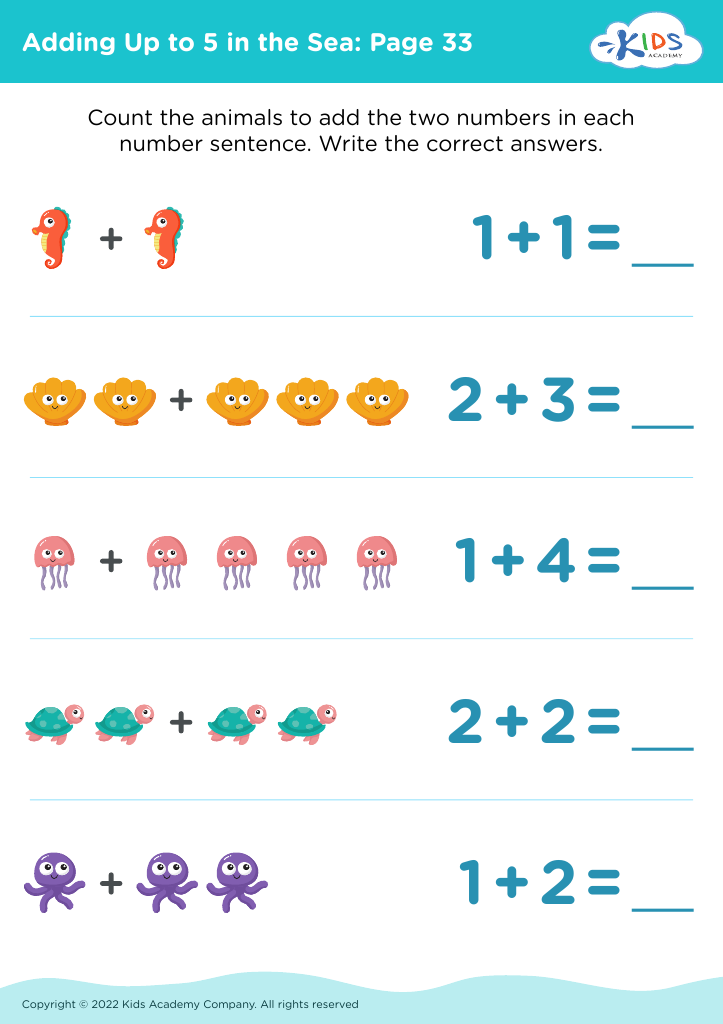
Adding Up to 5 in the Sea: Page 33
Worksheet
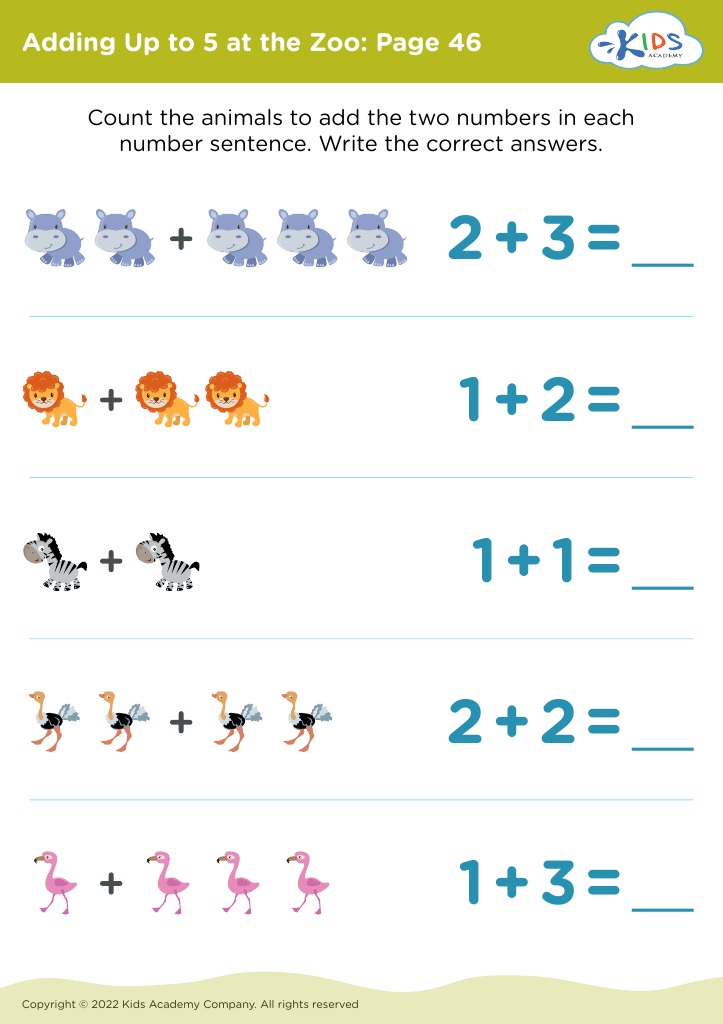
Adding Up to 5 at the Zoo: Page 46
Worksheet
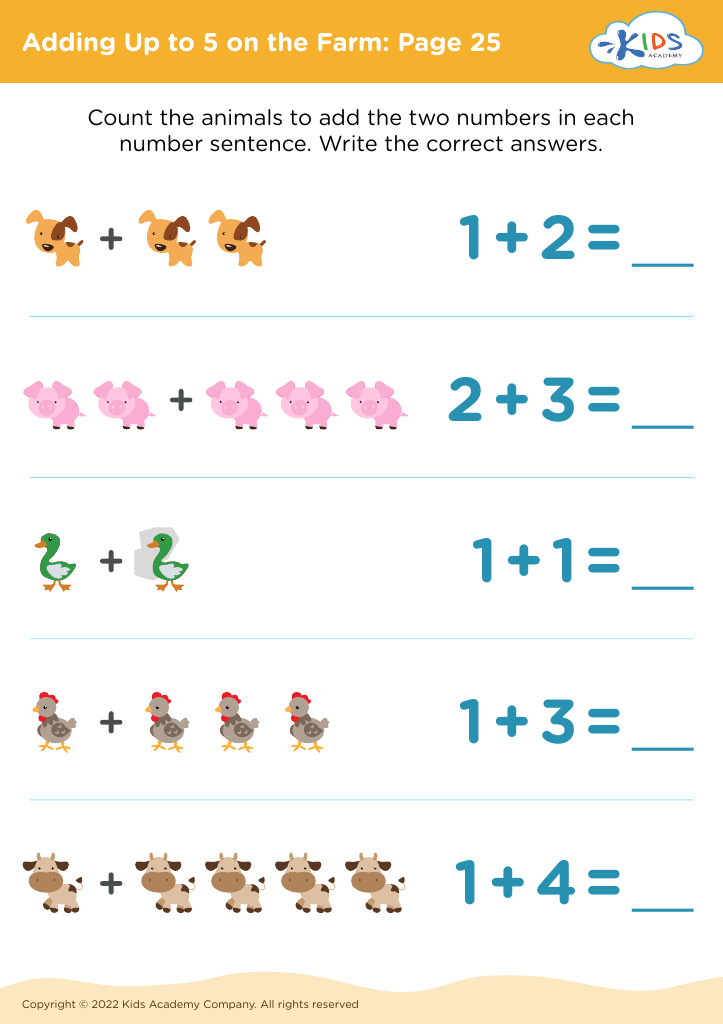
Adding Up to 5 on the Farm: Page 25
Worksheet
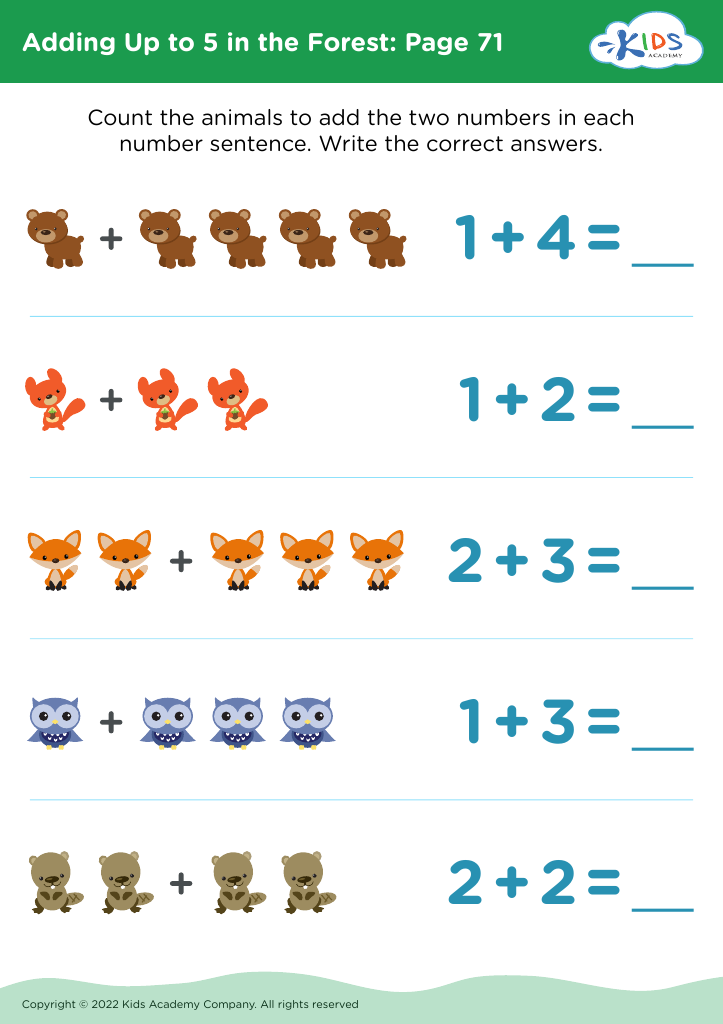
Adding Up to 5 in the Forest: Page 71
Worksheet
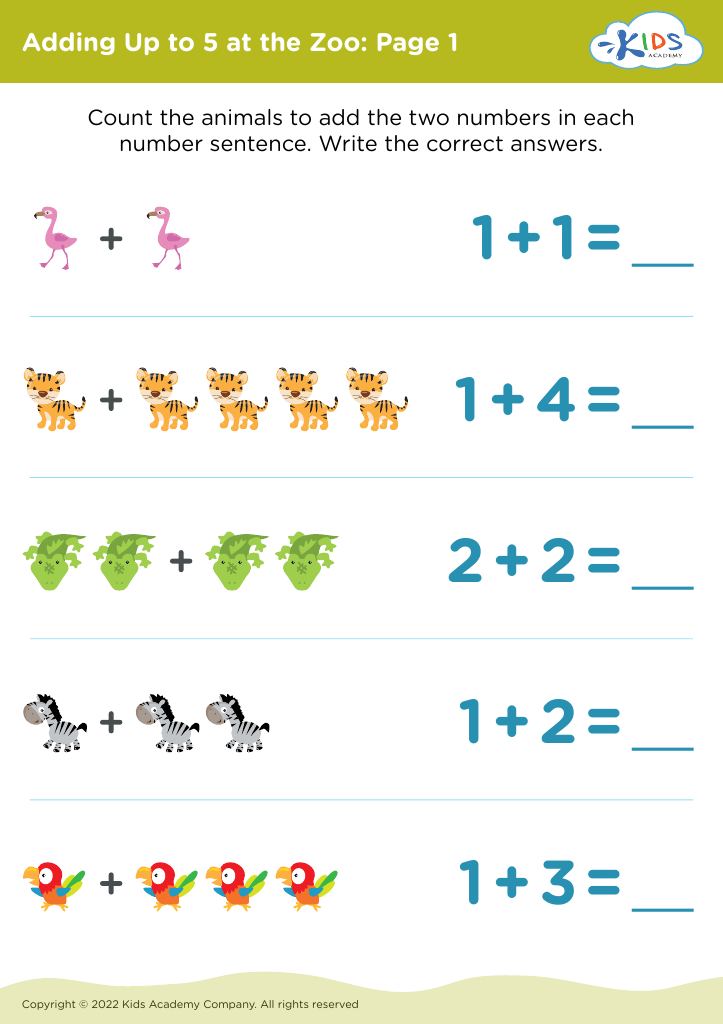
Adding Up to 5 at the Zoo: Page 1

Adding Up to 5 at the Zoo: Page 1

Adding Up to 5 at the Zoo: Page 1
Worksheet
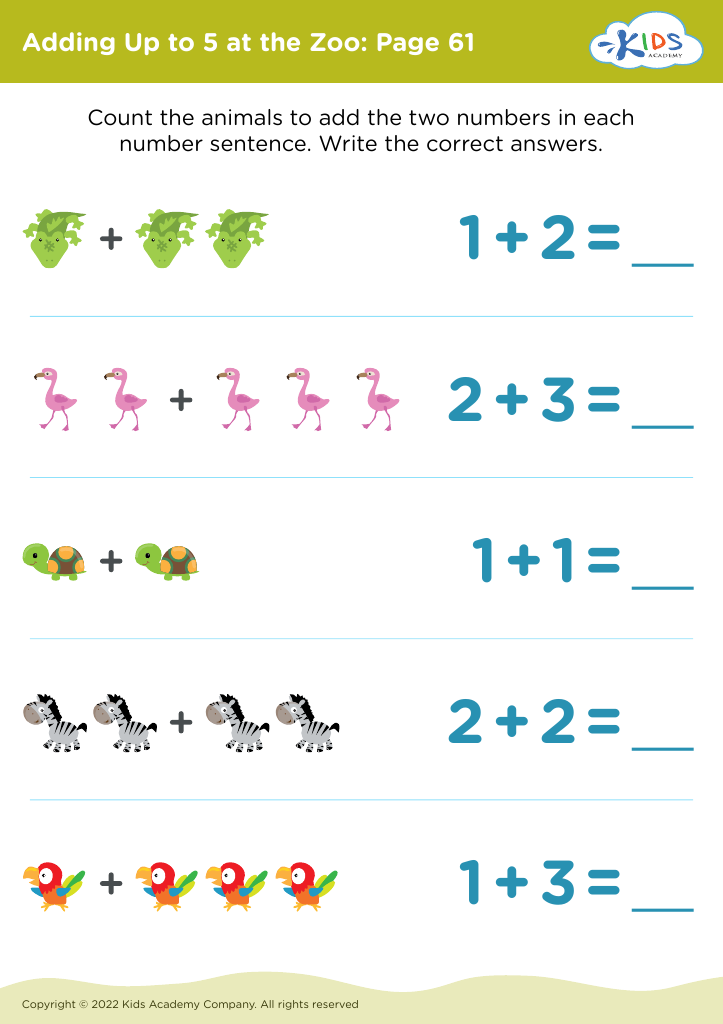
Adding Up to 5 at the Zoo: Page 61
Worksheet
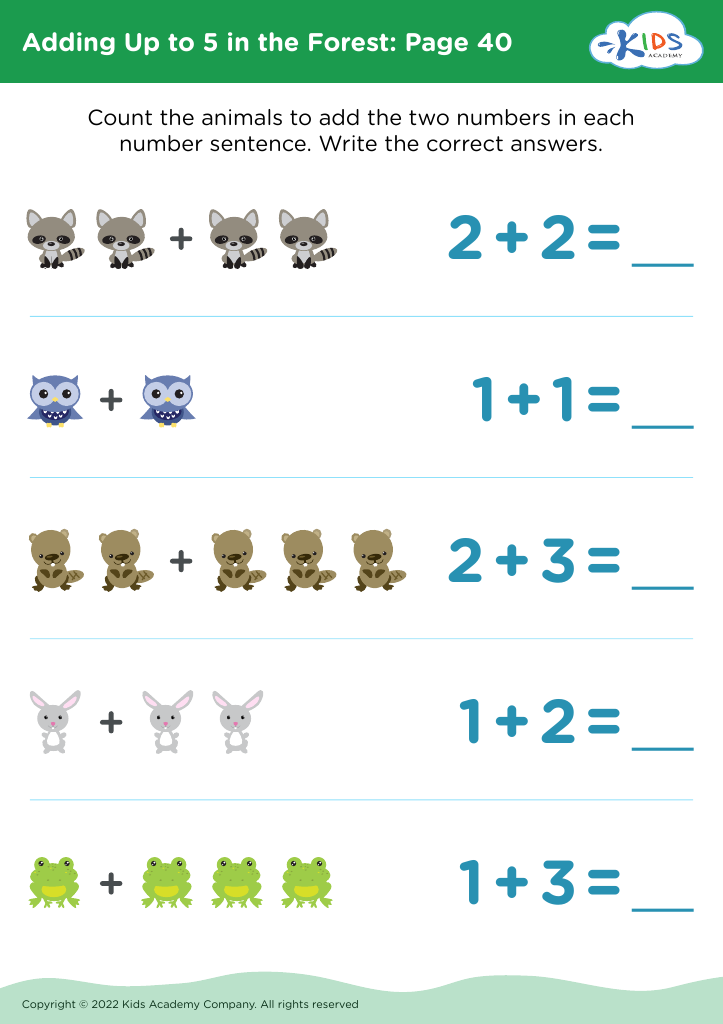
Adding Up to 5 in the Forest: Page 40
Worksheet
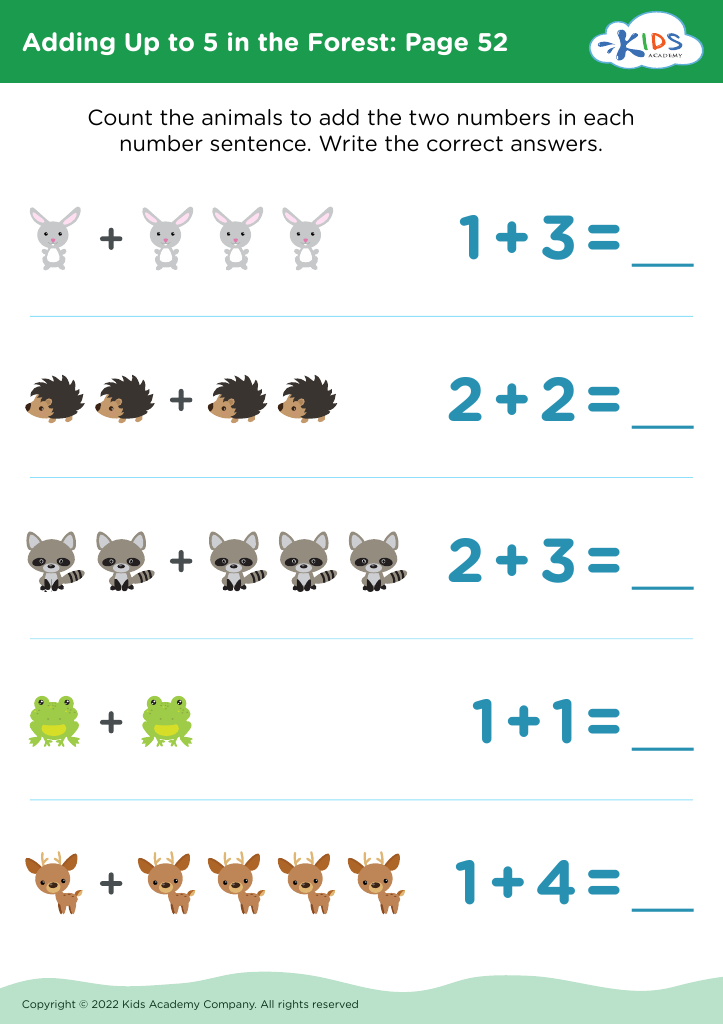
Adding Up to 5 in the Forest: Page 52
Worksheet
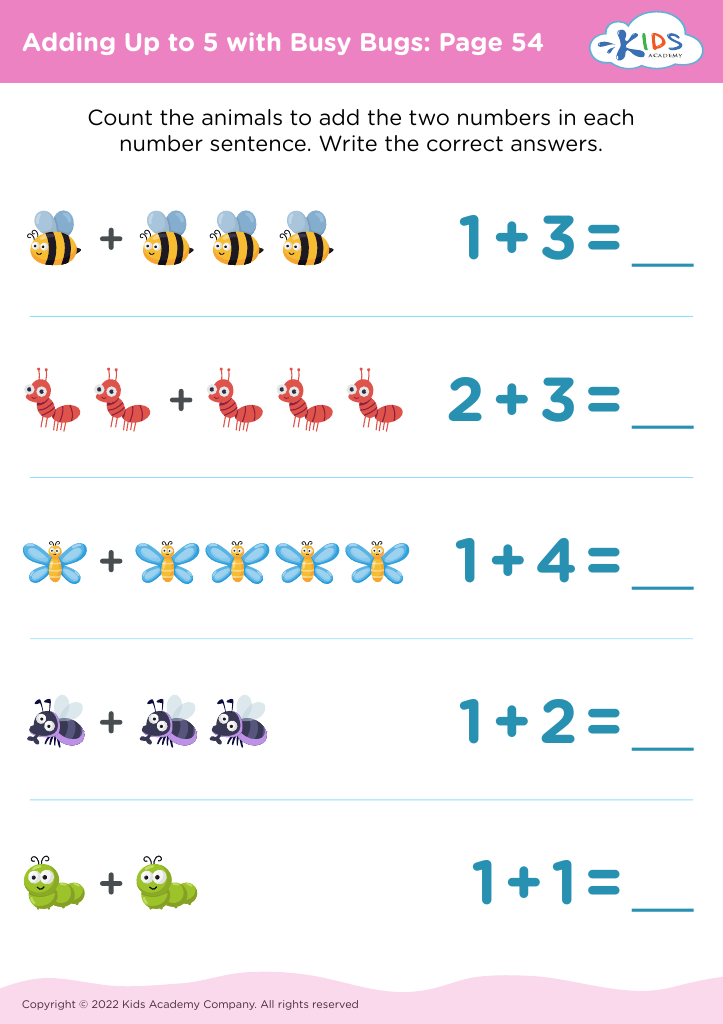
Adding Up to 5 with Busy Bugs: Page 54
Worksheet
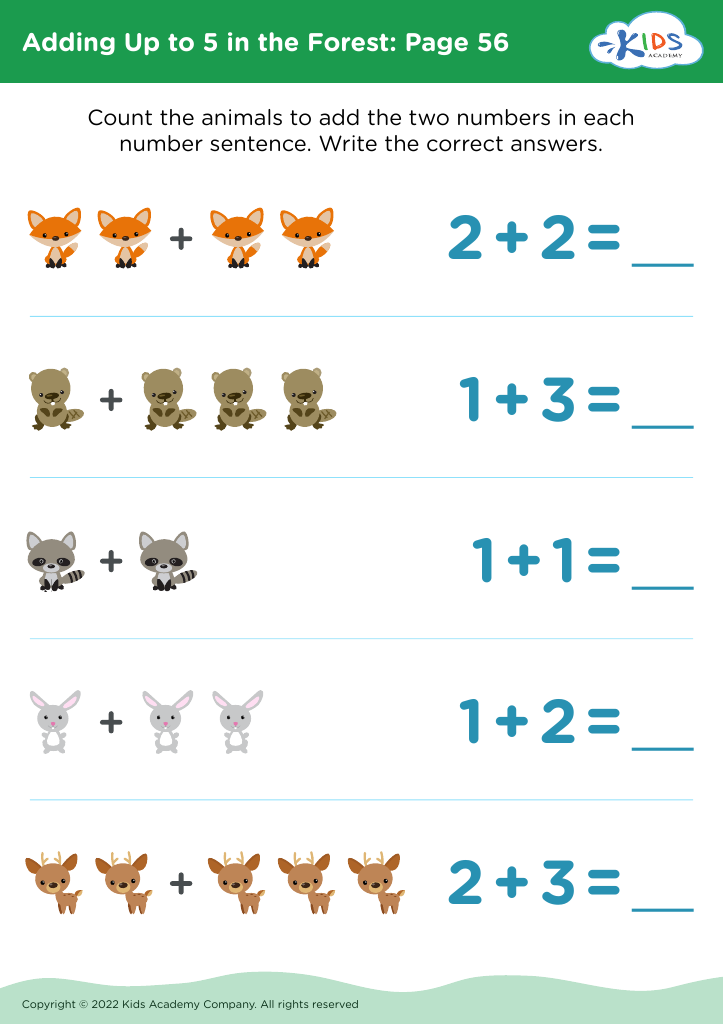
Adding Up to 5 in the Forest: Page 56
Worksheet
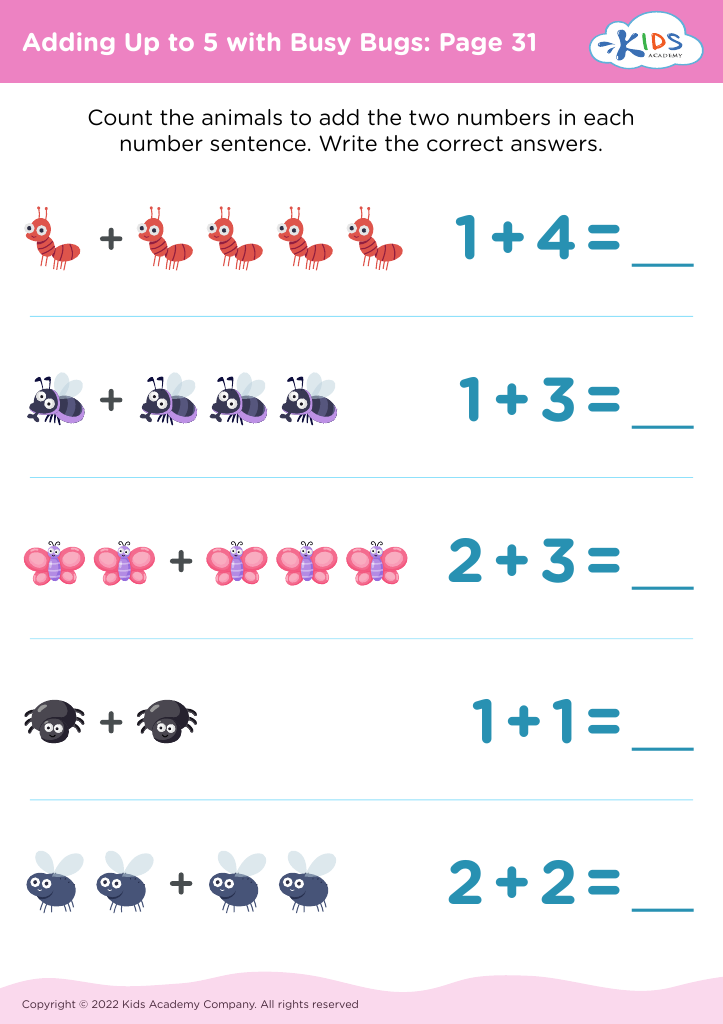
Adding Up to 5 with Busy Bugs: Page 31
Worksheet
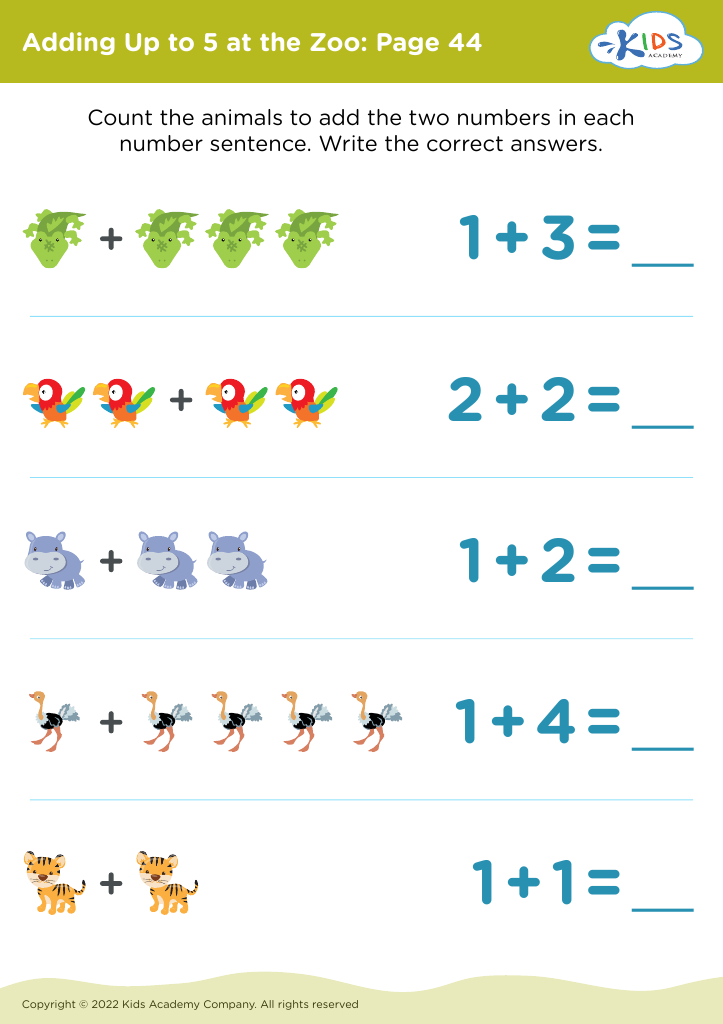
Adding Up to 5 at the Zoo: Page 44
Worksheet
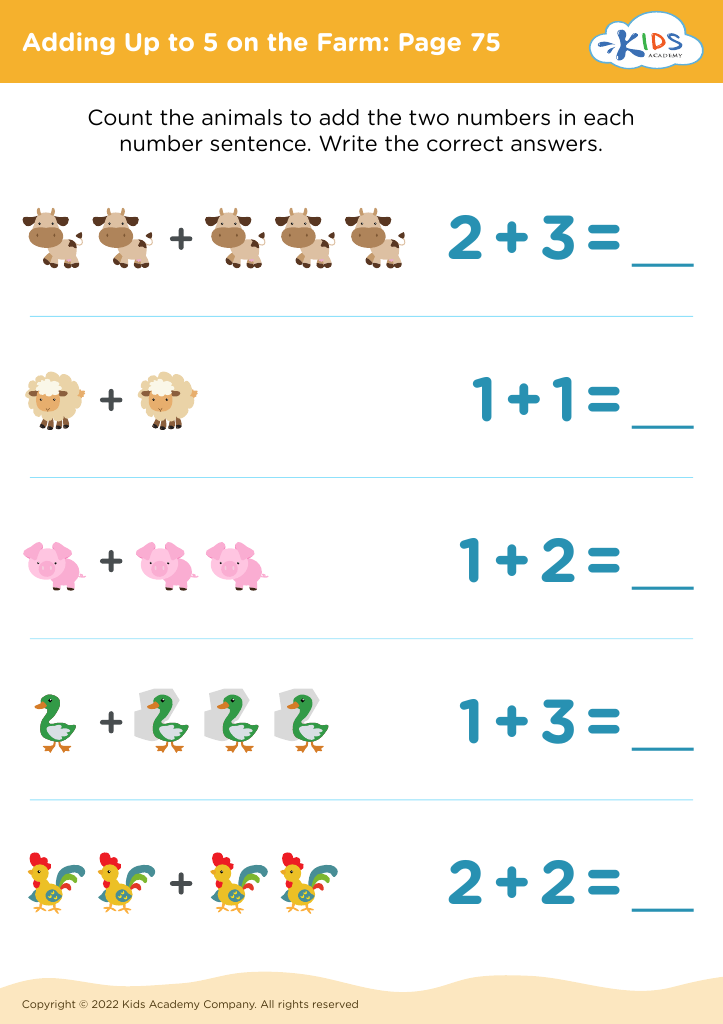
Adding Up to 5 on the Farm: Page 75
Worksheet
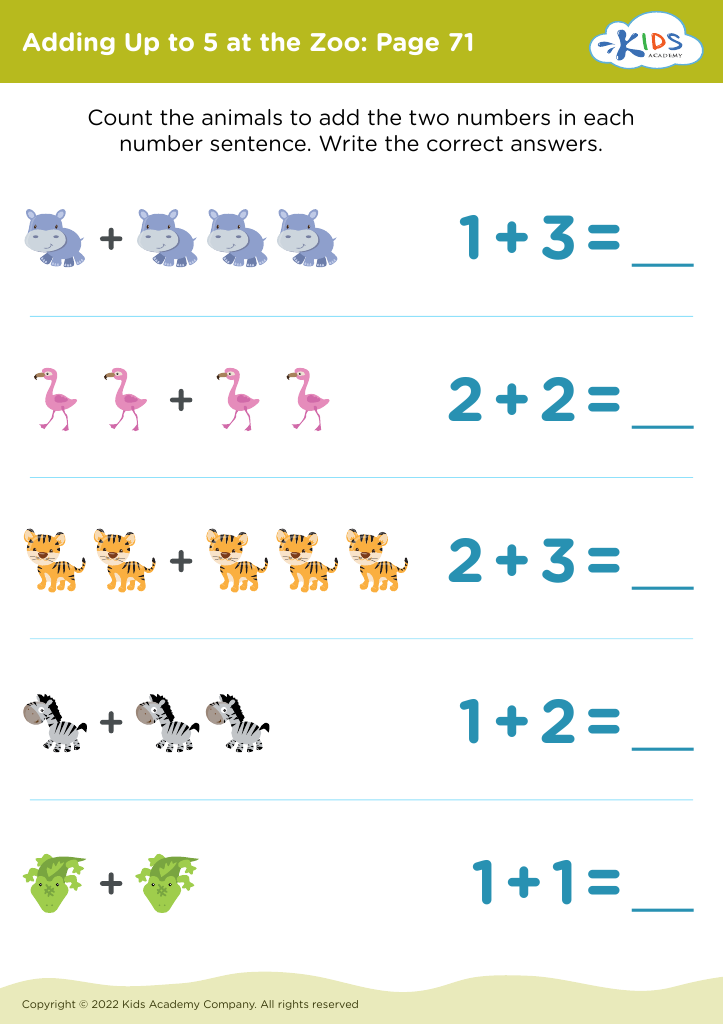
Adding Up to 5 at the Zoo: Page 71
Worksheet
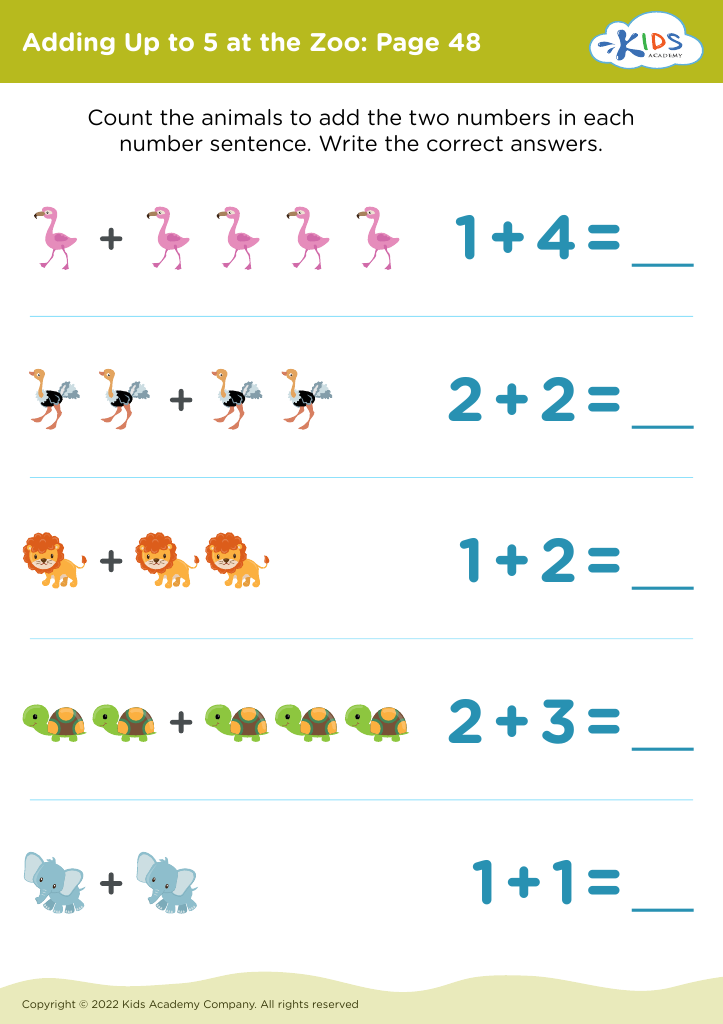
Adding Up to 5 at the Zoo: Page 48
Worksheet


Number recognition and early addition skills in 3-year-olds are fundamental for a strong mathematical foundation, which significantly impacts future academic success. At this early age, children are incredibly receptive to learning new concepts, and their brains are rapidly developing critical thinking and problem-solving skills. By introducing number recognition, they become familiar with symbols that represent quantities, which is the cornerstone of all mathematical learning.

For parents and teachers, fostering these skills helps children develop a positive attitude towards mathematics and builds confidence. Early exposure to numbers and addition through playful activities can make math fun and engaging, reducing the likelihood of math anxiety later in life. Additionally, these skills promote the development of fine motor skills, memory, and cognitive abilities.

Research shows that early math skills are strong predictors of later academic achievement, not only in mathematics but across other subjects as well. By prioritizing number recognition and simple addition, parents and teachers provide children with the tools they need for a lifelong learning journey. Moreover, it instills a sense of achievement and excitement about learning, fueling their natural curiosity and laying the groundwork for continued educational success. Therefore, early math skills are not just beneficial; they are essential.